White Tiles Design for Living Room: 20+ Modern Ideas
Discover 20 modern white tile design ideas for Indian living rooms, including marble-look floors, feature walls, large-format tiles, finishes, sizes, styling tips, and practical buying advice.
- Why White Tiles Work So Well in Indian Living Rooms
- 10 White Tile Floor Design Ideas for Living Rooms
- 10 White Tile Wall Design Ideas for Living Room Feature Walls
- 20 White Tile Design Ideas: Quick Reference
- Buying Guide: Choosing White Living Room Tiles
- Styling White Tile Living Rooms: What Works in Indian Homes
- Common Mistakes with White Living Room Tile Designs
- Finding the Right White Tile Design for Your Living Room
White tiles make living rooms feel larger, brighter, and more timeless while working with both traditional and modern interiors. Choose the right size, finish, and wall treatments to create a stylish, low-maintenance space that stays relevant for years.
White tiles have held their position in Indian living rooms across every design shift of the past two decades. They have outlasted stone-look, wood-look, and geometric phases not by accident but because they do something no other colour can match: they make a room feel larger, lighter, and more open simply by being there.
But white tiles for living rooms are not one idea. There are dozens. The difference between a white tile floor that feels dated and clinical and one that feels warm, intentional, and genuinely beautiful comes down to the specific design choices made around it: the tile format, the surface finish, the veining pattern, the wall treatment, the grout, and how the floor coordinates with the furniture and lighting.
This guide brings together 20 distinct white tile design ideas that work in Indian living rooms in 2026, covering every combination of floor and wall treatment, from the most classic interpretations to the design directions that premium apartments and interior designers are specifying today. Each idea includes specific tile recommendations so you can act on what you see, not just be inspired by it.
Why White Tiles Work So Well in Indian Living Rooms
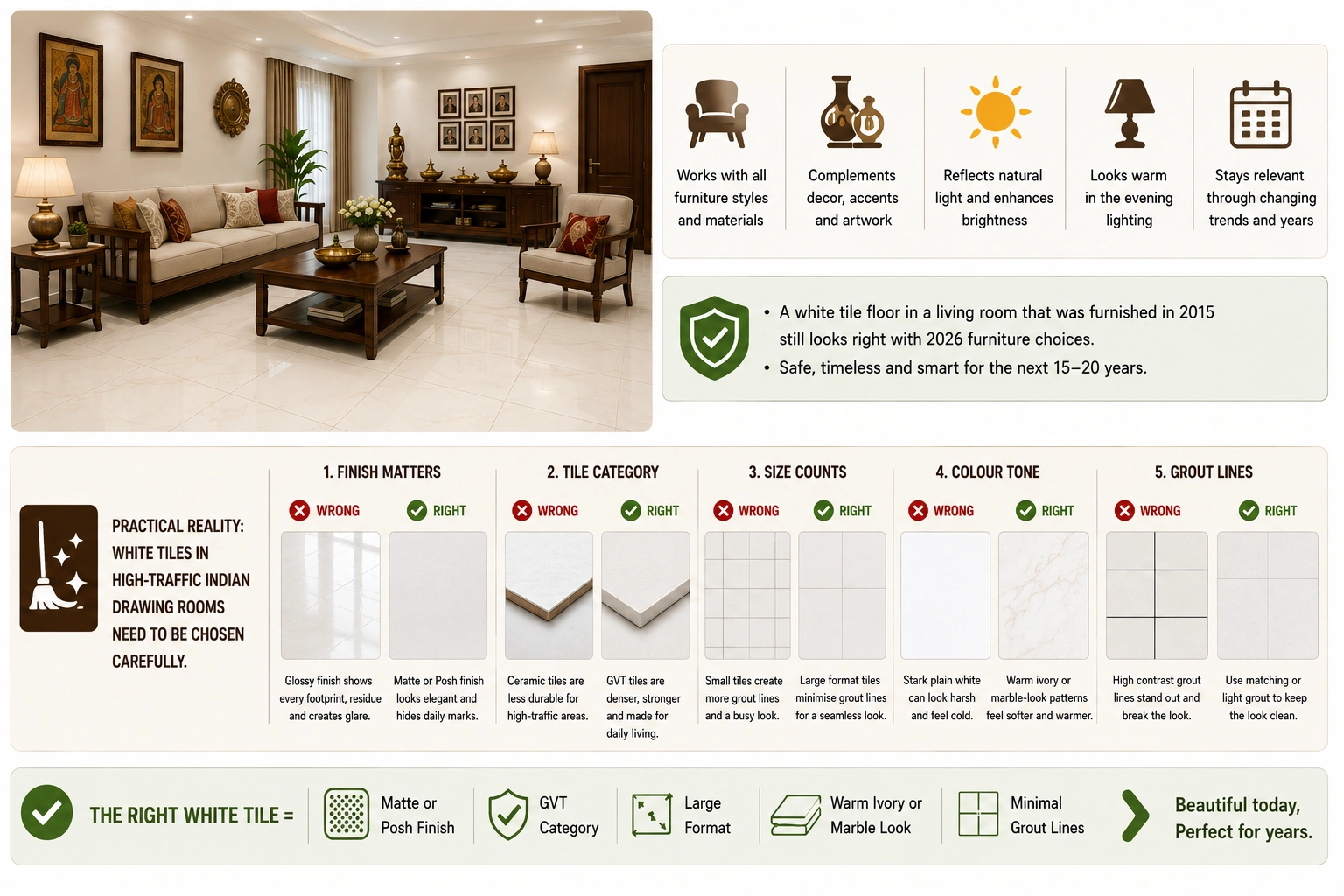
The case for white tiles in an Indian living room is practical before it is aesthetic. Indian drawing rooms carry a heavy design load. They need to work with teak or sheesham furniture, patterned upholstery, brass or chrome hardware, decorative items from travels or festivals, and the changing light of an Indian day from bright morning sun to warm evening lamps.
White floors carry all of this without competing. The light surface reflects warm tones from wooden furniture, catches the warmth of evening lighting, and holds its quality through furniture changes and style updates. A white tile floor in a living room that was furnished in 2015 still looks right with 2026 furniture choices. That longevity is what makes white tiles the safe and smart choice for a floor that will be lived on for the next 15 to 20 years.
The practical reality of white tiles in high-traffic Indian drawing rooms is that they need to be chosen carefully. A glossy white tile on a living room floor shows every footprint, shows mopping residue when it dries, and creates glare problems in the afternoon sun. The right white tile for a living room floor is matte or Posh finish in a GVT category, in a large format that minimises grout lines, and with a warm ivory or marble-look pattern rather than a stark plain white. Each of the 20 ideas below builds on this foundation.
If you're deciding between the two most popular neutral flooring colours, our White Tiles vs Grey Tiles comparison explains which option suits different room sizes, lighting conditions, and interior styles.
10 White Tile Floor Design Ideas for Living Rooms
Idea 1: Warm White Marble-Look GVT Floor in 2x4 Format
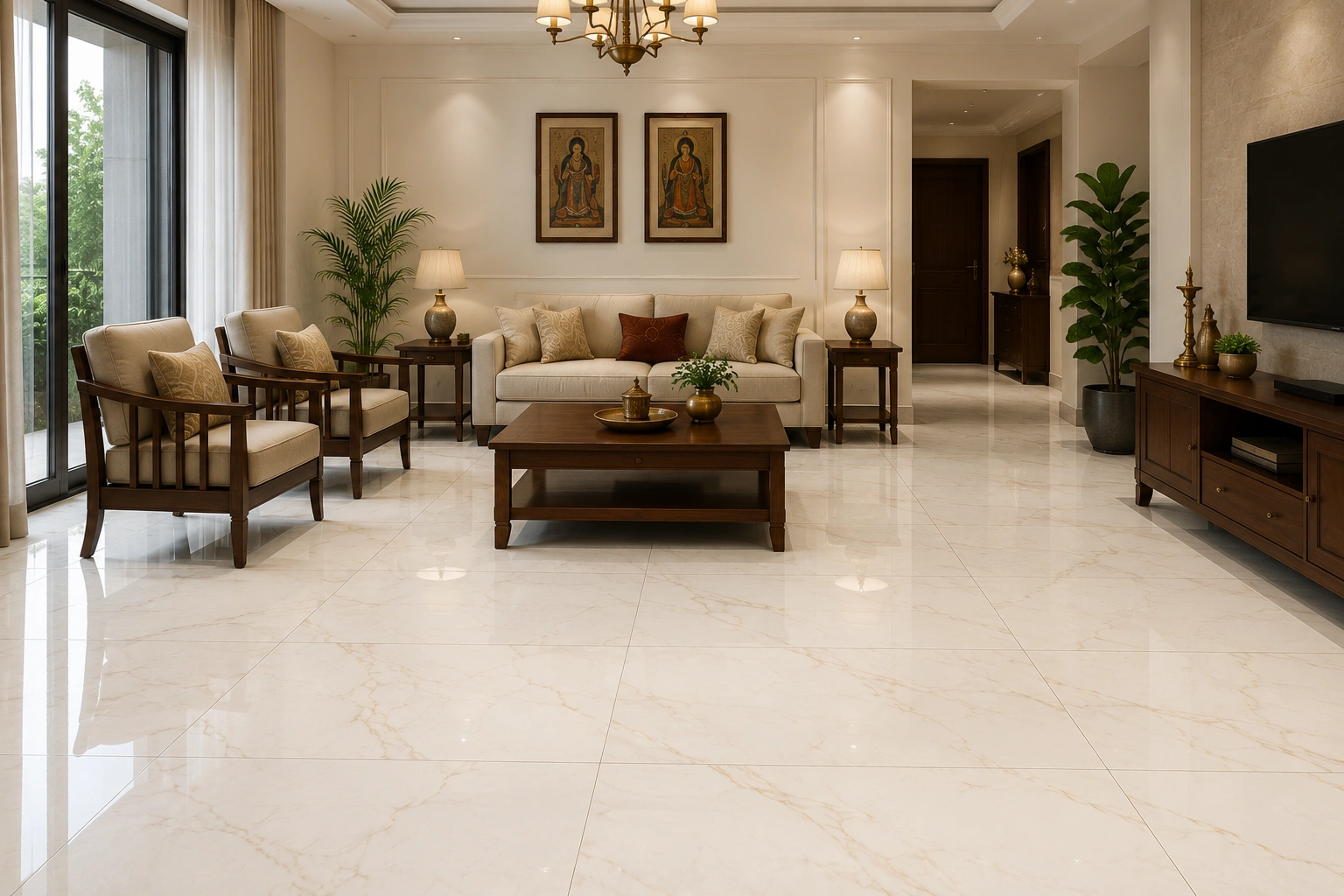
A matte finish GVT tile in a warm white Calacatta marble pattern, laid in a straight stack bond in the 600x1200 mm (2x4) format, is the starting point for most well-designed white living room floors in India today. The warm white base with soft grey or gold veining reads as marble without the maintenance cost of real stone.
This tile works in any Indian living room above 120 sq. ft. The 2x4 format creates fewer grout lines than a 2x2 tile and adds a subtle directionality that makes the room feel longer. Use an off-white or warm ivory grout in a 2 mm rectified joint to keep the surface continuous.
Best for: South or east-facing living rooms in 2BHK and 3BHK apartments. Approximate price: ₹90 to ₹180 per sq. ft. (GVT marble-look).
The 600x1200 mm format remains one of the most versatile choices for modern homes. Explore our 600x1200 Tiles Guide to learn where this size performs best and how to use it effectively.
Idea 2: High-Gloss PGVT White Floor for a Hotel-Lobby Feel
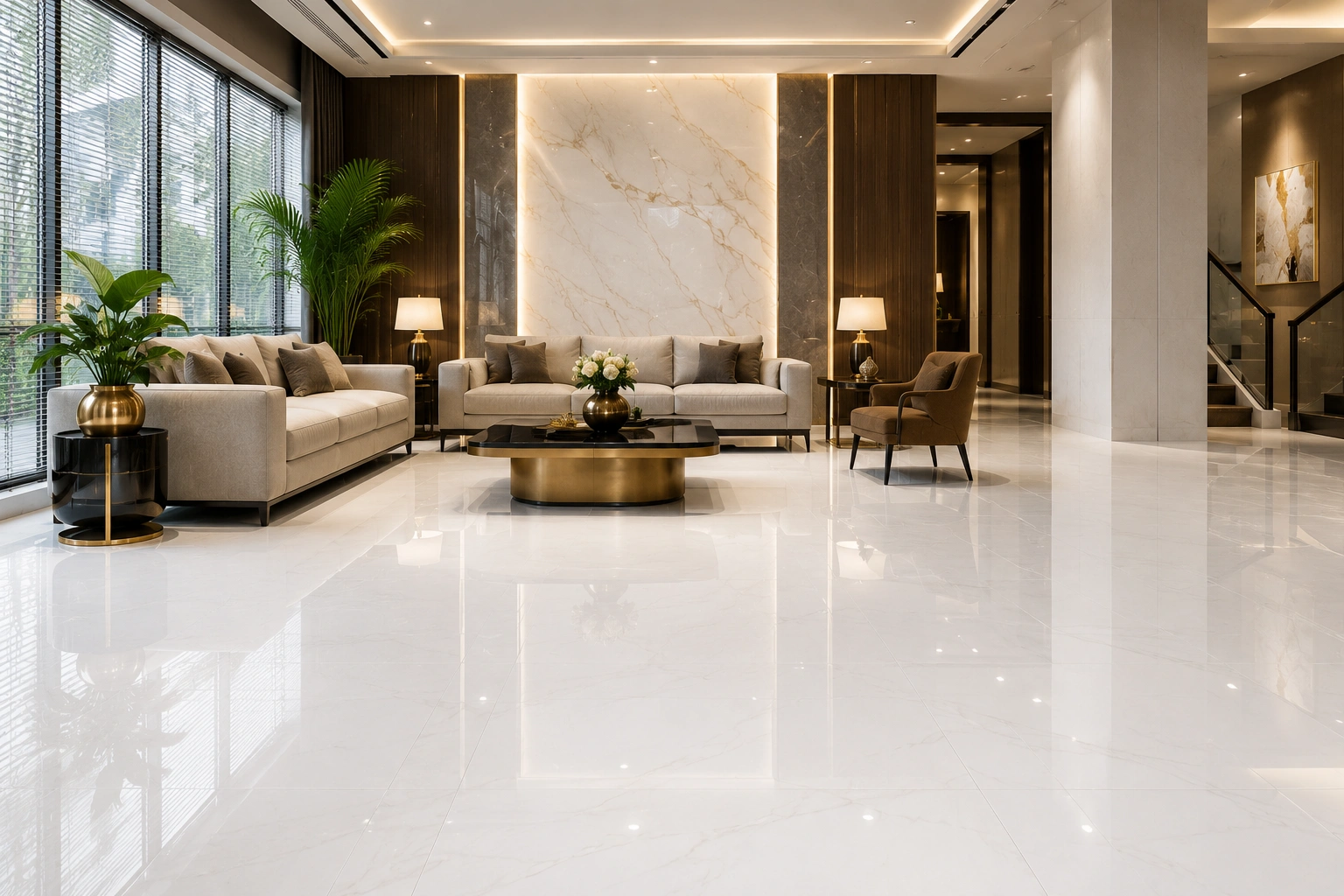
A polished PGVT white tile in a Statuario or plain white design in the 32x64 (800x1600 mm) format creates the reflective, hotel-lobby quality that premium apartment living rooms aim for. The polished surface multiplies the light in the room and gives the floor a depth that no other finish matches.
This tile is an indoor-only, dry-area specification. It should not be used in wet zones or outdoor areas. It suits 4BHK apartments and independent villas where the living room has controlled foot traffic and is mopped with a damp (not wet) mop. Avoid this finish in homes with very young children or elderly family members where slip safety on a polished floor is a concern.
Best for: Premium living rooms in independent villas and high-rise 4BHK apartments. Approximate price: ₹120 to ₹280 per sq. ft. (PGVT polished).
Large-format white PGVT floors are increasingly specified in premium interiors. See our 800x1600 Tiles guide to understand why this size has become a preferred choice for spacious living rooms.
Idea 3: Cream and Off-White Tile Floor for a Warm Neutral Base
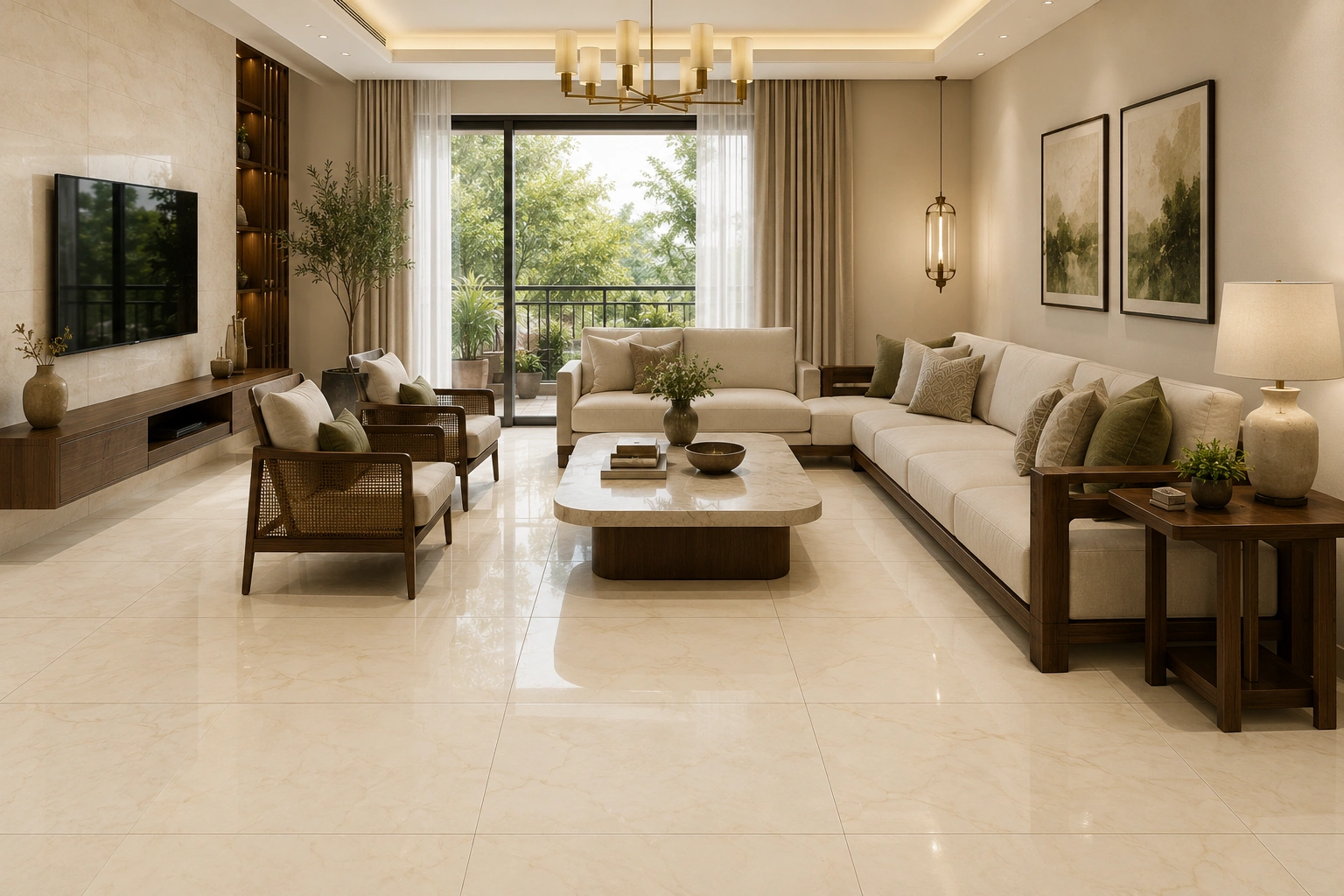
Pure bright white tiles can feel clinical in Indian homes with warm-toned teak or sheesham furniture. Cream and off-white GVT tiles in a matte or Posh finish solve this by giving the floor the lightness of white without the cold contrast against warm wood.
Cream-toned GVT tiles in the 2x4 format laid in a brick bond pattern suit traditional and transitional Indian living room styles particularly well. The warm base tone brings out the richness of wooden furniture and brass accents rather than fighting against them.
Best for: Traditional and transitional Indian living rooms with warm wood furniture. Approximate price: ₹80 to ₹160 per sq. ft. (GVT matte).
Idea 4: White Concrete-Look Tiles for a Contemporary Edge
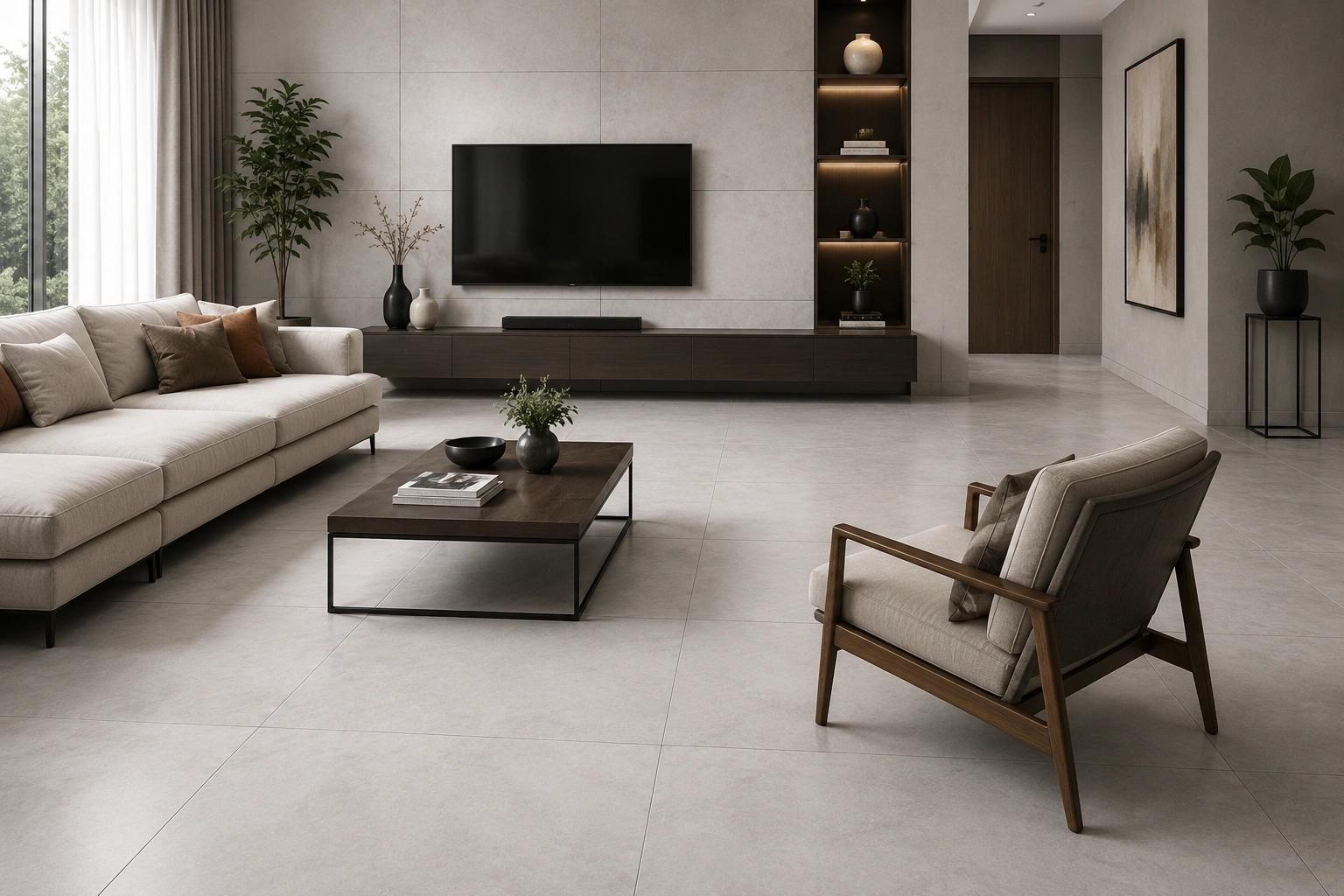
White and pale grey concrete-look GVT tiles in matte finish bring a quiet, contemporary quality to living rooms that the marble-look does not. The flat, texture-free surface of a concrete-look tile reads as deliberately minimal, which suits living rooms furnished in Japandi, Scandinavian, or modern Indian styles with clean-lined furniture and natural material accents.
Concrete-look tiles in a large format (32x64 or the 6x4 at 1200x1800 mm) across an open-plan living and dining area create a floor that feels like a single continuous surface. The absence of veining or pattern means the furniture and artwork become the visual focus.
Best for: Contemporary open-plan living rooms in premium apartments. Approximate price: ₹100 to ₹200 per sq. ft. (GVT matte, large format).
Idea 5: White Patterned Floor Tiles as a Drawing Room Centrepiece
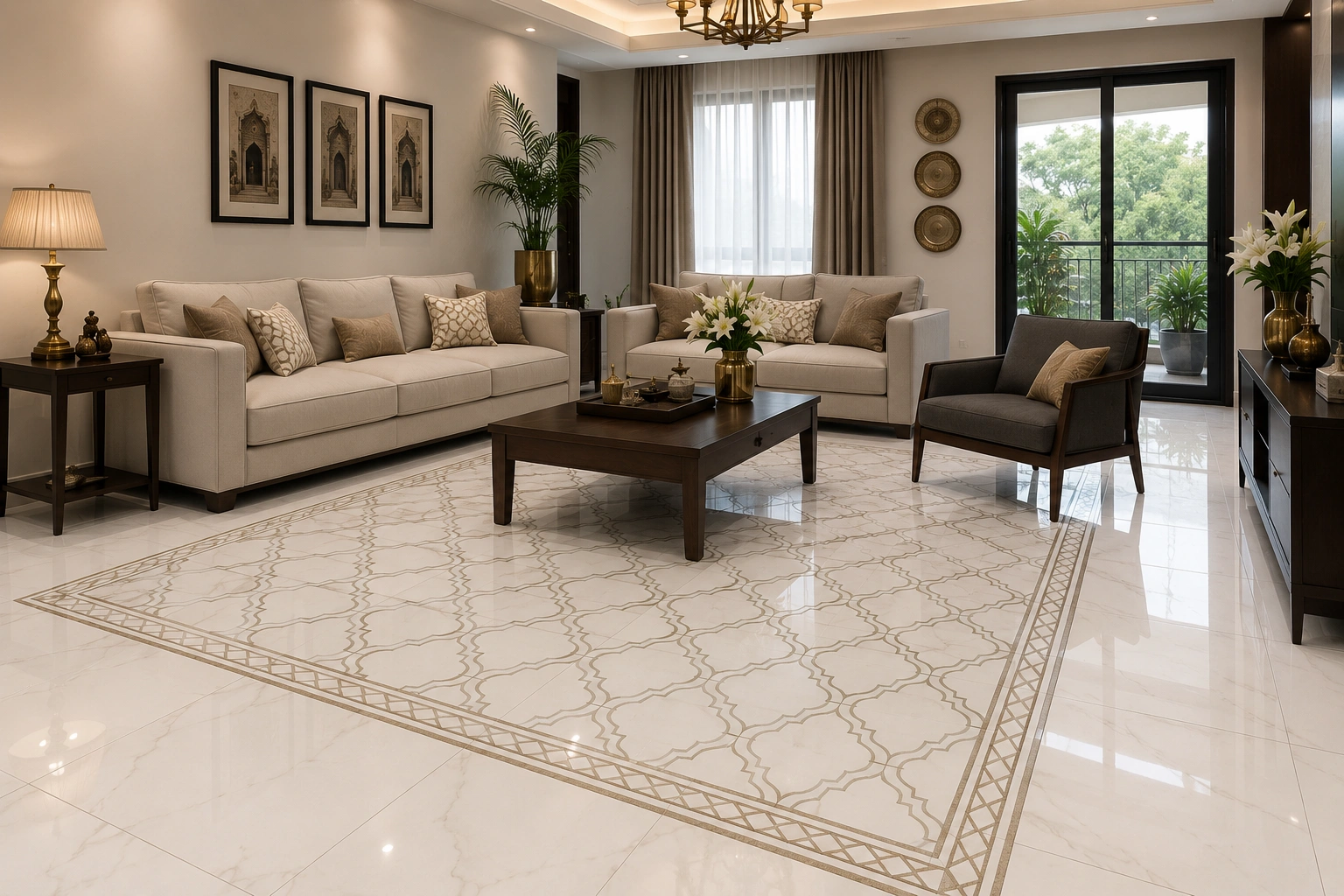
Geometric patterned white tiles in a 600x600 mm (2x2) format, placed in the centre of the drawing room as a centrepiece area under the main seating arrangement, add visual interest to an otherwise plain white floor without committing the entire room to a pattern. This technique comes from Spanish and Moroccan tile traditions and reads beautifully in Indian homes with traditional or eclectic furnishing styles.
The surrounding floor in a plain white or off-white GVT tile frames the patterned centre without competing with it. This two-tile approach also allows the homeowner to change the centrepiece rug placement without the pattern looking wrong from any angle.
Best for: Traditional and eclectic Indian living rooms. Approximate price: ₹120 to ₹280 per sq. ft. for the patterned centrepiece tiles.
Idea 6: White Herringbone Floor for a Boutique Hotel Effect
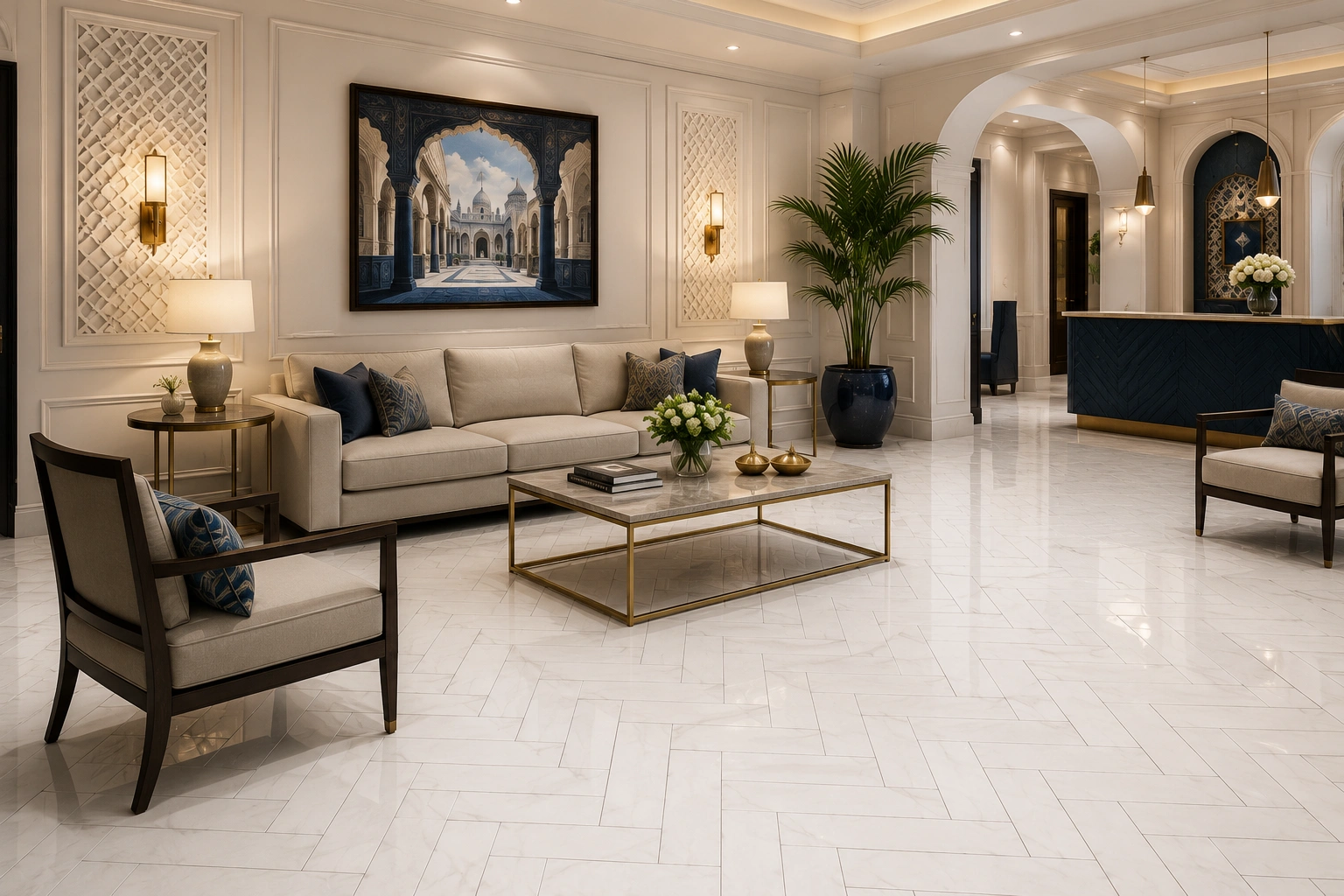
White GVT tiles in a 2x4 (600x1200 mm) format laid in a herringbone pattern create a floor surface with far more visual dynamism than the same tile in a stack or brick bond. The angled arrangement catches light differently at different times of day, and the V-shaped geometry reads as a design choice rather than a default installation.
Herringbone with white tiles works particularly well in living rooms with high ceilings and generous natural light. The pattern adds complexity at the floor level that balances a large, open room without needing heavy furniture or wall decoration to fill the space.
Budget an additional 15 to 20% tile wastage for the angled cuts in herringbone layouts, and confirm your tile contractor has experience with this pattern before committing. Best for: Large premium living rooms in independent villas. Approximate price: Tile cost plus 30 to 40% higher installation charge versus straight-lay.
Idea 7: White Full Body Floor Tile for Commercial-Quality Durability
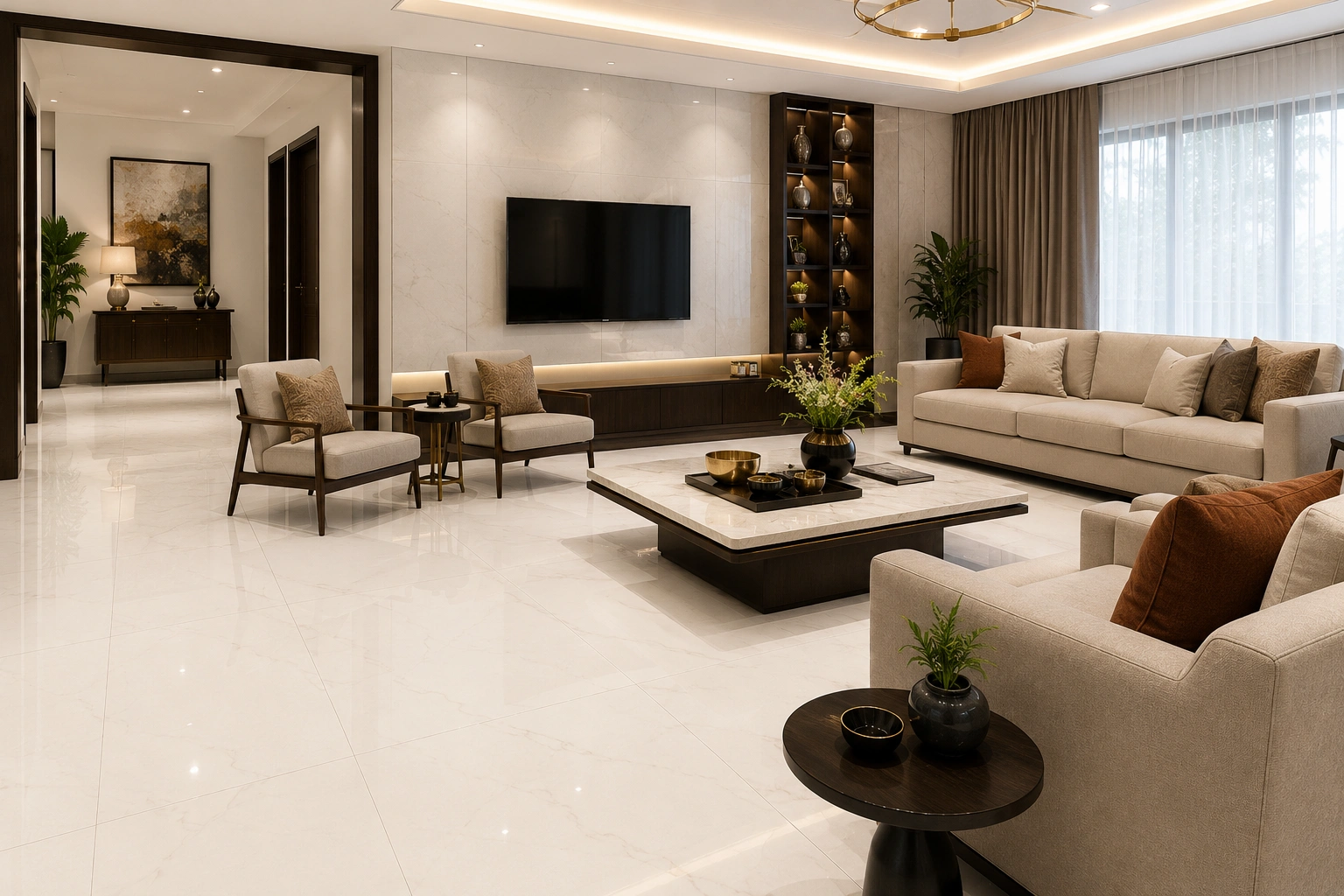
For living rooms in joint family homes or ground-floor flats with very high daily footfall, white Full Body GVT tiles in a matte or GHR finish give the durability of commercial-grade tile in a residential design. Full Body tiles carry their colour and texture through the entire tile thickness, so chipping at edges near doorways does not expose a different-coloured core.
White Full Body tiles in the 2x4 or 32x64 format in a matte white or lightly textured stone finish look indistinguishable from standard GVT tiles in day-to-day use but hold up significantly better over a decade of high-traffic use.
Best for: Ground-floor homes, joint family living rooms, homes with heavy footfall. Approximate price: ₹100 to ₹200 per sq. ft. (Full Body GVT).
Idea 8: Soft White Travertine-Look Floor
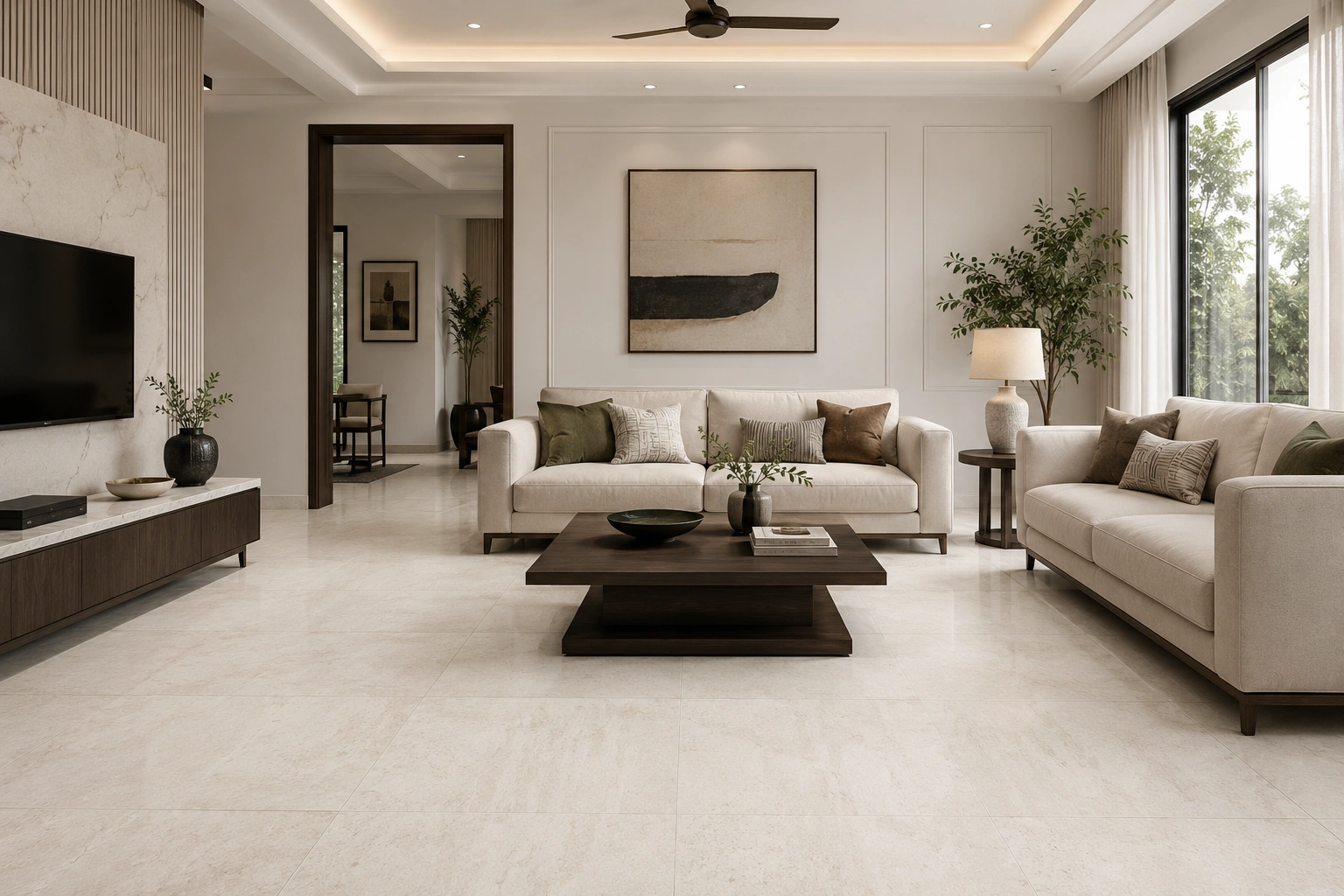
White and pale cream travertine-look GVT tiles in matte finish bring the look of natural Roman stone into Indian living rooms without the sealing, polishing, and staining concerns of real travertine. The subtle pitted texture of a travertine-look tile in matte finish adds warmth and depth to a white floor that plain marble-look tiles do not.
Travertine-look tiles in a 32x64 format suit contemporary Indian living rooms that use natural materials: rattan furniture, jute rugs, wooden accents, and terracotta pottery. The slightly earthy quality of the travertine pattern bridges the gap between a white floor and warm, natural material furnishings.
Best for: Contemporary Indian living rooms with natural material furnishing styles. Approximate price: ₹110 to ₹220 per sq. ft. (GVT matte marble/travertine-look).
Idea 9: White Bookmatched Floor for Open-Plan Premium Spaces
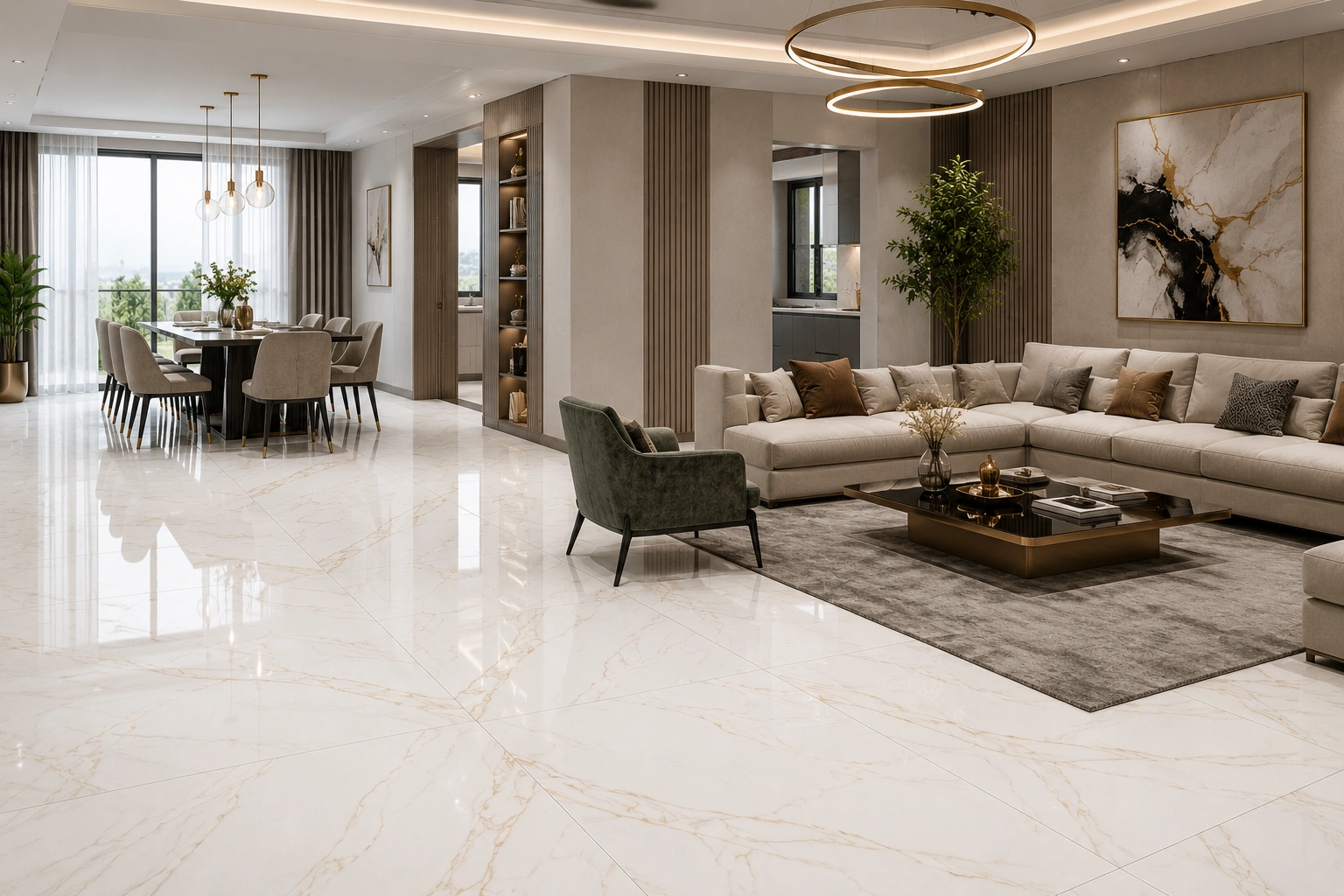
In large open-plan living and dining areas above 400 sq. ft., a bookmatched white marble-look PGVT tile in the 32x96 (800x2400 mm) slab format creates a floor with near-zero grout lines and a mirrored veining pattern that reads like a single continuous slab of stone. The visual impact at this scale is difficult to achieve with any other floor treatment.
This specification is for premium villas and 4BHK apartments where the visual ambition matches the budget. The installation requires specialist tile fixers experienced in slab-format tiles, polymer-modified adhesive, and levelling clip systems throughout.
Best for: Luxury villas and large premium 4BHK open-plan living areas. Approximate price: ₹180 to ₹400 per sq. ft. material, plus ₹100 to ₹180 per sq. ft. installation.
Idea 10: White and Warm Wood Combination Floor
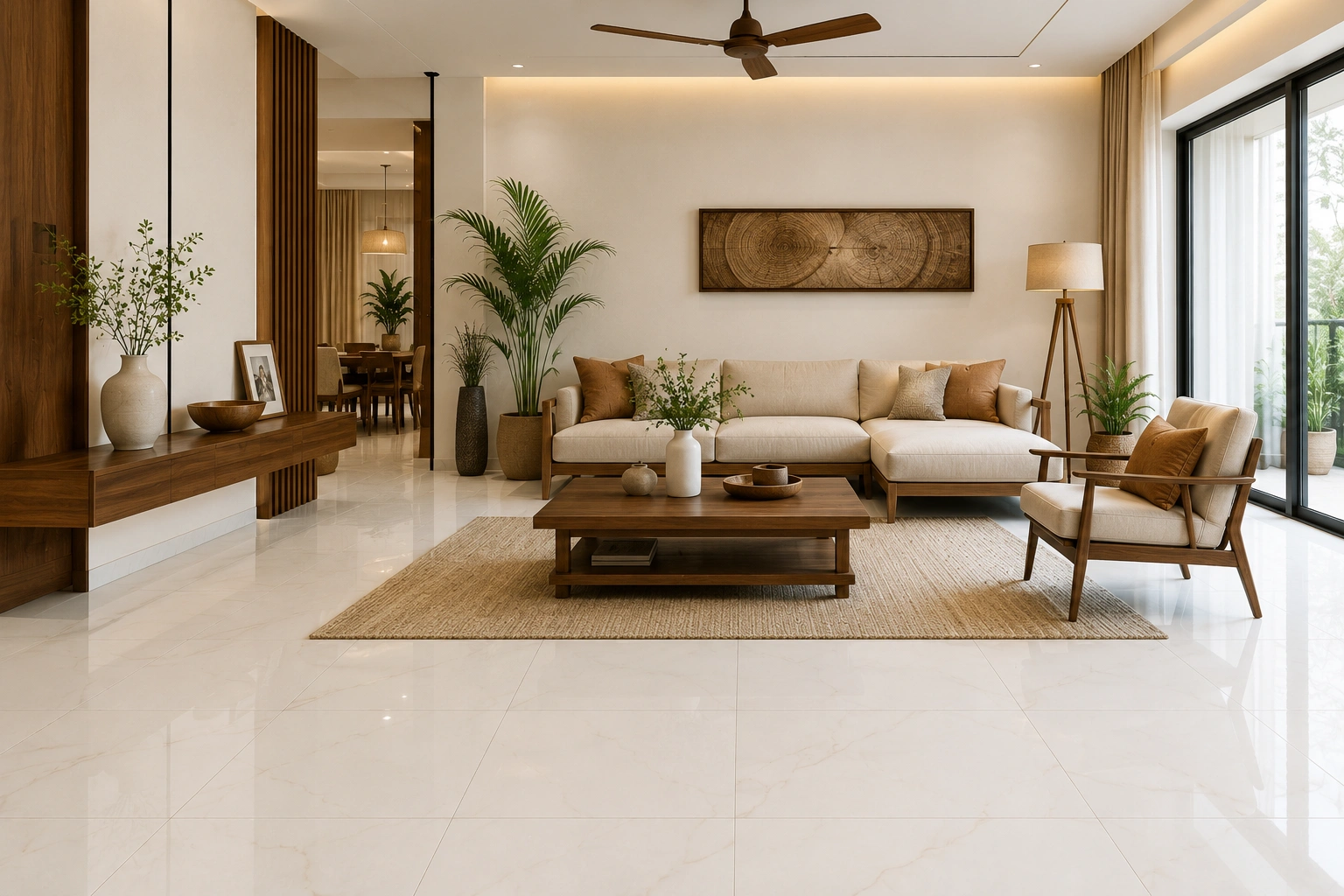
A white GVT tile in the main living area transitioning into a warm wood-look GVT plank tile (8x48, 200x1200 mm) in the adjoining study nook or TV wall alcove creates a floor that defines two zones within one open plan without needing a physical partition. This zoning approach is used frequently in compact Indian 2BHK and 3BHK apartments where the floor plan combines the drawing room and a workspace corner.
The white tile reads as the primary living zone. The wood-look plank reads as the warmer, more private zone. The transition at a natural threshold or a low step defines the two areas architecturally.
Best for: Open-plan 2BHK and 3BHK apartments with multi-use living room layouts. Approximate price: ₹80 to ₹160 per sq. ft. for white GVT, ₹90 to ₹180 per sq. ft. for wood-look plank tiles.
10 White Tile Wall Design Ideas for Living Room Feature Walls
Idea 11: Full-Height White Marble-Look PGVT Feature Wall
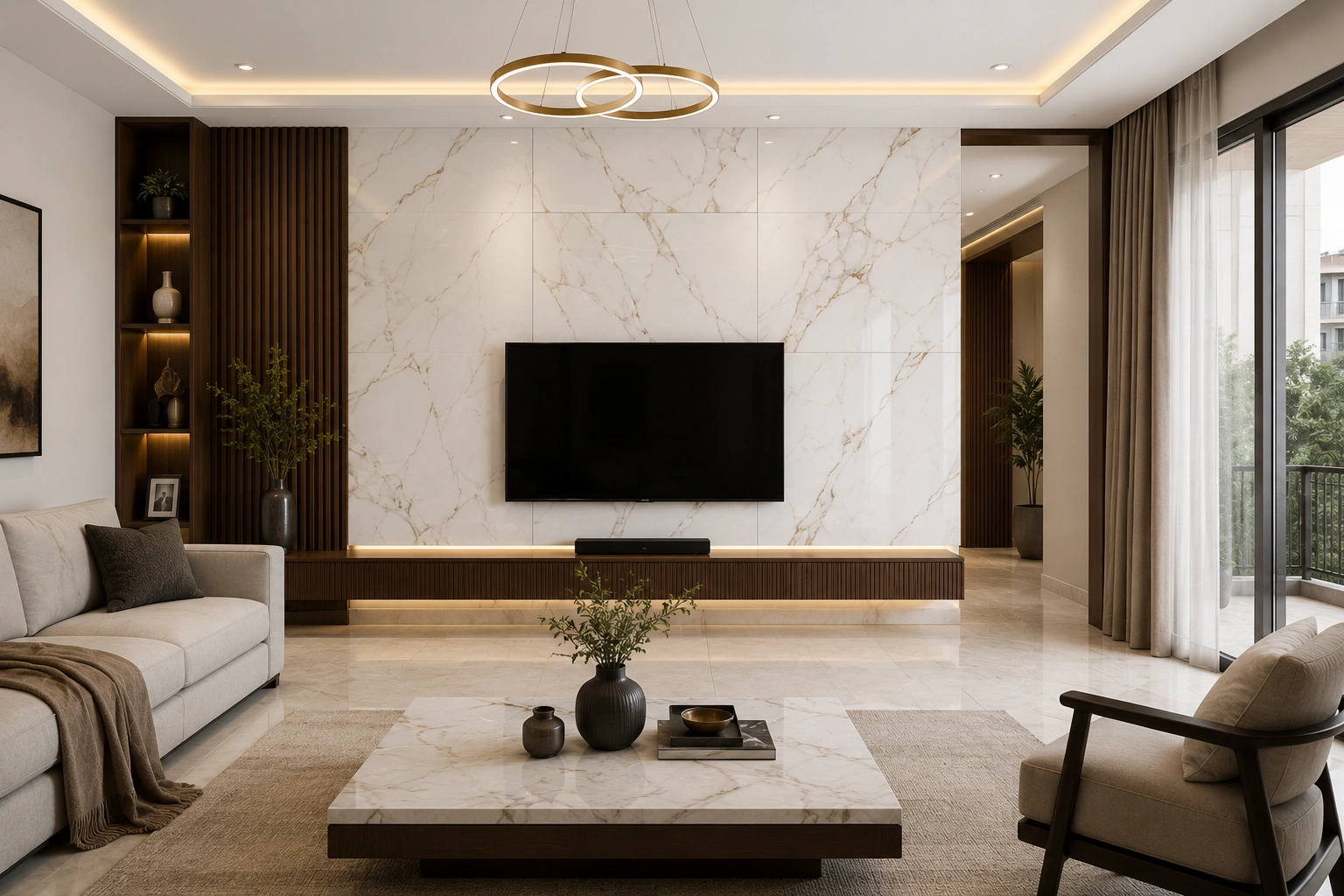
A floor-to-ceiling white Calacatta or Statuario PGVT feature wall behind the main sofa is the single most commonly specified white tile design in Indian premium living rooms today. The polished high-gloss surface amplifies depth and light in the veining pattern, and the tall vertical format in a 32x64 or 8x4 (1200x2400 mm) tile creates an almost seamless stone surface with very few horizontal grout lines.
This feature wall works best when the rest of the room keeps its material palette simple: a plain ceiling, a neutral floor in matte finish, and furniture that does not compete with the wall's visual strength. One statement wall, done with full commitment, carries the entire room.
Idea 12: White 3D Textured Feature Wall
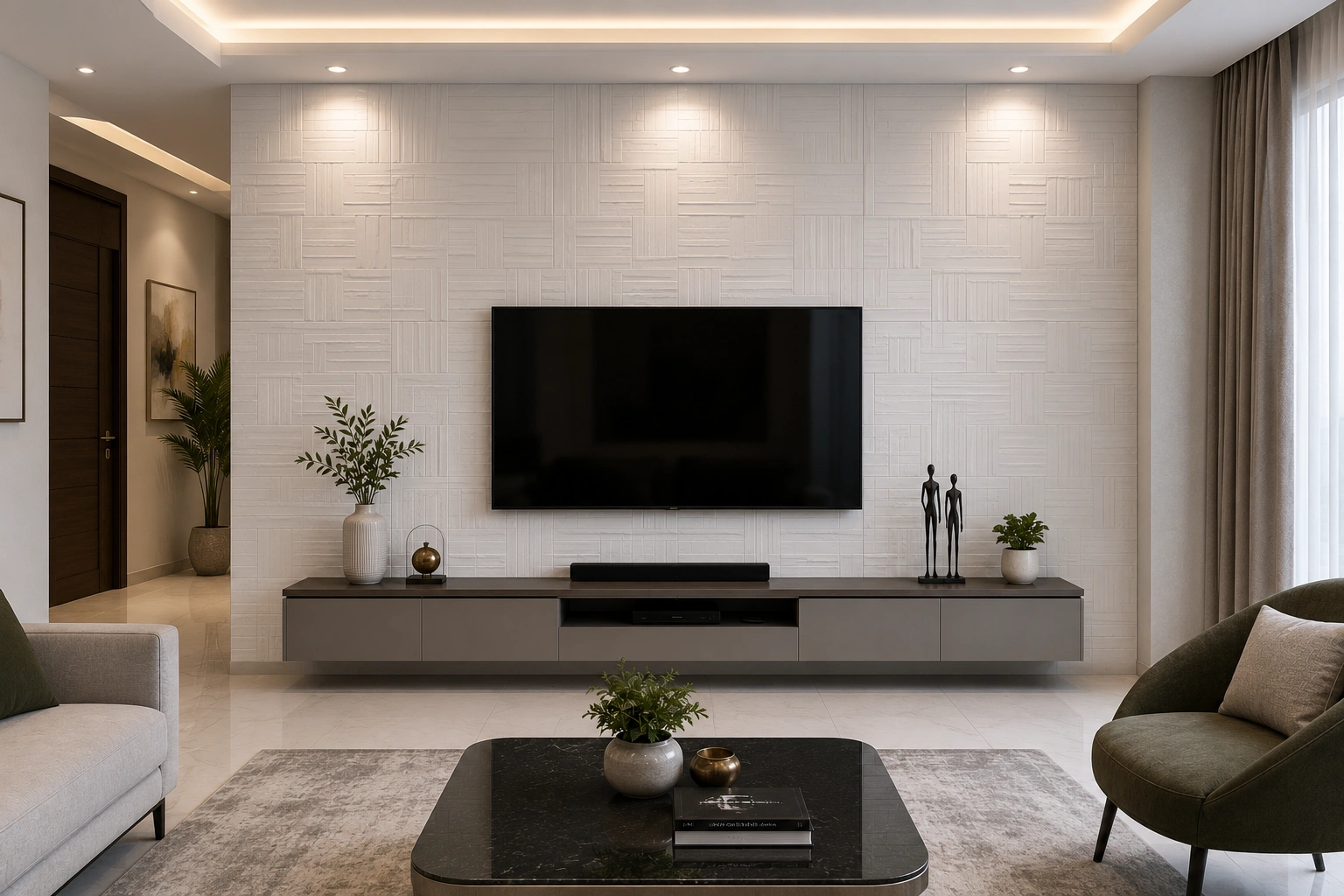
White GVT tiles with a three-dimensional embossed or abstract punch pattern on the surface create a feature wall that catches and plays with light throughout the day. In Indian living rooms where the afternoon sun comes in from a side window, a textured white wall creates changing shadow patterns that make the wall feel alive at different hours.
White textured 3D tiles are wall-only applications. They work as a single panel behind the sofa, as a TV wall accent, or as a full room feature behind the dining table in an open-plan layout. Avoid using heavily textured tiles across all four walls of a room, as the effect becomes visually exhausting.
Idea 13: White Subway Tile Wall for a Classic Drawing Room
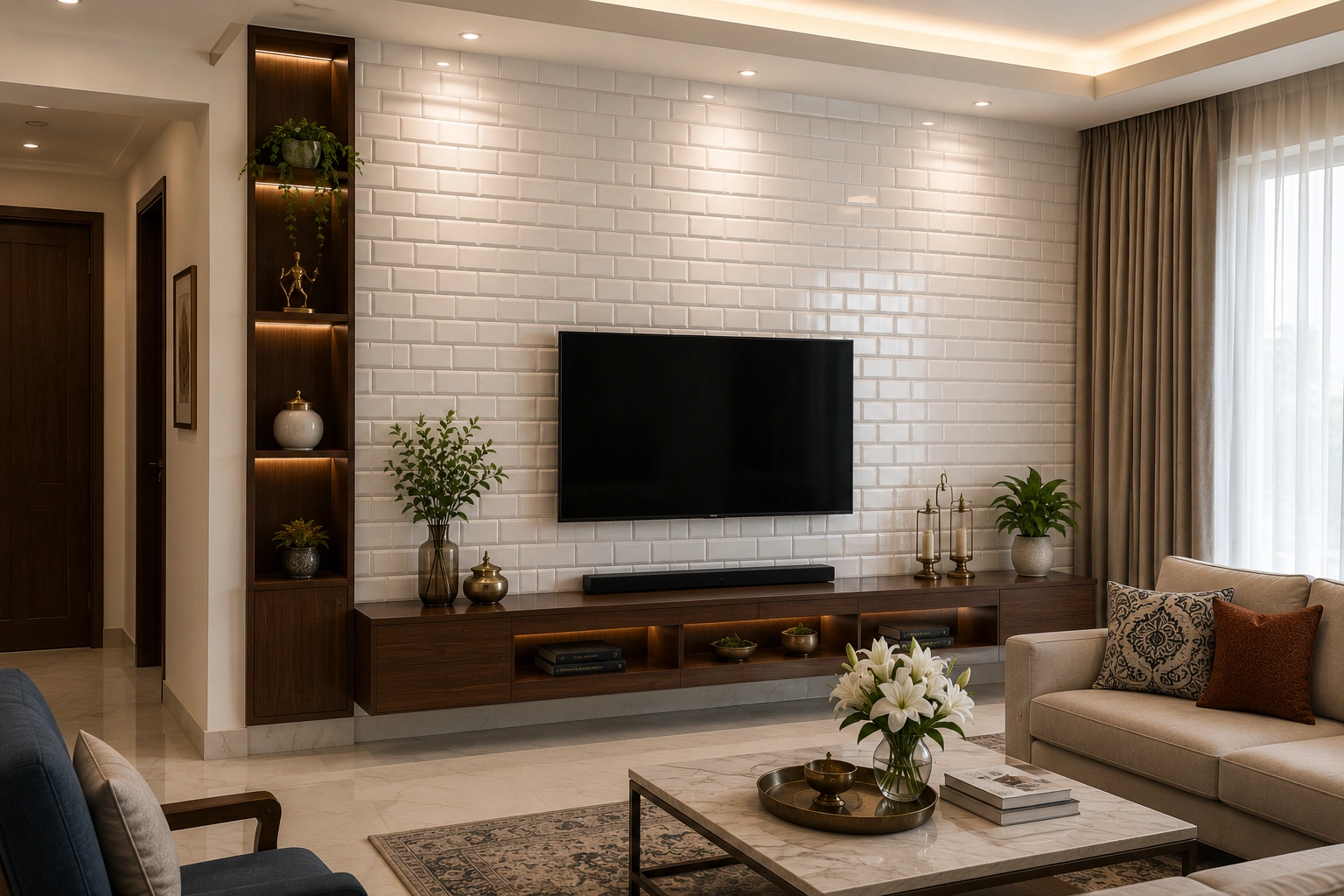
White ceramic subway tiles in a 12x24 (300x600 mm) format laid in a horizontal brick bond on one living room wall create a classic, timeless look that reads as intentional without being dramatic. This wall tile treatment originated in early 20th-century New York but has been adopted across Indian contemporary and transitional living rooms as a clean backdrop for art, shelving, and gallery walls.
White ceramic 12x24 tiles are wall-only. Their relatively lower price point (approximately ₹30 to ₹70 per sq. ft.) makes them accessible for larger accent wall treatments and for renters who want to add a designed quality to a flat before handing back possession.
Idea 14: White Bookmatched Feature Wall Behind the Sofa
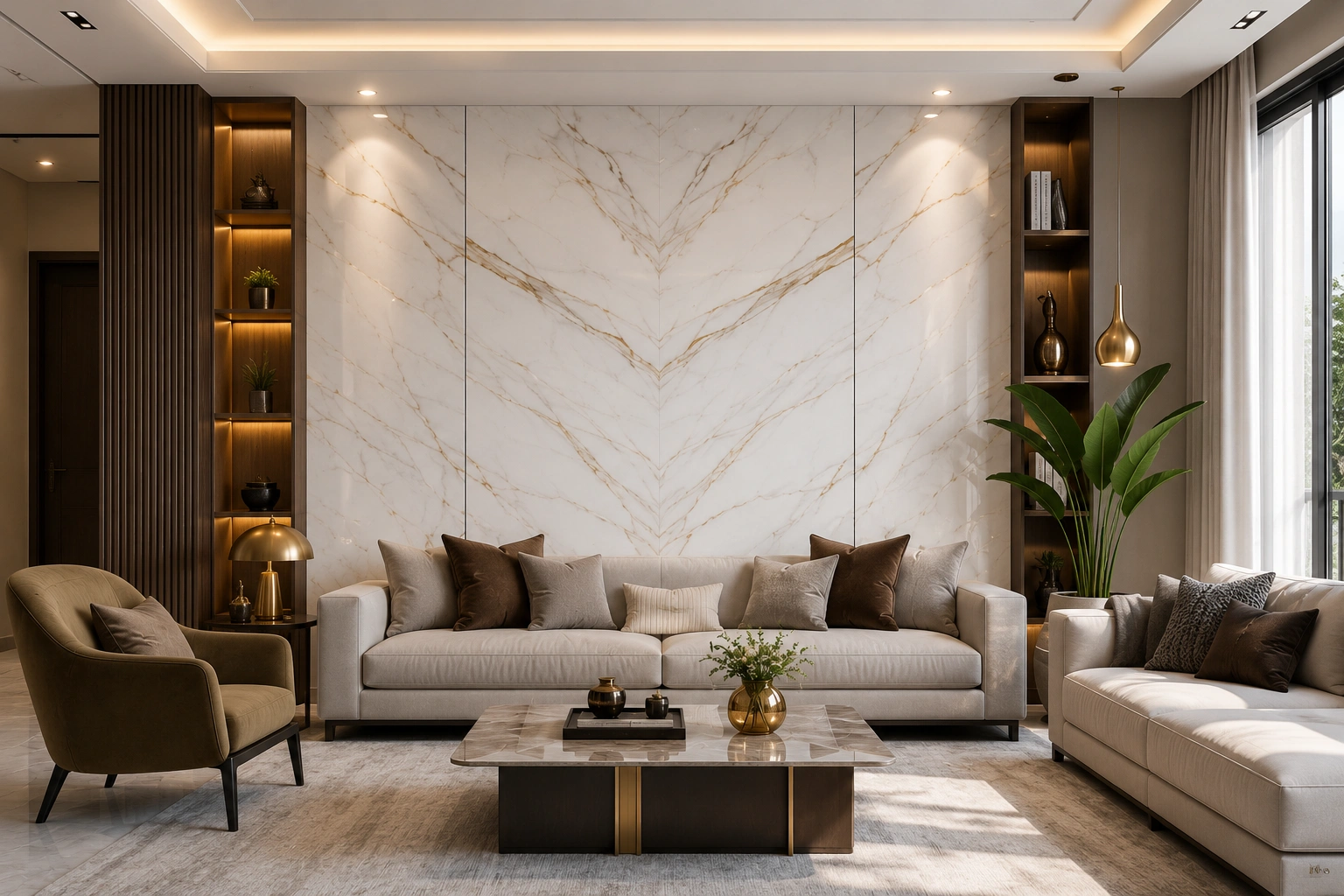
Two or four 32x64 white PGVT tiles with a bookmatched Calacatta marble pattern placed symmetrically behind the sofa create a mirrored stone effect that reads like a single large artwork. In a living room where the television is mounted on the opposite wall, the bookmatched wall becomes the room's second focal point and balances the space visually.
This design works best with a warm ivory or pale gold grout in a 2 mm rectified joint to maintain the illusion of a single continuous stone surface. Pair with wall-wash LED lighting from ceiling recesses to bring out the depth of the veining pattern after dark.
Idea 15: White Tile Wainscoting with Painted Upper Wall
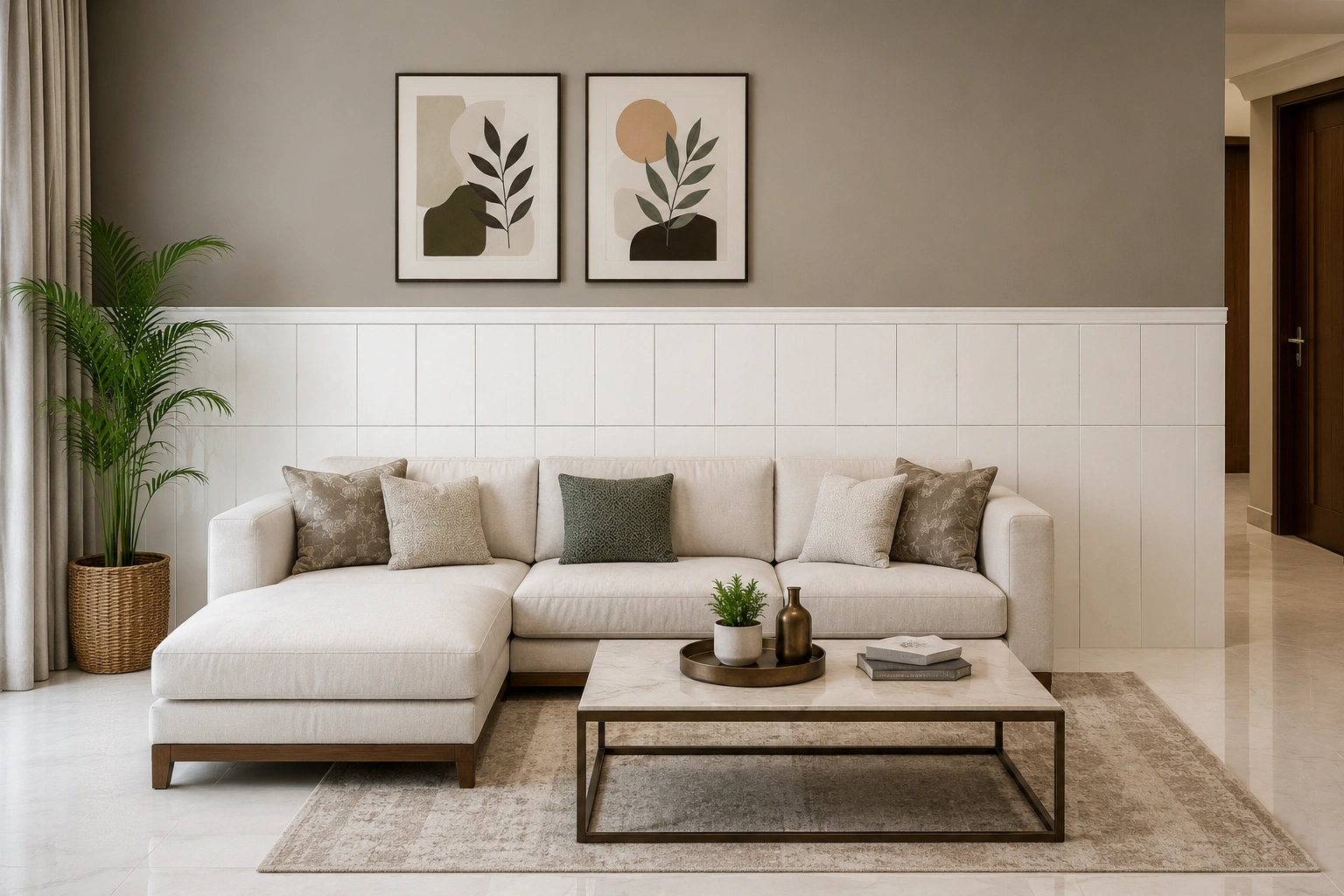
Wainscoting, tiling the lower third to half of a living room wall and leaving the upper portion painted, is an approach that brings the durability and cleanability of tile to the most vulnerable zone of a living room wall (where chair backs, children's hands, and furniture edges cause damage) while keeping the cost lower than full-height tiling.
White GVT tiles in a matte or Posh finish laid to a height of 900 mm to 1200 mm from the floor, with a clean tile-to-paint edge at a cornice line, suit both traditional and contemporary Indian living rooms. The painted upper wall can be in any tone, giving the homeowner flexibility to update the room's colour direction without replacing any tiles.
Idea 16: White Tile TV Unit Backdrop Wall
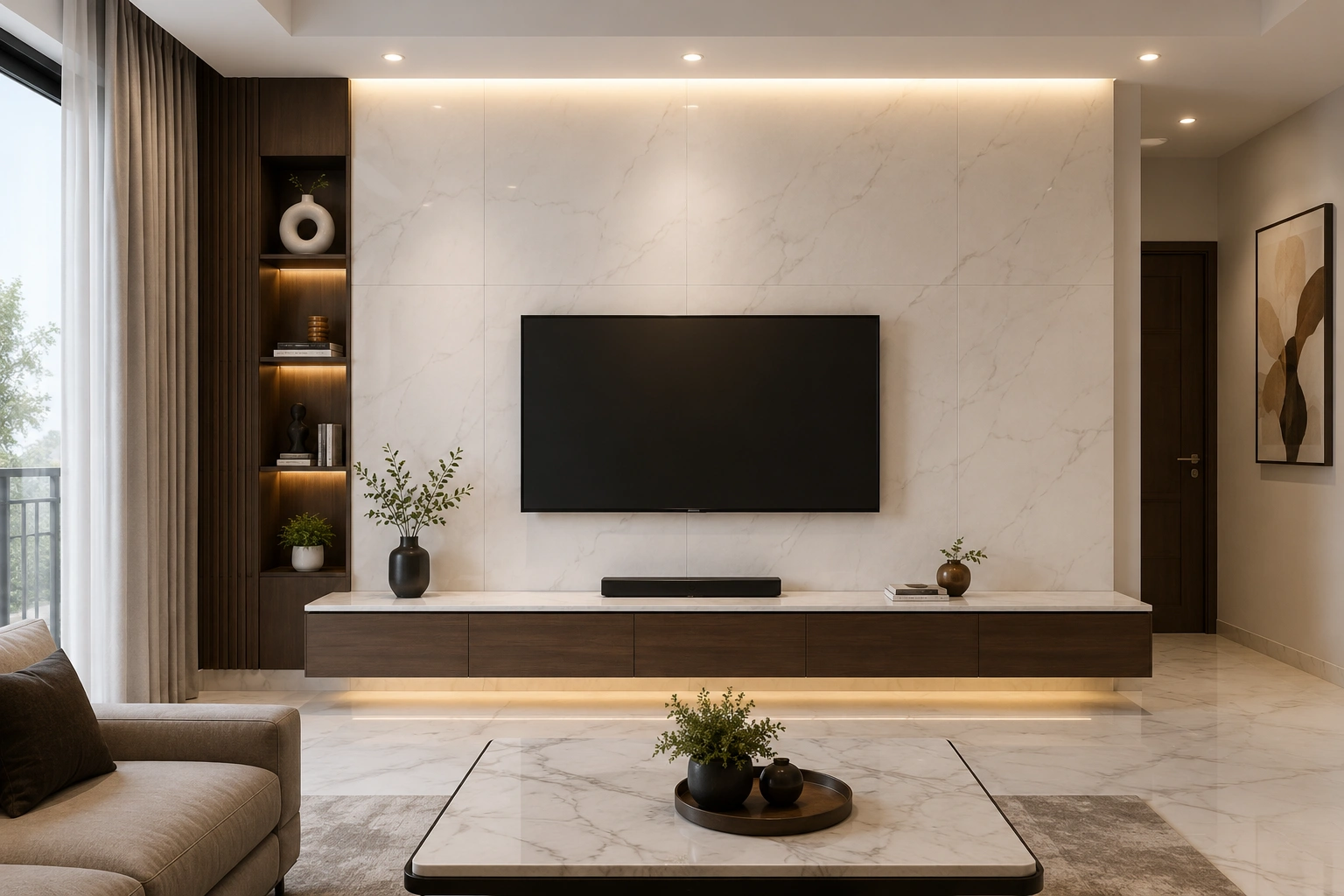
The wall behind a mounted television is one of the most actively designed surfaces in Indian living rooms. White large-format PGVT tiles in the 2x4 or 32x64 format create a sleek, reflective backdrop for a floating TV unit that looks more finished than paint and requires no maintenance beyond occasional wiping.
For TV walls, the tile should be specified in a polished or Posh finish rather than a heavily textured surface, as the television mount and any integrated shelving unit need to be fixed to the tile wall with concealed anchors that sit flat. Matte Carving or embossed tiles make hardware mounting more complicated.
Idea 17: White and Gold Accent Tile Feature Wall
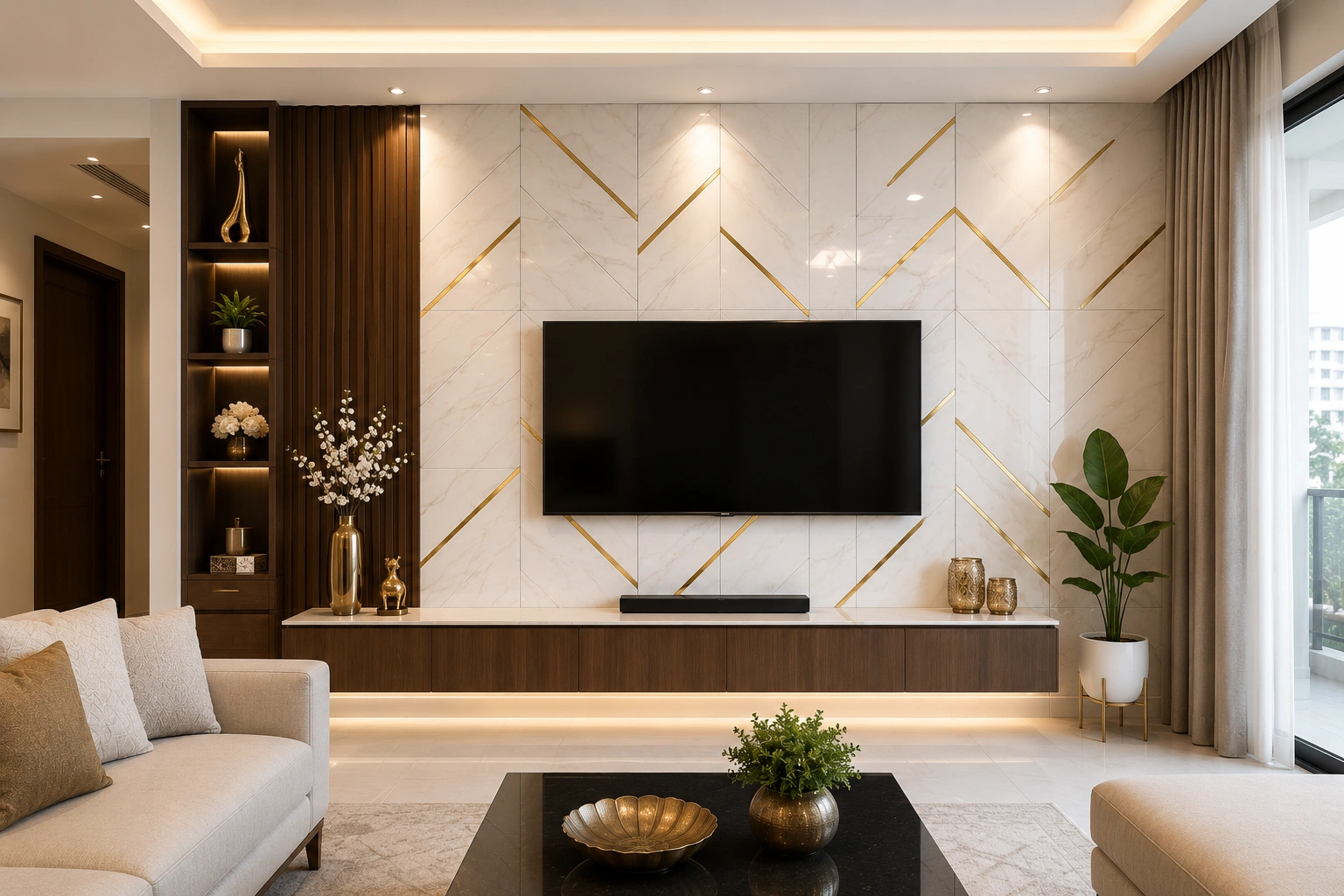
White GVT or PGVT tiles with gold veining in a Calacatta Gold or Portoro Gold marble pattern create a feature wall that suits the warmth of Indian festival lighting and the richness of traditional Indian interior aesthetics. In a living room that carries brass hardware, gold-framed mirrors, and rich fabric upholstery in jewel tones, a white and gold marble wall tile is a natural choice.
The gold veining pattern in these tiles typically comes from digital printing technology on a white GVT or PGVT base. The gold reads as a warm accent against the white ground, rather than a dominant colour, which keeps the wall from feeling heavy.
Idea 18: White Mosaic Tile Border or Accent Strip
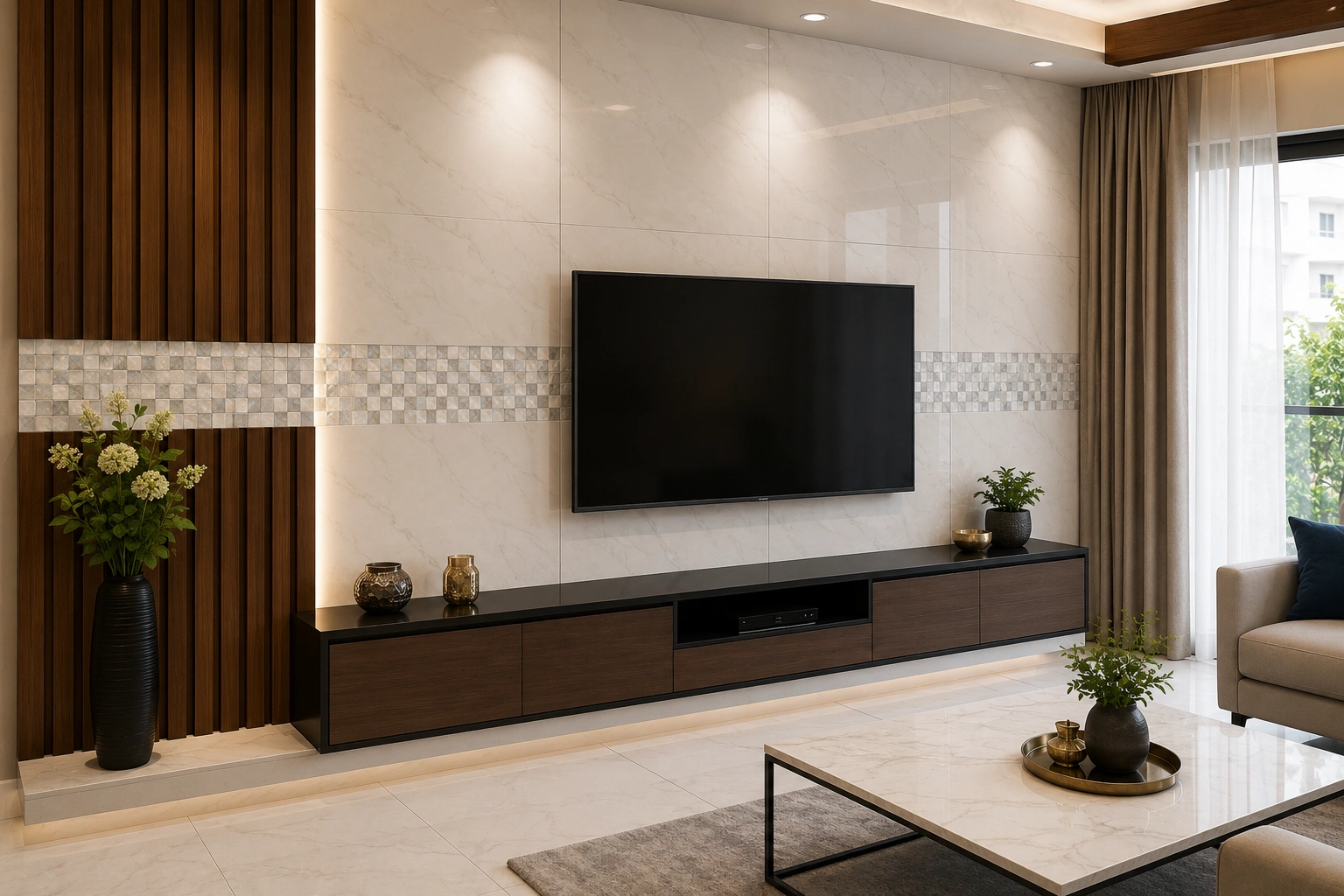
A horizontal strip of white mosaic tiles, typically in a 1x1 (300x300 mm) format with geometric or arabesque pattern, placed as a border between the main floor tile and the wall, or as an accent band across a feature wall, adds architectural definition to the living room without the cost or commitment of a full feature wall.
White mosaic accent strips work particularly well in living rooms that already have plain white GVT floors, where the mosaic strip at the skirting line adds a layer of detail that breaks the uniformity of the all-white surface. This is a lower-cost design move with a disproportionate visual result.
Idea 19: Full-Room White Tile Look with Contrast Dark Grout
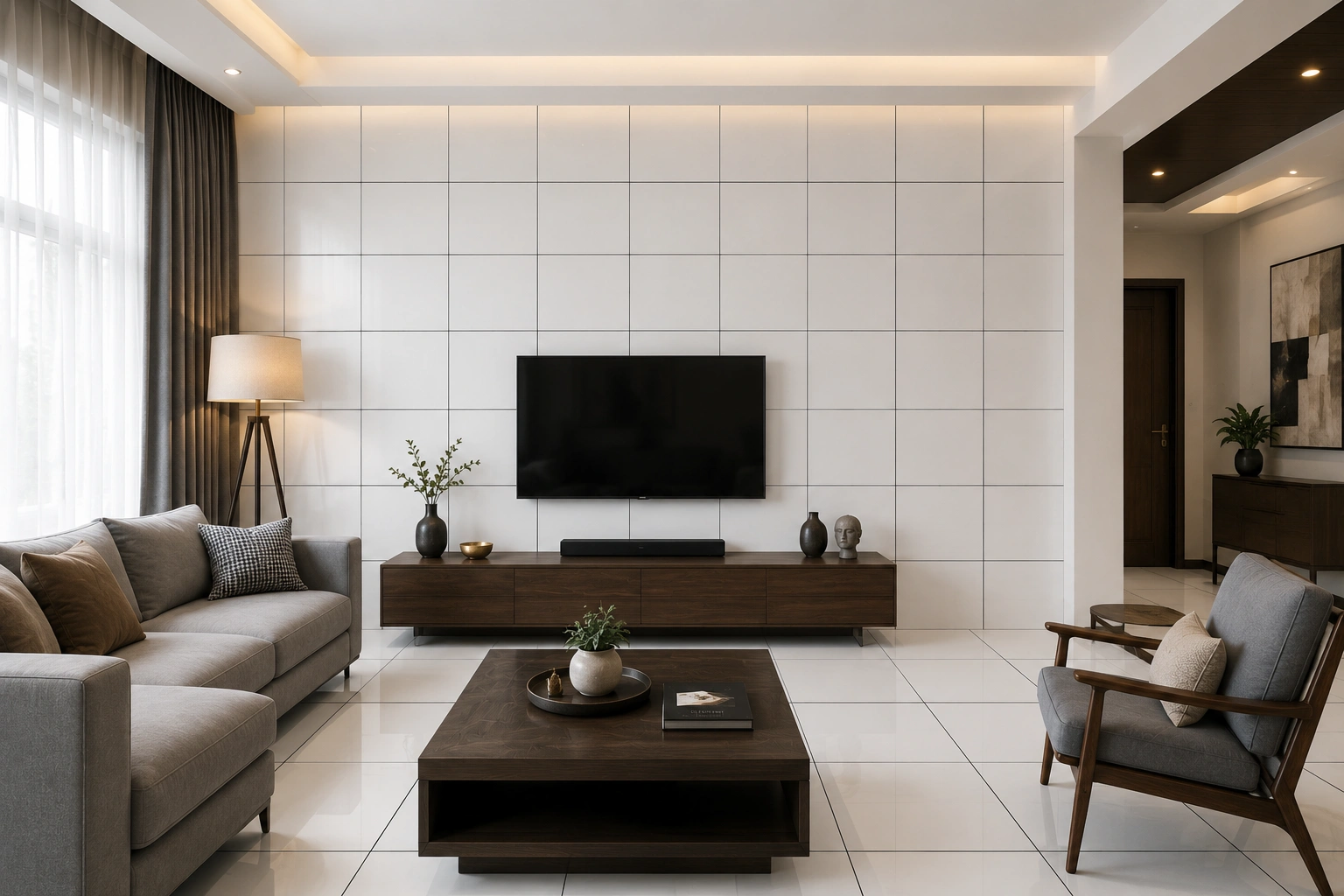
Using a mid-grey or charcoal grout with white GVT floor and wall tiles in a coordinated room creates a graphic, contemporary look that reads as deliberately designed. The dark grout lines create a visible grid that references both historic Moroccan tile aesthetics and contemporary Scandi-industrial design.
This look requires consistent tile sizing and a precise installation. The grout lines become part of the design, so any variation in joint width is immediately visible. It suits living rooms with a strong contemporary or industrial direction and does not suit traditional or transitional Indian interiors, where the graphically imposed grid reads as too urban.
Idea 20: White Stone-Texture Elevation Tiles on Living Room Feature Wall
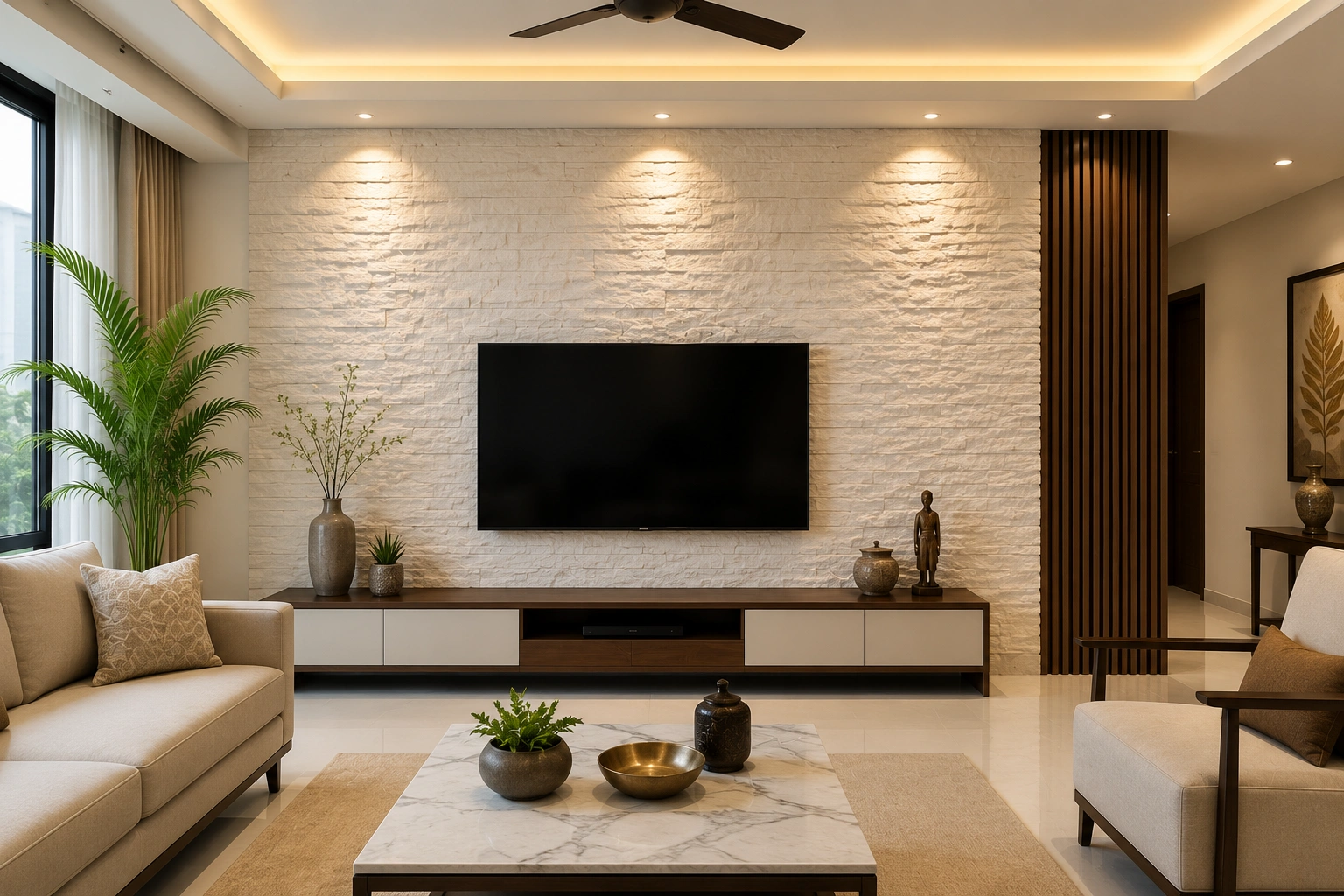
White High Depth punch GVT tiles in a 12x18 (300x450 mm) or 12x24 (300x600 mm) format, with 2.5 to 5 mm surface depth, giving the appearance of stacked stone or brick relief, create a textured white elevation wall that adds strong three-dimensional character to a living room without paint or wallpaper. These are wall-only tiles, and the deep texture catches shadows beautifully.
This wall treatment suits contemporary Indian living rooms that use rustic or industrial elements alongside cleaner design pieces. A textured white stone-effect wall behind a leather sofa with metal-framed shelving creates a strong material contrast that interior designers use to give living rooms a curated, layered quality.
20 White Tile Design Ideas: Quick Reference
| # | Design Idea | Tile Type | Best Format | Best Finish | Best For |
| 1 | Warm white marble-look floor | GVT | 2x4 (600x1200) | Matte / Posh | 2BHK and 3BHK apartments |
| 2 | High-gloss PGVT white floor | PGVT | 32x64 (800x1600) | Polished | Premium dry indoor living rooms |
| 3 | Cream off-white warm base floor | GVT | 2x4 (600x1200) | Matte | Traditional Indian interiors |
| 4 | White concrete-look floor | GVT | 32x64 or 6x4 | Matte | Contemporary open-plan rooms |
| 5 | Patterned centrepiece floor tiles | GVT / Porcelain | 2x2 (600x600) | Matte | Eclectic and traditional styles |
| 6 | White herringbone floor | GVT | 2x4 (600x1200) | Matte | Large premium living rooms |
| 7 | White Full Body floor | Full Body GVT | 2x4 or 32x64 | Matte / GHR | High-traffic and joint family homes |
| 8 | White travertine-look floor | GVT | 32x64 (800x1600) | Matte | Natural material interiors |
| 9 | White bookmatched floor | PGVT | 32x96 (800x2400) | Polished | Luxury villas, large open plans |
| 10 | White and wood combo floor | GVT + GVT plank | 2x4 + 8x48 | Matte | 2BHK and 3BHK multi-zone plans |
| 11 | Full-height marble PGVT feature wall | PGVT | 32x64 or 8x4 | Polished | Premium living room sofa wall |
| 12 | White 3D textured feature wall | GVT embossed | 2x4 or 2x2 | Matte / Abstract | Contemporary Indian rooms |
| 13 | White subway tile accent wall | Ceramic | 12x24 (300x600) | Glossy (wall only) | Classic and transitional rooms |
| 14 | White bookmatched sofa wall | PGVT | 32x64 (800x1600) | Polished | Premium sofa feature wall |
| 15 | White wainscoting + painted wall | GVT | 2x4 or 2x2 | Matte / Posh | Traditional and transitional rooms |
| 16 | White TV wall backdrop | PGVT / GVT | 2x4 or 32x64 | Polished / Posh | TV unit and floating shelf walls |
| 17 | White and gold accent wall | GVT / PGVT | 32x64 | Polished | Festive and traditional rooms |
| 18 | White mosaic accent border | GVT / Porcelain | 1x1 (300x300) | Matte or Glossy | Accent strips and skirting details |
| 19 | White tiles with dark contrast grout | GVT | 2x4 or 2x2 | Matte | Contemporary urban interiors |
| 20 | White stone texture elevation wall | GVT High Depth | 12x18 or 12x24 | High Depth (wall only) | Feature walls in contemporary rooms |
Buying Guide: Choosing White Living Room Tiles
Match the Format to the Room Size
White tiles in a large format (2x4, 32x64, or larger) suit living rooms above 150 sq. ft. and amplify the spacious, continuous quality that makes white floors work so well. In compact rooms under 100 sq. ft., a 2x2 (600x600 mm) format gives a better result because the tile proportions fit the room dimensions without creating oversized cuts along walls.
The general rule: the larger the room, the larger the format you can use. A 300 sq. ft. open-plan living and dining area suits a 32x64 format. A 120 sq. ft. drawing room suits a 2x4. A small urban studio suits a 2x2.
Understanding tile proportions is just as important as colour and finish. Refer to our Tile Sizes Guide to compare popular formats and choose the right dimensions for every room.
Choose Finish Based on the Floor's Actual Use
Polished and high-gloss white tiles look spectacular and suit rooms where the aesthetic outweighs the practical. But in Indian homes with joint families, children, domestic help who mop daily, or pets, matte and Posh finish white GVT tiles are more forgiving. Polished white floors show footprints, mopping residue, and pet prints clearly. Matte white floors hide these far better without sacrificing the brightness of the white colour.
| Situation | Recommended White Tile Finish | Why |
| Premium apartment, low daily traffic | PGVT Polished | Maximum light reflection, hotel quality |
| Family home with children or pets | GVT Matte or Posh | Hides footprints and daily marks |
| Joint family, high daily mopping | GVT Matte or GHR | Most forgiving for daily maintenance |
| North-facing room, limited light | GVT Posh or PGVT Polished | Maximises light reflection |
| South/west-facing, strong afternoon sun | GVT Matte | Reduces glare from direct sun on the floor |
| Feature wall, dry indoor | PGVT Polished or Matte Carving | Visual depth and texture |
| Feature wall, wanting 3D texture | GVT High Depth or Embossed | Shadow play, dimensional quality |
Grout Colour for White Living Room Tiles
White tile floors with white or off-white grout create the most seamless, continuous surface and suit formal and premium living rooms. The near-invisible grout line lets the tile design, whether a plain white or a marble-look, read across the full floor without interruption.
For a more graphic, contemporary look, a mid-grey grout with white tiles creates a visible grid that adds structure to the room. This suits urban contemporary and Japandi-influenced interiors but can feel restless in large open-plan areas where the grid multiplies across a big surface.
Avoid white cement grout on high-traffic Indian living room floors. It discolours within a year under the combination of daily sweeping of residue and mopping. Off-white epoxy grout or a light grey cement grout holds its appearance significantly better in Indian conditions.
Size and Price Reference for White Living Room Tiles
| Tile Type | Format | Approx. Price (per sq. ft.) | Best Application in the Living Room |
| GVT matte (marble-look) | 2x4 (600x1200 mm) | ₹90 to ₹180 | Main floor, all living room sizes |
| GVT matte (plain white) | 32x64 (800x1600 mm) | ₹100 to ₹200 | Large floor areas, open-plan |
| PGVT polished (Calacatta) | 32x64 (800x1600 mm) | ₹130 to ₹280 | Premium floors and feature walls |
| PGVT polished (Statuario) | 8x4 (1200x2400 mm) | ₹160 to ₹350 | Statement feature walls, large villas |
| Full Body GVT (white matte) | 2x4 or 32x64 | ₹100 to ₹200 | High-traffic floors, commercial-grade |
| Ceramic (subway, white gloss) | 12x24 (300x600 mm) | ₹30 to ₹70 | Accent walls only (wall-only size) |
| GVT High Depth (stone texture) | 12x18 or 12x24 | ₹120 to ₹280 | Feature elevation walls only |
Styling White Tile Living Rooms: What Works in Indian Homes
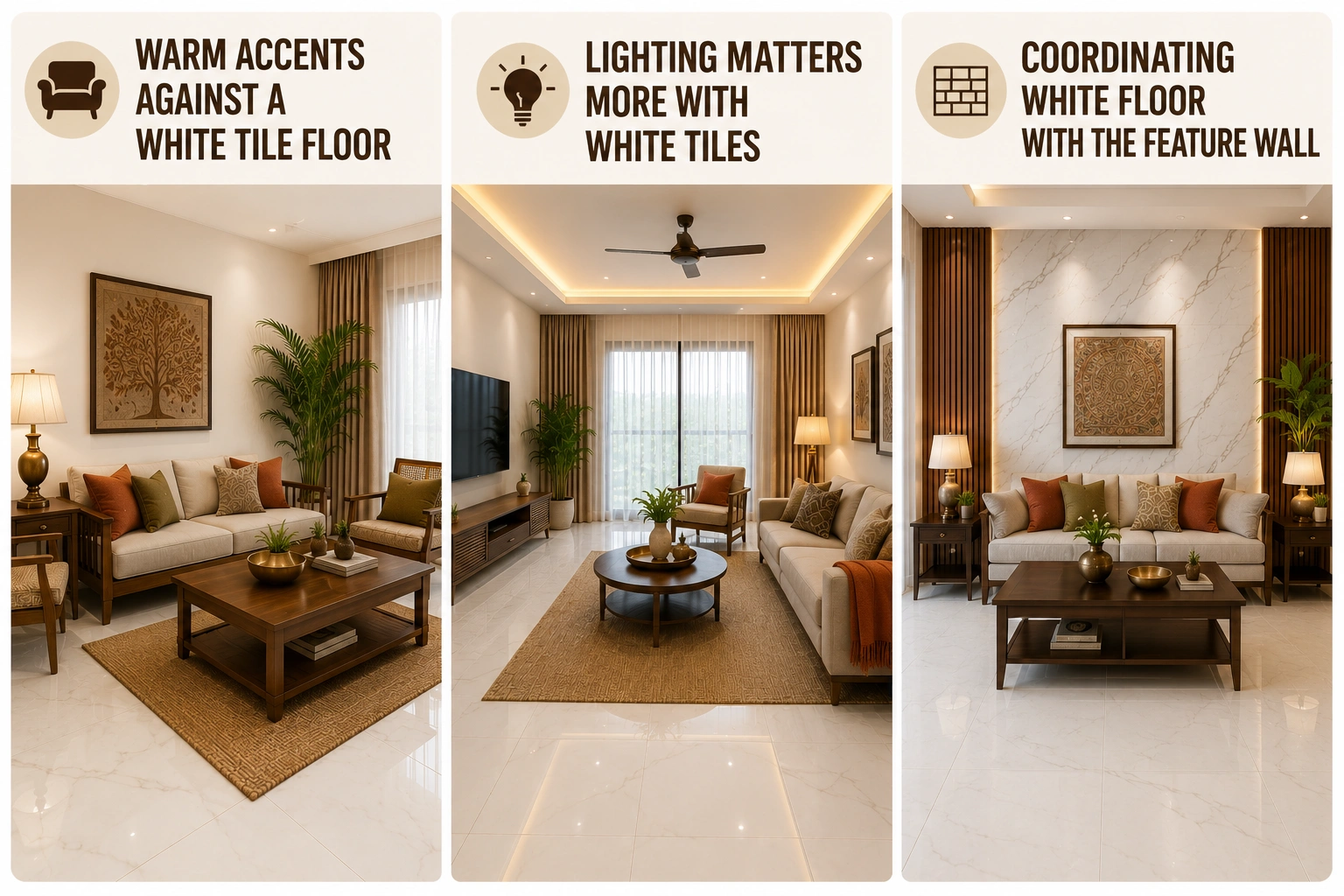
Warm Accents Against a White Tile Floor
White tile floors in Indian living rooms look their best when the furniture and accessory palette leans warm. Teak wood furniture, sheesham wood frames, jute or sisal rugs, brass table lamps, and textiles in burnt orange, dusty rose, terracotta, and olive green all read beautifully against a white floor. The warmth of these tones creates a natural contrast with the cool, clean white base that makes each element more visible and considered.
Avoid placing very light-toned, white, or cream furniture on a white tile floor. The lack of contrast makes the room feel washed out and without depth. The floor needs something to contrast against to do its job effectively.
Lighting Matters More with White Tiles
White tiles reflect whatever light falls on them. In a living room with warm LED strip lighting in the ceiling coving, the white floor takes on a warm cream quality that suits an evening living space. Under cool daylight LEDs, the same floor reads as bright and crisp. Under direct afternoon sun from a west-facing window, a polished white floor creates glare patches.
Consider the lighting type before finalising the finish. Matte white tiles are more forgiving of direct sun than polished tiles. If the living room has strong afternoon sun from a large window, specify matte or Posh finish rather than a polished PGVT tile for the floor.
Coordinating White Floor with the Feature Wall
The most common design combination in Indian premium living rooms today is a white matte floor with a white marble-look PGVT feature wall behind the sofa. The two surfaces use the same tonal direction but different finishes, which creates depth and interest without confusion. The matte floor reads as grounded and quiet. The polished wall reads as dramatic and refined.
This combination also works from a maintenance standpoint. The matte floor hides daily marks. The polished wall, which sees no foot traffic or mopping, maintains its reflective quality with occasional dry cloth wiping.
Common Mistakes with White Living Room Tile Designs
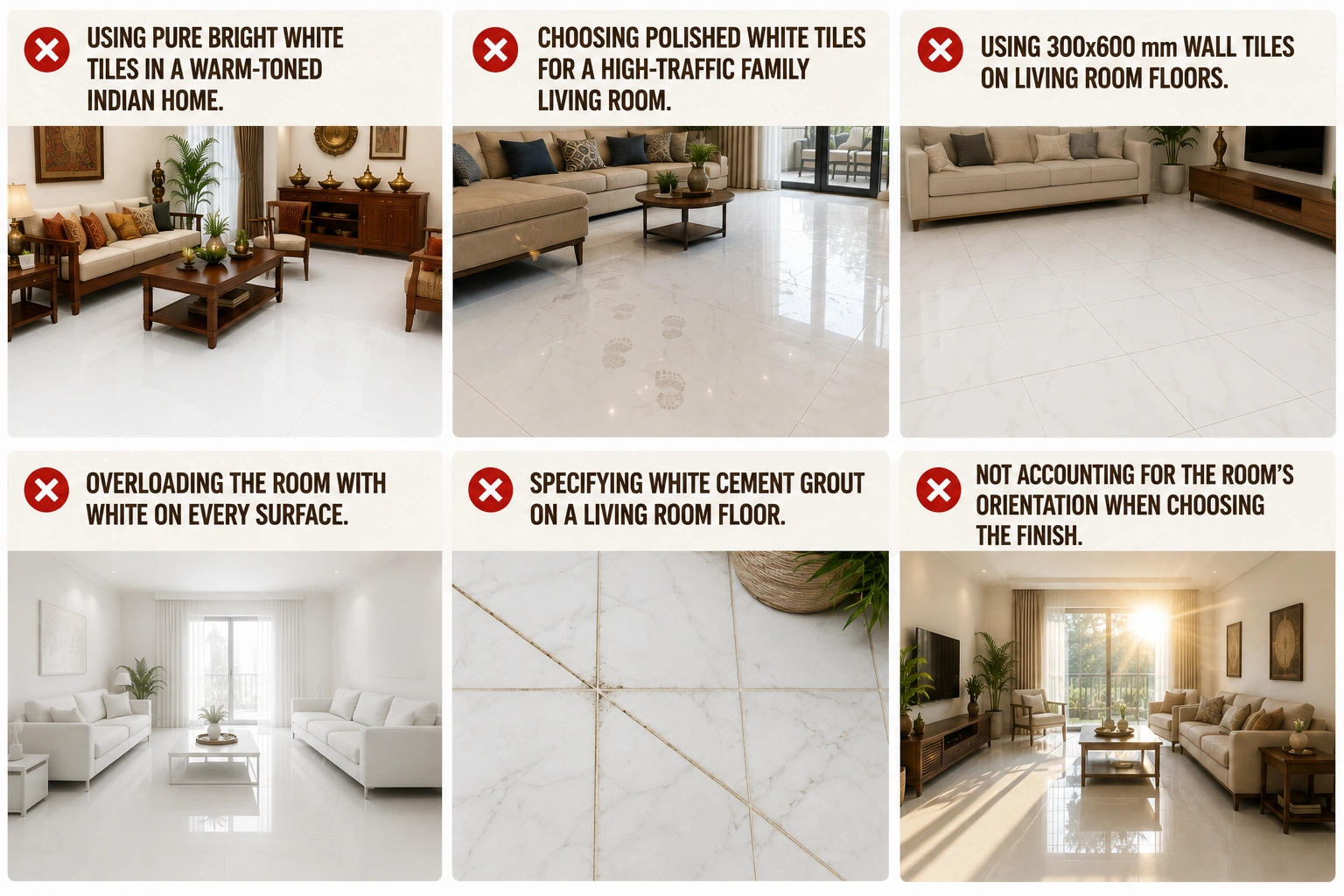
Using pure bright white tiles in a warm-toned Indian home. Pure white tiles create a cold contrast against teak or sheesham furniture, brass hardware, and earthy upholstery. Off-white, cream, or warm white tiles with ivory or gold veining bridge this gap and look far more intentional in Indian home contexts.
Choosing polished white tiles for a high-traffic family living room. A polished white floor shows every footprint, mopping smear, and scuff mark in a high-traffic Indian drawing room. For homes with children, pets, or multiple family members, matte or Posh finish white GVT tiles look clean far longer between mops.
Using 300x600 mm wall tiles on living room floors. The 12x24 size is a wall-only tile. It should never be laid on floors. Some homeowners see a white 300x600 mm tile in a wall display and ask for it to be laid on the floor as well. This is a technical specification error that creates a weak, inappropriate tile application.
Overloading the room with white on every surface. White floor, white walls, white ceiling, and white furniture create a space that feels blank and unfinished rather than clean and designed. White tile floors work best when there is a contrast element in the room: a warm feature wall, dark furniture, or a richly coloured rug.
Specifying white cement grout on a living room floor. White cement grout on a high-traffic living room floor discolours within one to two years in Indian conditions. An off-white or ivory epoxy grout, or a light grey cement grout, holds its colour significantly longer and looks better over time.
Not accounting for the room's orientation when choosing the finish. A polished white tile in a south-facing Indian living room creates afternoon glare that makes the room uncomfortable. Matte finish white tiles handle strong afternoon sun far better. Check the room's sun exposure before finalising the tile finish.
Finding the Right White Tile Design for Your Living Room
White tiles in a living room are not a safe or boring choice. They are a flexible foundation that carries every design direction from traditional and warm to contemporary and dramatic, depending on the format, finish, pattern, and styling choices made around them.
The 20 ideas in this guide cover the full range of what white tiles can do in an Indian living room in 2026. Some, like the warm white marble-look 2x4 floor, are accessible starting points for most apartment renovations. Others, like the full-height bookmatched PGVT sofa wall or the slab-format floor in a large villa, are for projects where the design ambition and budget are both elevated.
Before finalising, take tile samples home and observe them under your actual room's lighting in the morning and evening. Place them against your furniture and wall colours. Two tiles in the intended format laid next to each other on the floor will tell you more about the finished result than any showroom display can.
You can browse the full range of white GVT, PGVT, marble-look, concrete-look, and textured tiles across every size and finish on TilesFinders, India's growing tile marketplace, to compare options from leading Morbi manufacturers before shortlisting for your showroom visit.
FAQs
A warm white Calacatta marble-look GVT tile in matte or Posh finish, in the 600x1200 mm (2x4) format, suits most Indian living rooms well. It gives the brightness of white without the clinical quality of pure white, hides daily marks better than a polished tile, and works with the warm furniture tones common in Indian drawing rooms. For premium apartments with lower traffic, PGVT polished white tiles in a 32x64 format deliver a more dramatic result.
White matte GVT tiles on a living room floor show less day-to-day dust than polished white tiles because the matte surface does not reflect light in a way that highlights surface particles. Polished white tiles show every footprint and mopping residue clearly. White grout shows staining more than mid-grey grout. The combination that minimises visible dirt: matte or Posh finish white GVT tile with an off-white or light grey epoxy grout.
A 600x600 mm (2x2) white GVT tile in matte finish suits compact living rooms under 120 sq. ft. In slightly larger rooms of 120 to 200 sq. ft., the 600x1200 mm (2x4) format works and adds a directional quality that makes the room feel larger. Avoid formats above 32x64 in rooms under 150 sq. ft., as the large tile size relative to the room dimensions creates disproportionate cuts along walls that look awkward.
Yes. White tiles on living room walls, particularly as feature walls behind the sofa or TV unit, are among the most popular design choices in Indian premium apartments today. White PGVT tiles in polished finish on a full-height feature wall create a hotel-lobby quality that paint cannot match. White 3D textured GVT tiles on a feature wall add dimensional interest. White ceramic subway tiles on a section of wall add a classic, timeless quality.
The clinical quality of a white tile room comes from too much uniformity. Three changes prevent it: use a warm white or off-white tile with soft veining rather than a plain bright white, introduce warm-toned furniture and accessories in wood, brass, and earthy textiles against the white floor, and specify a warm or textured feature wall tile on one wall rather than leaving all walls painted white. The contrast between the white floor and the warmer elements in the room is what gives a white-tiled living room warmth and character.
Approximate 2026 price ranges for white living room tiles from Indian manufacturers: standard GVT matte white tiles in 2x4 or 2x2 format run ₹80 to ₹180 per sq. ft., marble-look GVT tiles run ₹90 to ₹200 per sq. ft., PGVT polished white tiles run ₹120 to ₹320 per sq. ft., and Full Body white GVT tiles run ₹100 to ₹200 per sq. ft. Installation adds ₹35 to ₹120 per sq. ft., depending on the tile size and laying pattern. All prices vary by brand and dealer city and exclude GST at 18%.
GVT matte or Posh finish white tiles are the easiest to maintain in Indian living room conditions. They hide footprints, mopping residue, and dust settling from ceiling fans better than polished tiles. They do not create glare issues under strong afternoon sun. And they clean easily with a damp mop without leaving streaky water marks. PGVT polished white tiles look spectacular but require careful damp mopping and more frequent attention to maintain their reflective quality in daily use.

See our tile guides first
Set TilesFinders as a preferred source and our buying guides surface ahead of the rest for you.
Add as preferred sourceTakes one tap. Nothing to install.
What Readers Say
I was about to redo my parking area with the wrong tile size until I read this. The layout comparisons saved me from a costly mistake.
We reference TilesFinders guides while briefing clients on material selection. The size and pattern breakdowns are accurate and easy to explain visually.
On site, I get asked about grout spacing all the time. This article gave me a solid reference I now share with my team before every job.
Finally a guide that doesn't just push generic advice. The oil stain removal steps actually worked on our clubhouse driveway tiles.
I run a small construction firm and now send this link to clients directly when they ask about entrance tile sizing. Saves me an hour of explaining.
Good practical detail, though I wish there were more examples for compact apartment entrances specifically, not just villas.
My mother-in-law wanted marble, I wanted vitrified. This blog gave us the neutral comparison we needed to actually decide together.
Detailed without being overwhelming. I appreciated that it covered both cost and maintenance, not just the aesthetics.
Used the algae and hard water removal tips on our terrace tiles after the monsoon. Worked better than what our regular cleaner was doing.
As someone who sources tiles for multiple builder projects, I find these comparisons genuinely useful for vendor conversations, not just consumer content.
Recommended this to a client who kept second-guessing the entrance design. The small vs large layout section settled the debate instantly.
Straightforward and honest, no unnecessary jargon. Would like to see a similar breakdown for outdoor pool-deck tiles next.
We've bookmarked several TilesFinders guides for our design handbook. Reliable source when clients want data, not just opinions.
Two paths, one marketplace.
Get free quotes from verified suppliers.
Share your room, budget, and style. Suppliers in Morbi respond within hours.
Get Free QuotesList your business, reach real buyers.
Put your showroom in front of homeowners searching for tiles right now.
List Your Business