600x1200 Tiles: When, Where & How to Use Them
Learn where 600x1200 mm tiles work best in Indian homes. Compare finishes, layouts, room applications, installation tips, and 2026 pricing for informed tile selection.
- Why the 600x1200 mm Format Has Become India's Default Choice
- Which Tile Categories Come in 600x1200 mm
- Room-by-Room Guide: Where 600x1200 Tiles Work and What to Choose
- Best Finishes for 600x1200 mm Tiles by Application
- Laying Patterns for 600x1200 mm Tiles
- 600x1200 mm Tiles vs Other Popular Sizes: Quick Comparison
- 600x1200 mm Tile Price Ranges in India for 2026
- Expert Tips Before Buying 600x1200 mm Tiles
- Common Mistakes When Using 600x1200 mm Tiles
- Getting the Most from Your 600x1200 mm Tile Choice
600x1200 mm (2x4) tiles are India's most popular large-format tiles, offering a spacious look with fewer grout lines. They work best in living rooms, bedrooms, bathroom walls, kitchens, and commercial spaces, with GVT matte tiles being the safest and most versatile choice for both floors and walls.
Walk into any tile showroom in India today, and one size dominates the floor displays, the wall mockups, and the recommendation conversations: 600x1200 mm. Known in the trade as the 2x4 tile, it has become the default choice for living rooms, bedrooms, bathrooms, and commercial spaces across the country.
There is a reason for that. The 2x4 format hits a practical sweet spot. It is large enough to make a room feel open and spacious, but still manageable enough for standard Indian construction sites without requiring the specialised handling and extra structural checks that slab-format tiles demand.
But being the most popular size does not mean it works everywhere or works the same way in every application. The right tile category, finish, laying pattern, and grout choice for a 600x1200 mm tile in a living room floor is completely different from what works in a bathroom wall or an outdoor corridor.
This guide covers every practical aspect of the 2x4 tile so you can make the right call for your specific space, whether you are renovating a 2BHK apartment, designing a commercial reception area, or specifying tiles for a premium villa project.
Why the 600x1200 mm Format Has Become India's Default Choice
Ten years ago, 600x600 mm (the 2x2 tile) was the dominant size in Indian residential projects. The shift to 600x1200 mm happened for several connected reasons, and understanding them helps clarify when this size genuinely suits your project versus when a different format would serve better.
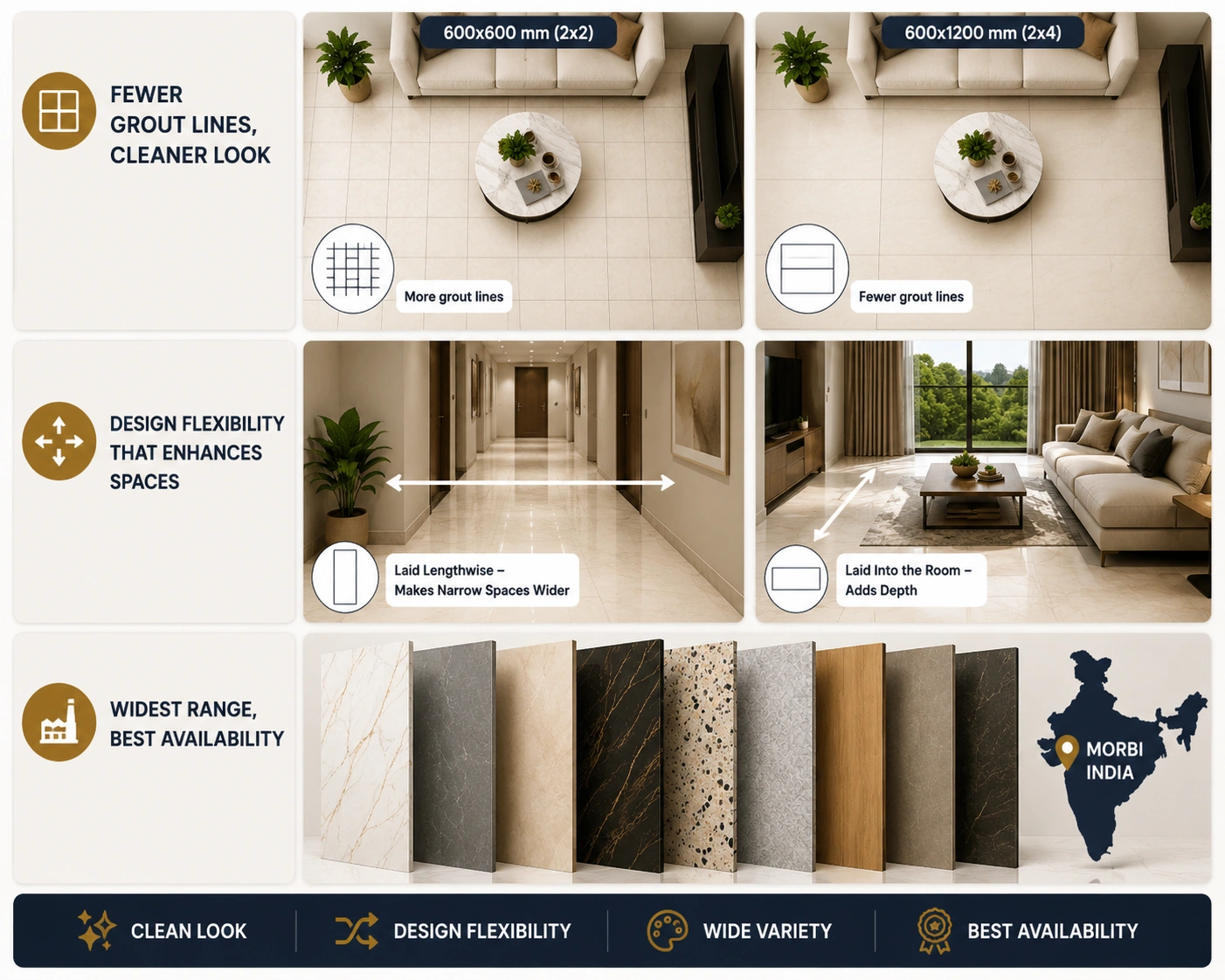
The 2x4 tile creates fewer grout lines across a given floor or wall area than a 2x2 tile does. Fewer grout lines mean a cleaner, more continuous visual surface and less maintenance over time, since grout is always the first place a floor starts looking dated or dirty. In a 15-by-12-foot living room, the difference in grout line count between 2x2 and 2x4 tiles is significant.
The rectangular format also adds a directional quality to a room that square tiles do not. Laying 2x4 tiles lengthwise in a narrow corridor makes it feel wider. The same tile laid with the long edge running into a room adds depth. This design flexibility is something the 2x2 format cannot offer.
Finally, the 600x1200 mm size is now the most widely produced format by Indian tile manufacturers in Morbi, which means the widest range of designs, finishes, and price points is available in this size compared to any other large format option.
While 600x1200 mm tiles are among the most versatile options available today, selecting the right tile dimensions depends on the room size, layout, and intended application. Explore our Tile Sizes Guide to compare popular tile sizes and find the best fit for every space in your home.
Which Tile Categories Come in 600x1200 mm
Not every tile type is available in the 2x4 format. Below is a reference guide to which categories support this size and where each one can be used.
| Category | 600x1200 Available? | Floor? | Wall? | Outdoor? | Wet Areas? |
| GVT (Glazed Vitrified) | Yes | Yes | Yes | Yes | Yes |
| PGVT (Polished GVT) | Yes | Indoor only | Yes | No | No (slippery) |
| Porcelain | Yes | Yes | Yes | Yes | Yes |
| Double Charge | Yes | Indoor only (heavy traffic) | Limited | No | No |
| Full Body | Yes | Yes | Yes | Yes | Yes |
| Colour Body | Yes | Yes (premium projects) | Yes | Yes | Yes |
| Ceramic | No (300x600 max) | No | Wall only | No | Limited |
| Nano / Soluble Salt | No (600x600 only) | N/A | N/A | N/A | N/A |
The table above shows that GVT (Glazed Vitrified Tiles) is the most versatile category in the 2x4 format. It works on floors, walls, outdoor areas, and wet zones, making it the category most homeowners and contractors reach for first when specifying 600x1200 mm tiles.
PGVT tiles in this size are excellent for living room floors and bedroom floors where indoor conditions are controlled, but should never be used in bathrooms or any wet area on the floor. The polished surface becomes hazardous when wet. PGVT is also not suited for outdoor use.
Room-by-Room Guide: Where 600x1200 Tiles Work and What to Choose
Living Room and Drawing Room
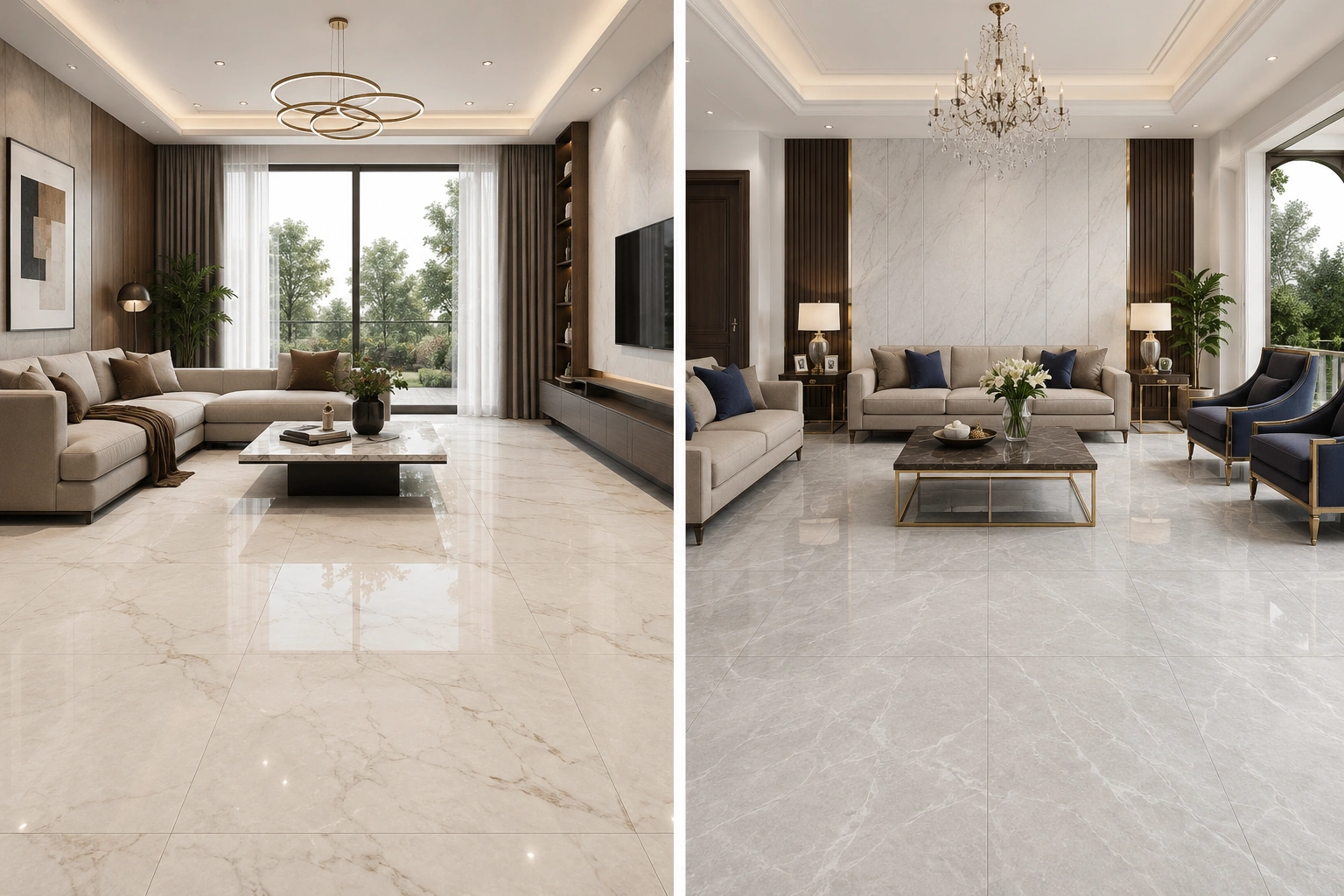
The 2x4 tile is at its best in the living room. The rectangular format, laid with the long edge running parallel to the main wall, creates a visual horizontality that makes the room feel wider. In a standard Indian drawing room of 200 to 300 sq. ft., this effect is immediately noticeable.
For living room floors, GVT tiles in a marble-look, concrete-look, or natural stone pattern work well. Posh or matte finish tiles are the right choice over glossy finishes on floors, as they stay slip-safe and hide daily dust and footprints better. If the living room has high foot traffic or children and pets, the GHR (Glaze High Resistance) finish adds extra scratch resistance.
For living room feature walls, PGVT in polished finish gives the high-gloss, hotel-lobby quality that makes 2x4 feature walls popular in premium apartments. The longer tile format on a vertical surface creates a flowing, uninterrupted effect that 2x2 tiles cannot replicate.
Bedroom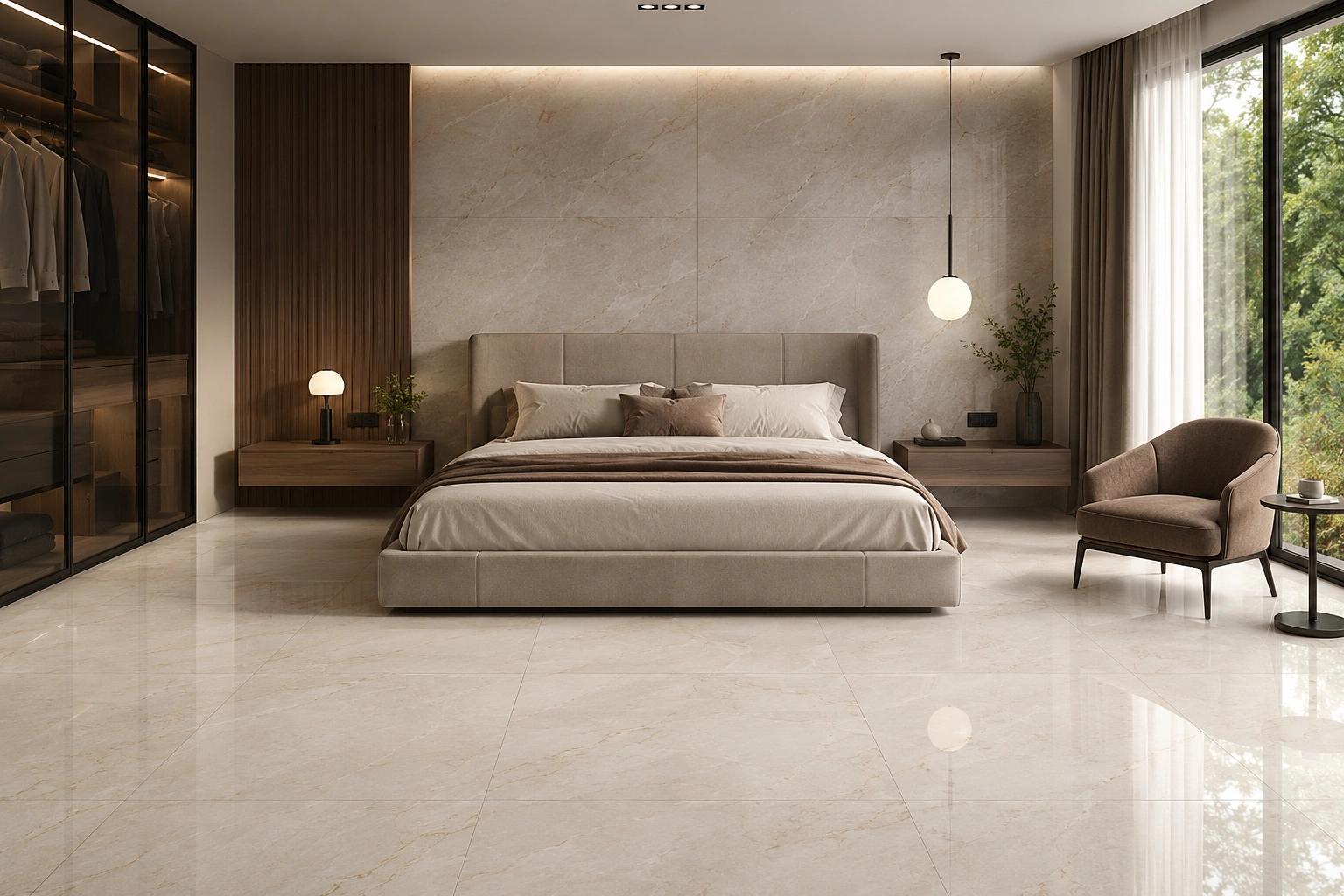
Bedrooms in Indian homes have shifted strongly toward the 2x4 size over the last five years, moving away from the older 2x2 format that dominated builder-grade apartments. The larger format makes the bedroom floor feel less busy and more restful.
Warm-toned marble looks, wood-effect tiles (though the 8x48 plank format suits wood effects better), and soft concrete textures all work well in bedrooms in this size. Matte and Posh finishes are the right pick for bedroom floors, as they stay warm underfoot and hide dust from the ceiling fan that settles overnight.
For a master bedroom headboard wall, a large-format 2x4 PGVT tile in a bookmatched marble pattern can replace wallpaper or a painted accent wall with a more permanent, low-maintenance result.
Bathroom Wall and Floor
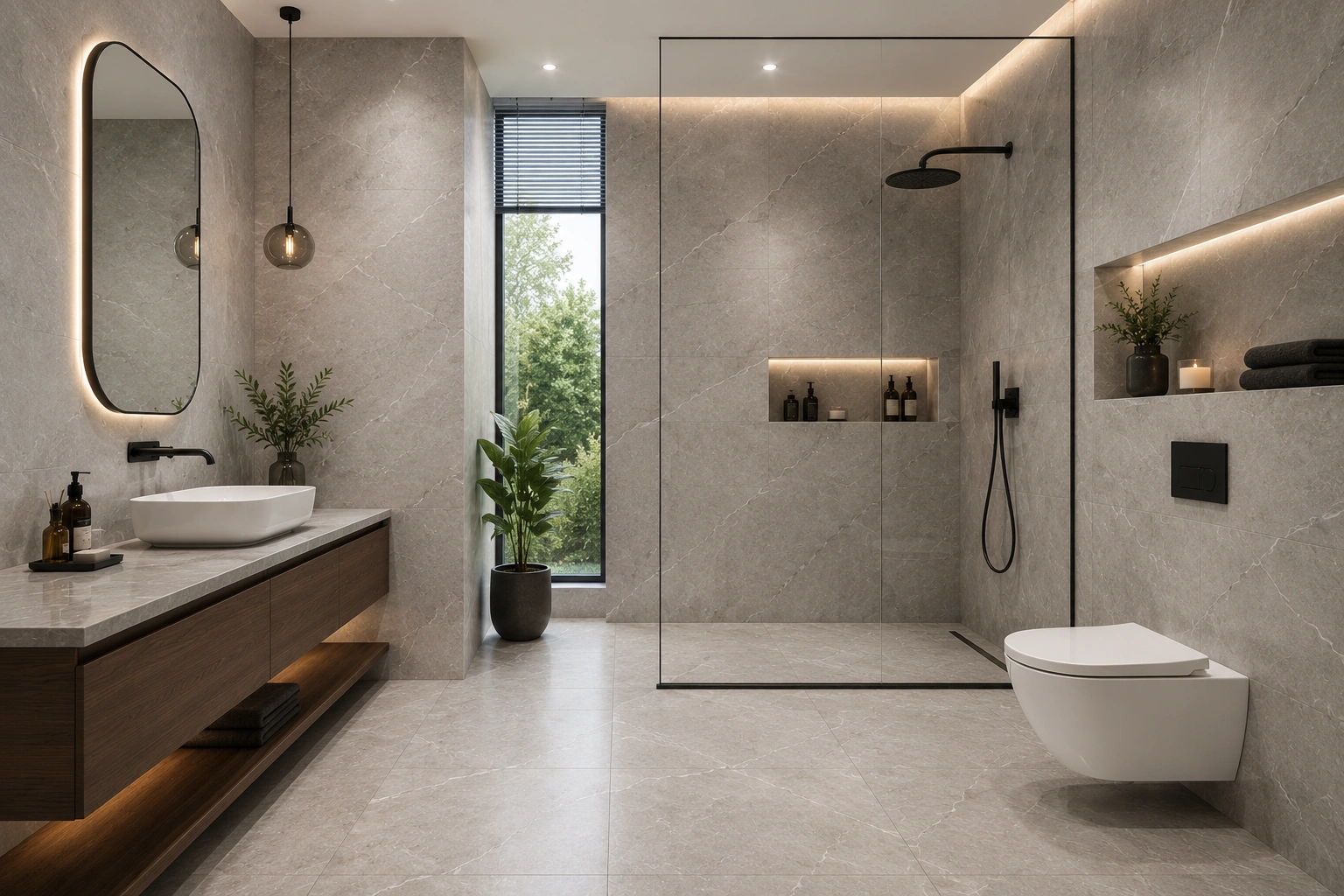
The 2x4 tile is increasingly common in Indian bathrooms, particularly on walls. For bathroom walls, GVT and PGVT tiles in this format create a clean, spa-like surface with minimal grout lines. Full-height 600x1200 mm wall tiles, especially in a soft stone or marble-look pattern, give compact Indian bathrooms a sense of height and space that smaller tiles never quite achieve.
For bathroom floors, the tile category and finish choice are critical. GVT tiles with matte, Rain Drops, or GHR finish are safe for bathroom floors. PGVT tiles, regardless of their floor eligibility for dry indoor areas, should never be used on bathroom floors because the polished surface is dangerously slippery when wet. Anti-skid rating is the non-negotiable requirement for any bathroom floor tile.
In smaller bathrooms (under 40 sq. ft.), the 2x4 tile on the floor can feel oversized if the room is narrow. In those cases, a 600x600 mm (2x2) floor tile with 2x4 wall tiles is a better combination.
Kitchen
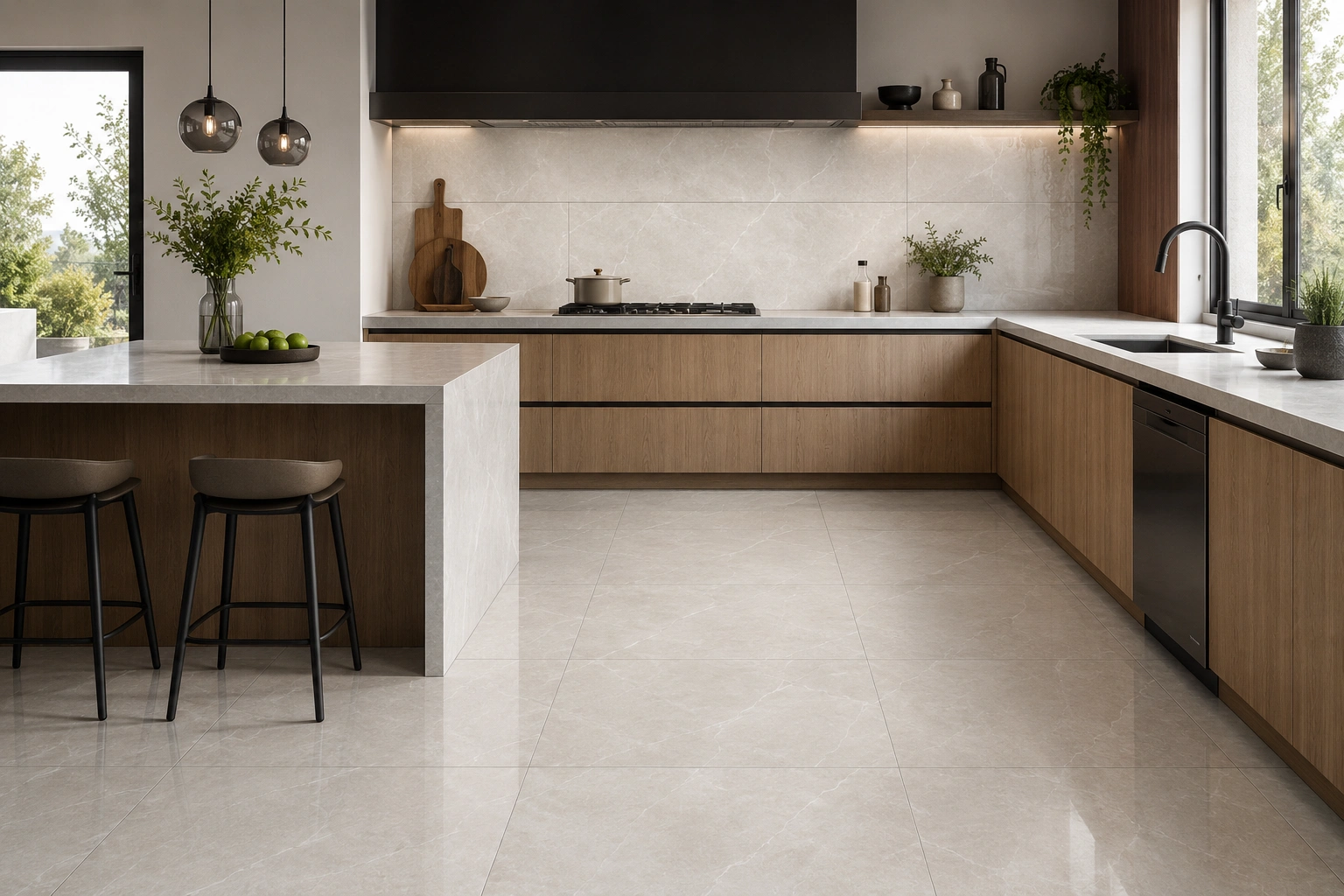
In modular kitchen layouts, 600x1200 mm tiles work on kitchen floors and as backsplash walls. For kitchen floors, GVT matte finish or Full Body tiles in a light or neutral tone handle the daily combination of oil, water, and foot traffic well. Full Body tiles are particularly worth considering in kitchen floors where chipping at tile edges from dropped utensils is a real concern, since the colour runs through the full thickness.
Kitchen backsplash walls between the counter and upper cabinets typically need only one or two horizontal rows of tiles. A 600x1200 mm tile laid with its long edge horizontally covers this zone in fewer pieces with fewer grout lines, which makes the backsplash easier to clean.
Corridor and Passage
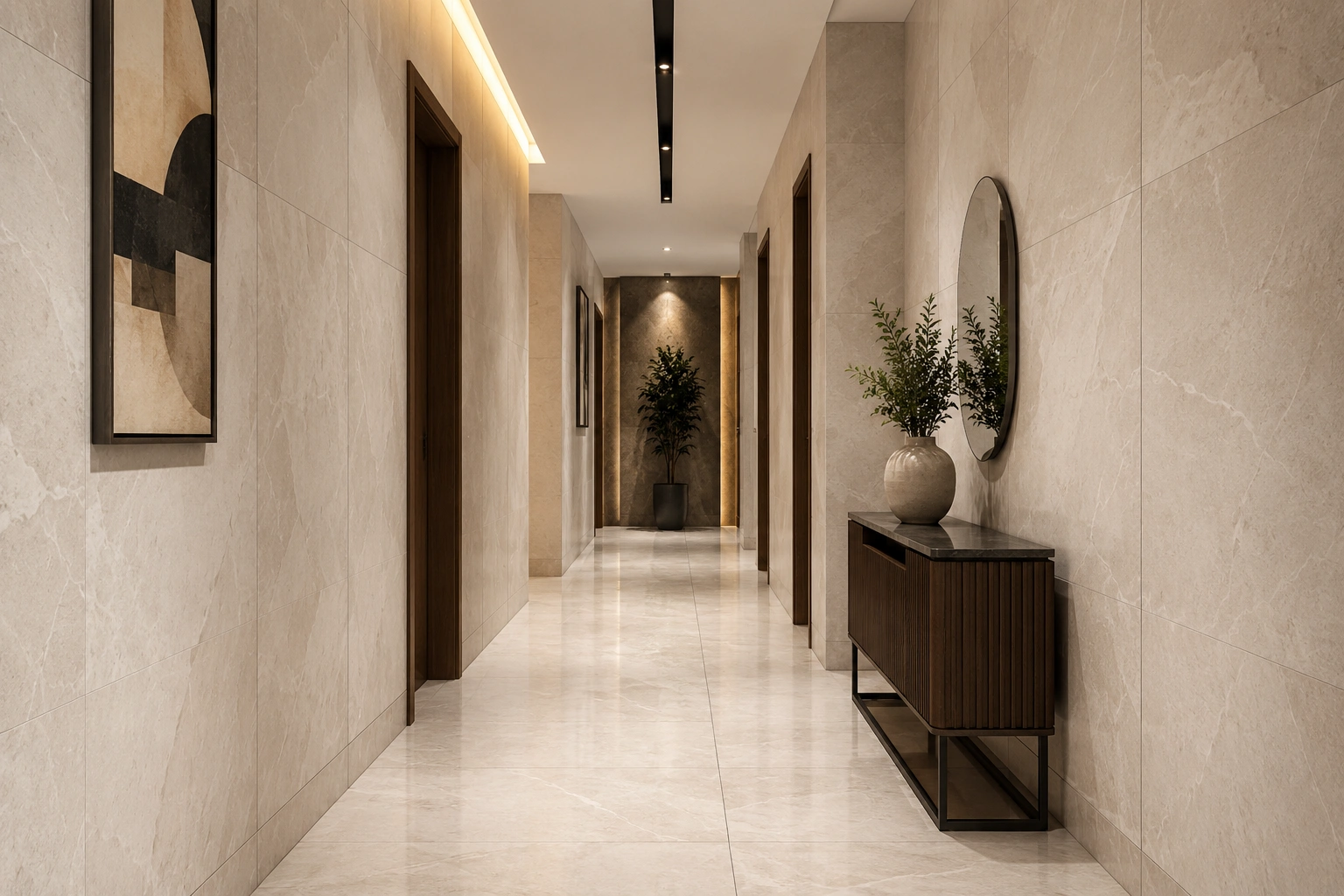
The direction you lay a 2x4 tile in a corridor changes how the space reads. Laying the tile with its long edge running along the corridor length (lengthwise) draws the eye toward the end of the passage and makes the corridor feel longer and narrower. Laying it with the long edge across the corridor (crosswise) makes the passage feel shorter but wider.
For most Indian corridors and passages, crosswise laying in a GVT matte finish tile is the better call. It adds perceived width to what are typically narrow spaces in 2BHK and 3BHK apartments. GHR finish is a good choice for high-traffic corridor floors that see daily foot traffic from multiple family members.
Commercial Spaces: Offices, Retail, Reception Areas
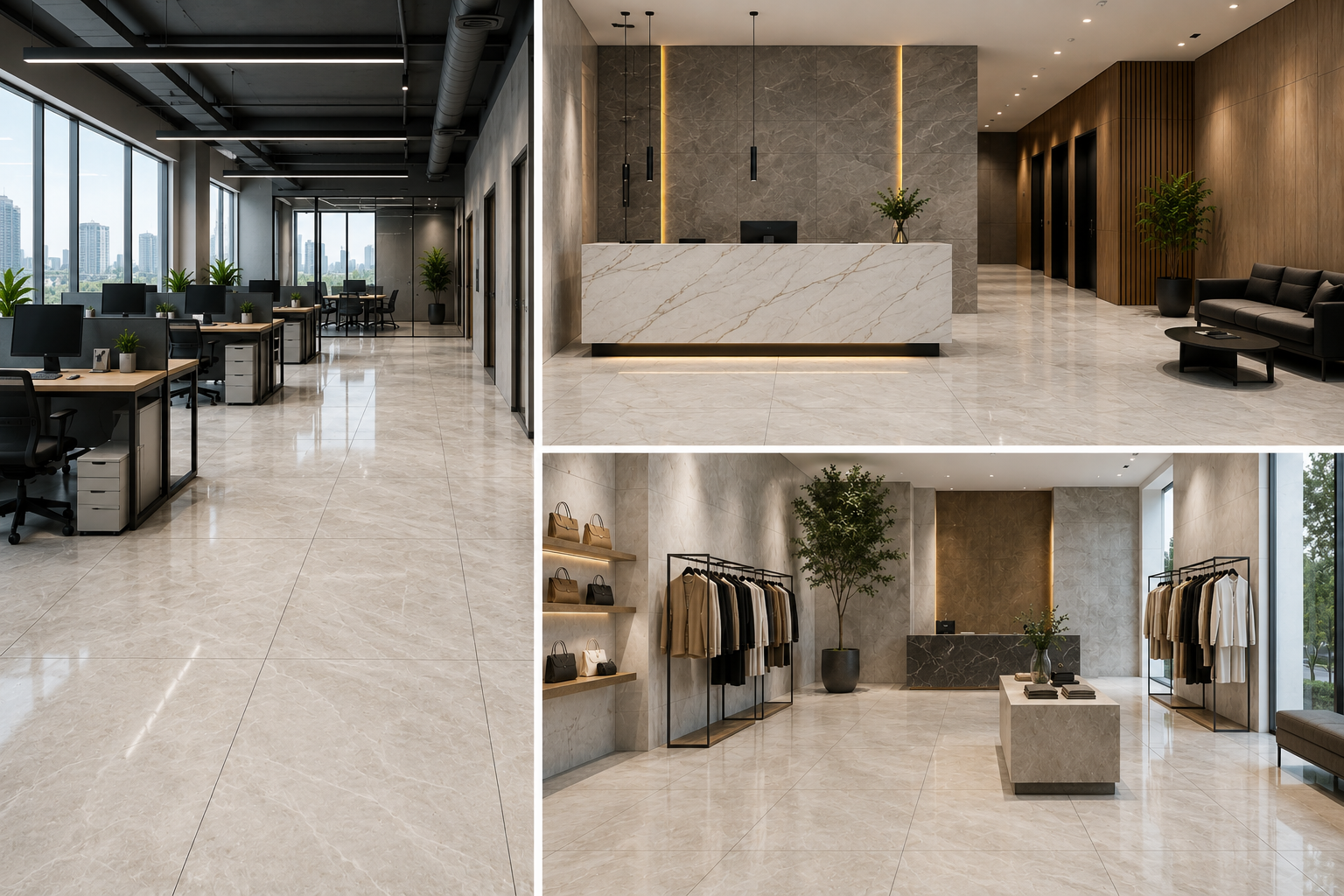
The 2x4 size has become a staple in commercial flooring in India. It is used in corporate office floors, retail store floors, clinic waiting areas, hotel lobbies, and restaurant dining areas. The large format speeds up installation across big floor areas, reduces grout lines that collect dirt in high-traffic environments, and creates a professional, ordered visual quality.
For commercial floors, Double Charge tiles in 600x1200 mm are worth considering in areas with very heavy footfall, as they carry the highest scratch resistance on polished indoor surfaces among vitrified tile types. Full-body tiles work well in commercial spaces where edge chipping is a concern near doorways and thresholds.
Best Finishes for 600x1200 mm Tiles by Application
| Finish | Floor? | Wall? | Wet Areas? | Outdoor? | Best For |
| Matte | Yes | Yes | Yes | Yes | Living rooms, bedrooms, corridors, bathrooms |
| GHR (Glaze High Resistance) | Yes | Yes | Yes | Yes | High-traffic floors, outdoor corridors |
| Posh | Yes | Yes | Yes (floor only if dry) | No | Bedrooms, feature walls, and premium living rooms |
| PGVT Polished (High Gloss) | Indoor dry only | Yes | No (slippery) | No | Living room feature walls, bedroom walls |
| Matte Carving | Yes | Yes | Yes | Limited | Textured feature walls, rustic floor looks |
| Sugar | Limited | Yes | No | No | Decorative wall feature strips |
| Rain Drops | Yes (anti-skid) | Yes | Yes | Yes | Bathroom floors, wet utility areas |
| Satin Matte | Indoor dry only | Yes | No | No | Premium bedroom floors and walls |
The single most important finish rule for 600x1200 mm tiles: never use any glossy, high-gloss, polished, or Satin Matte finish on a floor that will get wet. This includes bathrooms, utility areas, balconies, and any outdoor surface. Falls on polished tile floors are a real and serious household hazard.
Laying Patterns for 600x1200 mm Tiles
The laying pattern affects how a room reads as much as the tile design itself. With a rectangular tile like the 2x4, the options are wider than with a square tile, and each pattern creates a noticeably different spatial effect.
Stack Bond (Straight Lay)
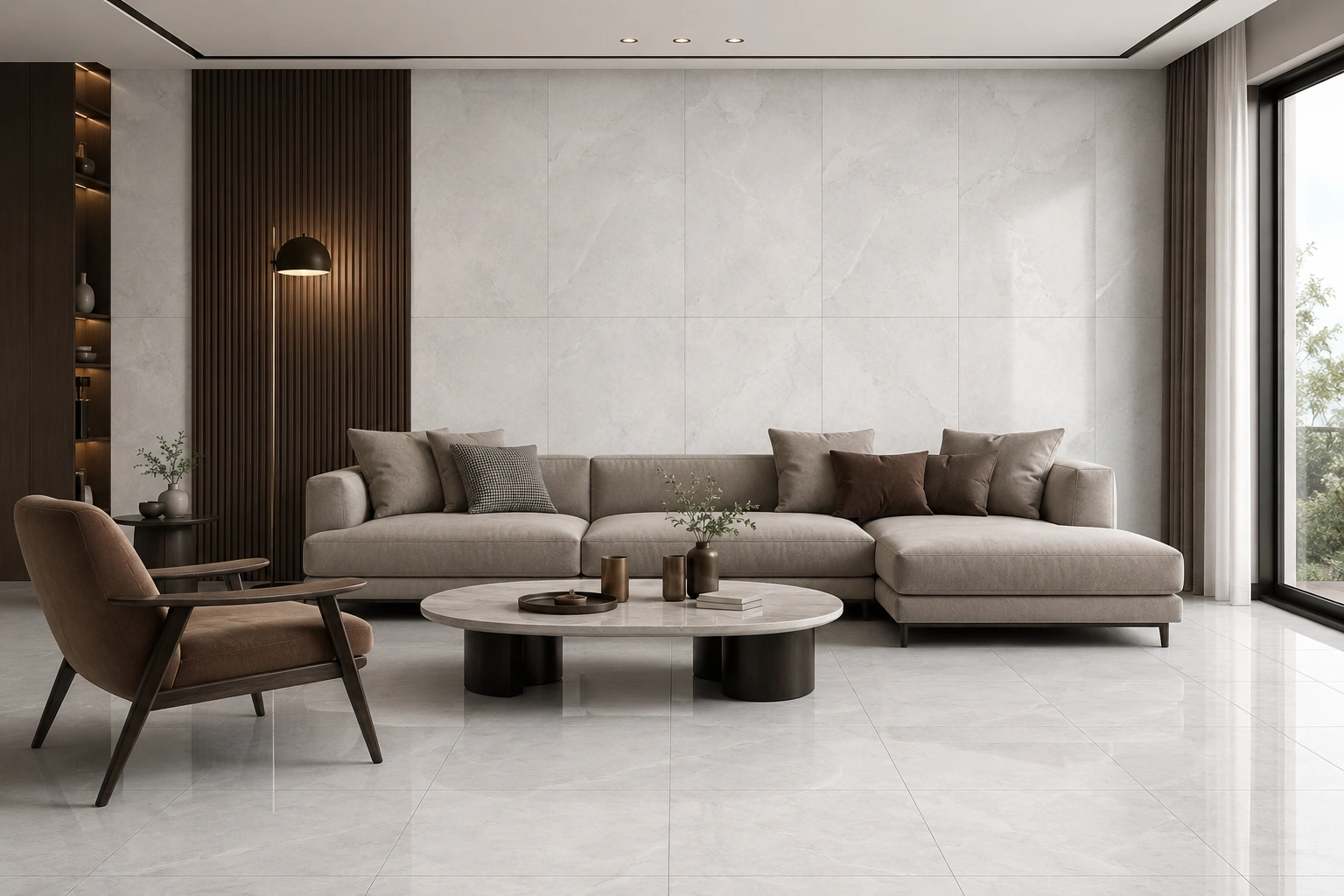
Stack bond means every tile is laid with its edges perfectly aligned in both directions, creating a grid. It is the cleanest, most contemporary look and works well in minimalist interiors where the tile design itself is the focus. The long edges can run horizontally or vertically, depending on the room proportion and the effect you want.
This pattern is the easiest for installers and requires the least cutting, making it the lowest-cost laying option on a per-square-foot basis. It also makes small rooms feel more ordered and less cluttered.
Brick Bond (Offset / Running Bond)
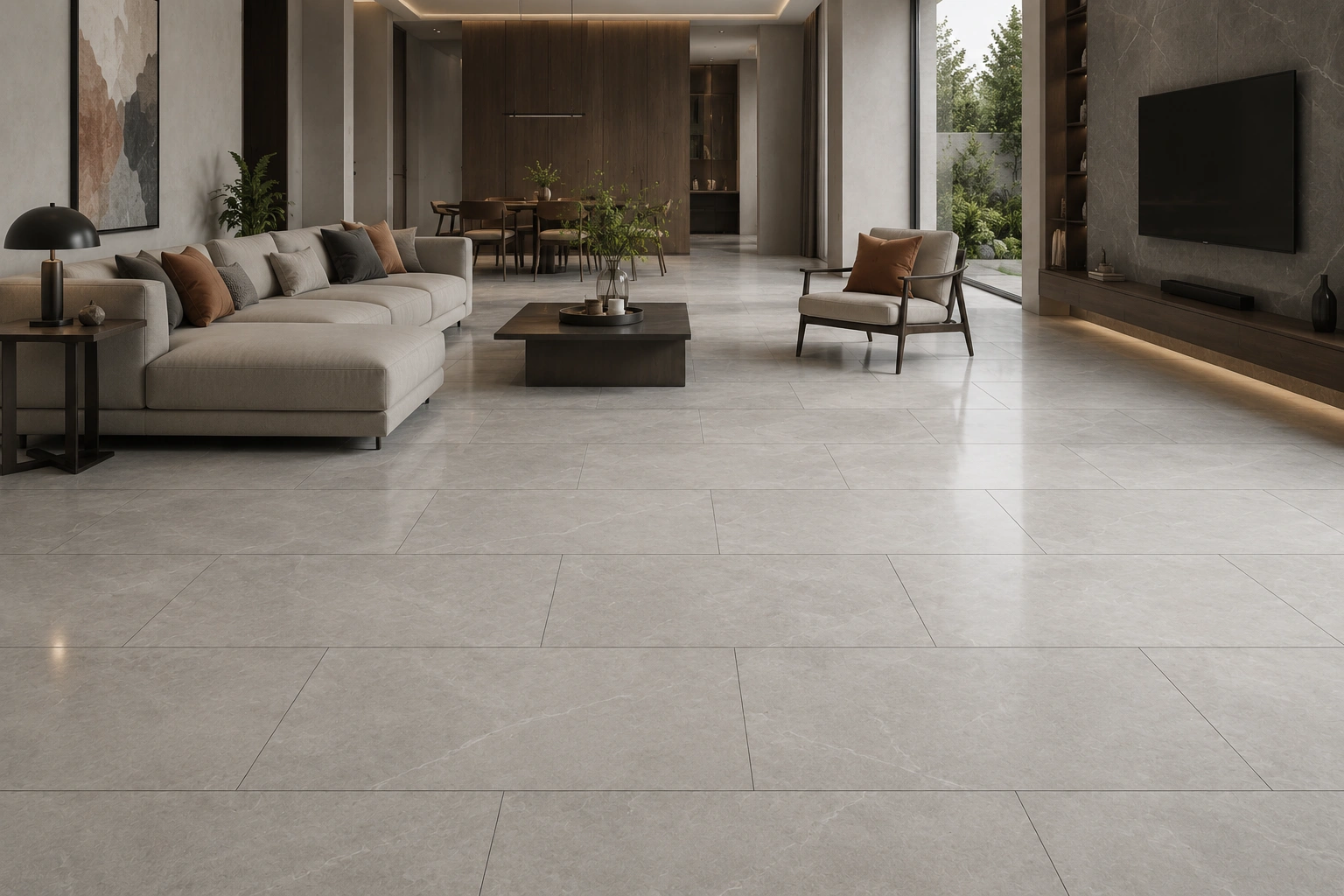
In brick bond, each row of tiles is offset by half the tile length from the row above, exactly the way bricks are laid in a wall. For a 600x1200 mm tile, this means each tile is offset by 300 mm from its neighbour above and below.
Brick bond is the most popular laying pattern for 2x4 tiles in Indian homes. It breaks the rigid grid of stack bonds and creates a more organic, flowing visual rhythm. The pattern also disguises slight unevenness in tile edges better than stack bond does, which matters in sites where surface flatness is not perfectly controlled.
One caution: some tile manufacturers specify a maximum offset for their tiles to prevent lippage (where the edge of one tile sits higher than the adjacent tile). Check the tile specifications before specifying a full half-offset brick bond for very large format tiles.
Herringbone
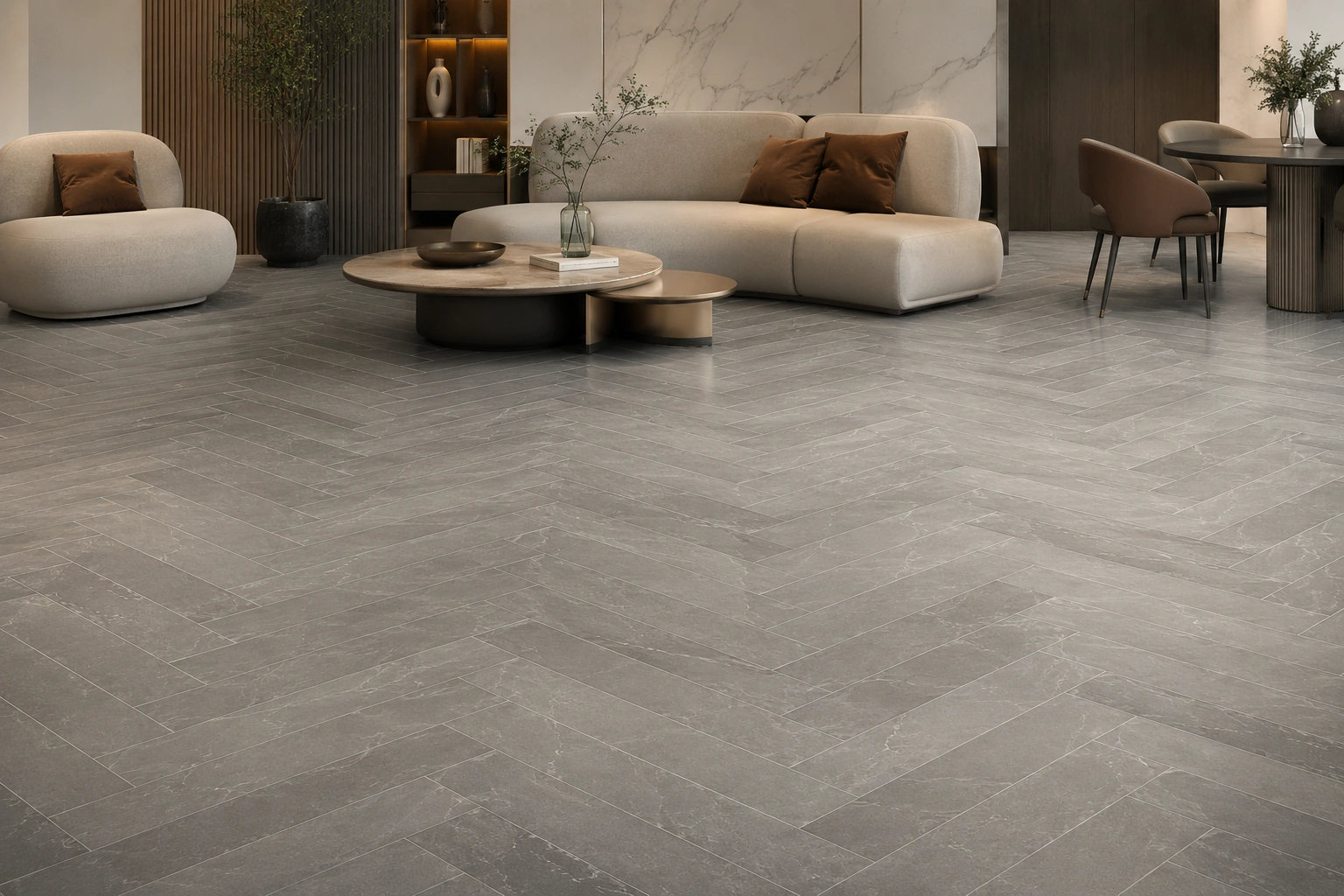
Herringbone requires each tile to be cut to a specific proportion, typically 2:1 (matching the 600x1200 mm native proportion). The tiles are laid at 45-degree angles to each other in a V-shape pattern. It is a visually complex, high-impact pattern that suits feature areas like bathroom floors, small entrance foyers, and accent zones.
Herringbone has a significantly higher cutting waste and installation cost than stack or brick bond. Budget an additional 15 to 20% tile wastage for herringbone layouts, and confirm your tile contractor has experience with angled cuts in this format before committing to the pattern.
Vertical Stack
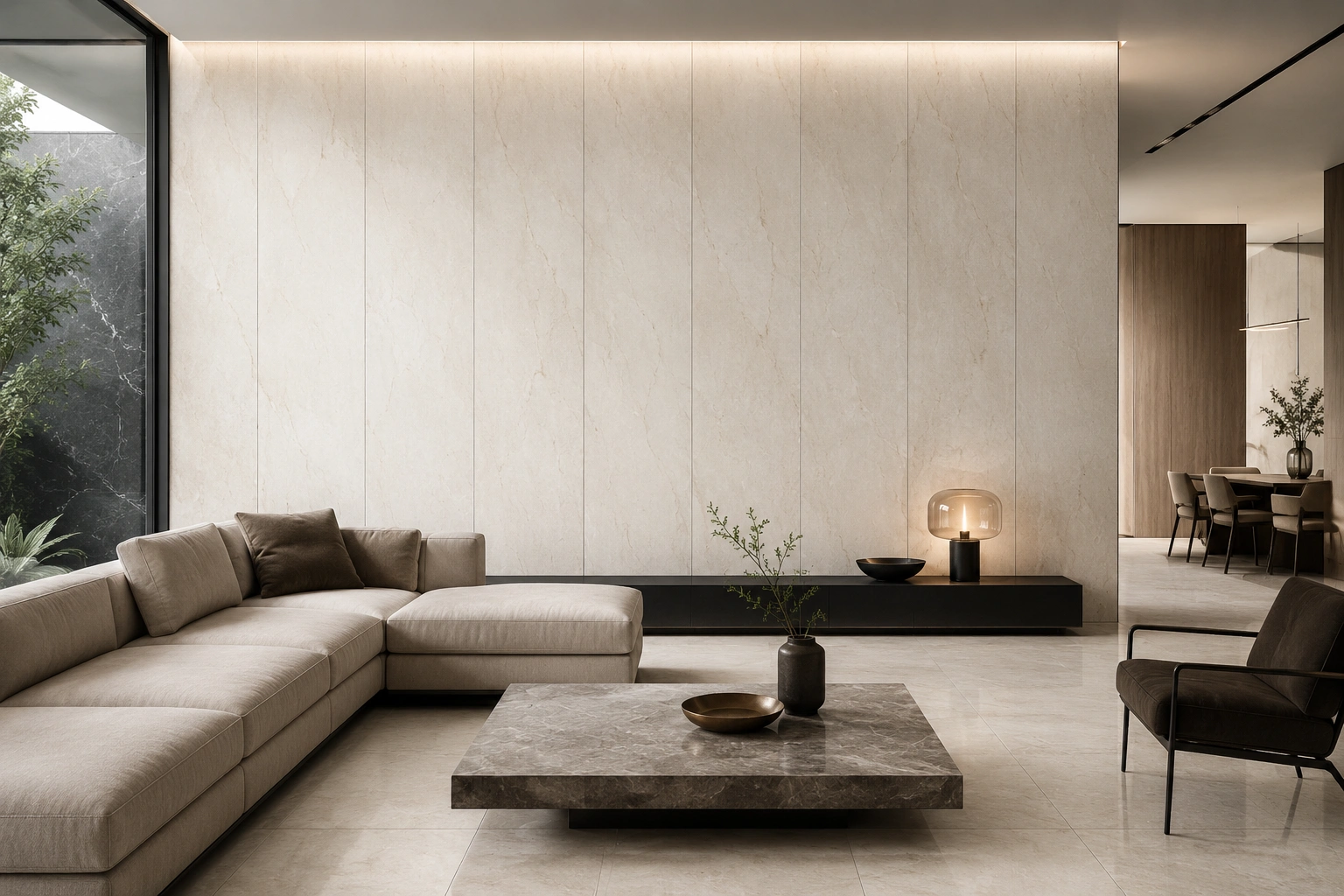
Laying 600x1200 mm tiles vertically on a wall, with the long edge running floor to ceiling, makes rooms feel taller. This is particularly effective in low-ceiling apartments, which are common in many Indian society buildings where floor-to-ceiling height can be as little as 9 feet. One vertical column of 2x4 tiles covers 1.2 metres of height in a single piece, with only two tiles needed to reach a standard 2.4-metre ceiling height.
600x1200 mm Tiles vs Other Popular Sizes: Quick Comparison
| Factor | 600x600 (2x2) | 600x1200 (2x4) | 800x1600 (32x64) | 800x2400 (32x96) |
| Visual effect | Balanced, neutral | Spacious, directional | More premium, fewer joints | Near-seamless, slab-like |
| Grout lines per 100 sqft | Many | Moderate | Few | Very few |
| The room size fits | Small to medium | Any room size | Medium to large | Large rooms, commercial |
| Installation difficulty | Easy | Moderate | Moderate to hard | Hard (needs specialist) |
| Price range (GVT) | ₹60 to ₹130 | ₹70 to ₹180 | ₹100 to ₹250 | ₹150 to ₹400 |
| Design variety | Wide | Widest | Good | Limited but growing |
| Cutting waste | Low | Low to moderate | Moderate | High |
| Structural check needed? | No | No | No | Yes (upper floors) |
The 2x4 format sits at the practical centre of the large-format range. It delivers most of the visual benefits of bigger slab tiles without the specialist installation requirements, structural considerations, or premium pricing that 32x64 and 32x96 formats carry.
600x1200 mm Tile Price Ranges in India for 2026
Prices below are approximate 2026 market ranges from Indian manufacturers, primarily from Morbi. Prices vary by brand, finish complexity, and city of purchase. GST at 18% applies to all tile materials.
| Category | Price Range (per sq. ft.) | Best Application |
| GVT (Glazed Vitrified) | ₹70 to ₹180 | Living rooms, bedrooms, bathrooms, and outdoor |
| PGVT (Polished GVT) | ₹80 to ₹250 | Indoor floors, feature walls, premium interiors |
| Porcelain 600x1200 | ₹90 to ₹220 | Floors, walls, outdoor, wet areas |
| Double Charge 600x1200 | ₹80 to ₹150 | Heavy-traffic indoor floors, commercial spaces |
| Full Body 600x1200 | ₹90 to ₹200 | Commercial floors, premium residential |
| Marble-look GVT/PGVT | ₹90 to ₹280 | Living room floors and walls, feature walls |
Installation charges for 600x1200 mm tiles typically run between ₹35 and ₹70 per sq. ft., depending on the site city, pattern complexity, and whether a levelling screed is needed. Herringbone and diagonal patterns carry a higher labour charge, usually ₹60 to ₹90 per sq. ft., due to the additional cutting work involved.
Expert Tips Before Buying 600x1200 mm Tiles
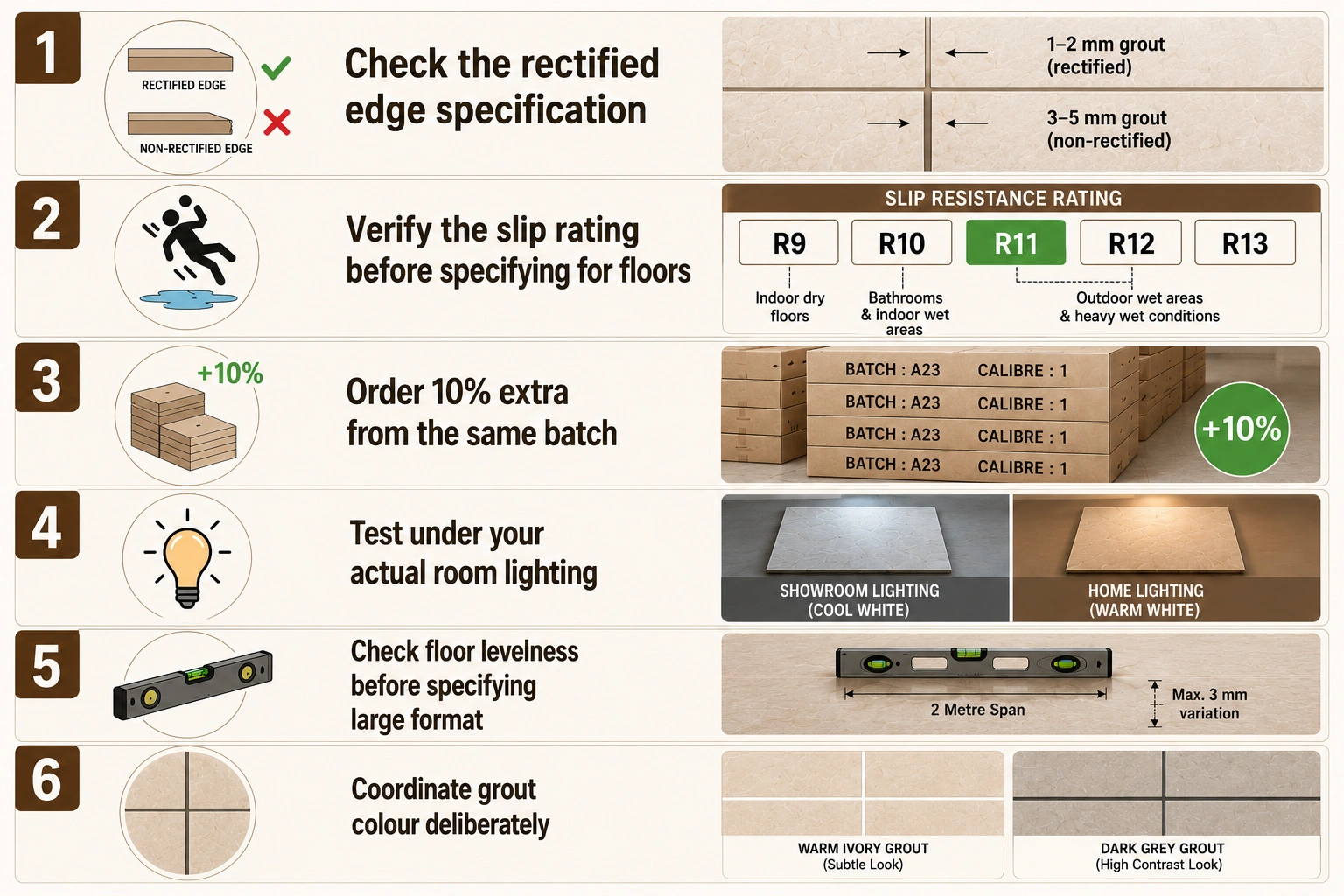
1. Check the rectified edge specification
Rectified tiles have machine-cut edges that are perfectly square and consistent. This allows very thin grout joints of 1 to 2 mm, which makes the 2x4 tile surface appear almost seamless. Non-rectified tiles have slight size variations that require wider grout joints of 3 to 5 mm. For the clean, minimal-grout look that makes 2x4 tiles so popular, always specify rectified tiles.
2. Verify the slip rating before specifying for floors
Indian tile packaging should carry a slip resistance rating. Look for R9 (low slip) to R13 (very high slip, suited for steep outdoor ramps). For indoor dry floors, R9 is acceptable. Bathroom floors need R10 or R11 at a minimum. Any outdoor surface that gets wet in the monsoon needs R11 or higher. This rating matters far more than the tile brand when it comes to safety.
3. Order 10% extra from the same batch
Tile colours vary between production batches. The same tile design from a different batch can be a slightly different shade. If a tile cracks or chips two years after installation and you need a replacement, tiles from a new batch may not match. Always buy 10% more than your calculated requirement and keep the extras stored at home.
4. Test under your actual room lighting
Showroom lighting is designed to make every tile look its best. A cool-white tile under warm LED strip lighting in your home will look noticeably different from how it looked in the showroom. Take physical samples home and place them on the floor or against the wall under your actual lighting before placing the full order.
5. Check floor levelness before specifying large format
600x1200 mm tiles amplify floor undulation. If the existing floor or concrete slab is not flat to within 3 mm over a 2-metre span, the installed tiles will rock or show lippage at joints. Ask your contractor to check floor flatness and budget for a levelling compound if needed before tile installation begins.
6. Coordinate grout colour deliberately
With fewer grout lines than smaller tiles, the grout colour in a 2x4 layout has a stronger visual presence. A warm ivory grout on a cream marble-look tile blends naturally. A contrasting dark grout on the same tile makes the grid the focal point of the floor design. Both can be right, but choose deliberately rather than defaulting to the most common grout colour at the store.
Common Mistakes When Using 600x1200 mm Tiles
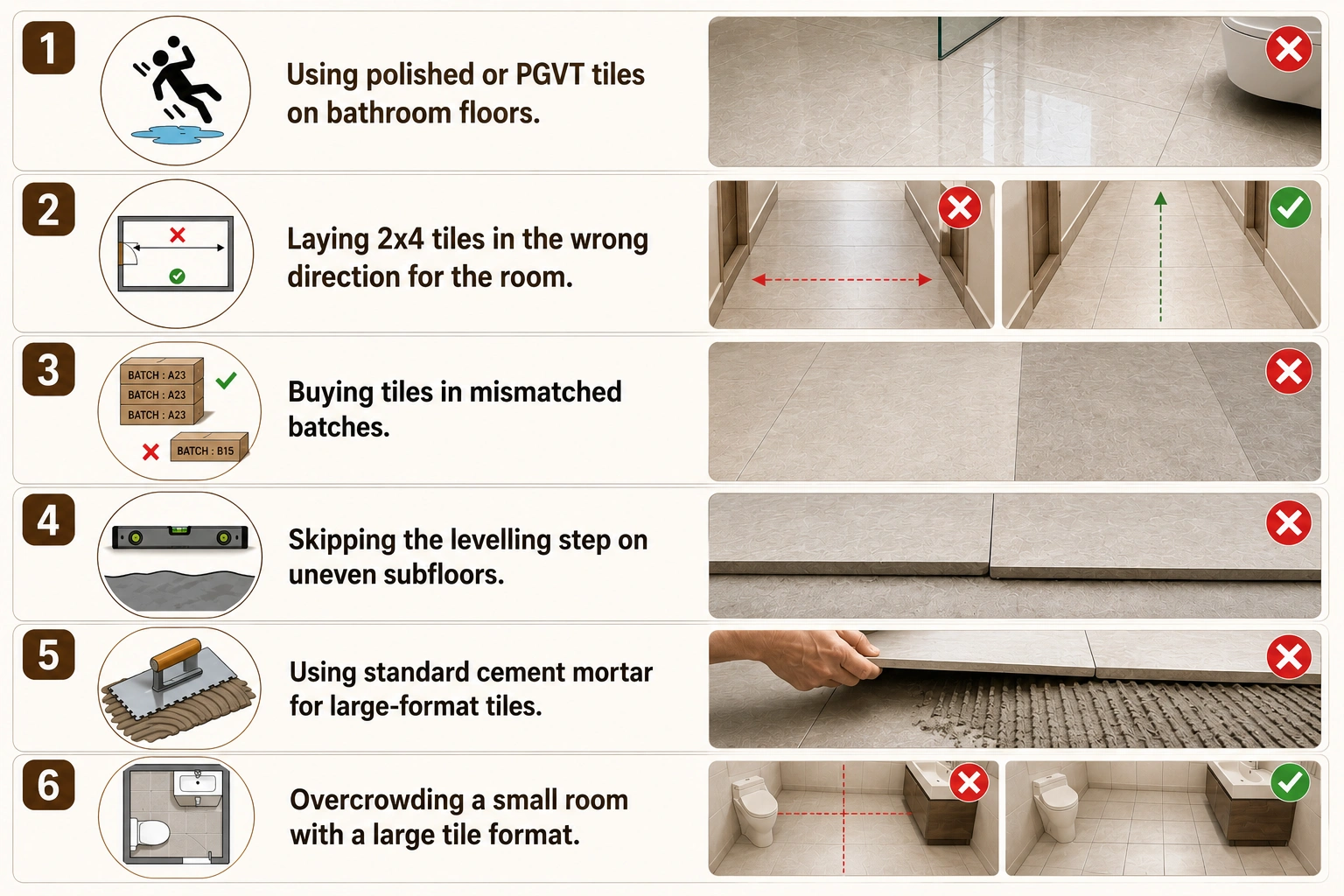
Using polished or PGVT tiles on bathroom floors. The polished surface is dangerously slippery in wet conditions. This is the most common and most preventable safety mistake in Indian home renovations. Always use Matte, Rain Drops, or GHR finish on any floor tile that will see moisture.
Laying 2x4 tiles in the wrong direction for the room. Lying the long edge parallel to the shortest wall of a narrow room makes the room feel even narrower. Take fifteen minutes before installation begins to mock up the intended direction with a few dry tiles to verify the visual effect before the adhesive goes down.
Buying tiles in mismatched batches. Ordering the first half of the tiles from one stock lot and the second half from a different lot mid-project leads to visible colour variation across the floor. Calculate the full tile requirement before buying and confirm all boxes are from the same batch number.
Skipping the levelling step on uneven subfloors. Large-format tiles on an uneven base produce lippage (where one tile edge sits higher than the adjacent tile). Lippage is both a visual problem and a tripping hazard. Address subfloor flatness before laying, not after.
Using standard cement mortar for large-format tiles. 600x1200 mm tiles require polymer-modified tile adhesive for proper bond strength and working time. Standard cement mortar does not provide adequate coverage under a tile this size, leading to hollow spots that crack under load.
Overcrowding a small room with a large tile format. In bathrooms under 35 sq. ft. or corridors under 4 feet wide, the 2x4 tile can feel disproportionate and difficult to cut cleanly around fixtures. For very small spaces, 600x600 mm is a more manageable and often better-looking choice.
Getting the Most from Your 600x1200 mm Tile Choice
The 2x4 tile is the most versatile large format option in the Indian market today, but getting the most from it comes down to matching the right category and finish to each specific application in your home.
GVT matte or GHR finish for floors that see any moisture. PGVT is for dry indoor feature walls where visual impact is the goal. Rectified edges for minimal grout joints. Polymer-modified adhesive for proper bond strength. These four decisions, made correctly from the start, determine whether the finished result holds up well for decades or starts to cause problems within the first monsoon season.
Before finalising, take tile samples home, lay them on the actual floor or hold them against the actual wall, and check how the size reads in your specific room dimensions and under your lighting. Two tiles placed side by side in the intended laying direction will tell you more than an hour in a showroom.
You can browse the full range of 600x1200 mm tiles across GVT, PGVT, Full Body, and marble-look categories on TilesFinders, India's growing tile marketplace, where you can compare designs, finishes, and prices from leading Morbi manufacturers before making your final choice.
FAQs
600x1200 mm is a tile size where each tile is 600 mm (roughly 2 feet) wide and 1200 mm (roughly 4 feet) long. In the tile trade it is commonly called the 2x4 tile, referring to its 2-foot by 4-foot approximate dimensions. It is one of the most widely produced and sold tile formats in India across GVT, PGVT, porcelain, and Full Body categories.
Yes, but only with the right finish. GVT tiles in matte, Rain Drops, or GHR finish with adequate anti-skid rating (R10 or above) are safe for bathroom floors in this size. PGVT polished tiles, glossy tiles, and Satin Matte finish tiles should never be used on bathroom floors, regardless of size. The polished or smooth surface becomes hazardous when wet. Always check the slip rating on the tile box before purchasing for bathroom floor use.
For most Indian living rooms above 150 sq. ft., the 600x1200 mm (2x4) tile gives a better result. The rectangular format creates fewer grout lines, adds a directional quality that makes rooms feel more spacious, and offers a wider range of design options. The 600x600 mm (2x2) tile is a better choice for compact rooms, balconies, or spaces where the floor area involves a high proportion of cuts around pillars and furniture bases.
Brick bond (offset or running bond) is the most popular and forgiving pattern for the 2x4 tile in Indian homes. It creates a natural, less rigid look than stack bond and hides slight variations in tile dimensions better. Stack bond (straight lay) is the cleaner, more modern choice for minimalist interiors. Herringbone is the most dramatic option but requires more cutting waste and a skilled mason.
Yes, when laid correctly. The key is orientation. Laying the long edge of the tile parallel to the longest wall of the room draws the eye along the length and makes the room feel larger. Keeping the grout colour close to the tile colour (tone-on-tone) reinforces the effect by reducing visual interruptions across the surface. The fewer grout lines of a large-format tile also help the floor read as a single continuous plane.
Approximate 2026 market prices for 600x1200 mm (2x4) tiles from Indian manufacturers range from ₹70 to ₹180 per sq. ft. for standard GVT tiles, ₹80 to ₹250 per sq. ft. for PGVT polished tiles, and ₹90 to ₹280 per sq. ft. for marble-look or premium finish tiles. Prices vary by brand, finish, and city. Installation adds approximately ₹35 to ₹70 per sq. ft. for standard patterns. GST at 18% applies.
GVT tiles and Full Body tiles in 600x1200 mm can be used outdoors with the right finish. Matte, GHR, or textured finishes with anti-skid ratings of R11 or higher suit covered outdoor areas like porticos, covered verandahs, and open corridors. PGVT tiles in this size should never be used outdoors, as the polished surface becomes slippery in rain and is not rated for outdoor exposure. Double Charge tiles are also not suitable for outdoor use.

See our tile guides first
Set TilesFinders as a preferred source and our buying guides surface ahead of the rest for you.
Add as preferred sourceTakes one tap. Nothing to install.
What Readers Say
I was about to redo my parking area with the wrong tile size until I read this. The layout comparisons saved me from a costly mistake.
We reference TilesFinders guides while briefing clients on material selection. The size and pattern breakdowns are accurate and easy to explain visually.
On site, I get asked about grout spacing all the time. This article gave me a solid reference I now share with my team before every job.
Finally a guide that doesn't just push generic advice. The oil stain removal steps actually worked on our clubhouse driveway tiles.
I run a small construction firm and now send this link to clients directly when they ask about entrance tile sizing. Saves me an hour of explaining.
Good practical detail, though I wish there were more examples for compact apartment entrances specifically, not just villas.
My mother-in-law wanted marble, I wanted vitrified. This blog gave us the neutral comparison we needed to actually decide together.
Detailed without being overwhelming. I appreciated that it covered both cost and maintenance, not just the aesthetics.
Used the algae and hard water removal tips on our terrace tiles after the monsoon. Worked better than what our regular cleaner was doing.
As someone who sources tiles for multiple builder projects, I find these comparisons genuinely useful for vendor conversations, not just consumer content.
Recommended this to a client who kept second-guessing the entrance design. The small vs large layout section settled the debate instantly.
Straightforward and honest, no unnecessary jargon. Would like to see a similar breakdown for outdoor pool-deck tiles next.
We've bookmarked several TilesFinders guides for our design handbook. Reliable source when clients want data, not just opinions.
Two paths, one marketplace.
Get free quotes from verified suppliers.
Share your room, budget, and style. Suppliers in Morbi respond within hours.
Get Free QuotesList your business, reach real buyers.
Put your showroom in front of homeowners searching for tiles right now.
List Your Business