Indian Modular Kitchen Tile Combinations: Wall, Floor and Backsplash Trios
Discover tile colours, layouts, and size combinations that help small Indian kitchens between 80 and 120 sq. ft. appear brighter, larger, and more open.
- Why the Right Tile Trio Makes or Breaks a Modular Kitchen
- How Modular Kitchen Tile Combinations Work
- Best Modular Kitchen Tile Combinations for Indian Homes
- Tile Sizes That Work in Indian Modular Kitchens
- Best Tile Finishes for Kitchen Walls, Floors and Backsplash
- Comparison: Tile Category Options for Each Kitchen Surface
- Expert Tips Before Finalizing Your Kitchen Tile Combination
- Common Mistakes in Modular Kitchen Tile Selection
- Shortlist Kitchen Tiles Before Visiting a Tile Showroom
The right tile size, colour, and layout can make an 80-120 sq. ft. kitchen feel significantly larger without changing the actual footprint. Learn which tile combinations, finishes, and visual tricks create a brighter, more spacious modular kitchen in Indian homes.
Most Indian homeowners spend weeks choosing cabinet colours and countertop finishes for their modular kitchen. The tile combination across wall, floor, and backsplash is often decided in an hour at the showroom, under fluorescent light, with a salesperson waiting. Getting the modular kitchen tile combination right from the start makes a difference that shows up every single day.
That quick decision shows up fast. A backsplash that clashes with the floor makes even a well-built kitchen feel unsettled. Choosing the wrong modular kitchen tile combination is expensive to fix after the cabinets are installed. A glossy kitchen floor tile looks sharp in the showroom but shows every oil spill and poses a slip risk near the cooking area.
This guide walks through five proven modular kitchen tile combinations that work specifically for Indian homes, with real sizes, finishes, categories, and price ranges for each of the three kitchen tile surfaces. Use it before you visit the tile shop, not after.
Why the Right Tile Trio Makes or Breaks a Modular Kitchen
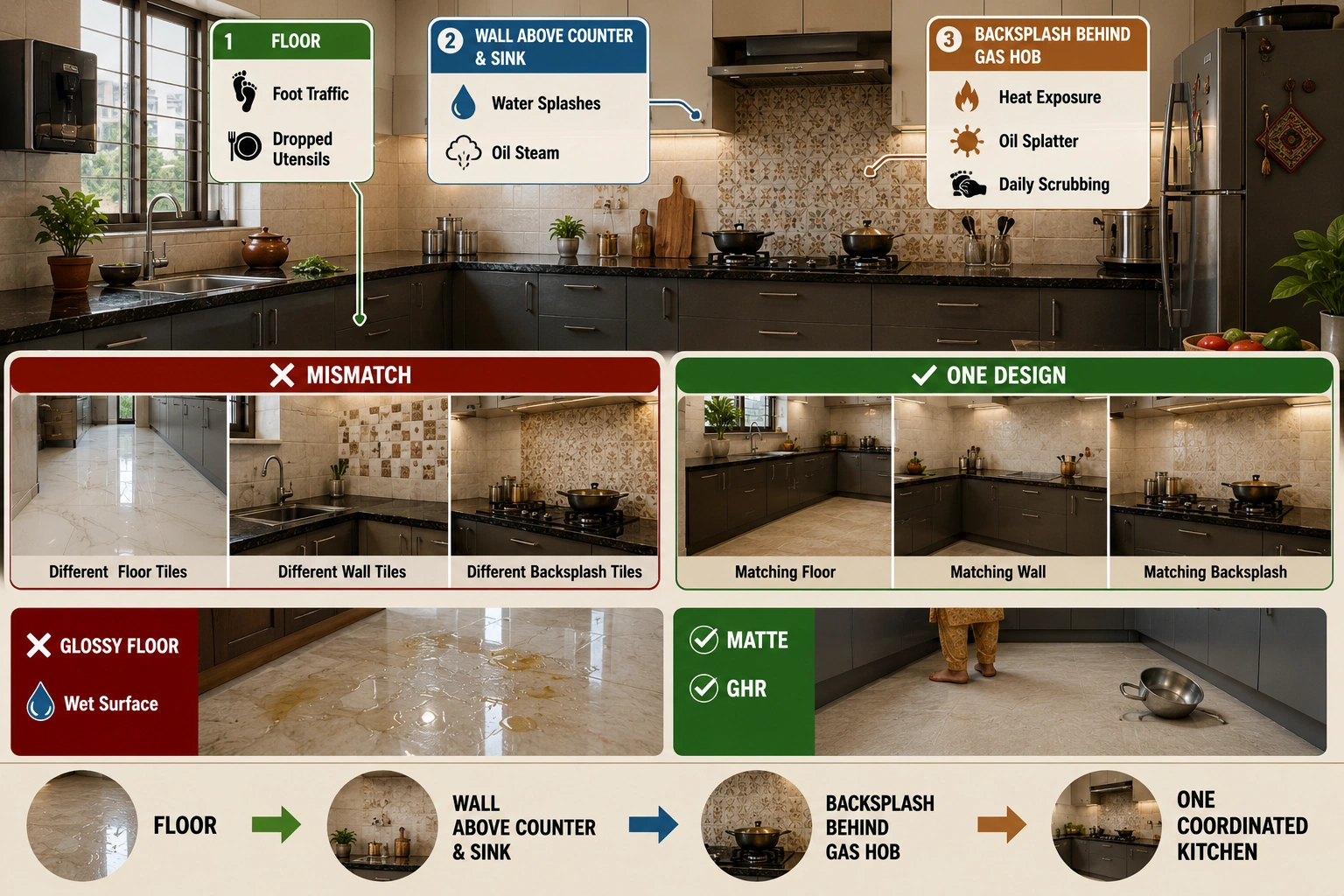
A modular kitchen has three distinct tile surfaces: the wall above the counter, the floor, and the backsplash behind the cooking platform. Each surface takes a different kind of abuse. The floor handles foot traffic and dropped utensils. The wall above the platform gets oil steam and water splashes from the sink. The backsplash directly behind the gas hob takes the worst of it: direct heat exposure, spattering oil, and daily scrubbing.
When these three surfaces don't coordinate in finish, scale, and colour, the kitchen reads as three separate design decisions rather than one. Indian kitchens tend to be compact, typically 100 to 180 sq. ft. in a 2BHK or 3BHK apartment. In a small space, a tile mismatch is impossible to hide.
The modular kitchen tile combination also affects maintenance. Glossy floor tiles in a kitchen that sees daily Indian cooking (heavy oil, turmeric, frequent mopping) stain quickly and stay slippery when wet. Matte or GHR finish floor tiles handle that reality far better. Getting this right at the start saves significant rework cost later.
How Modular Kitchen Tile Combinations Work
The Three Surfaces and Their Jobs
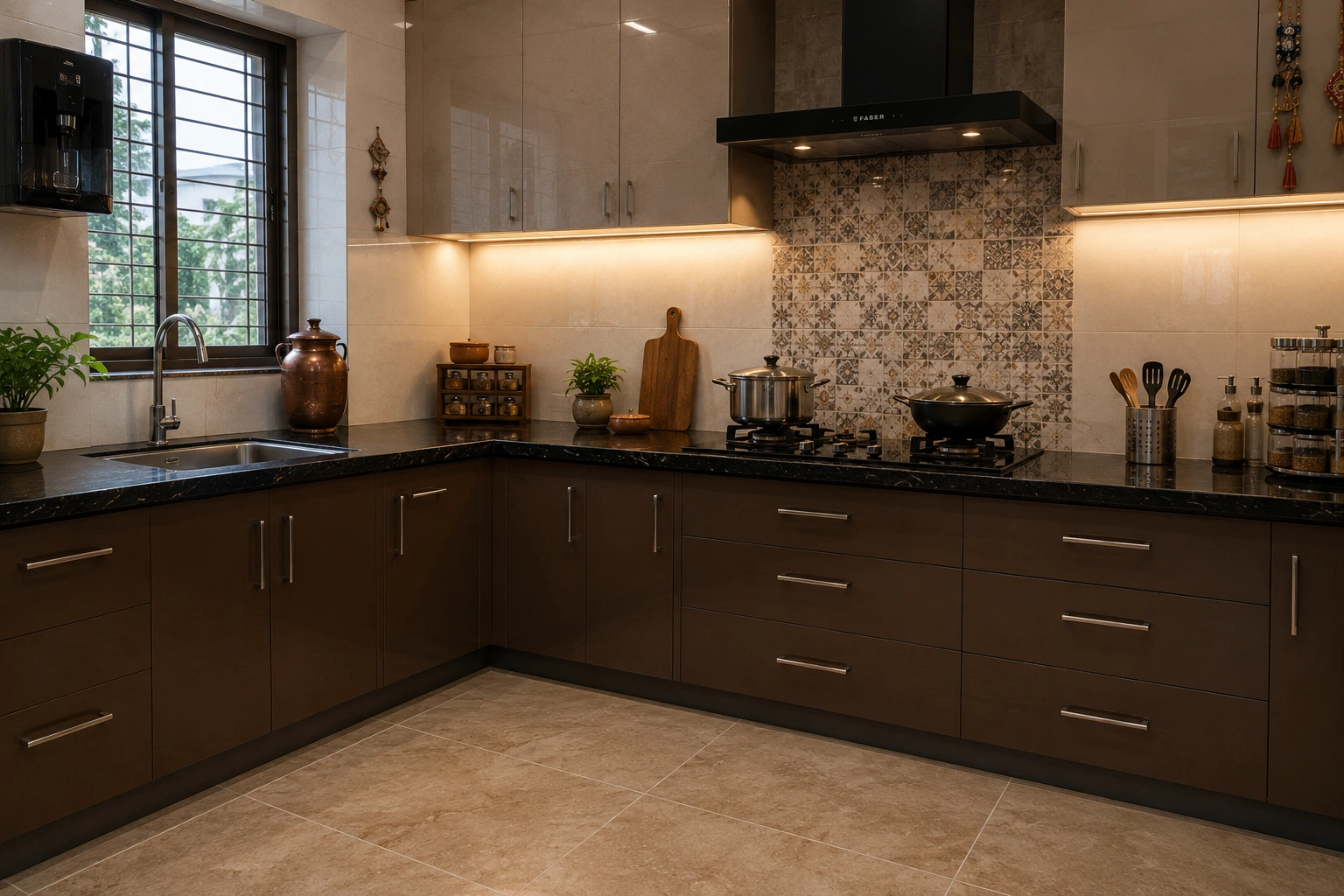
Wall tiles in a modular kitchen refer to the tiled surface between the upper and lower cabinets, typically 600 to 900 mm of exposed wall. These tiles face steam, light splashing, and cabinet contact. They should be easy to wipe clean and carry the room's main colour direction.
Floor tiles span the entire kitchen footprint. They face constant foot traffic, dropped vessels, mopping with strong detergents, and, in many Indian homes, underfoot water during cooking. Anti-skid or textured matte finishes are the practical choice for kitchen floors.
The backsplash sits directly behind the gas hob or induction cooktop. This 300 to 600 mm band of tile takes direct heat, heavy oil and masala splashing, and daily scrubbing. Glossy tiles clean easily here, but only if they are heat-rated and not too large in format.
The Coordination Rule: 60-30-10
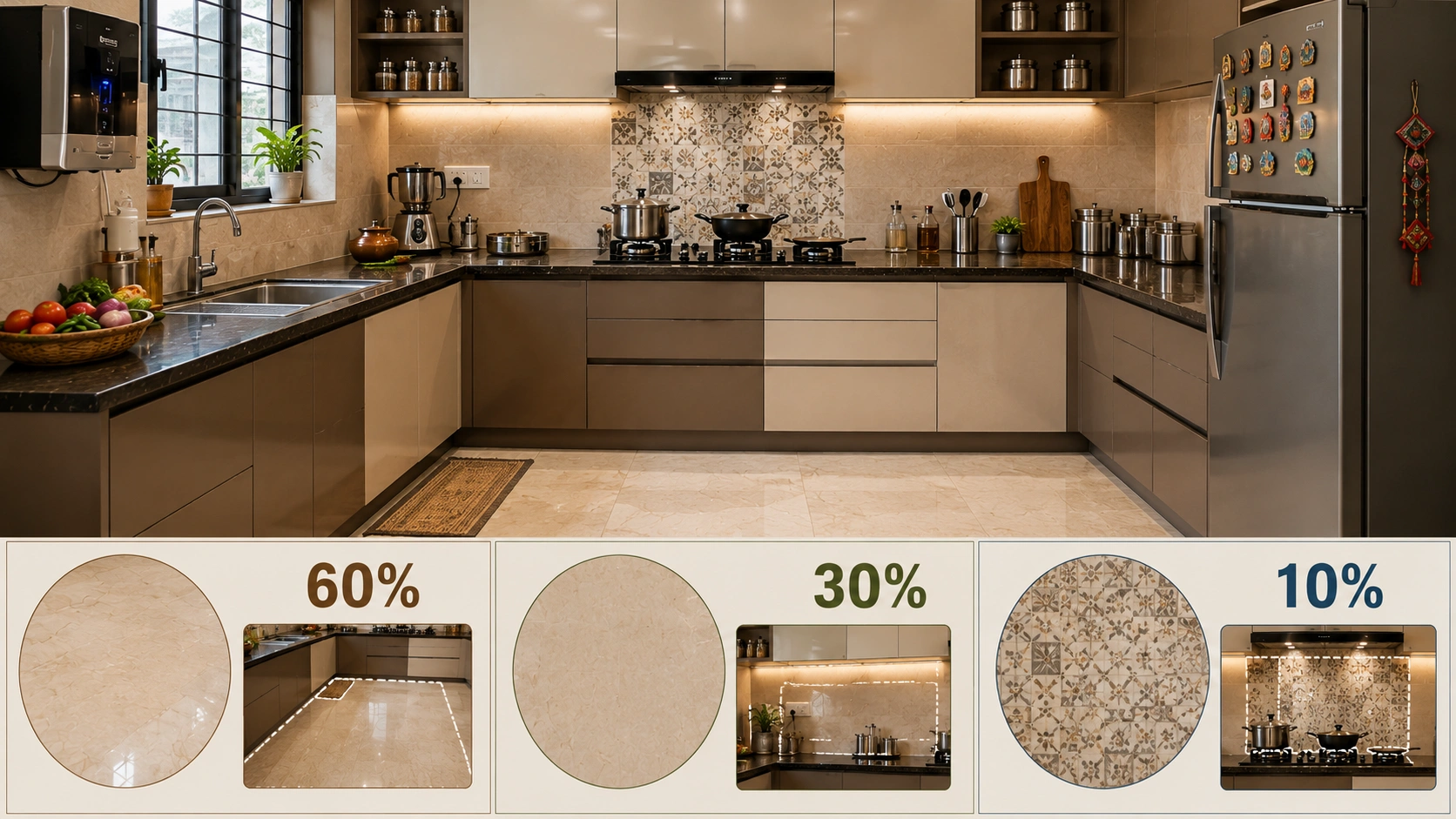
A practical way to build a modular kitchen tile combination is the 60-30-10 rule. 60% of the visual area uses the dominant colour, usually the floor. 30% uses a secondary colour, typically the wall tile. 10% uses an accent, often the backsplash. This prevents visual clutter in a compact kitchen.
In Indian modular kitchens, this often plays out as: a warm beige or light grey floor (60%), white or cream wall tiles (30%), and a patterned or contrasting backsplash in terracotta colour, sage green, or marble-look (10%). The backsplash is where most of the personality lives.
Best Modular Kitchen Tile Combinations for Indian Homes
The five modular kitchen tile combinations below are built around Indian market-available tile categories, practical finishes, and realistic price ranges. Each combination trio is tested against the three kitchen surfaces: wall, floor and backsplash. All approximate prices are per sq. ft. from Morbi manufacturers.
Combination 1: White Wall + Grey Floor + Subway Backsplash
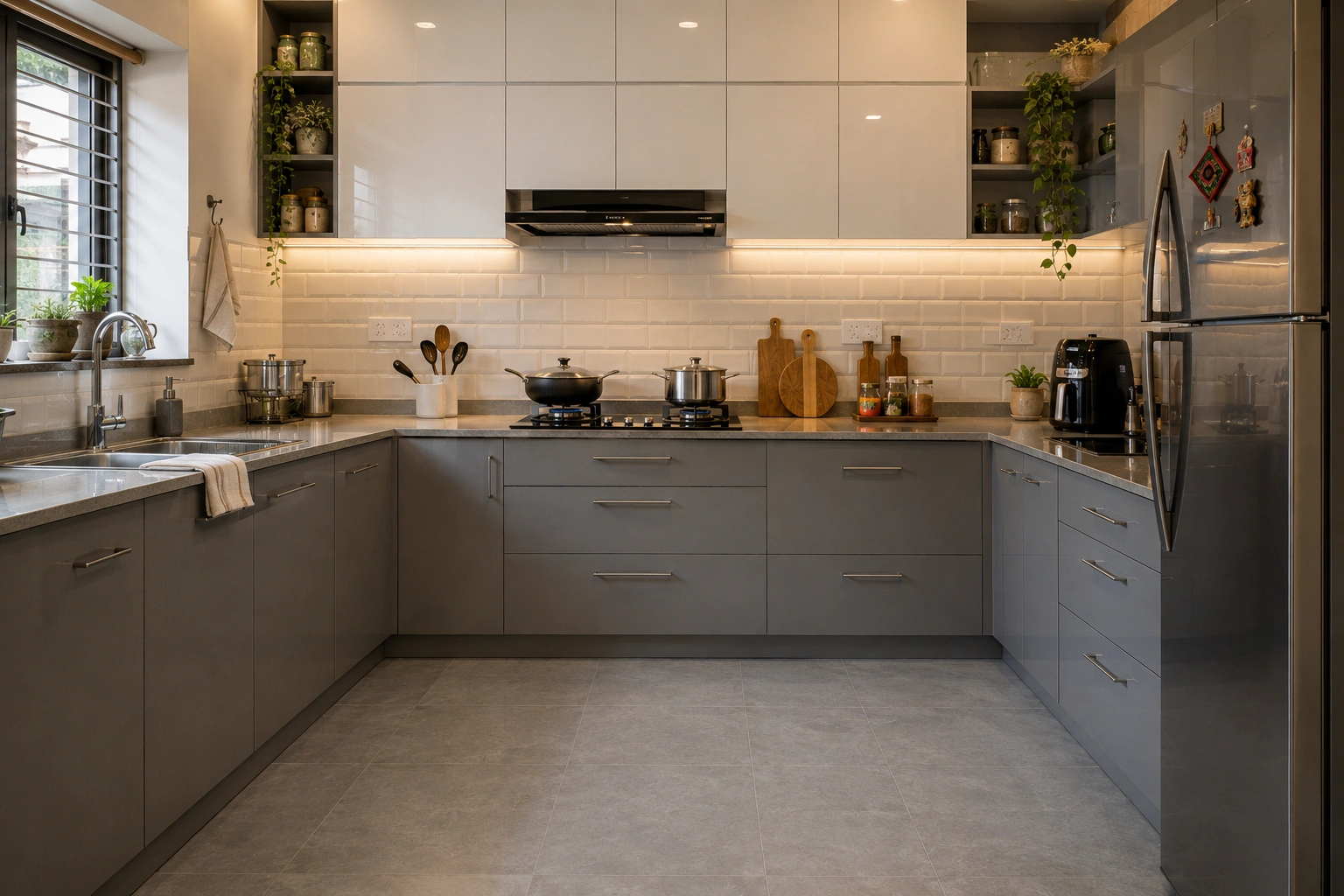
This is the most requested modular kitchen tile combination in urban Indian apartments right now. It reads clean, photographs well, and works in both small and large kitchens.
| Surface | Tile | Finish | Size | Category | Approx. Price |
| Wall | White or off-white | Glossy | 300x600 mm (12x24) | Ceramic | Rs. 35 to Rs. 60 per sq. ft. |
| Floor | Mid-grey or cool grey | Matte or GHR | 600x600 mm (2x2) or 600x1200 mm (2x4) | GVT | Rs. 65 to Rs. 110 per sq. ft. |
| Backsplash | White or light grey subway (brick-lay pattern) | Glossy | 75x300 mm or 100x300 mm | Ceramic | Rs. 45 to Rs. 80 per sq. ft. |
The wall ceramic in 12x24 size is wall-only and works perfectly in this zone. The grey GVT floor in 2x2 or 2x4 with matte or GHR finish handles daily Indian cooking traffic without showing oil marks. The subway backsplash in a glossy finish cleans easily after cooking.
Grout colour matters here. Use mid-grey grout on the floor and white or off-white grout on the wall and backsplash. Contrasting grout on the subway backsplash is a popular choice for kitchens with a modern look.
Combination 2: Cream Wall + Beige Matte Floor + Terracotta Colour Backsplash
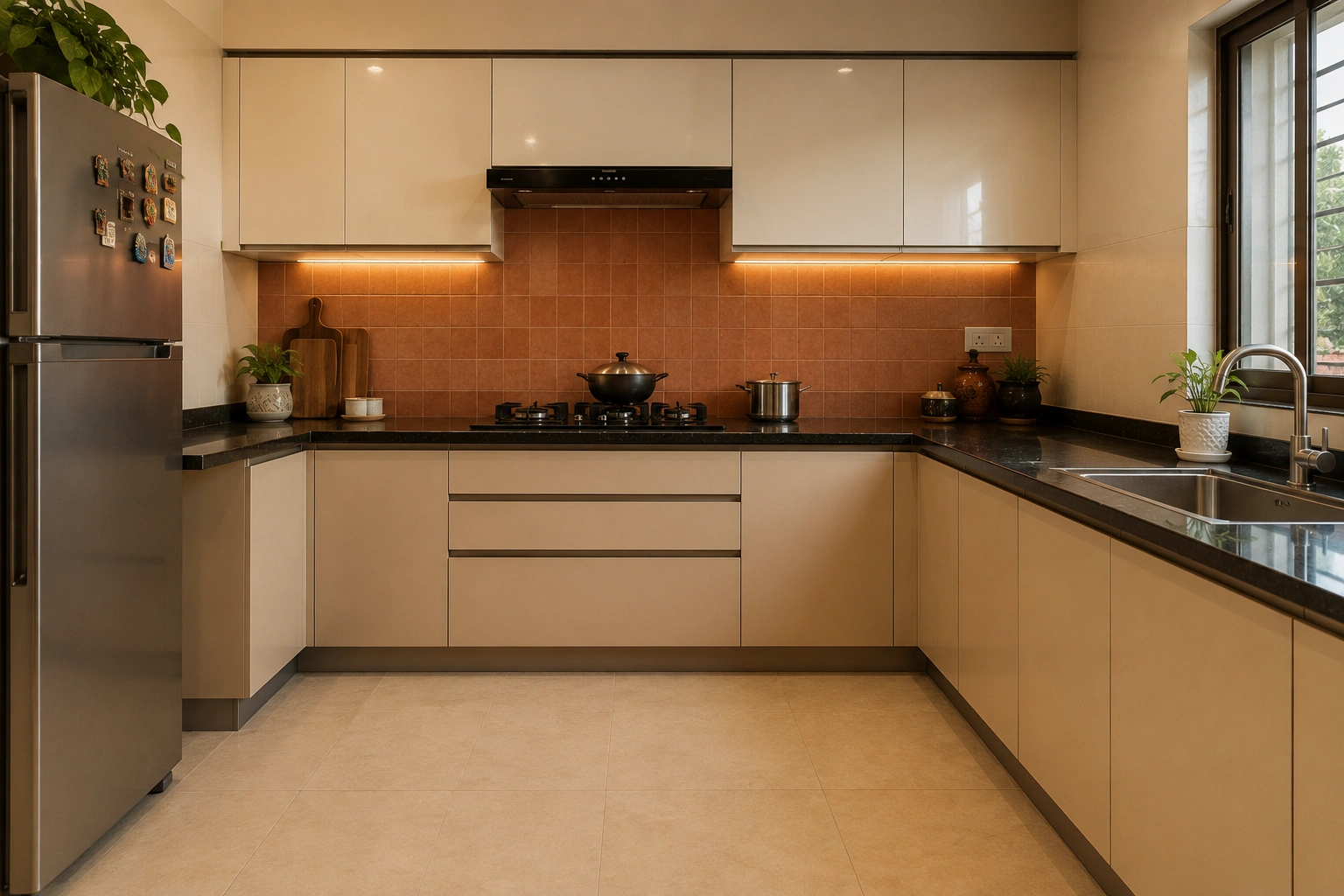
This warm combination suits kitchens with wooden modular cabinetry in shades of oak, walnut, or teak. The terracotta colour in the backsplash tile (ceramic or GVT in terracotta-coloured glaze, not actual clay tile) adds warmth without going heavy.
| Surface | Tile | Finish | Size | Category | Approx. Price |
| Wall | Cream or warm white | Glossy or Satin Matte (dry-room only) | 300x600 mm (12x24) | Ceramic | Rs. 35 to Rs. 65 per sq. ft. |
| Floor | Warm beige or sand | Matte or Posh | 600x600 mm (2x2) | GVT | Rs. 60 to Rs. 100 per sq. ft. |
| Backsplash | Terracotta colour glaze | Glossy | 300x300 mm (1x1) or 300x600 mm (12x24) | Ceramic | Rs. 40 to Rs. 75 per sq. ft. |
Note that satin matte finish on the wall tile is acceptable in this dry wall zone, but never use satin matte on the floor or backsplash. Also, terracotta here describes the colour, not the material. The backsplash tile is ceramic in a terracotta-coloured glaze, which is heat-tolerant and easy to wipe.
Epoxy grout in a terracotta or rust shade on the backsplash ties the palette together and resists oil staining far better than cement grout in this cooking-heavy zone.
Combination 3: Light Grey Wall + Dark Grey Floor + White Marble-Look Backsplash
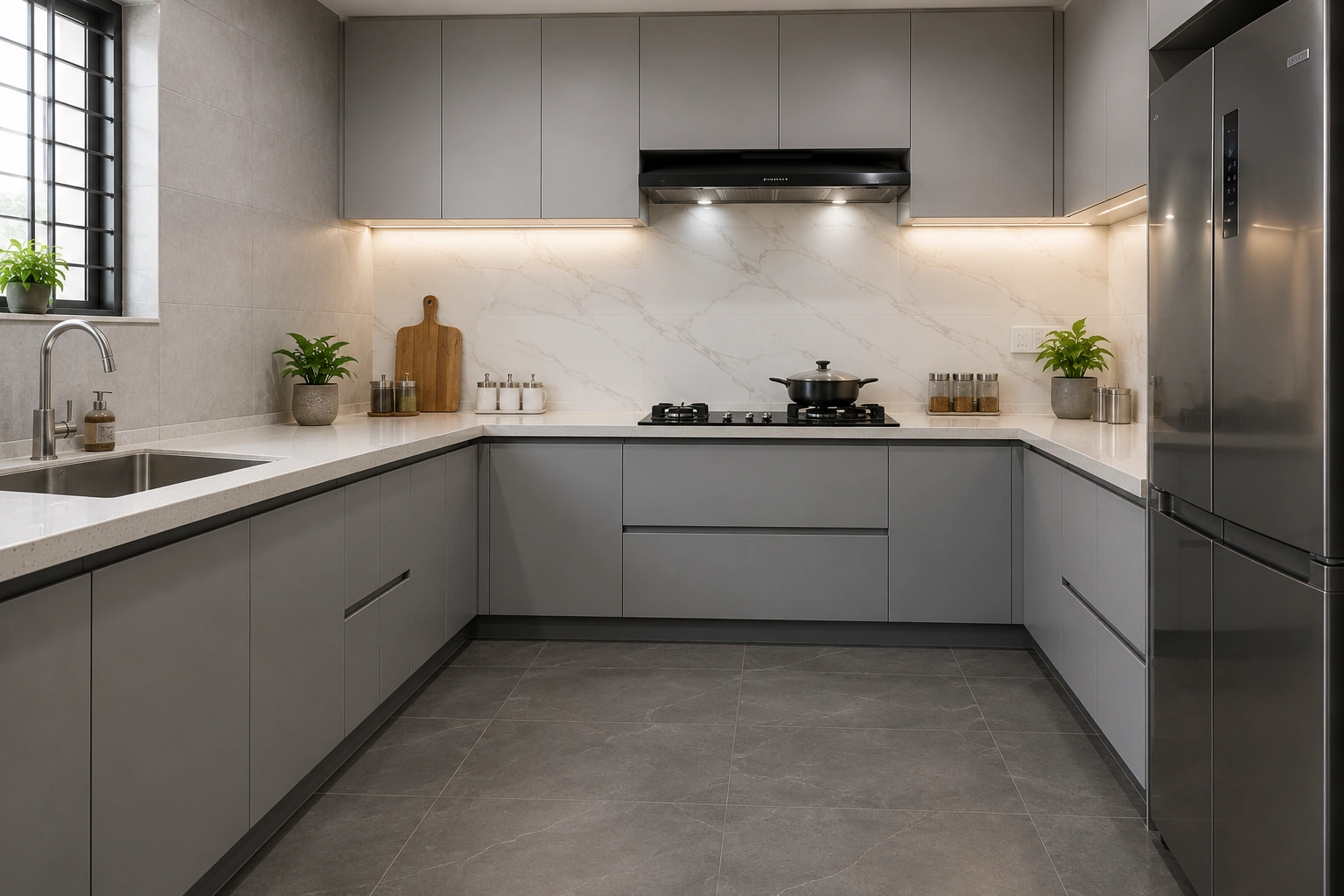
A monochromatic grey palette with a marble-look backsplash works well in sleek urban kitchens with white or grey lacquered cabinetry. This combination reads modern and is relatively forgiving of maintenance.
| Surface | Tile | Finish | Size | Category | Approx. Price |
| Wall | Light grey or silver-grey | Glossy | 300x600 mm (12x24) | Ceramic | Rs. 35 to Rs. 70 per sq. ft. |
| Floor | Dark grey or charcoal | Matte or GHR | 600x1200 mm (2x4) | GVT | Rs. 70 to Rs. 130 per sq. ft. |
| Backsplash | White Carrara marble-look | Glossy or Matte Carving | 600x1200 mm (2x4) or 300x600 mm (12x24) | PGVT (wall only) | Rs. 90 to Rs. 150 per sq. ft. |
The PGVT marble-look backsplash is walls-only and never goes on the floor. Its polished surface cleans easily, which suits the backsplash position. The dark grey GVT floor in matte or GHR finish absorbs foot traffic and does not show dust the way a lighter floor does. Epoxy grout in mid-grey across all three surfaces keeps the palette cohesive.
Combination 4: Sage Green Wall + Warm White Floor + Wooden Plank Backsplash
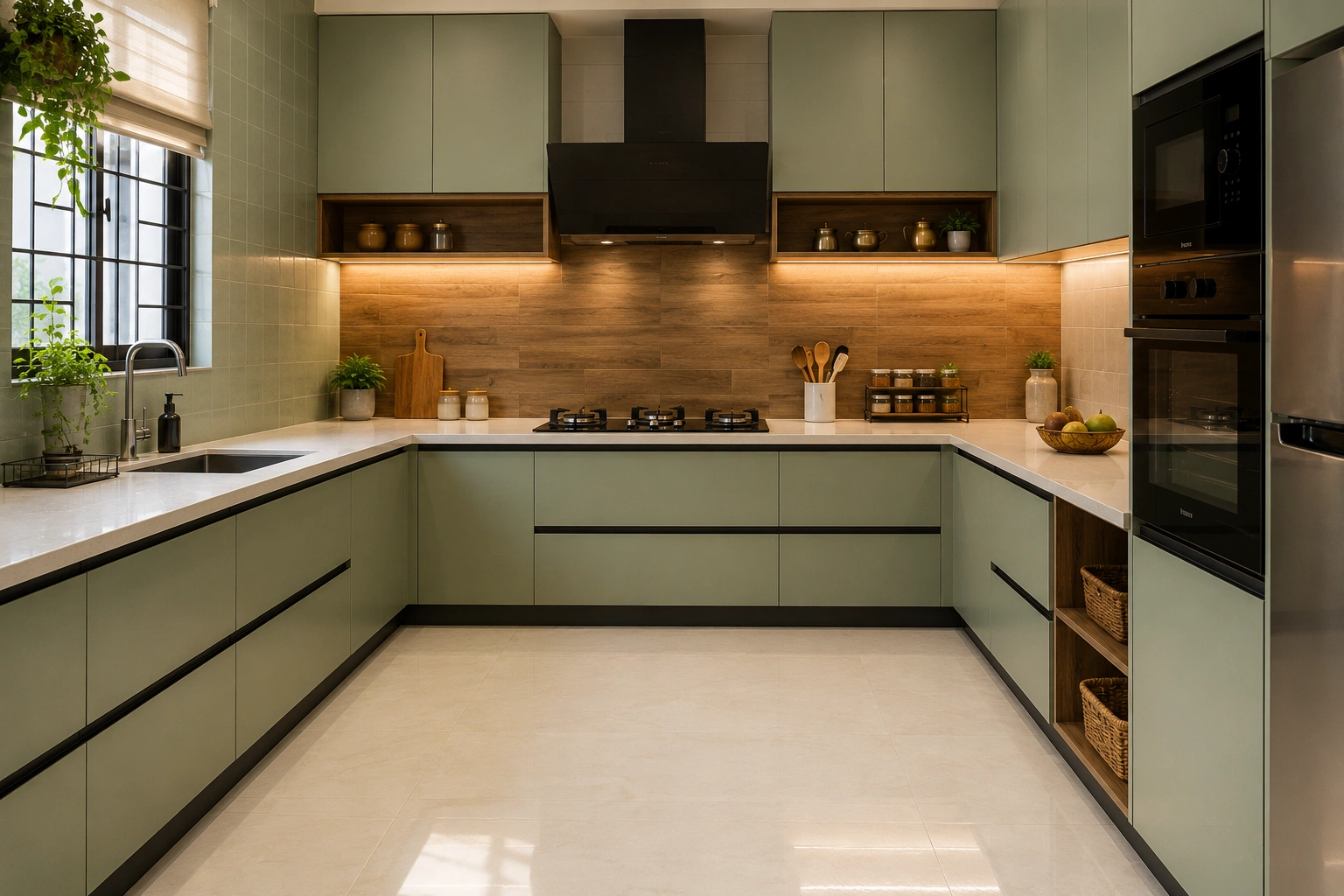
Sage green as a kitchen wall tile colour has grown significantly in popularity in Indian 3BHK and 4BHK homes since 2024. It pairs well with warm white or cream floors and a wooden plank-look backsplash tile for a kitchen that feels relaxed rather than clinical.
| Surface | Tile | Finish | Size | Category | Approx. Price |
| Wall | Sage green or eucalyptus green | Glossy | 300x600 mm (12x24) or 300x450 mm (12x18) | Ceramic | Rs. 40 to Rs. 80 per sq. ft. |
| Floor | Warm white or ivory | Matte or Posh | 600x600 mm (2x2) | GVT | Rs. 60 to Rs. 105 per sq. ft. |
| Backsplash | Wood-look plank tile in oak or walnut colour | Matte or Sugar | 200x1200 mm (8x48) | GVT | Rs. 75 to Rs. 130 per sq. ft. |
The 8x48 wooden plank GVT tile used as backsplash is a modular kitchen tile combination trend that started in European design and adapted well to Indian cooking spaces. It is easier to clean than actual wood, resists heat, and gives the wall a textured natural look without the maintenance concerns of real wood. Lay it horizontally for a wider visual effect, or vertically for height in compact kitchens.
Combination 5: Charcoal Feature Wall + White Floor + Gold-Accent Backsplash
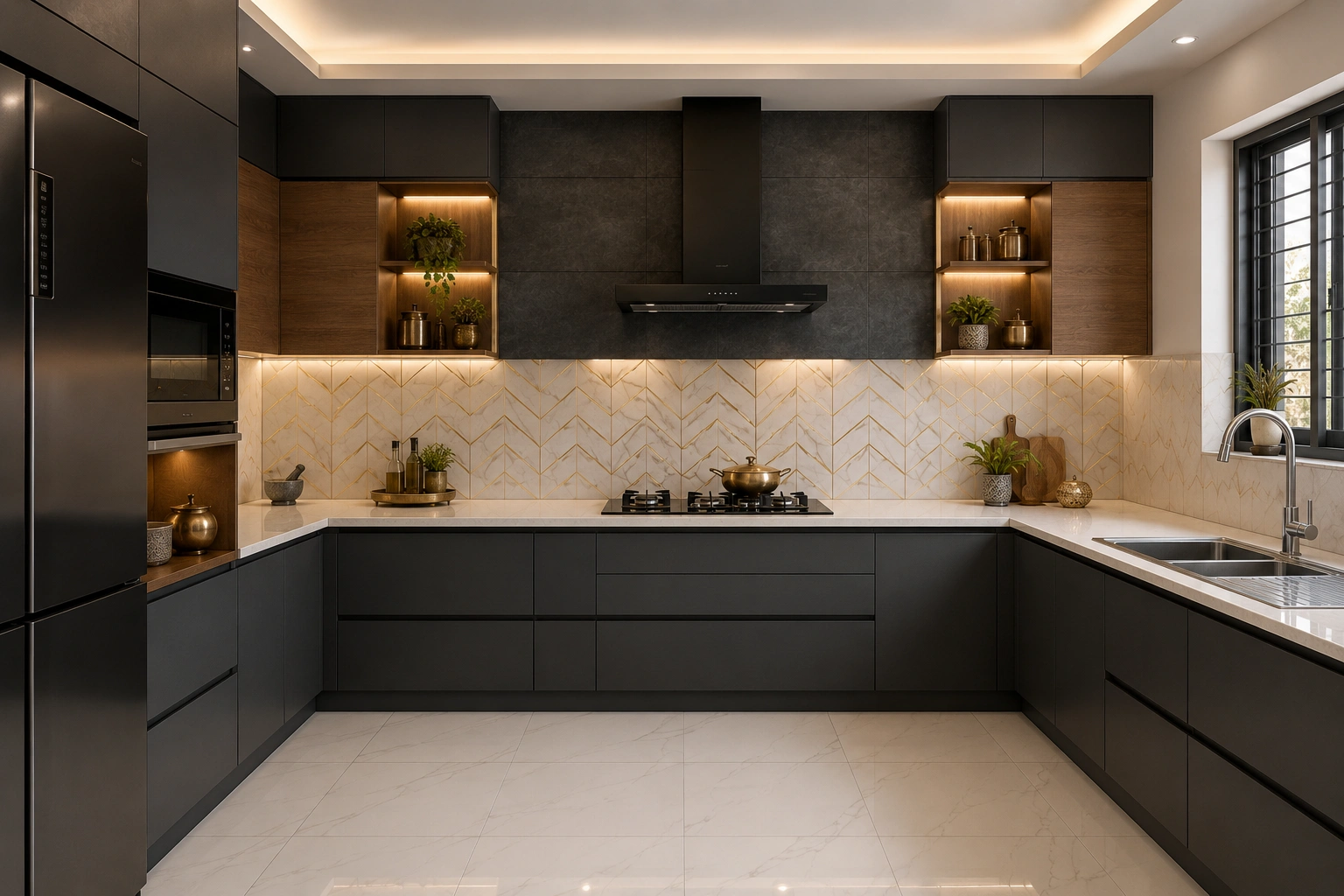
This combination suits open-plan kitchens in larger Indian homes where the kitchen is visible from the living room. The charcoal feature wall behind the cooking platform creates a bold anchor, the white floor keeps the space feeling open, and a gold-accent or ochre backsplash tile adds warmth.
| Surface | Tile | Finish | Size | Category | Approx. Price |
| Wall | Charcoal or dark anthracite | Matte or Posh | 600x1200 mm (2x4) or 600x600 mm (2x2) | GVT | Rs. 70 to Rs. 130 per sq. ft. |
| Floor | Bright white or polar white | Matte or GHR (anti-skid) | 600x1200 mm (2x4) | GVT | Rs. 65 to Rs. 120 per sq. ft. |
| Backsplash | Gold, ochre or antique brass glaze | Glossy | 75x300 mm subway or 300x600 mm (12x24) | Ceramic | Rs. 55 to Rs. 120 per sq. ft. |
Use epoxy grout in dark grey on the charcoal wall and white epoxy grout on the white floor. The gold-tone backsplash ties the two contrasting tones and the brass or matte-black cabinet hardware together. This modular kitchen tile combination works best with ample lighting since the dark wall absorbs light.
Tile Sizes That Work in Indian Modular Kitchens
Indian modular kitchens range from tight galley layouts of 80 sq. ft. in Mumbai apartments to open L-shaped or U-shaped kitchens of 200 sq. ft. or more in independent homes. Tile size affects how large or small the space reads.
If you're designing a compact kitchen, explore our Small Kitchen Tile Ideas guide for layouts, colours, and tile sizes that make 80-120 sq. ft. kitchens feel noticeably larger.
| Surface | Recommended Size | Common Alias | Notes |
| Wall (between cabinets) | 300x600 mm | 12x24 | Wall-only size. Most popular for Indian kitchen walls. Easy to lay without cuts in standard cabinet-gap height. |
| Wall (narrow strips or accent) | 300x450 mm | 12x18 | Wall-only. Useful in tight gaps above the countertop in compact kitchens. |
| Floor (small to medium kitchen) | 600x600 mm | 2x2 | Good for kitchens under 120 sq. ft. Fewer full-length grout lines. |
| Floor (medium to large kitchen) | 600x1200 mm | 2x4 | Makes a medium kitchen feel larger. Works in rectangular galley layouts. |
| Backsplash (classic subway) | 75x300 mm or 100x300 mm | 3x12 or 4x12 | Brick-lay pattern is the most common Indian kitchen backsplash choice. |
| Backsplash (plank style) | 200x1200 mm | 8x48 | Wood-look plank for modern kitchens. Horizontal or vertical lay. |
| Backsplash (standard panel) | 300x600 mm | 12x24 | Matches the wall tile size. Good when you want a seamless wall-to-backsplash look. |
A common mistake is using very large tiles (800x1600 mm) on a small kitchen wall. In a kitchen where only 600 to 900 mm of wall is exposed between cabinets, large-format tiles have minimal grout lines but also require precision cutting. The 12x24 ceramic remains the practical Indian kitchen wall standard for good reason.
For kitchen floors, the 2x4 GVT in matte finish is now the most specified size in new Indian apartment fit-outs. It covers more area with fewer grout lines, which means less dirt accumulation in a space that gets heavy cooking spillage.
Best Tile Finishes for Kitchen Walls, Floors and Backsplash
Finish is the most important technical decision in a modular kitchen tile combination. The wrong finish in the wrong zone creates safety risks or a maintenance nightmare.
| Surface | Best Finish | Avoid | Why |
| Kitchen wall (between cabinets) | Glossy or Satin Matte | High-depth punch tiles | Glossy wipes clean easily. Satin Matte looks softer. Deep-textured wall tiles trap oil. |
| Kitchen floor | Matte, GHR (textured), Posh, Rain Drops | Glossy, High Glossy, Polished, Satin Matte, PGVT (any finish) | Wet kitchen floors with a glossy or polished finish become slippery. Matte and GHR hold grip even after mopping. |
| Backsplash (behind hob) | Glossy, Matte Carving | High-depth textured tiles, Stucco | Glossy wipes clean fast after oil splashing. Deep-textured tiles trap grease and are difficult to clean daily. |
PGVT in any finish must never go on a kitchen floor. Its polished surface has near-zero grip when wet. For the backsplash, PGVT wall tiles are a good choice since they clean well and look sharp, as long as they are in the right format for the wall zone.
Satin matte finish deserves special mention. Many homeowners see 'matte' in the name and assume it is anti-skid. It is not. Satin matte is a dry-room finish only and should never be used on kitchen or bathroom floors. On kitchen walls above the countertop (a dry zone), it works well.
Comparison: Tile Category Options for Each Kitchen Surface
| Surface | Category | Water Absorption | Suitable? | Approx. Price Range |
| Kitchen Wall | Ceramic (300x600 mm) | 12 to 16% | Yes, wall only | Rs. 30 to Rs. 80 per sq. ft. |
| Kitchen Wall | GVT (glossy) | 0.05% | Yes | Rs. 60 to Rs. 130 per sq. ft. |
| Kitchen Wall | PGVT (polished) | 0.05% | Yes, wall only | Rs. 90 to Rs. 150 per sq. ft. |
| Kitchen Floor | GVT (matte or GHR) | 0.05% | Yes | Rs. 60 to Rs. 130 per sq. ft. |
| Kitchen Floor | Porcelain (matte) | 2 to 5% | Yes | Rs. 90 to Rs. 200 per sq. ft. |
| Kitchen Floor | Full Body (matte) | 0.05% | Yes | Rs. 90 to Rs. 180 per sq. ft. |
| Backsplash | Ceramic (glossy) | 12 to 16% | Yes, wall only | Rs. 35 to Rs. 80 per sq. ft. |
| Backsplash | GVT (glossy) | 0.05% | Yes | Rs. 65 to Rs. 120 per sq. ft. |
| Backsplash | PGVT (polished glossy) | 0.05% | Yes, wall only | Rs. 90 to Rs. 150 per sq. ft. |
All price ranges above are approximate 2026 market rates from Morbi-manufactured tiles. Choosing the right modular kitchen tile combination across all three surfaces means matching category to zone: ceramic and GVT for walls, GVT or porcelain for floors, and ceramic or PGVT for backsplash. Prices vary by brand, dealer, and city. Always add 10% extra tiles to the estimate for wastage and breakage during fitting.
Expert Tips Before Finalizing Your Kitchen Tile Combination
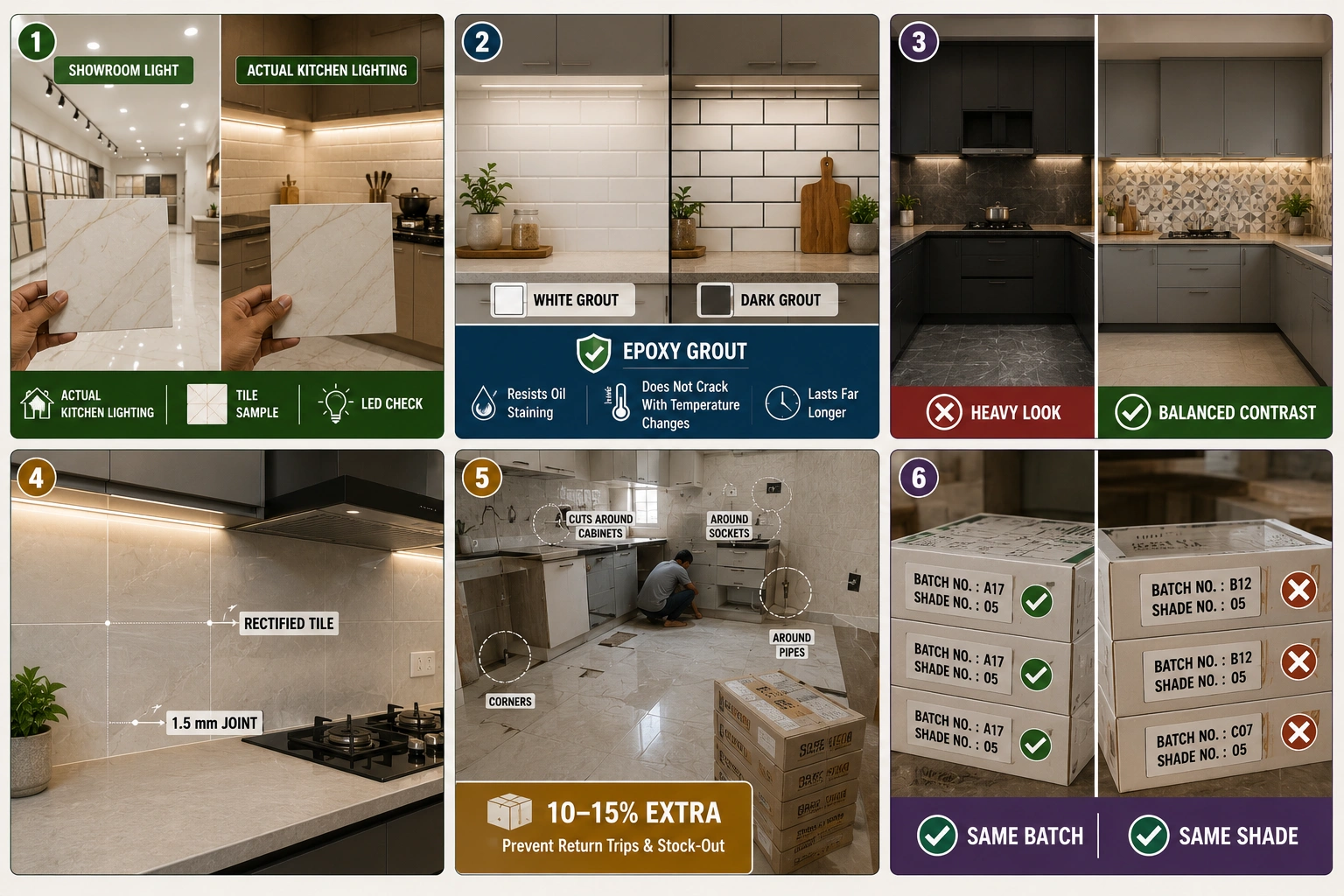
1. Check tile samples under your actual kitchen lighting
Showroom lighting is almost always brighter and whiter than a typical Indian kitchen. Bring tile samples home and see them under the kitchen's tube light or LED panel before finalising. A tile that looks cool grey in the showroom may read as blue-green under warm kitchen LEDs.
2. Decide on grout colour before tiling begins
Grout colour changes how a tile combination reads. White grout on a white subway backsplash reads seamless. Dark grey grout on the same tile reads graphic. Use epoxy grout throughout the kitchen, not just the backsplash. Epoxy grout resists oil staining, does not crack with temperature changes, and lasts far longer than cement grout in cooking environments.
3. Match the tile combination to the cabinet colour, not just your preference
The cabinet colour occupies the largest visual area in a modular kitchen. The tile combination should support the cabinet, not compete with it. A dark charcoal cabinet with a dark tile floor creates visual heaviness. A light grey cabinet with a light grey wall tile can feel flat. A contrast accent tile in the backsplash creates the balance.
4. Use rectified tiles for kitchen walls and backsplash
Rectified tiles have precisely cut edges, allowing tighter grout lines (as small as 1.5 mm). In a kitchen where the backsplash tiles are laid between precision-fitted cabinets, rectified tiles look significantly cleaner than standard tiles with wider joints.
5. Always buy 10 to 15% more than your measured area
Kitchen tiling involves cuts around cabinets, sockets, pipes, and corners. The wastage rate in modular kitchens is higher than in open rooms. A buffer of 10 to 15% prevents a return trip to the tile shop midway, which may face a stock-out on the same batch and shade number.
6. Confirm tile batch and shade numbers before placing the order
Tiles from the same design but different production batches can have slight shade variations. This is common in Morbi-manufactured tiles where large volumes are produced across multiple kiln runs. Always confirm that all tiles for one surface come from the same batch and shade number.
Common Mistakes in Modular Kitchen Tile Selection
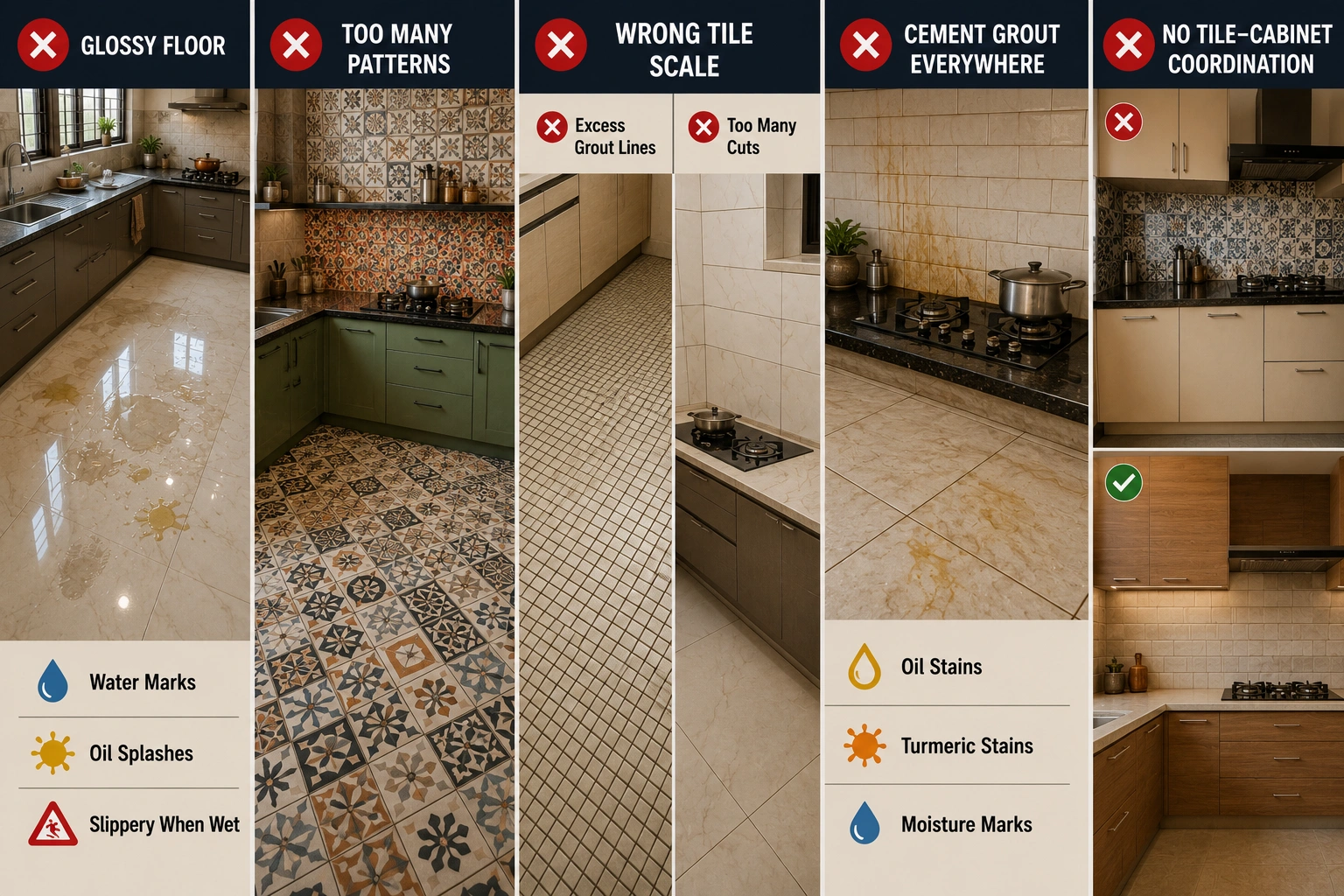
Glossy kitchen floors are the single most common regret in Indian modular kitchen renovations. Glossy tiles look striking in the showroom but show every fingerprint, oil splash, and water mark in daily kitchen use. They also become slippery when wet, which is a real safety concern near the sink and cooking platform.
Mixing too many tile patterns across three surfaces is another frequent problem. A patterned wall tile, a patterned floor tile, and a coloured backsplash in one small kitchen produce visual noise. The backsplash should carry the pattern or accent. The wall and floor should stay relatively calm.
Ignoring scale creates proportion problems. Very small mosaic tiles (25x25 mm) on a large kitchen floor create hundreds of grout lines that trap dirt and require significant effort to keep clean. Large-format tiles (800x1600 mm) on a 2BHK kitchen wall with limited exposed wall between cabinets produce mostly cuts and very few full tiles.
Using cement grout throughout instead of epoxy grout on at least the backsplash and floor is a maintenance mistake. Cement grout around the cooking platform absorbs oil, turmeric, and moisture. Within two monsoon seasons, it typically darkens and becomes difficult to restore. Epoxy grout adds to the upfront cost but pays off across years of low-maintenance use.
Skipping the tile-to-cabinet coordination step produces kitchens that feel designed in isolation. A contractor who tiles first and installs cabinets later (or vice versa) without referencing a coordinated palette often delivers a result where the tiles and cabinets work against each other rather than together.
Indian kitchens face conditions that European tile standards don't account for: heavy monsoon humidity, extreme summer heat near cooking platforms, and hard water with high mineral content in cities like Ahmedabad, Pune, and Delhi. For kitchen floors, GVT tiles manufactured in Morbi, Gujarat, carry a water absorption rate of 0.05%, which makes them suitable for the humidity swings that come with the monsoon season. A matte or GHR finish GVT floor tile resists the dampness that a glossy surface magnifies. IS 15622:2006 covers the vitrified tile standards that Morbi manufacturers follow for kitchen-grade flooring.
Kitchen wall and backsplash ceramic tiles manufactured in Morbi are typically available in the 300x600 mm (12x24) size at Rs. 35 to Rs. 80 per sq. ft. For the cooking platform backsplash, the ceramic category with 12 to 16% water absorption is acceptable since this is a wall zone that does not face standing water. GVT backsplash tiles at Rs. 60 to Rs. 130 per sq. ft. are a longer-lasting option that handles the temperature variation between a hot kadai and a cold splash of water without cracking. Choosing the right modular kitchen tile combination for your Indian home starts with matching the surface to the correct category, finish, and size.
Shortlist Kitchen Tiles Before Visiting a Tile Showroom
Getting the modular kitchen tile combination right is easier when you can compare wall, floor, and backsplash options side by side across finish, size, category, and colour. Most homeowners visit three or four tile shops before settling on a combination. That process takes weeks and rarely delivers a coordinated result across all three surfaces.
Using a platform like Tilesfinders to browse and shortlist kitchen tiles before visiting a dealer saves time and produces better combinations. TilesFinders brings together manufacturers from Morbi, Gujarat, and across India, letting you filter kitchen tiles by finish, category, size, and colour. Walk into your tile shop with a shortlist instead of starting from scratch.
FAQs
Ceramic tiles in 300x600 mm (12x24) size with glossy finish are the most widely used for Indian modular kitchen walls. They cost approximately Rs. 35 to Rs. 80 per sq. ft., clean easily with a damp cloth, and fit the standard exposed wall height between upper and lower cabinets. GVT in glossy finish is a step up in durability with 0.05% water absorption for kitchens that produce heavy steam.
You can use the same tile design on both, but you should choose different finishes. The backsplash can use a glossy finish for easy cleaning. The floor must use a matte, GHR, or anti-skid finish for slip safety. Using glossy tiles on a kitchen floor is a common mistake that creates a slip risk when the floor is wet. The tile pattern can match; the finish should differ by zone.
For small Indian kitchens under 120 sq. ft., 600x600 mm (2x2) GVT in matte finish works well on the floor, and 300x600 mm (12x24) ceramic works well on the wall. Avoid very large-format tiles in compact spaces as they need heavy cutting. A 75x300 mm subway tile on the backsplash adds pattern and visual interest without overwhelming a small kitchen.
Use a neutral mid-grey epoxy grout as the base across all three surfaces for a cohesive look. If you want contrast on the backsplash (especially subway tiles), choose a darker grout colour there and stick to lighter or matching grout on walls and floor. Epoxy grout is recommended throughout a kitchen because it resists oil, moisture, and turmeric staining far better than standard cement grout.
PGVT tiles work well on kitchen backsplash as a wall surface. They have 0.05% water absorption, clean easily with a damp cloth, and carry a polished look that suits modern Indian modular kitchens. Never use PGVT on kitchen floors. Its polished surface has very low grip when wet and is not rated for flooring use. Stick to PGVT on walls and backsplash only.
Light-coloured wall and floor tiles make small Indian kitchens feel more open. A white or cream ceramic wall tile paired with a light grey or warm beige GVT floor and a white subway backsplash is the most popular choice for compact 2BHK kitchens. Avoid dark floor tiles in small kitchens as they reduce the sense of space and show dust between mopping sessions.
Kitchen floor tiles should always be matte, GHR, Posh, or Rain Drops finish. Glossy, high glossy, polished, and satin matte finishes are not safe for kitchen floors because they become slippery when wet. Indian kitchens see daily water near the sink and cooking platform. A matte GVT floor in 0.05% water absorption holds grip, resists staining, and lasts through years of daily mopping.

See our tile guides first
Set TilesFinders as a preferred source and our buying guides surface ahead of the rest for you.
Add as preferred sourceTakes one tap. Nothing to install.
What Readers Say
I was about to redo my parking area with the wrong tile size until I read this. The layout comparisons saved me from a costly mistake.
We reference TilesFinders guides while briefing clients on material selection. The size and pattern breakdowns are accurate and easy to explain visually.
On site, I get asked about grout spacing all the time. This article gave me a solid reference I now share with my team before every job.
Finally a guide that doesn't just push generic advice. The oil stain removal steps actually worked on our clubhouse driveway tiles.
I run a small construction firm and now send this link to clients directly when they ask about entrance tile sizing. Saves me an hour of explaining.
Good practical detail, though I wish there were more examples for compact apartment entrances specifically, not just villas.
My mother-in-law wanted marble, I wanted vitrified. This blog gave us the neutral comparison we needed to actually decide together.
Detailed without being overwhelming. I appreciated that it covered both cost and maintenance, not just the aesthetics.
Used the algae and hard water removal tips on our terrace tiles after the monsoon. Worked better than what our regular cleaner was doing.
As someone who sources tiles for multiple builder projects, I find these comparisons genuinely useful for vendor conversations, not just consumer content.
Recommended this to a client who kept second-guessing the entrance design. The small vs large layout section settled the debate instantly.
Straightforward and honest, no unnecessary jargon. Would like to see a similar breakdown for outdoor pool-deck tiles next.
We've bookmarked several TilesFinders guides for our design handbook. Reliable source when clients want data, not just opinions.
Two paths, one marketplace.
Get free quotes from verified suppliers.
Share your room, budget, and style. Suppliers in Morbi respond within hours.
Get Free QuotesList your business, reach real buyers.
Put your showroom in front of homeowners searching for tiles right now.
List Your Business