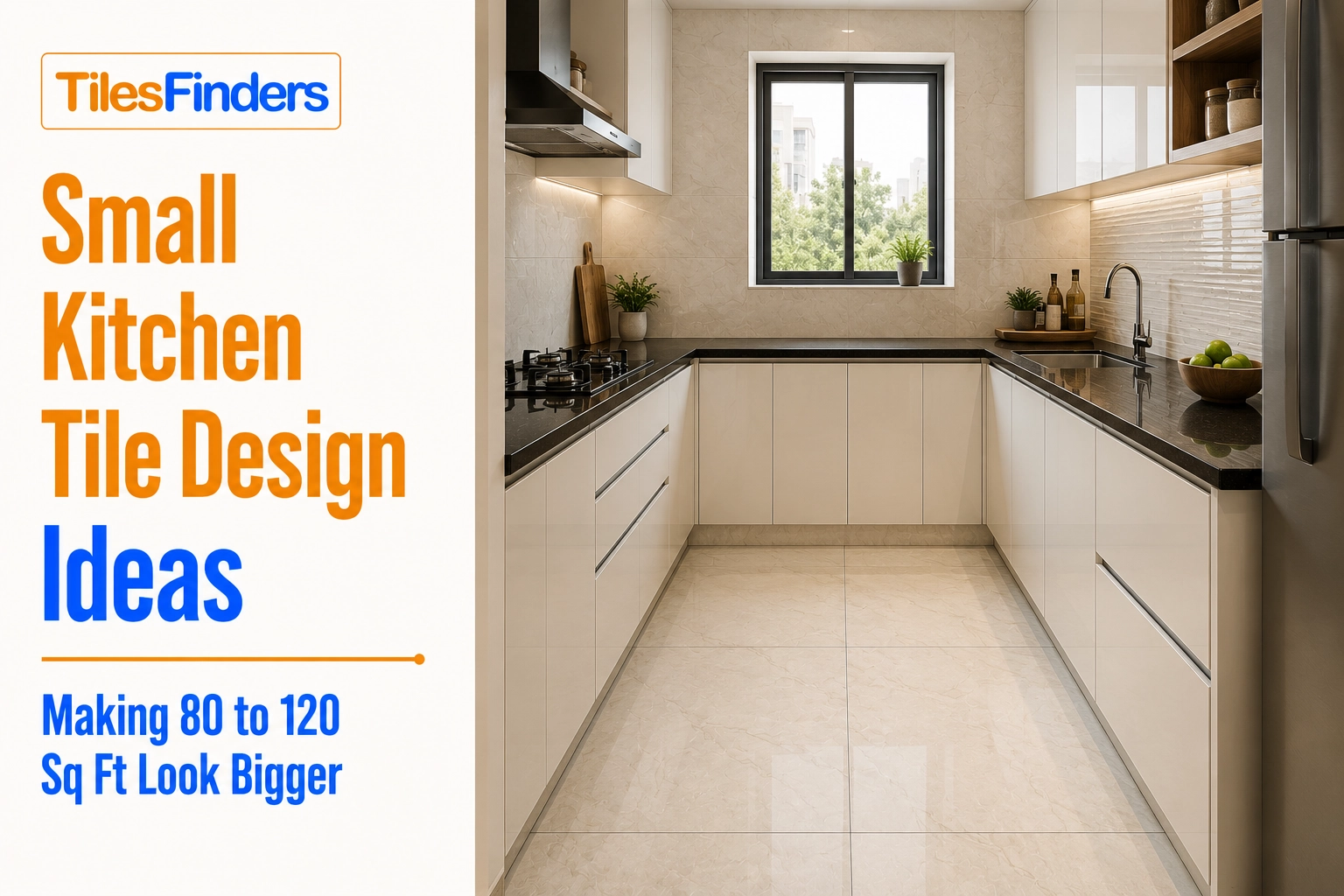
Small Kitchen Tile Design Ideas: Making 80 to 120 Sq Ft Look Bigger
Discover practical small kitchen tile design ideas for Indian homes. Learn the best tile sizes, colours, finishes, and layouts that make 80–120 sq ft kitchens feel bigger and brighter.
- Why Tile Choice Matters More in a Small Kitchen
- Best Tile Sizes for Small Kitchens in India
- Tile Colours and Patterns That Open Up a Small Kitchen
- Small Kitchen Tile Design Ideas for 2026
- Kitchen Tile Finishes: What Works Best in Small Spaces
- Why Anti-Skid Floors Matter
- Tile Size and Layout Guide for Small Kitchens
- Expert Tips Before Buying Small Kitchen Tiles
- Common Mistakes in Small Kitchen Tiling
- Your Next Step: Explore Kitchen Tile Options
Small kitchens look larger when you use light-coloured tiles, matching grout, larger wall formats, and matte anti-skid flooring. The right tile size and layout can visually expand even an 80 sq ft kitchen. For most Indian homes, 300x600 mm wall tiles and 600x600 mm floor tiles offer the best balance of spaciousness, easy maintenance, and cost-effectiveness.
Most Indian homes have compact kitchens. A 2BHK in Mumbai or Pune typically provides 80 to 110 sq ft of kitchen space, and many 1BHKs are even smaller. That is the reality, and the kitchen tiles you choose for the floor, walls, and backsplash will either make the space feel tight or surprisingly open.
The mistake most homeowners make is focusing only on colour. Colour matters, but tile size, layout direction, finish, and grout width are equally important. Get one of these wrong and even a beautifully coloured kitchen will feel like a corridor.
This guide covers what actually works in small Indian kitchens: the right sizes, finishes, patterns, and combinations, with approximate prices so you can plan before visiting a showroom.
Why Tile Choice Matters More in a Small Kitchen
In a large kitchen, you have room for experimentation. A slightly busy pattern or a dark floor will not feel overwhelming when there are 200 sq ft around you. In a compact kitchen, every surface reads at once. Your eye takes in the floor, two walls, and the backsplash without moving.
This is why tile decisions carry more weight in this room than in any other.
Light, Pattern, and Grout: The Three Things That Change Everything
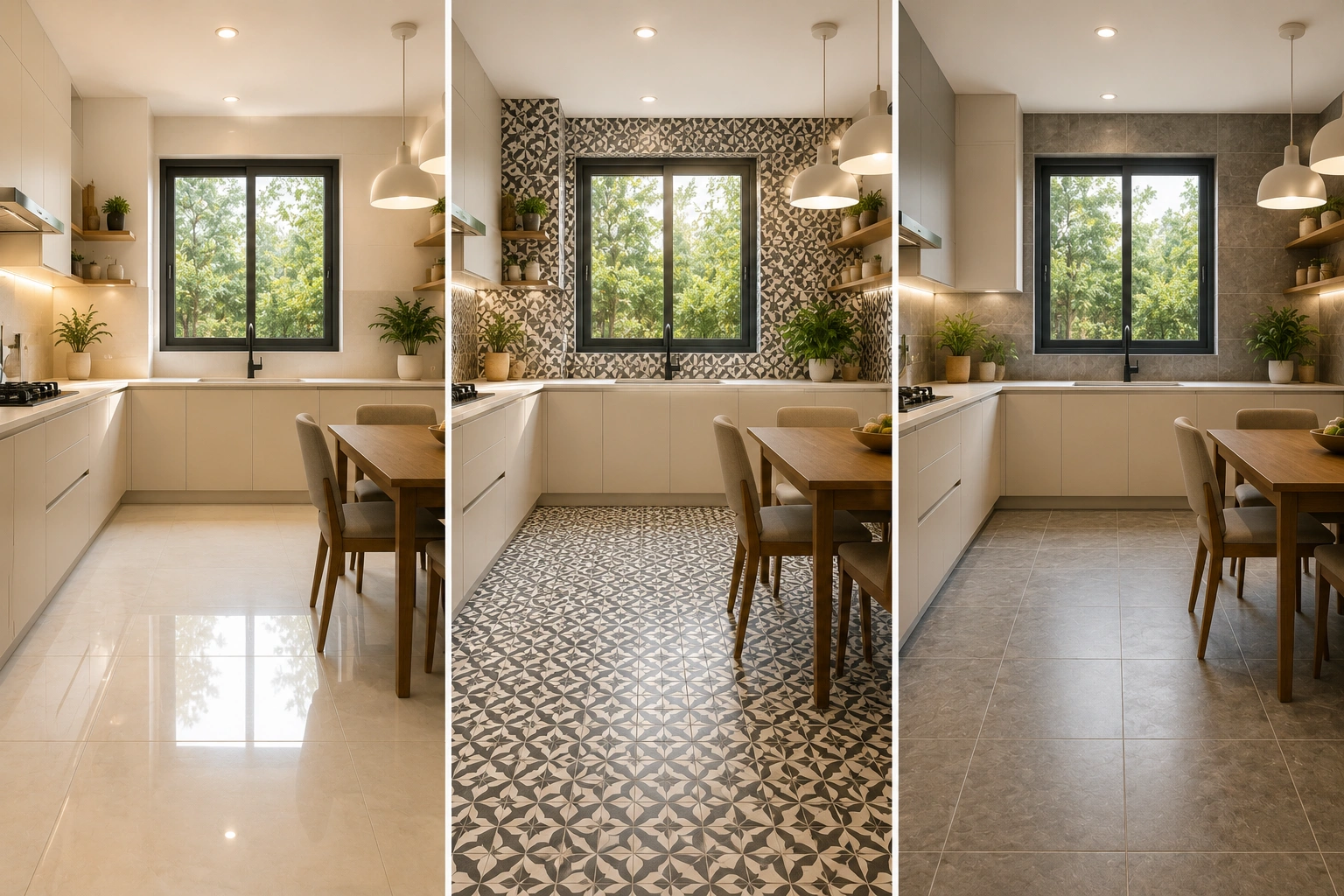
Light reflects differently from different finishes. A glossy tile on a wall bounces light around the kitchen, making it feel more spacious. A dark matte tile absorbs it. Neither is wrong, but you have to decide which effect you want before you pick a tile.
Pattern direction matters too. Horizontal tile layouts widen a space. Vertical layouts add height. Diagonal layouts draw the eye outward. In a kitchen that is narrow kitchen, a horizontal subway pattern on the wall can visually widen the room by a noticeable amount.
Grout lines are the most underestimated element. Wide, dark grout on light tiles chops the surface into a grid and makes a small kitchen feel smaller. Thin grout that matches the tile colour makes the whole wall read as one surface, and that one surface feels larger.
The Cost of Getting It Wrong in a Compact Kitchen
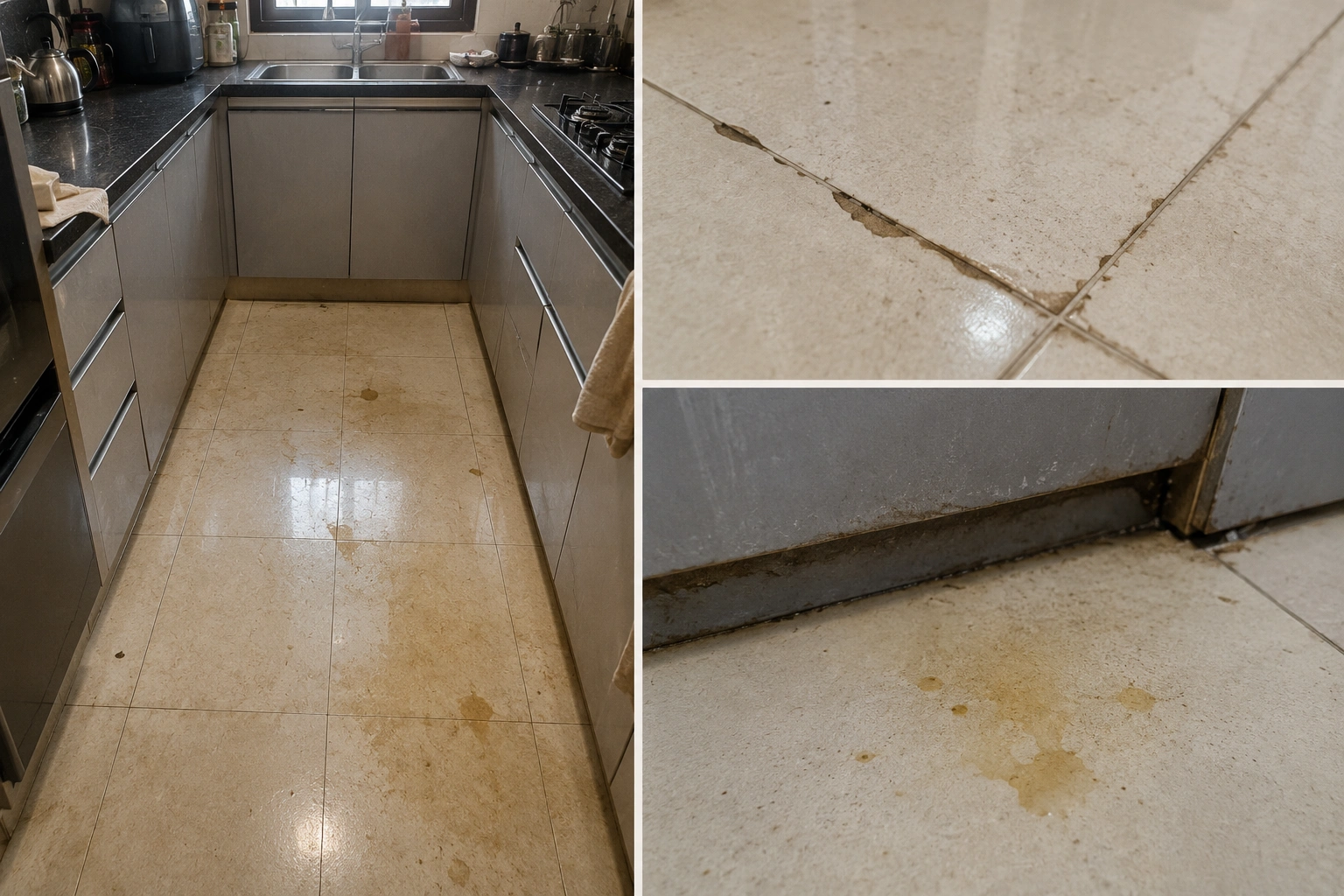
Indian kitchens see hard use. The combination of cooking oil fumes, daily water splashes near the sink, and high heat near the stove means your tiles are working harder than in any other room. A glossy floor tile in a cooking-heavy kitchen becomes a safety issue within a year as oil settles. A very light tile with wide grout becomes a maintenance burden near the cooking zone.
Getting it wrong is not just an aesthetic problem. Retiling a kitchen costs between Rs. 80 and Rs. 180 per sq ft in labour alone in most Indian cities, before you factor in tile costs and the disruption of redoing a working kitchen.
Best Tile Sizes for Small Kitchens in India
Many homeowners assume small rooms mean small tiles. This is not always true. The right size depends on which surface you are tiling and what visual effect you want.
Wall Tiles: The Right Sizes for Indian Kitchen Walls
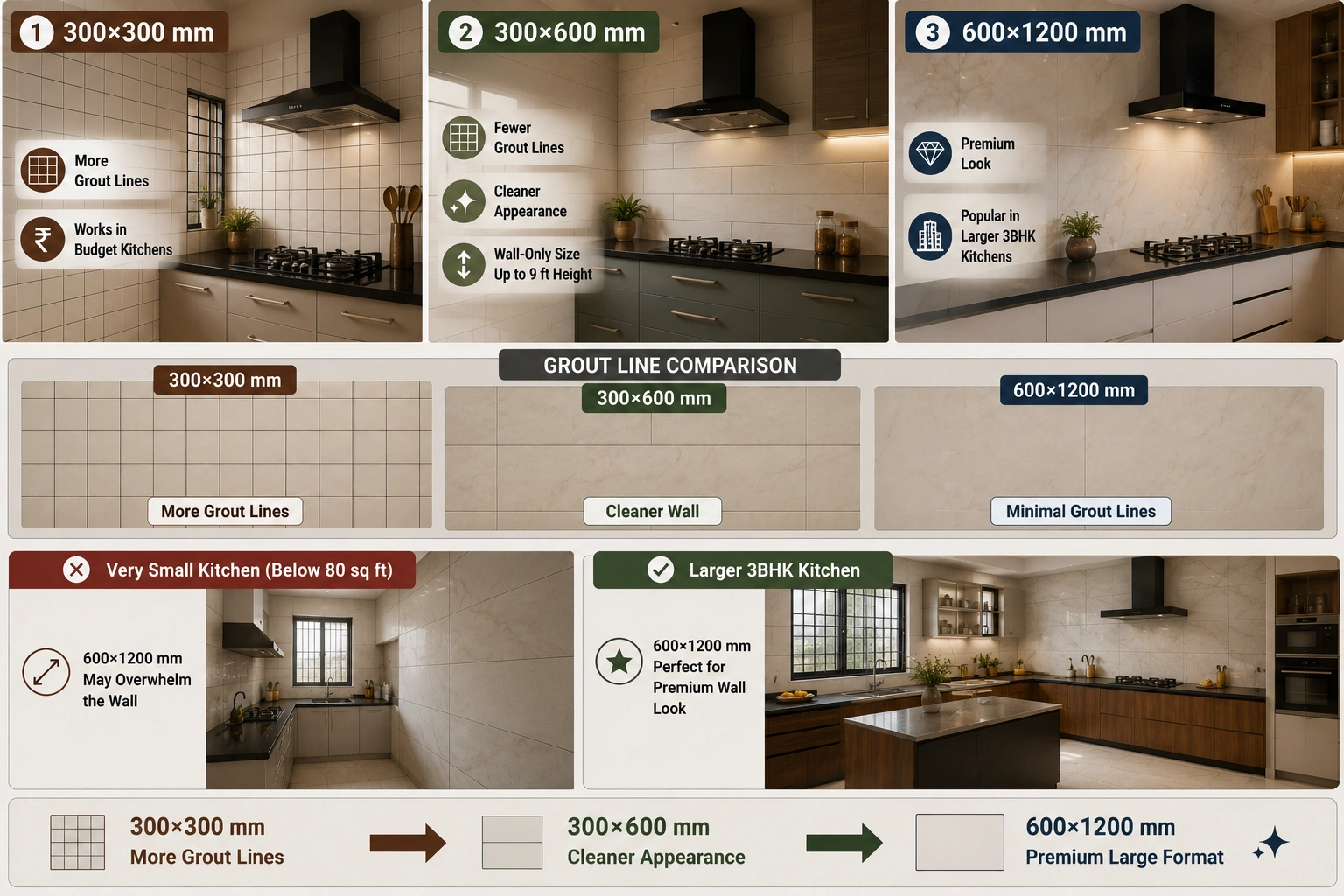
The 300x600 mm (12x24 inch) tile is the most commonly used kitchen wall tile in India, and for good reason. It covers more area per tile, so fewer grout lines break up the surface. This makes walls feel cleaner and larger. It is a wall-only size and works well on Indian kitchen walls up to 9 feet in height.
The 300x300 mm (1x1 inch) ceramic tile is the older choice and still works in budget kitchens. But more grout lines mean a more fragmented look. If you are using 1x1 tiles, match your grout colour closely to the tile to reduce visual noise.
For a premium look, 600x1200 mm (2x4 inch) GVT tiles on kitchen walls are increasingly popular in larger 3BHK kitchens. In a very small kitchen (below 80 sq ft), this size may overwhelm the wall rather than open it up.
Floor Tiles: What Works Below 120 Sq Ft
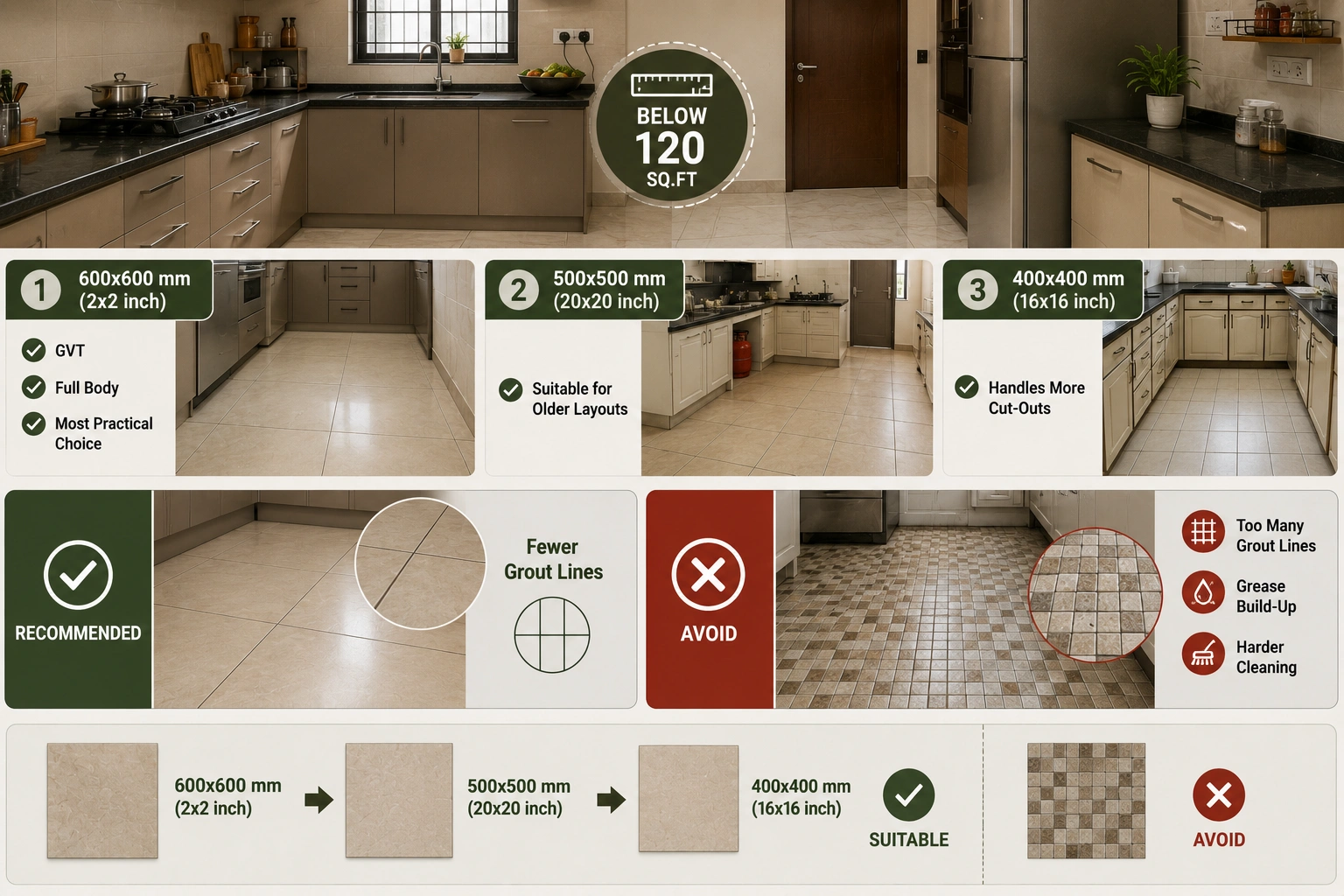
For kitchen floors, 600x600 mm (2x2 inch) GVT or Full Body tiles work well. The size is large enough to reduce grout lines without feeling oversized for the room. This is the most practical floor size for Indian kitchens across all budget ranges.
The 400x400 mm (16x16 inch) and 500x500 mm (20x20 inch) sizes are also good floor options. They suit older kitchen layouts where the floor area has more corners and cutouts, making larger tiles harder to lay cleanly.
Avoid very small mosaic floor tiles in a compact kitchen. They add too many grout lines, which collect grease and become hard to clean.
Tile Colours and Patterns That Open Up a Small Kitchen
Light and Neutral Tones
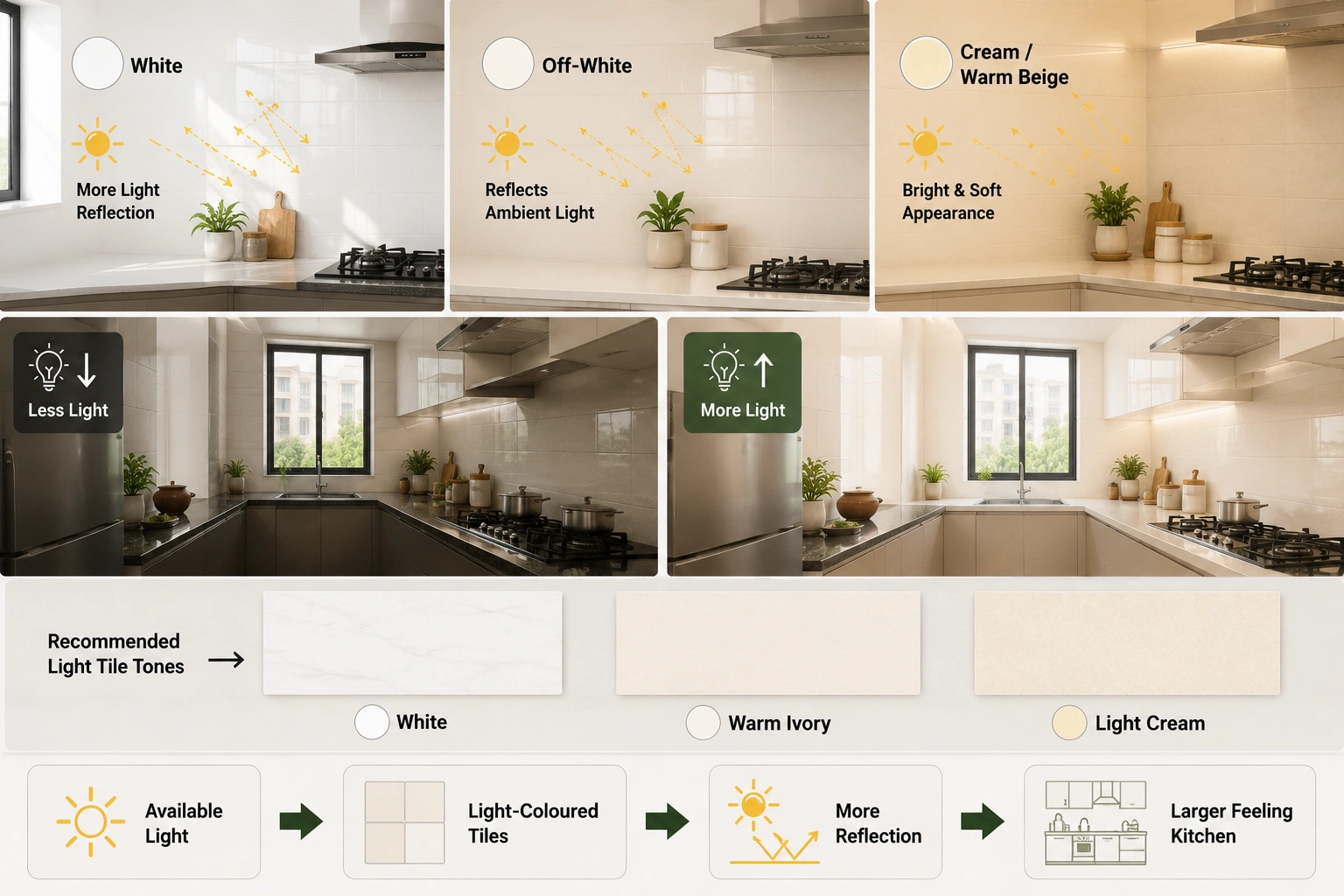
Light-coloured tiles make small kitchens feel bigger. This is not just a design opinion; it is how light behaves. White, off-white, cream, warm beige, and light grey all reflect ambient light into the room.
In Indian kitchens with limited window area, this effect is especially valuable. A north-facing or inner-courtyard kitchen that gets little direct light will benefit significantly from light wall tiles.
You do not need to go all-white. A light cream or warm ivory works just as well and hides minor staining near the cooking zone better than a stark white.
Vertical Layouts and Subway Patterns
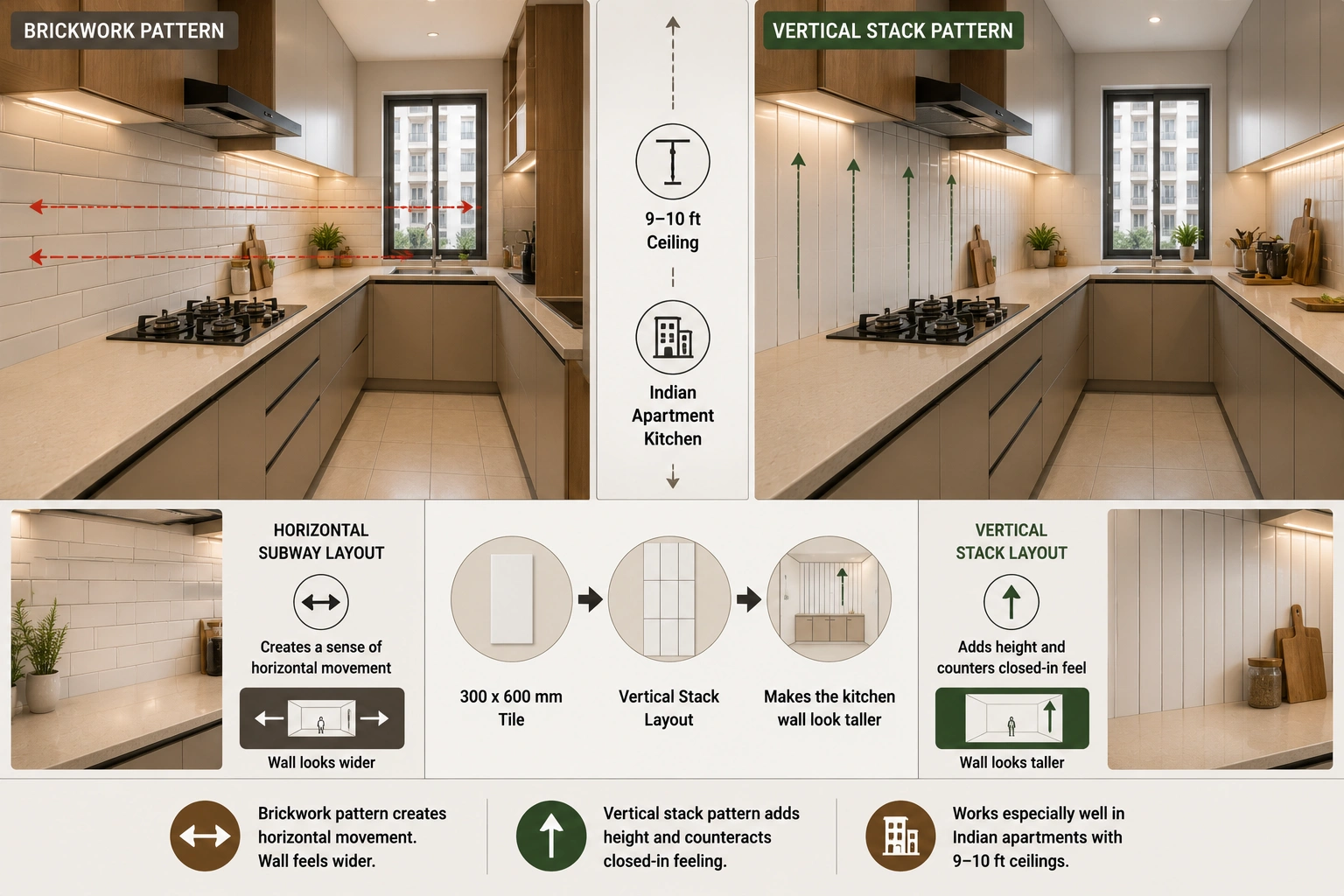
The classic subway tile pattern (brickwork or staggered offset) is popular because it creates a sense of horizontal movement. In a long, narrow kitchen, laying the tiles vertically (stacked) instead of in the usual brickwork pattern adds height and counteracts the closed-in feeling.
A simple vertical stack pattern in a 300x600 mm tile on the backsplash can make a kitchen wall look noticeably taller. This works especially well in Indian apartments where ceilings are typically 9 to 10 feet.
Large-Format Tiles for Visual Expansion
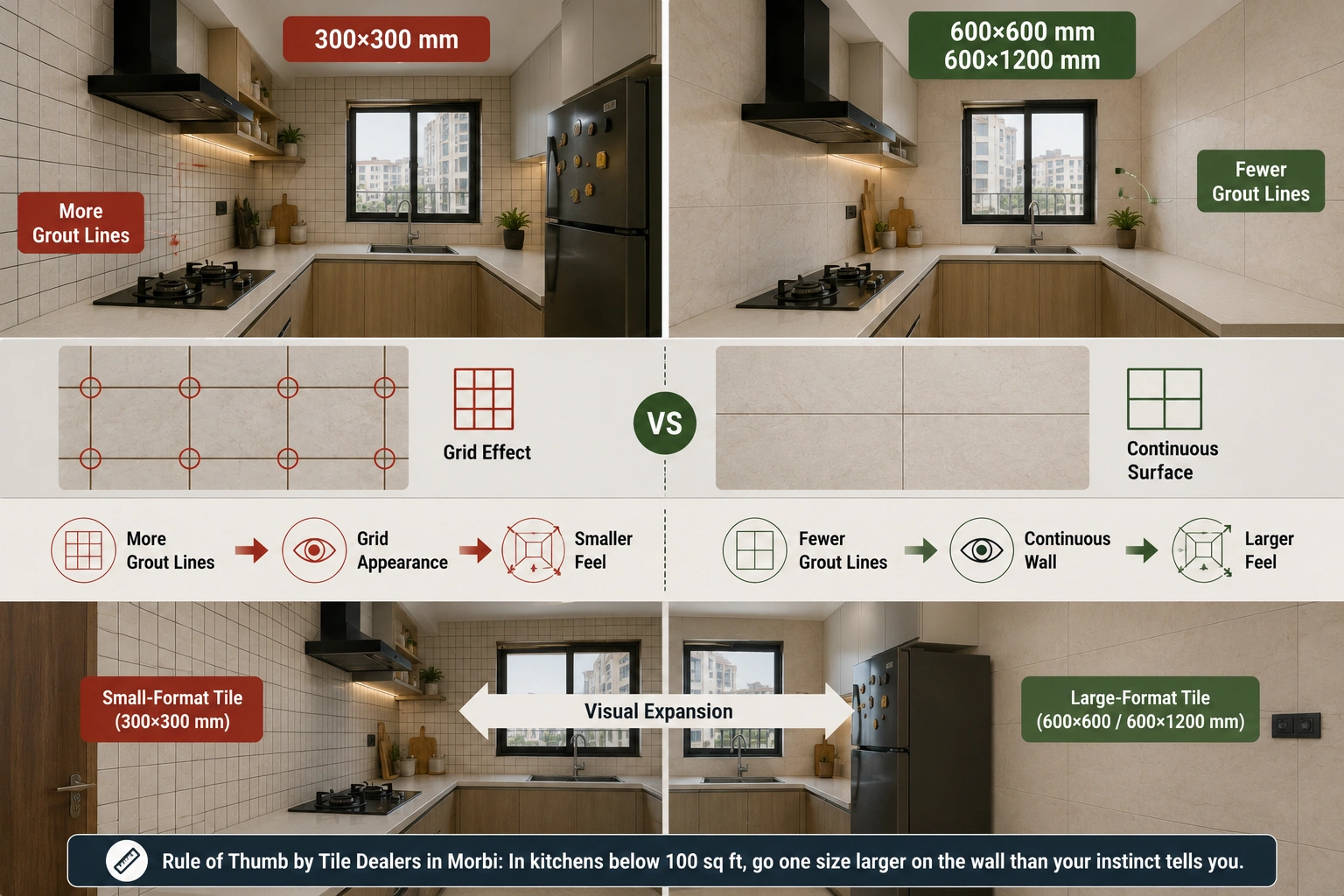
Counterintuitively, a larger tile often makes a small kitchen look bigger. A 600x600 mm or 600x1200 mm tile on the wall has fewer grout lines than a 300x300 mm tile. Fewer grout lines mean the eye reads the surface as a continuous plane rather than a grid. This continuity expands the perceived space.
The rule of thumb used by tile dealers in Morbi: in kitchens below 100 sq ft, go one size larger on the wall than your instinct tells you.
Small Kitchen Tile Design Ideas for 2026
Marble-Look Vitrified on Kitchen Walls
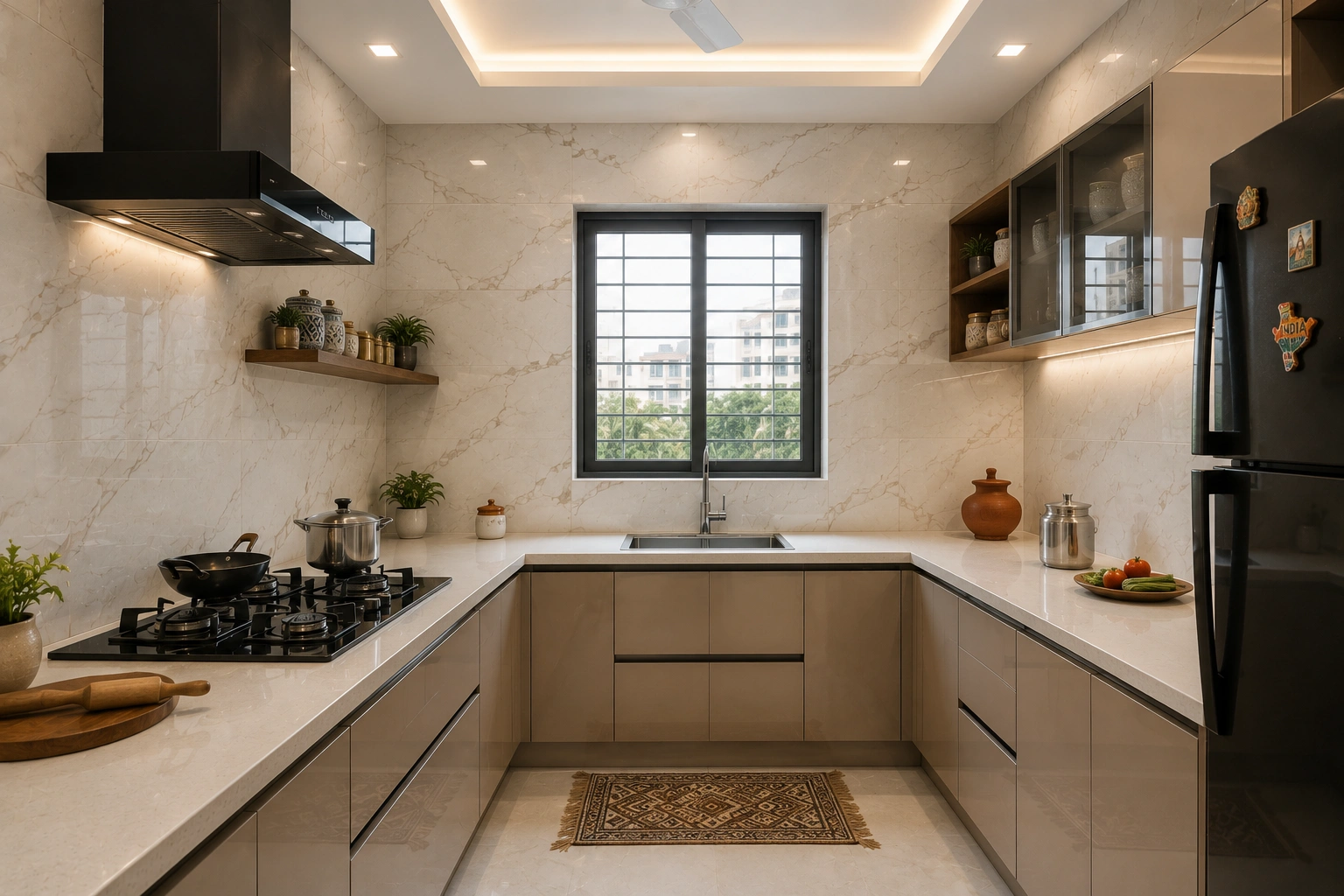
Marble-look GVT or PGVT tiles bring a polished, clean look to kitchen walls. White Carrara-style patterns with soft grey veining are the most popular choice. They reflect light well, stay easy to clean, and give a finish that reads expensive without the maintenance of real marble.
Use a 300x600 mm or 600x1200 mm marble-look GVT on the backsplash area. Keep the rest of the kitchen walls a coordinating plain colour to avoid visual clutter. Approximate price: Rs. 80 to Rs. 180 per sq ft for marble-look GVT tiles.
Wooden Plank Tiles as Backsplash
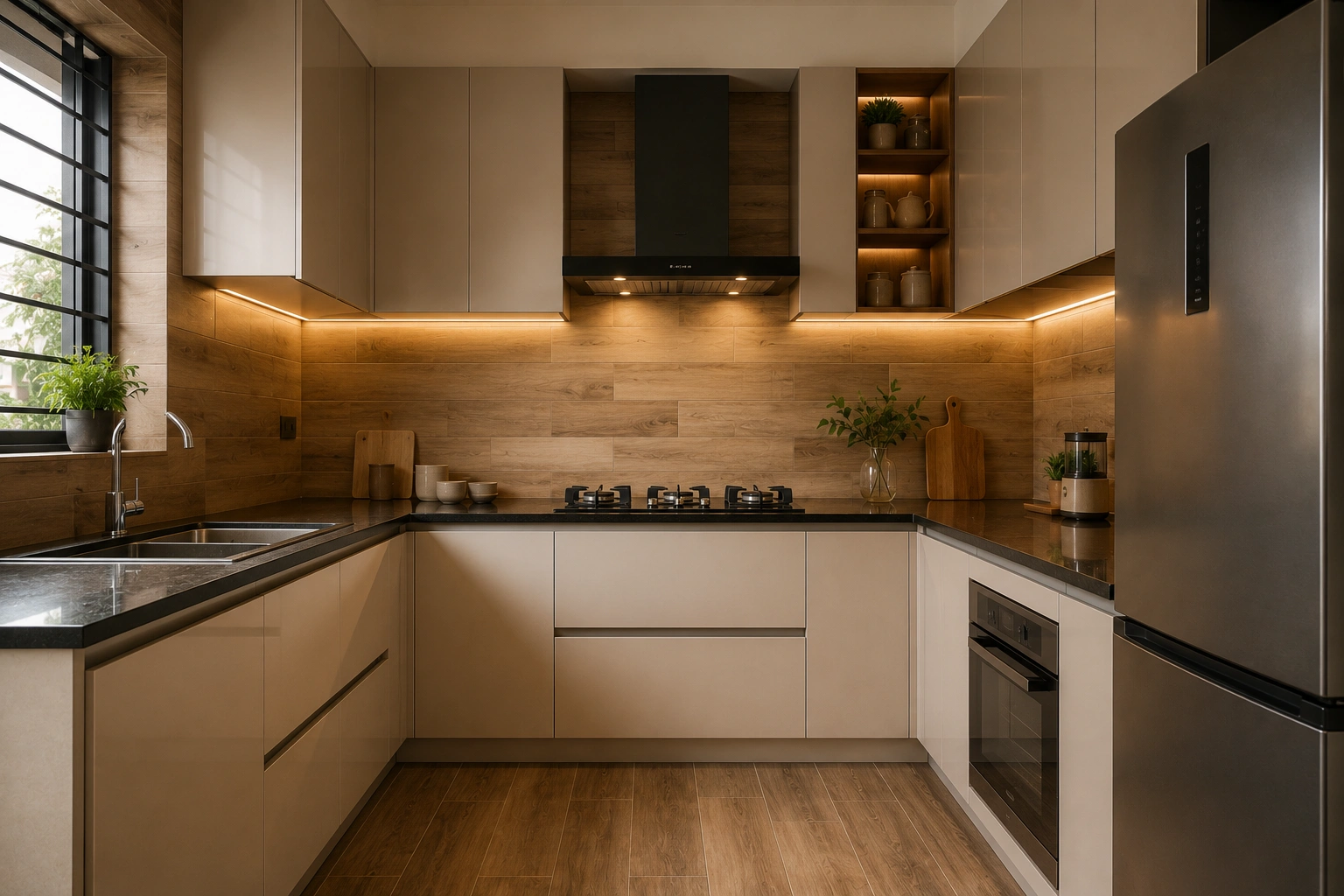
The 200x1200 mm (8x48 inch) wood-look tile, also called a wooden plank tile, is gaining popularity in Indian kitchens. Laid horizontally on the backsplash, these long planks draw the eye across the width of the kitchen, making narrow spaces feel wider.
Warm oak or walnut finishes pair well with white or cream cabinets, which are the dominant kitchen cabinet colour in Indian homes. Price range: Rs. 90 to Rs. 220 per sq ft, depending on finish quality.
Solid Colour Matte Tiles with Thin Grout
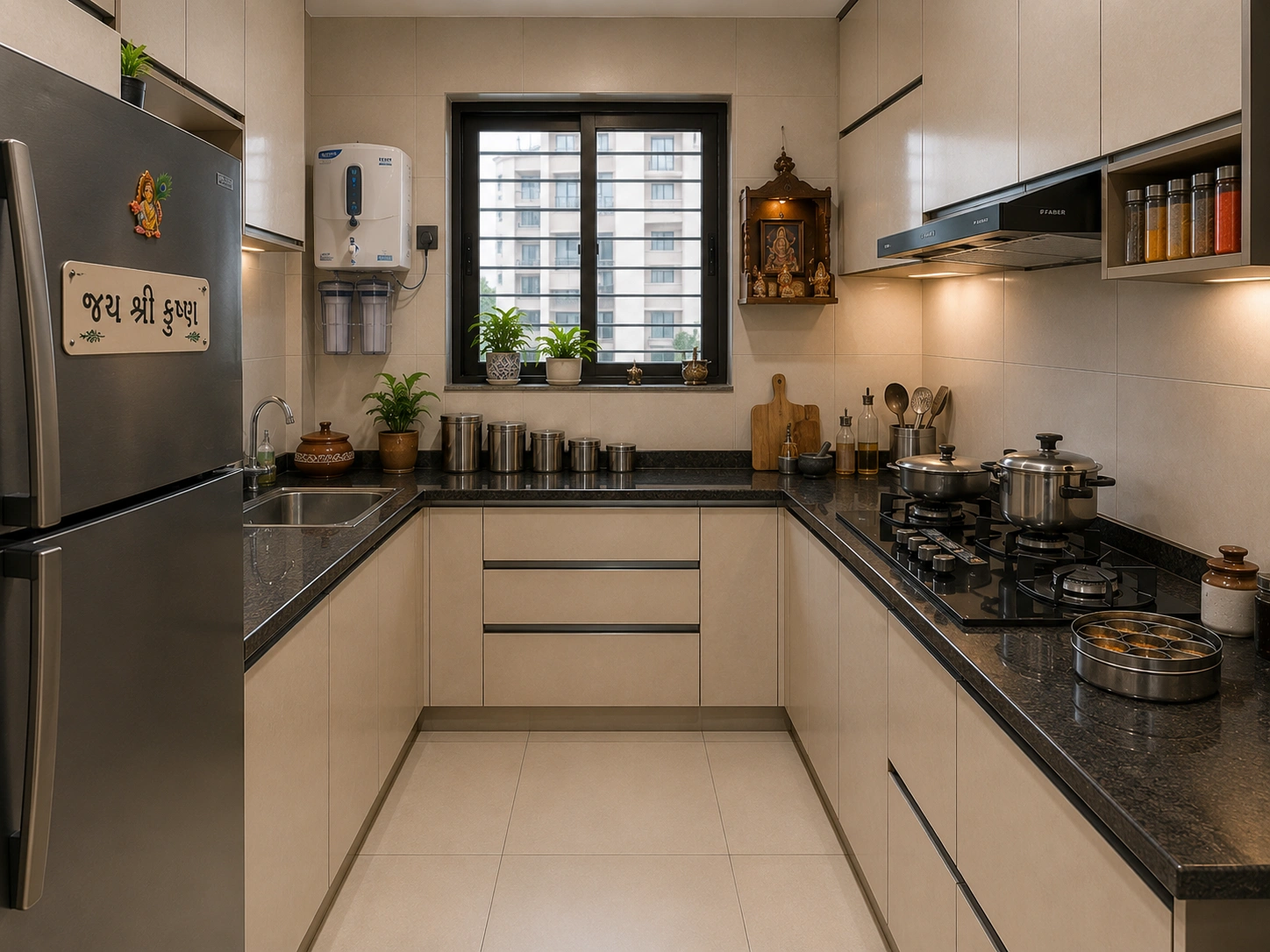
A single-colour matte tile across the entire backsplash, with thin grout in a matching shade, creates a smooth, uninterrupted surface that makes the kitchen feel larger. Sage green, warm terracotta, and dusty blue are trending in 2026 for Indian kitchens, moving away from all-white.
The key is keeping the grout narrow and colour-matched. A wide or contrasting grout line defeats the visual continuity that makes this approach work.
Full-Height Backsplash from Counter to Ceiling
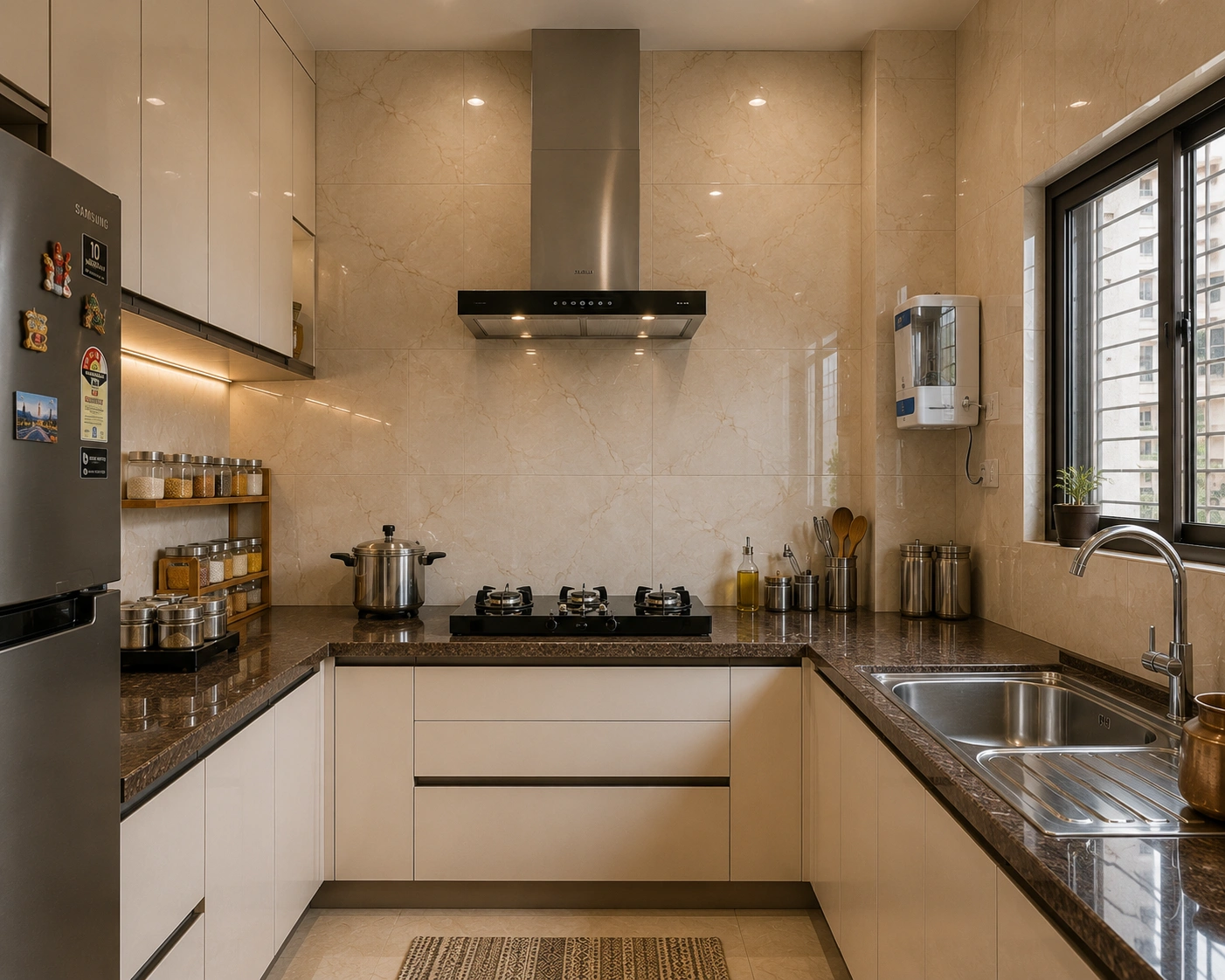
Instead of tiling only the standard 2-foot backsplash area between the counter and the upper cabinet, run the tile from the countertop all the way to the ceiling. This draws the eye upward, adds height to the room, and reduces the number of different surfaces the eye has to process.
In a compact kitchen, fewer surface breaks mean less visual fragmentation. Full-height tiling costs more in material, but the visual return is worth it in small spaces.
Two-Tone Floor and Wall Combination
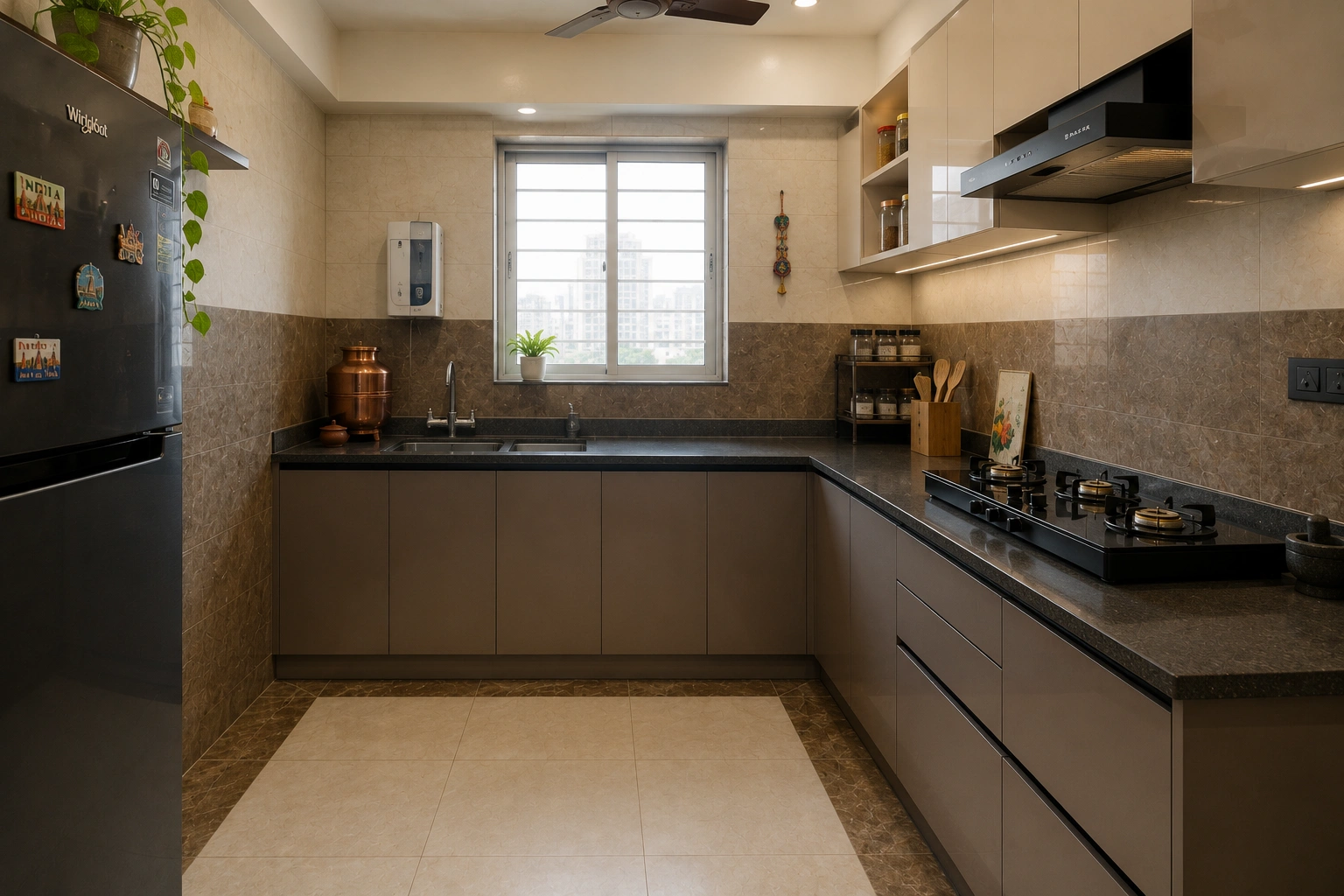
Use a light tile on the walls and a slightly deeper but still neutral tone on the floor. Light grey or warm beige on the floor against white or cream walls grounds the space without making it heavy. Avoid going dark on both surfaces; that is what makes a small kitchen feel like a box.
Kitchen Tile Finishes: What Works Best in Small Spaces
Glossy vs Matte in Small Kitchens
| Surface | Glossy | Matte |
| Kitchen wall | Good: reflects light, visually expands | OK: absorbs light, feels warmer |
| Kitchen floor | Avoid: slippery with oil/water | Recommended: anti-skid, hides daily dirt |
| Backsplash | Good: easy to wipe clean | OK: hides grease patterns better |
Glossy wall tiles are a practical choice for Indian cooking kitchens. They clean easily because the smooth surface does not trap oil splatter the way a textured finish does.
Why Anti-Skid Floors Matter
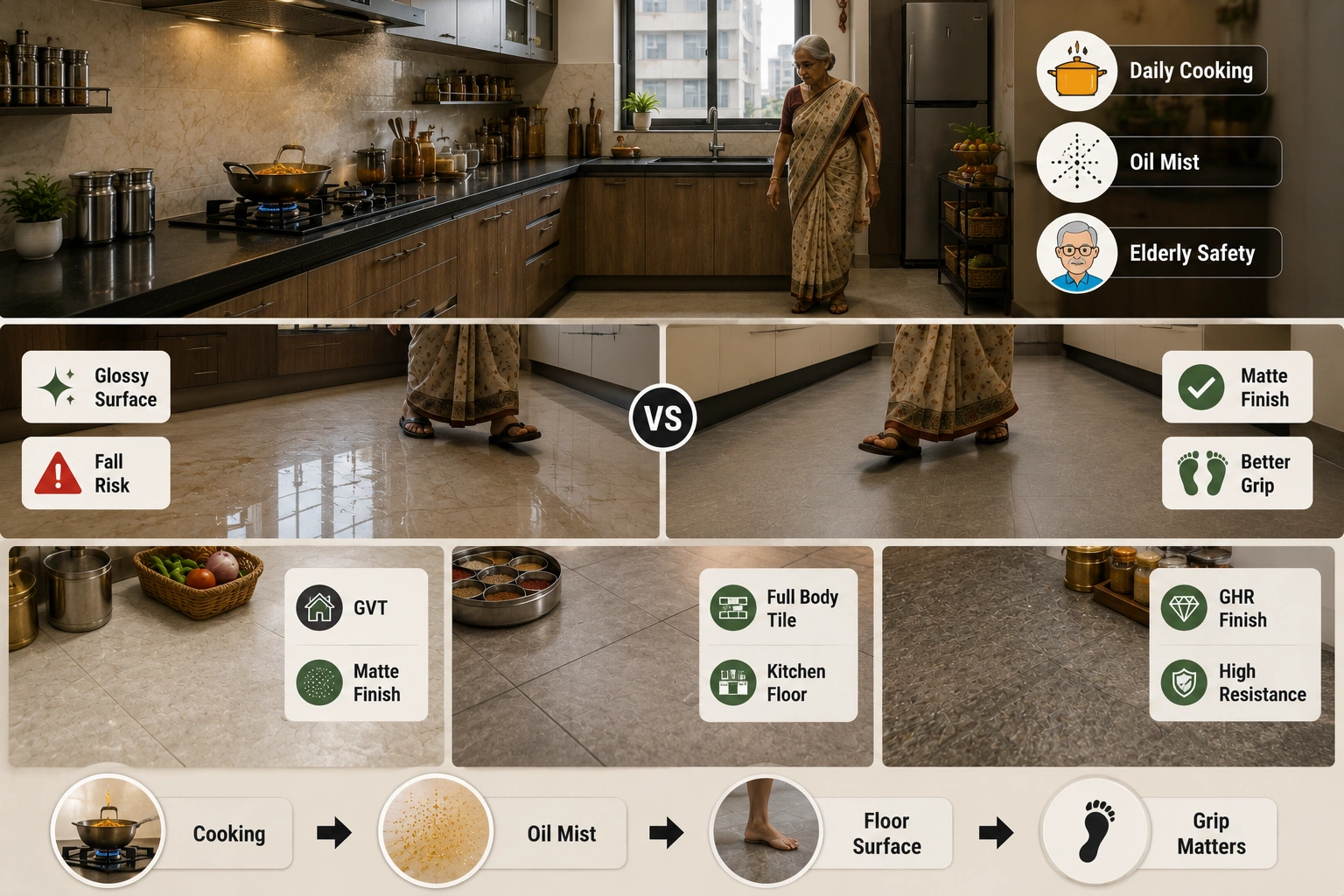
Indian cooking generates oil mist. Even in homes where there is an exhaust fan, fine oil particles settle on the floor daily. A glossy floor tile in this environment is a fall risk, especially for elderly family members. Use matte finish GVT or Full Body tiles on kitchen floors. The GHR (Glaze High Resistance) finish is well-suited for kitchens.
Tile Size and Layout Guide for Small Kitchens
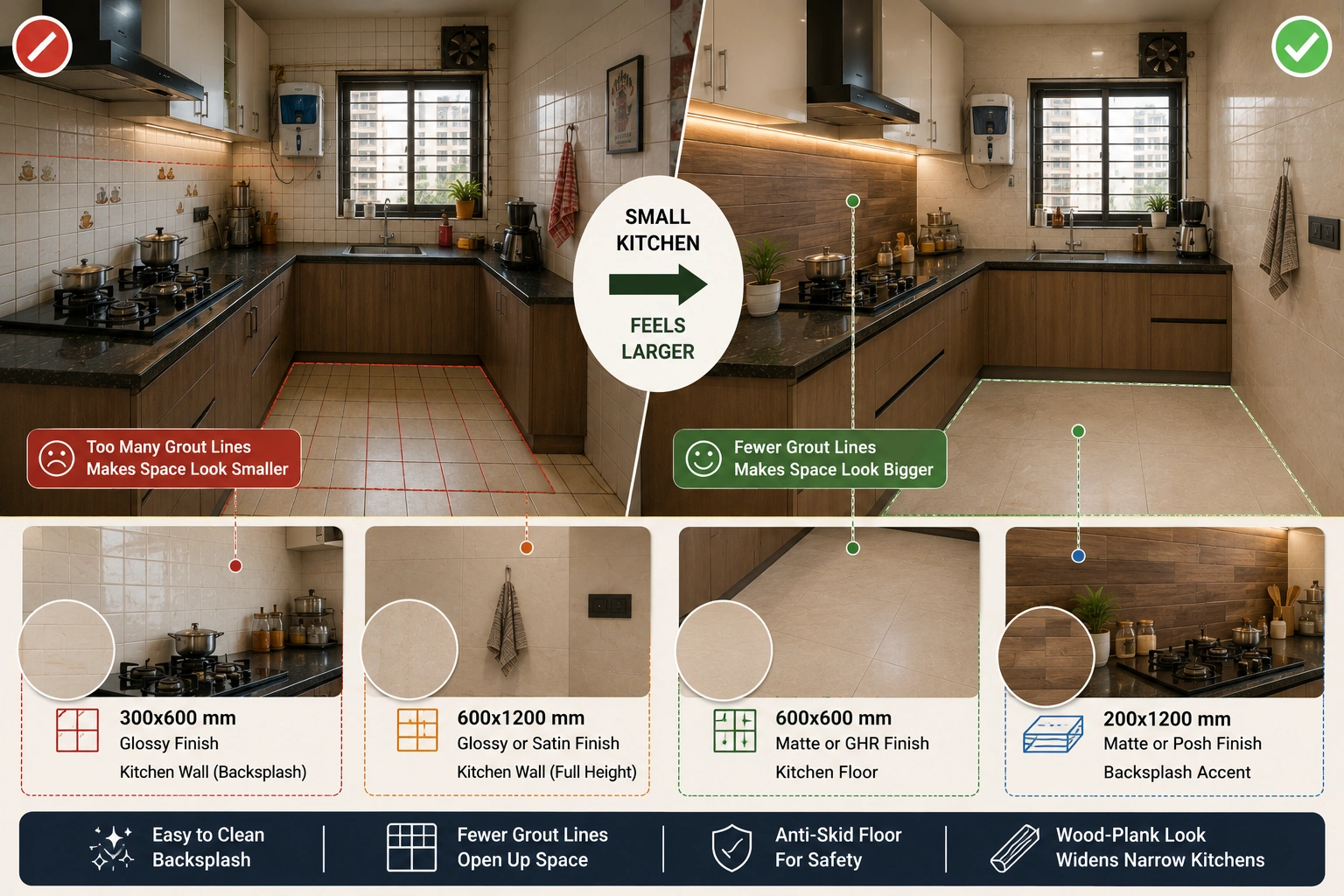
| Surface | Recommended Size | Category | Finish | Notes |
| Kitchen wall (backsplash) | 300x600 mm (12x24) | Ceramic or GVT | Glossy | Most popular choice, easy to clean |
| Kitchen wall (full height) | 600x1200 mm (2x4) | GVT or PGVT | Glossy or Satin | Fewer grout lines, looks spacious |
| Kitchen floor | 600x600 mm (2x2) | GVT or Full Body | Matte or GHR | Anti-skid, practical for cooking zones |
| Kitchen floor (budget) | 400x400 mm (16x16) | Porcelain | Matte | Good for kitchens with many corners |
| Backsplash accent | 200x1200 mm (8x48) | GVT | Matte or Posh | Wood-plank look widens narrow kitchens |
Expert Tips Before Buying Small Kitchen Tiles
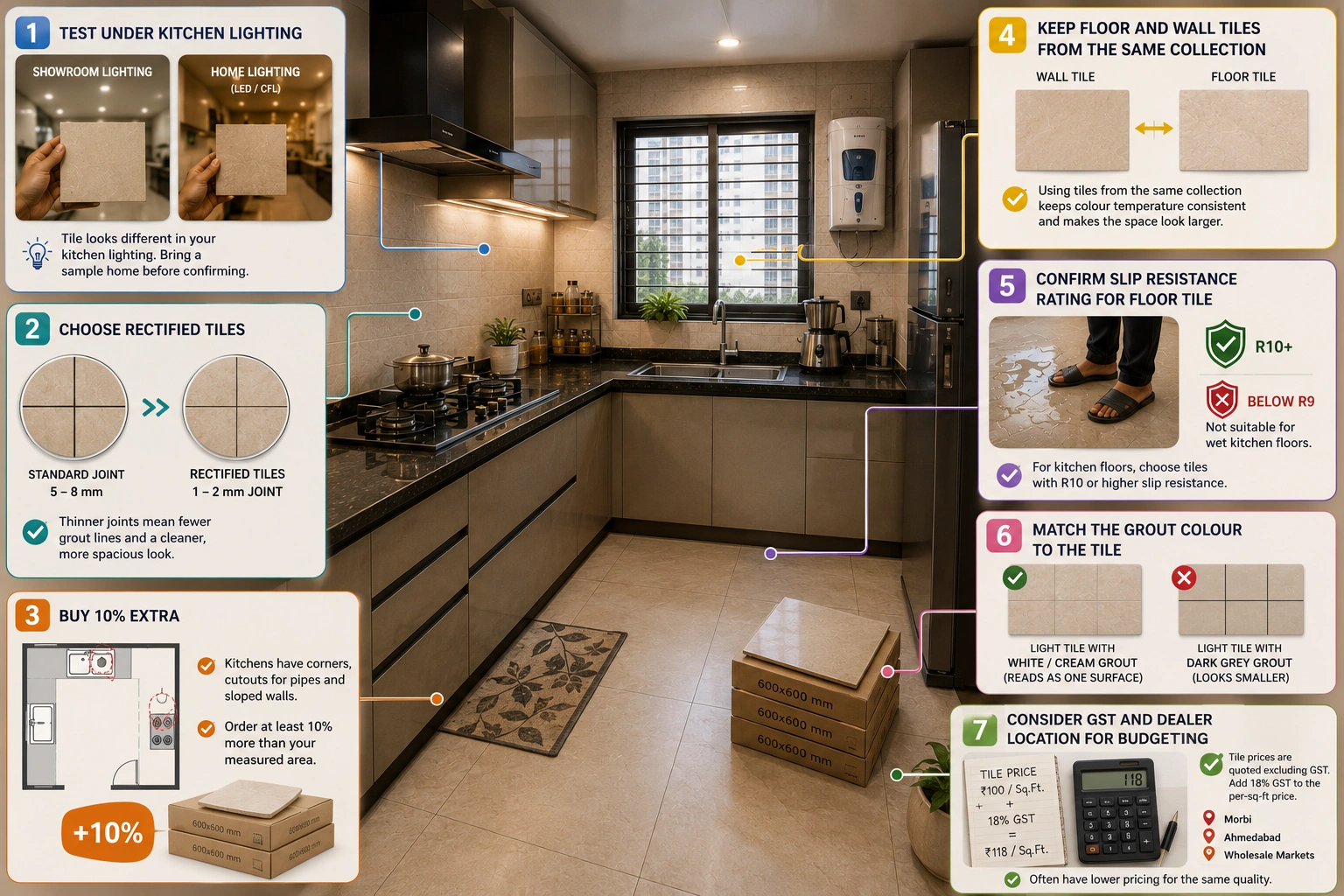
Test the tile under your kitchen lighting, not showroom lighting. Showroom lights are usually brighter and more neutral than Indian kitchen tube lights. A tile that looks bright white in the showroom may look yellow under your kitchen's CFL or LED strip. Bring a sample home before confirming.
Choose rectified tiles for a near-groutless finish. Rectified tiles have precision-cut edges and can be laid with 1 to 2 mm grout joints instead of the standard 5 to 8 mm. Thinner joints on kitchen walls mean fewer grout lines and a cleaner, more spacious appearance. Ask your dealer specifically for rectified tiles.
Buy 10% extra. Kitchens have corners, cutouts for pipes, and sloped walls near the loft. Wastage runs higher here than in a simple bedroom floor. Order at least 10% more than your measured area.
Keep floor and wall tiles from the same collection if possible. Many manufacturers offer coordinating floor and wall tiles. Using matched tiles from the same range keeps the colour temperature consistent, which reads as more spacious than mixing unrelated tiles with slightly different undertones.
Confirm the slip resistance rating for your floor tile. For kitchen floors, look for tiles with an R10 or higher slip resistance rating. Tiles rated below R9 are not suitable for wet kitchen floors. Ask your dealer for the slip rating before purchase.
Match the grout colour to the tile, not to contrast it. Light tiles with white or cream grout read as one continuous surface. The same light tiles with dark grey grout look smaller because the grid pattern multiplies the perceived complexity.
Consider GST and dealer location for budgeting. Tile prices in India are quoted excluding GST. Add 18% GST to the per-sq-ft tile price. Dealers in Morbi, Ahmedabad, or local wholesale markets often have lower pricing than branded retail showrooms for the same tile quality.
Common Mistakes in Small Kitchen Tiling
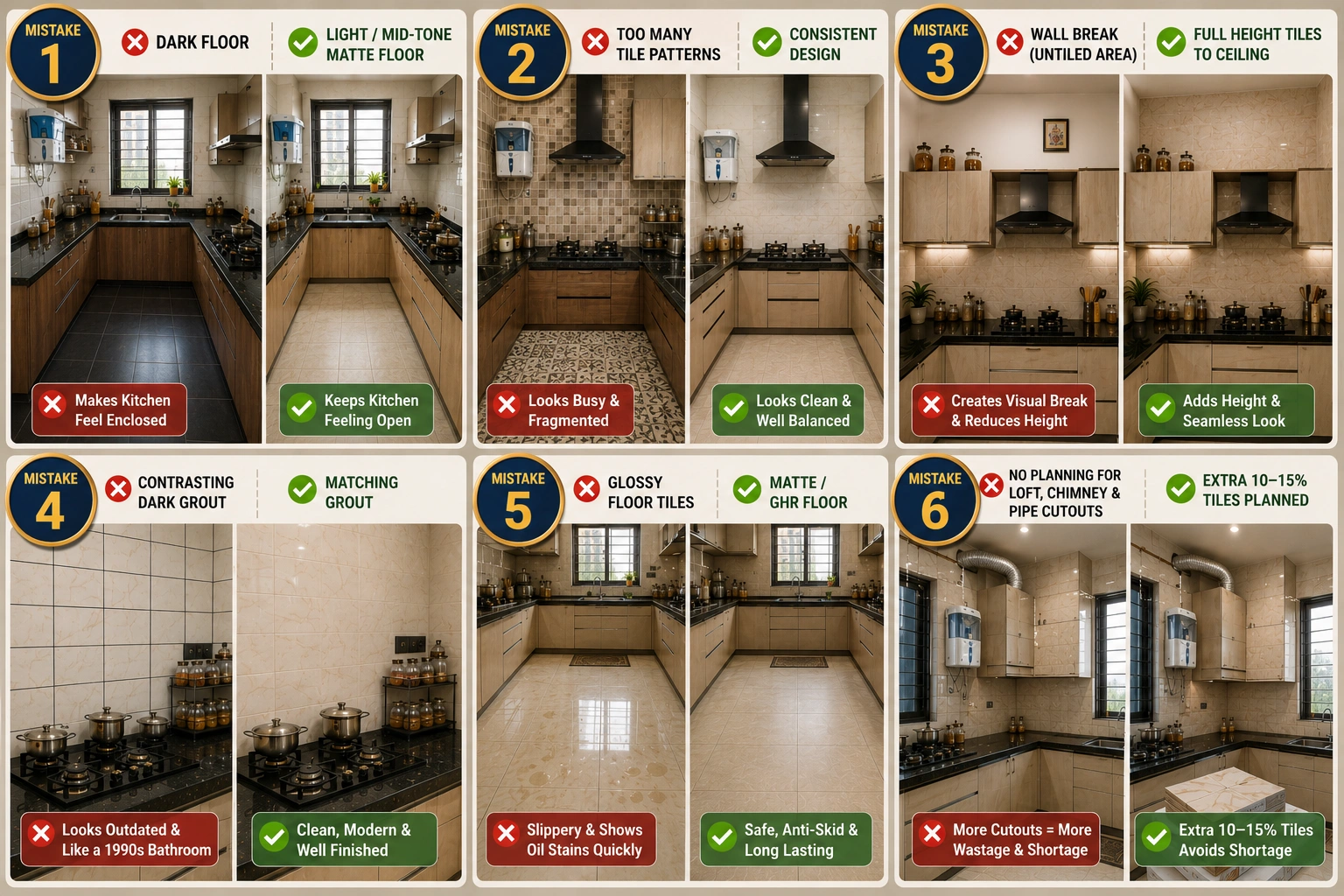
Using dark floor tiles to hide dirt is a common trap. Dark tiles do hide stains, but they also make a small kitchen feel enclosed. A light or mid-tone floor with a matte finish hides daily dirt almost as well and keeps the room feeling open.
Mixing too many tile sizes and finishes. When a homeowner uses a small mosaic on the backsplash, a different size on the wall above the counter, and a third pattern on the floor, the kitchen reads as fragmented. In 80 to 100 sq ft, three different tile patterns compete with each other and make the space feel busier than it is.
Ignoring the backsplash-to-ceiling zone. Most builders leave the wall above the upper cabinet un-tiled. In a small kitchen, that exposed painted wall becomes a visual break that chops up the vertical line. Tiling all the way to the ceiling removes that break and adds perceived height.
Using contrasting grout on light tiles. Wide dark grout on light tiles makes a kitchen feel like a bathroom from the 1990s. Colour-match your grout.
Choosing glossy floor tiles. Glossy or polished tiles on the kitchen floor look good in the showroom. They look slippery and oil-stained within six months of daily Indian cooking. Matte is the correct choice for kitchen floors, and the GHR finish is even better for heavy cooking households.
Not accounting for the loft and chimney cutouts. Kitchens with lofts, chimneys, or pipes running along the wall need more cutouts. Each cutout increases wastage. Order 10 to 15% extra in kitchens with complex layouts.
Your Next Step: Explore Kitchen Tile Options
Getting kitchen tiles right in a small space takes a few more decisions than a standard bedroom floor, but the payoff is real. Light colours, matched grout, a consistent size, and the right finish on each surface add up to a kitchen that feels notably more spacious than its actual square footage.
Before you visit a showroom, measure your kitchen carefully, note which walls get direct light and which do not, and decide whether you want a warm or cool colour family. Bring home tile samples and check them under your own kitchen light before placing any order.
You can explore kitchen tile options by size, colour, category, and finish on TilesFinders to compare what Indian dealers carry across price ranges. It is a practical starting point before the showroom visit.
FAQs
On walls, 300x600 mm (12x24 inch) tiles with matching grout give the cleanest, most spacious finish for typical Indian kitchens. For a more open look, 600x1200 mm (2x4 inch) GVT with thin grout lines does even more. On the floor, 600x600 mm (2x2 inch) GVT or Full Body tiles strike the right balance between coverage and visual cleanliness.
Vastu recommends east or south-east placement for kitchens, and light colours in the yellow, cream, orange, or white family. From a practical standpoint, these light warm tones also reflect more light and make the kitchen feel bigger. White, cream, warm ivory, and soft yellow are all Vastu-aligned and visually effective choices for small kitchen walls.
Not necessarily the same tile, but using tiles from the same colour family works well. A light cream or white wall tile with a warm grey or beige floor tile in coordinating tones reads as cohesive. Using the same tile on the floor and wall can make the kitchen feel like a wet room. The floor tile should be matte and anti-skid, while the wall tile can be glossy for easy cleaning.
Glossy finish on walls, matte or GHR finish on floors. This combination gives you the light-reflecting benefit of glossy walls (which open up the space) and the practical safety and maintenance benefit of a matte, anti-skid floor. Avoid glossy or polished finishes on kitchen floors regardless of kitchen size.
For an 80 to 120 sq ft kitchen, approximate tile costs range from Rs. 30 to Rs. 80 per sq ft for ceramic wall tiles and Rs. 60 to Rs. 150 per sq ft for GVT floor and wall tiles, excluding GST and installation. Labour for kitchen tiling typically runs Rs. 80 to Rs. 180 per sq ft, depending on the city and layout complexity.
Yes. Wood-look tiles (usually GVT in a 200x1200 mm or 8x48 inch plank size) work well on kitchen walls and backsplash areas. Laid horizontally, they visually widen a narrow kitchen. They are not suitable as kitchen floor tiles without checking the slip resistance, since many wood-look tiles come in glossy or satin finishes that are not safe for cooking floors.
It is one of the most effective ways to add perceived height in a small kitchen. Running tiles from the countertop to the ceiling removes the painted-wall zone above the upper cabinet, which can feel patchy and low. The cost increase over a standard 2-foot backsplash is approximately 30 to 40% more wall tile area. For a kitchen that feels enclosed, this investment pays off visually.

See our tile guides first
Set TilesFinders as a preferred source and our buying guides surface ahead of the rest for you.
Add as preferred sourceTakes one tap. Nothing to install.
What Readers Say
I was about to redo my parking area with the wrong tile size until I read this. The layout comparisons saved me from a costly mistake.
We reference TilesFinders guides while briefing clients on material selection. The size and pattern breakdowns are accurate and easy to explain visually.
On site, I get asked about grout spacing all the time. This article gave me a solid reference I now share with my team before every job.
Finally a guide that doesn't just push generic advice. The oil stain removal steps actually worked on our clubhouse driveway tiles.
I run a small construction firm and now send this link to clients directly when they ask about entrance tile sizing. Saves me an hour of explaining.
Good practical detail, though I wish there were more examples for compact apartment entrances specifically, not just villas.
My mother-in-law wanted marble, I wanted vitrified. This blog gave us the neutral comparison we needed to actually decide together.
Detailed without being overwhelming. I appreciated that it covered both cost and maintenance, not just the aesthetics.
Used the algae and hard water removal tips on our terrace tiles after the monsoon. Worked better than what our regular cleaner was doing.
As someone who sources tiles for multiple builder projects, I find these comparisons genuinely useful for vendor conversations, not just consumer content.
Recommended this to a client who kept second-guessing the entrance design. The small vs large layout section settled the debate instantly.
Straightforward and honest, no unnecessary jargon. Would like to see a similar breakdown for outdoor pool-deck tiles next.
We've bookmarked several TilesFinders guides for our design handbook. Reliable source when clients want data, not just opinions.
Two paths, one marketplace.
Get free quotes from verified suppliers.
Share your room, budget, and style. Suppliers in Morbi respond within hours.
Get Free QuotesList your business, reach real buyers.
Put your showroom in front of homeowners searching for tiles right now.
List Your Business