Super High Glossy vs High Glossy vs Polished Glossy: Which Finish Wins for Indian Living Rooms
Reflective surfaces take centre stage as super high glossy, high glossy, and polished glossy finishes go head-to-head on repairability, floor suitability, wall use, maintenance, and living-room value.
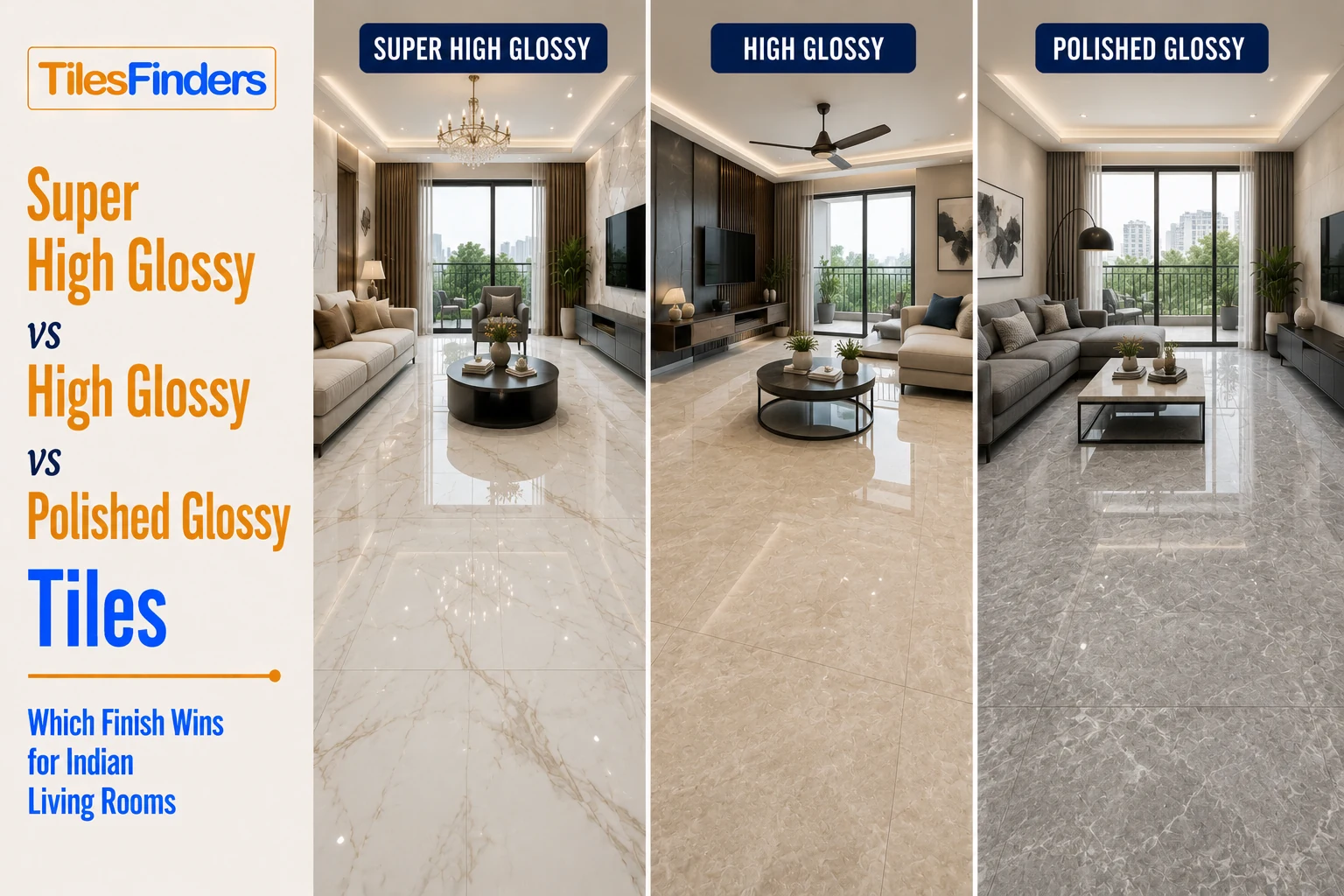
Polished glossy is the strongest choice for a living room floor because it can be professionally re-polished, while high glossy and super high glossy are better suited to walls. A zoned approach, polished flooring with a glazed glossy feature wall, delivers high visual impact while placing each finish where its properties work best.
Three glossy finishes compete for the same luxury living room brief, and choosing between them without understanding their construction differences is how households end up disappointed by a scratched, unrepairable floor. This guide compares super high glossy, high glossy, and polished glossy directly for living room application specifically.
From The Marketplace
Popular tiles right now







The Three Finishes at a Glance
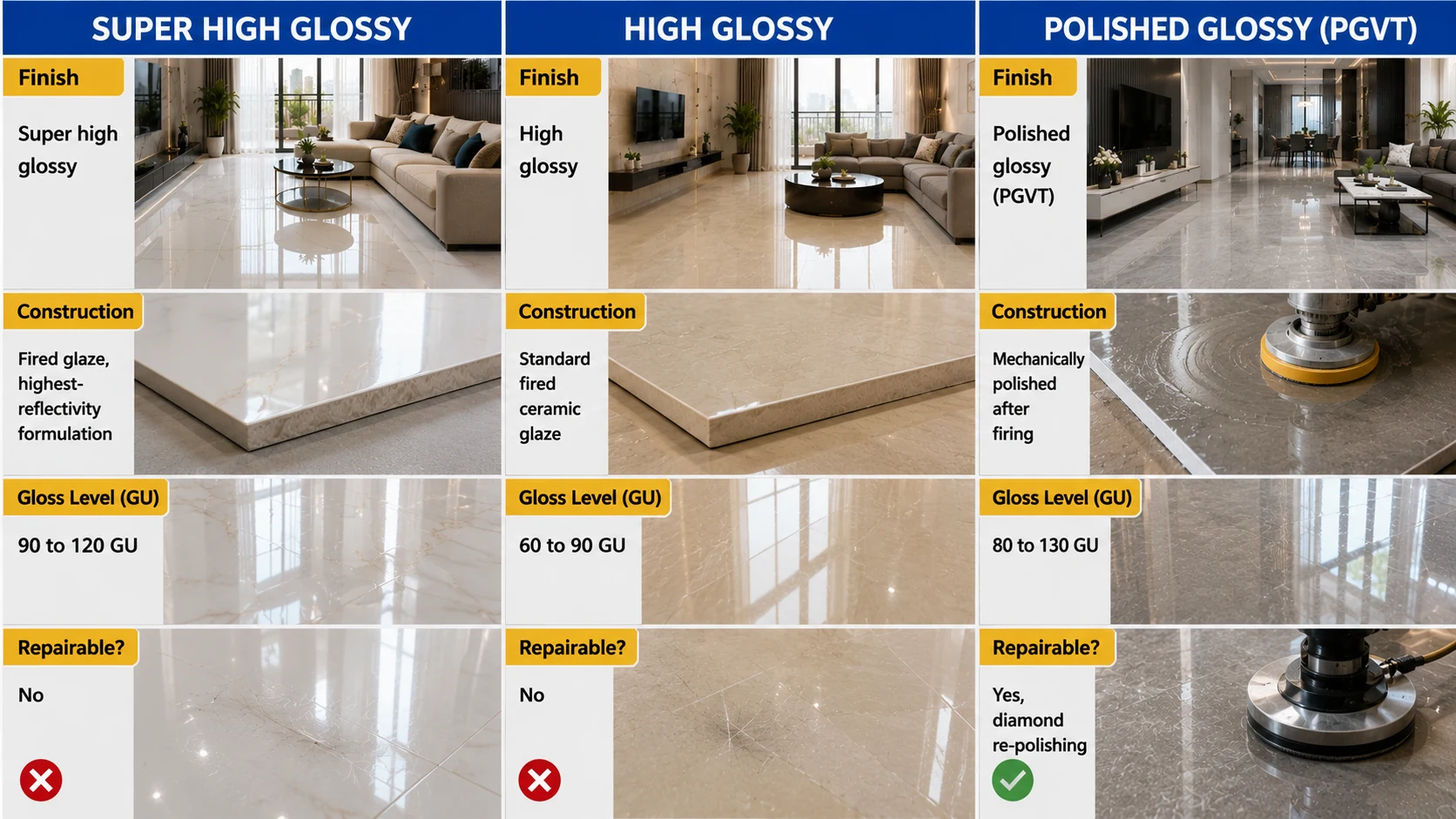
| Finish | Construction | Gloss Level (GU) | Repairable? |
| Super high glossy | Fired glaze, highest-reflectivity formulation | 90 to 120 GU | No |
| High glossy | Standard fired ceramic glaze | 60 to 90 GU | No |
| Polished glossy (PGVT) | Mechanically polished after firing | 80 to 130 GU | Yes, diamond re-polishing |
Living Room Suitability Compared
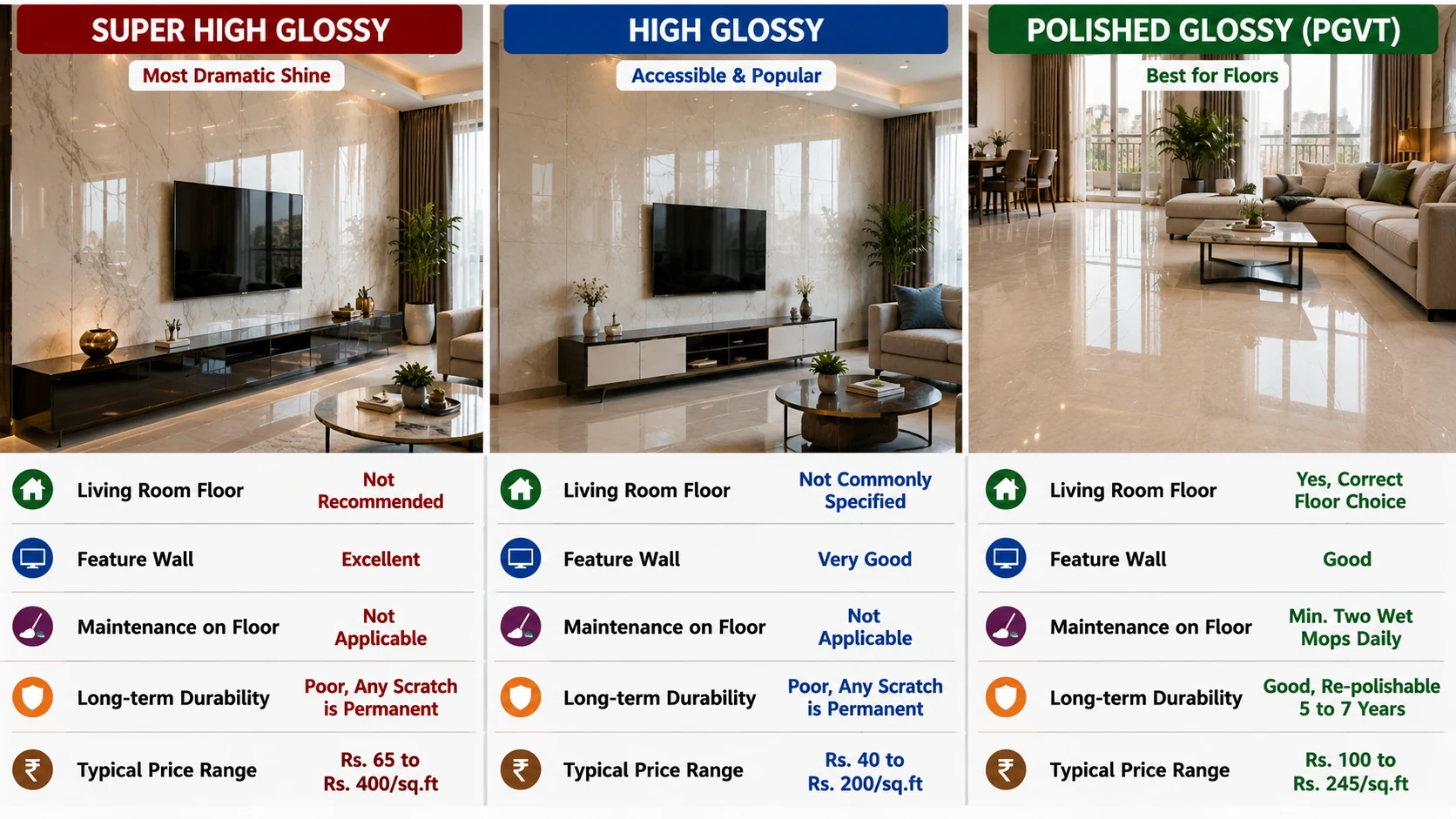
| Factor | Super High Glossy | High Glossy | Polished Glossy |
| Suitable for the living room floor? | Not recommended, given zero scratch repair option | Not commonly specified for floors; primarily a wall finish | Yes, the correct floor choice among the three |
| Suitable for a living room feature wall? | Excellent, the most dramatic reflective wall option | Very good, accessible, and widely available | Good, though less commonly specified for walls than for floors |
| Maintenance, if used on a floor | Not applicable, not recommended for floors | Not applicable, not commonly used on floors | Minimum two wet mops daily, epoxy grout mandatory |
| Long-term floor durability | Poor, any scratch is permanent | Poor, any scratch is permanent | Good, professionally re-polishable roughly every 5 to 7 years |
| Typical price range | Rs. 65 to Rs. 400/sq.ft | Rs. 40 to Rs. 200/sq.ft | Rs. 100 to Rs. 245/sq.ft |
The answer for a living room floor: Polished glossy is the only one of the three genuinely suited to a living room floor, given its mechanical polish construction allows professional restoration if scratched. Super high glossy and high glossy are both better reserved for feature walls in the same room, where their glazed construction's lack of repairability is a non-issue, given minimal wall contact risk. A living room combining a polished glossy floor with a super high glossy feature wall uses each finish exactly where its construction performs best.
If you want a deeper understanding of the super high glossy finish before choosing it for a feature wall, see our Super High Glossy Tiles in India guide. It covers reflectivity, scratch limitations, care requirements, and the applications where this finish makes the most sense.
Which Wins for Specific Living Room Briefs
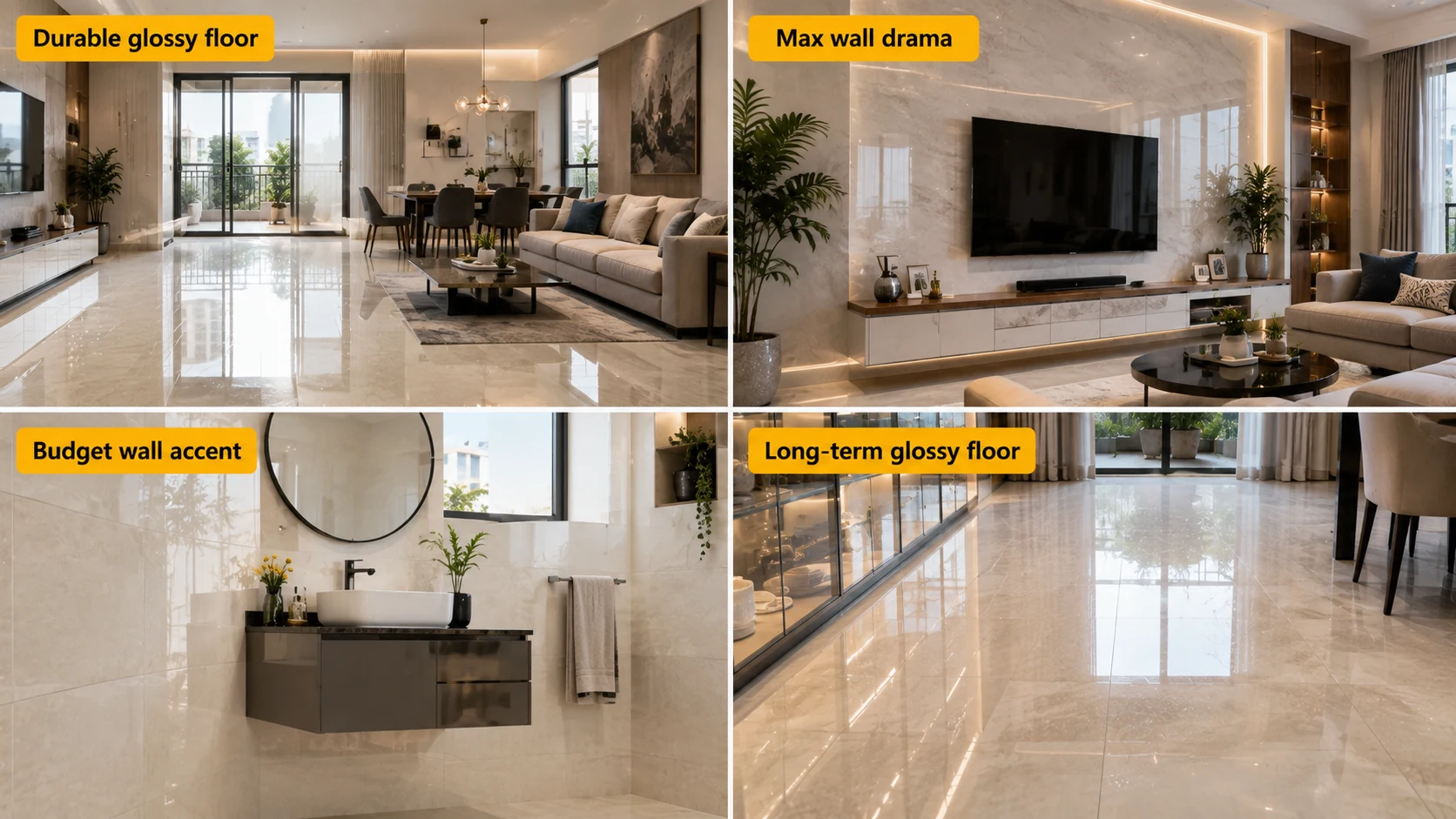
- Maximum floor reflectivity with long-term durability: polished glossy, specifically in double charge or full body construction for the best wear consistency over a decade or more.
- Maximum wall drama behind a sofa or TV: super high glossy, delivering the highest available reflectivity where scratch risk is minimal.
- Budget-conscious wall accent: high glossy, the most accessible and widely available of the three for a bathroom, kitchen, or living room wall application.
- A household wanting one glossy floor investment to last 15 years: polished glossy in full body construction with a planned re-polishing cycle, the only one of the three engineered for this outcome.
For more visual inspiration, explore Super High Glossy Tile Design Ideas covering statement walls, TV backdrops, bathroom surfaces, niches, and other low-contact applications where maximum sheen can create the strongest impact.
Buying Checklist
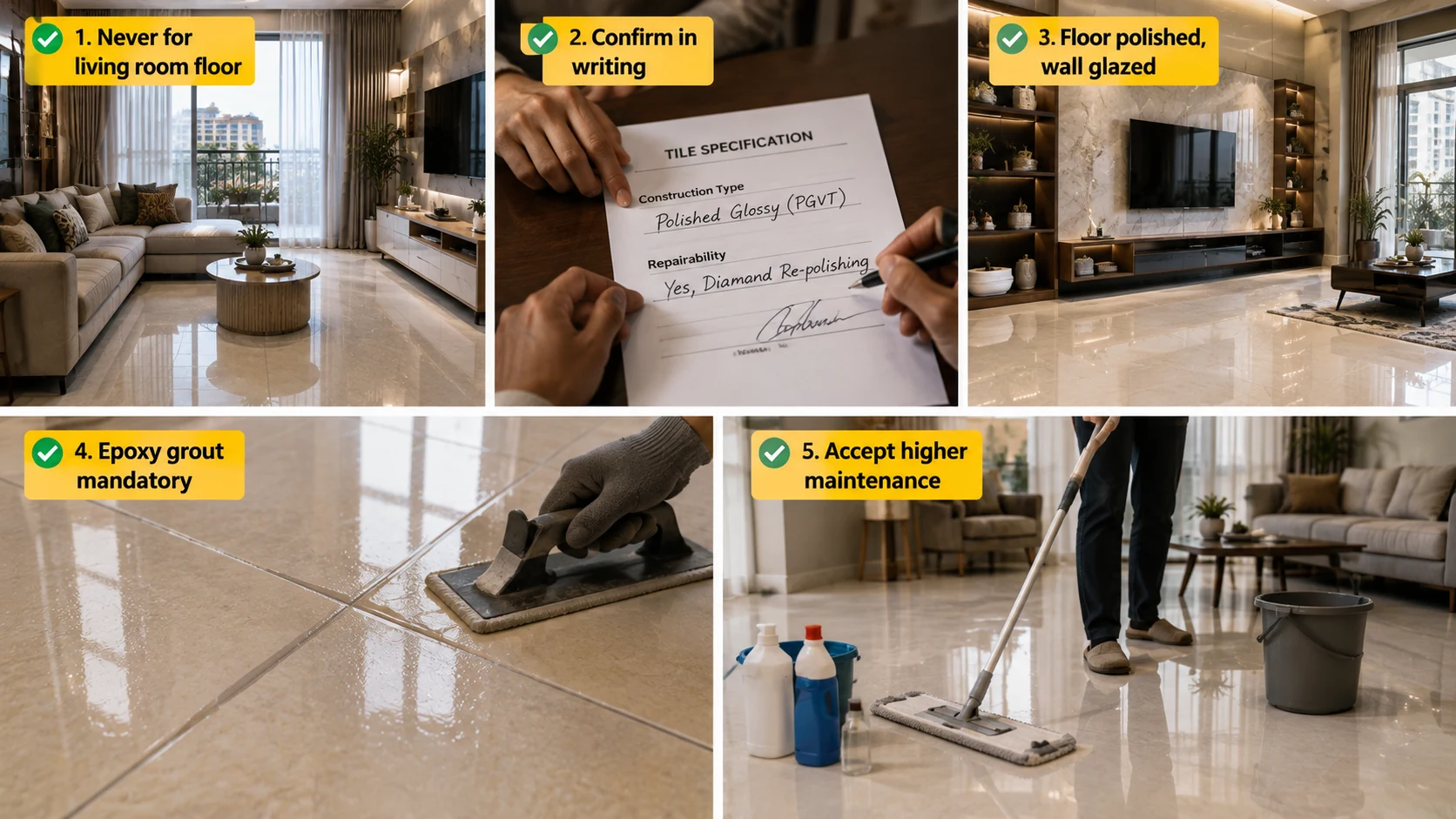
- Never specify super high glossy or standard high glossy for a living room floor, reserving polished glossy for this application instead.
- Confirm construction type in writing, since all three can look visually similar in a showroom despite meaningfully different repairability.
- For a living room combining floor and wall glossy finishes, specify polished glossy for the floor and either glazed finish for the wall.
- Confirm epoxy grout for any polished glossy floor as a mandatory specification, not optional.
- Confirm the household has accepted the maintenance demand of whichever finish is chosen, since all three require significantly more frequent cleaning than matte alternatives.
Glossy Finish Selection in India: 2026 Context
Indian designers increasingly specify a deliberate split across these three finishes within the same project, polished glossy for floors, given its repairability, and super high glossy or high glossy for walls, given their accessible cost and maximum reflectivity, where scratch risk does not matter. This zoned approach, rather than defaulting to one glossy finish throughout a room, has become the more sophisticated and practically sound specification strategy for 2026 luxury residential projects.
Compare All Three Finishes on TilesFinders
Super high glossy, high glossy, and polished glossy GVT and ceramic can be compared by application, repairability, and price on TilesFinders, with guidance to help you zone the correct finish to the correct surface in your living room.

FAQs
Polished glossy (PGVT), the only one of the three suited to floor application, given its mechanically polished surface can be professionally re-polished if scratched, unlike the permanent glaze construction of both super high glossy and standard high glossy.
Not recommended even with careful use, since any scratch that does occur over years of normal living room activity is permanent and irreparable, requiring full tile replacement rather than restoration.
Super high glossy delivers the most dramatic reflective quality for a TV wall, appropriate here specifically because a wall carries minimal scratch and contact risk compared to a floor.
High gloss is generally more affordable and more widely available, Rs. 40 to Rs. 200 per sq. ft., compared to super high gloss's Rs. 65 to Rs. 400 per sq. ft. range, though both share the same lack of scratch repairability.
Yes, and this is an effective zoned strategy: polished glossy for the floor, given its repairability, and either high glossy or super high glossy for a feature wall, given their accessible cost and maximum reflectivity, where scratch risk is a non-issue.
Polished glossy, specifically full body or double charge construction, given the professional re-polishing option that restores the surface close to original condition, roughly every 5 to 7 years across a floor's operating life.
Very close. Polished glossy reaches up to 130 GU in premium products, comparable to or exceeding super high glossy's 90 to 120 GU range, meaning the visual reflectivity difference between the two is often minimal despite their different construction.
Polished glossy floors typically range from Rs. 100 to Rs. 245 per sq.ft. High glossy walls range from Rs. 40 to Rs. 200 per sq.ft. Super high glossy walls range from Rs. 65 to Rs. 400 per sq.ft, depending on design complexity.


See our tile guides first
Set TilesFinders as a preferred source and our buying guides surface ahead of the rest for you.
Add as preferred sourceTakes one tap. Nothing to install.
What Readers Say
I was about to redo my parking area with the wrong tile size until I read this. The layout comparisons saved me from a costly mistake.
We reference TilesFinders guides while briefing clients on material selection. The size and pattern breakdowns are accurate and easy to explain visually.
On site, I get asked about grout spacing all the time. This article gave me a solid reference I now share with my team before every job.
Finally a guide that doesn't just push generic advice. The oil stain removal steps actually worked on our clubhouse driveway tiles.
I run a small construction firm and now send this link to clients directly when they ask about entrance tile sizing. Saves me an hour of explaining.
Good practical detail, though I wish there were more examples for compact apartment entrances specifically, not just villas.
My mother-in-law wanted marble, I wanted vitrified. This blog gave us the neutral comparison we needed to actually decide together.
Detailed without being overwhelming. I appreciated that it covered both cost and maintenance, not just the aesthetics.
Used the algae and hard water removal tips on our terrace tiles after the monsoon. Worked better than what our regular cleaner was doing.
As someone who sources tiles for multiple builder projects, I find these comparisons genuinely useful for vendor conversations, not just consumer content.
Recommended this to a client who kept second-guessing the entrance design. The small vs large layout section settled the debate instantly.
Straightforward and honest, no unnecessary jargon. Would like to see a similar breakdown for outdoor pool-deck tiles next.
We've bookmarked several TilesFinders guides for our design handbook. Reliable source when clients want data, not just opinions.
Two paths, one marketplace.
Get free quotes from verified suppliers.
Share your room, budget, and style. Suppliers in Morbi respond within hours.
Get Free QuotesList your business, reach real buyers.
Put your showroom in front of homeowners searching for tiles right now.
List Your Business