Super High Glossy Tiles in India: Ultra-Reflective Surfaces for Premium Interiors
Reflectivity takes centre stage with super high glossy tiles, delivering an intense mirror-like finish for feature walls and accents while demanding careful handling and avoiding wet-floor applications.
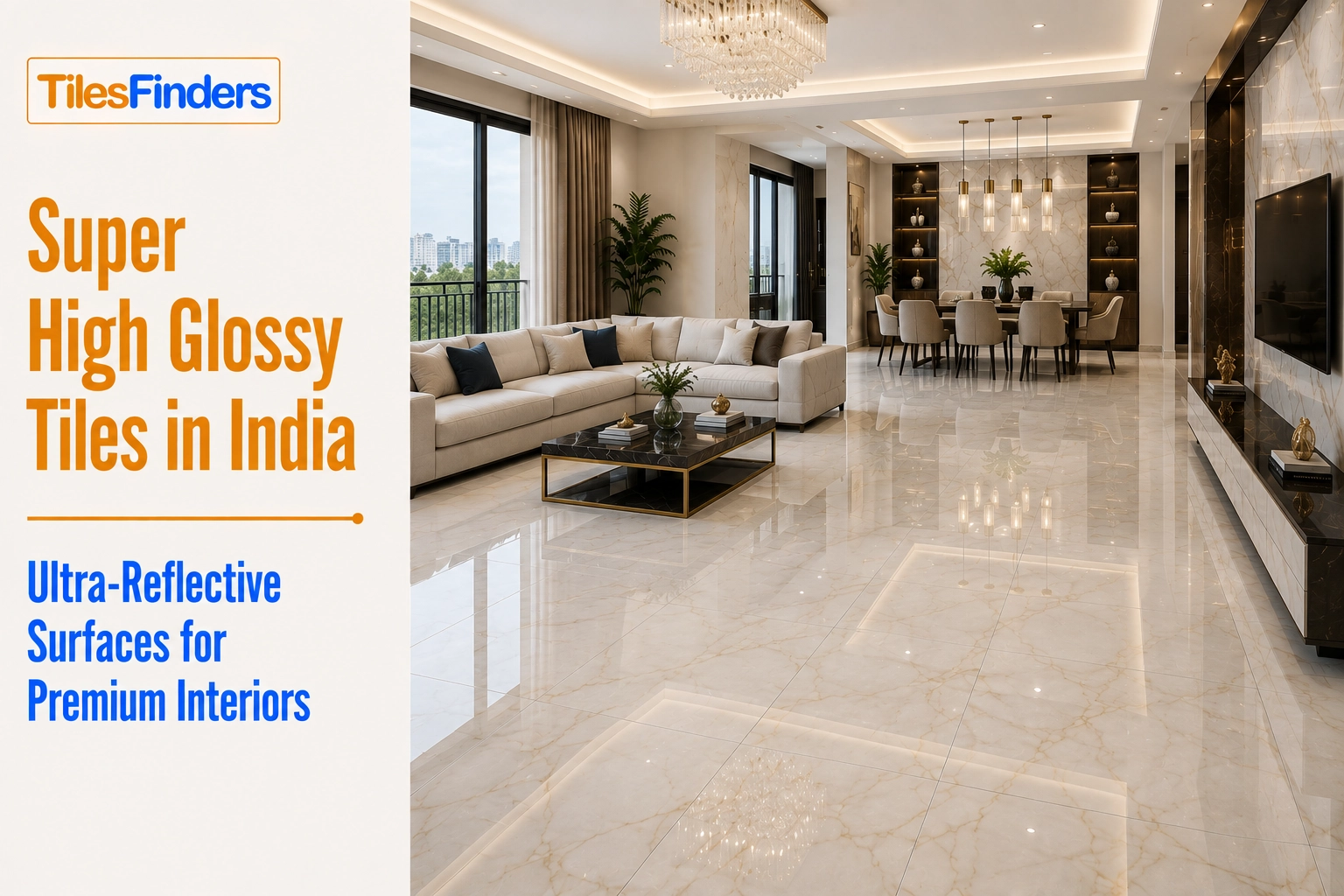
Super high glossy tiles deliver exceptional 90–120 GU reflectivity, making them ideal for feature walls, bathroom accents, TV walls, and low-contact niches. Because scratches are permanent and wet-floor friction is very low, keep this finish primarily on walls and avoid regularly walked or wet floors.
Super high glossy sits at the top of the gloss spectrum available in Indian tile production, a fired glaze formulation reaching the highest reflectivity of any glossy category. It delivers the most dramatic mirror-like surface available in ceramic and GVT, and it demands the most careful placement of any finish covered in this series, since its glazed construction means it cannot be repaired once scratched. This guide covers what super high gloss is, how it differs from its glossy neighbours, and where it genuinely belongs.
Before you continue: Super high glossy tile has a wet coefficient of friction of 0.15 to 0.25, the lowest of any finish covered across this series, and its glazed surface cannot be professionally repaired if scratched. It must never be specified for any wet-area floor, and its use on floors in dry areas should be limited and carefully considered, given its permanent scratch vulnerability. This guide's primary recommendation is wall and low-contact accent application.
From The Marketplace
Popular tiles right now



-85795cd6-7f47-491c-9daf-1e2310cace7b.jpg)
-22df6d3f-9edc-46fa-80f9-9cd4517ab8b7.jpg)
-1481ef3d-6bef-4a34-9dcb-2442b556d1b8.jpg)

What Makes Super High Glossy Different
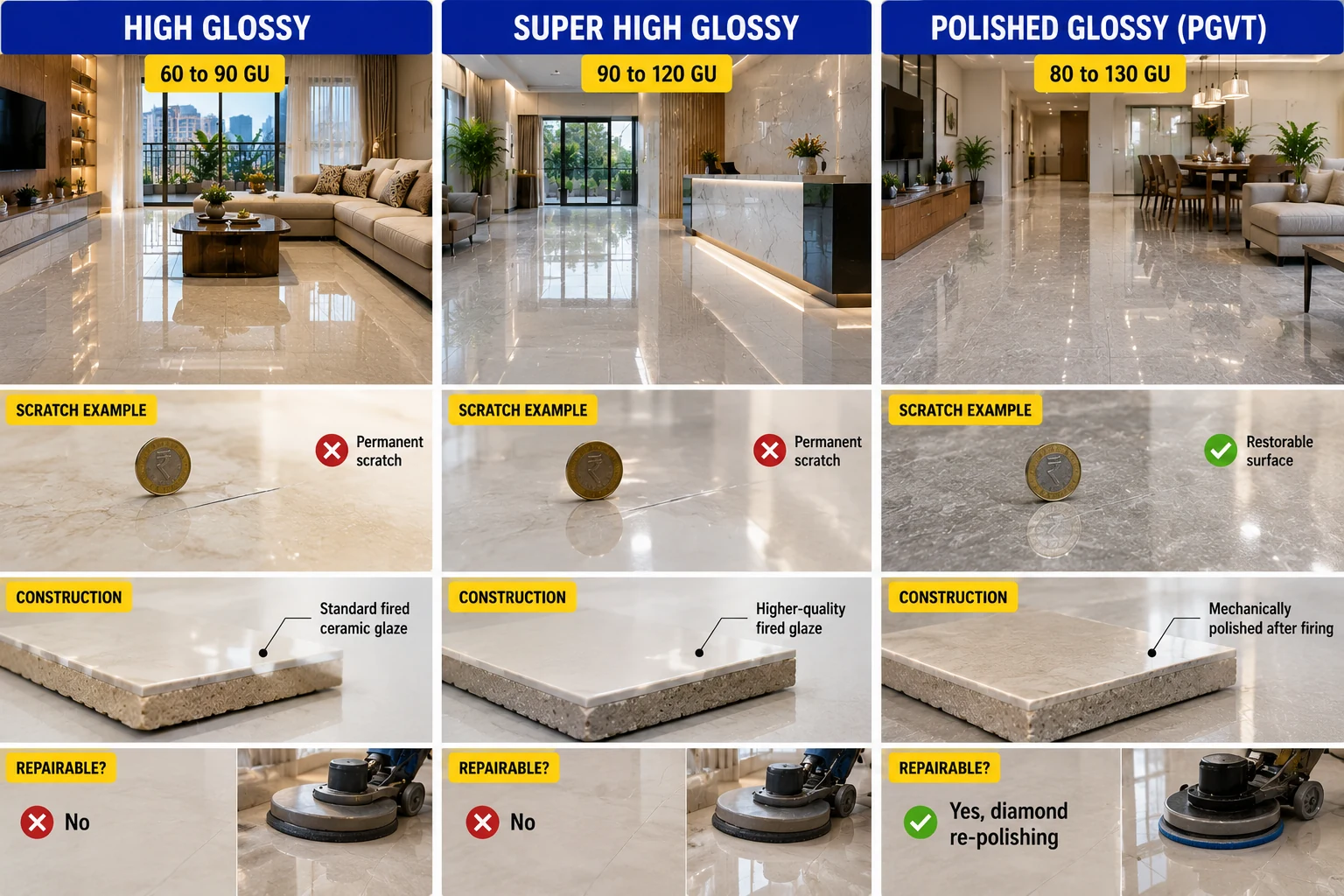
| Finish | Gloss Level (GU) | Construction | Repairable? |
| High glossy | 60 to 90 GU | Standard fired ceramic glaze | No |
| Super high glossy | 90 to 120 GU | A more reflective, higher-quality fired glaze formulation than standard high-glossy | No |
| Polished glossy (PGVT) | 80 to 130 GU | Mechanically polished after firing | Yes, diamond re-polishing |
The trade-off in one line: Super high glossy reaches a reflectivity that polished glossy can match or exceed, but its glazed construction means any scratch is permanent, while polished glossy's mechanical surface can be professionally restored. This single distinction is why super high glossy is best reserved for surfaces with minimal contact and scratch risk, walls, and select low-traffic accents, rather than any floor application a household relies on daily.
Where Super High Glossy Genuinely Belongs
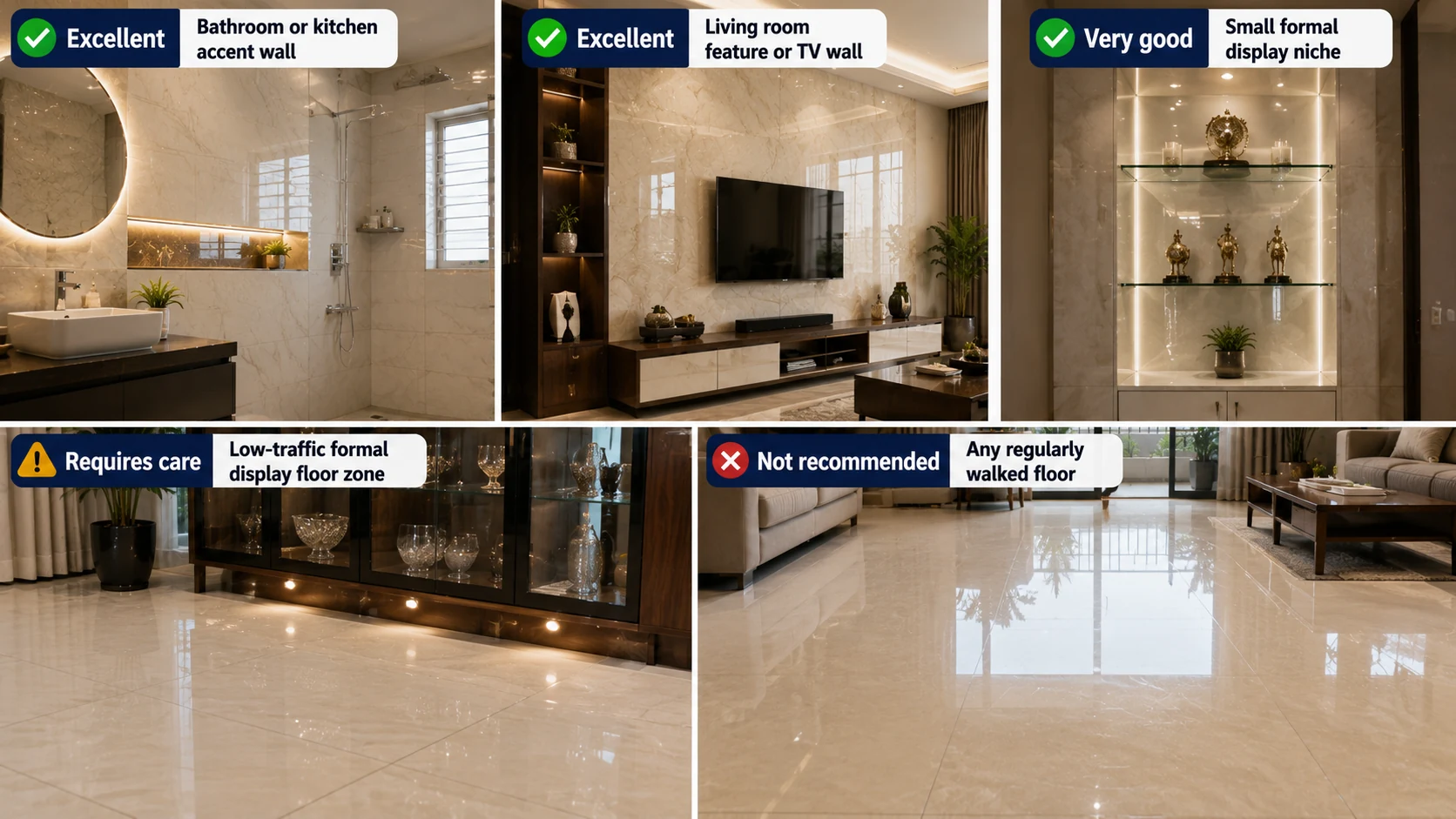
| Application | Suitability | Why |
| Bathroom or kitchen accent wall | Excellent | Maximum light amplification in a compact room with minimal scratch or impact risk on a vertical surface |
| Living room feature wall or TV wall | Excellent | The most dramatic reflective wall statement available, viewed rather than touched |
| Small formal display niche | Very good | A confined, low-contact space that showcases maximum reflectivity without daily wear risk |
| Low-traffic formal display floor zone | Requires significant care | Only appropriate for a genuinely low-contact dry area, such as beneath a display cabinet, never a walked-on living space |
| Any regularly walked floor, wet or dry | Not recommended | The combination of the lowest wet COF in this series and zero scratch-repair option makes this the least forgiving finish for any floor a household actually uses daily |
Care Requirements
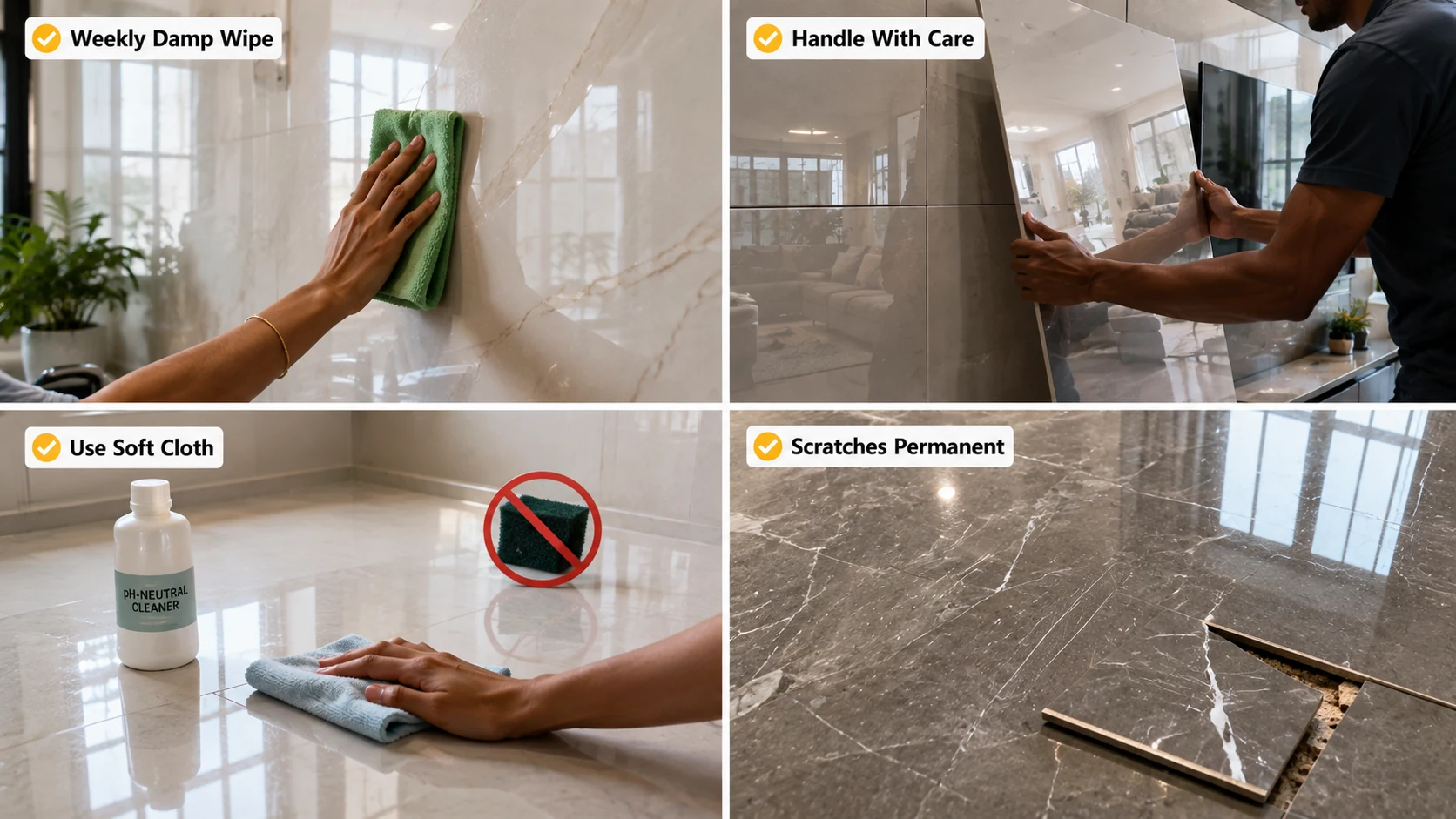
- Weekly damp wipe for wall applications, with no sealing or periodic treatment required beyond routine cleaning.
- Handle with particular care during installation and daily use, since super high glossy shows scratches and marks more visibly than any other finish in this series, given its maximum reflectivity.
- Avoid abrasive cleaning tools entirely. A soft microfibre cloth and pH-neutral cleaner are correct; any scouring pad or abrasive cleaner risks permanent surface damage.
- Accept that any scratch is permanent. Unlike polished glossy tiles, there is no professional restoration option; a damaged tile requires full replacement.
Buying Checklist
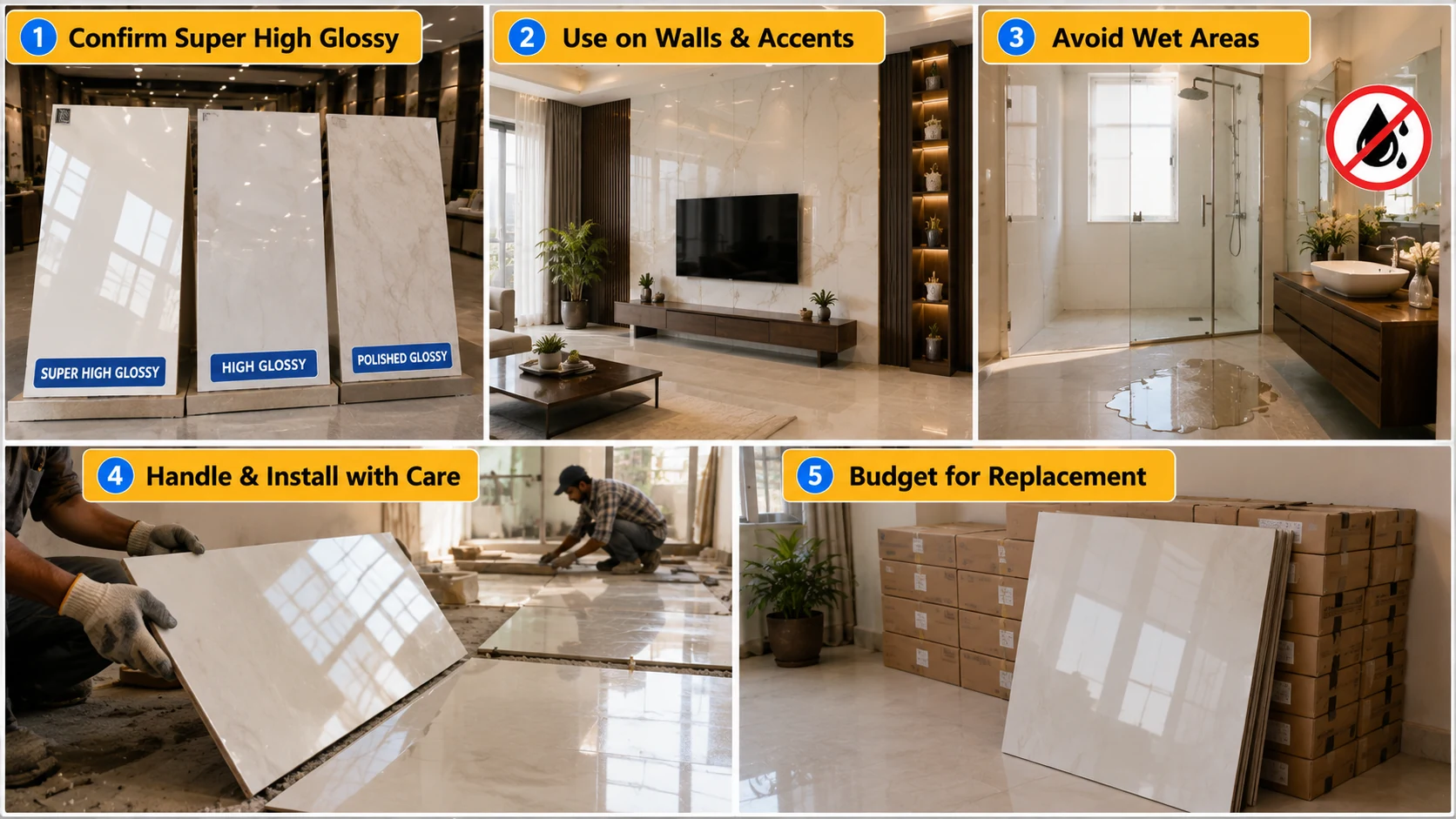
- Confirm the specific product is super high glossy and not standard high glossy or polished glossy, since the three are frequently displayed near each other in showrooms, and the visual difference can be subtle.
- Reserve this finish for walls and low-contact accents, not regularly walked floors, given its lack of repairability.
- Never specify for any wet-area application, given its wet COF of 0.15 to 0.25.
- Confirm handling and installation care with your contractor, since this finish scratches more easily during the installation process itself than lower-gloss alternatives.
- Budget for the possibility of eventual tile replacement rather than repair, if this finish is used in any application with even modest contact risk.
Super High Glossy Tiles in India: 2026 Manufacturing Context
Super high glossy is produced by a specialist subset of Indian ceramic manufacturers, including those in Morbi, Gujarat, given the more demanding glaze formulation and firing control this finish requires compared to standard high glossy. Design range, particularly in marble-look and metallic-adjacent finishes, continues to expand as more manufacturers add super high glossy production capability, though availability and lead time should always be confirmed separately from standard high glossy, given the narrower production base.
Explore Super High Glossy Walls on TilesFinders
Super high glossy ceramic and GVT for feature walls, bathroom accents, and display niches can be compared by design and price on TilesFinders, with placement guidance available to help you apply this finish where it performs best.
FAQs
Super high glossy is a fired ceramic glaze formulation reaching 90 to 120 GU, the highest reflectivity among the glazed glossy categories, distinct from polished glossy (PGVT), which achieves its shine through mechanical polishing rather than glaze.
No. Its glazed surface is permanent, and any scratch reaching the glaze cannot be professionally restored, unlike polished glossy surfaces, which can be diamond re-polished. A scratched super high-glossy tile requires replacement.
Not recommended for any regularly walked floor, wet or dry, given both its very low wet coefficient of friction, 0.15 to 0.25, and its lack of scratch repairability. It is best reserved for walls and low-contact display applications.
Feature walls, bathroom or kitchen accent walls, TV walls, and small formal display niches, all vertical or low-contact surfaces where the finish's maximum reflectivity can be appreciated without daily wear risk.
Super high glossy uses a more reflective, higher-quality glaze formulation, reaching 90 to 120 GU compared to standard high glossy's 60 to 90 GU. Both are glazed and equally non-repairable if scratched.
Use only a soft microfibre cloth and pH-neutral cleaner, avoiding any abrasive tool or scouring pad, since this finish shows scratches and marks more visibly than any other finish, given its maximum reflectivity.
Super high glossy ranges from Rs. 60 to Rs. 250 per sq.ft, depending on design, format, and whether the product is a plain colour, marble-look, or metallic-adjacent finish.
Generally not recommended given its lack of scratch repairability. Polished glossy (PGVT) delivers comparable or greater reflectivity with the added advantage of professional re-polishing if the surface is scratched, making it the safer choice for any floor application.


Handpicked for You
See our tile guides first
Set TilesFinders as a preferred source and our buying guides surface ahead of the rest for you.
Add as preferred sourceTakes one tap. Nothing to install.
What Readers Say
I was about to redo my parking area with the wrong tile size until I read this. The layout comparisons saved me from a costly mistake.
We reference TilesFinders guides while briefing clients on material selection. The size and pattern breakdowns are accurate and easy to explain visually.
On site, I get asked about grout spacing all the time. This article gave me a solid reference I now share with my team before every job.
Finally a guide that doesn't just push generic advice. The oil stain removal steps actually worked on our clubhouse driveway tiles.
I run a small construction firm and now send this link to clients directly when they ask about entrance tile sizing. Saves me an hour of explaining.
Good practical detail, though I wish there were more examples for compact apartment entrances specifically, not just villas.
My mother-in-law wanted marble, I wanted vitrified. This blog gave us the neutral comparison we needed to actually decide together.
Detailed without being overwhelming. I appreciated that it covered both cost and maintenance, not just the aesthetics.
Used the algae and hard water removal tips on our terrace tiles after the monsoon. Worked better than what our regular cleaner was doing.
As someone who sources tiles for multiple builder projects, I find these comparisons genuinely useful for vendor conversations, not just consumer content.
Recommended this to a client who kept second-guessing the entrance design. The small vs large layout section settled the debate instantly.
Straightforward and honest, no unnecessary jargon. Would like to see a similar breakdown for outdoor pool-deck tiles next.
We've bookmarked several TilesFinders guides for our design handbook. Reliable source when clients want data, not just opinions.
Two paths, one marketplace.
Get free quotes from verified suppliers.
Share your room, budget, and style. Suppliers in Morbi respond within hours.
Get Free QuotesList your business, reach real buyers.
Put your showroom in front of homeowners searching for tiles right now.
List Your Business