Pooja Room Wall Tiles: Vastu-Compliant Design Ideas
Pooja room wall tiles with Vastu-friendly colours, marble looks, glossy finishes, and mandir wall ideas. Find ceramic, GVT, PGVT, and 3D tiles on TilesFinders.
- What Vastu Actually Says About Pooja Room Walls
- Vastu-Aligned Colours for Pooja Room Wall Tiles
- Which Wall Gets Which Treatment
- Tile Materials for Pooja Room Walls
- Tile Looks That Suit a Mandir Wall
- Finish Guide for Pooja Room Walls
- Choosing the Right Tile Size for Your Pooja Room Wall
- Before You Buy: Seven Things Worth Confirming
- Four Mistakes That Show Up After Installation
- Browse Pooja Room Wall Tiles by Material, Colour, Finish & Size
Most homeowners ask two questions when selecting pooja room wall tiles. Which design looks best? And what does Vastu say? The challenge is that these two questions are usually answered separately, and then reconciled after the tiles are already ordered.
Vastu guidance shapes colour and direction. Design preference shapes material, pattern, and finish. Both need to inform the tile choice at the same time, not in sequence. A PGVT marble-look tile in white with soft grey veining can satisfy both: it aligns with Vastu's preference for light, sattvic colours while delivering the temple-quality visual that most families want for their mandir.
This guide works through Vastu principles first, then translates them into specific tile materials, looks, finishes, and sizes for pooja room walls, with notes on which wall in the mandir deserves which treatment.
What Vastu Actually Says About Pooja Room Walls
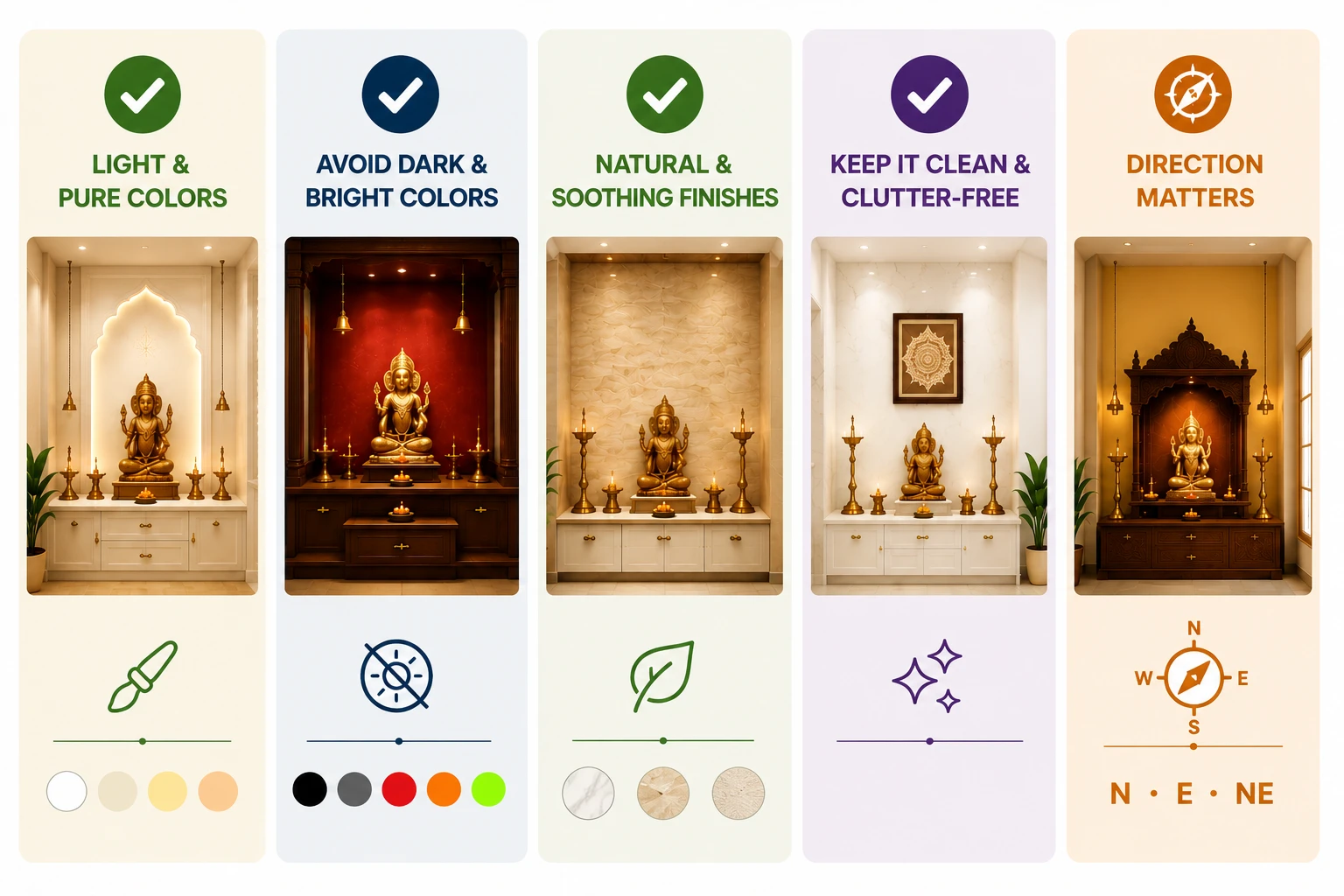
Vastu Shastra does not prescribe specific tile materials or brand names. It works with three principles that translate practically into tile selection: direction, colour, and light.
Direction determines which wall becomes the primary deity wall. In a northeast-facing mandir, the deity faces southwest, which means the wall behind the deity faces northeast. Vastu considers this direction the most sattvic, associated with clarity and spiritual openness. In east-facing mandirs, the deity faces west, with the feature wall facing east toward morning light. Both are considered highly favourable.
Colour relates to how the tile surface affects the energy of the space. Vastu recommends light, luminous tones for prayer areas because they support clarity, calm, and positive thought. Dark, heavy colours absorb light and create a closed, heavy feeling that Vastu considers unsuitable for a space meant for daily spiritual activity.
Light, the third principle, is about how the room interacts with natural and artificial illumination. A Vastu-compliant tile choice amplifies whatever light the room receives rather than absorbing it. This is why glossy and polished finishes on mandir walls have a practical Vastu logic: they reflect diya and lamp light outward, creating the warm, luminous atmosphere that makes a prayer space feel intentional.
| Mandir Direction | Deity Faces | Feature Wall Faces | Vastu Standing | Tile Colour Recommendation |
| Northeast corner | Southwest | Northeast | Most auspicious | White, cream, or very light yellow |
| East-facing | West | East | Highly favourable | White, off-white, or light gold tones |
| North-facing | South | North | Good for apartments | Cream, beige, or soft ivory |
| West-facing | East | West | Acceptable | Light grey, beige, or off-white |
| South-facing | North | South | Generally avoided | If unavoidable: white or cream to compensate for the brightness |
If you also want broader guidance on pooja room layouts, tile selection, maintenance, and mandir design planning, read our complete pooja room tiles design and vastu guide.
Vastu-Aligned Colours for Pooja Room Wall Tiles
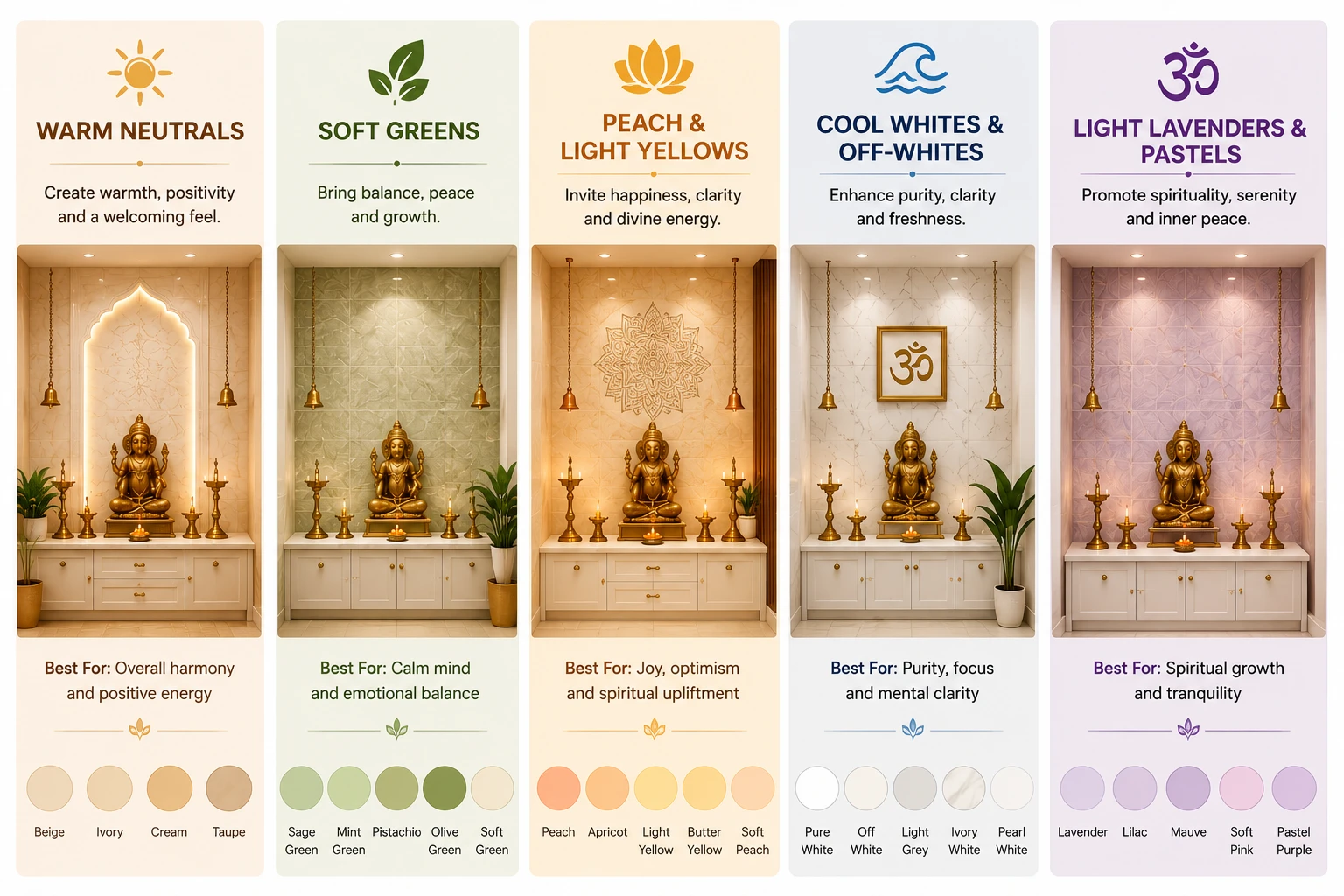
Vastu colours for pooja room tiles fall into a clear spectrum from most recommended to those best avoided. The principle behind each recommendation is consistent: the colour should support mental clarity and calm, reflect available light, and feel open rather than heavy.
White tiles for pooja room walls are the most widely used and most Vastu-aligned choice across all mandir directions. White reflects the maximum available light, whether that comes from a window, a ceiling LED, or a diya on the deity shelf. In small apartments where the mandir is an alcove rather than a dedicated room, white tiles prevent the space from feeling enclosed.
| Tile Colour | Vastu Alignment | Practical Benefit | Pairs Well With | Avoid When |
| White | Highest. Purity, clarity, maximum light reflection. | Brightens any room size. Works in all directions. | Gold border strips, cream grout, brass fixtures | Choosing white grout near agarbatti; it stains from smoke over time |
| Cream or ivory | Very high. Warmth without heaviness. | Softer than pure white under warm LED lighting. Hides dust better. | Light wood mandir frames, off-white surrounds | Very dark adjacent walls; cream reads pale against them |
| Beige or sandstone | High. Grounded, stable energy. | Pairs naturally with wooden mandir structures. Ages well. | Natural wood, brass, terracotta accents | Small alcoves with no natural light; beige darkens further under warm LEDs |
| Light yellow | High. Solar energy, optimism, clarity. | Brightens north-facing rooms with no window. | White or cream surrounds, minimal decor | Bold patterns; yellow as a field tile with heavy motifs is visually busy |
| Soft gold or champagne | Moderate-high. Divine association, warmth. | Works as a single accent or border, not as a field tile. | White or cream field tiles, brass deity accessories | Using gold across the full wall; too heavy and reflective at scale |
| Grey (light) | Moderate. Neutral, calm, modern. | Good in contemporary homes where traditional colours feel out of place. | White or charcoal accents, minimal wood | Traditional homes; grey reads cold in warm-light mandirs |
| Dark tones (navy, black, deep red) | Not recommended. | Absorb light, make compact spaces feel smaller. | Can be used as a thin border only | Primary wall surfaces in any mandir size |
Which Wall Gets Which Treatment
A pooja room has more than one wall, and not every wall deserves the same tile. The treatment should follow the function and visual weight of each surface.
The Deity Feature Wall
The wall directly behind the deity shelf is the most important visual surface in the mandir. This is the wall seen first when entering the room, and the one that sets the spiritual atmosphere of the entire space. It deserves the most considered tile choice.
Options that work well here: a large-format marble-look PGVT in 2x4 in white or cream with soft veining, a full-height Third Fired decorative panel with a temple arch or floral motif, or a plain PGVT in white or cream with a single row of gold border tiles framing the deity area. The feature wall tile should have some visual weight, either through pattern, format size, or finish, that makes it read as a considered choice.
What does not work on the feature wall: plain 1x1 ceramic tiles in a flat colour. Without any visual distinction from the surrounding walls, the deity area loses definition. The feature wall should be clearly different from the rest, even if subtly.
The Side and Surrounding Walls
The walls to the left and right of the deity feature wall, and the ceiling, if it is tiled, should recede visually. They are the frame, not the painting. A plain white or cream ceramic in 12x24, or a matte GVT in the same tone as the feature wall in a 2x2 format, keeps these walls clean and undemanding.
Using a second patterned or textured tile on the side walls in a small mandir creates visual noise. The eye does not know where to settle. One decorative surface, one calm surface around it. That ratio works consistently across mandir sizes and styles.
The Niche or Alcove Interior
In apartments where the mandir is a wall niche rather than a room, the three interior walls of the niche act as the entire tile canvas. The back wall of the niche is the feature wall, and the two narrow side walls of the niche frame it.
A common and effective approach: a third-fired decorative tile or a marble-look PGVT on the back of the niche, and plain white ceramic 12x18 on the narrow sides. The niche interior is small enough that even a single patterned tile on the back wall makes a strong visual statement without requiring any tile on the sides to be anything more than a clean neutral.
| Wall Type | Recommended Tile Treatment | Material | Finish | What to Avoid |
| Deity feature wall (dedicated room) | Marble-look PGVT 2x4, or Third Fired decorative panel, or plain PGVT with gold border strip | PGVT or GVT | Polished or High Glossy | Plain 1x1 ceramic with no visual distinction from surrounding walls |
| Side and surrounding walls (dedicated room) | Plain white or cream ceramic 12x24, or matte GVT 2x2 in matching tone | Ceramic or GVT | Matte or Satin | Second patterned or textured tile; it competes with the feature wall |
| Niche back wall (apartment alcove) | Third Fired decorative panel or marble-look PGVT 2x2 | Ceramic (Third Fired) or PGVT | Polished or decorative relief | Dark colours or heavy patterns; they close in an already compact space |
| Niche side walls (apartment alcove) | Plain white ceramic 12x18 or matte GVT 2x2 | Ceramic or GVT | Matte or Satin | Same patterned tile as the back wall; too much in a small niche |
Tile Materials for Pooja Room Walls
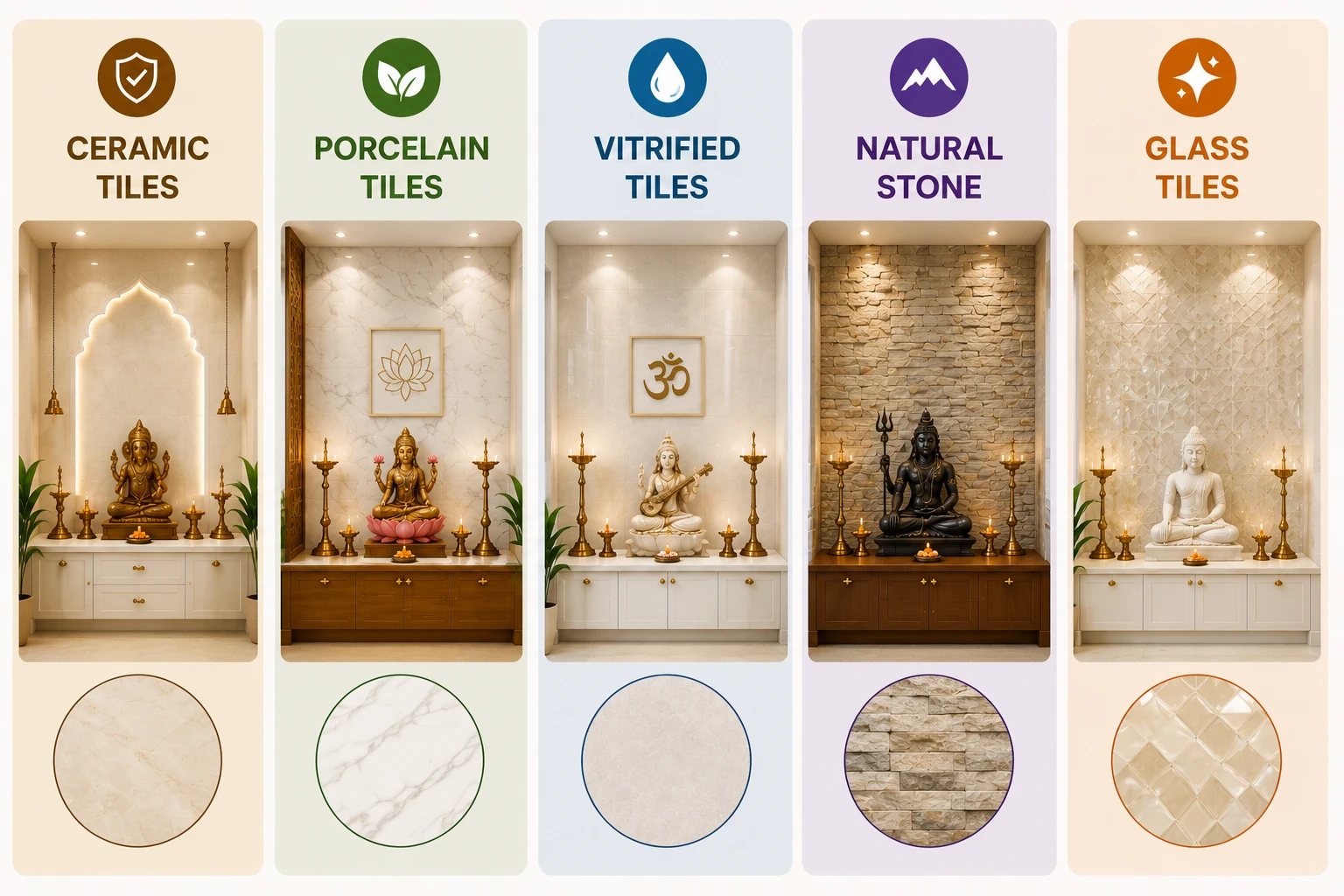
Three tile materials cover the full range of pooja room wall needs in Indian homes, from budget apartment niches to dedicated prayer rooms in larger homes.
Ceramic
Ceramic tiles for pooja room wall applications are the most accessible option and carry the widest design range for mandir-specific prints. Sizes available for walls are 12x18 and 12x24, both wall-only formats.
The design variety in ceramics includes plain white and cream in glossy and matte finishes, Om and lotus motifs printed on cream or ivory backgrounds, temple arch patterns, and Third Fired decorative surfaces with raised relief textures. Water absorption of 12 to 16% means ceramic stays on walls only; on the mandir floor, where water contact from rituals is regular, ceramic should not be used.
Price range: approximately ₹30 to ₹80 per sq. ft. The most common choice for rental homes, apartment niches, and renovations with a tight wall tile budget.
GVT (Glazed Vitrified)
GVT has less than 0.05% water absorption and works on both walls and floors. On a pooja room wall, GVT in 2x2 or 2x4 sizes brings the large-format look that modern mandirs favour: fewer grout lines, a more continuous surface, and the ability to carry detailed digital prints of marble veining, stone texture, or solid colour.
In a matte finish on the surrounding walls, GVT tiles create a calm, meditative background. In a glossy finish on the feature wall, the same material reflects light more actively. Both are correct uses of the material on mandir walls. Price range: approximately ₹60 to ₹130 per sq. ft.
PGVT (Polished Glazed Vitrified)
PGVT is the strongest material choice for the mandir feature wall in a dedicated pooja room. Its polished surface reflects diya light, morning lamp light, and ambient illumination in a way that matte and satin finishes cannot replicate. In a white or cream marble-look design on the deity wall, PGVT at 2x4 reads as a continuous panel of polished stone.
PGVT is wall-only in the pooja room. Its polished surface becomes slippery when wet, and mandir floors regularly receive water from abhishek and flower offerings. On walls, however, PGVT has no practical limitations beyond keeping it away from direct heavy water splash. Price range: approximately ₹70 to ₹160 per sq. ft.
Tile Looks That Suit a Mandir Wall
A tile look is the surface design and visual impression of the tile, separate from the material it is made from. The same marble look can be printed on a ceramic, GVT, or PGVT body. Choosing a look is a design decision; choosing a material is a performance decision. Both happen together, but for different reasons.
Marble-Look
Marble look tiles for pooja room walls are the most widely chosen decorative direction in Indian homes, across budget brackets and home sizes. The white-grey veined marble pattern connects to the visual language of temple architecture without requiring the maintenance burden of real stone. Kumkum, haldi, and diya oil wipe off a marble-look vitrified wall tile without leaving a trace. Real marble would stain from the same contact within days.
On the deity feature wall in 2x4 format, marble-look tiles in Statuario white with bold grey veining read as a considered, intentional choice. In a smaller niche in 2x2, the same look scaled down still carries the same visual character. Softer veining, such as a cream Botticino style, suits traditional mandirs with wooden frames and brass fixtures better than the high-contrast white-and-grey Statuario pattern.
Plain and Solid Colour
A plain white or cream tile is the right look for the surrounding walls in any mandir where the feature wall carries a pattern. It is also the right look for the entire mandir in a minimalist home where the deity and the offerings are meant to be the only visual presence in the space.
Plain tiles let the lamp light, the flowers, the idols, and the ritual objects do all the visual work. In a small niche, a plain white glossy tile on the back wall with no pattern can be more spiritually calm than a heavily printed surface. This is a valid and often overlooked choice.
3D and Textured Surfaces
3D wall tiles for pooja room applications, including raised relief ceramics, Texture punch GVT, and Third Fired tiles with carved-look patterns, add a hand-crafted quality to the feature wall that flat digital prints cannot. The physical depth of a relief tile catches light differently through the day as the angle of natural light or the lamp position shifts, creating a surface that reads differently in morning puja versus evening prayer.
The practical limit for textured tiles in a mandir is depth. Shallow relief textures (Texture punch, 0.3 to 1mm depth) are manageable to clean with a damp cloth. Deep grooves collect agarbatti ash and diya soot faster than smooth tiles and require more effort to clean. Keep High Depth punch tiles off the mandir wall entirely. Use them on an adjacent wall or a corridor feature panel where they are seen but not close to incense or lamp smoke.
Decorative Motif Tiles
Decorative motif tiles include ceramic or GVT tiles printed with Om symbols, lotus flowers, kalash patterns, temple arch motifs, and peacock or mandala designs. These are the most overtly religious in visual character and work well in traditional Indian homes, particularly in South India and Rajasthan, where temple-aesthetic interiors are more common in residential spaces.
In modern apartments and contemporary homes, motif tiles tend to work better as a single accent piece or a border strip rather than as the field tile across the full feature wall. One lotus motif tile inset into a plain marble-look wall makes a statement. A full wall of repeating Om tiles can feel busy rather than sacred in a contemporary interior context.
Finish Guide for Pooja Room Walls
Finish is the surface quality of the tile: polished, glossy, matte, satin, or textured. On a mandir wall, finish affects three things simultaneously: how the wall reflects light, how visible stains from daily rituals are, and how easily the surface cleans.
Glossy wall tiles for the pooja room feature walls have a clear advantage in light reflection. The smooth, glossy or polished surface bounces diya light, oil lamp glow, and recessed LED warmth outward into the room. In a mandir with limited natural light, a glossy or polished feature wall can make the space feel significantly more luminous than the same room with a matte wall.
Matte finishes on the surrounding walls are the right counterpart to a glossy feature wall. A fully glossy mandir, with polished tiles on all four walls, reads as reflective and visually restless rather than calm. The combination of one polished feature wall and matte surroundings gives light a place to gather and reflect without the whole room feeling like a mirror box.
| Finish | Light Reflection | Stain Visibility | Cleaning Ease Near Agarbatti | Best Wall Use in Mandir |
| Polished (PGVT) | Very high. Reflects the diya and lamp light strongly. | Medium. Shows fingerprints and watermarks. | Easy wipe on a smooth surface. Ash does not stick. | Deity feature wall only |
| High Glossy (GVT) | High. Strong reflection. | Medium-high. Water marks visible. | Easy wipe. | Feature wall or side walls in modern mandirs |
| Glossy (Ceramic) | Moderate-high. Good reflection for the price. | Low-medium. Easier to keep clean than polished. | Very easy. Most practical finish near agarbatti. | All walls, particularly the cooking-zone-equivalent backsplash around diya area |
| Matte (GVT or Ceramic) | Low. Absorbs light, calm appearance. | Very low. Hides ash, dust, and small marks well. | Slightly harder to wipe oil but manageable. | Side and surrounding walls in all mandir types |
| Satin Matte | Low-moderate. Between matte and glossy. | Low. Soft, forgiving surface. | Good. Less fingerprint-prone than glossy. | Surrounding walls where matte feels too flat |
| Sugar (GVT) | Moderate. Small glossy drops on a matte surface. | Low. The texture breaks up stain visibility. | Good. Tactile but not deeply grooved. | Side walls and feature walls in contemporary mandirs |
| Textured / Relief | Varied by depth. Light catches on edges. | Low for shallow texture; high for deep grooves. | Harder with depth. Keep shallow (0.3 to 1mm). | Feature panels only, away from direct agarbatti smoke |
Choosing the Right Tile Size for Your Pooja Room Wall
Tile size on a mandir wall affects how the space feels as much as colour does. In a small pooja niche, a large tile overwhelms the proportions. In a large dedicated room, small tiles create too many grout lines and make the wall feel fragmented rather than composed.
| Pooja Room Type | Wall Tile Size | Why It Works | Size to Avoid |
| Wall niche or alcove (very compact, under 10 sq. ft.) | 12x18 or 2x2 | Proportionate to the small surface. Minimal cutting around niche edges. | 2x4 or larger; needs heavy cutting in a small niche and the tile scale overwhelms the space |
| Apartment corner or partition mandir (10 to 30 sq. ft.) | 12x24 on surrounding walls, 2x2 on feature wall | 12x24 fills the wall height cleanly. 2x2 on the feature wall adds format weight. | Full 2x4 on all walls; the format becomes repetitive in a medium-sized space |
| Dedicated pooja room (30 to 60 sq. ft.) | 2x2 or 2x4 on feature wall, 12x24 on surrounding walls | Large format on the feature wall reads as a slab rather than individual tiles. 12x24 on surrounding walls is clean and minimal. | Very small format (12x18) on the feature wall; it reads as busy at this room size |
| Large dedicated pooja room (above 60 sq. ft.) | 2x4 on feature wall, 2x2 or 12x24 on surrounding walls | 2x4 on a tall feature wall gives a near-seamless look. Surrounding walls can carry a slightly more substantial format. | 1x1 everywhere; too many grout lines at this room scale |
Before You Buy: Seven Things Worth Confirming
1. Check the tile under the actual lighting of the room, not the showroom. Mandir lighting in Indian homes is almost always warm: incandescent LEDs, diyas, or oil lamps. A tile that looks clean white under cool showroom spotlights can read as yellow or grey under warm indoor light. Bring a sample home before ordering.
2. Confirm the mandir structure position before tiling begins. The deity shelf, wooden mandir frame, or niche opening dimensions must be finalised before the tile work starts. Tiles installed before the structure is mounted often need partial breaking or re-cutting when the frame goes in, leaving exposed edges around the deity area.
3. Choose grout colour before laying, not after. Grout changes the visual impression of a tiled wall more than most homeowners expect. White grout with white tiles gives a seamless look. A cream or buff grout with cream tiles maintains warmth without showing agarbatti ash accumulation as quickly as white grout does. Decide before laying, not after seeing the finished wall.
4. Confirm the tile is wall-rated for your chosen size. All 12x18 and 12x24 tiles are wall-only. GVT and PGVT in 2x2 and 2x4 are suitable for both walls and, in matte finish, for floors. If the dealer cannot confirm the wall rating clearly, ask for the technical data sheet.
5. Buy 10 to 15% more than the measured wall area. Pooja rooms have more cutting demands than standard rooms: niche edges, frame mounting points, and electrical cut-outs for lamps all generate tile wastage. Store the extra tiles flat for future repairs.
6. Test heat resistance if an enclosed havan or agni kund is part of the design. Standard GVT and ceramic tiles handle indirect diya heat without issue. If the design involves an enclosed fire source close to the tile surface, confirm the tile's heat resistance rating with the supplier.
7. Ask about the tile batch number and availability for the next six months. Tile designs go out of production. If a tile cracks six months after installation and the batch is discontinued, the replacement tile will not match. Note the batch number at the time of purchase and buy buffer stock accordingly.
Four Mistakes That Show Up After Installation
Using the same patterned tile on all walls. The deity feature wall needs one decorative tile. The surrounding walls need a plain or minimally textured tile that frames the feature without competing with it. Two patterned tiles in the same mandir space make the room feel visually restless rather than calm.
Choosing a dark accent tile as the feature wall. A deep charcoal, dark navy, or black feature wall behind the deity absorbs the diya and lamp light that the mandir depends on for atmosphere. The deity shelf sits in front of the wall. A dark tile behind it creates a shadow effect rather than a luminous background. Light tones on the feature wall, dark tones as border accents at most.
Using white grout with cream tiles near the agarbatti area. White grout and cream tiles look well-matched as samples. After six months of daily agarbatti use, the smoke residue turns the grout in the joints nearest the incense holder white, while the tile itself stays clean. A cream or buff grout matched to the tile colour hides this accumulation without affecting the overall appearance.
Selecting a deeply grooved texture tile for the deity wall because it looks rich in the showroom. High-depth punch tiles and deeply carved relief ceramics photograph beautifully. In a mandir where agarbatti smoke and diya soot settle daily, deep grooves collect residue that cannot be removed with a cloth wipe. The tile starts looking grimy within months of installation. Shallow-relief textures and smooth, glossy or polished tiles are the practical choice for a wall in active daily use.
Browse Pooja Room Wall Tiles by Material, Colour, Finish & Size
A well-chosen pooja room wall tile does not announce itself. It creates the right conditions for the deity, the diya, and the morning prayer to feel complete, and then stays quietly in the background for years without demanding attention or extra cleaning.
Before finalising, take the time to match the tile colour to your Vastu direction, test a sample in the room's actual lighting, and decide the feature wall treatment before choosing the surrounding tiles. The sequence matters.
You can browse pooja room wall tiles by material, finish, colour, and size on TilesFinders to compare options from Indian manufacturers and shortlist before visiting a showroom.

FAQs
For the deity feature wall, PGVT in a marble-look or plain white finish in 2x4 size is the strongest choice. It reflects lamp and diya light well, handles kumkum and haldi without staining, and reads as a considered, intentional surface. For the surrounding walls, plain white or cream ceramic in 12x24, or matte GVT in 2x2, keeps the background calm. For a compact niche, a Third Fired decorative ceramic tile on the back wall with plain white ceramic on the sides is a practical and visually appropriate combination.
Vastu for pooja room wall tiles recommends white, cream, ivory, beige, and light yellow as the primary colour choices. White reflects the maximum light and is the most widely applicable across all mandir directions and room sizes. Cream and ivory are slightly warmer alternatives that suit homes with warm LED lighting or wooden mandir structures. Light yellow is specifically beneficial in north-facing rooms or rooms with limited natural light, where it compensates for the lack of direct sunlight. Dark colours, including navy, charcoal, and deep red, are not recommended on primary mandir wall surfaces.
Marble-look vitrified tiles, either GVT or PGVT, are an excellent choice for pooja room walls. They give the temple-quality appearance of natural marble without the maintenance problems that real marble creates in a working mandir. Kumkum, turmeric, and diya oil wipe clean from a vitrified surface without staining. Real marble requires periodic sealing and stains from the same substances within days. For a dedicated pooja room feature wall, a PGVT marble-look tile in 2x4 is one of the most recommended choices in Indian residential design in 2026.
The right size depends on the type of mandir space. For a wall niche or compact alcove, 12x18 or 2x2 is proportionate and requires minimal cutting. For an apartment corner mandir in the 10 to 30 sq. ft. range, 12x24 on surrounding walls with 2x2 on the feature wall works well. For a dedicated pooja room above 30 sq. ft., 2x4 on the feature wall and 12x24 or 2x2 on the surrounding walls gives the right visual weight. Avoid large-format tiles like 2x4 in very small niches where they need heavy cutting and can overpower the proportions.
Glossy or polished tiles are better for the deity feature wall because they reflect diya and lamp light, making the mandir feel warmer and more luminous. Matte tiles are better for the surrounding and side walls because they absorb light quietly and create a calm background that does not compete with the feature wall. The combination of a polished or glossy feature wall with matte surrounding walls is the most consistent approach across different mandir sizes and lighting conditions. Avoid using polished or glossy tiles on mandir floors where water from rituals makes them slippery.
In a compact niche or small dedicated mandir, one strong tile on the back wall and plain tiles on the sides is the most effective arrangement. A PGVT marble-look 2x2 tile on the back of the niche in white or cream gives a polished, temple-quality look without needing much surface area to make an impact. A Third Fired decorative ceramic with a lotus or temple arch relief pattern on the back wall, with plain 12x18 white ceramic on the sides, also works well. Keep the colour light (white, cream, or ivory) throughout to prevent a small space from feeling enclosed. Avoid deep-textured tiles in compact niches as they collect dust and are harder to reach for cleaning.
Start by identifying the three surfaces: the deity feature wall, the surrounding walls, and the floor if the room is dedicated. Choose the feature wall tile first, since it sets the visual character of the entire space. Then choose a plain or minimal tile for the surrounding walls that shares the same colour tone but has less visual weight. Confirm your Vastu direction to align colour choice with the room's orientation.

See our tile guides first
Set TilesFinders as a preferred source and our buying guides surface ahead of the rest for you.
Add as preferred sourceTakes one tap. Nothing to install.
What Readers Say
I was about to redo my parking area with the wrong tile size until I read this. The layout comparisons saved me from a costly mistake.
We reference TilesFinders guides while briefing clients on material selection. The size and pattern breakdowns are accurate and easy to explain visually.
On site, I get asked about grout spacing all the time. This article gave me a solid reference I now share with my team before every job.
Finally a guide that doesn't just push generic advice. The oil stain removal steps actually worked on our clubhouse driveway tiles.
I run a small construction firm and now send this link to clients directly when they ask about entrance tile sizing. Saves me an hour of explaining.
Good practical detail, though I wish there were more examples for compact apartment entrances specifically, not just villas.
My mother-in-law wanted marble, I wanted vitrified. This blog gave us the neutral comparison we needed to actually decide together.
Detailed without being overwhelming. I appreciated that it covered both cost and maintenance, not just the aesthetics.
Used the algae and hard water removal tips on our terrace tiles after the monsoon. Worked better than what our regular cleaner was doing.
As someone who sources tiles for multiple builder projects, I find these comparisons genuinely useful for vendor conversations, not just consumer content.
Recommended this to a client who kept second-guessing the entrance design. The small vs large layout section settled the debate instantly.
Straightforward and honest, no unnecessary jargon. Would like to see a similar breakdown for outdoor pool-deck tiles next.
We've bookmarked several TilesFinders guides for our design handbook. Reliable source when clients want data, not just opinions.
Two paths, one marketplace.
Get free quotes from verified suppliers.
Share your room, budget, and style. Suppliers in Morbi respond within hours.
Get Free QuotesList your business, reach real buyers.
Put your showroom in front of homeowners searching for tiles right now.
List Your Business