Pooja Room Tiles: Complete Vastu, Design & Buying Guide
Explore modern pooja room tiles designs, Vastu-friendly colours, mandir wall tiles, marble finishes, and expert buying tips for peaceful Indian home interiors.
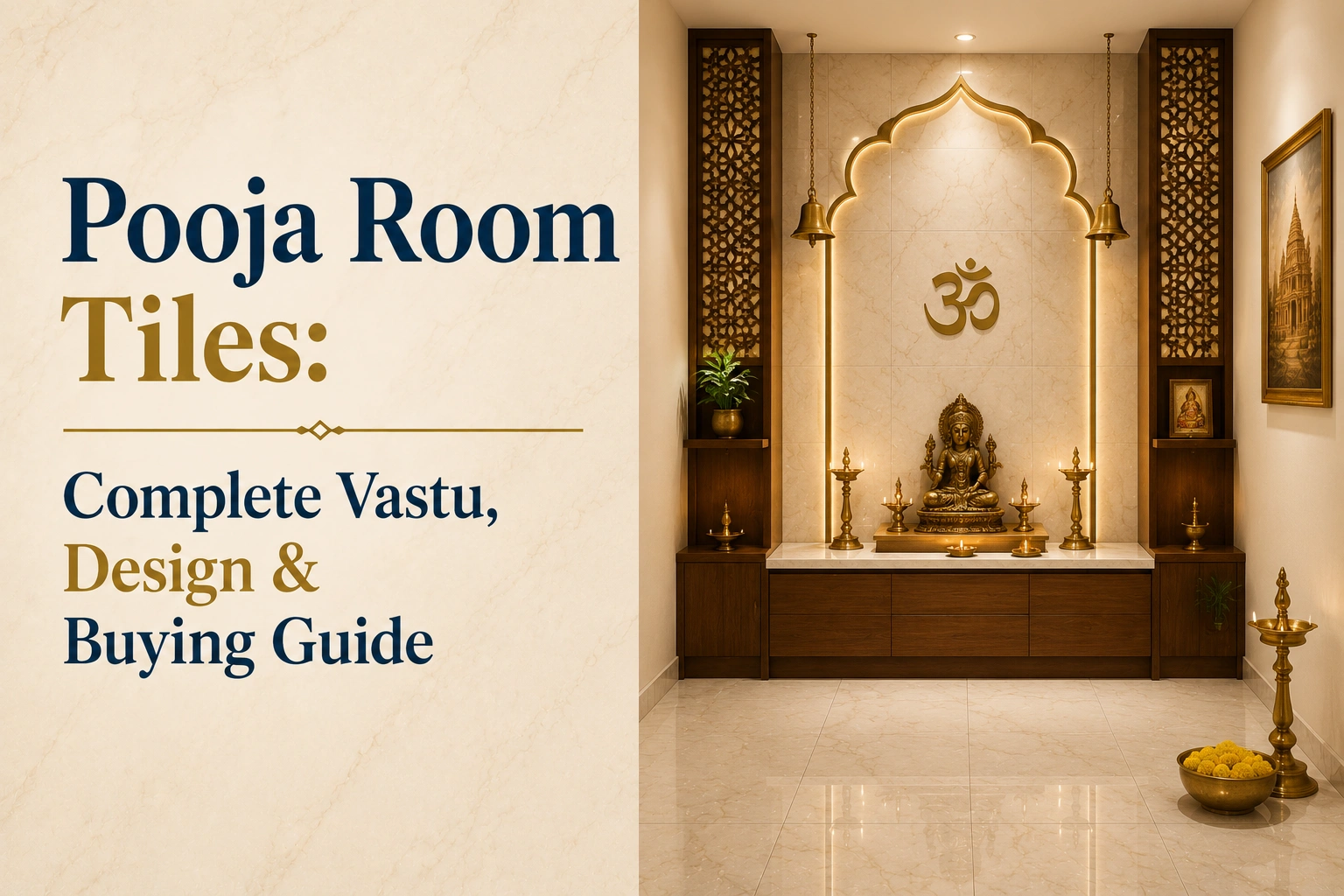
A pooja room is not just another corner of the house. In most Indian homes, it is the calmest and most emotionally connected space. It is where mornings begin with prayer, festivals feel complete, and families gather during important moments.
That is why selecting the right pooja room tiles deserves more attention than most homeowners give it.
A beautiful mandir design is not only about decoration. The right tiles affect lighting, cleanliness, maintenance, spiritual atmosphere, and even how spacious the room feels every day.
Many people choose tiles based only on showroom appearance. Later, they realise the glossy finish reflects too much light, darker colours make the room feel smaller, or textured tiles become difficult to clean after regular agarbatti and diya use.
This guide combines practical buying advice, pooja room Vastu principles, modern design ideas, material comparisons, and expert-level insights for Indian homes. It follows the editorial structure and detailed formatting style used in the attached reference blogs while making the content more engaging and immersive for readers.
Why Pooja Room Tiles Matter More Than People Think
 In older Indian homes, pooja rooms are often used:
- Painted walls
- White marble slabs
- Simple stone flooring
Modern homes have changed significantly.
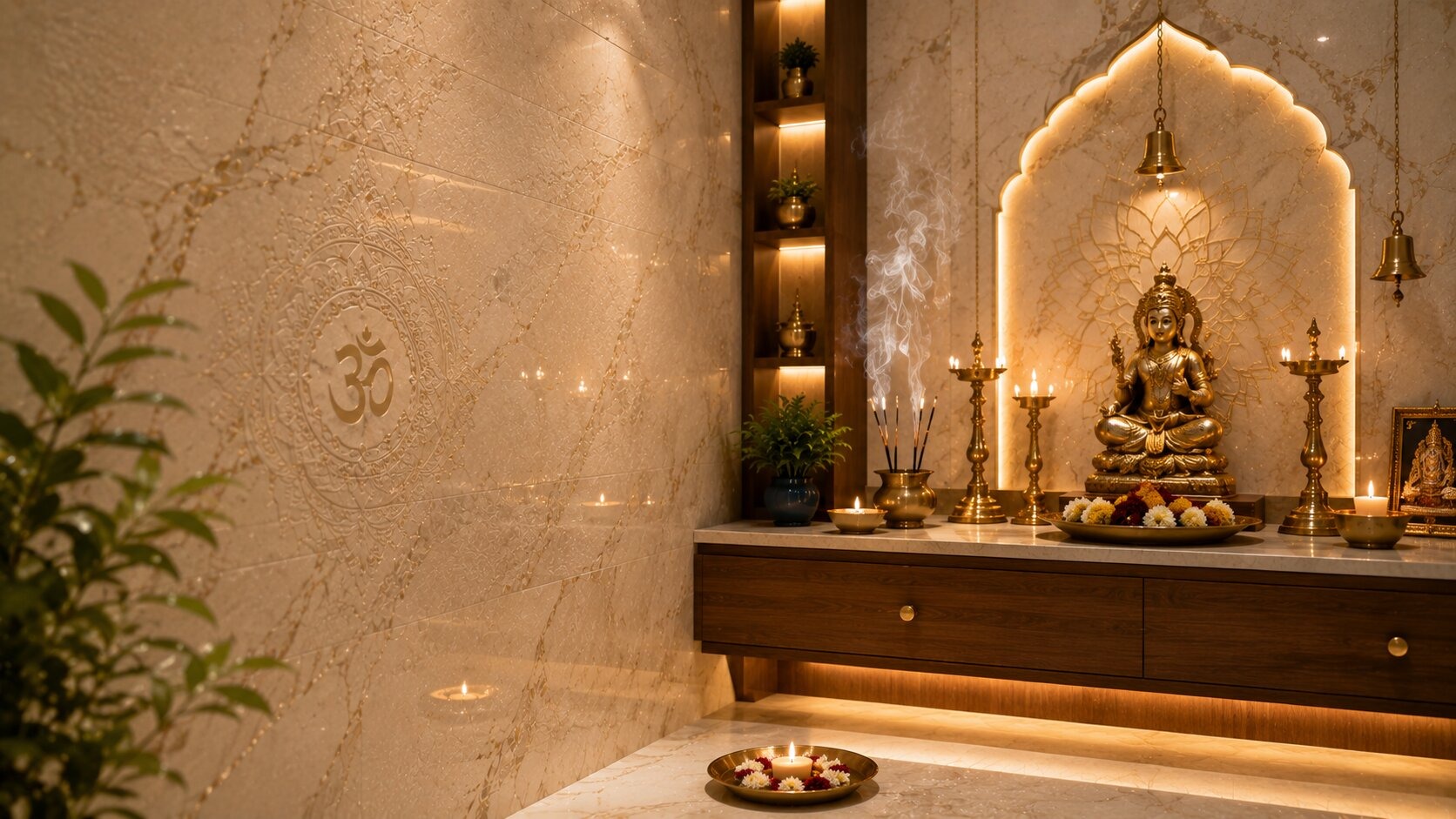
Today, pooja room wall tiles help homeowners create:
- Cleaner interiors
- Better lighting reflection
- Easier maintenance
- More premium-looking mandir spaces
This matters because pooja areas experience conditions very different from normal rooms.
Daily prayer routines involve:
- Agarbatti smoke
- Oil lamps
- Kumkum stains
- Haldi marks
- Water splashes
- Frequent cleaning
Painted walls absorb these stains quickly. Good-quality god room tiles resist them far better.
In compact apartments, tiles also help visually define the mandir area without needing heavy partitions or wooden enclosures.
A carefully selected tile can make a small prayer corner feel peaceful and elevated. The wrong tile can make it feel visually crowded within weeks.
Pooja Room Vastu Shastra Basics Before Choosing Tiles
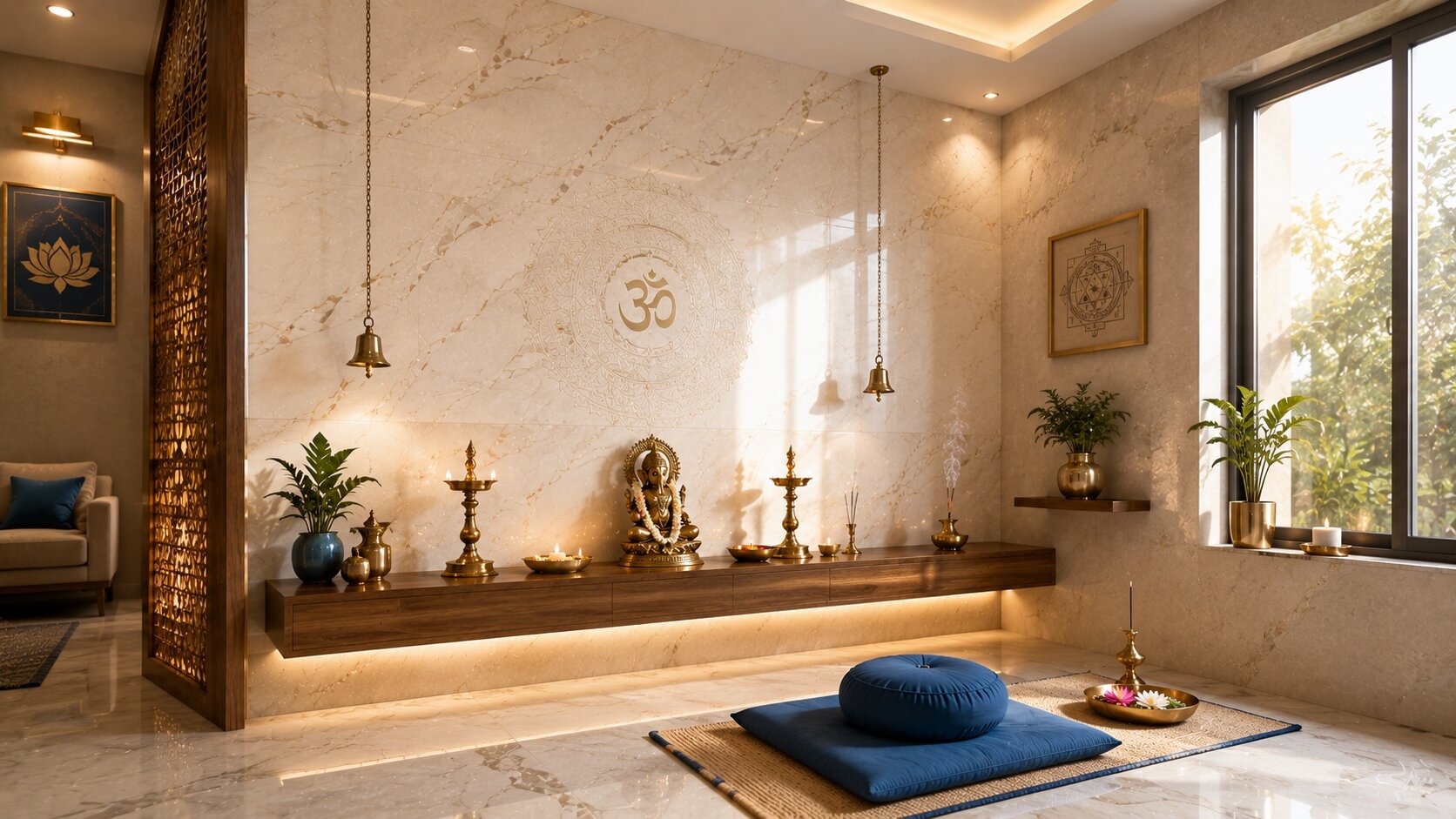 Many homeowners search for pooja room Vastu Shastra guidance before finalising colours and designs.
While Vastu is not only about tiles, tile colours, placement, lighting, and room direction all influence the atmosphere of the space.
Which Direction is Best for the Pooja Room as per Vastu?
According to traditional Vastu principles, the northeast corner is preferred because it receives softer natural morning light, creating a calm spiritual environment.
| Direction | Suitability | Quick Vastu Guidance |
| Northeast | Best Option | The most auspicious direction promotes peace and positive energy. |
| East | Highly Favorable | Ideal for harnessing morning sunlight and spiritual calmness. |
| North | Good for Apartments | A practical and positive alternative for compact modern flats. |
| West | Acceptable | A secondary option if Northeast or East is unavailable. |
| South | Generally Avoided | Typically not preferred according to traditional Vastu principles. |
If your apartment layout does not allow an ideal direction, focus on keeping the area:
- Clean
- Bright
- Well-ventilated
- Clutter-free
That matters more in practical urban homes.
Best Pooja Room Colours as per Vastu
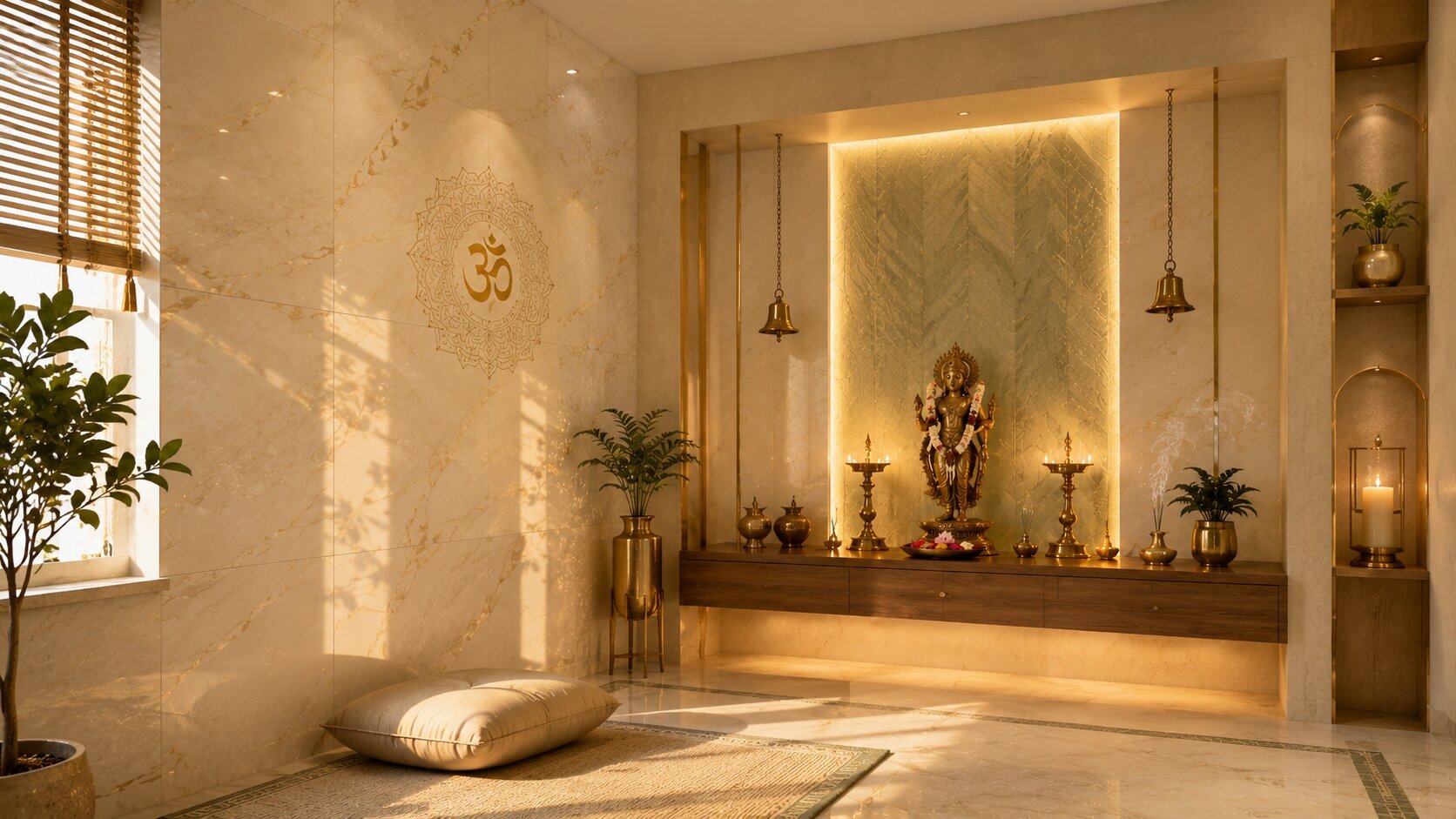 Colour changes the emotional feel of a mandir space instantly. Soft tones create calmness. Dark, heavy colours absorb light and reduce openness.
Most Recommended Pooja Room Tiles Colours
| Colour | Why It Works | Best For |
| White | Symbolises purity and peace; reflects maximum light. | Small pooja rooms and niches. |
| Cream | Creates a warm, soft, and grounded spiritual atmosphere. | Traditional homes and wooden mandirs. |
| Beige | Offers a sophisticated, neutral, and calming aesthetic. | Contemporary interiors and modern flats. |
| Light Yellow | Evokes positivity, happiness, and mental clarity. | Compact apartments with limited light. |
| Marble Tones | Represents timeless luxury and a sacred "temple" feel. | Premium mandirs and large feature walls. |
| Gold Accents | Adds divine richness and highlights spiritual motifs. | Feature walls and decorative borders. |
White glossy tiles remain one of the most popular choices because they reflect light beautifully and instantly brighten the room.
Beige and cream shades are becoming increasingly popular in modern homes because they feel softer and warmer than stark, bright white.
Colours and Tile Designs to Avoid
Certain choices can make the mandir feel visually exhausting instead of peaceful.
Avoid:
- Full dark black walls
- Heavy glossy red flooring
- Neon decorative patterns
- Excessive gold detailing
- Busy patterns covering every wall
A pooja room should calm the mind, not overload it visually.
Many designers now follow a “minimal spiritual” approach where the design feels elegant without excessive decoration.
Best Types of Pooja Room Tiles for Indian Homes
The material you choose affects:
- Maintenance
- Longevity
- Appearance
- Cleaning effort
- Lighting reflection
Understanding tile types before shopping prevents expensive mistakes later.
Ceramic Tiles
Ceramic tiles are among the most commonly used pooja room wall tiles in India because they are affordable, lightweight, and easy to maintain.
They work especially well for apartment pooja niches, compact mandirs, and decorative wall panels where heavy-duty flooring strength is not required. One of the biggest advantages of ceramic tiles is design variety.
Homeowners can easily find Om motifs, lotus patterns, marble effects, and traditional temple-inspired prints in ceramic finishes. These tiles are also simple to clean, which makes them practical for spaces exposed to incense smoke, diya oil, and kumkum marks.
Typical price range: ₹30 to ₹80 per sq. ft.
Vitrified Tiles
Vitrified tiles are denser and more durable than ceramic tiles, making them a strong choice for pooja room flooring and larger prayer spaces.
They absorb less moisture and handle frequent cleaning much better, which is important in homes where diyas and incense are used daily. Popular vitrified tile options include glazed vitrified tiles (GVT) and polished glazed vitrified tiles (PGVT) that give a premium appearance without the high maintenance of real marble.
Many Indian homeowners now prefer marble-look vitrified tiles because they stay glossy for years and do not require repeated polishing.
Typical price range: ₹60 to ₹150 per sq. ft.
Porcelain Tiles
Porcelain tiles create a refined and premium look for modern mandir interiors. They are highly durable, resistant to stains, less porous, and easier to maintain over the long term compared to standard ceramic surfaces.
These tiles are especially suitable for luxury apartments, contemporary homes, and designer pooja spaces where aesthetics and durability both matter. Matte porcelain tiles are becoming increasingly popular in 2026 because they create softer reflections under warm LED lighting.
Unlike highly glossy finishes, matte porcelain surfaces feel calmer and visually balanced, which suits spiritual spaces well.
Typical price range: ₹90 to ₹220 per sq. ft.
Marble-Look and Stone-Look Tiles
Real marble gives pooja rooms a luxurious appearance, but maintaining it in Indian homes often becomes expensive and time-consuming.
Marble-look and stone-look tiles solve this issue by offering the same visual appeal with easier maintenance and better stain resistance. These tiles come with realistic veining patterns and natural stone textures that create a peaceful and elegant mandir backdrop.
White marble-look tiles remain one of the most popular mandir tile design choices because they instantly create a sacred atmosphere. Soft beige marble patterns are also trending because they feel warmer and more welcoming than bright white surfaces.
Typical price range: ₹80 to ₹250 per sq. ft.
3D Tiles for Pooja Room Walls
3D tiles add texture and depth to the pooja room walls, especially behind idols or temple units. Popular styles include lotus carvings, geometric spiritual textures, Om-inspired panels, fluted vertical designs, and stone-textured backdrops.
These tiles help create a feature wall that feels visually rich without requiring excessive decoration. The best approach is to use 3D wall tiles on only one accent wall.
Covering the entire pooja room with heavily textured tiles often creates cleaning difficulties, dust accumulation, and visual clutter over time. A balanced feature wall usually looks more elegant and is easier to maintain.
Typical price range: ₹120 to ₹350 per sq. ft.
Modern Pooja Room Tiles Design Ideas for Indian Homes
Indian homes are moving toward cleaner and calmer mandir interiors.
Overly decorative temple rooms are slowly being replaced by designs that feel brighter, softer, and more peaceful. Many homeowners now prefer temple tiles design concepts that blend seamlessly with modern living room interiors instead of creating heavily enclosed traditional mandirs.
White and Gold Mandir Tile Designs
This remains the most timeless combination.
White tiles:
White tiles remain one of the most preferred choices for pooja rooms because they reflect light effectively, make compact spaces feel larger, and create a naturally clean spiritual atmosphere.
Gold accents add:
- Warmth
- Richness
- Spiritual elegance
This combination works especially well with:
- Brass diyas
- Wooden temple units
- Backlit acrylic panels
The key is moderation. Small gold highlights look luxurious. Excessive gold detailing feels overpowering.
Wooden Finish Temple Tiles
Wood-look tiles are becoming increasingly popular in urban Indian apartments. They create warmth without the maintenance issues of actual wood.
These designs pair beautifully with:
- Floating mandir shelves
- Beige flooring
- Warm LED lighting
- Matte wall finishes
Wood-look tiles also blend beautifully with modern hall tiles designs where the pooja area flows naturally into the main living space. Light oak and walnut wood-finish tiles pair especially well with floating mandir units, concealed LED strips, and soft beige flooring. This combination creates a warm spiritual corner without making modern apartments feel overly traditional.
Backlit Spiritual Tile Panels
Backlit tile walls are one of the biggest pooja room design trends right now.
Laser-cut acrylic combined with marble-look tiles creates a soft, glowing effect behind idols.
Popular motifs include:
- Om symbols
- Lotus patterns
- Radha Krishna silhouettes
- Temple-inspired arches
This setup works especially well in modern 2BHK and 3BHK apartments where homeowners want a premium-looking mandir without building a separate room.
How to Choose Pooja Room Tiles for Small Spaces
Apartment pooja rooms require careful planning because space is limited. A wrong colour or oversized pattern can instantly make the area feel cramped and visually heavy.
Recommended Tile Sizes for Small Pooja Rooms
Small wall niches usually work best with 300x600 mm tiles because they create a clean vertical appearance without making the space feel crowded.
Compact pooja rooms generally look more balanced with 600x600 mm tiles since they reduce grout lines and maintain a cleaner visual flow.
Feature walls behind idols or temple units often use 600x1200 mm large-format tiles because they create a seamless, premium appearance with fewer visible joints.
Large-format tiles usually make pooja room walls feel smoother, cleaner, and visually more spacious.
Best Tile Finishes for Compact Mandirs
Glossy tiles work especially well in small pooja rooms with limited natural light because they reflect illumination beautifully and brighten the entire area. They are also easier to clean after incense smoke exposure.
Matte tiles suit premium contemporary interiors because they create softer reflections and a calmer atmosphere. Matte floor tiles also provide better grip during cleaning.
Satin tiles offer a balanced look between glossy and matte finishes. They reflect light gently without creating excessive glare.
Expert Buying Tips Before Purchasing Pooja Room Tiles
Beautiful designs alone are not enough. Practical performance matters equally.
Surface Finish
Highly reflective glossy tiles show fingerprints and oil marks quickly. Matte and satin finishes usually require less maintenance.
Water and Stain Resistance
Incense ash, diya oil, and kumkum stains are common in pooja spaces. Choose tiles with low porosity for easier cleaning.
Tile Thickness
Floor tiles should feel sturdy and stable. Thin, low-quality tiles crack faster over time.
Cleaning and Maintenance
Ask your dealer:
- How easily does the tile stain?
- What cleaning products are safe?
- whether texture grooves trap dust
Simple surfaces remain easier to maintain long-term.
Select Heat-Resistant Tiles
Cheap glossy tiles sometimes lose shine near continuously lit diyas. Porcelain and vitrified surfaces generally perform better under regular heat exposure.
Match Tiles with Actual Home Lighting
This is one of the biggest mistakes homeowners make.
A tile that looks bright inside a showroom may look:
- Yellow under warm lighting
- Dull in low-light corners
- Overly reflective at night
Always bring tile samples home before finalising.
Test them under:
- Morning light
- Evening lighting
- Warm LEDs
- Decorative lighting
Buy Extra Tiles
Always order:
- 5% extra for simple layouts
- 10% extra for detailed designs
Future production batches may not perfectly match your existing tile shade. Large grout lines often become visually distracting in compact pooja rooms. Choosing rectified tiles with thinner joints creates a cleaner and more seamless mandir appearance.
Common Mistakes People Make While Designing Pooja Rooms
Choosing Overly Dark Tiles
Dark shades absorb light and make prayer spaces feel smaller. Use darker colours only as accents.
Ignoring Lighting Reflection
Lighting completely changes how a tile appears after installation. A soft beige tile can suddenly look yellow under warm LEDs if not tested properly.
Using Slippery Glossy Floor Tiles
Glossy flooring becomes slippery during cleaning. Matte or anti-skid flooring is safer, especially for elderly family members.
Overdecorating Every Surface
Too many:
- Borders
- Religious motifs
- Textures
- Decorative inserts
can make the room feel crowded. Minimal designs usually create a more peaceful atmosphere.
How do I choose temple tile designs for small spaces?
Use lighter colours, large-format wall tiles, minimal patterns, and good lighting to make compact pooja spaces feel brighter and more open.
The best temple tile designs are not always the most decorative or expensive ones. The right tiles should feel peaceful every day, handle regular cleaning easily, and match your home’s lighting and interior style naturally.
Before finalising your tiles, note down your room dimensions, lighting type, preferred Vastu colours, and maintenance expectations. Always compare tile samples inside your actual home instead of relying only on showroom lighting.
You can also explore different mandir tile styles through India’s growing tiles marketplace to compare designs, materials, and finishes more easily.
Platforms like TilesFinders can help you find modern pooja room tile ideas that suit both traditional and contemporary Indian homes.

FAQs
Ceramic, vitrified, and porcelain wall tiles all work well. Marble-look vitrified tiles remain one of the most popular choices because they combine elegance with easy maintenance.
The northeast direction is considered the most favourable according to traditional Vastu principles. East-facing pooja rooms also work very well.
Yes, but they work best as a feature wall rather than across the entire room. Too much texture becomes difficult to clean and visually heavy.
White, cream, beige, marble tones, and soft yellow shades are commonly preferred because they create a peaceful and spiritually calming environment.
Yes. Highly polished, glossy floor tiles can become slippery during cleaning or oil exposure near diyas. Matte or anti-skid finishes are usually safer for flooring.
Vitrified and porcelain tiles are generally the easiest to maintain because they resist stains, absorb less moisture, and clean more easily after incense smoke or kumkum exposure.
Marble-look vitrified tiles are often preferred because they provide a similar luxurious appearance with lower maintenance and better stain resistance.

See our tile guides first
Set TilesFinders as a preferred source and our buying guides surface ahead of the rest for you.
Add as preferred sourceTakes one tap. Nothing to install.
What Readers Say
I was about to redo my parking area with the wrong tile size until I read this. The layout comparisons saved me from a costly mistake.
We reference TilesFinders guides while briefing clients on material selection. The size and pattern breakdowns are accurate and easy to explain visually.
On site, I get asked about grout spacing all the time. This article gave me a solid reference I now share with my team before every job.
Finally a guide that doesn't just push generic advice. The oil stain removal steps actually worked on our clubhouse driveway tiles.
I run a small construction firm and now send this link to clients directly when they ask about entrance tile sizing. Saves me an hour of explaining.
Good practical detail, though I wish there were more examples for compact apartment entrances specifically, not just villas.
My mother-in-law wanted marble, I wanted vitrified. This blog gave us the neutral comparison we needed to actually decide together.
Detailed without being overwhelming. I appreciated that it covered both cost and maintenance, not just the aesthetics.
Used the algae and hard water removal tips on our terrace tiles after the monsoon. Worked better than what our regular cleaner was doing.
As someone who sources tiles for multiple builder projects, I find these comparisons genuinely useful for vendor conversations, not just consumer content.
Recommended this to a client who kept second-guessing the entrance design. The small vs large layout section settled the debate instantly.
Straightforward and honest, no unnecessary jargon. Would like to see a similar breakdown for outdoor pool-deck tiles next.
We've bookmarked several TilesFinders guides for our design handbook. Reliable source when clients want data, not just opinions.
Two paths, one marketplace.
Get free quotes from verified suppliers.
Share your room, budget, and style. Suppliers in Morbi respond within hours.
Get Free QuotesList your business, reach real buyers.
Put your showroom in front of homeowners searching for tiles right now.
List Your Business