Best Tiles for Dining Room Floor in India: Material, Finish & Brand Picks 2026
Compare the best dining room floor tiles in India for 2026. Explore GVT, ceramic, finishes, pricing, supplier options, and expert recommendations for every budget.
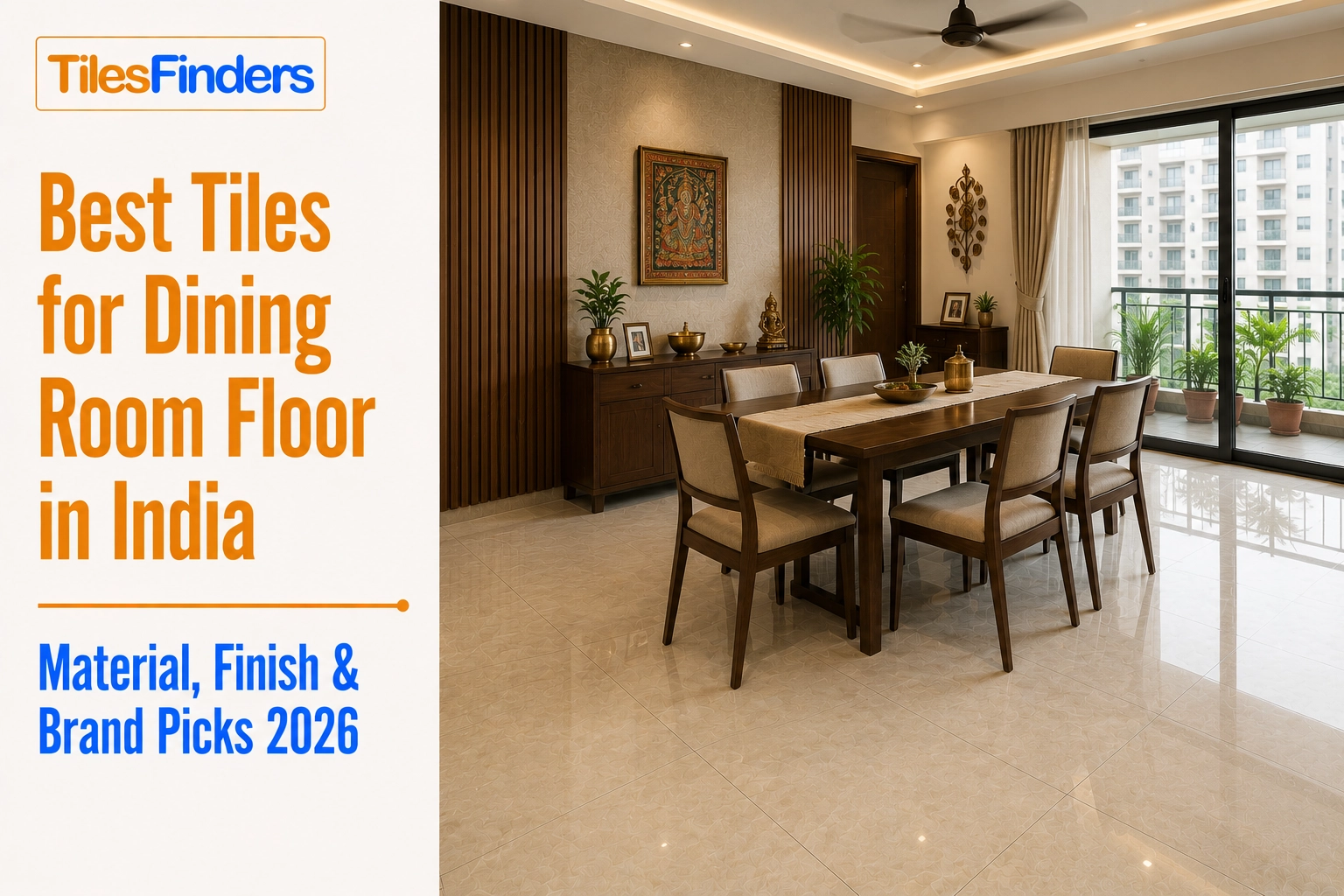
- Understanding Tile Material for Dining Room Floors
- Material Comparison Table
- Finish Guide: What Actually Works on a Dining Floor
- Finish Performance Comparison Table
- Brand and Supplier Considerations for 2026
- Best Tiles for Dining Room Floor by Budget, India 2026
- Common Mistakes When Selecting Dining Room Floor Tiles
- Choose the Right Tile Material for Your Dining Room
For most Indian homes, GVT tiles in matte, sugar, or GHR finish offer the best mix of durability, safety, and easy maintenance. Choose 600x1200 mm or 800x1600 mm tiles for a modern look, verify IS certification and COF ratings, and compare Morbi suppliers to save 15–25% on costs.
Finding the best tiles for the dining room floor in India means comparing three separate decisions at once: tile material, surface finish, and brand or supplier source. Buyers who skip any one of these end up with a floor that looks right at installation but fails on durability, safety, or maintenance within a few years.
This guide breaks down each material available in the Indian market, the finishes that are actually safe for a dining floor, and how to evaluate brands and suppliers, particularly the Morbi, Gujarat manufacturing base that supplies most of the country's vitrified tile output.
By the end, you will know exactly which material-and-finish combination suits your dining room, what to ask a brand or dealer before you buy, and what price range is reasonable for 2026.
If you're still exploring styles, layouts, and buying considerations, read our Dining room tiles guide before choosing materials.
Understanding Tile Material for Dining Room Floors
The material question comes before the finish or brand. A dining room floor in an Indian household takes daily chair movement, food and liquid spills, and frequent wet mopping. The tile material determines how well it survives this load over years, not months.
Three materials dominate the Indian dining room floor market: glazed vitrified tiles (GVT), double-charged vitrified tiles, and ceramic tiles. Natural stone and engineered wood are used in some higher-budget homes but come with maintenance demands that most buyers prefer to avoid in a high-traffic, high-spill room.
Need inspiration before selecting a material? Explore these popular Dining tile designs used in modern Indian homes.
GVT (Glazed Vitrified Tiles): The Standard Choice
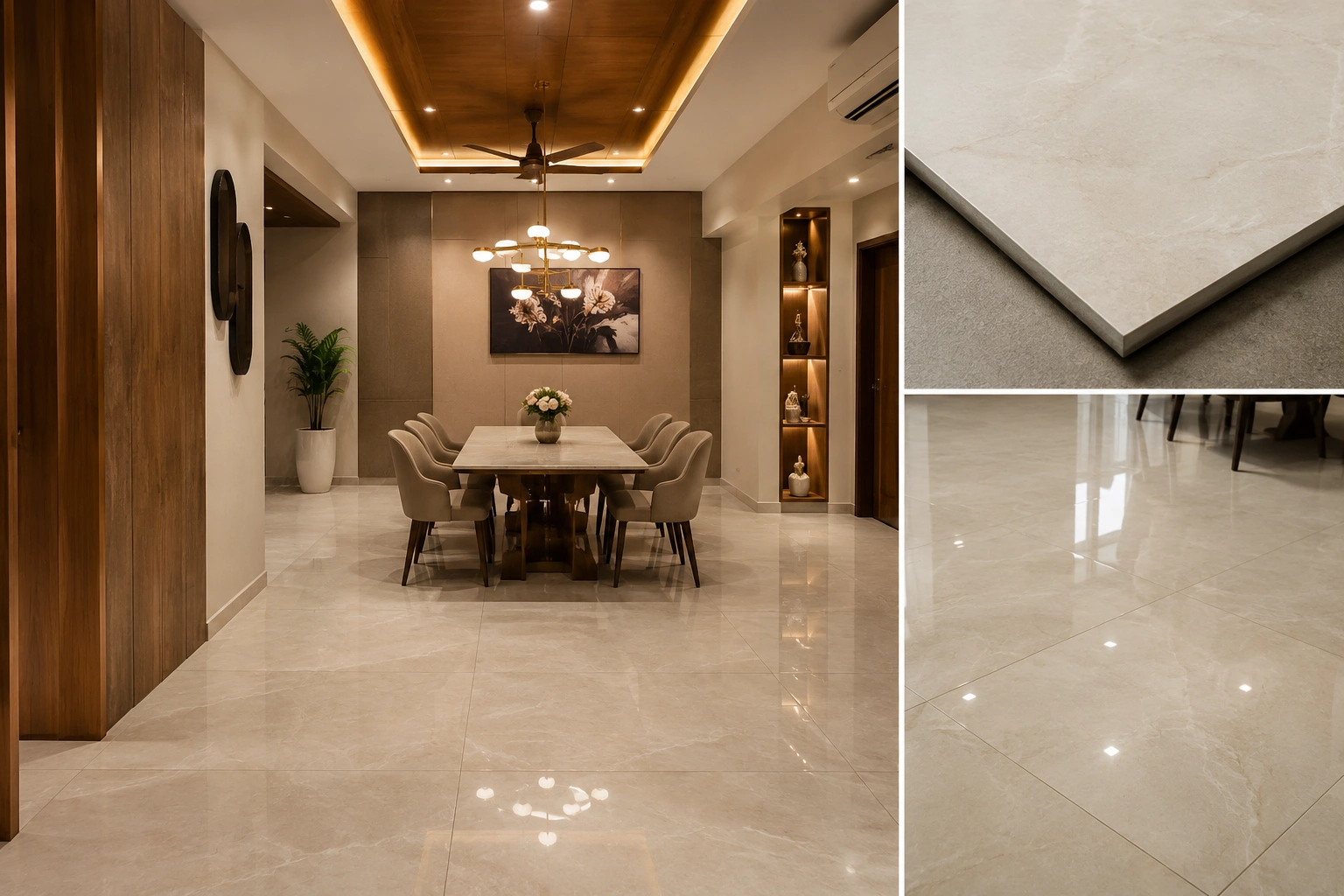
GVT tiles carry a printed design layer fused with a glaze on top of a dense vitrified body. Water absorption sits at 0.05% or lower under IS 15622:2006, India's standard for vitrified tiles. This low absorption is what makes GVT the most practical material for a dining room floor, since spills sit on the surface rather than soaking into the tile body.
GVT is manufactured extensively in Morbi, Gujarat, which accounts for over 70% of India's vitrified tile production. Sizes range from 600x600 mm to 800x1600 mm and beyond. Price for dining room application: Rs. 55 to Rs. 180 per sq.ft, depending on size and finish.
Double-Charged Vitrified Tiles: A Mid-Range Option
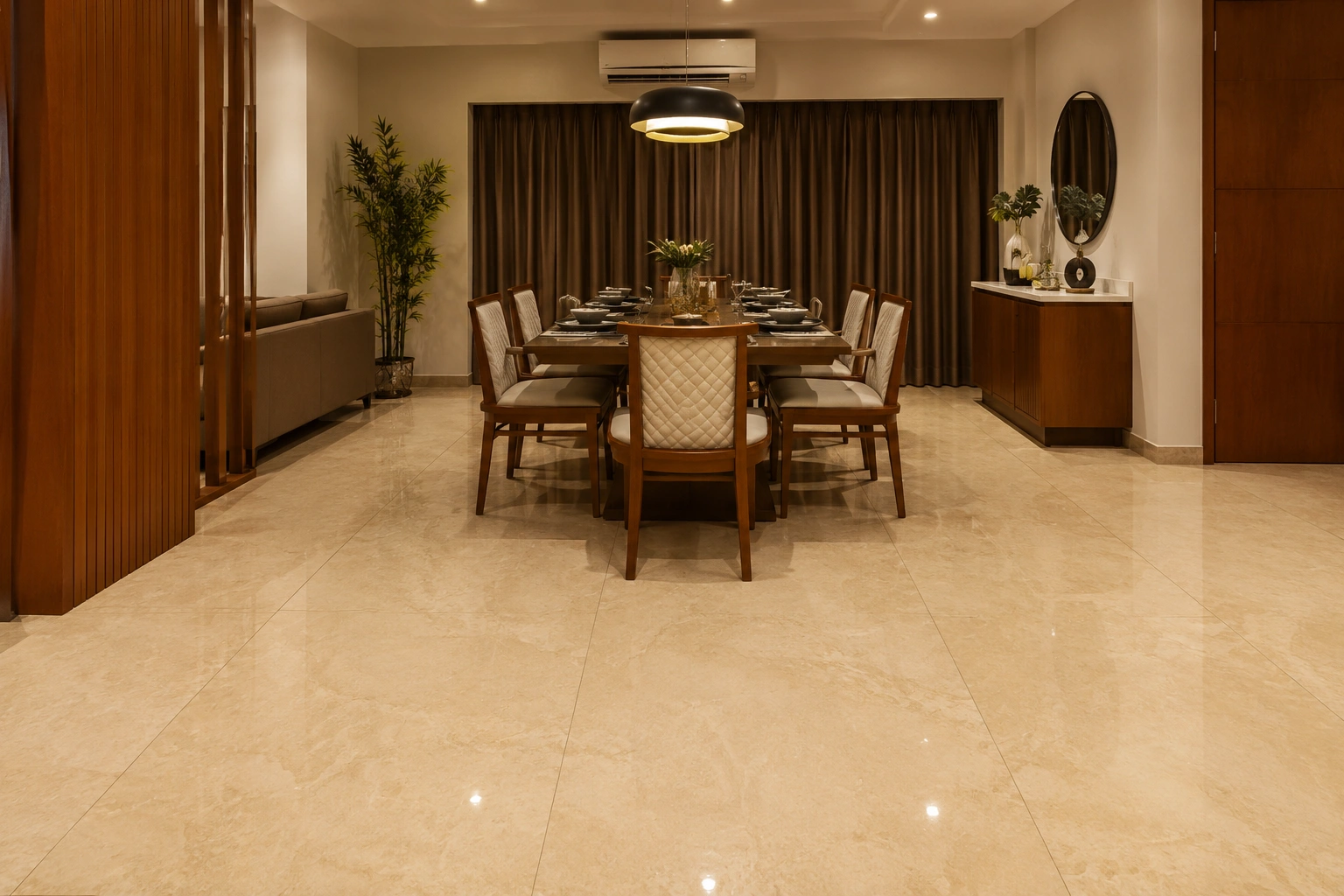
Double-charged tiles press two layers of coloured material together, with the pattern layer running 3 to 4 mm deep. This means a surface scratch does not expose a different base colour, similar to GVT. The key difference is finish: double-charged tiles are typically supplied with a polished surface from the factory.
Note: The polished finish standard on double-charged tiles is not suitable for dining room floors. Wet slip resistance on polished tiles drops sharply after mopping. If you choose double-charged material for its price point, use it on dining room walls, not the floor.
Price: Rs. 40 to Rs. 90 per sq ft from suppliers in Morbi, Gujarat.
Ceramic Tiles: Budget Option, Wall Use Recommended
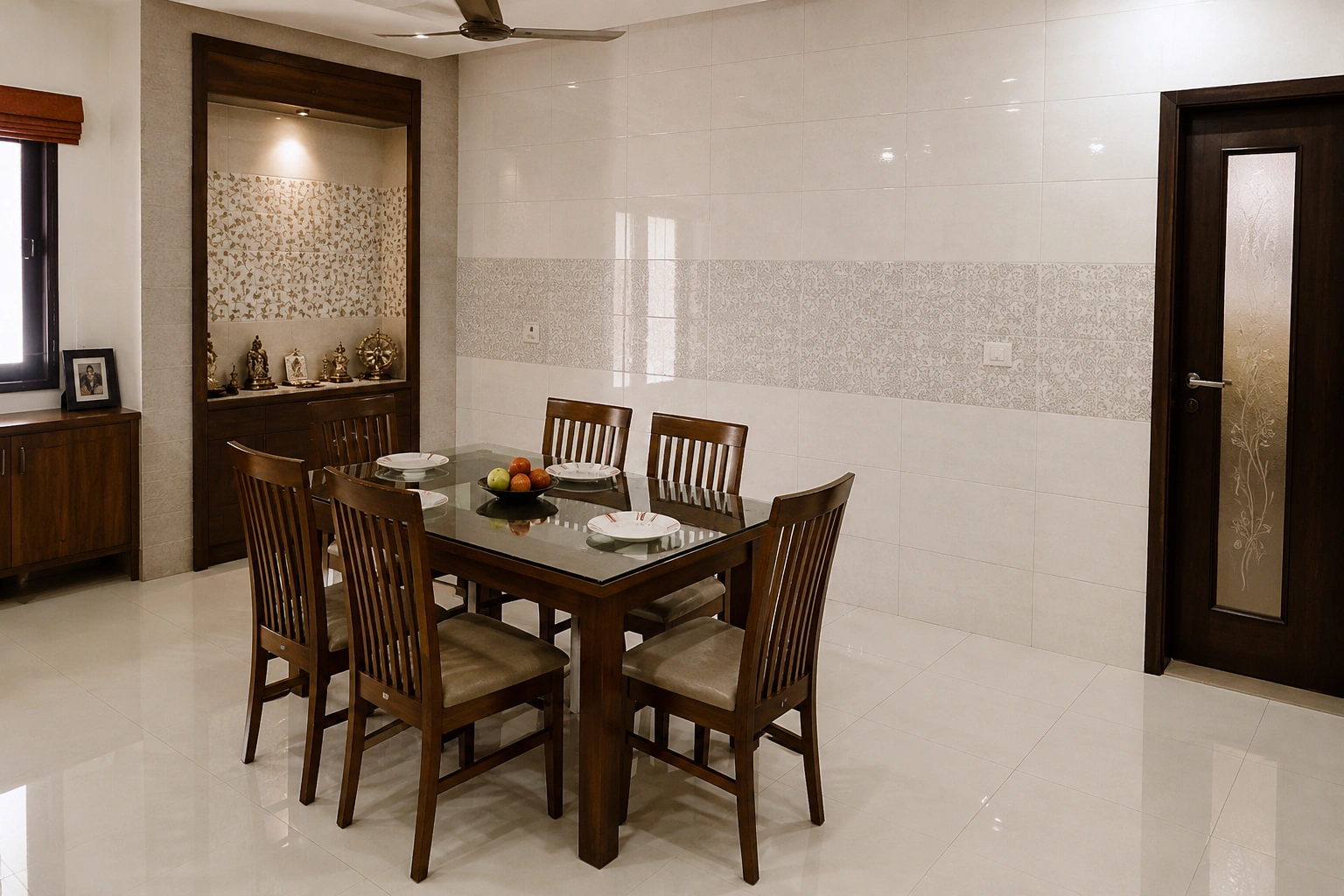
Ceramic tiles carry a water absorption of 12 to 16% under IS 13630, considerably higher than vitrified tiles. This makes them less suited to a dining room floor where spills are frequent. Ceramic tiles also have lower load-bearing strength than vitrified tiles, which matters under chair point pressure.
Ceramic tiles work well on dining room walls, where water absorption is less of a concern, and the lighter weight makes installation easier.
Price: Rs. 25 to Rs. 65 per sq.ft.
Natural Stone and Engineered Wood: Higher Budget Alternatives
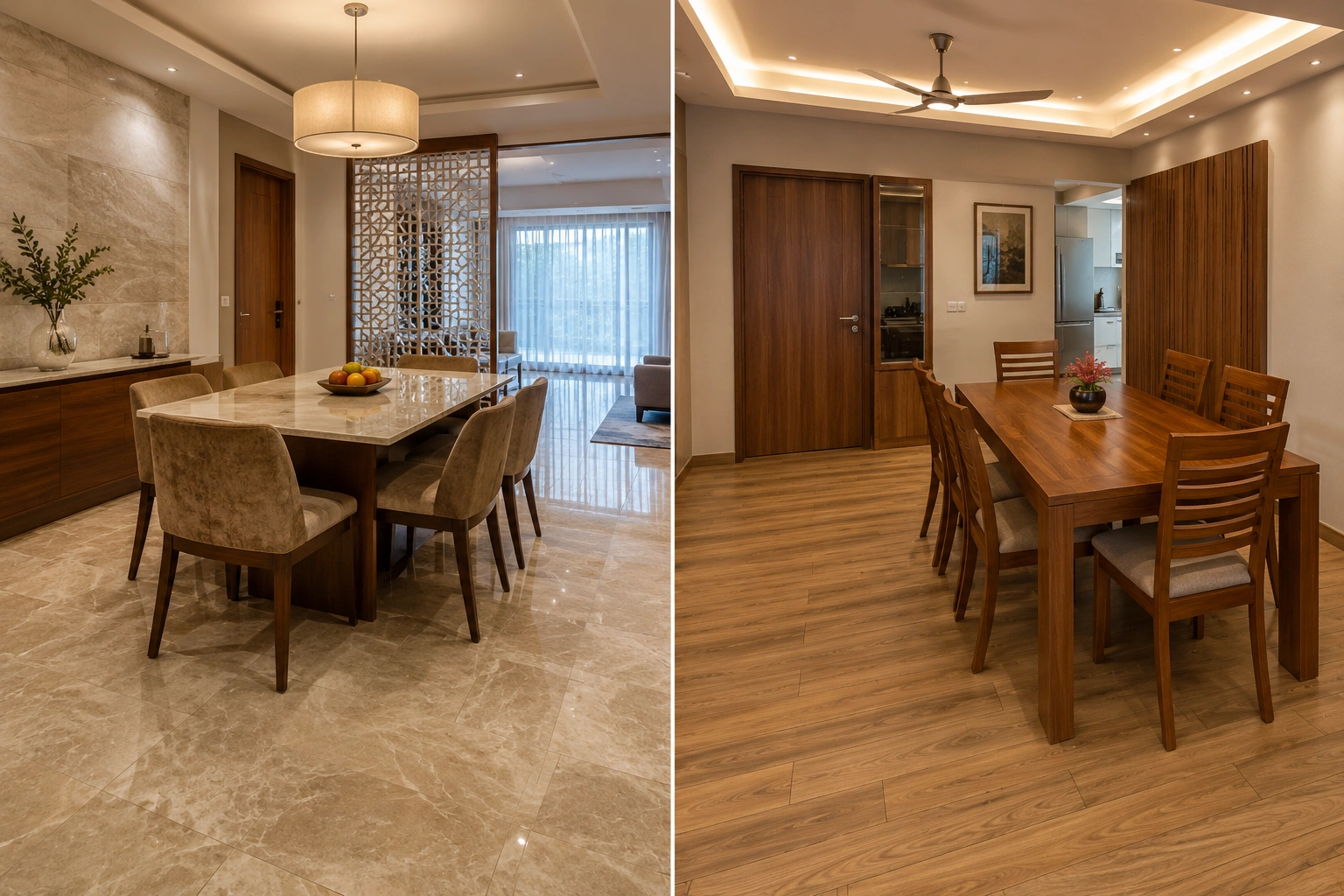
Natural marble and granite are used in some higher-budget Indian dining rooms. These materials are porous to varying degrees and require periodic sealing to resist oil and food staining, an ongoing maintenance cost that GVT does not carry. Engineered wood flooring is rarely used in Indian dining rooms due to high humidity and moisture exposure from frequent mopping, which causes warping over time.
For most Indian dining rooms, GVT in matte or sugar finish delivers the visual range of marble or wood at a fraction of the maintenance burden.
Material Comparison Table
| Material | Water Absorption | IS Standard | Floor Suitable | Price Range | Maintenance |
| GVT (Glazed Vitrified) | 0.05% or less | IS 15622:2006 | Yes | Rs. 55 to Rs. 180/sq.ft | Low |
| Double-Charged Vitrified | 0.05% or less | IS 15622:2006 | Walls only (polished) | Rs. 40 to Rs. 90/sq.ft | Medium (floor: high) |
| Ceramic Tile | 12% to 16% | IS 13630 | Walls recommended | Rs. 25 to Rs. 65/sq.ft | Medium |
| Natural Marble | 0.5% to 3% | Not a vitrified standard | Yes, with sealing | Rs. 150 to Rs. 500/sq.ft | High |
| Engineered Wood | Variable, moisture sensitive | Not applicable | Not recommended (humidity) | Rs. 200 to Rs. 600/sq.ft | Very High |
Finish Guide: What Actually Works on a Dining Floor
Material sets the foundation. Finish determines whether the floor is safe, easy to clean, and durable in daily use. This is the decision most buyers are underweight.
Matte Finish
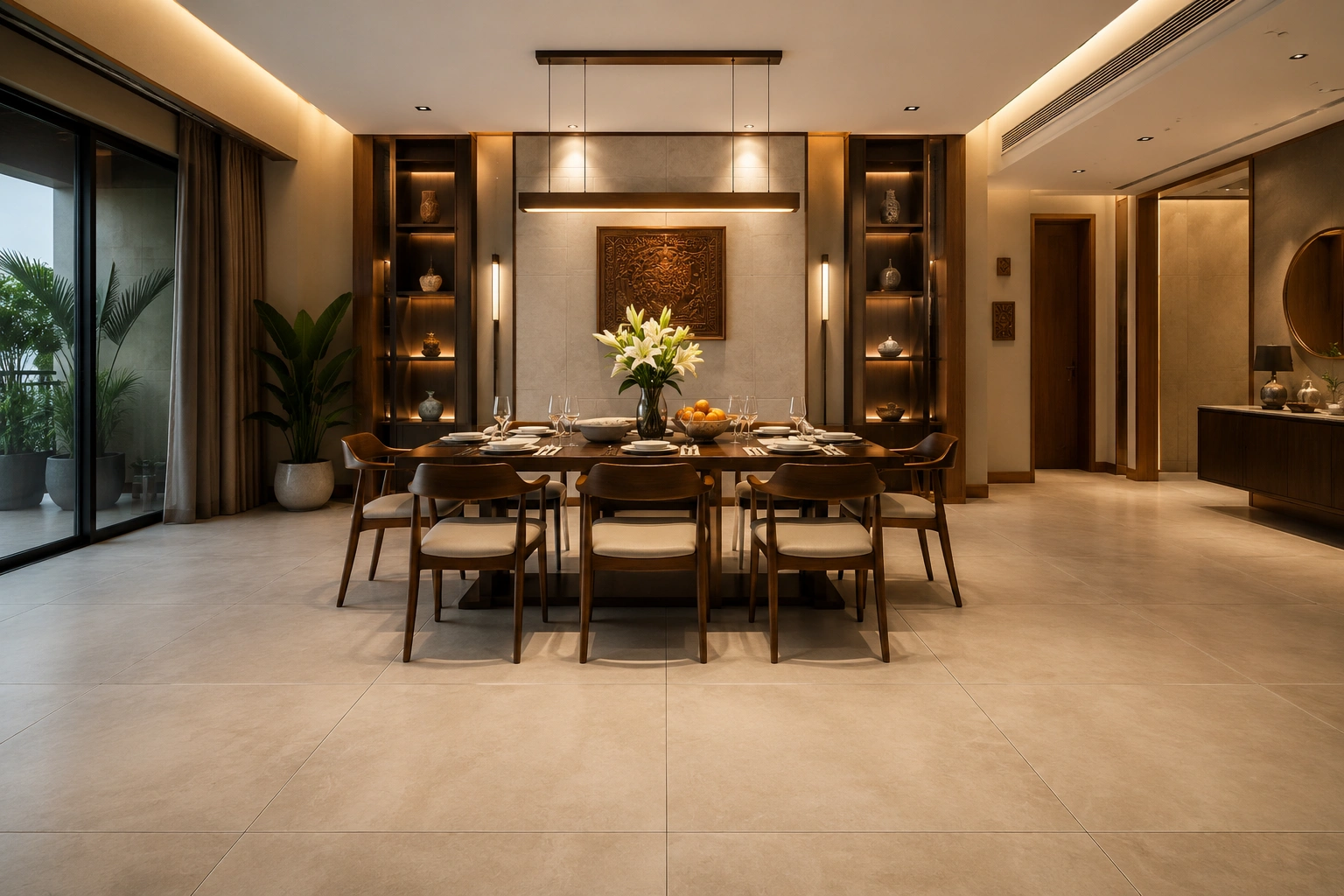
Matte finish has high slip resistance in both dry and wet conditions, good stain resistance, and the lowest maintenance load of any common finish. It is the safest and most practical choice for any dining room floor in India. Available across all GVT sizes and price points.
Sugar (Lappato) Finish
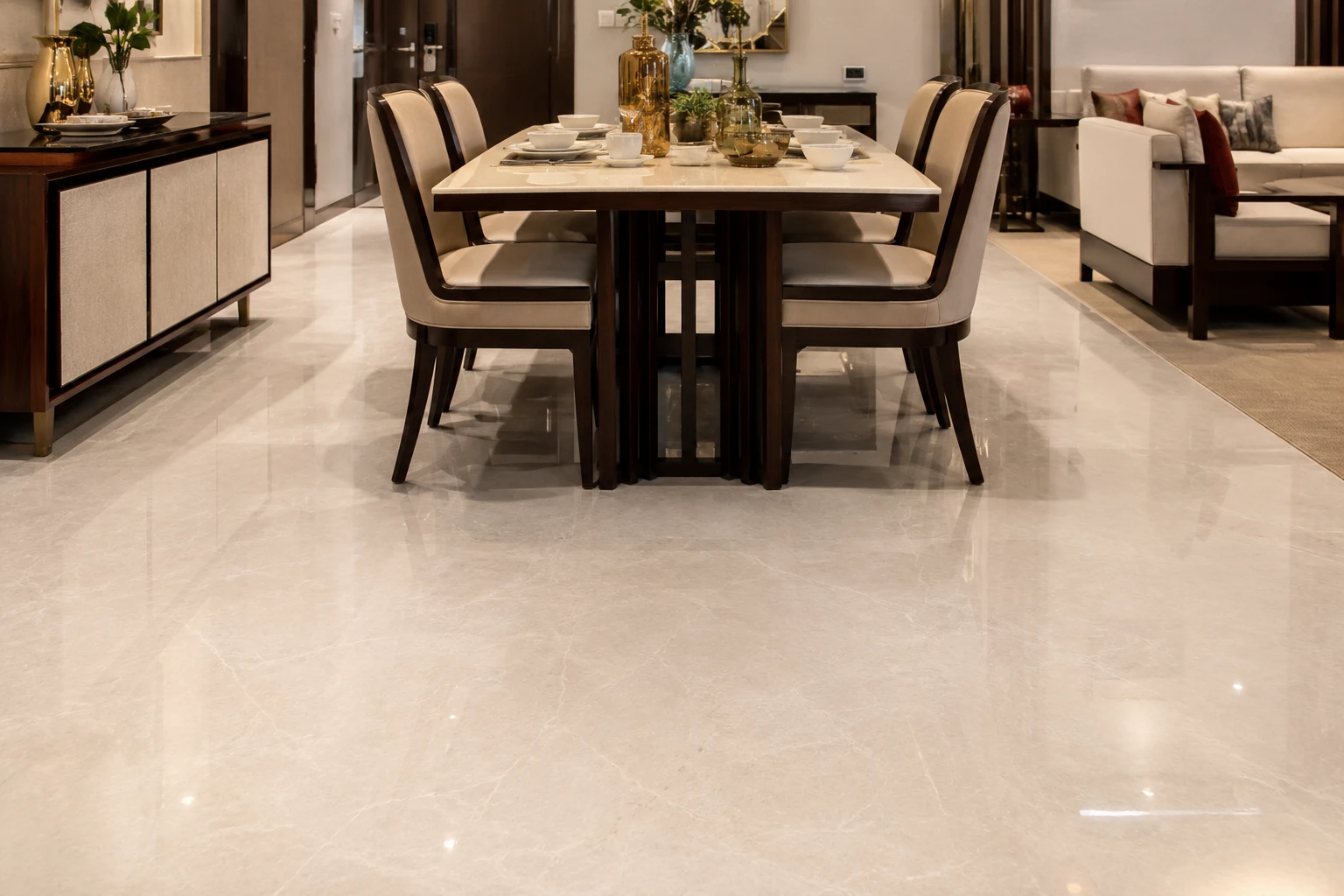
Sugar finish sits between matte and polished, with a soft sheen and textured surface. Slip resistance is medium in both dry and wet conditions, still acceptable for dining room use, with very good stain resistance. A good middle-ground choice for buyers who want some visual shine without the risk of full polish.
GHR (Glazed High Resistance) Finish
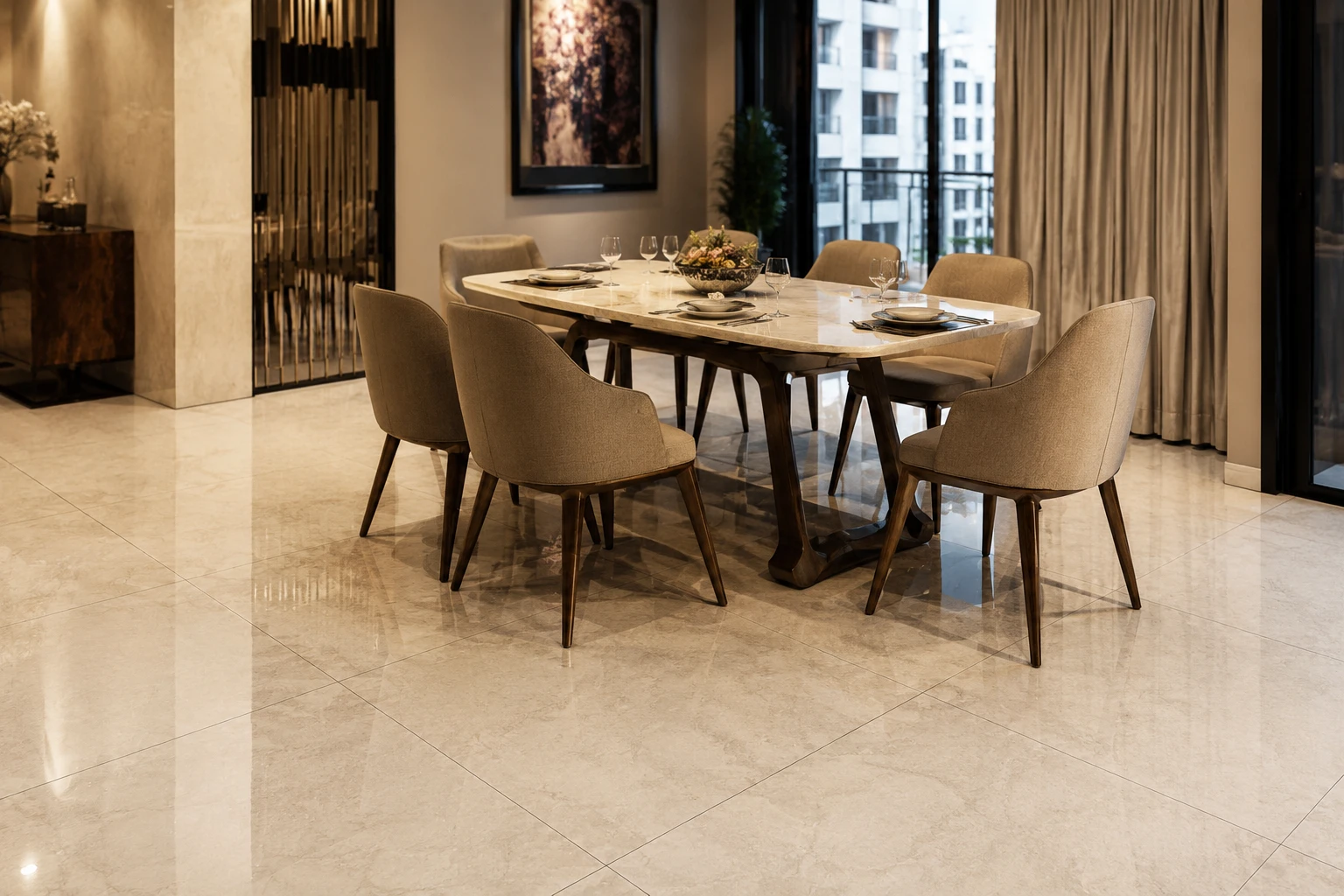
GHR is a premium matte-category finish engineered for high stain resistance and high slip resistance in both dry and wet conditions. It carries a small price premium over standard matte but is worth considering for dining rooms in households with young children or elderly family members.
Finishes to Avoid on the Floor
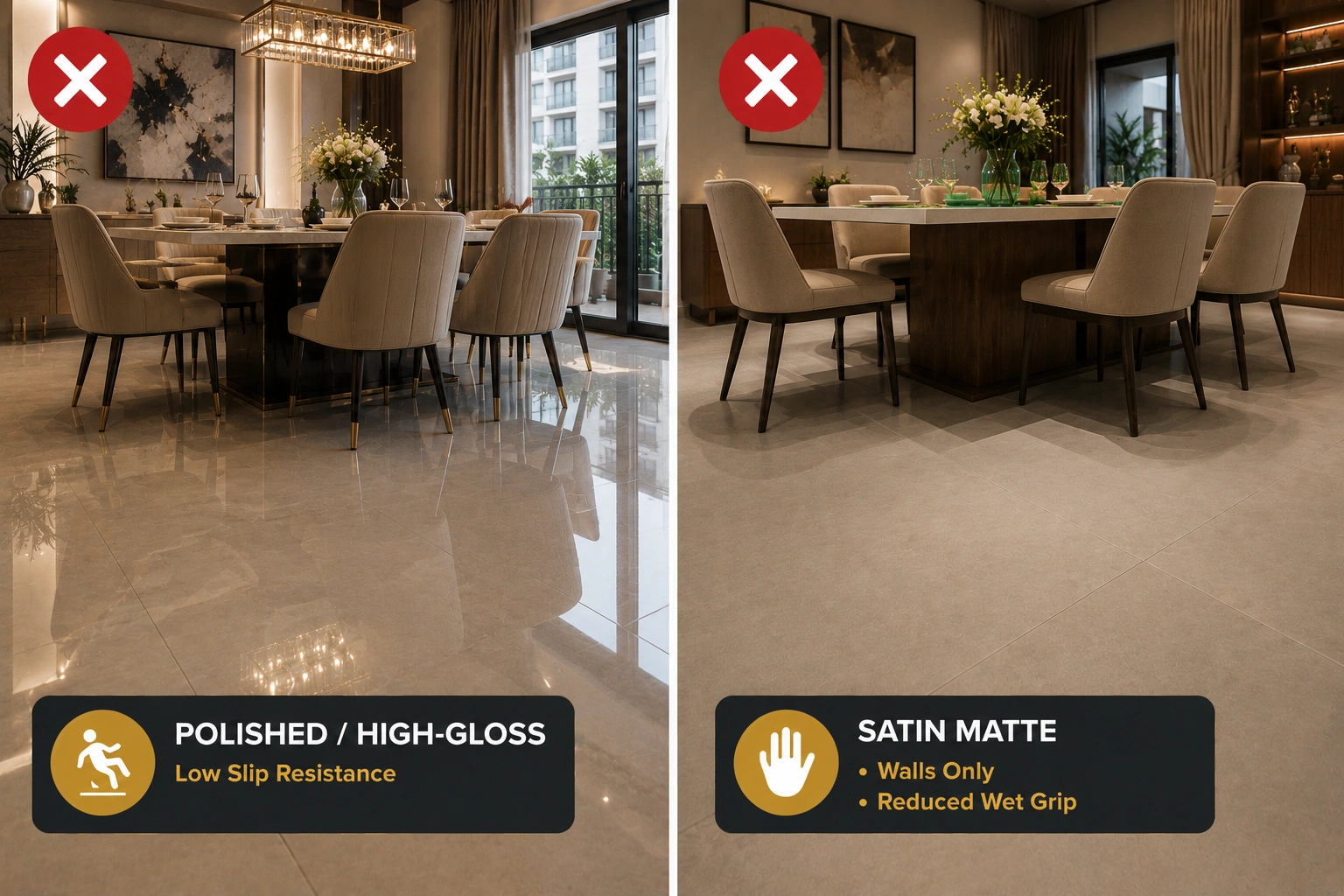
Polished and high-gloss finishes have low slip resistance, dry and wet, and poor long-term stain resistance since spills settle into surface micro-scratches over time. Satin matte finish, despite its name, also has reduced wet-surface grip and is rated for walls only, not dining room floors.
Note: PGVT (Polished Glazed Vitrified Tiles) is a distinct product category with a polished layer applied after firing. PGVT is manufactured for wall and elevation use only. It is not rated for floor traffic load and should never be installed on a dining room floor.
Finish Performance Comparison Table
| Finish | Dry Slip Resistance | Wet Slip Resistance | Stain Resistance | Dining Floor Suitable |
| Matte | High | High | Good | Yes |
| Sugar (Lappato) | Medium | Medium | Very Good | Yes |
| GHR | High | High | Excellent | Yes |
| Satin Matte | Medium | Low | Good | Walls only |
| Polished | Low | Very Low | Poor (long term) | No |
| High Glossy | Low | Very Low | Average | No |
Pro tip: Always ask your dealer for the COF (Coefficient of Friction) rating sheet for any tile you are considering for the dining floor. A wet COF of 0.3 or higher and a dry COF of 0.4 or higher is the minimum acceptable standard for a wet-mop area like a dining room.
Brand and Supplier Considerations for 2026
India's vitrified and ceramic tile manufacturing is heavily concentrated in Morbi, Gujarat, which produces the vast majority of the country's tile supply, including GVT, double-charged, and ceramic categories. National retail brands typically source their stock from Morbi factories and add brand margin, marketing cost, and showroom overhead to the price.
Branded Retail vs Direct Morbi Sourcing
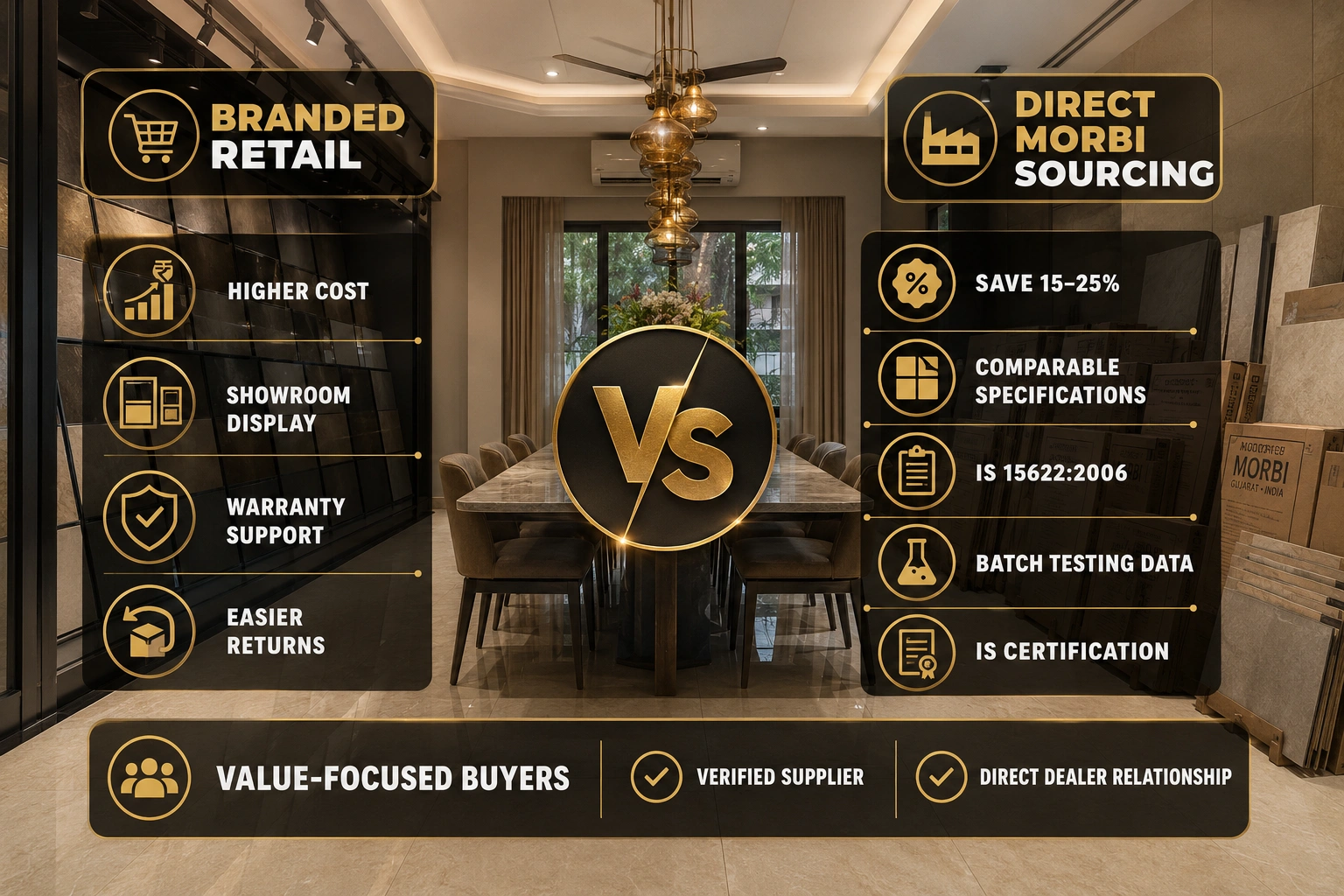
Buying directly from Morbi, Gujarat-origin suppliers, where verified, typically saves 15 to 25% over the same tile sold through a branded retail showroom, since the product specification (IS 15622:2006 compliance, water absorption, tile body) is often identical or comparable. The trade-off is that branded retail comes with established showroom display, established warranty processing, and easier returns in some cities.
For buyers prioritising value, verified Morbi-origin tiles through a marketplace or direct dealer relationship is a reasonable approach, provided the supplier can show batch testing data and IS certification.
What to Verify Before Buying, Regardless of Brand
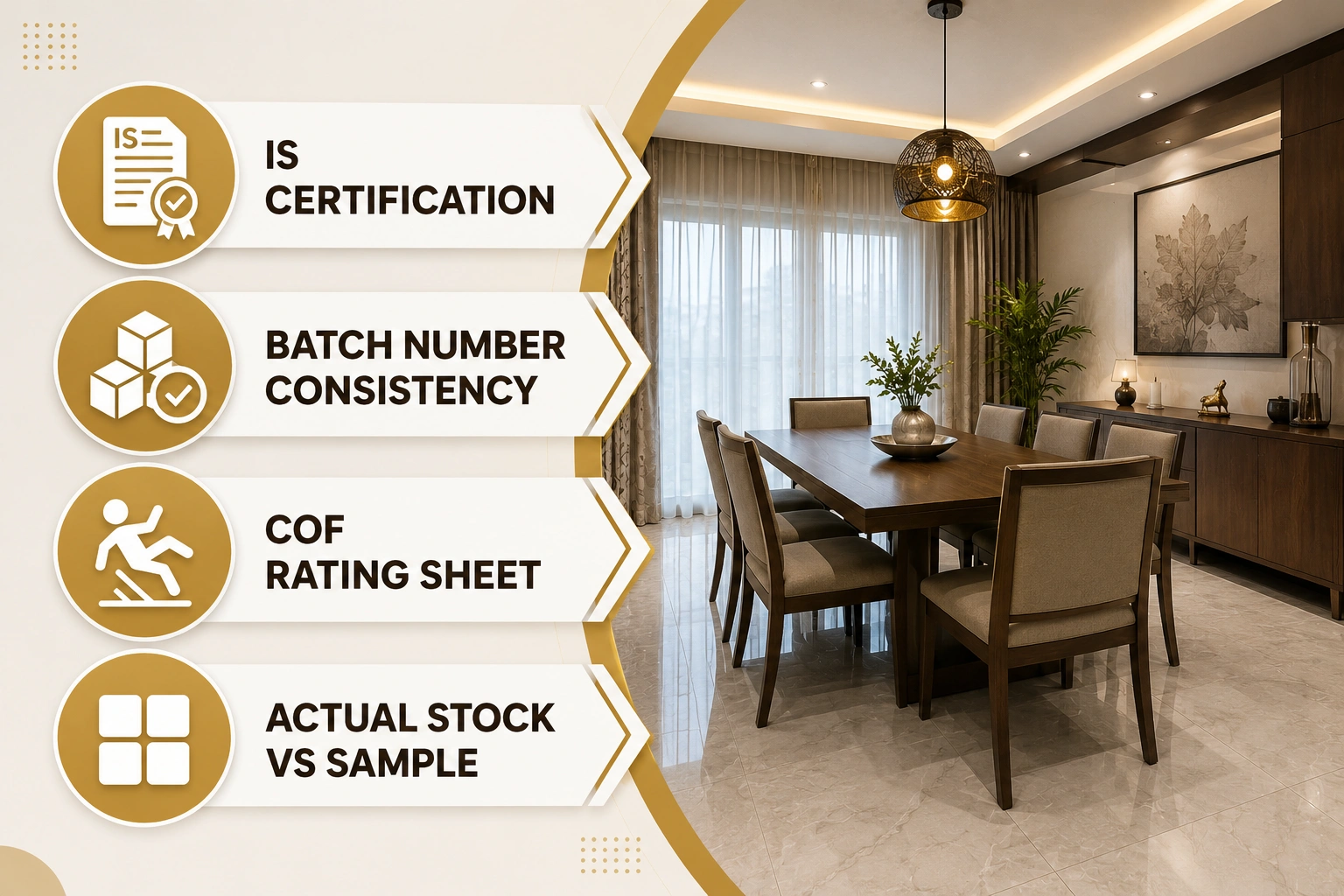
- IS certification: Ask for IS 15622:2006 compliance documentation for vitrified tiles, or IS 13630 for ceramic tiles. This confirms that water absorption and strength testing were done to Indian standards.
- Batch number consistency: If you need more than one carton, confirm all cartons are from the same production batch. Tile shade varies between batches, and a later top-up order from a different batch will not match.
- COF rating sheet: For any tile going on the dining room floor, request the coefficient of friction rating, dry and wet. This is the most overlooked specification by buyers and the most important one for floor safety.
- Actual stock vs sample: Showroom samples can be from an older production run. Confirm that the stock available for delivery matches the sample shade and finish exactly.
Best Tiles for Dining Room Floor by Budget, India 2026
| Budget Tier | Material | Size | Finish | Price Range |
| Entry | GVT | 600x600 mm | Matte | Rs. 55 to Rs. 80/sq.ft |
| Mid Range | GVT | 600x1200 mm or 800x800 mm | Matte / Sugar | Rs. 80 to Rs. 130/sq.ft |
| Upper Mid | GVT | 800x1600 mm | Matte / GHR | Rs. 130 to Rs. 180/sq.ft |
| Premium | GVT Large Format | 1200x600 mm and above | GHR / Sugar | Rs. 180 to Rs. 220/sq.ft |
For a 120 sq ft dining room floor, a mid-range GVT tile at Rs. 90 per sq.ft in matte finish (600x1200 mm) gives a material cost of Rs. 10,800 to Rs. 11,880, including 10% wastage allowance. Add Rs. 25 to Rs. 45 per sq.ft for labour and adhesive, plus Rs. 600 to Rs. 900 per kg if using epoxy grout. Total installed cost for this size and tier typically falls between Rs. 14,000 and Rs. 18,000.
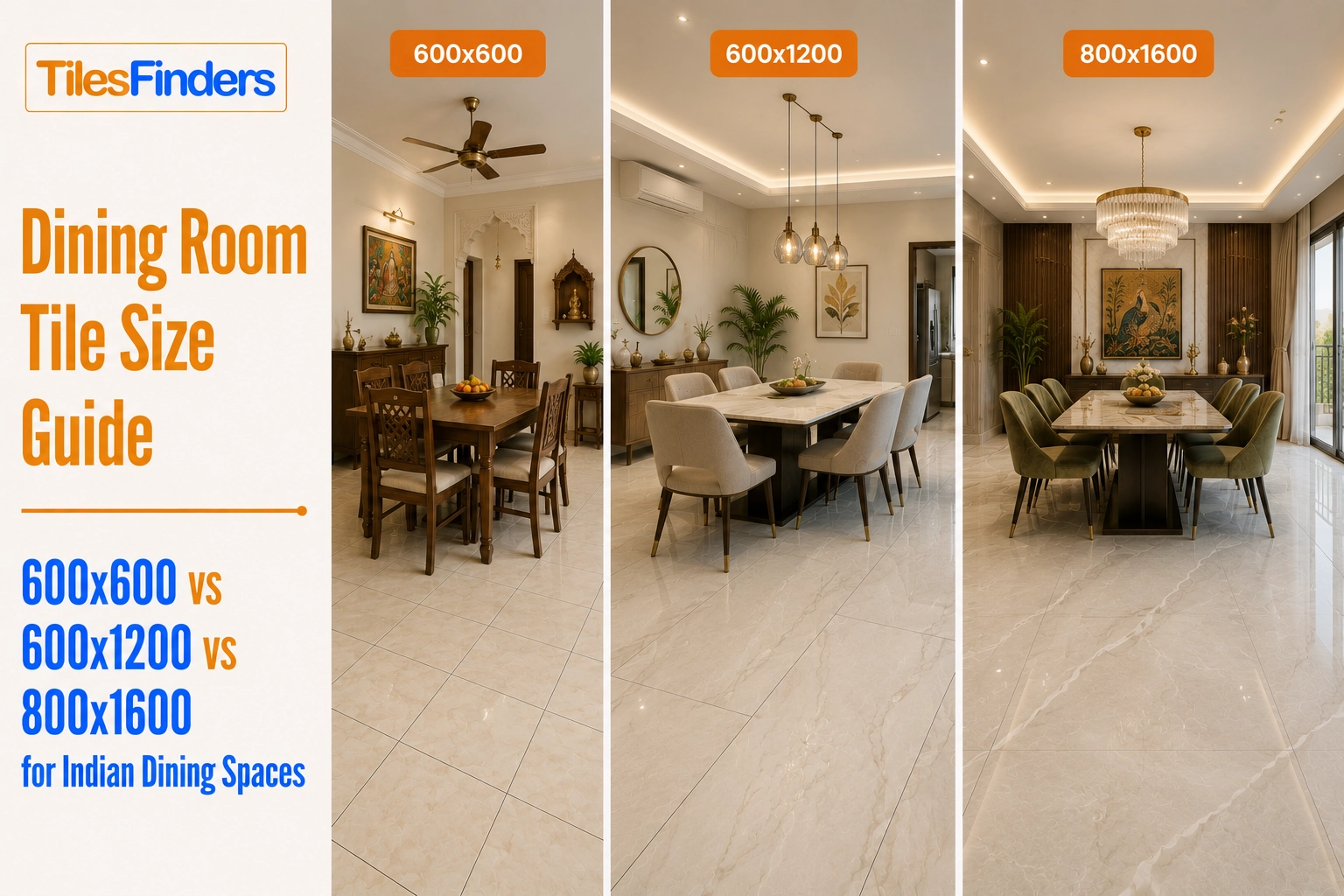
Not sure whether 600x600 mm, 600x1200 mm, or 800x1600 mm works best? Check our Dining tile size guide for room-wise recommendations.
Common Mistakes When Selecting Dining Room Floor Tiles
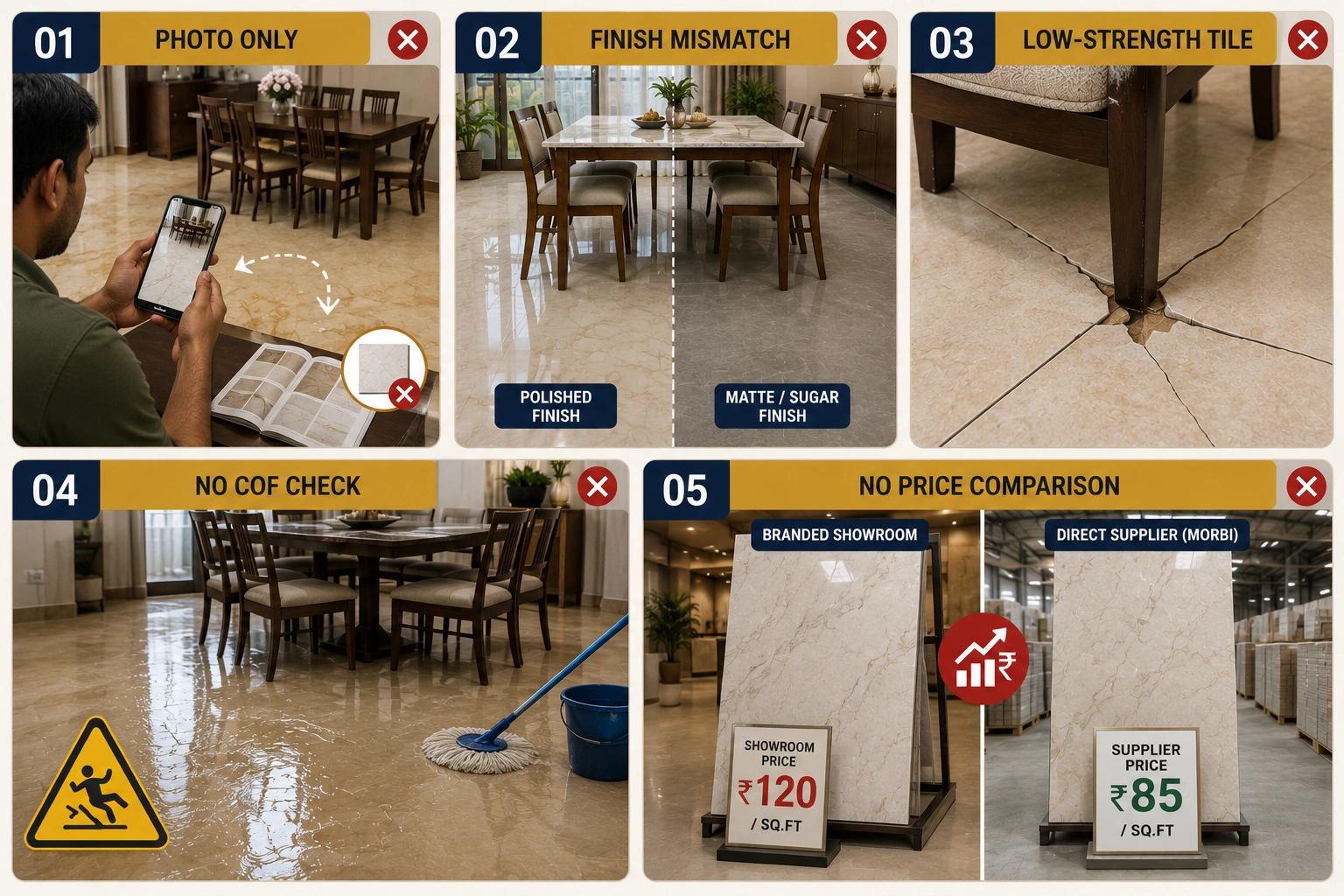
- Choosing material based on a photo alone: A photo cannot show slip resistance, surface texture, or how a finish behaves under wet conditions. Always request a physical sample before ordering.
- Assuming all vitrified tiles are the same: GVT and double-charged vitrified tiles differ in standard finish (matte/sugar vs polished). Ask specifically what finish a tile ships in, not just the material category.
- Buying ceramic tiles for the floor to save cost: Ceramic tiles cost less per sq.ft but carry higher water absorption and lower load strength, both of which work against a dining room floor's daily demands.
- Skipping the COF rating check: Most buyers never ask for this, yet it is the single most relevant safety specification for a floor that gets mopped daily.
- Choosing branded retail without comparing Morbi-origin pricing: Many branded showroom tiles are manufactured in Morbi, Gujarat, and resold with markup. Comparing direct supplier pricing for the same specification can reveal meaningful savings.
Choose the Right Tile Material for Your Dining Room
Selecting the best tiles for the dining room floor in India comes down to matching material (GVT for most cases), finish (matte, sugar, or GHR), and a verified supplier source. On Tilesfinders, you can filter dining room floor tiles by material, finish, and size, and compare verified Morbi and Gujarat suppliers with current stock and IS certification details in one place.
FAQs
GVT (Glazed Vitrified Tiles) in matte or sugar finish is the best material for dining room floors in India. Water absorption is 0.05% or lower under IS 15622:2006, which means spills sit on the surface and clean easily. GVT also resists scratching from chair legs better than ceramic tiles.
Yes. GVT has water absorption of 0.05% or less compared to 12 to 16% for ceramic tiles under IS 13630. GVT is also stronger under point load, which matters for chair legs in a dining room. Ceramic tiles are better suited to dining room walls than floors.
Matte, sugar (lappato), or GHR finish are the right choices for a dining room floor. All three offer good to excellent wet slip resistance. Polished, high-gloss, and satin matte finishes should not be used on dining room floors due to reduced wet-surface grip.
Yes. Morbi, Gujarat, produces over 70% of India's vitrified tile supply, including the GVT and double-charged tiles used in branded retail products nationwide. Verified Morbi-origin suppliers with IS 15622:2006 certification offer the same specification as branded showroom tiles, often at a lower cost due to fewer markup layers.
Entry-level GVT matte tiles in 600x600 mm cost Rs. 55 to Rs. 80 per sq.ft. Mid-range tiles in 600x1200 mm or 800x800 mm cost Rs. 80 to Rs. 130 per sq.ft. Premium large-format GVT in GHR finish costs Rs. 180 to Rs. 220 per sq.ft. The installed cost adds Rs. 25 to Rs. 45 per sq ft for labour.
COF stands for Coefficient of Friction, a measurement of how slip-resistant a tile surface is, tested dry and wet. For a dining room floor, a wet COF of 0.3 or higher and a dry COF of 0.4 or higher is the safety minimum. Always request this rating sheet from your supplier before buying floor tiles.
Double-charged tiles typically ship with a polished finish, which is not safe for dining room floors due to low wet slip resistance. If you want double-charged material for its price point, use it on dining room walls instead, where slip resistance is not a factor.
Natural marble works for dining room floors but requires periodic sealing to resist oil and food staining, an ongoing cost GVT tiles do not carry. Marble also costs significantly more, typically Rs. 150 to Rs. 500 per sq.ft, compared to Rs. 55 to Rs. 180 per sq ft for GVT with comparable visual range in marble-look finishes.

See our tile guides first
Set TilesFinders as a preferred source and our buying guides surface ahead of the rest for you.
Add as preferred sourceTakes one tap. Nothing to install.
What Readers Say
I was about to redo my parking area with the wrong tile size until I read this. The layout comparisons saved me from a costly mistake.
We reference TilesFinders guides while briefing clients on material selection. The size and pattern breakdowns are accurate and easy to explain visually.
On site, I get asked about grout spacing all the time. This article gave me a solid reference I now share with my team before every job.
Finally a guide that doesn't just push generic advice. The oil stain removal steps actually worked on our clubhouse driveway tiles.
I run a small construction firm and now send this link to clients directly when they ask about entrance tile sizing. Saves me an hour of explaining.
Good practical detail, though I wish there were more examples for compact apartment entrances specifically, not just villas.
My mother-in-law wanted marble, I wanted vitrified. This blog gave us the neutral comparison we needed to actually decide together.
Detailed without being overwhelming. I appreciated that it covered both cost and maintenance, not just the aesthetics.
Used the algae and hard water removal tips on our terrace tiles after the monsoon. Worked better than what our regular cleaner was doing.
As someone who sources tiles for multiple builder projects, I find these comparisons genuinely useful for vendor conversations, not just consumer content.
Recommended this to a client who kept second-guessing the entrance design. The small vs large layout section settled the debate instantly.
Straightforward and honest, no unnecessary jargon. Would like to see a similar breakdown for outdoor pool-deck tiles next.
We've bookmarked several TilesFinders guides for our design handbook. Reliable source when clients want data, not just opinions.
Two paths, one marketplace.
Get free quotes from verified suppliers.
Share your room, budget, and style. Suppliers in Morbi respond within hours.
Get Free QuotesList your business, reach real buyers.
Put your showroom in front of homeowners searching for tiles right now.
List Your Business