Best Rain Drops Finish Anti-Skid Tiles India 2027: Balcony, Bathroom and Outdoor Picks
Nine Rain Drops anti-skid tile picks for Indian bathrooms, balconies, terraces and outdoor steps, ranked by priority, budget, grip, drainage and real-world use.
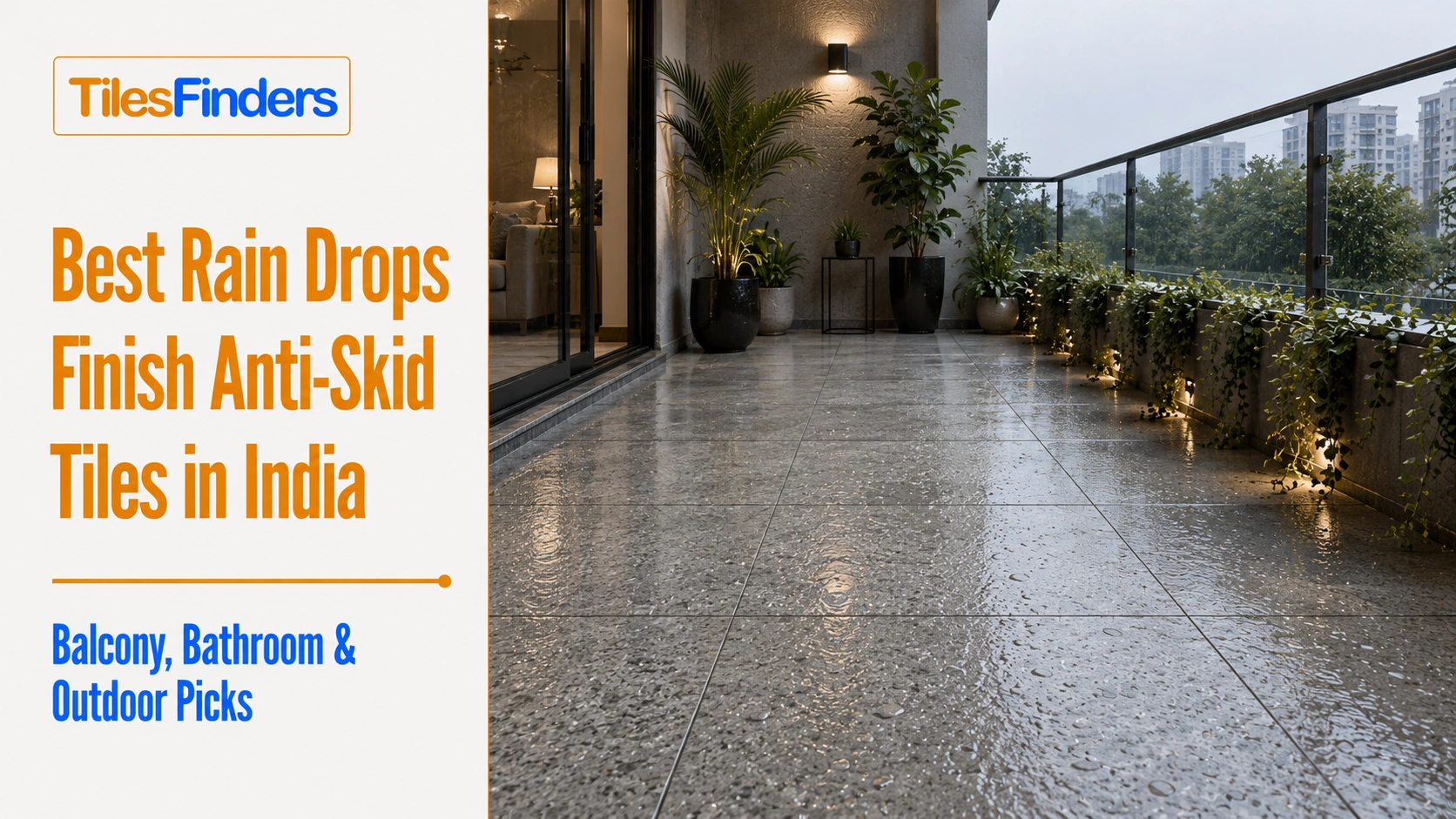
Rain Drops tiles are best prioritised for high-risk wet zones such as outdoor steps, shower areas, wash areas and exposed balconies. Choose by wet COF, outdoor rating, drainage, water absorption and household needs rather than appearance alone.
Almost nobody retiles every wet surface in a home at once. Most people have a budget that covers one or two zones, which makes the order you spend in more consequential than which tile you pick. Rain Drops tiles can be prioritised where wet-floor grip matters most. This guide sets that order first, then gives nine picks matched to each stage, with what each costs for a typical area and an honest note on when to skip it.
From The Marketplace
Popular tiles right now
If You Can Only Do One Zone, Do Them in This Order
Ranked by how much genuine risk each addresses per rupee spent, not by how visible the improvement is.
| Priority | Zone | Typical Area | Why It Ranks Here |
| 1 | Outdoor steps and level changes | 15 to 25 sq.ft | Smallest area on this list and the highest consequence, since a slip on steps has further to travel than a slip on a level floor |
| 2 | Shower zone and the floor just outside it | 20 to 30 sq.ft | Wet bare feet, soap film and nothing within reach to steady against, concentrated in a small area |
| 3 | Wash and utility area | 25 to 40 sq.ft | Standing water, detergent film and people carrying heavy wet loads, and the most commonly overlooked zone in Indian homes |
| 4 | Exposed balcony | 40 to 60 sq.ft | Sustained monsoon wetness, though usually walked with more care than an indoor floor |
| 5 | Remaining bathroom floor | 20 to 30 sq.ft | Splash rather than continuous water, so risk is real but lower than the shower zone |
| 6 | Kitchen floor at the sink | 15 to 25 sq.ft | Localised splash in a space with counters to steady against |
The practical consequence of that order: Steps and the shower zone together are often under 50 square feet, which means the two highest-risk areas in a typical home can usually be addressed for a fraction of a full bathroom renovation. If budget is the constraint, doing those two properly beats doing an entire bathroom in a cheaper specification. |
Before comparing individual products, it is useful to understand why the dimpled surface behaves differently from other textured finishes. Our Rain Drops Finish Tiles Guide covers the working mechanism, wet-area applications, maintenance requirements and specifications worth checking before purchase.
The Nine Picks
1. BEST OVERALL
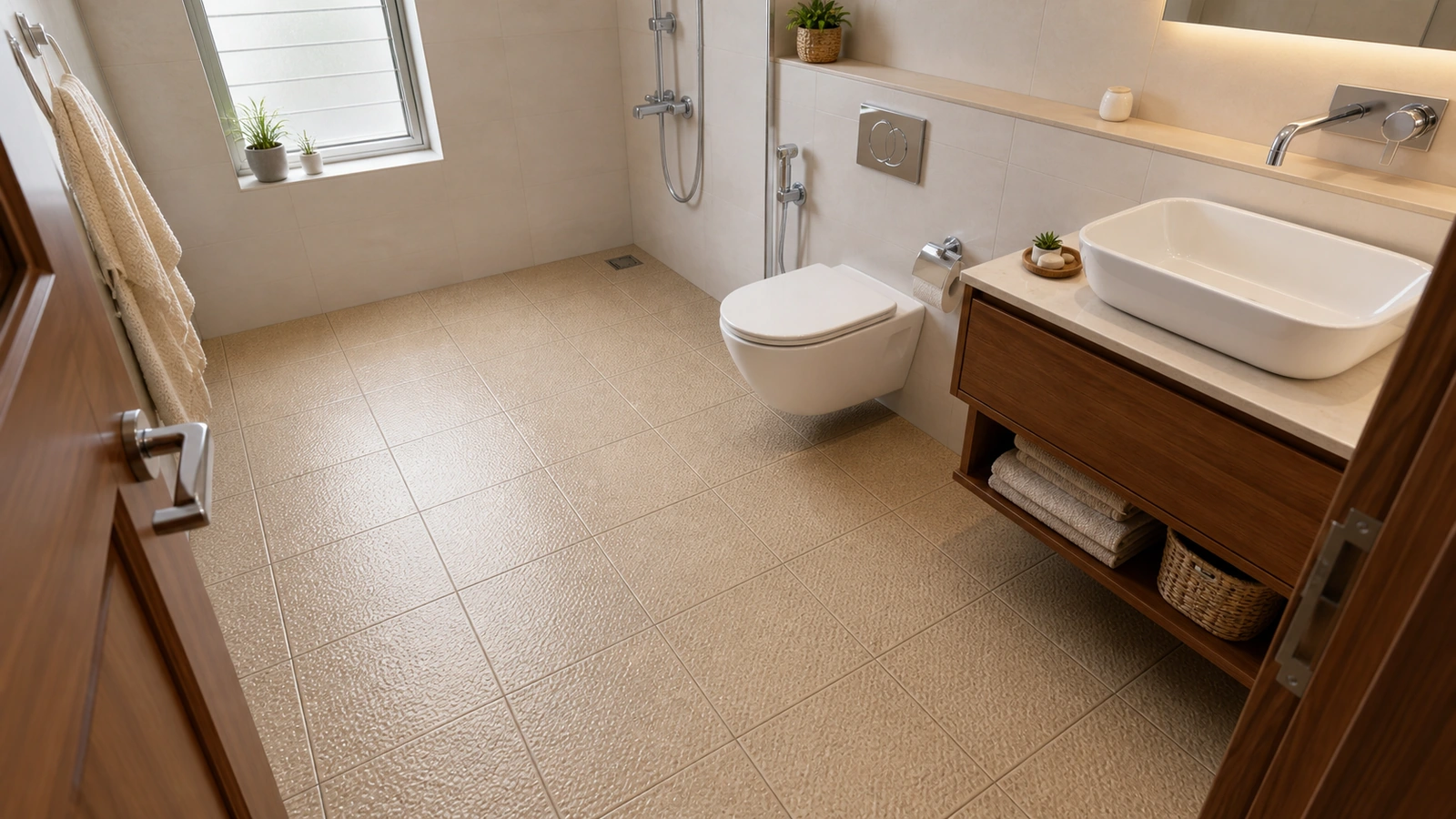
Warm Beige Rain Drops GVT, 300x300 mm
Rain drops textured GVT, confirmed wet COF | 300x300 mm | Matte textured | Rs. 70 to Rs. 120/sq.ft
Typical panel cost: About Rs. 3,500 to Rs. 6,000 for a 50 sq.ft bathroom
The pick that suits the widest range of situations. The 300x300 tile format cuts economically around fixtures, warm beige hides daily soiling without going dark, and the uniform dimple works wherever a foot lands. If you are doing one bathroom and want the lowest chance of regret, this is it.
Choose this if: you are specifying a standard bathroom floor and want a safe default rather than an optimised one.
Skip it if: the room is a large open floor with few fixtures, where a larger format gives fewer joints for the same grip.
2. BEST FOR THE SHOWER ZONE
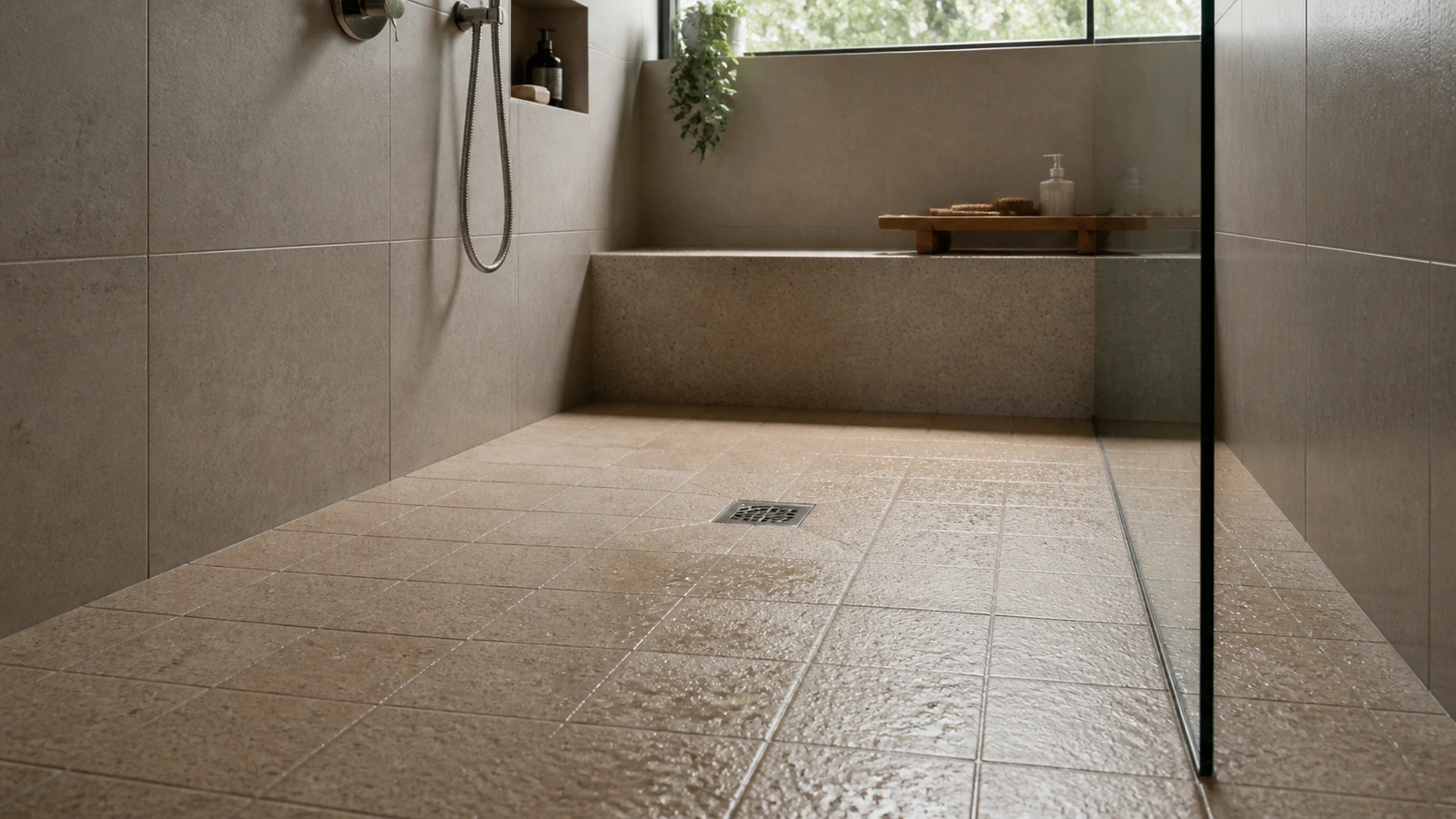
Warm Sand Rain Drops GVT, Small Format
Rain drops textured GVT, confirmed wet COF | 300x300 mm | Matte textured | Rs. 70 to Rs. 120/sq.ft
Typical panel cost: About Rs. 1,400 to Rs. 2,400 for a 20 sq.ft shower zone
The small format earns its place here specifically. More grout lines across the drainage fall means more paths for water to leave and more edges for a foot to register, both of which matter in the one place where people stand wet with their eyes closed.
Choose this if: you are addressing the shower area as a standalone project, which is the highest-value small job in this guide.
Skip it if: your drainage fall is inadequate, in which case fix that first, because no texture compensates for standing water.
3. BEST FOR ELDERLY HOUSEHOLDS
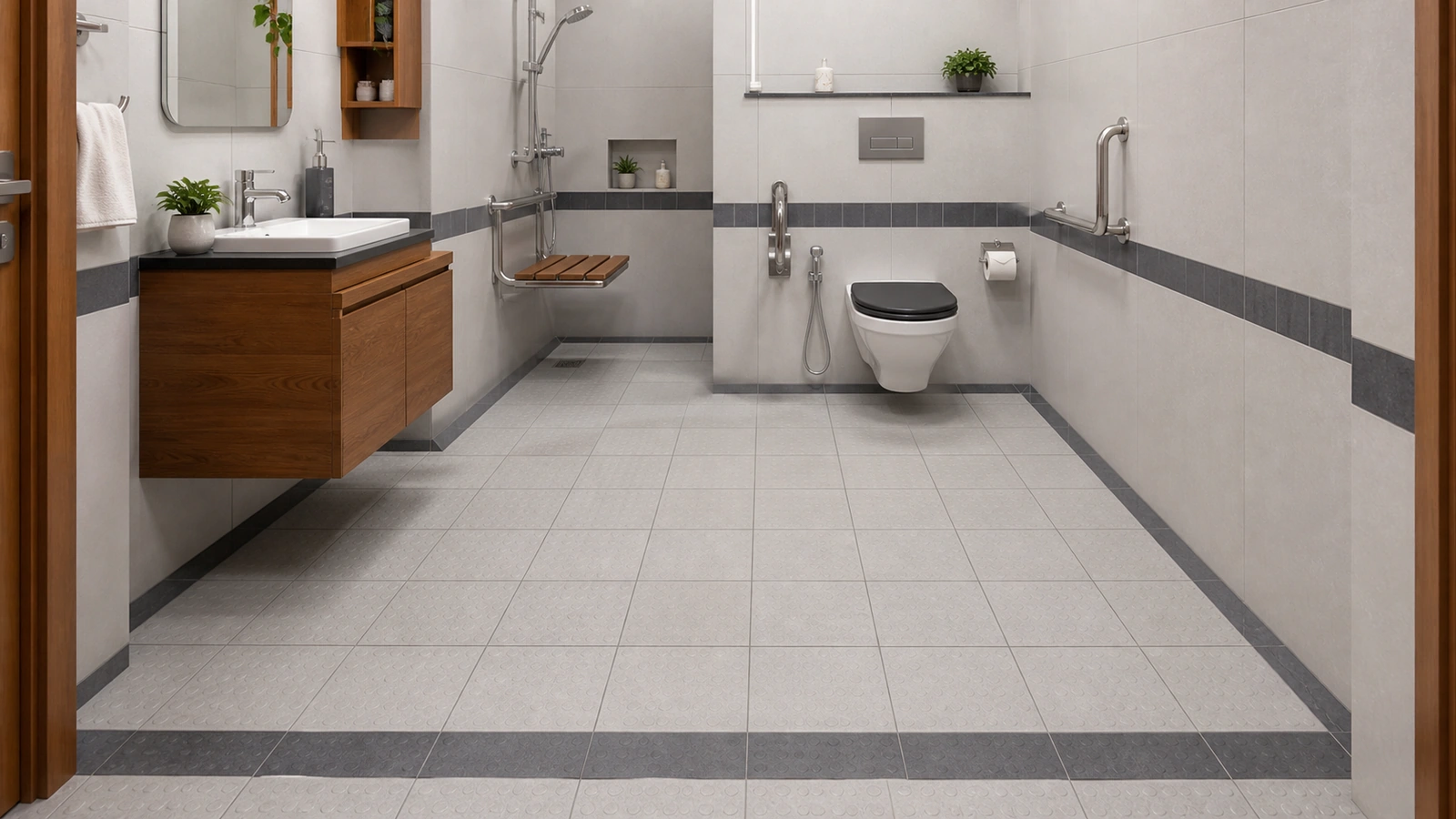
Light Grey Rain Drops GVT with Contrast Threshold
Rain drops textured GVT, confirmed wet COF | 300x300 mm | Matte textured | Rs. 75 to Rs. 130/sq.ft
Typical panel cost: About Rs. 3,750 to Rs. 6,500 for a 50 sq.ft bathroom
Full-floor coverage in a light tone with a deliberately contrasting band at any level or zone change. Visual contrast at transitions is a genuine safety feature for anyone with reduced depth perception, and full coverage avoids a finish boundary that is itself a small trip point.
Choose this if: the bathroom is used by anyone with limited mobility or reduced vision, where the design brief goes beyond grip alone.
Skip it if: you are working with a raised shower kerb you cannot remove, since that undoes much of what this specification provides.
4. BEST FOR OUTDOOR STEPS
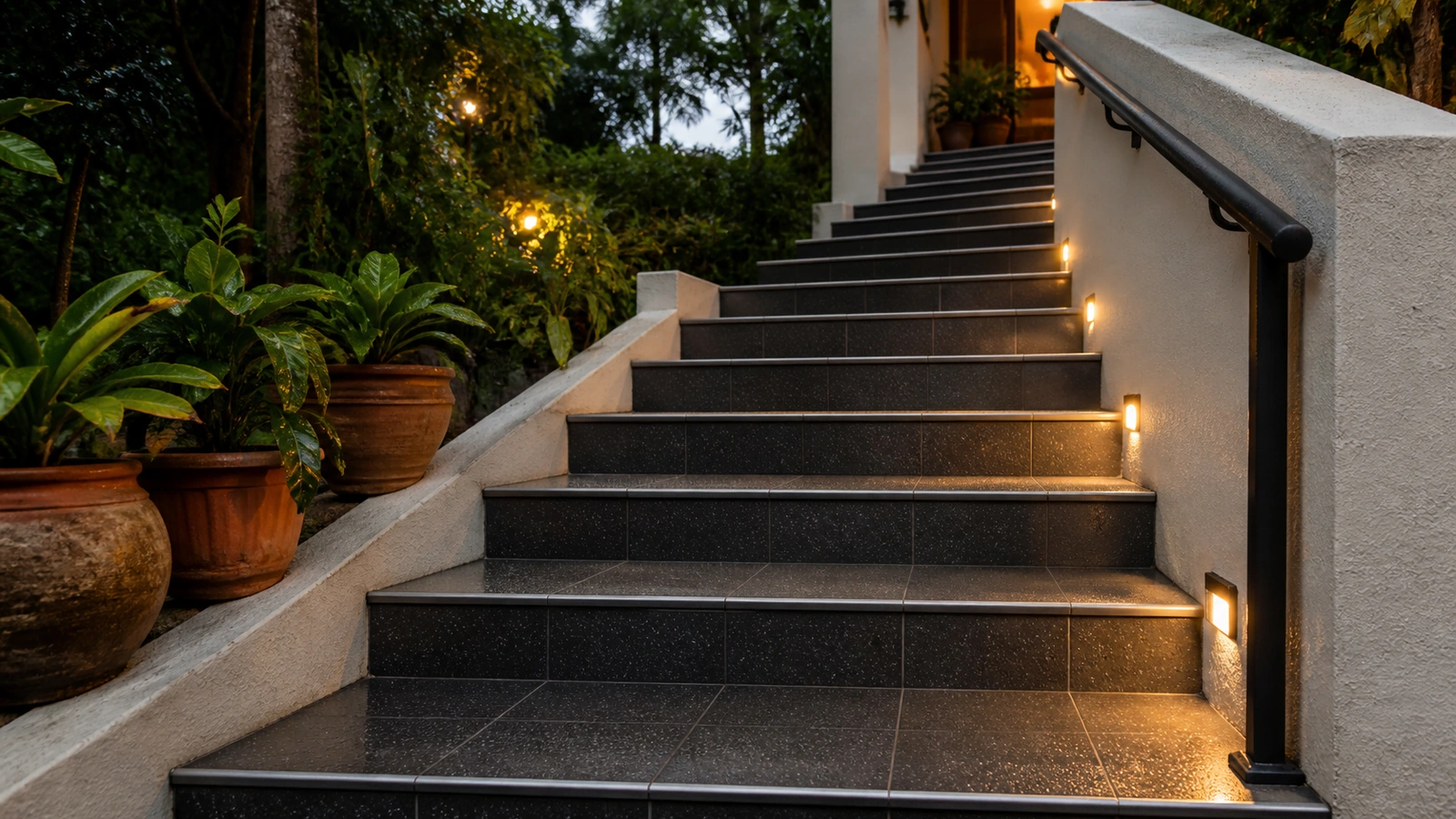
Charcoal Rain Drops GVT, R11 Outdoor Rated
Rain drops textured GVT, R11 outdoor rated | 300x300 mm | Matte textured | Rs. 80 to Rs. 140/sq.ft
Typical panel cost: About Rs. 1,600 to Rs. 2,800 for a 20 sq.ft flight
The highest-value application of this finish anywhere. Steps combine wet surfaces with a fall that has somewhere to go, and charcoal hides the soil and leaf residue that outdoor steps accumulate. A small area with a disproportionate safety return, making outdoor tiles a practical choice where wet-weather grip matters most.
Choose this if: you have any exterior steps at all, which most Indian homes with a garden, terrace or entrance level change do.
Skip it if: the risers are inconsistent in height, since that causes more falls than the surface does and should be corrected first.
5. BEST FOR MONSOON BALCONIES
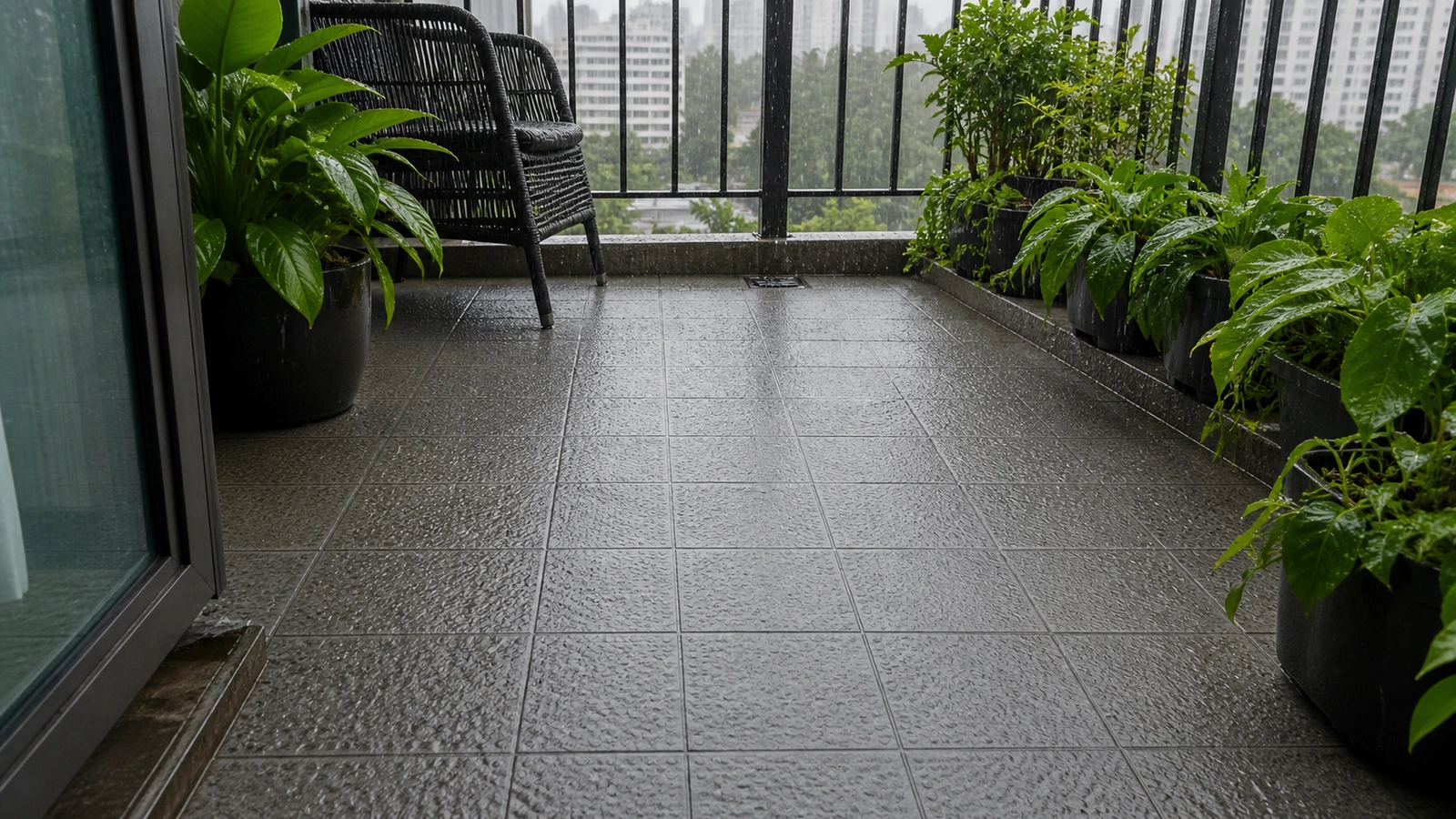
Grey Rain Drops GVT, R11 Outdoor Rated
Rain drops textured GVT, R11 outdoor rated | 300x300 mm | Matte textured | Rs. 80 to Rs. 140/sq.ft
Typical panel cost: About Rs. 3,200 to Rs. 5,600 for a 40 sq.ft balcony
Built for the condition where the surface stays wet for hours rather than minutes. Continuous rain rinses the dimples rather than filling them, which is why this finish performs better outdoors over a season than it does in a soapy bathroom.
Choose this if: the balcony is fully exposed with no overhead cover, in a region with a genuine monsoon.
Skip it if: the balcony is covered and set well back from the rain, where a standard anti-skid matte is sufficient and easier to clean.
6. BEST BUDGET PICK
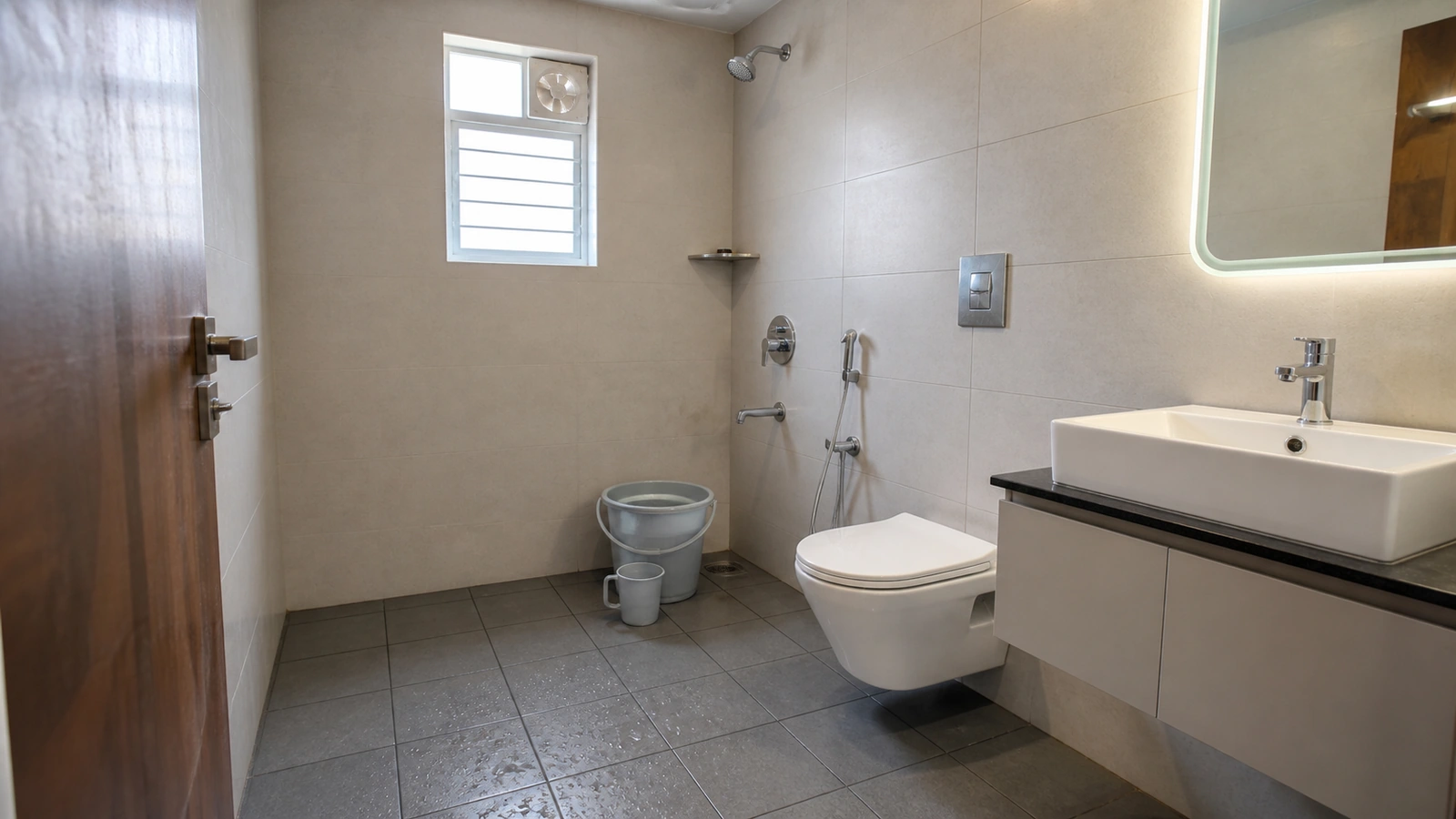
Grey Rain Drops Ceramic, Indoor Only
Rain drops textured ceramic, confirmed wet COF | 300x300 mm | Matte textured | Rs. 55 to Rs. 85/sq.ft
Typical panel cost: About Rs. 2,750 to Rs. 4,250 for a 50 sq.ft bathroom
Ceramic body keeps the cost down and is entirely appropriate for an indoor bathroom floor, provided the wet coefficient of friction is confirmed. The saving comes from the body and the edge finish rather than from anything affecting grip.
Choose this if: budget is genuinely tight and the application is an indoor bathroom or wash area.
Skip it if: the floor is outdoors, where low water absorption genuinely matters, and a vitrified body is worth the difference.
7. BEST FOR WASH AREAS
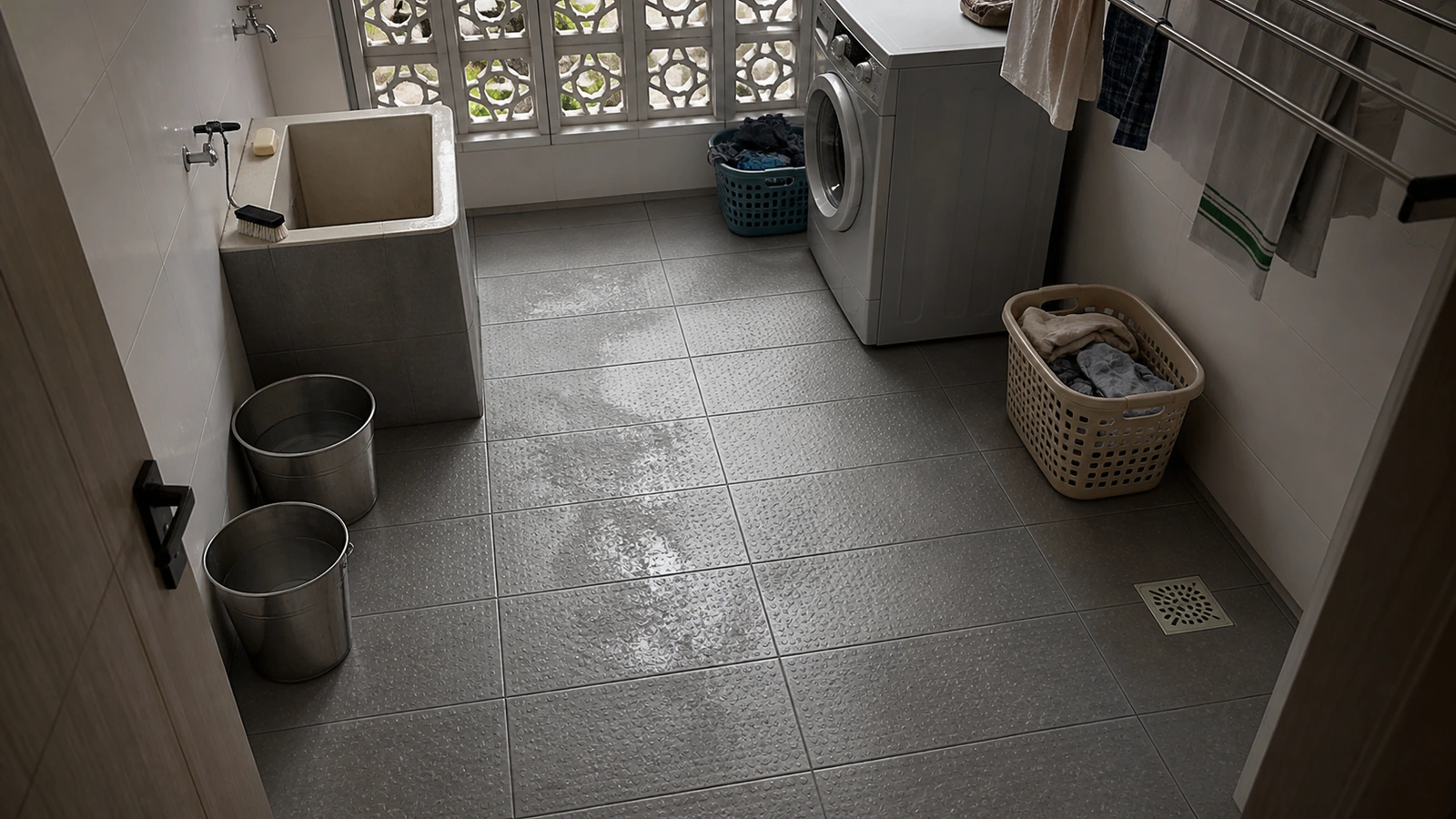
Mid-Grey Rain Drops GVT, R11 Rated
Rain drops textured GVT, R11 rated | 300x300 mm | Matte textured | Rs. 75 to Rs. 130/sq.ft
Typical panel cost: About Rs. 2,250 to Rs. 3,900 for a 30 sq.ft wash area
The most under-specified zone in Indian homes gets the specification it deserves. Standing water and detergent film are routine here, and mid grey hides the residue and soil that a paler tone would show constantly.
Choose this if: your wash area currently has a smooth or unrated floor, which is more common than most households realise.
Skip it if: the area drains poorly, since standing water should be solved with a corrected fall before any tile is chosen.
8. BEST LOOKING
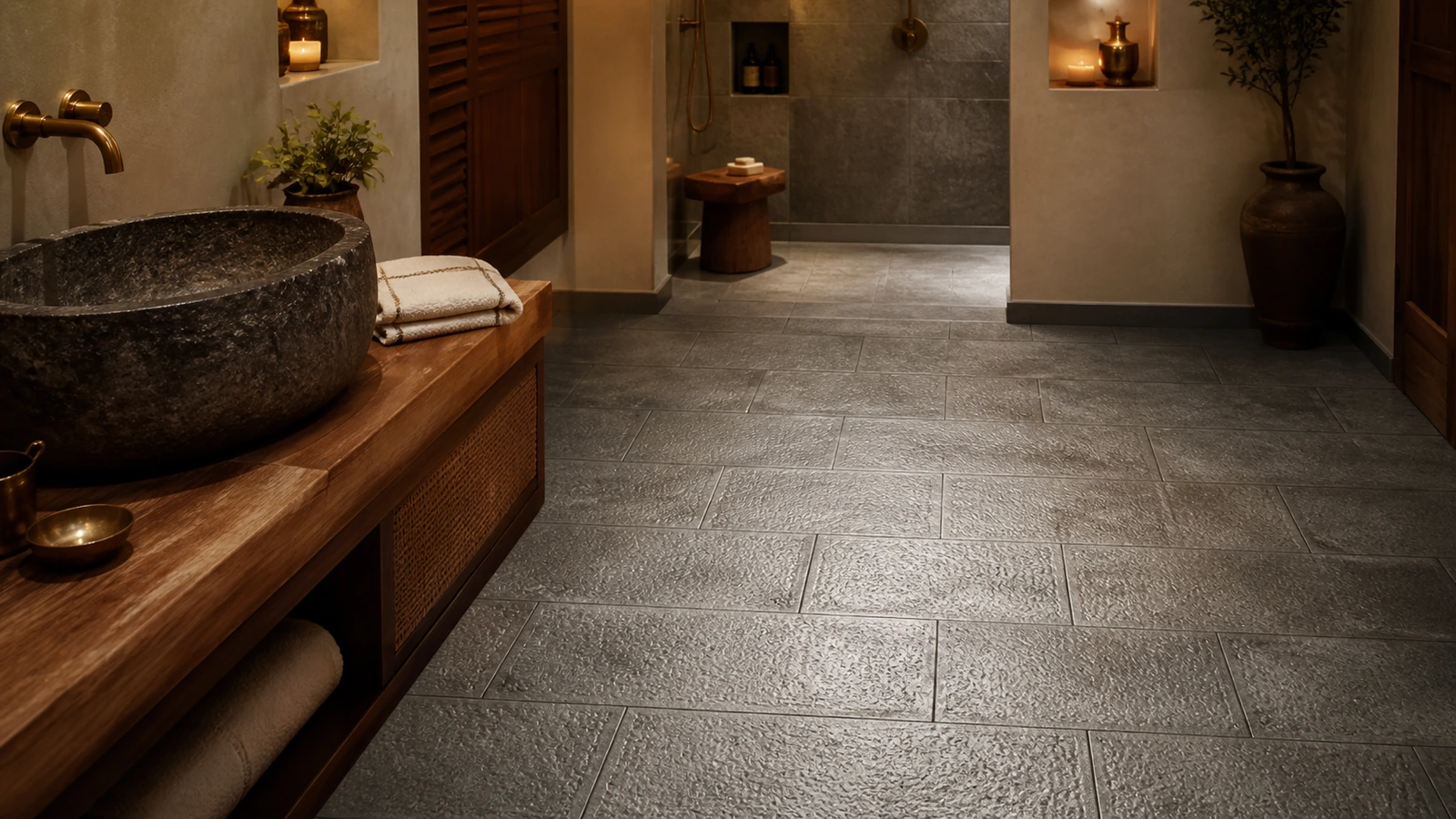
Stone-Look Rain Drops GVT, 300x600 mm
Rain drops textured GVT, stone-look, confirmed wet COF | 300x600 mm | Matte textured | Rs. 85 to Rs. 145/sq.ft
Typical panel cost: About Rs. 4,250 to Rs. 7,250 for a 50 sq.ft bathroom
For anyone convinced anti-skid means utilitarian. A stone-look dimple surface reads as genuinely natural rather than technical while providing identical grip to a plain textured tile, which makes it the pick for a design-led bathroom that still has to be safe.
Choose this if: you want a considered-looking bathroom and refuse to trade safety for it.
Skip it if: the tonal variation is uniform across faces, since uniformity is what makes stone-look read as printed rather than natural.
If appearance matters as much as grip, the finish does not have to look purely functional. Our Rain Drops Tile Design Ideas guide shows how textured surfaces can work across bathrooms, balconies, terraces and outdoor steps without compromising the practical brief.
9. BEST FOR LARGE TERRACES
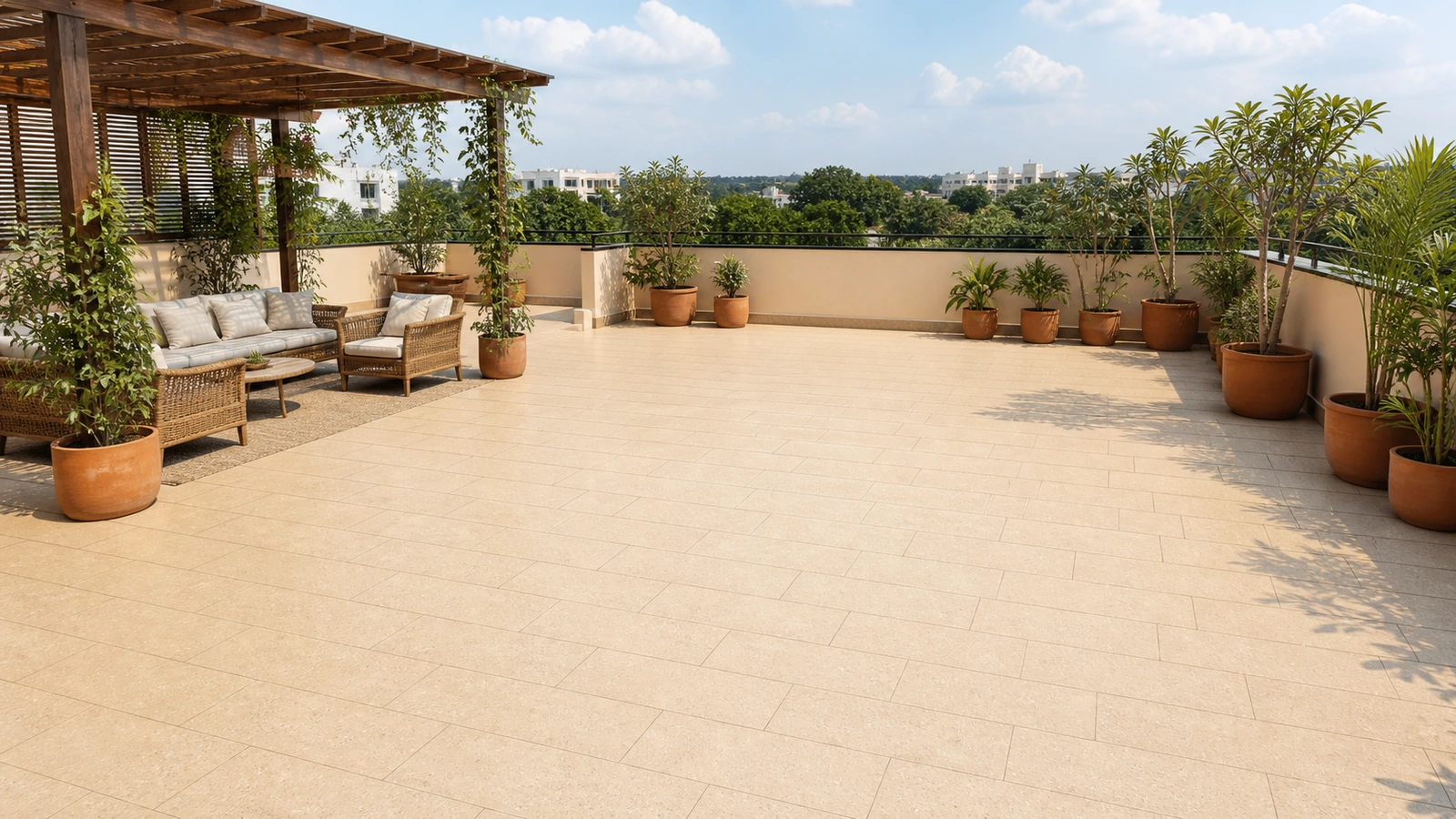
Warm Sand Rain Drops GVT, 300x600 mm, R11
Rain drops textured GVT, R11 outdoor rated | 300x600 mm | Matte textured | Rs. 85 to Rs. 145/sq.ft
Typical panel cost: About Rs. 6,800 to Rs. 11,600 for an 80 sq.ft terrace
The larger format reduces joint count across a big outdoor area, and warm sand stays comfortable underfoot in direct sun where a dark tone would become genuinely hot on a terrace used barefoot.
Choose this if: the terrace is used for seating and gets direct sun as well as monsoon rain.
Skip it if: the terrace is heavily broken up by planters and level changes, where a smaller format cuts more economically.
What to Confirm on Every Pick Above
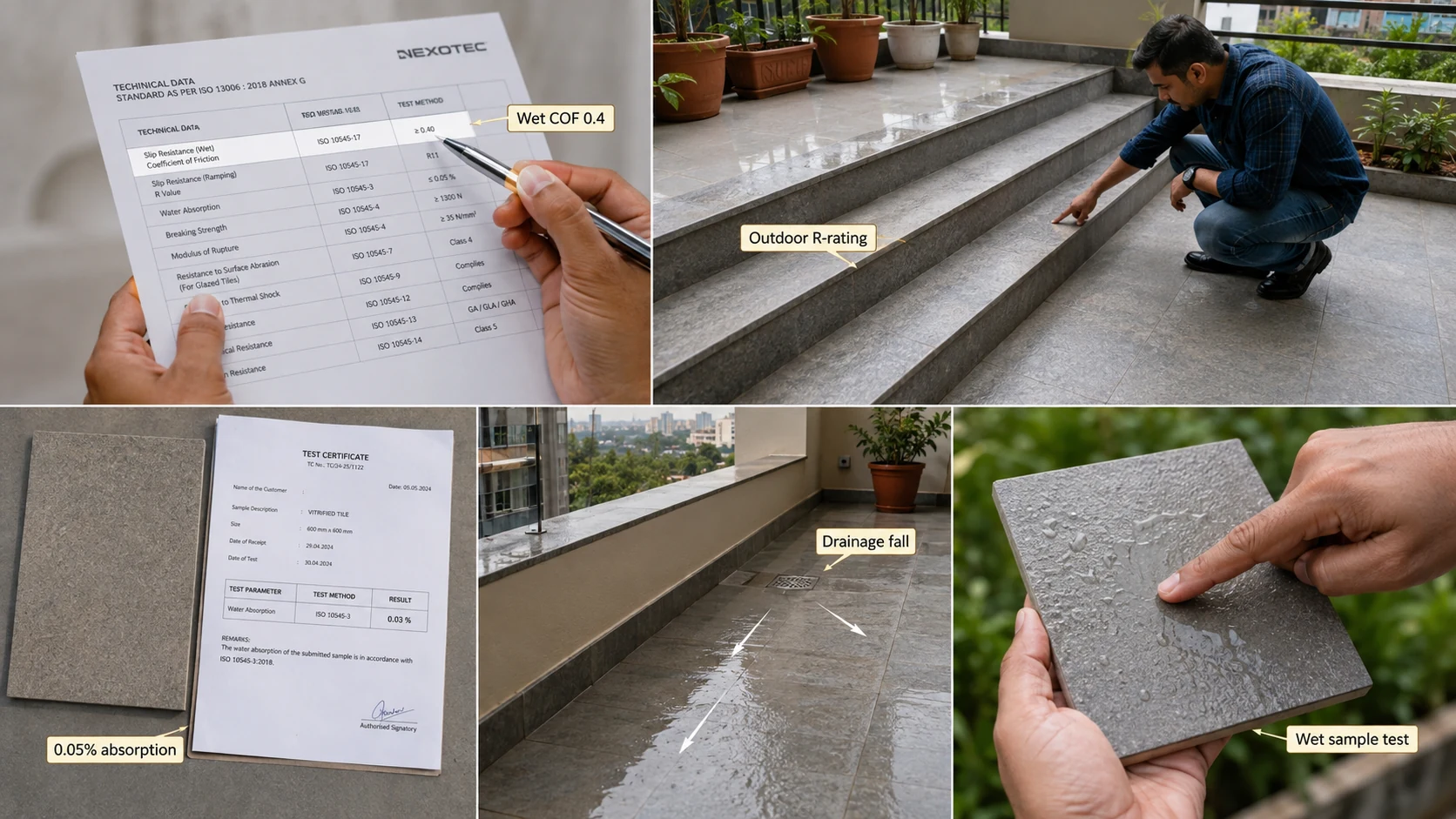
- Wet coefficient of friction of 0.4 minimum, taken from the technical data sheet. Do not accept low water absorption as an answer, because it answers a different question entirely.
- Outdoor R-rating in addition to wet COF for steps, balconies and terraces, since sustained rain is a different requirement from indoor splash.
- Water absorption of 0.05% or below for vitrified tile, the benchmark set by the Bureau of Indian Standards under IS 15622, with the test certificate requested.
- PEI 4 minimum for residential floors, as stated on the manufacturer's technical data sheet.
- The drainage fall, before the tile. Grip and drainage solve the same problem from two directions, and no surface finish compensates for water that has nowhere to go.
- A wet sample in your hand, with water run over it and a fingertip drawn across, which tells you more in ten seconds than any product photograph.
Two Things Worth Doing Before You Buy Anything
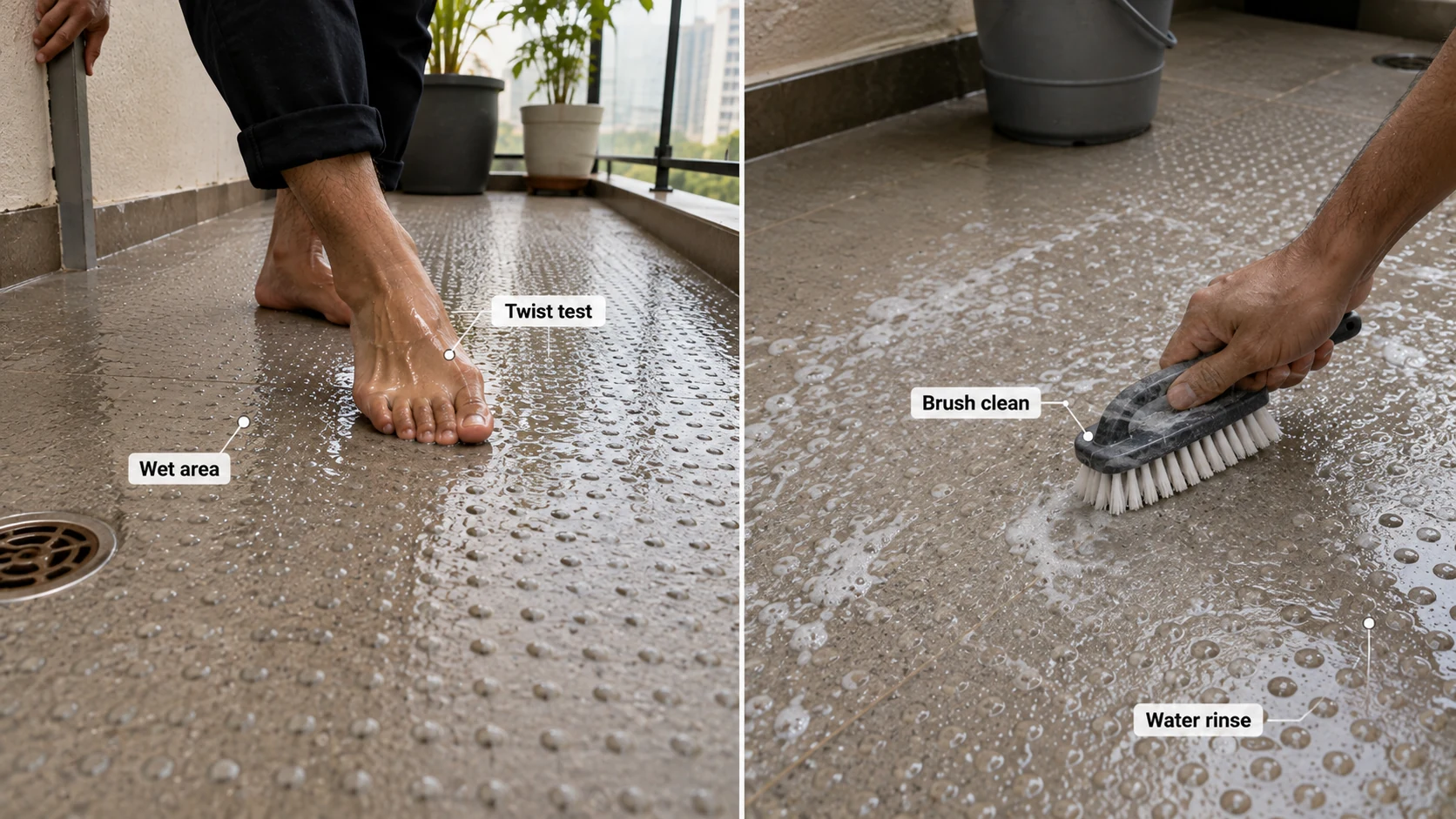
- Test the floors you already have. Wet a small area, and with clean bare feet, press the ball of your foot down and twist gently while keeping your weight on the other foot and something within reach. A floor with adequate grip resists noticeably. This identifies which zones genuinely need addressing rather than assuming all of them do.
- Deep clean before you conclude a floor has failed. Residue buildup is the most common cause of a floor losing grip, and a thorough brush clean followed by a plain water rinse restores a surprising amount. It costs an afternoon and occasionally saves a retiling job.
Still deciding between textured finishes? A direct comparison can make the choice easier. See how Rain Drops vs Stucco vs Matte Carving perform under soap film, cooking oil, monsoon rain and long-term cleaning.
Source Anti-Skid Ranges by Zone on TilesFinders
Rain drops and other anti-skid ranges can be filtered on TilesFinders by finish, format and outdoor rating, so you can specify the higher-grip surfaces for the zones at the top of the priority order and keep easier-to-clean finishes where risk is lower.
FAQs
Outdoor steps if you have any, followed by the shower zone. Both are small areas with disproportionate risk, and together they are often under 50 square feet, which means the two highest-risk areas in a home can be addressed for a fraction of a full bathroom renovation.
Warm beige at 300x300 mm, which cuts economically around bathroom fixtures, hides daily soiling without going dark, and provides uniform grip wherever a foot lands. It is the safe default rather than the optimised choice.
Yes for an indoor bathroom, provided the wet coefficient of friction is confirmed. The saving comes from the body and edge finish rather than from anything affecting grip. Outdoors, a vitrified body is worth the difference because low water absorption genuinely matters.
Because it combines standing water, constant detergent film and people carrying heavy wet loads, and it is the zone most commonly left with a smooth or unrated floor in Indian homes. The risk is high, and the attention paid to it is usually low.
Not well if the terrace is used barefoot in direct sun, where dark surfaces reach genuinely uncomfortable temperatures. Warm sand and similar light tones stay usable, which matters more on a seating terrace than in a shaded corner.
The drainage falls, and on steps, there are inconsistent riser heights. Both cause more incidents than the surface finish does, and neither is solved by a grippier tile.
Yes. A stone-look dimple surface reads as natural rather than technical while providing identical grip to a plain textured tile. The trick is choosing one with genuine tonal drift across faces, since uniformity is what makes stone-look read as printed.
Deep clean it first and retest, since residue is the most common cause of lost grip and a thorough brush clean with a plain water rinse restores a surprising amount. Only if it still fails the wet twist test is replacement the right answer.


See our tile guides first
Set TilesFinders as a preferred source and our buying guides surface ahead of the rest for you.
Add as preferred sourceTakes one tap. Nothing to install.
What Readers Say
I was about to redo my parking area with the wrong tile size until I read this. The layout comparisons saved me from a costly mistake.
We reference TilesFinders guides while briefing clients on material selection. The size and pattern breakdowns are accurate and easy to explain visually.
On site, I get asked about grout spacing all the time. This article gave me a solid reference I now share with my team before every job.
Finally a guide that doesn't just push generic advice. The oil stain removal steps actually worked on our clubhouse driveway tiles.
I run a small construction firm and now send this link to clients directly when they ask about entrance tile sizing. Saves me an hour of explaining.
Good practical detail, though I wish there were more examples for compact apartment entrances specifically, not just villas.
My mother-in-law wanted marble, I wanted vitrified. This blog gave us the neutral comparison we needed to actually decide together.
Detailed without being overwhelming. I appreciated that it covered both cost and maintenance, not just the aesthetics.
Used the algae and hard water removal tips on our terrace tiles after the monsoon. Worked better than what our regular cleaner was doing.
As someone who sources tiles for multiple builder projects, I find these comparisons genuinely useful for vendor conversations, not just consumer content.
Recommended this to a client who kept second-guessing the entrance design. The small vs large layout section settled the debate instantly.
Straightforward and honest, no unnecessary jargon. Would like to see a similar breakdown for outdoor pool-deck tiles next.
We've bookmarked several TilesFinders guides for our design handbook. Reliable source when clients want data, not just opinions.
Two paths, one marketplace.
Get free quotes from verified suppliers.
Share your room, budget, and style. Suppliers in Morbi respond within hours.
Get Free QuotesList your business, reach real buyers.
Put your showroom in front of homeowners searching for tiles right now.
List Your Business