Rain Drops Finish Tiles in India: Textured Dimple-Surface Guide for Outdoor and Bathroom Use
From bathroom floors to monsoon-facing balconies, Rain Drops tiles offer textured grip where water creates slip risk, with practical guidance on COF, R-rating, placement, cleaning, and selection.
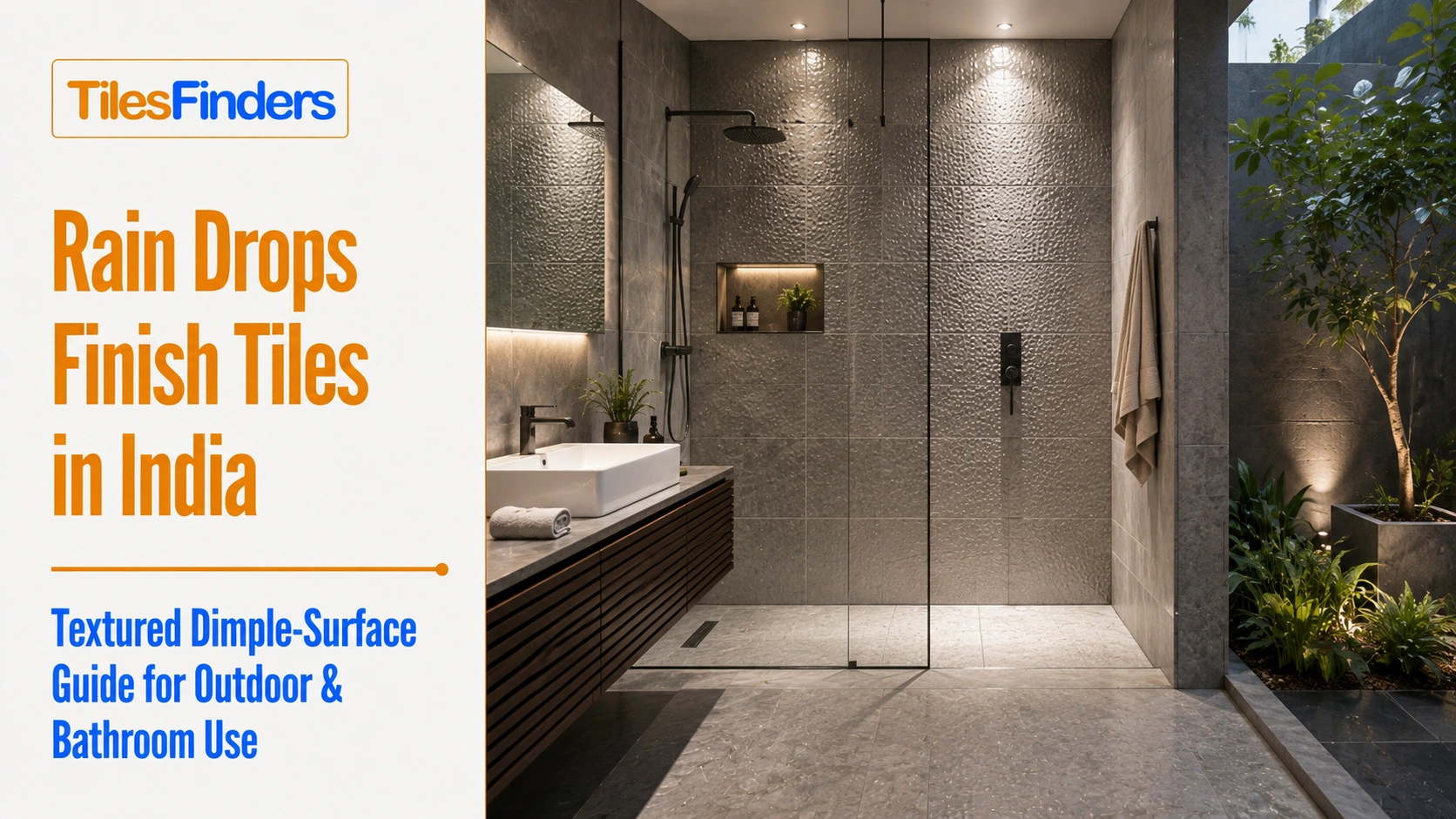
Rain Drops tiles use a dimpled texture to disrupt water films, making them particularly useful for showers, wash areas, exposed balconies, terraces, and outdoor steps. Use them selectively by zone and verify wet COF, outdoor R-rating, water absorption, and maintenance requirements before installation.
Most tile textures are decorative first, with any grip they offer arriving as a side effect. Rain Drops tile inverts that. The dimpled surface exists to break the film of water that forms between a wet foot and a smooth floor, and its appearance is a consequence of that job rather than the reason for it. This guide covers how the mechanism actually works, walks your home zone by zone to identify where it is genuinely needed, and is honest about the places it is unnecessary.
Wet Zones Ranked by Actual Risk
Not every wet surface carries the same risk. Risk rises where water is present, the surface is walked on with bare or wet feet, and there is nothing to grab if a foot slips.
| Zone | Risk Level | Why |
| Bathroom floor immediately outside the shower | Highest | Wet bare feet, water carried out on the body, and nothing within reach to steady against |
| Shower enclosure floor | Highest | Continuous water, soap film, and often a standing position with eyes closed |
| Open balcony or terrace during monsoon | High | Sustained rain, an unfamiliar wet surface, and often a hard edge or railing nearby |
| Wash and utility area | High | Standing water, detergent film, and heavy items being carried |
| Poolside and pool surround | High | Constant wet foot traffic and running children |
| Outdoor pathway and courtyard | Moderate | Wet during rain, but usually walked on with footwear and at a steady pace |
| Kitchen floor at the sink | Moderate | Localised splash and occasional oil, in a space with counters to steady against |
| General kitchen floor | Lower | Occasional spills rather than sustained water |
| Covered balcony set back from the rain | Lower | Limited direct water exposure |
How the Dimple Actually Works
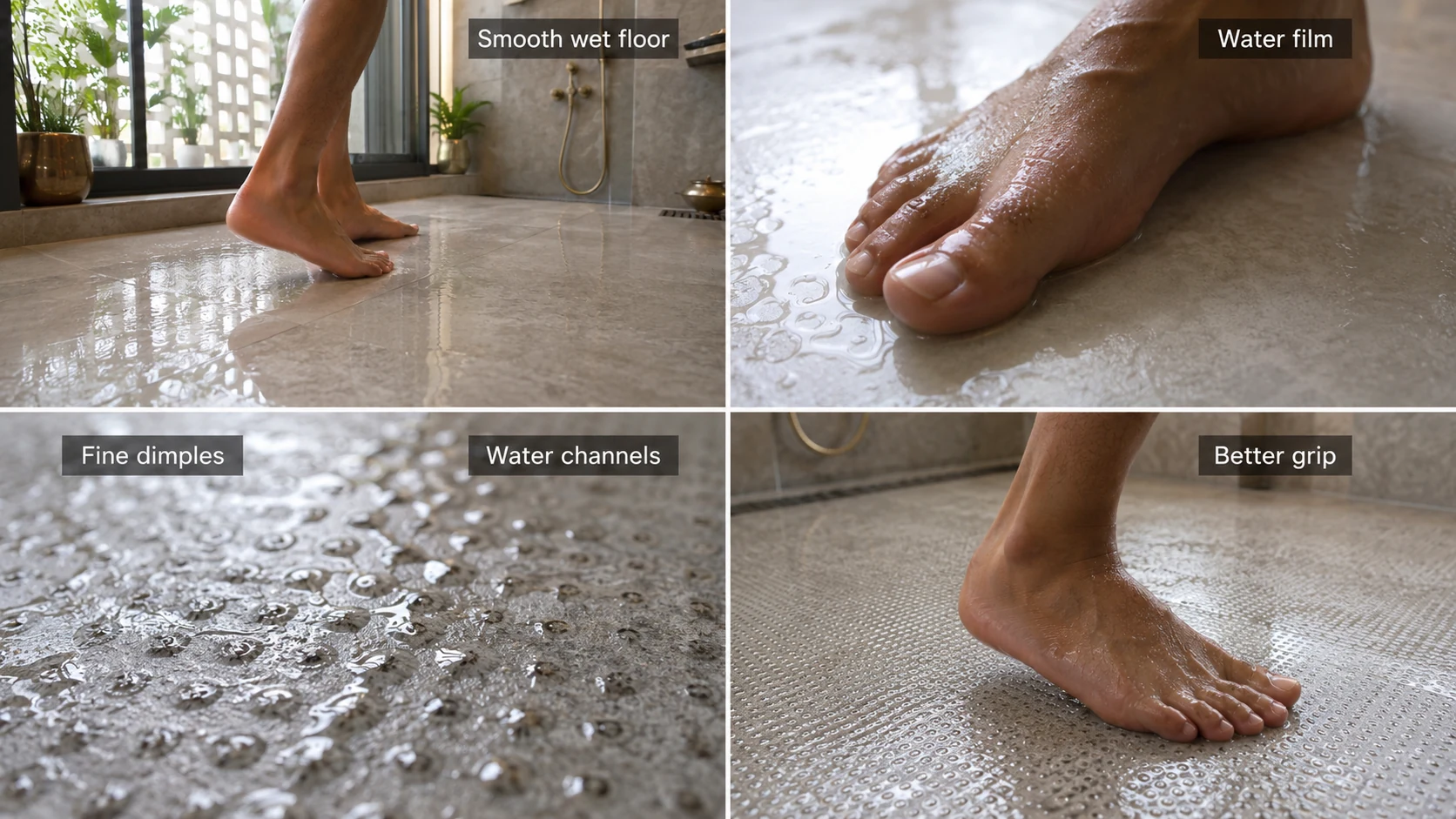
What a slip really is, and what the texture is doing about it: When a foot lands on a smooth wet floor, the water between foot and tile cannot escape quickly enough, so it stays as a thin film and the foot skates on it rather than gripping the surface underneath. The tile is not slippery in itself; the film is. A dimpled surface gives that water somewhere to go. Each recess acts as a small channel, the film breaks up rather than staying continuous, and enough dry contact remains for the foot to grip. This is why the texture is fine and regular rather than deep and dramatic: the job is to interrupt a film a fraction of a millimetre thick, and a shallow consistent pattern does that across the whole surface far better than a few pronounced ridges would. |
A consequence worth understanding: Because the mechanism depends on water escaping into the recesses, anything that fills those recesses reduces the effect. Soap residue, floor cleaner film and cooking oil all build up inside the dimples over time, and a surface that was genuinely grippy when new can become considerably less so after a few years without anything visibly changing. This is not a defect in the tile; it is maintenance, and it is covered further below. |
The Distinction That Catches People Out
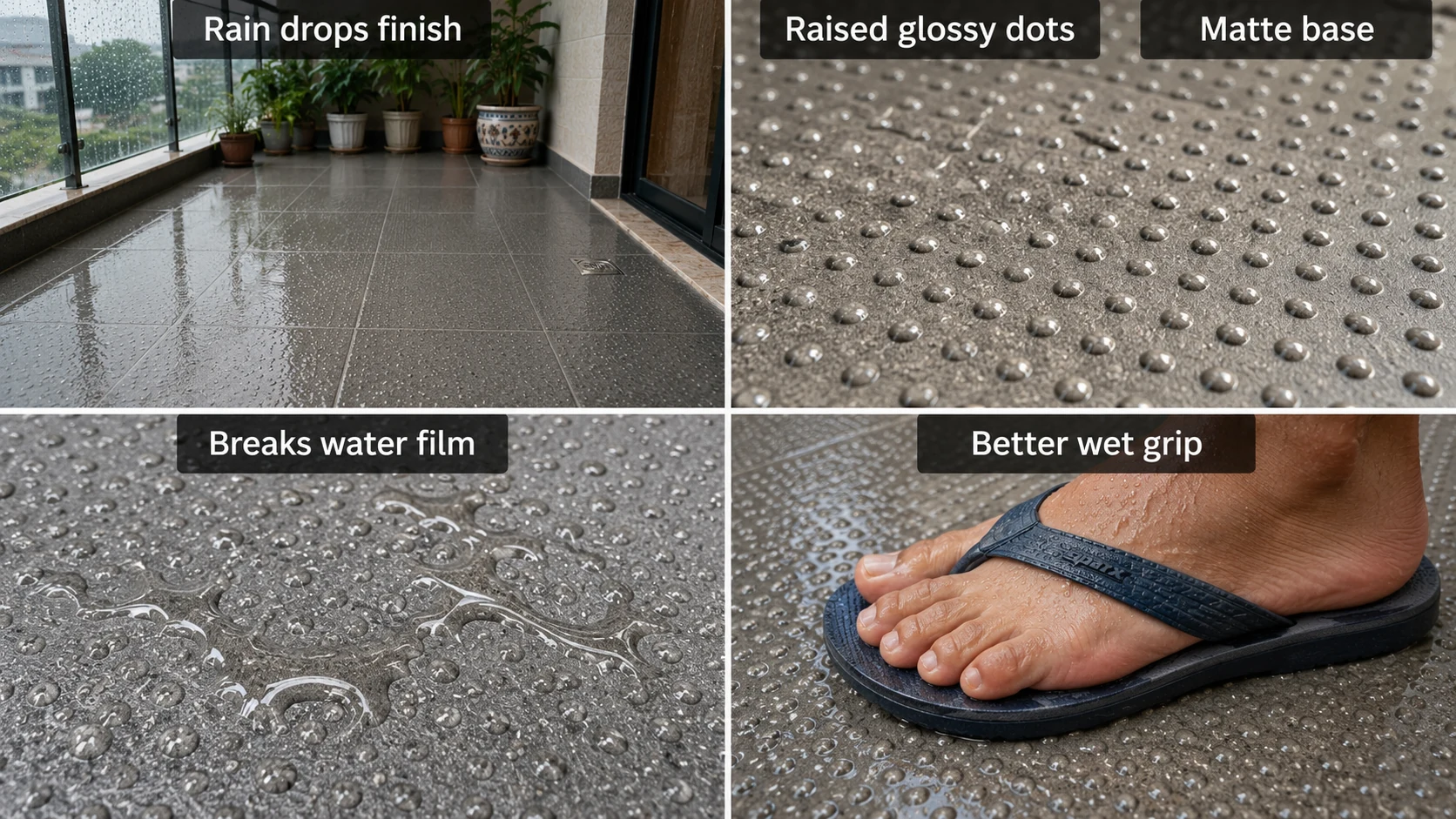
Humidity resistance and wet-floor grip are two completely different properties: A tile can be entirely unaffected by humidity, absorb almost no water, and survive a monsoon-facing balcony for decades, while still being dangerous to walk on when wet. Low water absorption tells you the tile will not degrade. Wet coefficient of friction tells you whether a foot will grip it. These are separate figures on the specification sheet, and a supplier confirming one has not confirmed the other. This matters because glossy vitrified tiles frequently have excellent water absorption figures, which gets presented as suitability for wet areas when it is nothing of the sort. For any floor that gets wet, ask for the wet coefficient of friction specifically, and look for 0.4 as the minimum. |
From The Marketplace
Popular tiles right now
The Home Audit, Zone by Zone
Bathroom
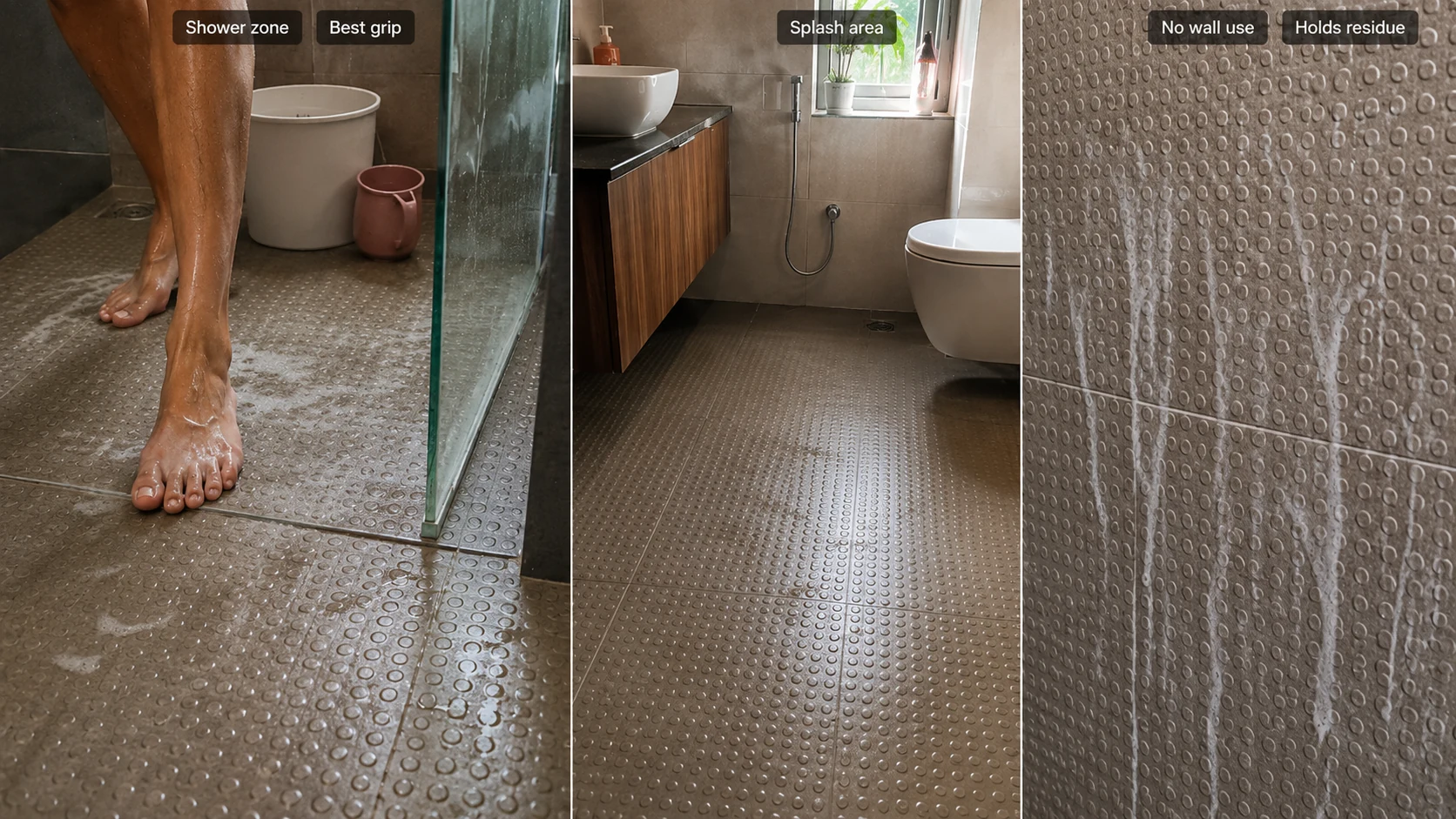
- Shower floor and the area immediately outside it are the highest-value places for this finish in any Indian home. Wet bare feet, soap film and nothing to steady against make this the zone where grip genuinely prevents incidents.
- The rest of the bathroom floor benefits, though less critically, since water reaches it as splash rather than continuous flow.
- Bathroom walls do not need it at all. Grip on a vertical surface serves no purpose, and the dimpled texture will hold soap residue that a smooth glazed wall would shed.
Balcony and Terrace
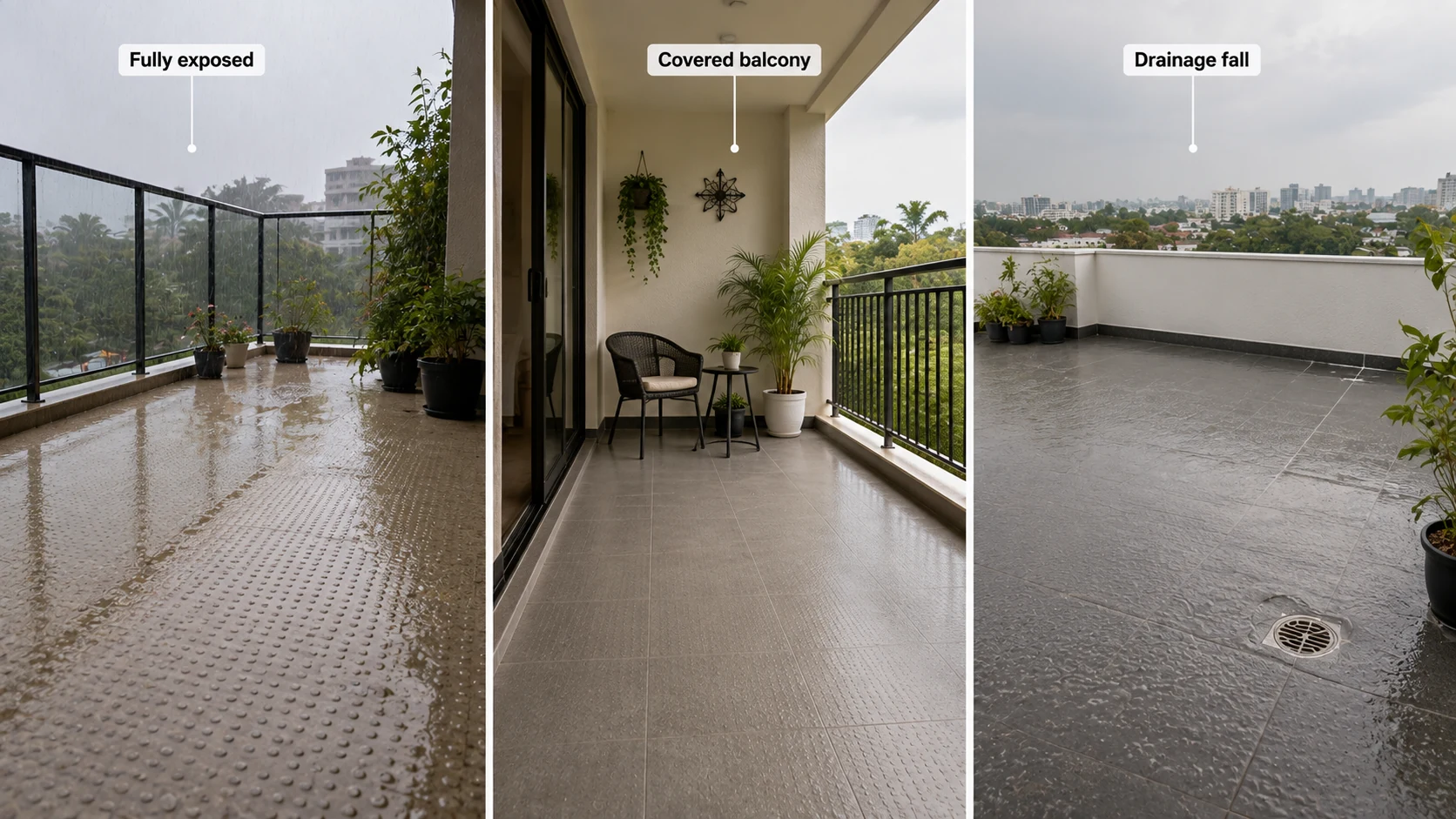
- Fully exposed balconies are the strongest outdoor case, particularly in heavy-monsoon regions where the surface stays wet for extended periods rather than briefly.
- Covered balconies set well back from the rain see far less direct water, and a standard anti-skid matte is usually sufficient.
- Terraces with a drainage fall already shed water quickly, which reduces, though does not eliminate, the need.
Utility and Wash Area
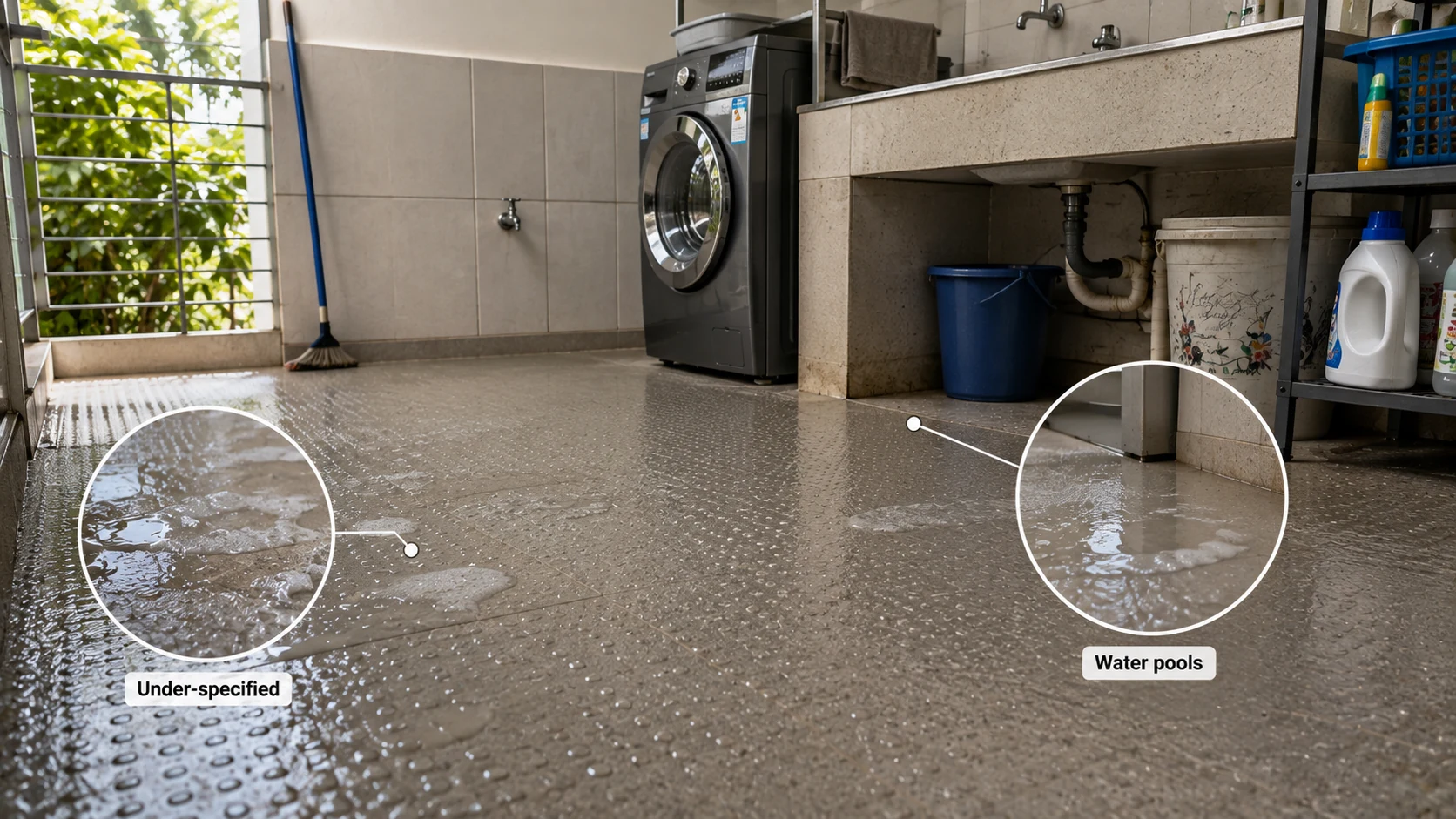
- One of the most under-specified zones in Indian homes. Standing water is routine, detergent film is constant, and people carry heavy wet items across it, which is precisely the combination where a slip does most damage.
- Around the washing machine and sink specifically, where water pools rather than draining immediately.
Kitchen
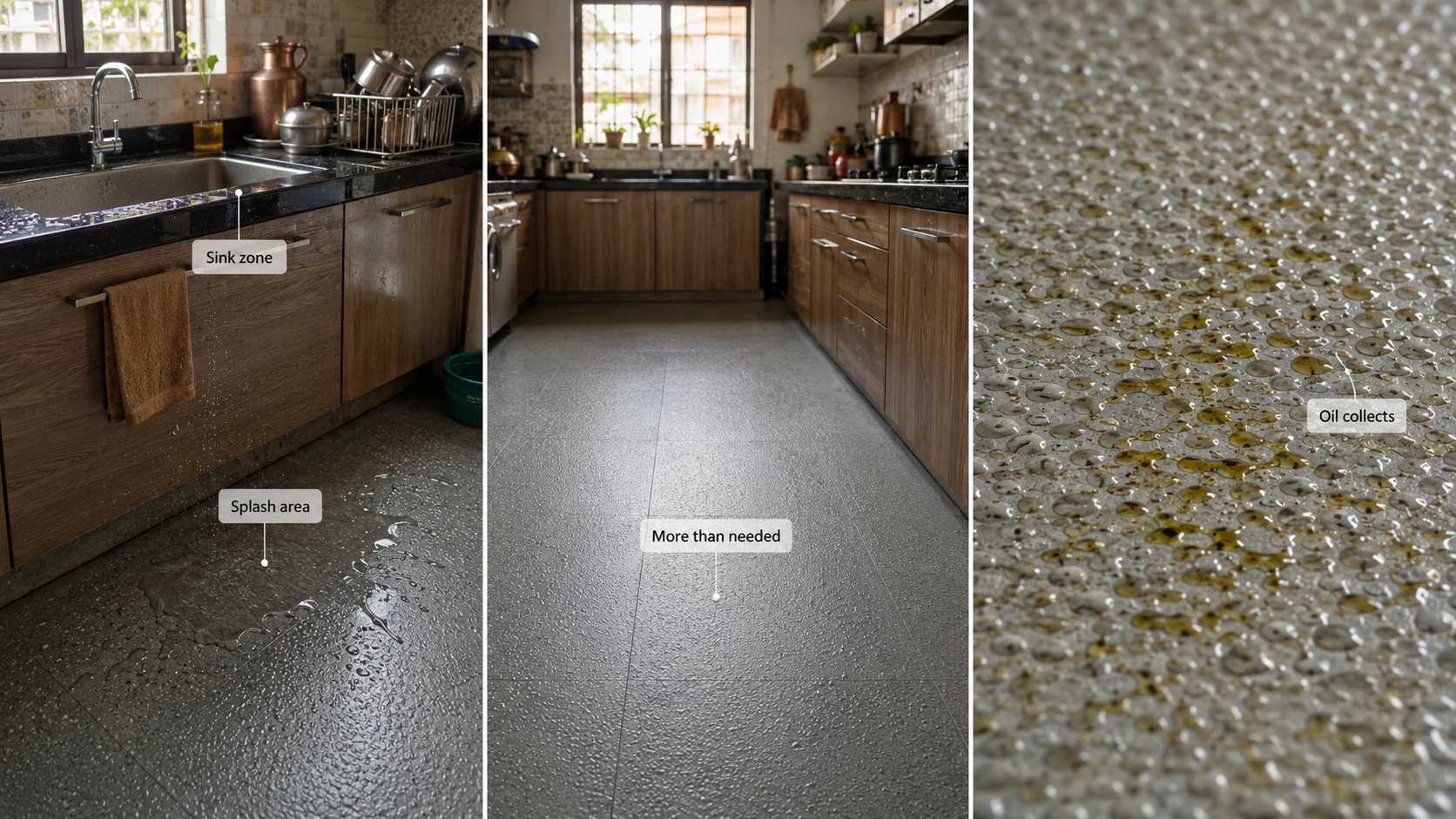
- At the sink, where splash is routine, the finish earns its place.
- Across the general kitchen floor, it is usually more than is needed, and the dimples will collect cooking oil aerosol, which is harder to clean out of a textured surface than off a smooth one.
Outdoor Pathways and Courtyards
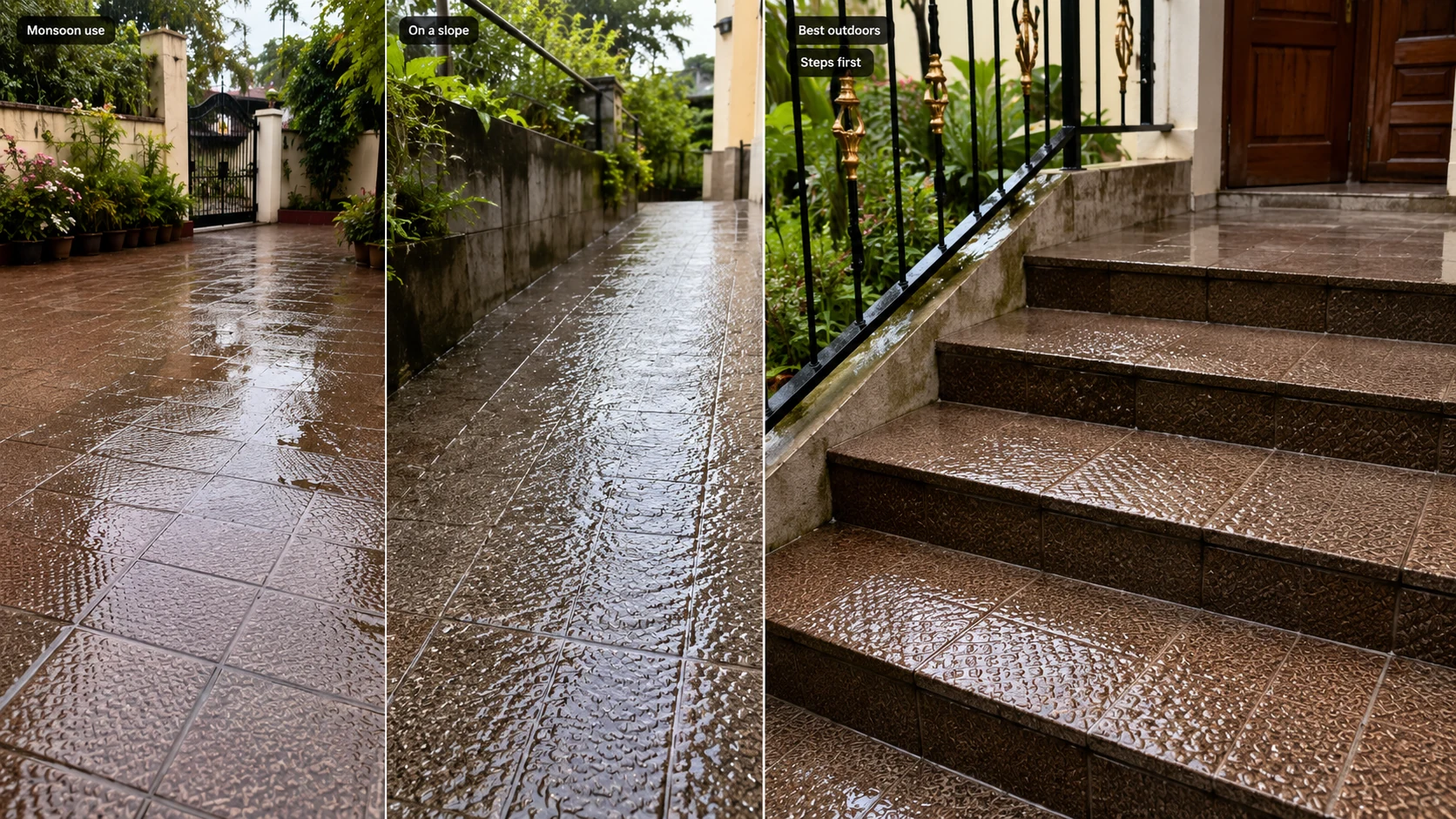
- Genuinely useful in monsoon regions, particularly on a slope or on steps where a slip has further to travel.
- Steps and level changes outdoors are the single highest-value outdoor application, more so than a flat path.
Where It Is Overkill
A guide that recommends a product everywhere is not a guide. These are places the finish adds cost and cleaning effort without adding safety.
| Location | Why It Is Unnecessary |
| Bedroom and living room floors | No water, no grip requirement, and the texture collects dust in a room where a smooth floor is easier to keep clean |
| Any wall, anywhere | Grip serves no purpose vertically, and the recesses hold residue a smooth wall would shed |
| Covered indoor corridors | Dry underfoot, so the texture adds maintenance with no safety return |
| Kitchen floor away from the sink | Occasional spills do not justify a texture that will collect cooking oil aerosol |
| Dry storage and box rooms | No exposure and no traffic pattern that creates risk |
Testing the Floors You Already Have
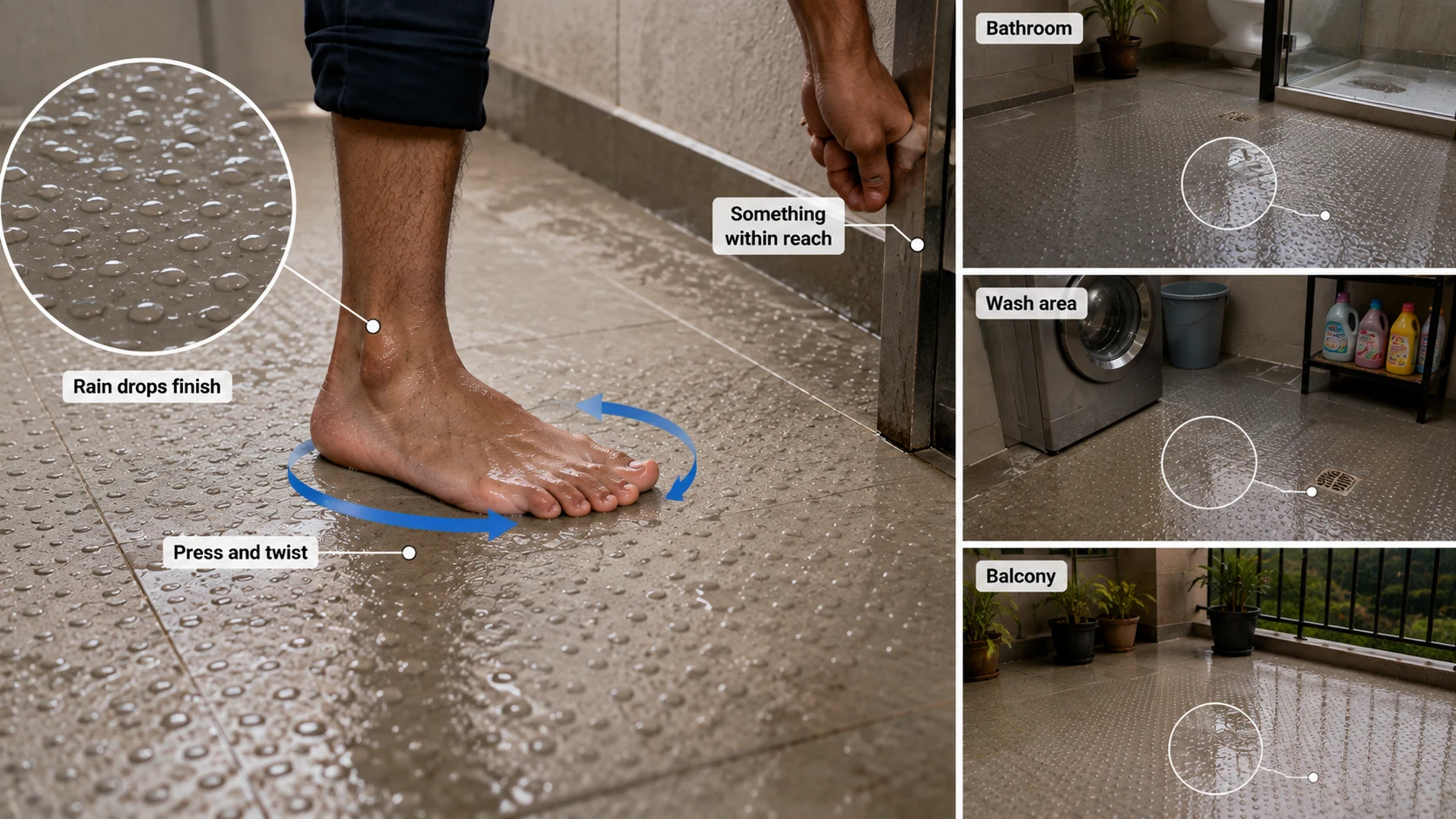
A rough assessment you can do this week, before spending anything: Wet a small area of the floor with plain water, and with clean bare feet press the ball of your foot down and twist gently, keeping your weight on the other foot and something within reach. A floor tile with adequate grip resists the twist noticeably. One that turns easily under a light twist is telling you something useful. Do this in the bathroom just outside the shower, in the wash area, and on the balcony, since those are where the answer matters most. This is a rough indication rather than a measurement, and it will not give you a coefficient figure, but it reliably identifies the floors worth doing something about. |
If an existing floor tests poorly
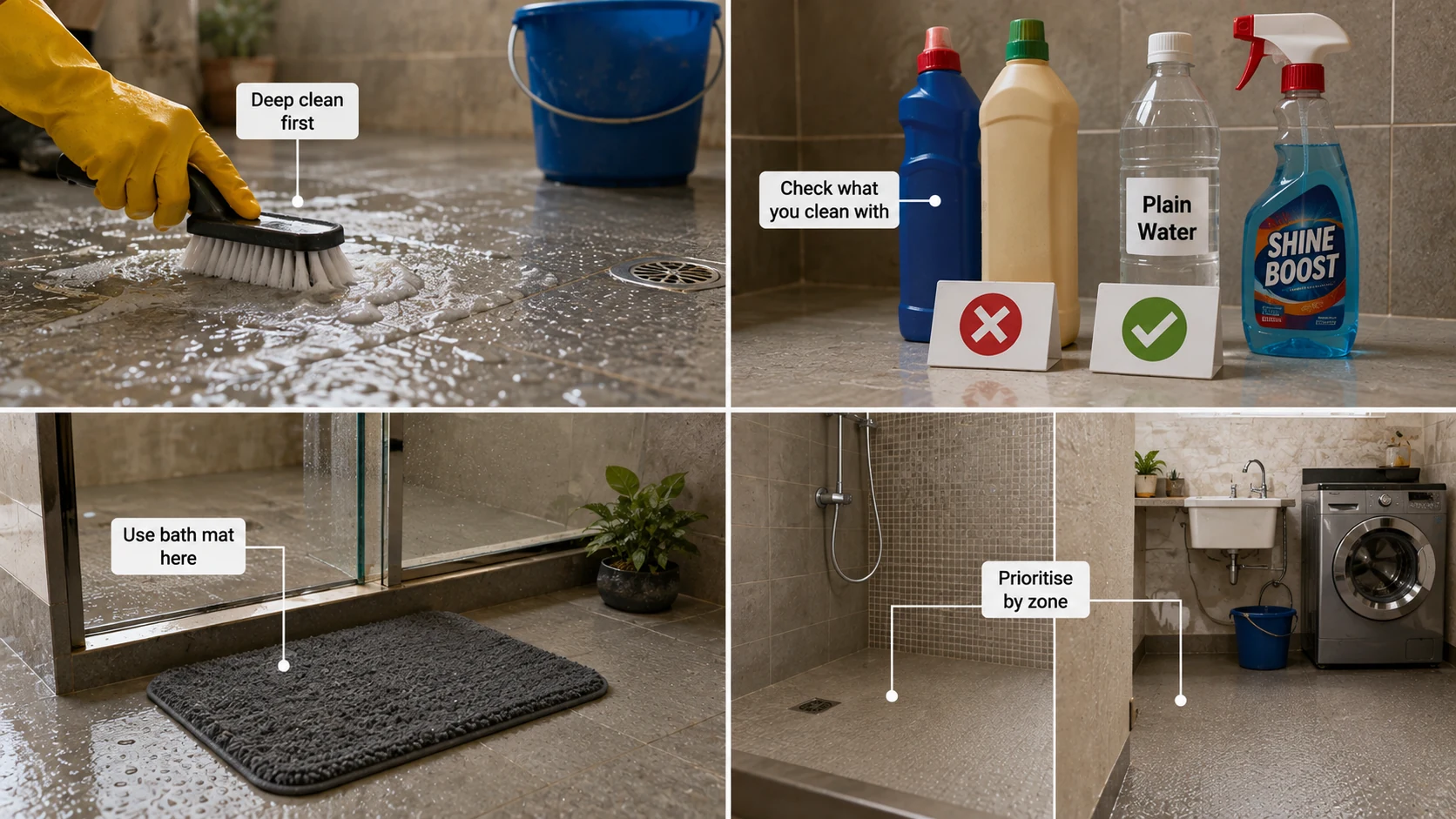
- Deep clean it first and retest. Residue buildup is the most common cause of a floor losing grip, and a thorough clean followed by a plain water rinse restores a surprising amount.
- Check what you are cleaning with. Products that leave a film, including some floor cleaners and anything with added shine, actively reduce grip. Plain water rinsing after cleaning helps considerably.
- Consider a bath mat as an interim measure in the highest-risk spot, immediately outside the shower, while you plan anything more permanent.
- Prioritise by zone rather than replacing everything. Retiling the shower area and the wash area addresses most of the genuine risk in a typical home.
Keeping the Grip It Was Bought For
| Practice | Why It Matters |
| Rinse with plain water after cleaning | Removes the detergent film that would otherwise settle into the recesses and reduce the effect |
| Use a soft brush rather than a flat mop | A mop passes over the recesses, while a brush reaches into them where residue collects |
| Avoid cleaners that leave a shine or coating | Any film that fills the dimples works directly against the mechanism |
| Clean the shower floor more often than the rest | Soap residue accumulates fastest exactly where grip matters most |
| Address oil promptly in kitchen zones | Oil is the hardest residue to remove from a textured surface once it has settled |
Buying Checklist
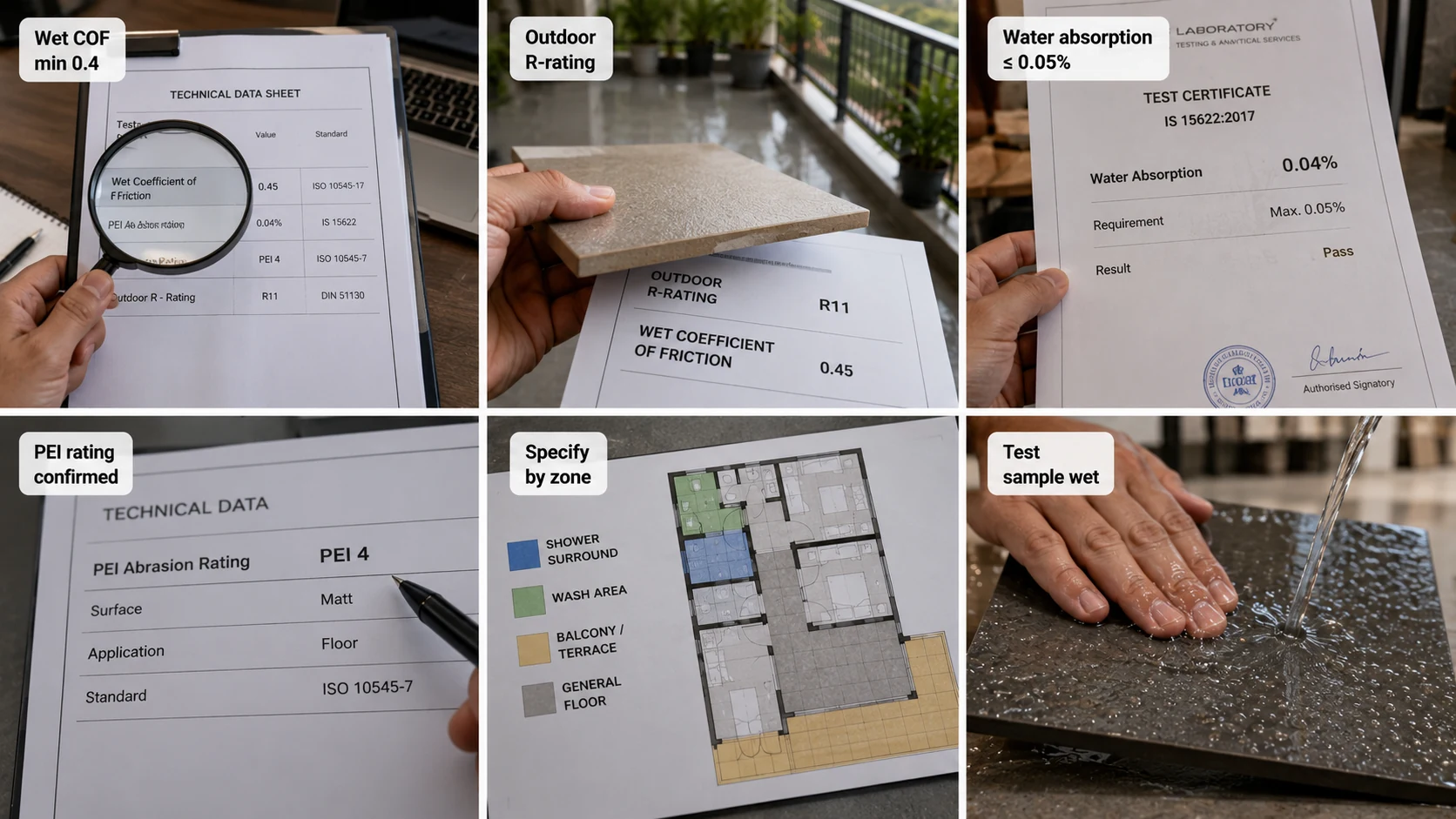
- Ask for the wet coefficient of friction figure specifically, and look for 0.4 as a minimum. Do not accept low water absorption as an answer to this question, because it answers a different one.
- Ask for outdoor R-rating for any exposed balcony, terrace or pathway, in addition to the wet COF figure.
- Confirm water absorption of 0.05% or below for vitrified tile, the benchmark set by the Bureau of Indian Standards under IS 15622, with the test certificate requested.
- Confirm PEI abrasion rating on the technical data sheet: PEI 4 minimum for residential floors and PEI 5 where vehicle load is involved.
- Specify it by zone rather than by room, since the shower surround and wash area justify it while the bedroom and general kitchen floor do not.
- Handle a sample wet. Run water over it and feel the surface, which tells you more in ten seconds than any photograph will.
Specify by Zone on TilesFinders
Anti-skid and textured ranges can be filtered on TilesFinders by finish and application, so you can specify the higher-grip surfaces for the zones that genuinely need them and keep smoother finishes where they are easier to live with.

FAQs
A slip happens when water trapped between the foot and the tile cannot escape and forms a continuous film the foot skates on. The recesses give that water somewhere to go, breaking the film so enough dry contact remains for the foot to grip. The tile itself was never the slippery part.
No, and confusing the two is a common and consequential error. Water absorption tells you whether the tile will degrade. Wet coefficient of friction tells you whether a foot will grip it. Glossy tiles often have excellent absorption figures and poor wet grip.
The shower floor and the area immediately outside it, where wet bare feet, soap film and nothing to steady against combine. The rest of the bathroom benefits less, and the walls do not need it at all.
Usually residue rather than wear. Soap film, cleaner residue and oil settle into the recesses that the mechanism depends on, and once filled, they cannot break up the water film. A thorough clean with a brush, followed by a plain water rinse, restores much of it.
Wet a small area, and with clean bare feet, press the ball of your foot down and twist gently while keeping your weight on the other foot and something within reach. A floor with adequate grip resists the twist noticeably. It is a rough indication, not a measurement, but it identifies floors worth addressing.
No. Bedrooms, living rooms, dry corridors and walls gain nothing from it and are harder to keep clean because of it. Specify it by zone, concentrating on the shower surround, wash area, exposed balcony and outdoor steps.
At the sink, yes. Across the general kitchen floor, it is usually more than needed, and cooking oil aerosol settles into the recesses and is considerably harder to remove from a textured surface than from a smooth one.
Wet coefficient of friction of 0.4 minimum, plus an outdoor R-rating appropriate to the exposure. In heavy-monsoon regions where the surface stays wet for extended periods, specify the higher end rather than the minimum.
Partially. Deep cleaning to clear residue, switching away from cleaners that leave a film, and rinsing with plain water after cleaning all help. For the highest-risk spot immediately outside a shower, a bath mat is a reasonable interim measure while you plan anything permanent.


See our tile guides first
Set TilesFinders as a preferred source and our buying guides surface ahead of the rest for you.
Add as preferred sourceTakes one tap. Nothing to install.
What Readers Say
I was about to redo my parking area with the wrong tile size until I read this. The layout comparisons saved me from a costly mistake.
We reference TilesFinders guides while briefing clients on material selection. The size and pattern breakdowns are accurate and easy to explain visually.
On site, I get asked about grout spacing all the time. This article gave me a solid reference I now share with my team before every job.
Finally a guide that doesn't just push generic advice. The oil stain removal steps actually worked on our clubhouse driveway tiles.
I run a small construction firm and now send this link to clients directly when they ask about entrance tile sizing. Saves me an hour of explaining.
Good practical detail, though I wish there were more examples for compact apartment entrances specifically, not just villas.
My mother-in-law wanted marble, I wanted vitrified. This blog gave us the neutral comparison we needed to actually decide together.
Detailed without being overwhelming. I appreciated that it covered both cost and maintenance, not just the aesthetics.
Used the algae and hard water removal tips on our terrace tiles after the monsoon. Worked better than what our regular cleaner was doing.
As someone who sources tiles for multiple builder projects, I find these comparisons genuinely useful for vendor conversations, not just consumer content.
Recommended this to a client who kept second-guessing the entrance design. The small vs large layout section settled the debate instantly.
Straightforward and honest, no unnecessary jargon. Would like to see a similar breakdown for outdoor pool-deck tiles next.
We've bookmarked several TilesFinders guides for our design handbook. Reliable source when clients want data, not just opinions.
Two paths, one marketplace.
Get free quotes from verified suppliers.
Share your room, budget, and style. Suppliers in Morbi respond within hours.
Get Free QuotesList your business, reach real buyers.
Put your showroom in front of homeowners searching for tiles right now.
List Your Business