Showroom Tiles in India: Design, Material & Installation Guide for Retail Spaces
Explore the best showroom tiles in India for retail spaces. Compare materials, design ideas, installation tips, and 2026 pricing to create attractive, durable showroom flooring.
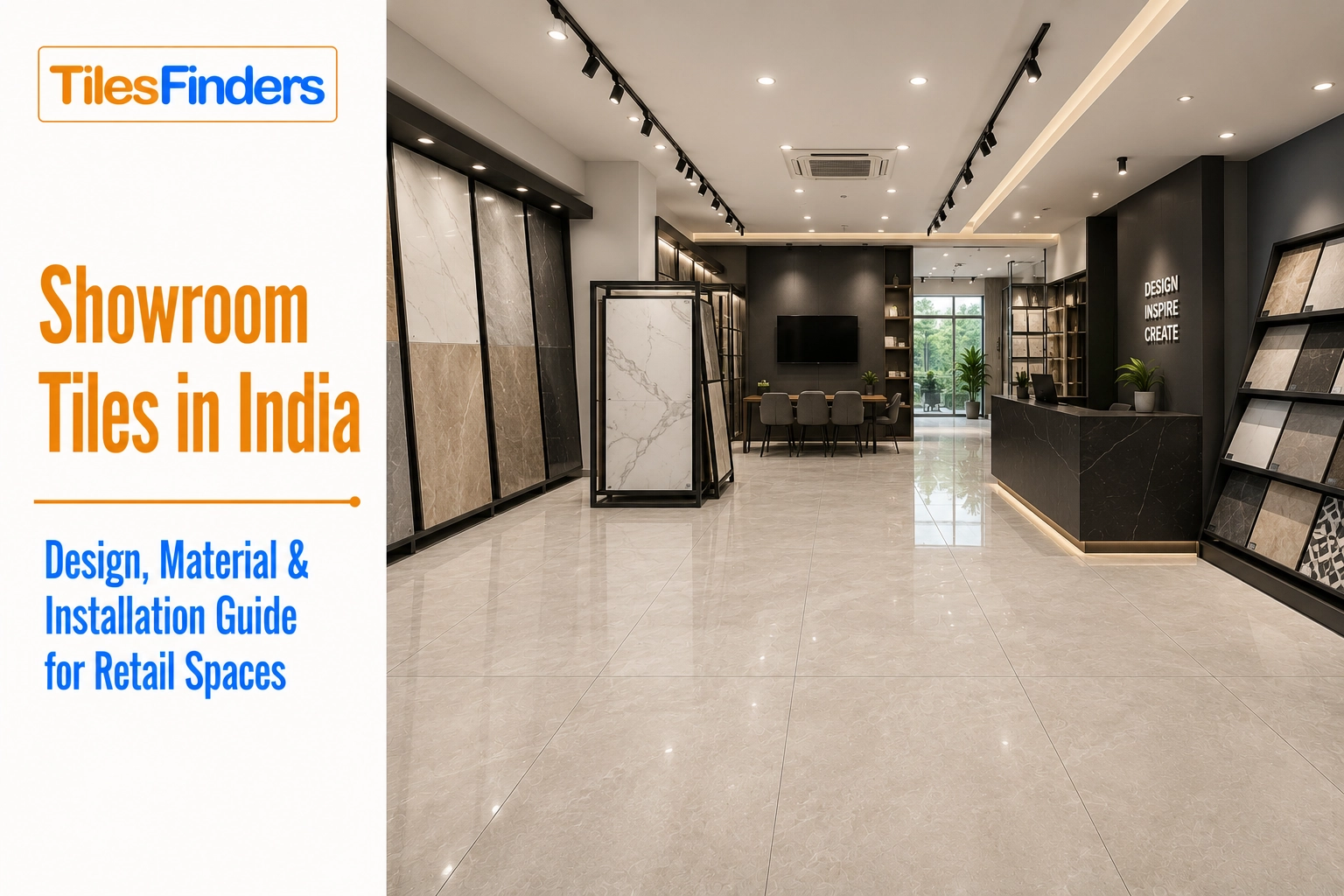
- What the Floor Is Doing Depends on What You Sell
- Material Picks by Showroom Type
- Showroom Floor Design Directions for Indian Retail
- Installation Decisions That Affect the Finished Showroom Floor
- Showroom Tile Price Guide India 2026
- Why Morbi and Gujarat Tiles Meet the Visual and Structural Demands of Indian Retail
- Specify Your Showroom Floor with Confidence
Showroom flooring should balance aesthetics, durability, and brand identity. Large-format GVT and full-body vitrified tiles are the preferred choices for most Indian retail spaces due to their performance and design versatility. From jewellery and apparel stores to automobile and electronics showrooms, selecting the right tile material, finish, and installation method ensures a professional retail environment that attracts customers and withstands daily foot traffic.
In most commercial spaces, the floor is chosen to withstand foot traffic. In a showroom, it has to do that and more: it sets the tone for the products displayed above it, signals the price bracket of the brand, and guides customers through a space without a single sign or instruction.
A jewellery showroom floor in Mumbai that reads cold and institutional pushes customers toward a cautious, transactional mindset. The same space, with warm, marble-look floor tiles in a large format, reads as both aspirational and relaxed, which is what jewellery retail needs. Neither floor costs more per square foot than the other. The difference is in the specification decision, not the budget.
This guide covers how to translate a retail brand brief into a tile specification, which materials hold up under the footfall and cleaning demands of Indian retail, and what installation choices affect the final result as much as the tile itself.
What the Floor Is Doing Depends on What You Sell
Showroom tile choices are not universal because the floor performs a different function depending on the retail category. Before material or design decisions, the first question is what the floor needs to communicate.
Jewellery and luxury retail:
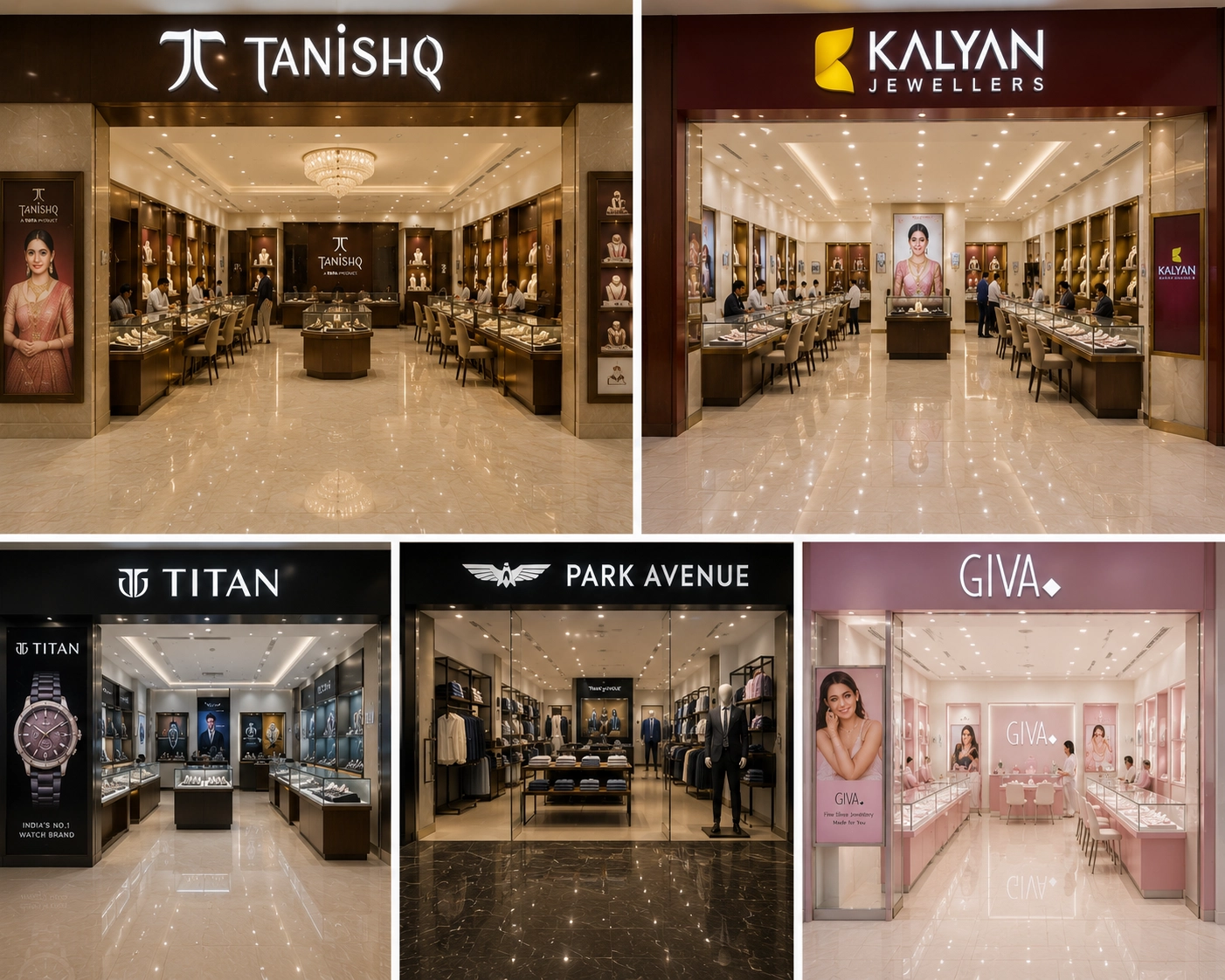
The floor is a backdrop for high-value display cases. It needs to read as premium without competing with the product. Large format marble-look or solid cream GVT in matte or sugar finish creates the right register. Busyness in the floor pattern fights the product.
Automobile and vehicle showrooms:
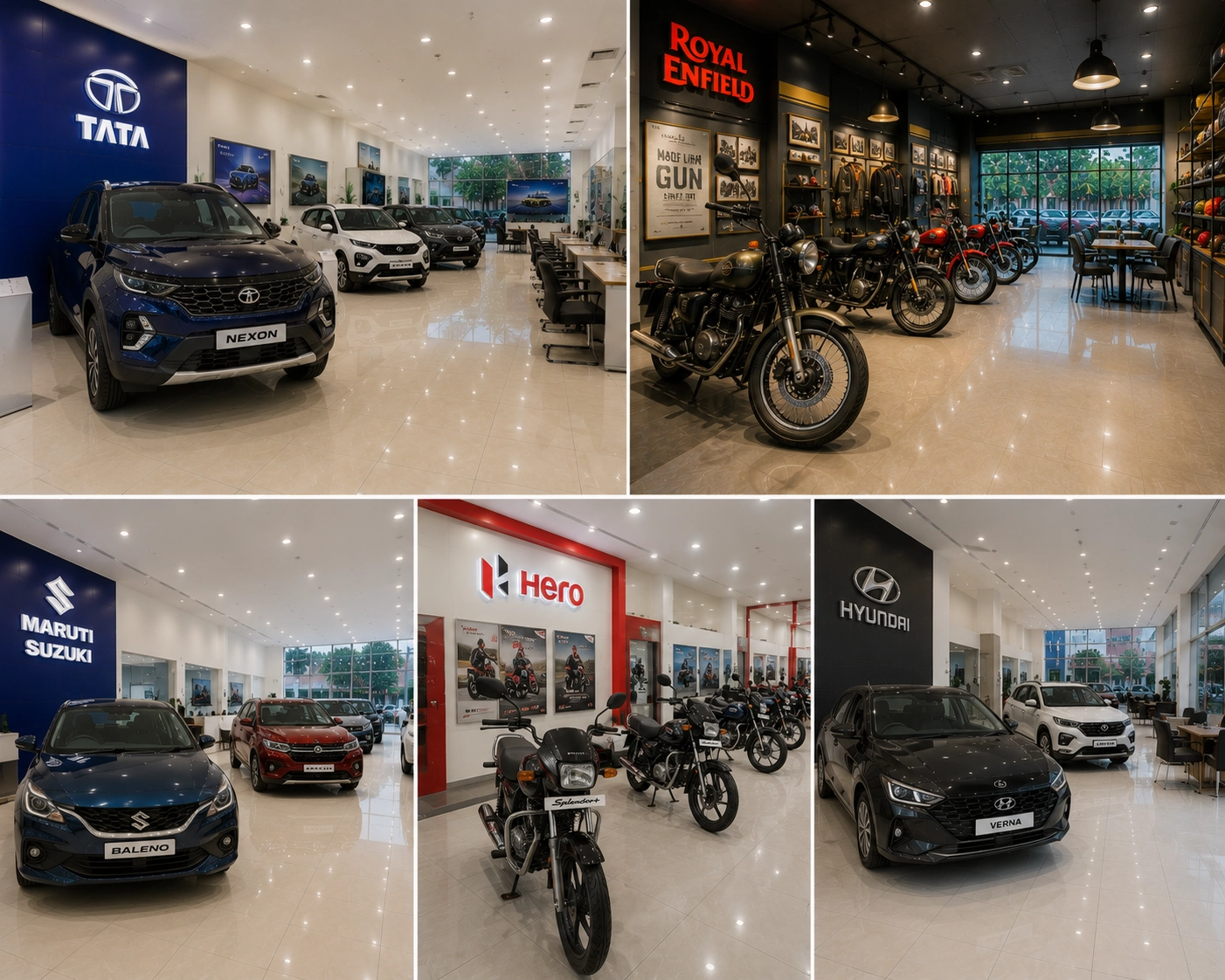
The floor needs to carry the visual weight of large products. Dark or mid-tone neutral tiles in 800x1600 mm or larger make cars and two-wheelers read as the hero. The floor also needs to handle tyre rubber and oil drip without permanent staining, which means GHR or full body vitrified with documented stain resistance.
Apparel and lifestyle retail:
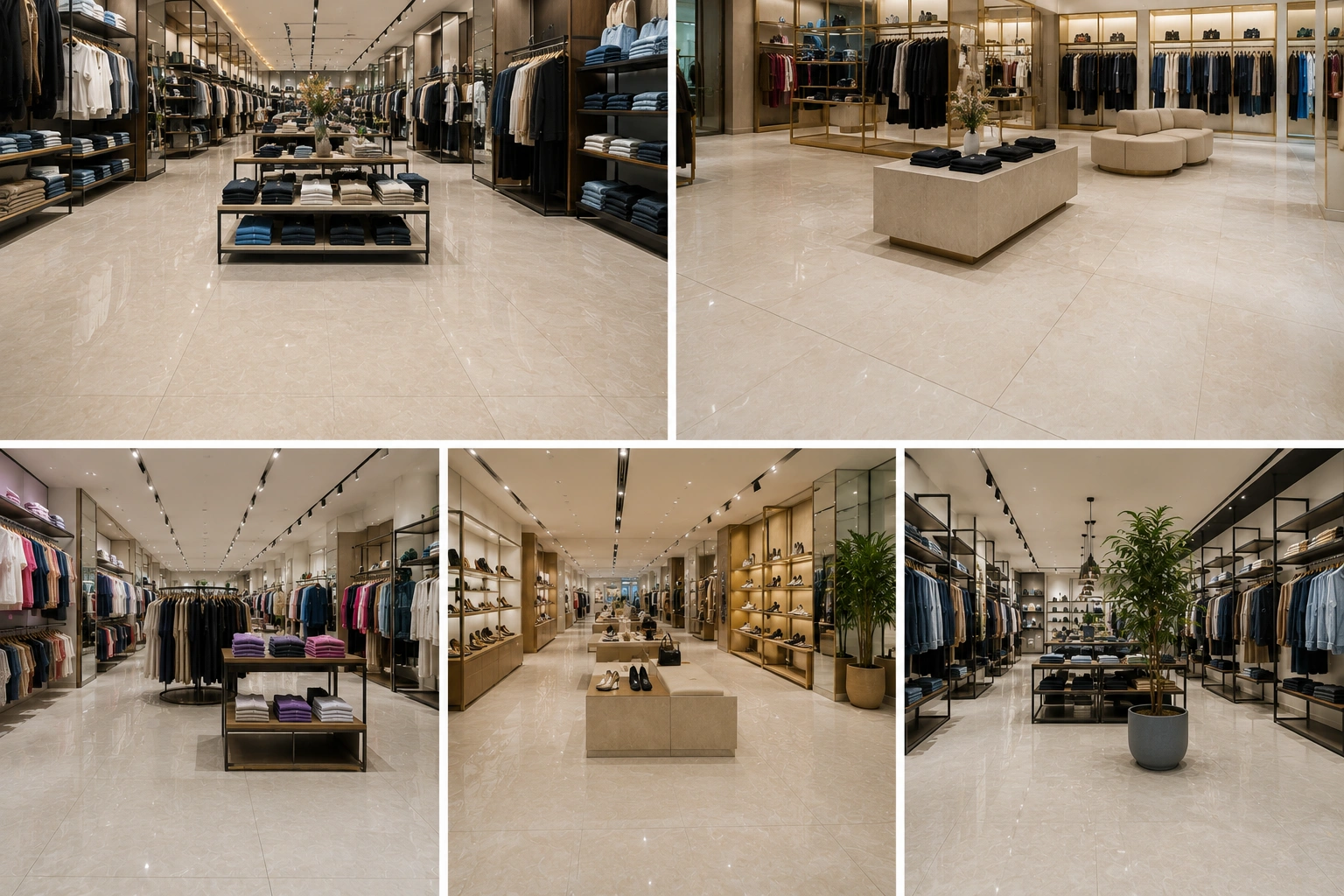
Brand personality lives on the floor here more than in any other retail type. A fast-fashion brand uses bold patterns or colours. A premium Indian ethnic brand uses a warm stone or terracotta-look. A contemporary international brand uses minimal concrete-look in large format. The floor is part of the visual merchandising, not separate from it.
Electronics and tech retail:
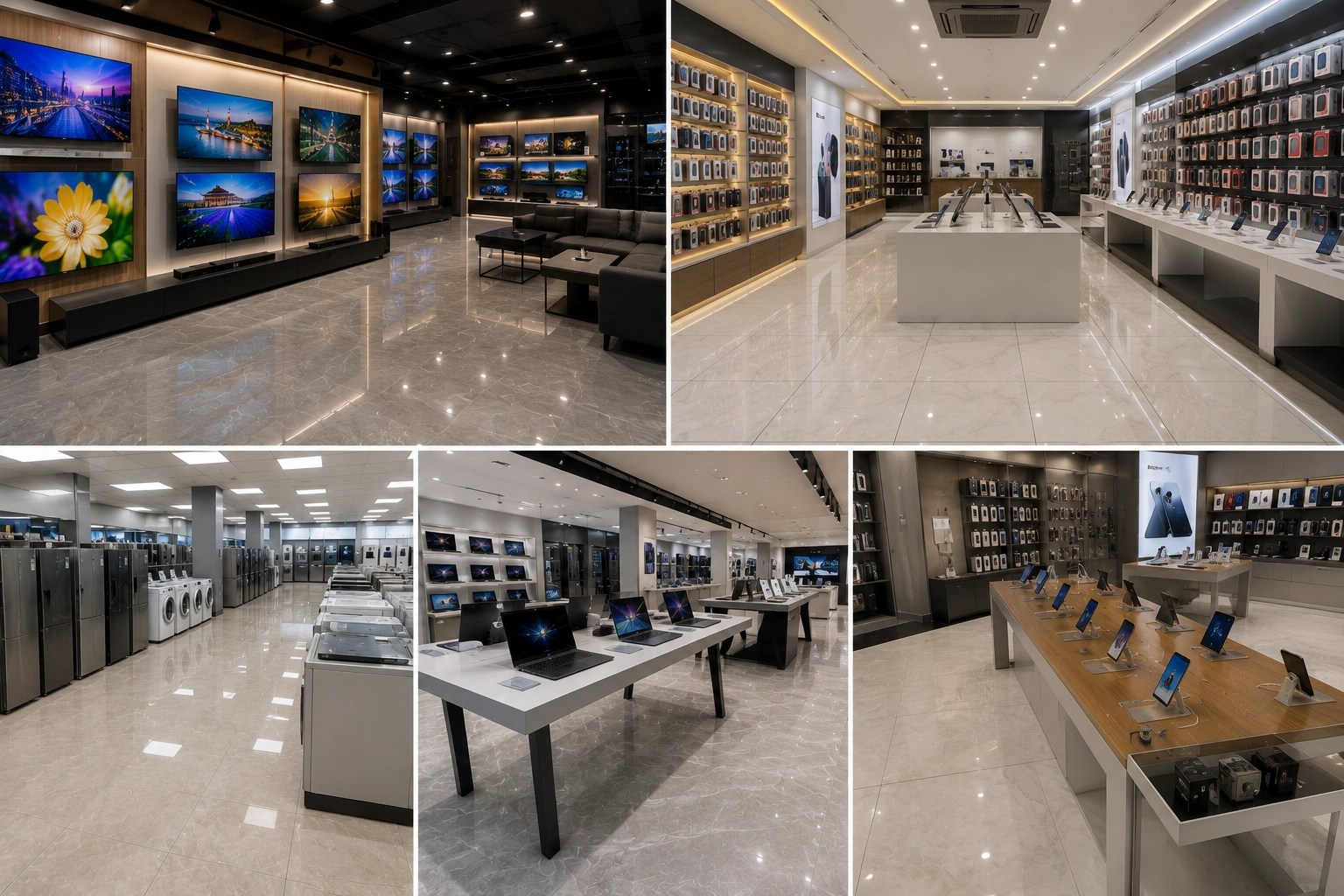
Highly functional. The floor carries heavy foot traffic, trolley movement for display units, and frequent rearrangement of merchandise fixtures. PEI 5 full body vitrified in a neutral matte is the standard because it needs to look consistent regardless of how the store is reconfigured.
Furniture and home decor showrooms:
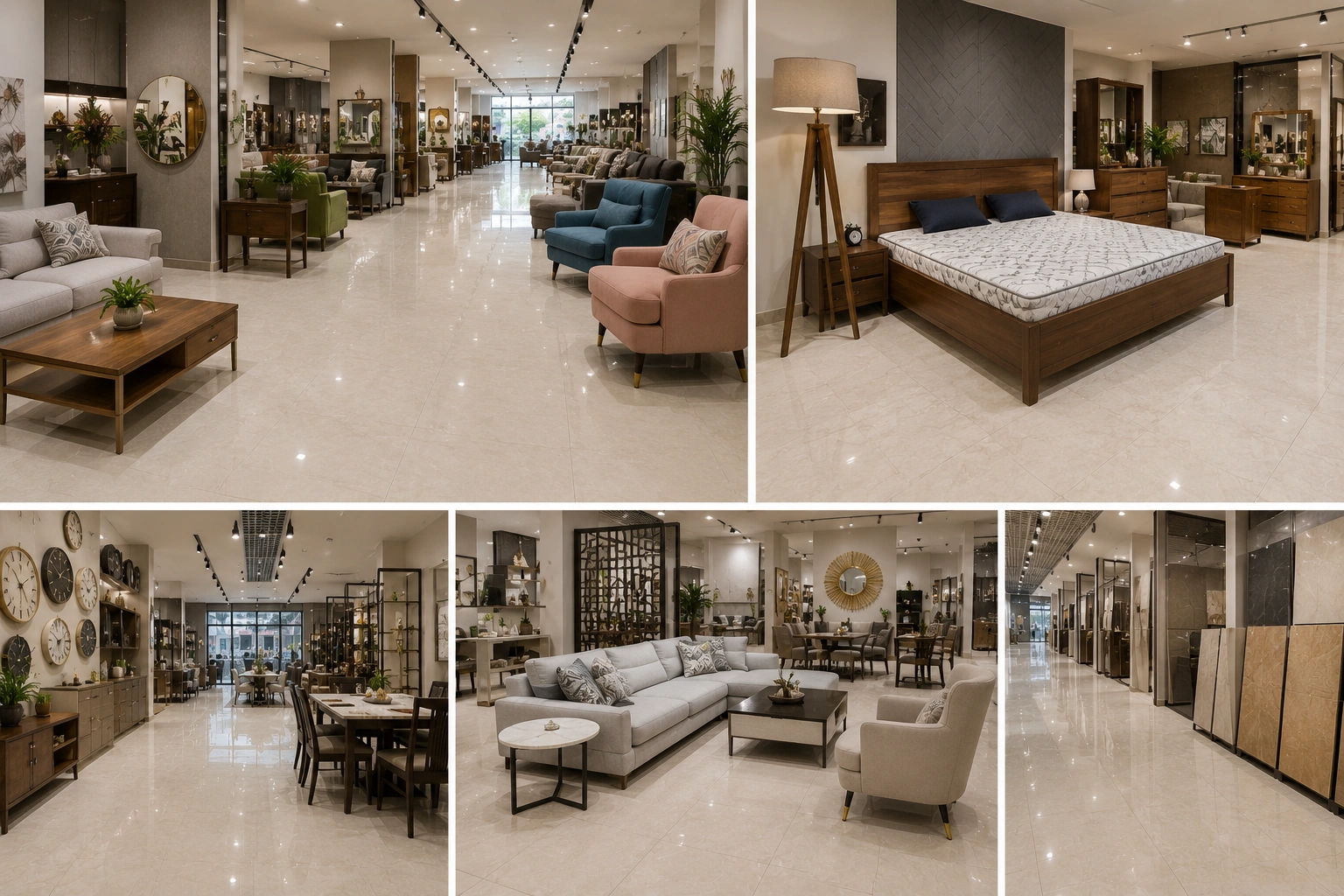
The floor is a direct part of the product demonstration. Customers need to visualise a tile, rug, or sofa against the existing floor, which means the showroom floor should not compete with the display. A neutral, flat, large-format matte tile is almost always the right choice here.
Tile and building material showrooms:
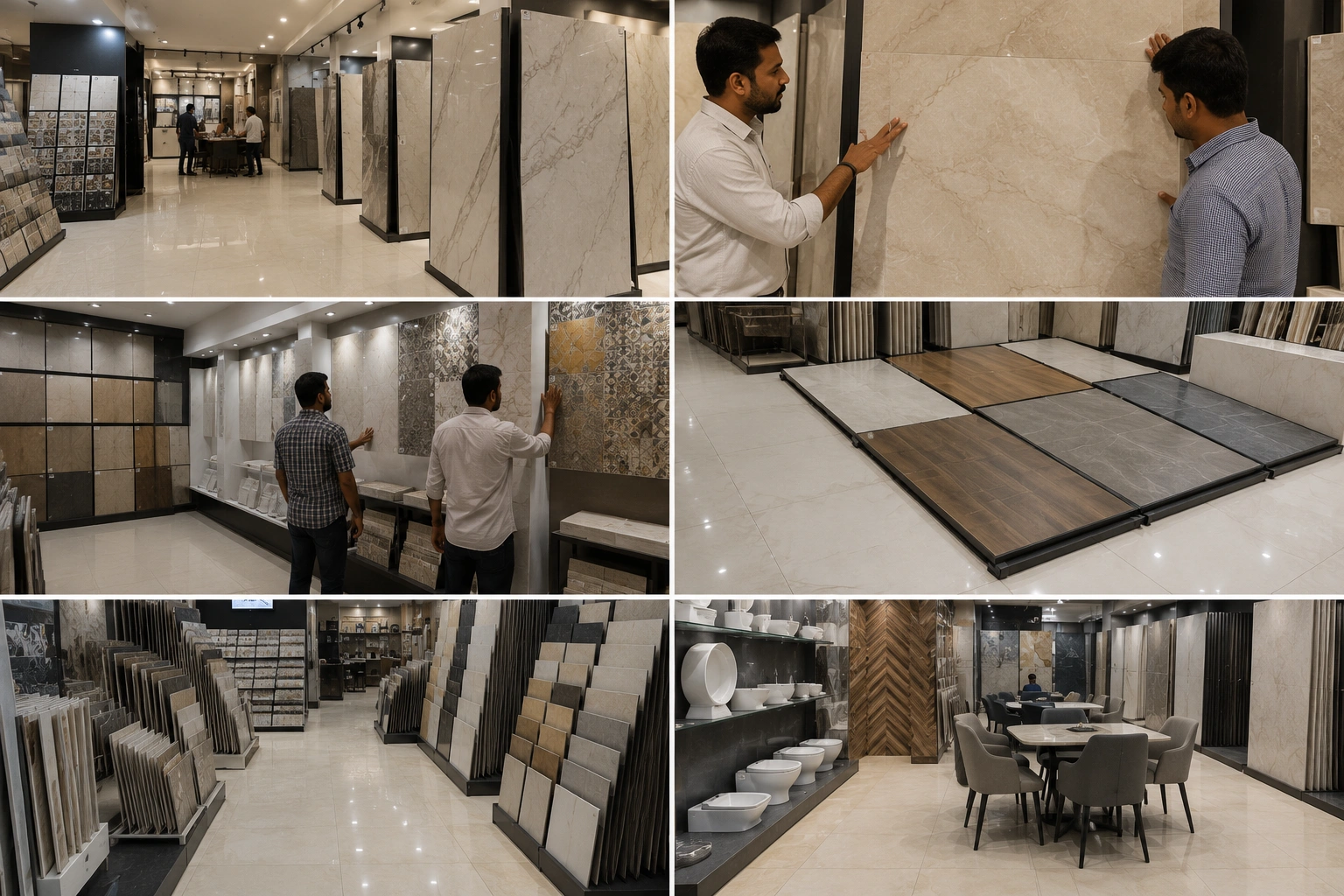
Meta: the floor is the product catalogue. Display zones should carry the actual products being sold. Common-area floors in tile showrooms typically use a neutral GVT that does not compete with the display tiles being considered by customers.
Brand-to-floor principle: Before specifying a single tile, write one sentence describing what the showroom floor should make a customer feel in the first 10 seconds. That sentence is more useful than any reference image, because it tells you whether you need warm or cool, busy or quiet, light or dark, large format or small.
Material Picks by Showroom Type
The four materials in the running for Indian showroom floors are GVT, full-body vitrified, ceramic, and natural stone. Each has a different role.
GVT for Design-Led Showrooms
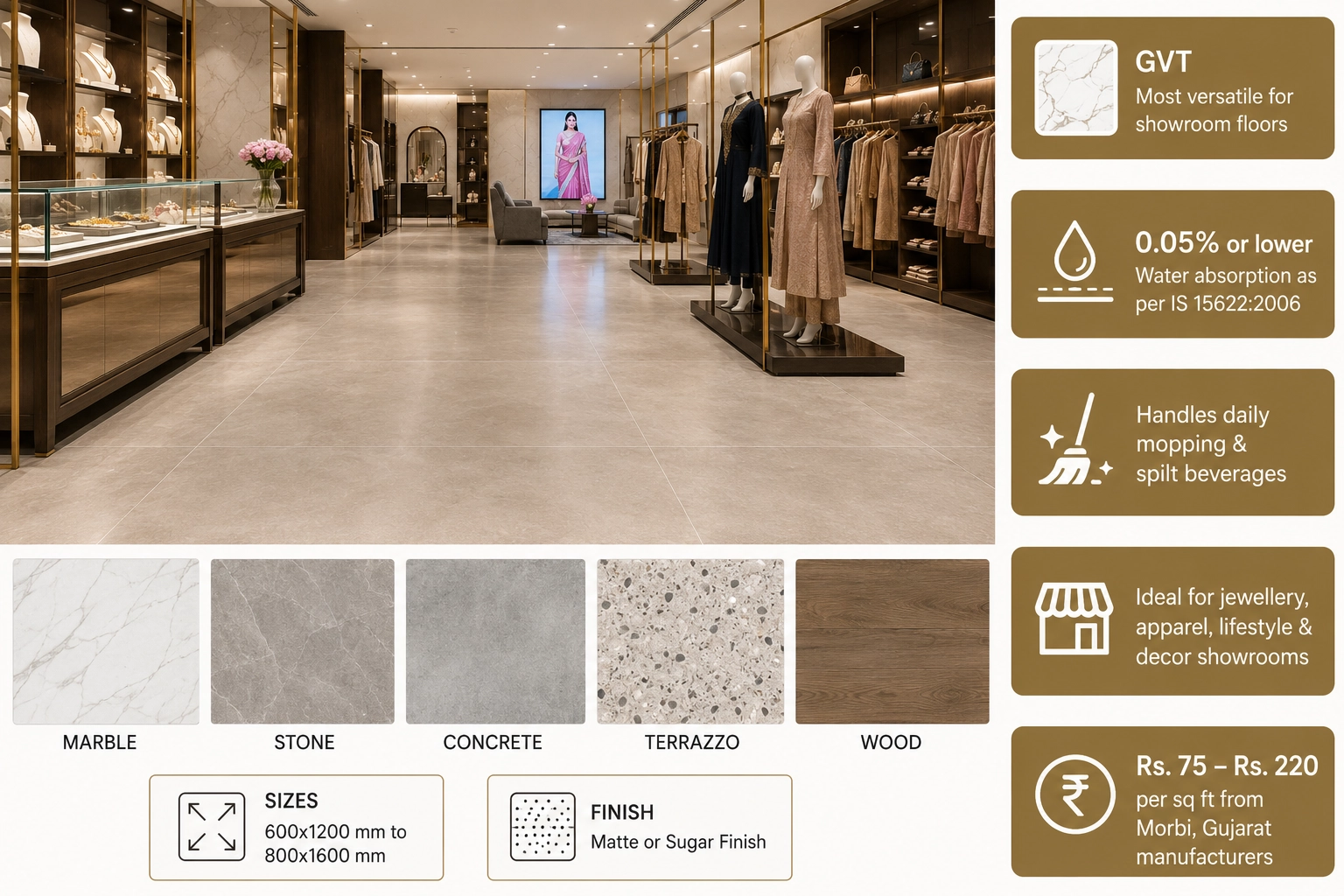
GVT is the most versatile material for showroom floors because its printed glaze layer can replicate any surface, marble, stone, concrete, terrazzo, or wood, at a consistent quality that natural materials cannot guarantee batch to batch. Water absorption at 0.05% or lower under IS 15622:2006 means it handles daily mopping and spilt beverages in a retail environment without staining the tile body.
For jewellery, apparel, lifestyle, and decor showrooms where the floor carries a specific brand signal, GVT in 600x1200 mm to 800x1600 mm size, matte or sugar finish, is the default recommendation. Price: Rs. 75 to Rs. 220 per sq ft from Morbi, Gujarat manufacturers.
Full Body Vitrified for High-Traffic and Vehicle Showrooms
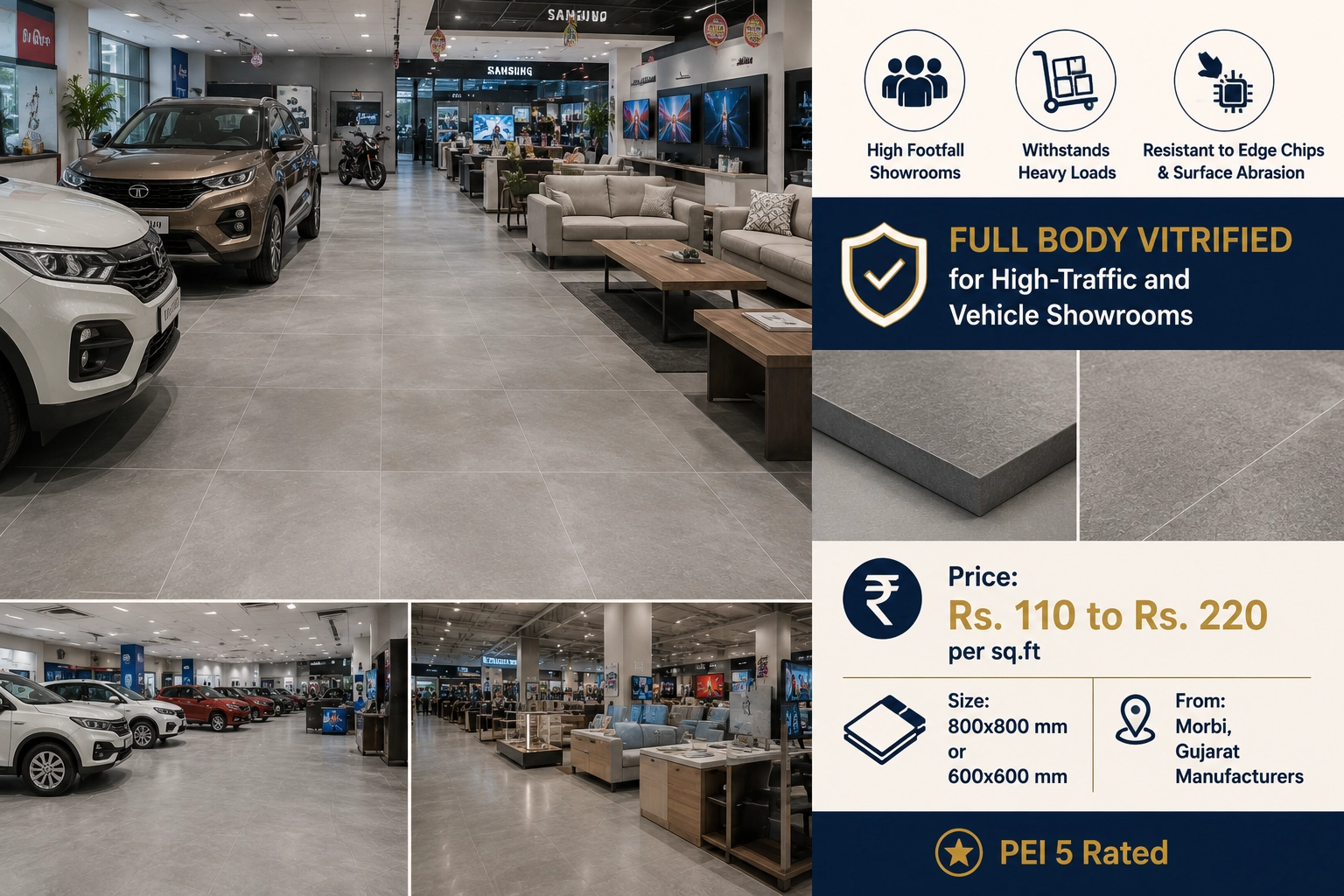
Automobile showrooms, electronics retailers, and large-format furniture stores carry footfall and load types that GVT's glaze layer can show wear over the years. Full body vitrified carries colour and structural integrity through the tile thickness, meaning edge chips in high-traffic zones and surface abrasion from trolley movement do not create a visible deterioration the way they do on a GVT with a worn glaze.
Price: Rs. 110 to Rs. 220 per sq.ft for 800x800 mm or 600x600 mm formats from Morbi, Gujarat manufacturers. PEI 5 rated.
Natural Stone for Ultra-Premium Retail
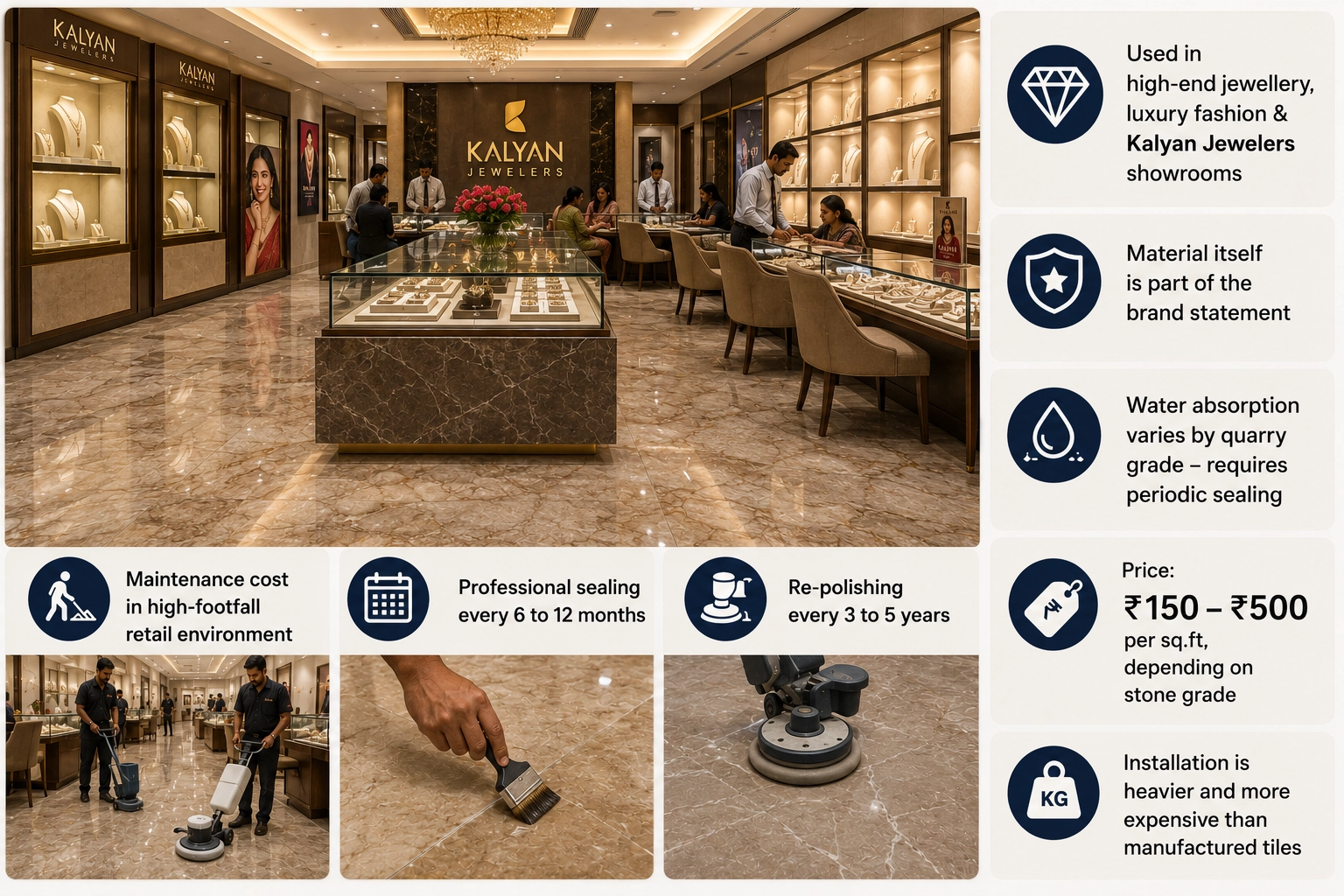
Natural marble or granite is used in high-end jewellery, luxury fashion, and heritage-brand showrooms where the material itself is part of the brand statement, and where the budget and maintenance capacity exist to support it. Water absorption on natural stone varies by quarry grade and requires periodic sealing. Maintenance cost in a high-footfall retail environment, professional sealing every 6 to 12 months and re-polishing every 3 to 5 years, should be factored into the project cost before specifying.
Price: Rs. 150 to Rs. 500 per sq.ft, depending on stone grade. Installation is heavier and more expensive than manufactured tiles.
Ceramic Tiles: Walls Only in Showroom Contexts
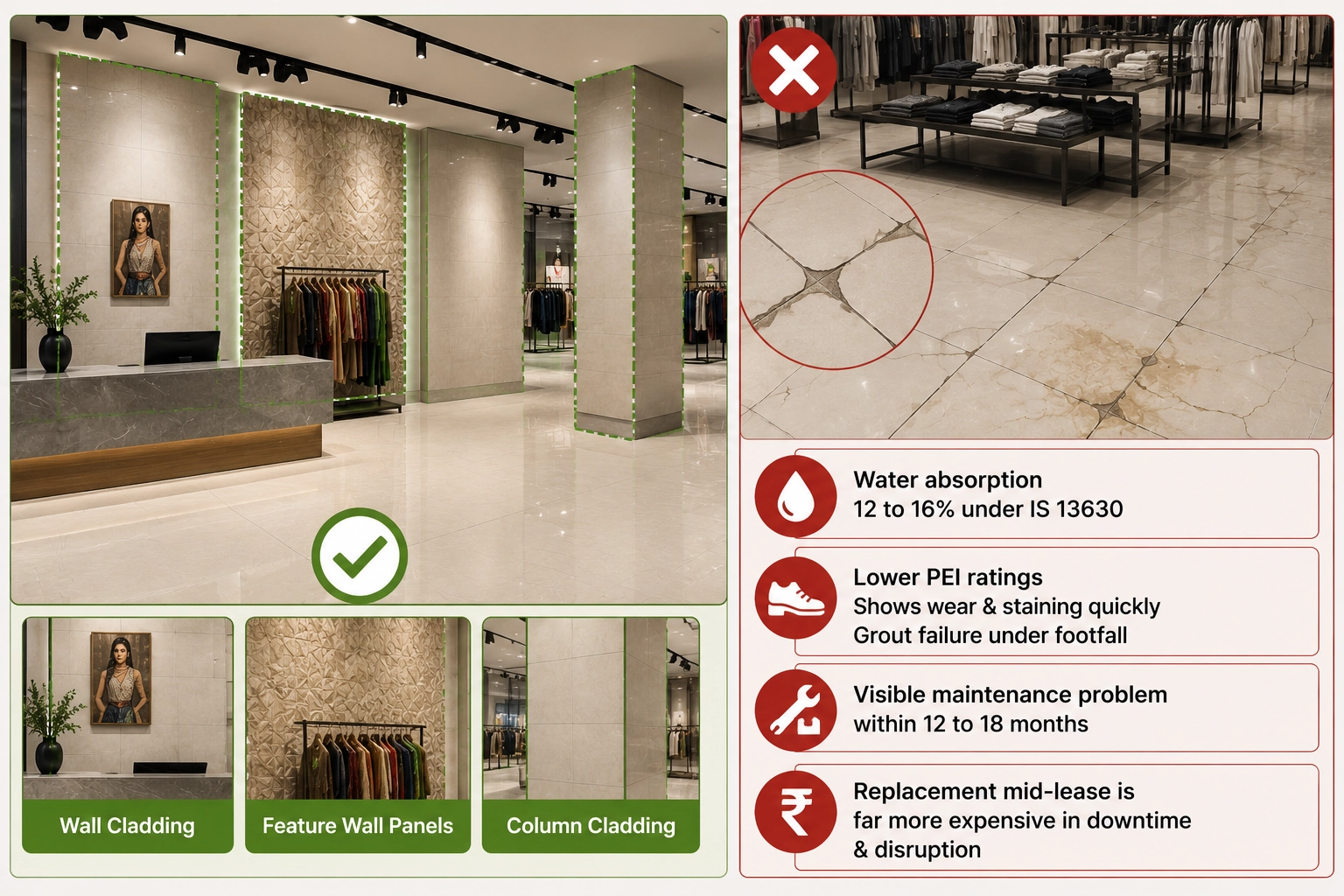
Ceramic tiles are not suitable for showroom floors. Water absorption at 12 to 16% under IS 13630, combined with lower PEI ratings, means they show wear, staining, and grout failure quickly under retail footfall. Their correct application in a showroom is wall cladding, feature wall panels, and column cladding, where lower floor-load is not a factor.
Caution: Specifying ceramic tiles on a showroom floor to save on material cost creates a visible maintenance problem within 12 to 18 months. Replacement mid-lease in a retail space is significantly more expensive in downtime and disruption than the difference in day-one material cost between ceramic and GVT.
Showroom Floor Design Directions for Indian Retail
The Neutral Anchor
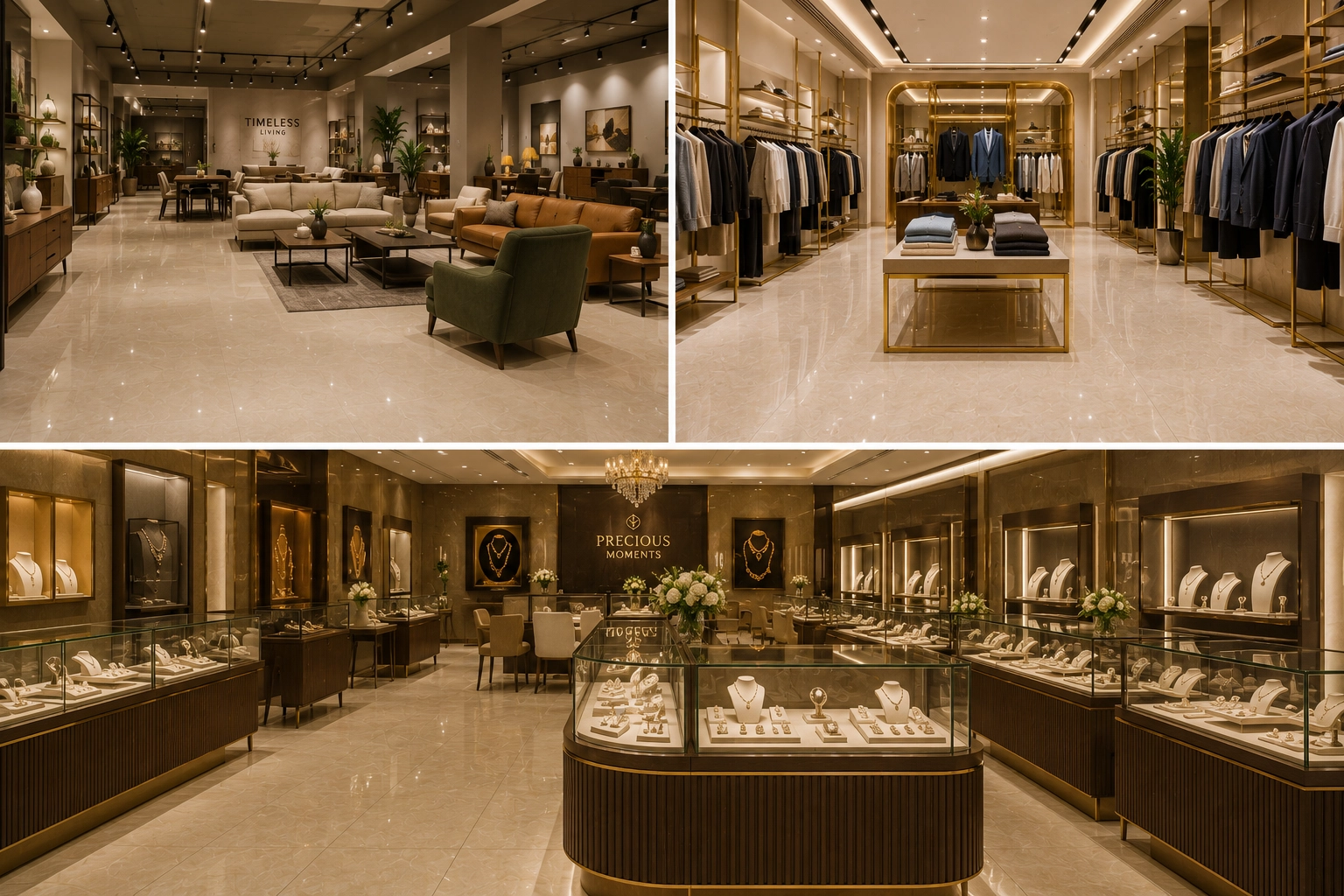
A large-format off-white, light cream, or warm grey matte GVT tile in 800x1600 mm or 600x1200 mm. Zero pattern, one tone, minimal grout lines. Works for furniture showrooms, high-end apparel, jewellery, and any brand that wants the product to do the visual work. This is the most widely used showroom floor design in Indian premium retail for a reason: it never looks wrong,g and it never competes.
Price: Rs. 90 to Rs. 180 per sq.ft. Morbi and Gujarat origin.
The Stone Statement
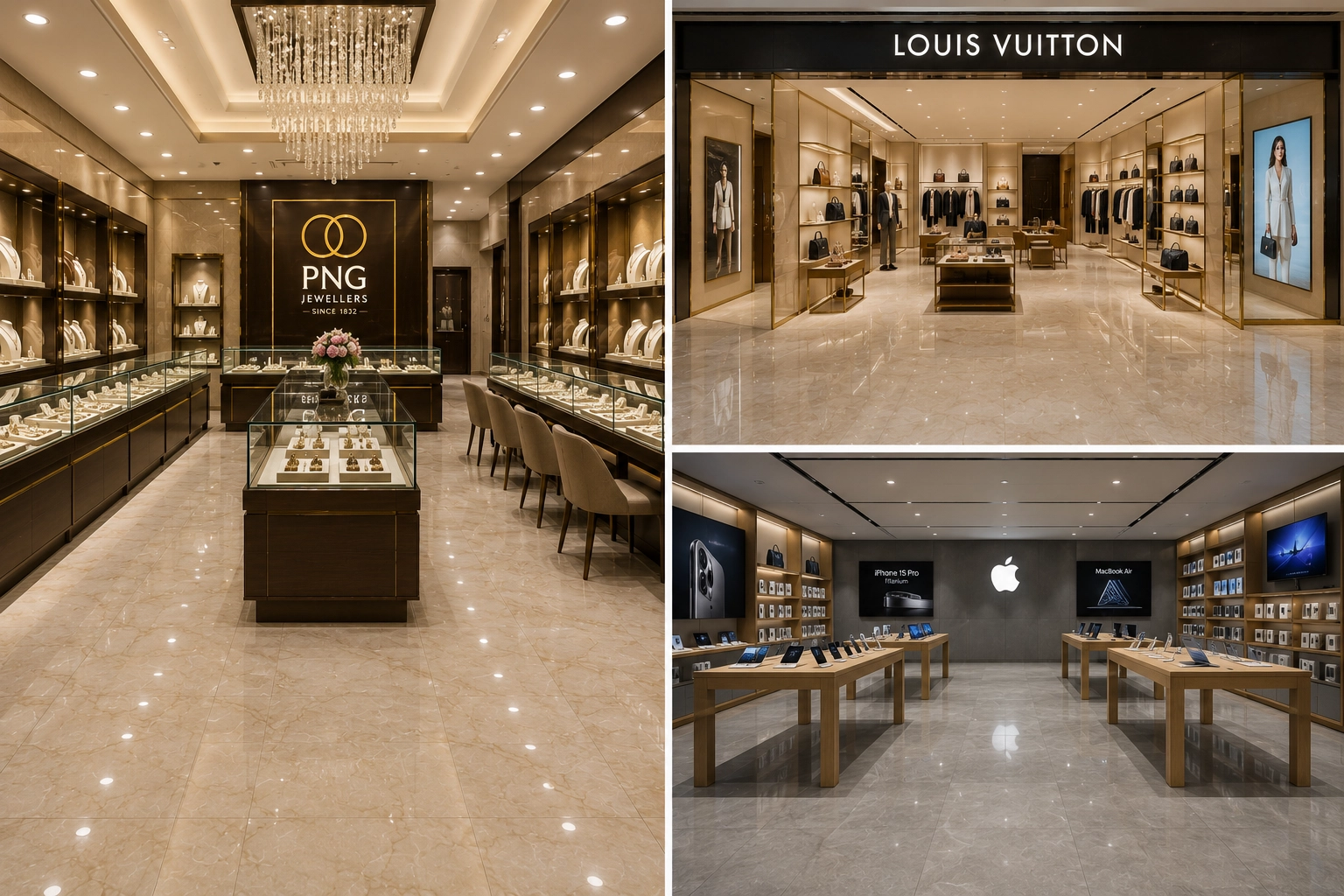
Marble-look or travertine-look GVT in large format, 800x1600 mm or 1200x600 mm, in a sugar or matte finish. Creates a premium backdrop that reads as expensive without the maintenance cost of natural stone. Suited to jewellery showrooms, luxury lifestyle brands, and premium electronics retail, il where the physical environment needs to justify a high average transaction value.
Price: Rs. 100 to Rs. 220 per sq.ft. A single consistent stone-look tone across the floor works better than mixing two stone looks, which fragments the space.
The Brand Floor
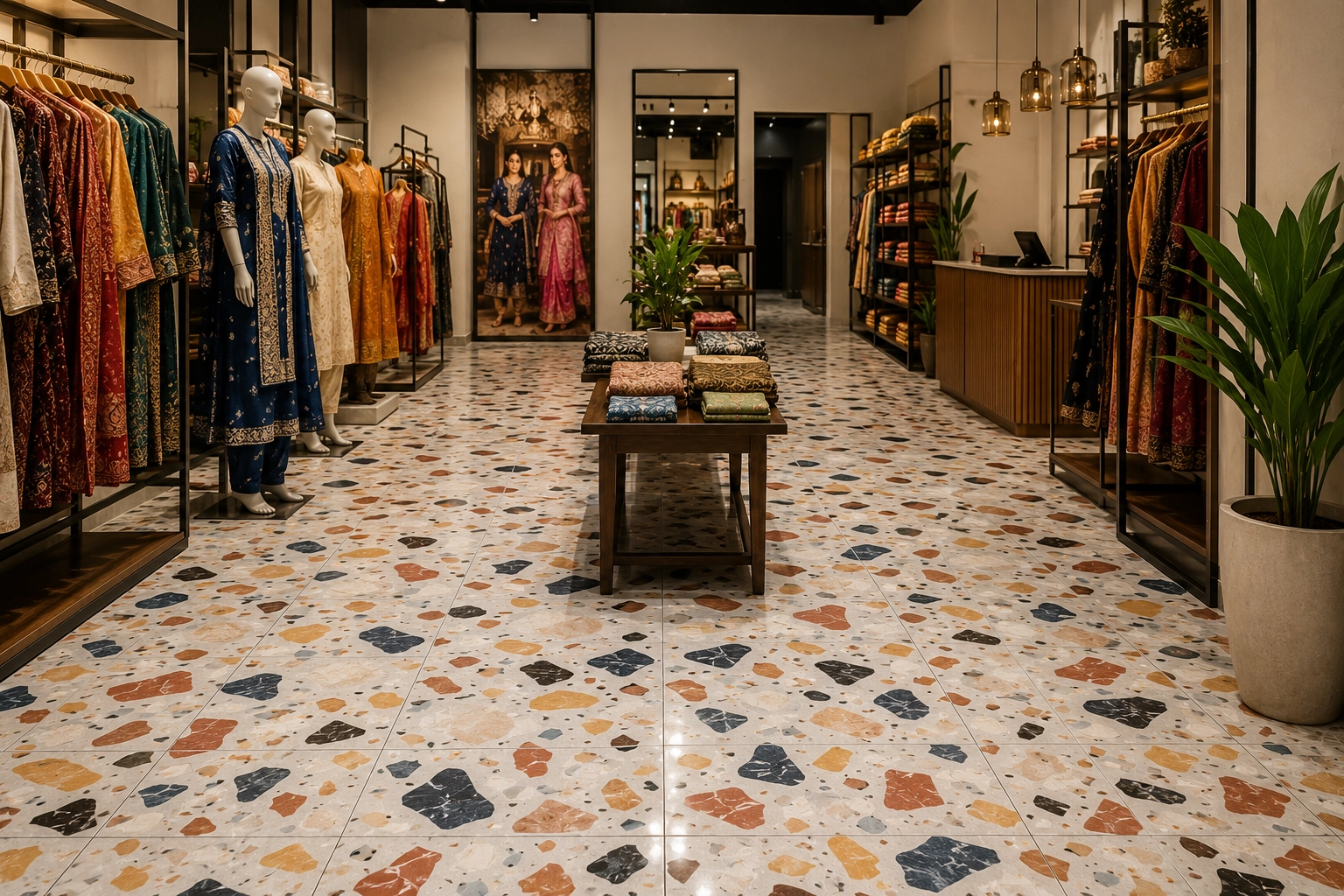
A deliberately chosen tile design, colour, or pattern that aligns directly with brand identity rather than defaulting to a neutral. A bold terrazzo-look in brand colours. An encaustic geometric in the brand's heritage palette. A wood-plank floor in a brand that positions itself around craft and natural materials. This approach takes more time to specify correctly, but creates a retail environment that is visually distinctive and harder to replicate.
Price varies: Rs. 80 to Rs. 250 per sq. ft.,t depending on tile complexity and pattern installation.
Brand-to-floor note: Brand floor designs should be reviewed under the showroom's actual lighting condition, not in a tile showroom with fluorescent lights. A terracotta-tone tile under warm retail track lighting reads very differently than under cold showroom fluorescence. Request a physical sample and view it on-site before confirming.
The Dark Anchor
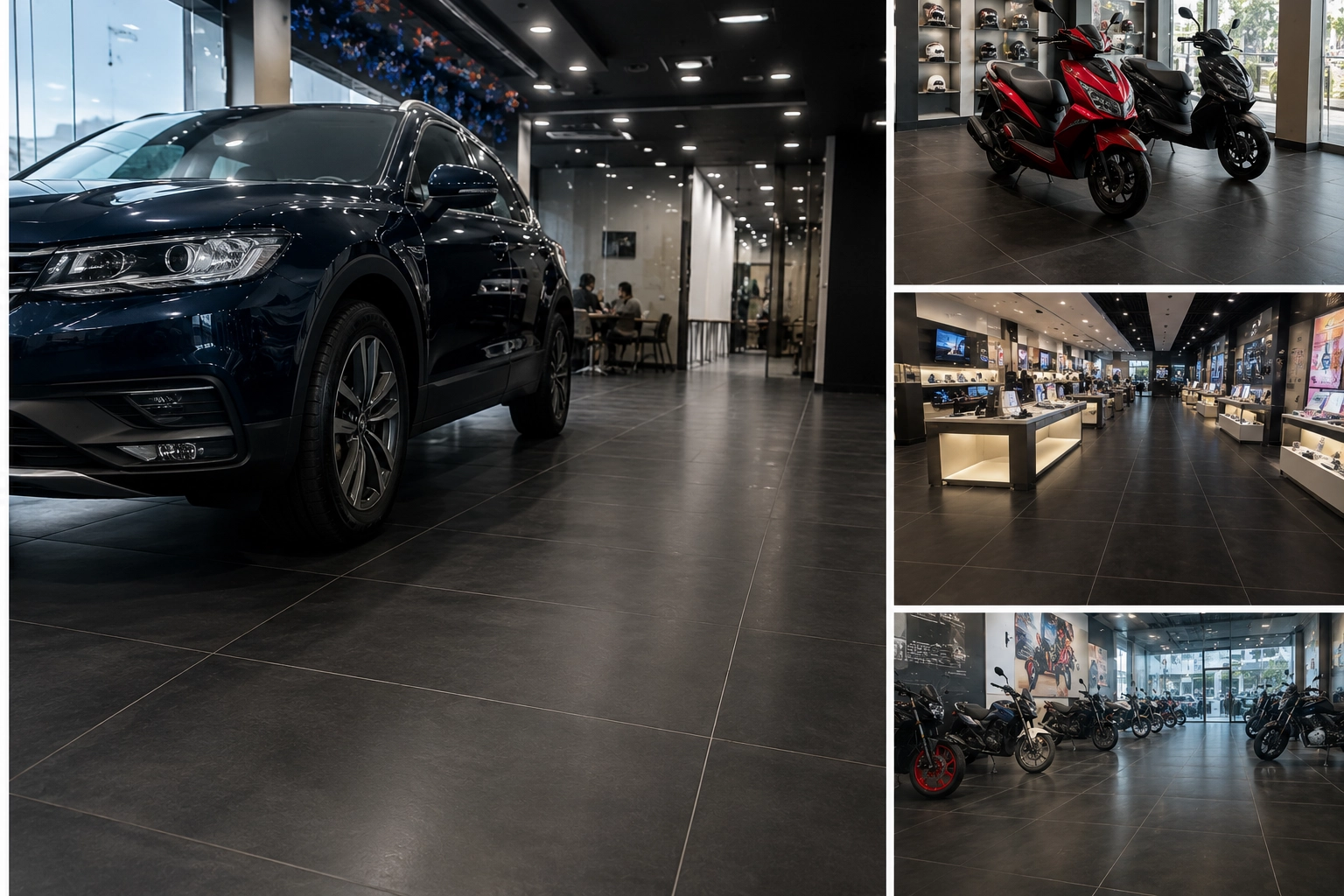
Deep charcoal, dark slate, or near-black matte GVT in 800x800 mm or larger. Common in automobile showrooms, electronics flagships, and premium two-wheeler retail, where the dark floor makes vehicles and products read as lighter and more vivid. Requires more frequent visible-soil maintenance since dust and light-coloured debrisares more apparent than on a mid-tone floor.
Price: Rs. 85 to Rs. 180 per sq.ft.
The Zoned Floor
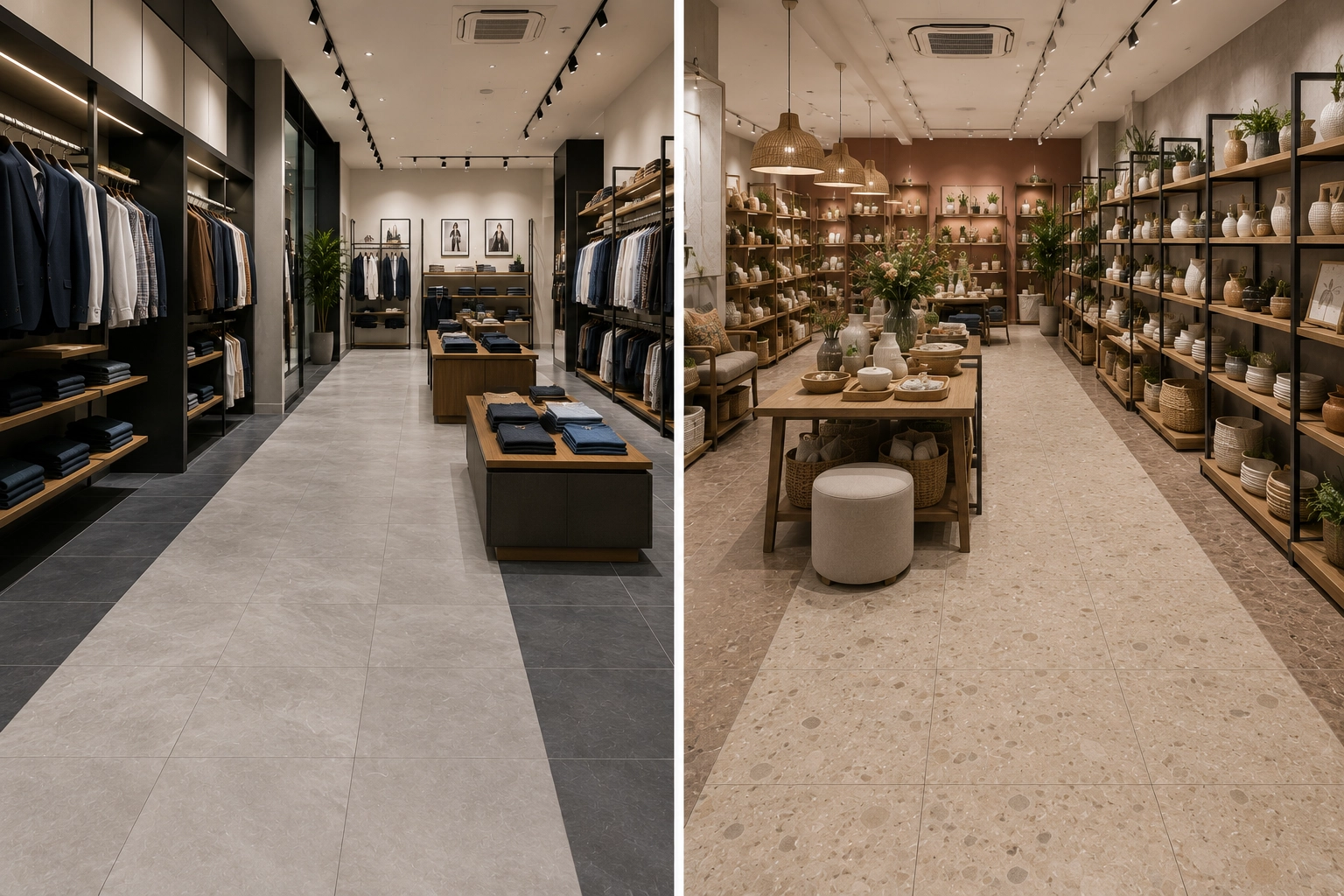
A primary floor tile across the main showroom space with a contrasting tile in product display alcoves, feature walls at floor level, or an entry zone that transitions into the main floor. Used in apparel retail and lifestyle brands to define spatial hierarchy within an open-plan retail floor. Two tile specifications, carefully matched in height (no lips), with a transition strip or seamless butt joint between zones.
Price: Rs. 80 to Rs. 200 per sq.ft across both tile types. Transition detail adds installation complexity.
Installation Decisions That Affect the Finished Showroom Floor
For residential tile installation, small imperfections are acceptable. For a showroom floor that will be photographed, lit with track and accent lighting, and scrutinised by customers with time to look, installation quality directly affects whether the floor reads as intended.
Levelling and Substrate Preparation
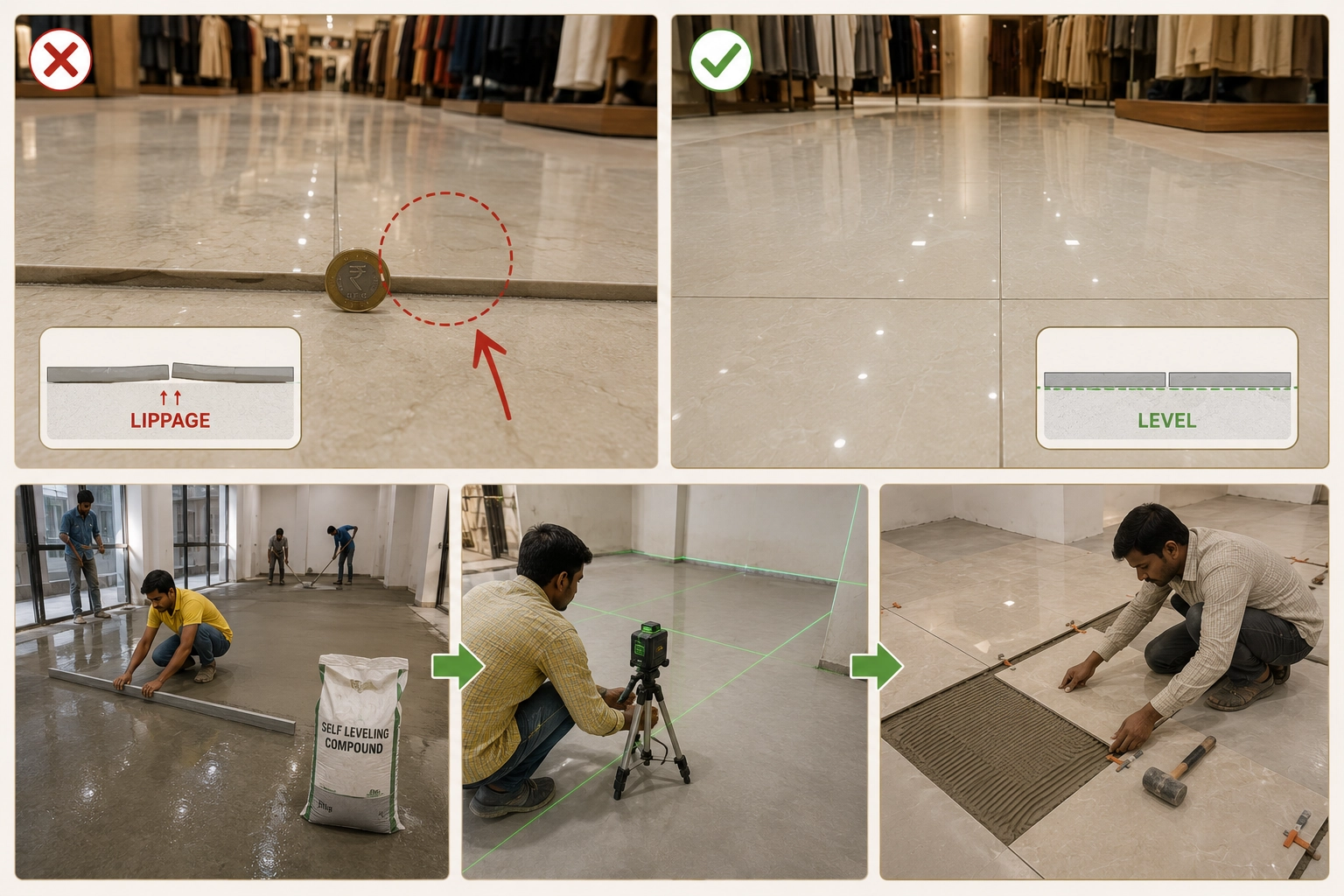
Large-format showroom tiles, 600x1200 mm and above, are unforgiving of an uneven substrate. A floor with lippage, where one tile edge sits higher than the adjacent tile, catches light under retail track lighting and draws the eye to the joint rather than the product. For any tile above 600x600 mm in a showroom context, a self-levelling compound underlayment and laser-level installation process is not optional.
Note: Lippage is not a tile defect; it is an installation defect. It is not covered under the tile manufacturer's warranty. Specifying the correct adhesive bed depth and substrate preparation in the installation brief, rather than leaving it to the contractor's discretion, is the client's responsibility.
Grout Joint Width and Colour
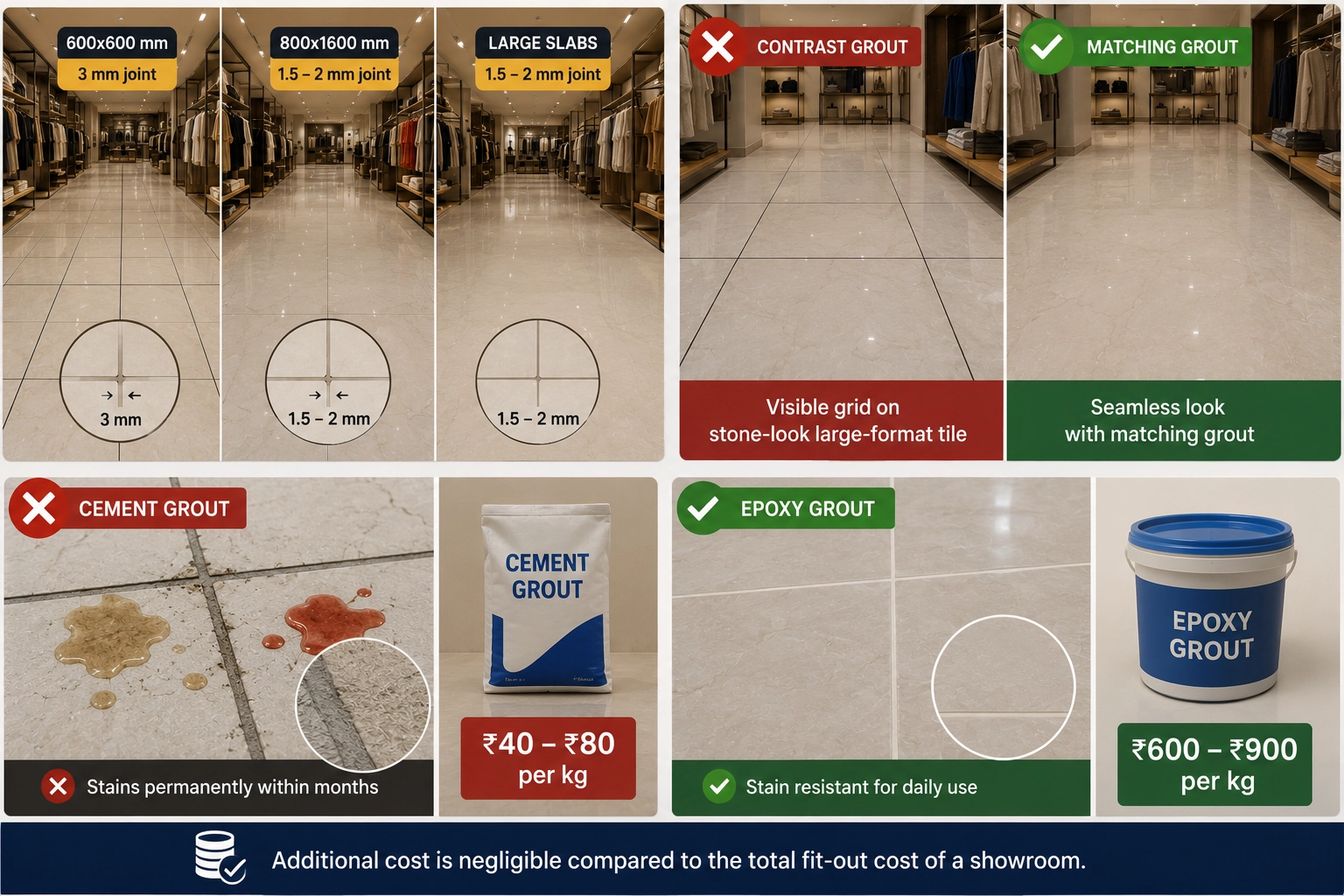
For showroom floors, grout joint width should match the tile format. 600x600 mm tiles can carry a 3 mm joint cleanly. 800x1600 mm and larger slabs are typically installed with a 1.5 to 2 mm joint to minimise visible grid lines. Grout colour in a showroom almost always matches the tile body: a visible contrast grout on a stone-look large-format tile draws a grid on what was meant to read as a seamless surface.
Epoxy grout is mandatory for any showroom floor. Cement grout in a retail environment, where beverages, cosmetics, and cleaning agents contact the floor daily, stains permanently within months. The additional cost of epoxy grout, Rs. 600 to Rs. 900 per kg versus Rs. 40 to Rs. 80 per kg for cement grout, is negligible against the total fit-out cost of a retail space.
Expansion Joints Across Large Floor Plates
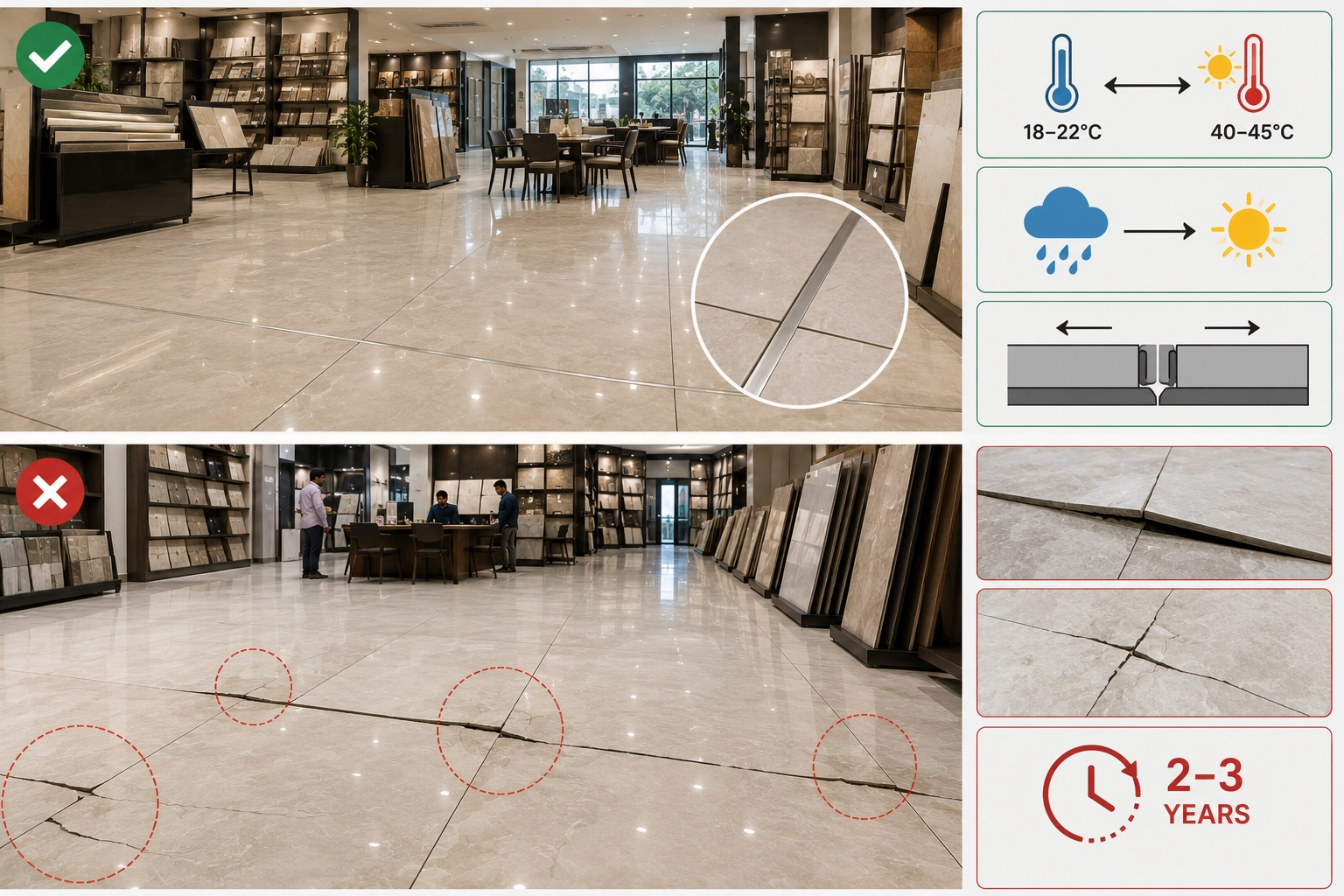
Any showroom floor above 8 to 10 metres in one continuous run needs movement or expansion joints to accommodate thermal expansion in the tile and substrate. In India's climate, where air-conditioned retail interiors cycle from 18 to 22 degrees Celsius to 40 to 45 degrees Celsius externally, and from monsoon humidity to dry-season aridity, expansion stress on a large tile floor without proper jointing causes tile lifting and cracking within 2 to 3 years.
Note: Expansion joints are frequently omitted by contractors trying to reduce visible interruption to the floor design. If the architect or designer has not specified joint placement in the drawing set, request it explicitly. An expansion joint that is correctly designed into the floor plan is nearly invisible. One that is added after cracking occurs is always visible and expensive.
Adhesive Specification for Large Format Tiles
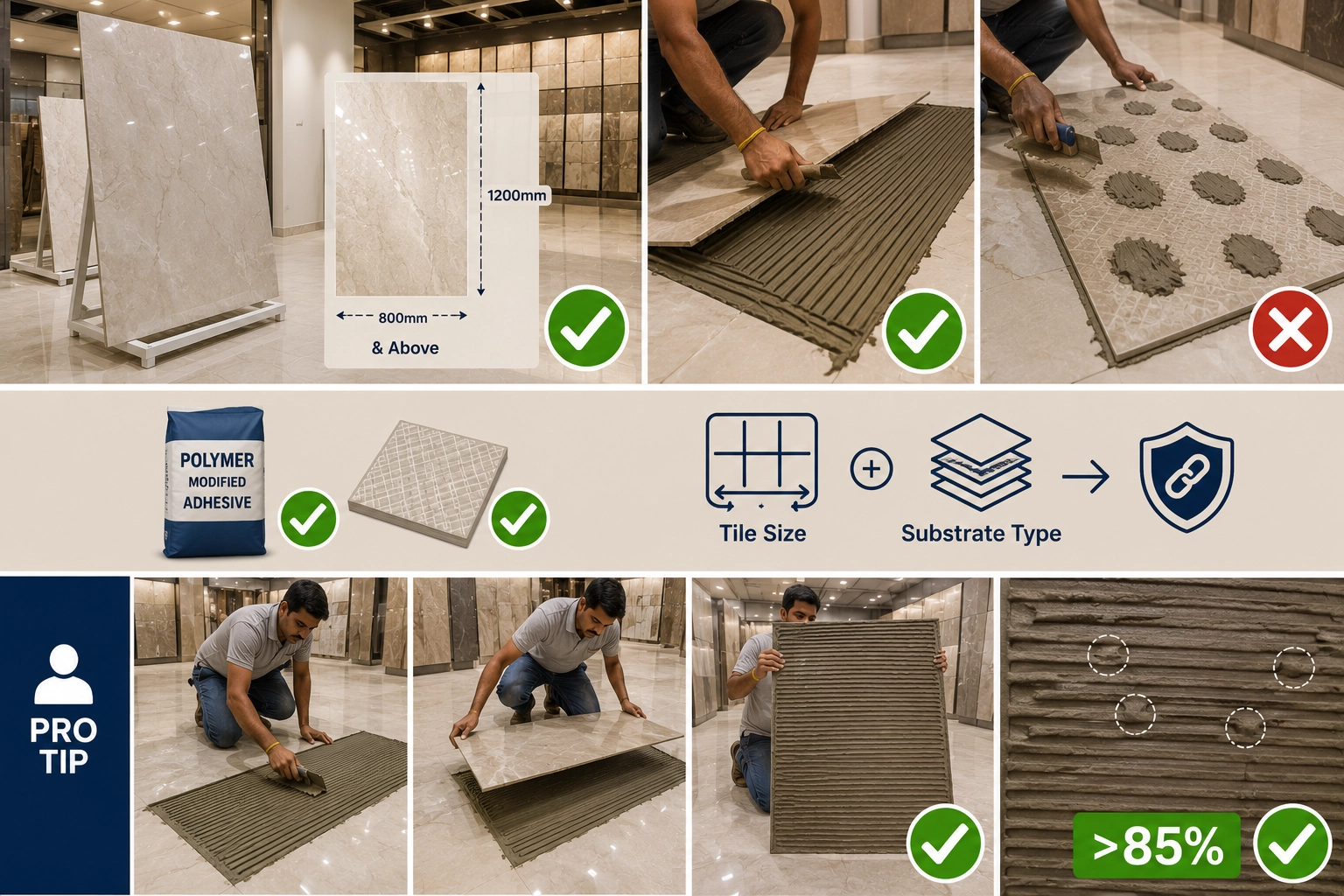
Large format tiles, 800x1200 mm and above, require full-bed adhesive coverage, not spot adhesive application. Spot bedding on a large tile creates hollow spots that crack under foot traffic and product display load. Specify a polymer-modified adhesive rated for the tile size and substrate type. For tiles above 1200 mm in any dimension, ask the adhesive manufacturer to confirm the product is rated for that format.
Pro tip: Before a contractor begins installation on a showroom floor, ask them to demonstrate a full-bed adhesive lay on one tile and lift it to show coverage. Coverage should be above 85% of the tile back surface with no large voids. This one check prevents the most common large-format installation failure.
Showroom Tile Price Guide India 2026
All material prices below are from Morbi, Gujarat, origin tiles. Branded retail prices run 15 to 25% higher. Installation costs are given separately as they vary significantly by floor plate size, substrate condition, and tile format.
| Showroom Type | Recommended Tile | Size | Finish | Material Price |
| Jewellery / Luxury | Marble-look GVT | 800x1600 mm | Sugar / Matte | Rs. 130 to Rs. 220/sq.ft |
| Automobile | Full Body Vitrified | 800x800 mm | Matte / GHR | Rs. 140 to Rs. 200/sq.ft |
| Apparel / Lifestyle | GVT Stone or Concrete Look | 600x1200 mm | Matte | Rs. 90 to Rs. 160/sq.ft |
| Electronics / Tech | Full Body Vitrified | 600x600 mm | Matte / GHR | Rs. 110 to Rs. 160/sq.ft |
| Furniture / Decor | GVT Neutral Solid | 800x1600 mm | Matte | Rs. 100 to Rs. 180/sq.ft |
| Tile Showroom | GVT Neutral Background | 600x1200 mm | Matte | Rs. 80 to Rs. 130/sq.ft |
| Budget Retail | GVT Entry Grade | 600x600 mm | Matte | Rs. 75 to Rs. 110/sq.ft |
| Installation Task | Cost Range (per sq.ft) | Notes |
| Standard tile laying, 600x600 mm | Rs. 30 to Rs. 45/sq.ft | Standard mortar bed, no pattern |
| Large format laying, 600x1200 mm+ | Rs. 45 to Rs. 65/sq.ft | Full-bed adhesive, levelling required |
| Self-levelling compound substrate | Rs. 20 to Rs. 35/sq.ft | Required for any tile above 600mm in size |
| Epoxy grouting | Rs. 15 to Rs. 25/sq.ft | Strongly recommended for all showroom floors |
| Pattern laying (herringbone, chevron) | Rs. 55 to Rs. 80/sq.ft | Additional cuts, alignment, and 15-20% wastage |
| Transition strips between zones | Rs. 150 to Rs. 350 per running metre | Aluminium or SS for seamless zone change |
For a 2,000 sq. ft. showroom using 800x1600 mm marble-look GVT at Rs. 160 per sq ft, tile material cost with 10% wastage is approximately Rs. 3,52,000. Add large-format installation at Rs. 55 per sq.ft (Rs. 1,10,000), self-levelling compound at Rs. 25 per sq.ft (Rs. 50,000), and epoxy grout at Rs. 20 per sq.ft (Rs. 40,000).
Total installed floor cost: approximately Rs. 5,52,000 for a premium-finish showroom floor. Budget showrooms using 600x600 mm GVT at Rs. 90 per sq.ft in the same area come in at Rs. 2,50,000 to Rs. 3,00,000 fully installed.
Why Morbi and Gujarat Tiles Meet the Visual and Structural Demands of Indian Retail
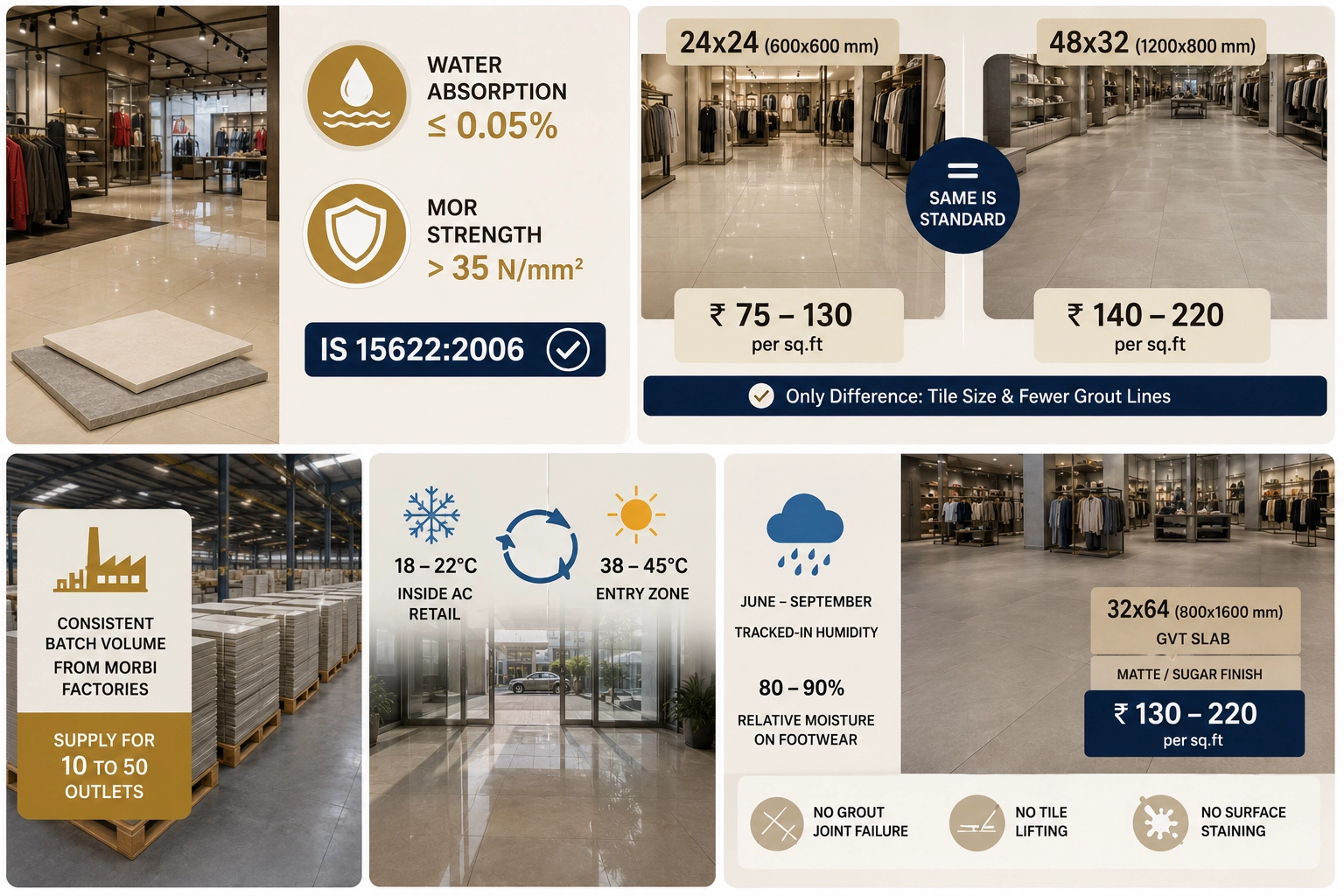
GVT and full-body vitrified tiles from Morbi, Gujarat, are manufactured under IS 15622:2006 with water absorption at 0.05% or lower and MOR above 35 N/mm2, the structural floor standard for commercial retail use. The 24x24 (600x600 mm) format at Rs. 75 to Rs. 130 per sq.ft gives entry-level retail the same IS-certified specification as the premium 48x32 (1200x800 mm) slab at Rs. 140 to Rs. 220 per sq.ft, with the only difference being tile size and the visual impact of fewer grout lines. Morbi factories also produce the consistent batch volumes that large retail chains and fit-out contractors need when tiling 10 to 50 outlets from a single specification.
India's retail showroom environment places specific demands on flooring that temperate-climate tile standards do not fully account for. Air-conditioned retail interiors in cities like Ahmedabad, Chennai, and Mumbai cycle from 18 to 22 degrees Celsius inside to 38 to 45 degrees Celsius at entry zones, while monsoon months from June to September bring tracked-in humidity at 80 to 90% relative moisture on footwear. The 32x64 (800x1600 mm) GVT slab in matte or sugar finish from Gujarat manufacturers at Rs. 130 to Rs. 220 per sq.ft is the format that handles this thermal and humidity cycle without grout joint failure, tile lifting, or surface staining, which is why it has become the dominant large-format showroom specification in Indian retail fit-out.
Specify Your Showroom Floor with Confidence
Matching the right tile to your retail category, brand brief, and installation realities is faster when you can compare verified material options by showroom type and finish in one place. On TilesFinders, showroom and commercial retail tiles from Morbi and Gujarat manufacturers are catalogued by size, finish, and look, with current pricing for 2026.
FAQs
Large-format marble-look or solid cream GVT in 800x1600 mm or 600x1200 mm, sugar or matte finish, is the standard specification for jewellery and luxury retail in India. The floor needs to read as premium without a pattern that competes with the product display. Price: Rs. 130 to Rs. 220 per sq ft from Morbi, Gujarat suppliers.
Matte and sugar (lappato) finishes are right for showroom floors. Matte gives the best slip resistance and the lowest maintenance. Sugar gives a soft sheen that reads as slightly more premium without the wet-floor risk of polished or high-gloss tiles. Polished tiles in a showroom look good at installation, but show foot traffic marks under retail track lighting and carry wet-slip risk in entrance zones during the monsoon.
Entry-level GVT for budget retail showrooms starts at Rs. 75 per sq.ft for 600x600 mm matte tiles from Morbi, Gujarat. Mid-range GVT for apparel and lifestyle showrooms runs Rs. 90 to Rs. 160 per sq.ft. Premium marble-look or full body vitrified for jewellery and automobile showrooms costs Rs. 130 to Rs. 220 per sq.ft. Add Rs. 45 to Rs. 65 per sq.ft for large-format installation,n including substrate levelling.
No. Ceramic tiles carry 12 to 16% water absorption and PEI ratings of 2 to 3, both of which are inadequate for showroom floor footfall. Ceramic tiles stain from cleaning agents and show surface wear within 12 to 18 months of retail use. They are appropriate for showroom wall cladding and feature panels, not floors.
800x1600 mm or 600x1200 mm tiles work best for most showrooms above 500 sq. ft. because fewer grout lines make the floor read as a continuous surface, which makes the space feel larger, and the product display feel less cluttered. For showrooms below 300 sq. ft., 600x600 mm or 600x1200 mm is more practical because large-format tiles in a compact space require many edge cuts that increase wastage and cost.
Yes. A showroom floor in a retail environment sees daily exposure to beverages, cosmetics, cleaning agents, and food from staff. Cement grout stains permanently from these within months and looks neglected regardless of the tile quality above it. Epoxy grout at Rs. 600 to Rs. 900 per kg resists all common retail stains and needs no sealing. For a showroom where the floor is a brand statement, the grout is part of that statement.
Ask for: confirmation of full-bed adhesive coverage on large format tiles (above 85% coverage), substrate levelling method and material for tiles above 600x600 mm, expansion joint placement drawing for any floor plate above 8 metres in continuous run, and epoxy grout specification. Request the adhesive manufacturer's written confirmation that the product is rated for the tile size being installed.
GVT and full-body vitrified tiles with 0.05% water absorption handle monsoon-tracked moisture in retail entrance zones without surface or subsurface damage. The risk in showrooms is slip safety at the entrance during the monsoon, where customers enter with wet footwear. Matte or GHR finish tiles with a wet COF above 0.4 at the entrance zone are essential. Polished showroom tiles at the entrance are a documented liability risk from June to September across most Indian cities.

See our tile guides first
Set TilesFinders as a preferred source and our buying guides surface ahead of the rest for you.
Add as preferred sourceTakes one tap. Nothing to install.
What Readers Say
I was about to redo my parking area with the wrong tile size until I read this. The layout comparisons saved me from a costly mistake.
We reference TilesFinders guides while briefing clients on material selection. The size and pattern breakdowns are accurate and easy to explain visually.
On site, I get asked about grout spacing all the time. This article gave me a solid reference I now share with my team before every job.
Finally a guide that doesn't just push generic advice. The oil stain removal steps actually worked on our clubhouse driveway tiles.
I run a small construction firm and now send this link to clients directly when they ask about entrance tile sizing. Saves me an hour of explaining.
Good practical detail, though I wish there were more examples for compact apartment entrances specifically, not just villas.
My mother-in-law wanted marble, I wanted vitrified. This blog gave us the neutral comparison we needed to actually decide together.
Detailed without being overwhelming. I appreciated that it covered both cost and maintenance, not just the aesthetics.
Used the algae and hard water removal tips on our terrace tiles after the monsoon. Worked better than what our regular cleaner was doing.
As someone who sources tiles for multiple builder projects, I find these comparisons genuinely useful for vendor conversations, not just consumer content.
Recommended this to a client who kept second-guessing the entrance design. The small vs large layout section settled the debate instantly.
Straightforward and honest, no unnecessary jargon. Would like to see a similar breakdown for outdoor pool-deck tiles next.
We've bookmarked several TilesFinders guides for our design handbook. Reliable source when clients want data, not just opinions.
Two paths, one marketplace.
Get free quotes from verified suppliers.
Share your room, budget, and style. Suppliers in Morbi respond within hours.
Get Free QuotesList your business, reach real buyers.
Put your showroom in front of homeowners searching for tiles right now.
List Your Business