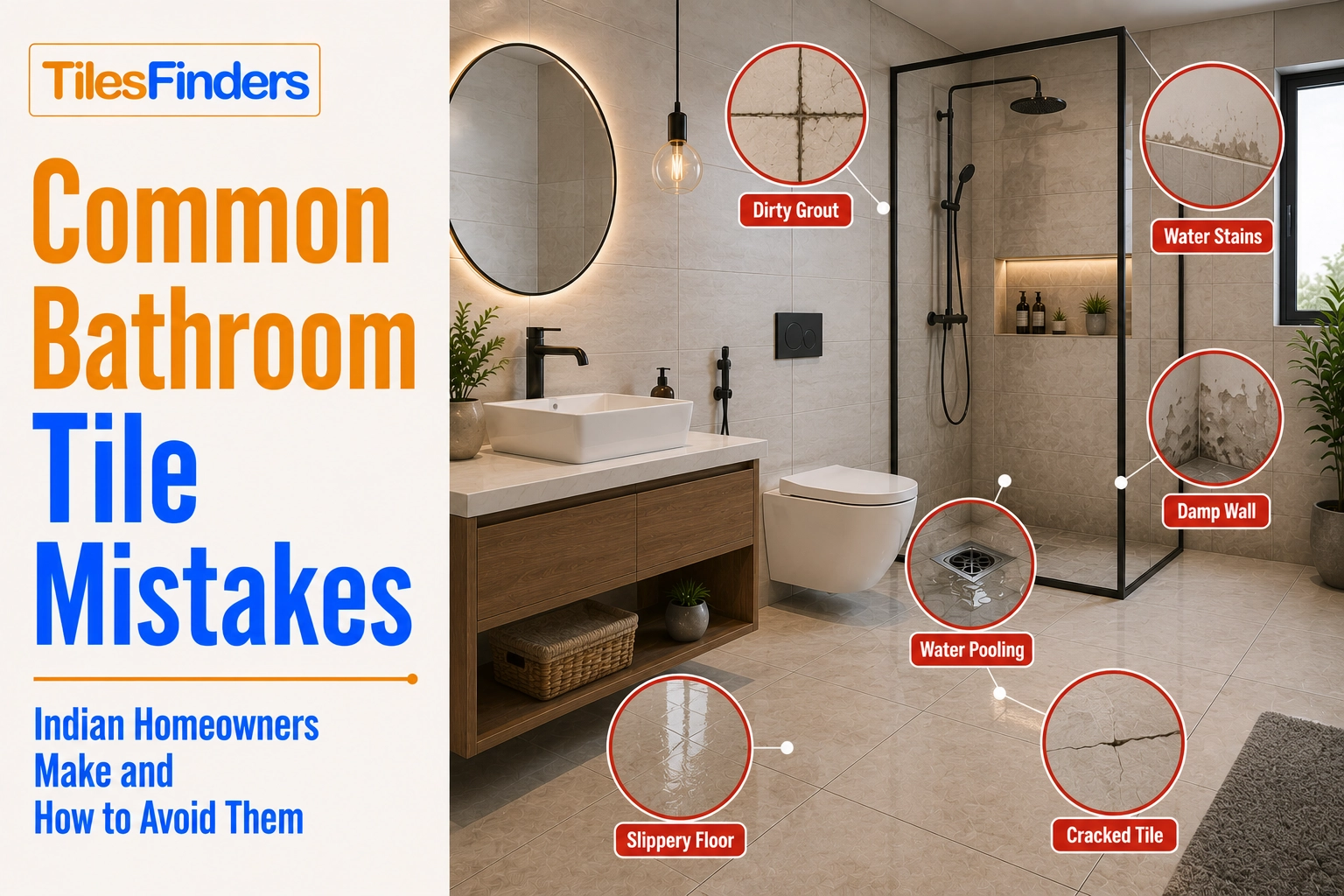
Common Bathroom Tile Mistakes Indian Homeowners Make and How to Avoid Them
Learn the most common bathroom tile mistakes Indian homeowners make, from slippery floors and waterproofing issues to sizing errors and grout problems, along with practical solutions.
- Why Bathroom Tile Mistakes Are So Costly to Fix
- Mistake 1: Putting Glossy Tiles on the Bathroom Floor
- Mistake 2: Skipping Waterproofing to Save Money
- Mistake 3: Mixing Tile Batches Without Checking Shade
- Mistake 4: Choosing the Wrong Tile Size for the Space
- Mistake 5: Using Wall Tiles on the Bathroom Floor
- Mistake 6: Ignoring the Drain Slope
- Mistake 7: Getting Grout Colour and Width Wrong
- Mistake 8: Buying the Exact Measured Quantity With No Buffer
- Mistake 9: Choosing Tiles Only Under Showroom Lighting
- Mistake 10: Not Accounting for Hard Water Staining
- Mistake 11: Letting the Contractor Choose the Tile Category
- Quick Reference: Mistakes and Fixes at a Glance
- Important Bathroom Tile Checks Before Starting Your Renovation
Bathroom tile mistakes are expensive to fix but easy to avoid with proper planning. Choose anti-skid floor tiles instead of glossy finishes, never skip waterproofing, verify tile batches, select the correct tile size, maintain proper drain slope, use suitable grout, account for hard water conditions, and always purchase extra tiles for wastage.
A bathroom renovation is one of the few home projects where a mistake stays with you every single morning.
In Indian homes, tile errors are particularly common because the purchasing decision is often made in haste. Homeowners visit a showroom, pick a tile they like under bright display lights, order it, and hand the rest over to a contractor. Several months later, the floor is slippery, the grout has gone grey, or a wall is showing seepage behind the tiles.
Most of these problems are avoidable. They follow a predictable pattern of mistakes that repeat across 1BHK flats in Pune, 3BHK apartments in Bangalore, and independent houses in Jaipur.
This guide names eleven of the most common bathroom tile mistakes Indian homeowners make, explains why each one happens, and gives a clear fix for every single one.
Why Bathroom Tile Mistakes Are So Costly to Fix
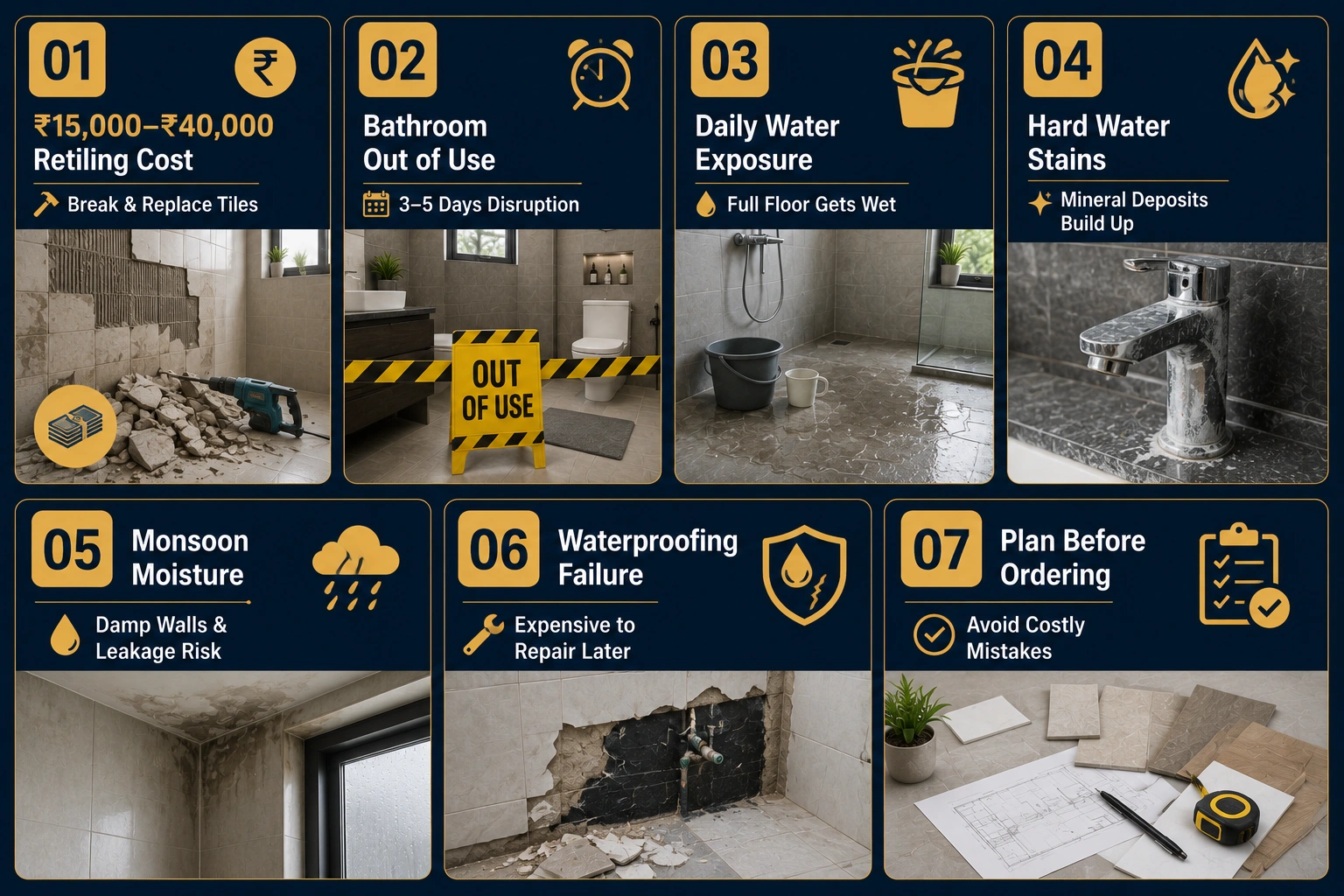
Unlike paint or furniture, tiles are nearly permanent. Fixing a wrong tile choice means breaking the existing tiles off the wall or floor, redoing the waterproofing underneath, and relaying fresh tiles. In a medium-sized bathroom, that work alone can cost ₹15,000 to ₹40,000, depending on the city and contractor.
Before finalising your renovation budget, check this Bathroom Tile Cost Guide to understand current tile pricing, labour charges, and installation costs across India.
The damage goes beyond money. Retiling means the bathroom goes out of use for three to five days. In a 2BHK with one common bathroom, that affects the whole family. In a 1BHK, it means using a neighbour's facility or a hotel.
Indian bathrooms also face conditions that make tile errors show up faster than they might elsewhere. Bucket baths soak the entire floor every day. Hard water in cities like Delhi, Chennai, and Ahmedabad leaves mineral deposits on glossy surfaces within weeks. The monsoon season keeps bathroom walls damp for months, which exposes any gap in waterproofing very quickly.
The good news is that all eleven mistakes below are avoidable before the tiles are ordered. None of them requires expensive workarounds if caught at the right time.
Mistake 1: Putting Glossy Tiles on the Bathroom Floor
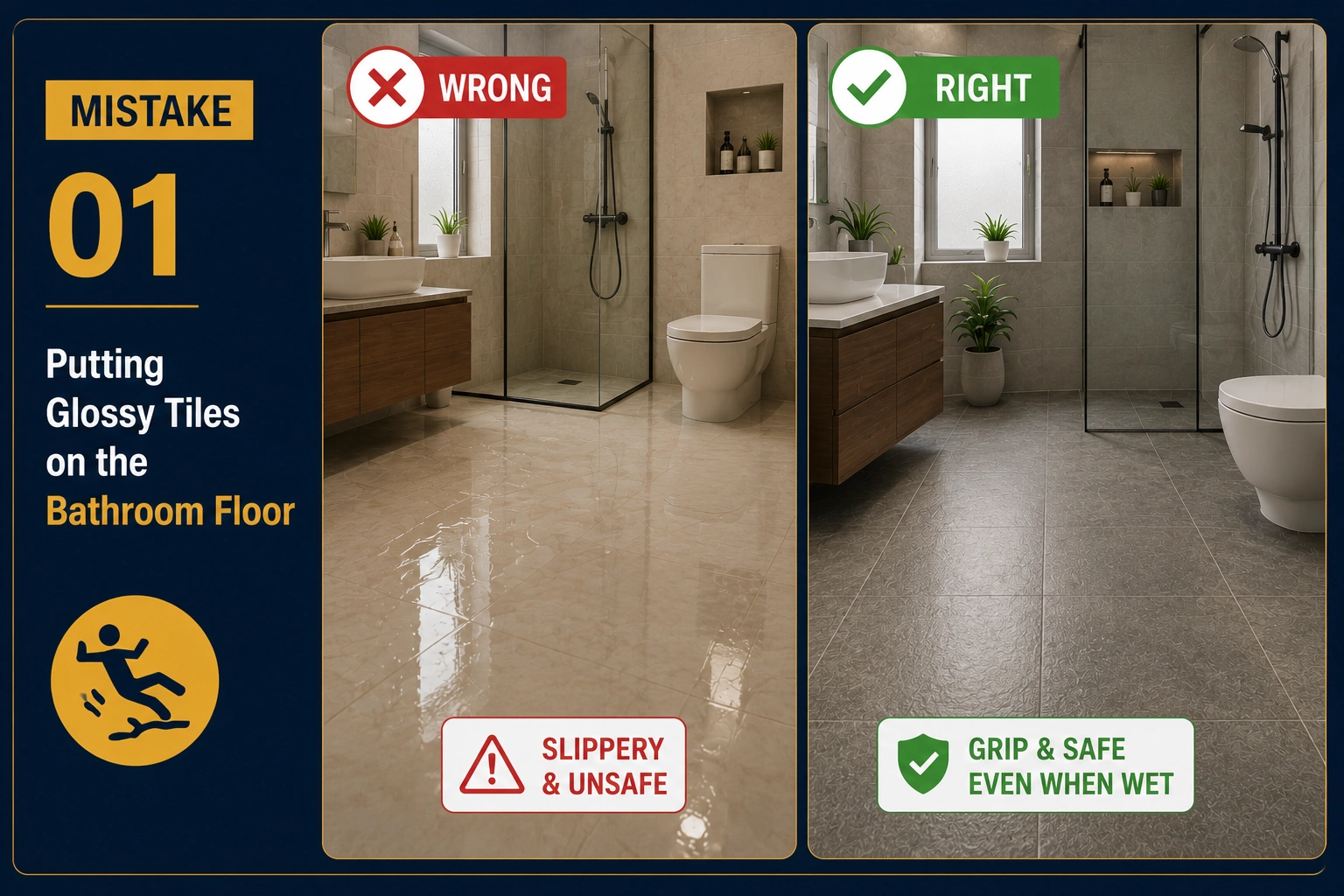
This is the single most reported bathroom tile mistake across Indian homes. A glossy tile looks clean, bright, and attractive in a showroom. The same tile on a wet bathroom floor is genuinely dangerous.
Glossy, high-glossy, super high-glossy, and satin matte finishes all become slippery the moment water touches them. In an Indian bathroom where the entire floor gets wet during a bucket bath or shower, this creates a real fall risk, particularly for elderly family members and young children.
PGVT (Polished Glazed Vitrified) tiles carry the same risk. Their polished surface looks stunning on bathroom walls and in dry living room floors, but they should never be used on a wet bathroom floor. The finish simply does not hold underfoot when wet.
The fix is straightforward. Use a matte or raindrops GVT tile on the floor. Look for an anti-skid finish with a slip resistance rating of R10 or R11. The floor can still look sharp and coordinate with the wall tiles without being a slip hazard.
Mistake 2: Skipping Waterproofing to Save Money
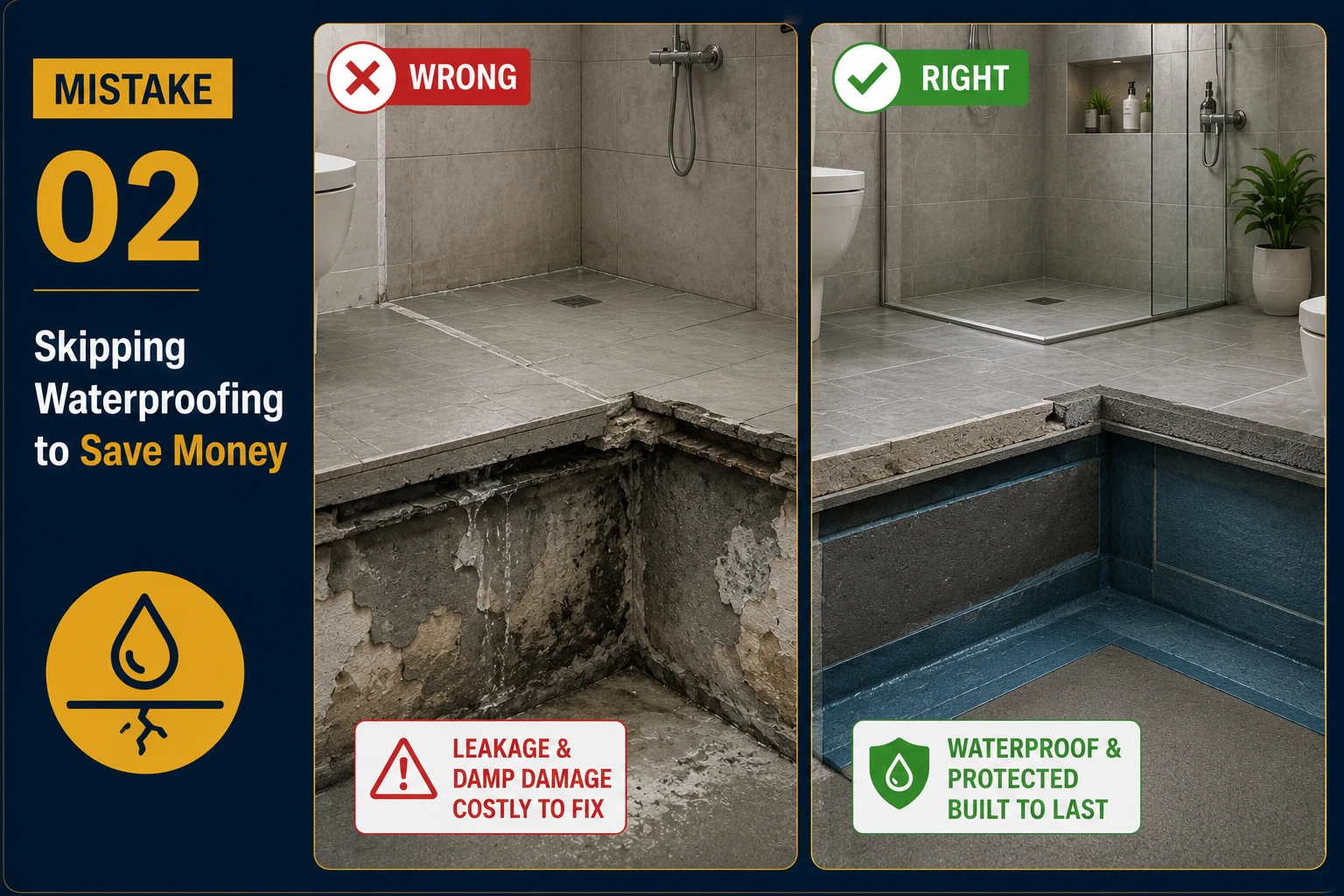
Waterproofing is the most common cost-cutting target in Indian bathroom renovations, and it is the one that creates the most expensive problems later.
Tiles themselves are water-resistant. The gaps between them, the corners, and the wall-to-floor junction are not. Without a proper waterproofing membrane under the tiles, water seeps through grout joints over time and sits behind the tile layer. That moisture causes wall dampness, mould growth, tile delamination, and eventually structural damage to the concrete below.
In Indian apartments, seepage from one flat's bathroom often appears as a damp patch on the ceiling of the flat below. That repair involves two parties, two families, and a contractor working from both sides. The total bill regularly crosses ₹50,000 once both bathrooms are involved.
Waterproofing a bathroom floor and wet walls typically costs ₹40 to ₹120 per sq. ft., depending on the membrane system used. Applied correctly before the tiles go down, it lasts the life of the renovation. Skipped, it costs several times more to fix post-installation.
Mistake 3: Mixing Tile Batches Without Checking Shade
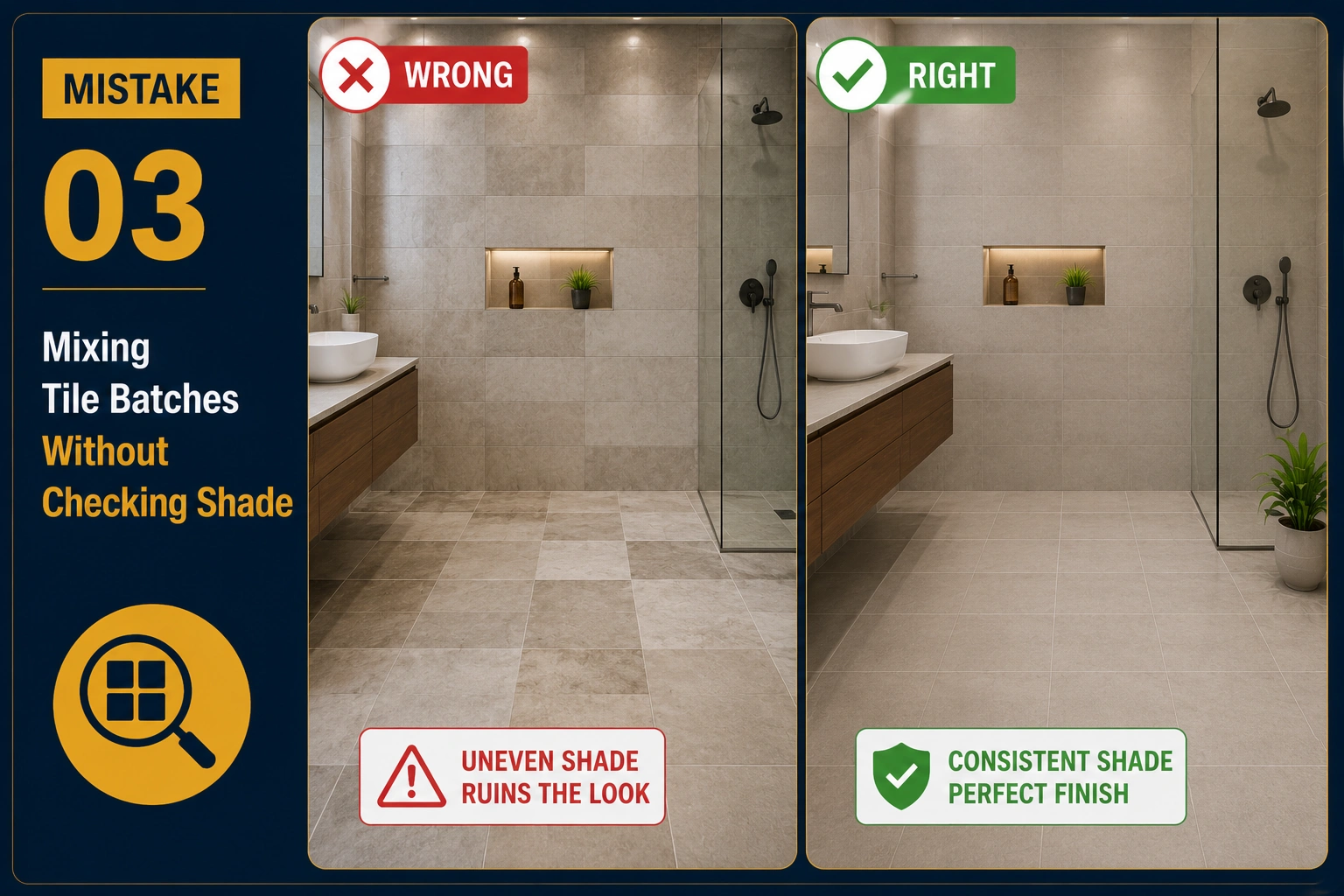
Tiles from the same design and colour code can look noticeably different if they come from different production batches. The difference is slight under a showroom's display lights and visible under a bathroom's ceiling light.
This problem is more common in India than most homeowners realise. A buyer orders 200 sq. ft. of a tile, the dealer's stock only carries 160 sq. ft. in that batch, and the remaining 40 sq. ft. arrives from a newer lot. The contractor lays everything, and once the grout dries and the lights go on, two sections of the bathroom wall look like they have different tiles.
The fix is to check the batch number and shade number on every box before accepting delivery. All boxes for one bathroom should carry the same batch number. Also buy 7 to 10 per cent more tiles than the measured area in the same batch, both to cover wastage and to have spares if a tile breaks later, and that batch is out of stock.
Mistake 4: Choosing the Wrong Tile Size for the Space
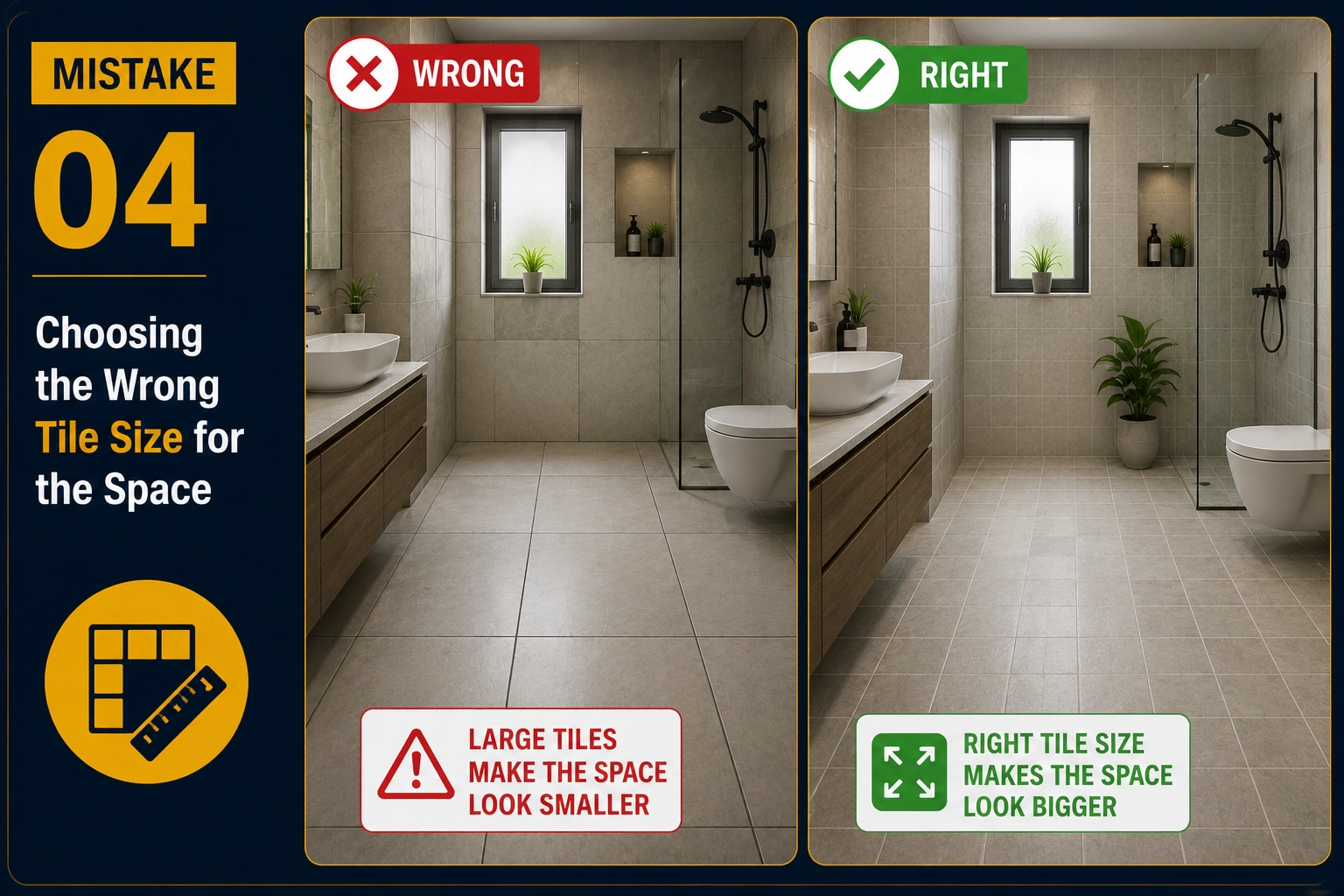
Many homeowners see large-format tiles trending in showrooms and choose a 2x4 tile for a 4 x 6 ft. compact bathroom. The result is heavy cutting on three sides of almost every tile, significant wastage, and a finished wall where the cut pieces near the edges are thin slivers that look wrong.
On the other end, very small tiles in a large bathroom create a busy grid of grout lines that takes time to clean and makes the room feel like a public restroom rather than a home bathroom.
For compact 1BHK bathrooms, 12x18 or 12x24 wall tiles and a 1x1 floor tile work well. If you're planning a space-efficient renovation, explore these Small Bathroom Tile Ideas for practical layouts and tile combinations suitable for Indian homes.
For a standard 2BHK master bathroom, 2x4 on walls and a 2x2 anti-skid GVT on the floor covers the space cleanly with less cutting. Match the tile format to the room's actual dimensions, not to what looked good in a larger showroom setting.
Mistake 5: Using Wall Tiles on the Bathroom Floor
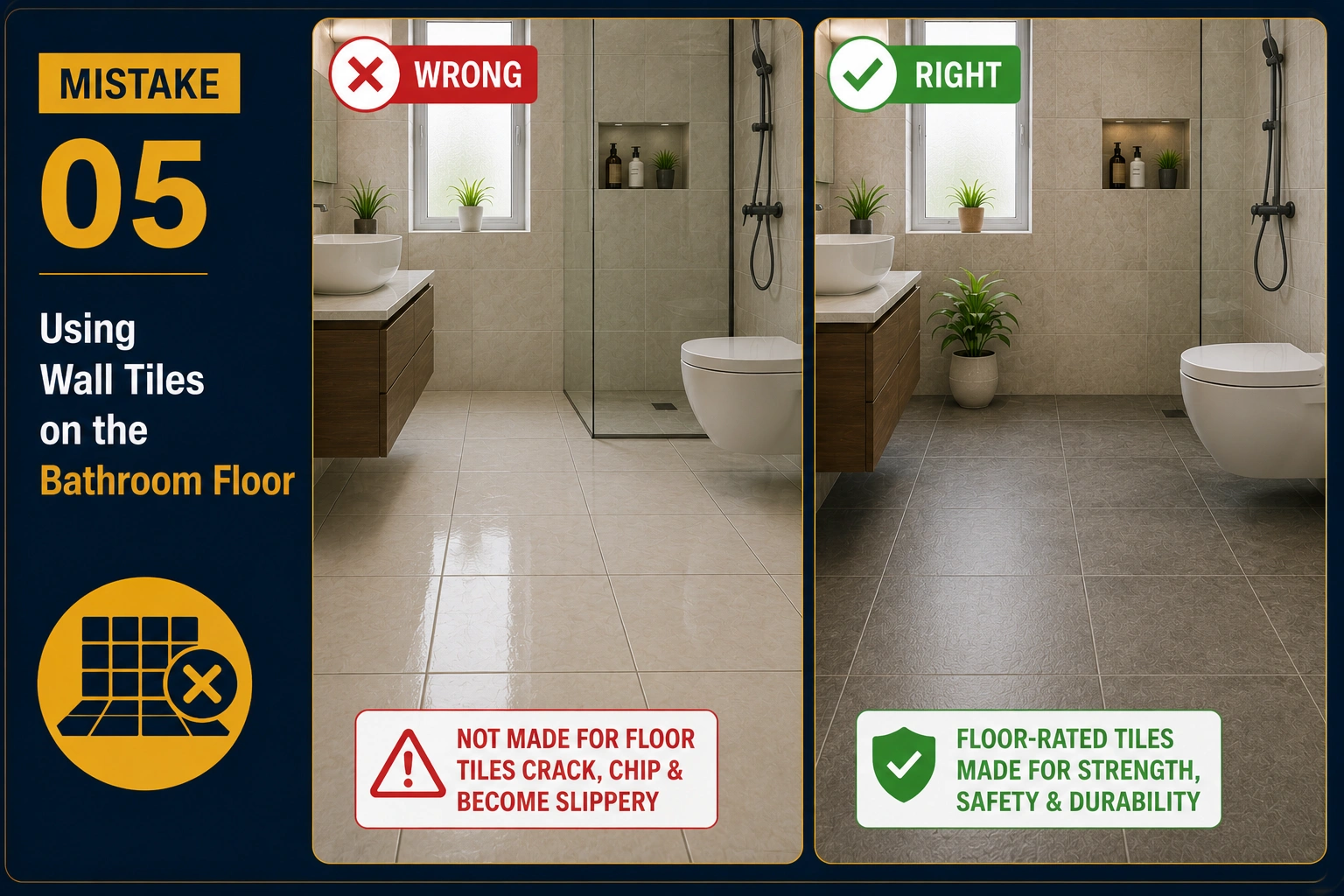
This mistake often happens when a homeowner wants the bathroom floor and walls to match exactly. The 12x18 and 12x24 tile sizes are wall-only tiles. They are not built for floor use. Lying them on the floor is a technical error that some contractors still make or agree to when pushed by the client.
Wall tiles are thinner and have a surface finish not rated for foot traffic or the abrasion a floor takes. They also tend to be ceramic in the smaller sizes, which means a water absorption rate of 12 to 16 per cent, far too high for a bathroom floor that gets soaked daily.
Always use a floor-rated tile on the bathroom floor. A 1x1 or 2x2 GVT in matte or anti-skid finish is the right choice for most Indian bathrooms. If the homeowner wants to match the wall tile closely, pick a floor tile in a coordinated colour rather than the same tile.
Mistake 6: Ignoring the Drain Slope
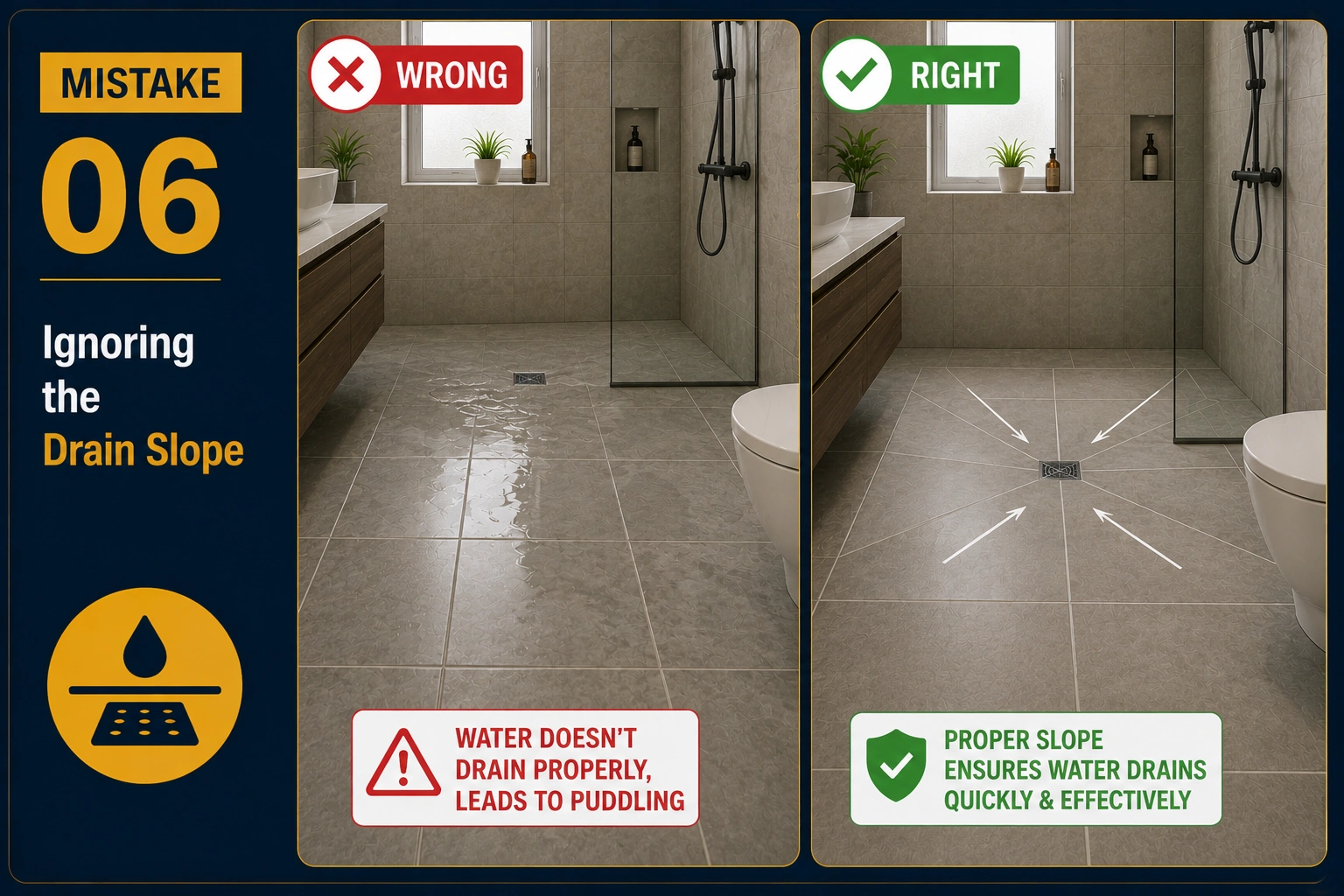
This is a mistake specific to Indian bathrooms that Western tile guides rarely address. The floor must slope gently toward the drain so water runs off cleanly after a bucket bath or shower. If the contractor lays the floor tiles on a flat plane without building in the slope, water pools on the floor and sits there for hours.
Standing water on a bathroom floor causes two problems. First, it keeps the floor wet much longer, which increases the slip risk even on matte tiles. Second, it creates a breeding ground for mildew and makes the bathroom smell musty within weeks.
The fix is to confirm the drain slope with the contractor before laying starts. The standard fall for a bathroom floor in India is 1:100, meaning 1 cm of drop for every 100 cm of horizontal run. The contractor should build this into the cement bed below the tiles, not try to manage it with adhesive thickness.
Mistake 7: Getting Grout Colour and Width Wrong
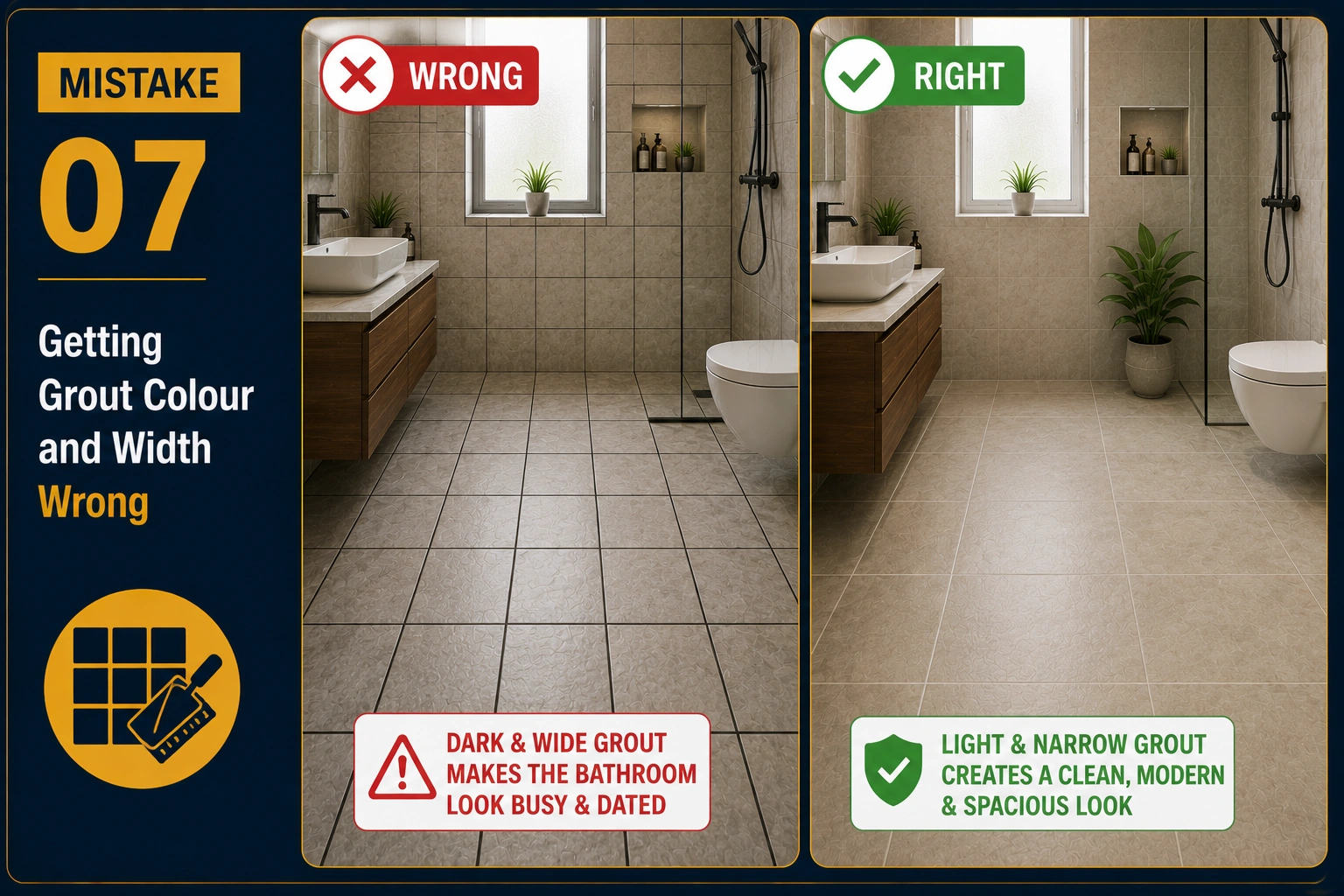
Grout is treated as an afterthought in most Indian bathroom renovations. The contractor usually picks a standard white or grey grout without asking, and the homeowner only notices the result once the bathroom is complete and the grout starts to stain.
Bright white grout on a bathroom floor looks sharp for a few weeks and then turns grey from hard-water minerals, soap residue, and foot traffic. In cities with hard water, the grout discolouration can begin within the first monsoon season.
A grout that matches or is one shade darker than the floor tile hides daily deposits and stays presentable far longer. For bathroom walls where splash and soap marks are the main concern, a close-match grout on lighter tiles keeps the surface looking clean between wipes.
Joint width also matters. Wide grout joints on small tiles create visible texture that accumulates dirt. A 2 to 3 mm joint works for most bathroom tiles. For large-format tiles in a stack layout, a 2 mm joint gives the clean look that is popular in 2026 bathroom renovations.
Mistake 8: Buying the Exact Measured Quantity With No Buffer
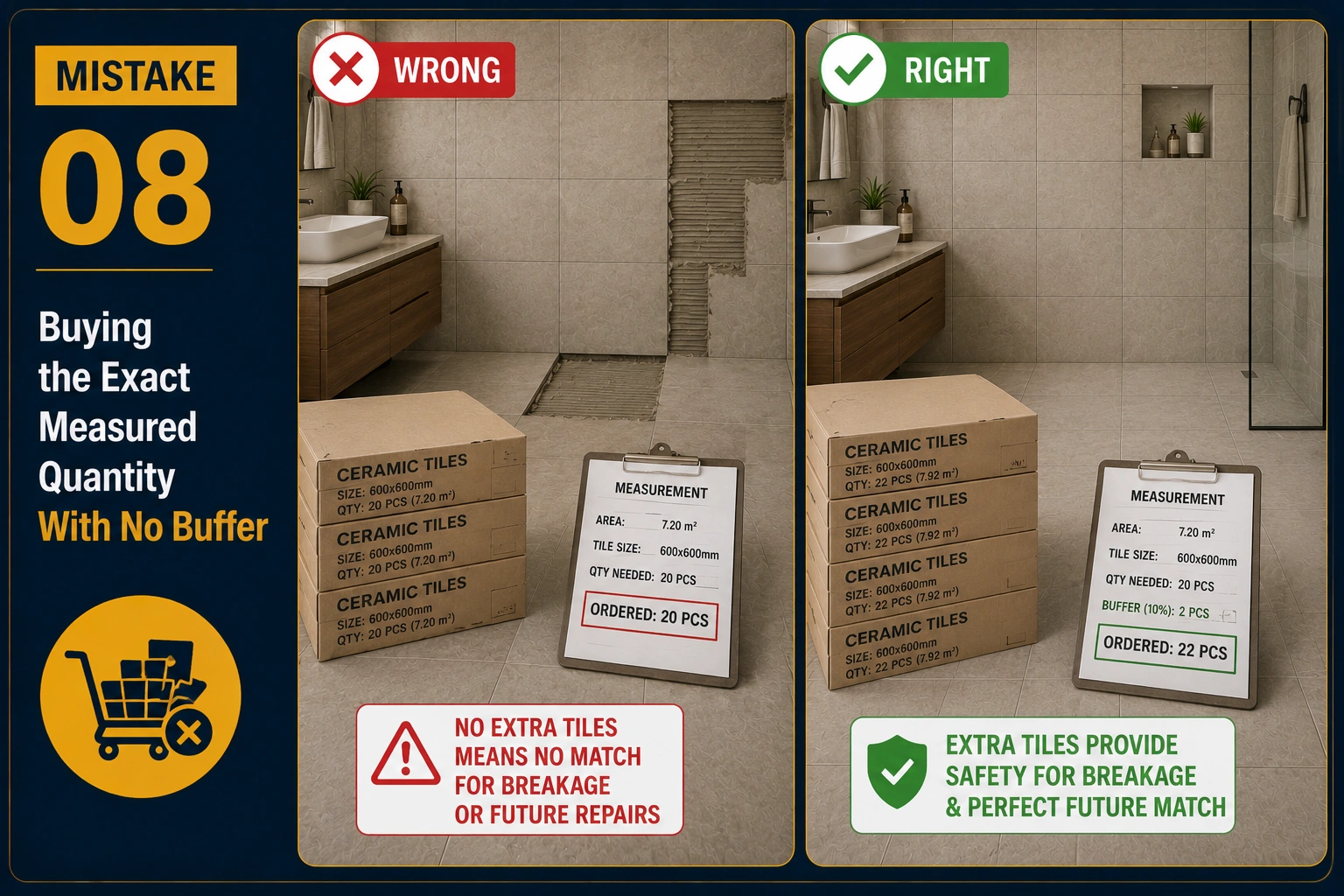
A homeowner measures the bathroom, calculates the tile area in square feet, and orders exactly that number of tiles. The contractor then breaks two tiles during cutting, a third during delivery, and needs four more to finish a corner. The same batch is now out of stock at the dealer.
This situation is frustrating and surprisingly common. Always order 7 to 10 per cent more tiles than the calculated area for a straight lay, and 15 to 20 per cent more for herringbone or diagonal layouts. Understanding different Bathroom Tile Layout Patterns can help you estimate wastage more accurately before placing an order. Keep the extras after the job finishes. If a tile cracks six months later, you will be glad to have a matching spare.
Mistake 9: Choosing Tiles Only Under Showroom Lighting
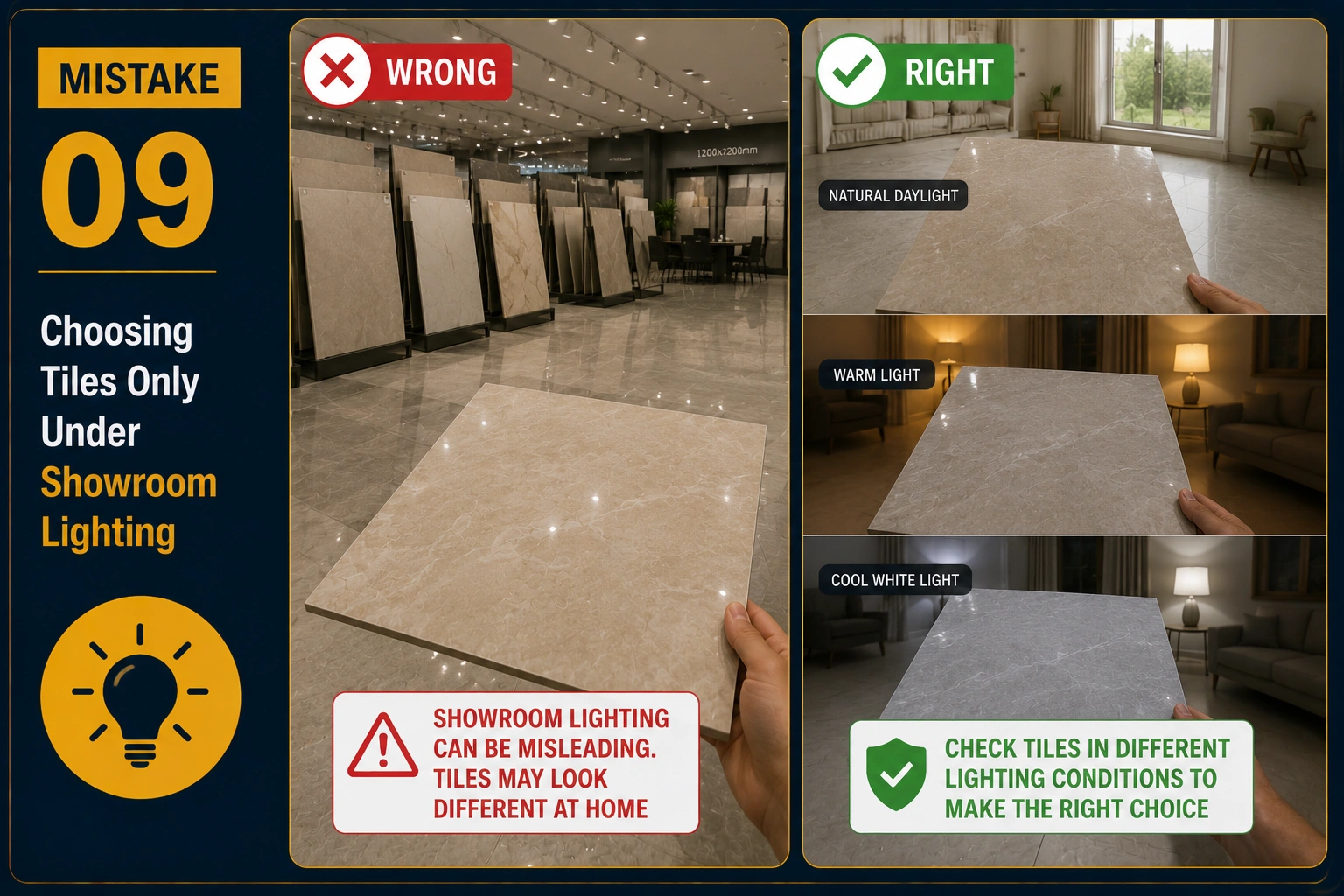
Showrooms use high-intensity cool-white or warm lighting aimed at the tile displays to make every surface look its best. A cream tile in that setting looks bright and rich. The same tile under the warm LED ceiling light of a compact bathroom can look yellow or flat.
Always take a physical tile sample home before placing the order. Hold it against your bathroom wall under the actual light fittings at different times of day. This takes one extra trip to the showroom and saves a far more painful trip to the contractor to discuss relaying.
The same check matters for grout. A grout chip next to a tile sample in your bathroom is far more reliable than a grout strip in a showroom folder.
Mistake 10: Not Accounting for Hard Water Staining
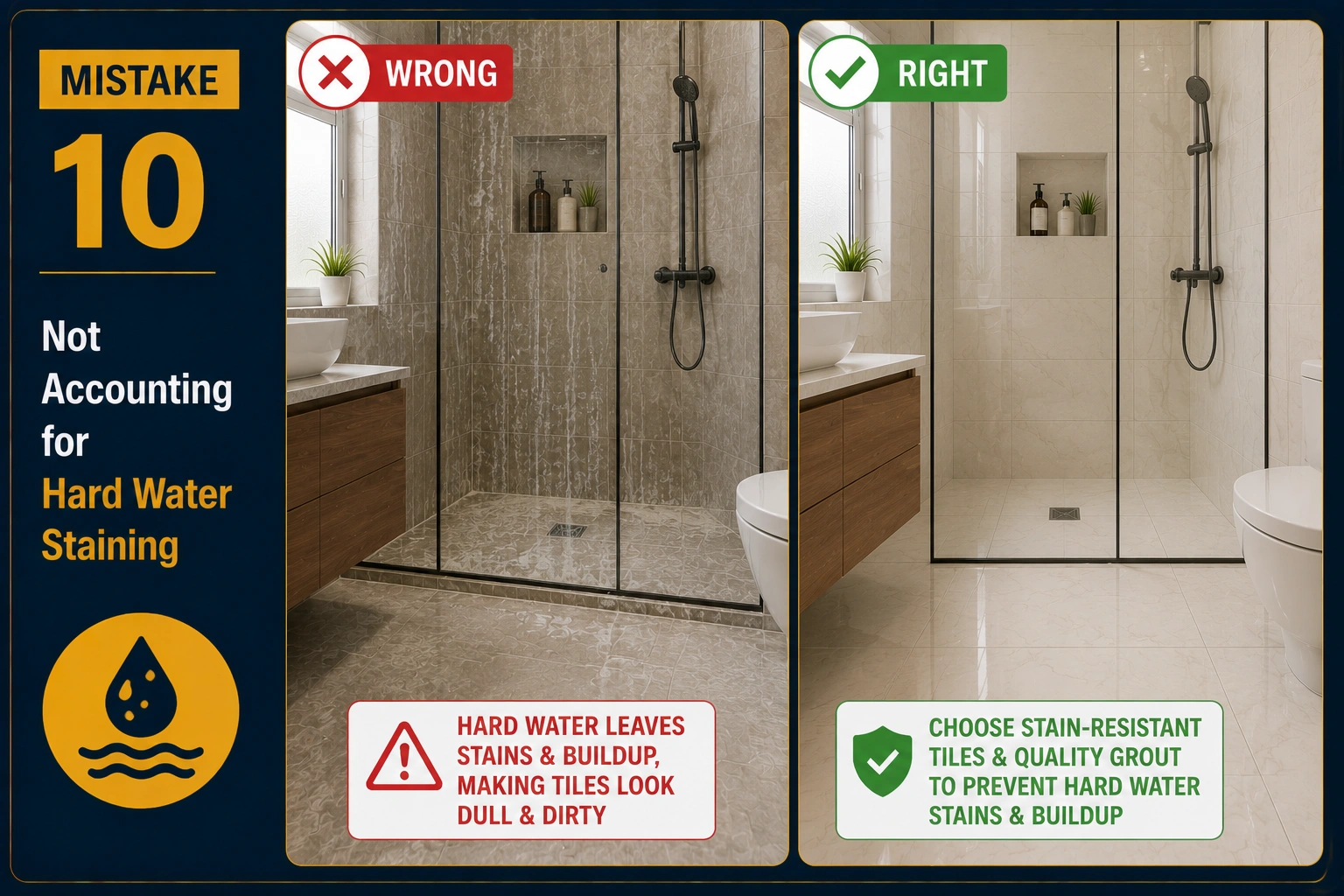
Hard water is a fact of life in most Indian cities. The mineral deposits in water from cities like Delhi, Jaipur, Hyderabad, Chennai, and Ahmedabad leave white calcium marks on surfaces that stay wet. On a glossy floor or a lightly coloured glossy wall tile, those marks appear within weeks of regular use.
Matte and textured tiles in mid-tones such as greige, light grey, or beige hide hard-water deposits far better than high-gloss whites. Low-porosity GVT tiles also resist surface staining more effectively than ceramic because water absorption sits below 0.05 per cent, leaving less for minerals to cling to.
For homeowners in hard-water zones, this choice is worth more attention than colour or pattern. A tile that looks fresh after six months of daily use is worth more than one that looks perfect at installation and requires descaling every two weeks.
Mistake 11: Letting the Contractor Choose the Tile Category
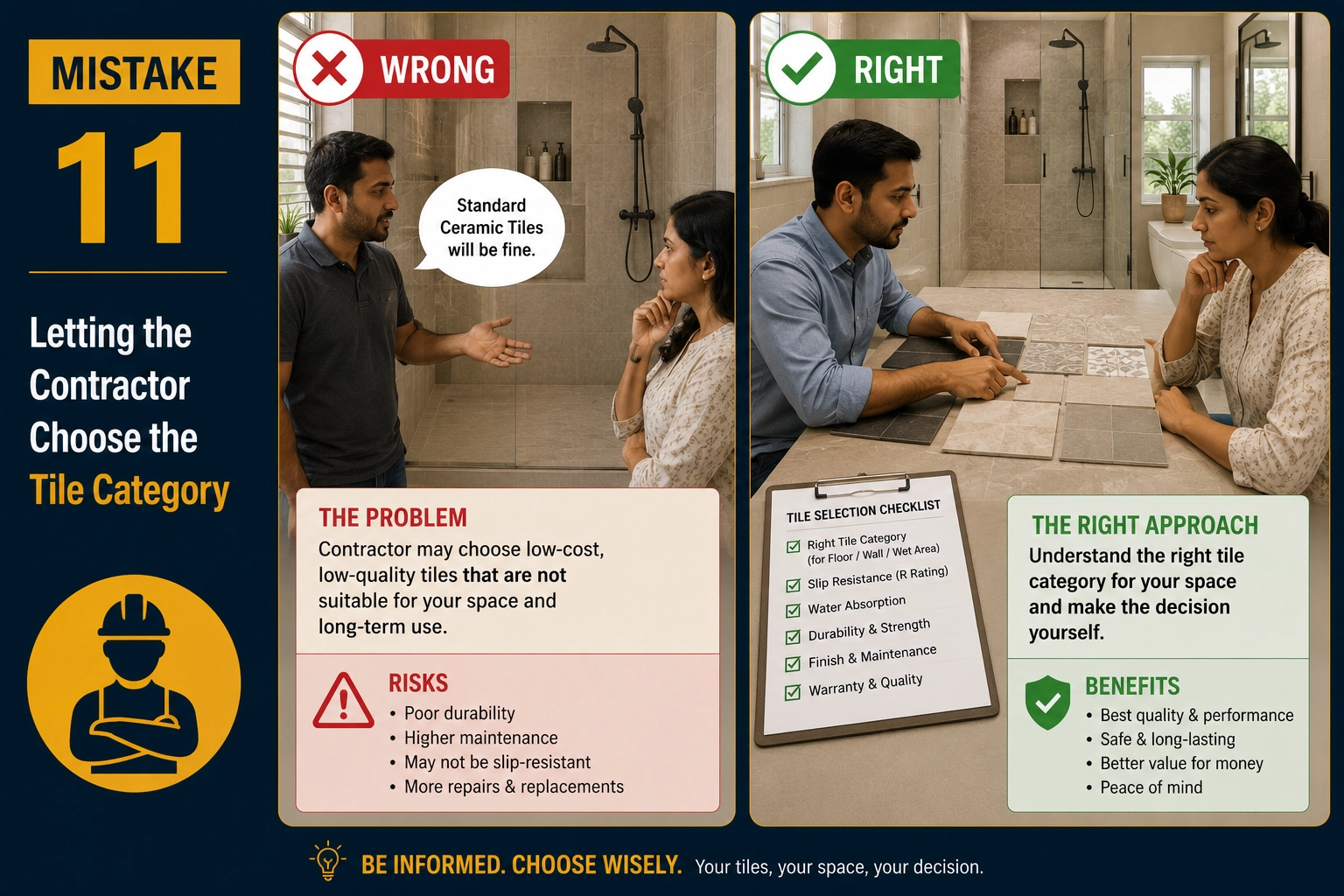
Many contractors receive a margin from specific tile dealers and will recommend whatever gives them the best return, not necessarily the right tile for the space. A homeowner who leaves the tile category fully to the contractor may end up with ceramic on the floor, the wrong finish in the wet zone, or a tile size that creates excessive wastage.
Knowing the basics before the contractor conversation protects against this. Use GVT with an anti-skid finish on the bathroom floor. Use ceramic or GVT on bathroom walls. Never put PGVT on a wet floor. Do not use a 12x24 tile, which is wall-only, on the floor, regardless of what the contractor suggests.
A homeowner who arrives with a clear tile category shortlist has far more control over the outcome than one who starts the renovation conversation with an open brief.
Quick Reference: Mistakes and Fixes at a Glance
| Mistake | Why It Happens | The Fix |
| Glossy tile on a wet floor | Looks good in the showroom | Use matte or anti-skid GVT, R10 or R11 rated |
| Skipping waterproofing | Seen as optional to save money | Apply the membrane before tiling, especially the floor and wet walls |
| Mixing tile batches | Dealer runs short, second batch added | Check the batch number on every box before delivery |
| Wrong tile size for bathroom | Showroom inspiration does not match the room scale | Match tile format to room dimensions, not trends |
| Wall tile used on the floor | Desire to match the wall and floor exactly | Use a floor-rated 1x1 or 2x2 GVT on the bathroom floor |
| No drain slope | Contractor skips it without asking | Confirm a 1:100 slope into the cement bed before tiling starts |
| Wrong grout colour or width | Treated as an afterthought | Choose grout one shade darker than tile, 2 to 3 mm joint |
| No tile buffer ordered | Exact measurements used | Buy 7 to 10 per cent extra, up to 20 per cent for patterns |
| Showroom-only tile check | No sample taken home | Test sample at home under actual bathroom lighting |
| Ignoring hard water impact | Not considered during tile selection | Choose mid-tone matte GVT in high hard-water cities |
| Contractor chooses tile category | The homeowner leaves all decisions to the contractor | Learn basic rules: GVT for floor, never PGVT on a wet floor |
Important Bathroom Tile Checks Before Starting Your Renovation
Most bathroom tile mistakes share one root cause: decisions made too quickly, without checking the basics first.
Before your next renovation begins, note down your bathroom dimensions, the tile category you need for each surface, your city's water quality, and the lighting type in the room. These four points narrow the shortlist to tiles that will actually work, not just tiles that look good in a showroom.
You can also browse tiles by category, finish, and size across Indian suppliers on TilesFinders before visiting a showroom. Knowing the rates and options available in your preferred tile type puts you in a much stronger position when the contractor conversation begins.
FAQs
Glossy, high-glossy, and polished finishes become extremely slippery when wet. In an Indian bathroom where the entire floor gets soaked during a bucket bath or shower, this creates a real fall risk, especially for elderly family members and young children. Replace glossy floors with a matte or anti-skid GVT tile rated R10 or R11.
Check the batch number printed on every tile box before accepting delivery. All boxes for one bathroom should share the same batch number. Order 7 to 10 per cent more tiles than your measured area in the same batch to cover wastage and keep spares for future repairs. If the dealer cannot supply the full quantity from one batch, ask them to reserve the full amount before placing the order.
Leaking behind tiles is almost always caused by skipped or incomplete waterproofing. Tiles are water-resistant, not waterproof. Water enters through grout joints, corners, and the wall-to-floor junction, sits behind the tile layer, and eventually damages walls, causes mould, and creates seepage into the flat below. A proper waterproofing membrane applied before tiling prevents this.
Ceramic tiles have a water absorption rate of 12 to 16 per cent, too high for a bathroom floor that gets soaked daily. The only exception is the 1x1 (300x300 mm) ceramic tile, which can be used on bathroom floors to match a ceramic wall tile set. For all other floor applications, use a floor-rated GVT with a matte or anti-skid finish.
Order 7 to 10 per cent more than the measured area for a straight stack or brick bond layout. If the pattern is herringbone or diagonal, increase the buffer to 15 to 2per centnt because angled cuts produce more offcuts. Keep the spare tiles after the job finishes in case a tile cracks or chips later, and that batch is no longer in production.
Matte and textured GVT tiles in mid-tones such as greige, light grey, or beige hide hard-water mineral deposits better than glossy whites. GVT tiles absorb less than 0.05 per cent water, which means fewer minerals cling to the surface. In cities like Delhi, Jaipur, and Chennai, where hard water is common, a mid-tone matte tile on the floor stays looking clean far longer than a glossy white.
The floor should slope at 1:100, meaning 1 cm of fall for every 100 cm of horizontal run toward the drain. The contractor must build this slope into the cement bed below the tiles, not compensate with adhesive thickness. A flat floor causes water to pool after every bath, increasing slip risk and leading to mildew and musty odour within weeks.

See our tile guides first
Set TilesFinders as a preferred source and our buying guides surface ahead of the rest for you.
Add as preferred sourceTakes one tap. Nothing to install.
What Readers Say
I was about to redo my parking area with the wrong tile size until I read this. The layout comparisons saved me from a costly mistake.
We reference TilesFinders guides while briefing clients on material selection. The size and pattern breakdowns are accurate and easy to explain visually.
On site, I get asked about grout spacing all the time. This article gave me a solid reference I now share with my team before every job.
Finally a guide that doesn't just push generic advice. The oil stain removal steps actually worked on our clubhouse driveway tiles.
I run a small construction firm and now send this link to clients directly when they ask about entrance tile sizing. Saves me an hour of explaining.
Good practical detail, though I wish there were more examples for compact apartment entrances specifically, not just villas.
My mother-in-law wanted marble, I wanted vitrified. This blog gave us the neutral comparison we needed to actually decide together.
Detailed without being overwhelming. I appreciated that it covered both cost and maintenance, not just the aesthetics.
Used the algae and hard water removal tips on our terrace tiles after the monsoon. Worked better than what our regular cleaner was doing.
As someone who sources tiles for multiple builder projects, I find these comparisons genuinely useful for vendor conversations, not just consumer content.
Recommended this to a client who kept second-guessing the entrance design. The small vs large layout section settled the debate instantly.
Straightforward and honest, no unnecessary jargon. Would like to see a similar breakdown for outdoor pool-deck tiles next.
We've bookmarked several TilesFinders guides for our design handbook. Reliable source when clients want data, not just opinions.
Two paths, one marketplace.
Get free quotes from verified suppliers.
Share your room, budget, and style. Suppliers in Morbi respond within hours.
Get Free QuotesList your business, reach real buyers.
Put your showroom in front of homeowners searching for tiles right now.
List Your Business