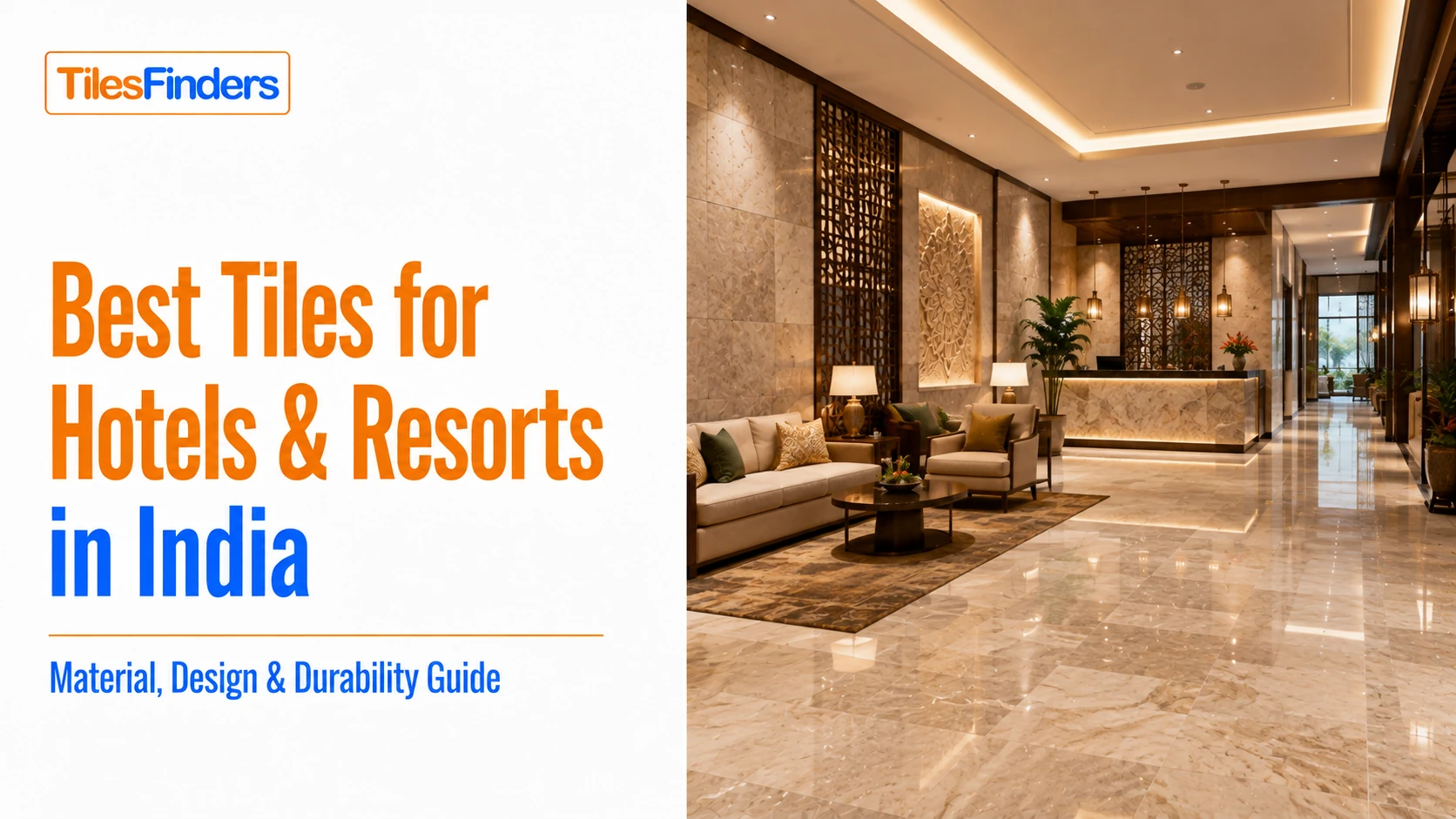
Best Tiles for Hotels & Resorts in India: Material, Design & Durability Guide
A practical guide to sourcing tiles in Bhopal, covering top brand showrooms, major wholesale clusters like MP Nagar, and distinct strategies for homeowner and builder orders.
- Two Masters, One Floor
- The Guest Journey, Zone by Zone
- Why Slip Resistance Is a Liability Question, Not Just a Safety One
- India's Resorts Don't Share One Climate Brief
- Lifecycle Cost: Why Hospitality Tile Math Is Different
- Material and Design Picks by Property Type
- A Specification Checklist Before the RFP Goes Out
- Where to Source Hospitality Grade Tiles
- Specifying for Both Judges at Once
A hotel floor answers to a guest who judges only by look, and an operator who lives with maintenance cost, slip liability, and replacement cycles for years. This guide walks the guest journey zone by zone, covers India's diverse resort climates, and explains why hospitality tile economics differ from residential.
A guest walking through a hotel lobby forms an opinion about the floor in about the time it takes to notice it looks good, or doesn't. The general manager running that same property forms a different opinion, one built from the maintenance log, the cost of the last floor replacement, and whether the insurance broker has ever asked pointed questions about the pool deck.
These two judges rarely agree on what matters, and a tile that satisfies one often fails the other. A polished marble-look porcelain photographs beautifully and is a liability the moment monsoon rain tracks in in June. A bulletproof PEI 5 tile with zero design personality does its job for fifteen years and does nothing for the property's Instagram presence. This guide is built around resolving that tension, zone by zone, climate by climate, rather than treating hotel flooring as a bigger version of a residential buying decision.
Two Masters, One Floor
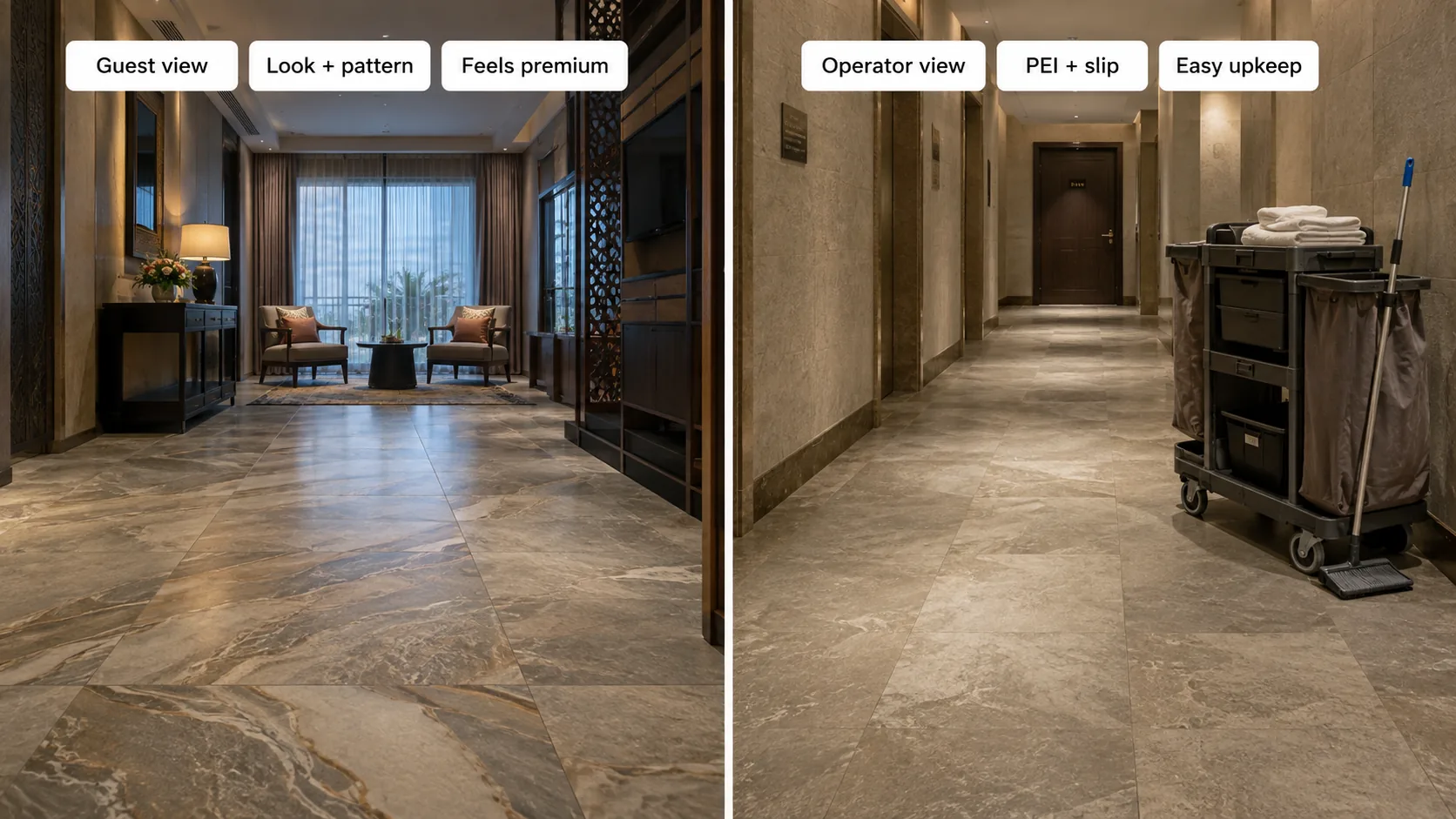
Residential tile decisions answer to one person, the homeowner, over a timeframe measured in years of personal use. A hotel floor answers to two groups with genuinely different priorities, and both need to be satisfied for a specification to actually work.
The guest sees: colour, pattern, how the floor photographs, how it feels underfoot barefoot in a room, whether it looks fresh or dated the moment they walk in.
The operator lives with: PEI abrasion rating against 24-hour foot traffic, slip resistance data defensible in an insurance claim, cleaning labour cost across housekeeping shifts, and a replacement cycle measured against room revenue lost during renovation.
Every zone covered below gets evaluated against both lenses, because a specification that wins on one and fails the other is, in practice, the wrong specification.
The Guest Journey, Zone by Zone
Following a guest from arrival to departure surfaces a genuinely different flooring brief at almost every stop.
| Zone | Guest Priority | Operator Priority | Typical Specification |
| Porte-cochere and lobby | First impression, visual scale | PEI 5, monsoon slip safety | 800x1600mm tiles in GVT, matte or sugar finish |
| Corridors | Feels premium, quiet underfoot | Very high traffic durability | Full-body vitrified or GVT, PEI 4-5 |
| Guest room | Warmth, comfort, quiet | Moderate wear, easy turnover cleaning | Wood-look vitrified plank or engineered wood |
| Guest bathroom | Spa-like, premium materials | Slip safety, water resistance | Marble-look GVT, matte, R10 minimum |
| Pool deck | Resort atmosphere, bare feet | High slip liability zone | Textured porcelain paver, R11-R12 |
| Restaurant and banquet | Ambience, acoustic comfort | Spill resistance, heavy trolley traffic | Full body vitrified, PEI 4-5, matte |
| Spa and wellness | Calm, natural materials look | Constant humidity, barefoot slip safety | Stone-look GVT, textured, R10-R11 |
| Back of house and kitchen | Not guest-facing | Extreme durability, hygiene, drainage | Full body vitrified tiles or quarry tile, PEI 5 |
Lobby and reception specification carries enough weight on its own to warrant separate, deeper coverage; PEI ratings, exact large-format sizing, and finish selection for that zone specifically are covered in more depth elsewhere on this site.
From The Marketplace
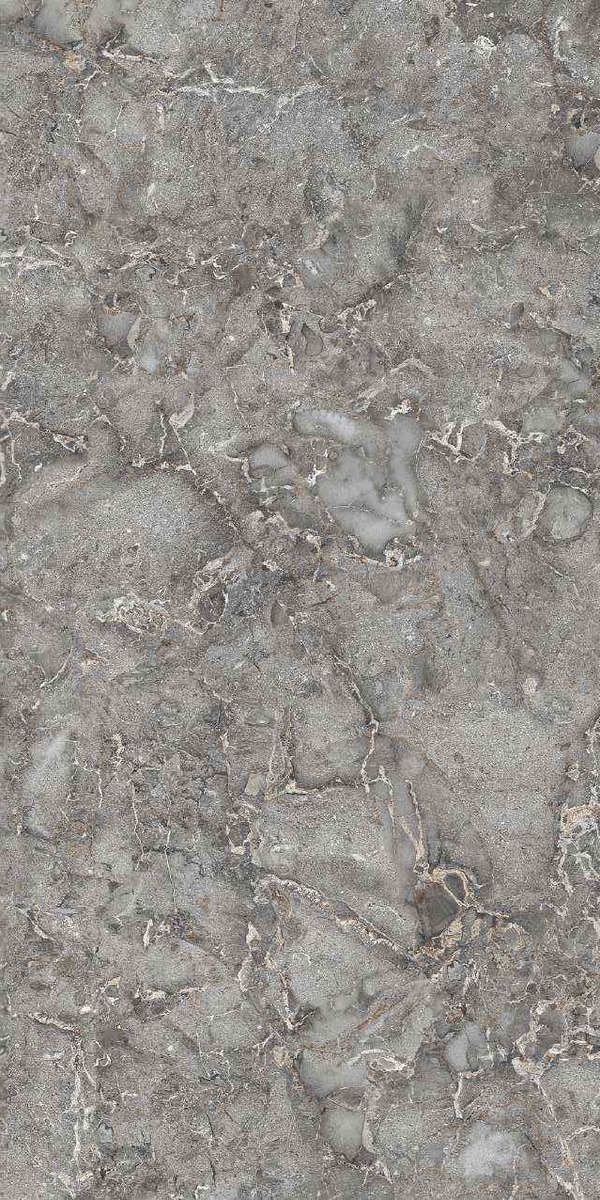
Popular tiles right now



-8810c14b-a9e2-4c98-bf74-de5ef107d96a.jpg)


Why Slip Resistance Is a Liability Question, Not Just a Safety One
In a private home, a slippery floor is a personal risk the owner accepts. In a hotel, it is a legal and financial exposure the operator carries for every guest who walks across it, and this changes how seriously slip specification should be treated at the design stage.
Beyond the R-rating system common in Indian and European specifications, commercial projects internationally increasingly reference the Dynamic Coefficient of Friction, tested under ANSI A326.3, with a wet DCOF of 0.42 or higher generally treated as the defensible threshold for interior commercial floors where water is likely to be present. A glossy, highly polished tile can carry an excellent PEI durability rating and still fail this friction test badly, since abrasion resistance and slip resistance are measuring two entirely different surface properties.
The practical takeaway for a hotel project: request both PEI and slip test data (R rating, DCOF, or both) for any tile being considered for a wet or transitional zone, and treat a beautiful polished sample that lacks this documentation as an incomplete submission, not a finished one.
India's Resorts Don't Share One Climate Brief
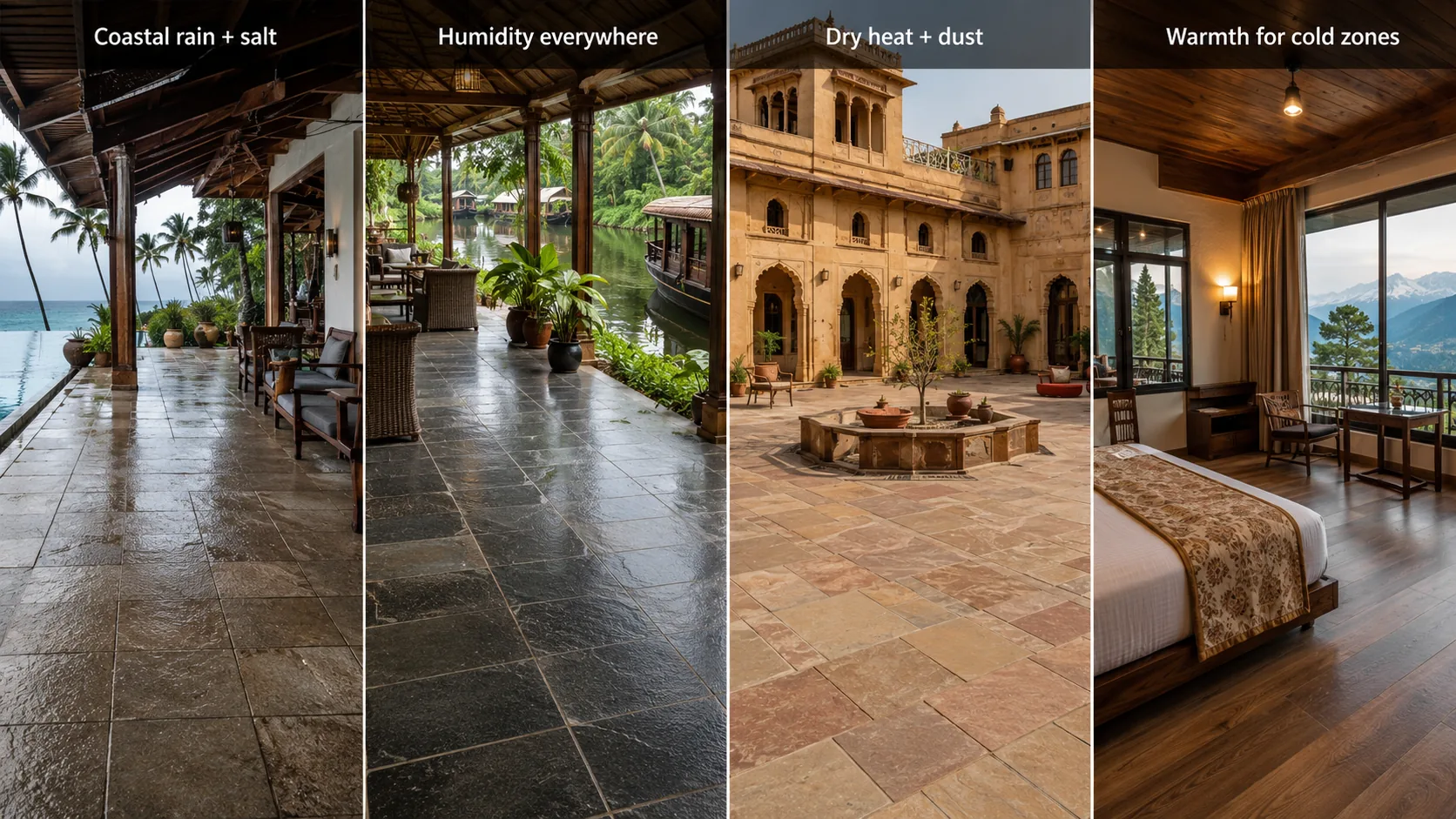
A hotel flooring guide written for a single climate misses how differently Indian hospitality properties are actually built. A resort brief genuinely changes by region.
- Coastal resorts (Goa, Kerala, Andhra coast): salt-laden air accelerates metal fixture corrosion and tests grout and glaze quality faster than an inland property, while the monsoon brings sustained heavy rain to open-air lobbies and pool decks for months at a time.
- Backwater and houseboat-adjacent properties (Kerala): near-constant humidity favours dense, low-porosity tiles and epoxy grout throughout, not just in wet zones, since mould risk extends further into nominally dry areas than it would in a drier climate.
- Desert and heritage resorts (Rajasthan): intense dry heat and dust load favour cooler-toned stone or stone-look finishes for open courtyards, along with more frequent dust-resistant cleaning regimes built into the housekeeping schedule.
- Hill station properties (Himachal, Uttarakhand): lower ambient humidity but genuinely cold winters change guest expectations toward warmer-toned, wood-look finishes in guest rooms, even though frost-related tile damage is a minor concern compared to European hill properties.
A tile specification written for a Goa beachfront property and copied directly onto a Rajasthan heritage resort brief is a common and avoidable mismatch; the climate risk each is actually managing is different enough to warrant a fresh specification, not a shared template.
Lifecycle Cost: Why Hospitality Tile Math Is Different
A residential floor gets replaced when the owner decides to renovate, on their own timeline. A hotel floor gets replaced when it fails, and every day of that replacement is lost room revenue, not just a material and labour cost.
This changes the calculation that should govern tile selection. A marginally cheaper tile that wears visibly within three years instead of eight is not a saving once the cost of a mid-cycle renovation, including displaced guests and disrupted operations, is factored in against the original price difference. For any zone carrying continuous high traffic, lobby, corridors, restaurant, specifying one grade above what seems strictly necessary is consistently the better economic decision over a typical hotel's ten-year renovation cycle.
Material and Design Picks by Property Type
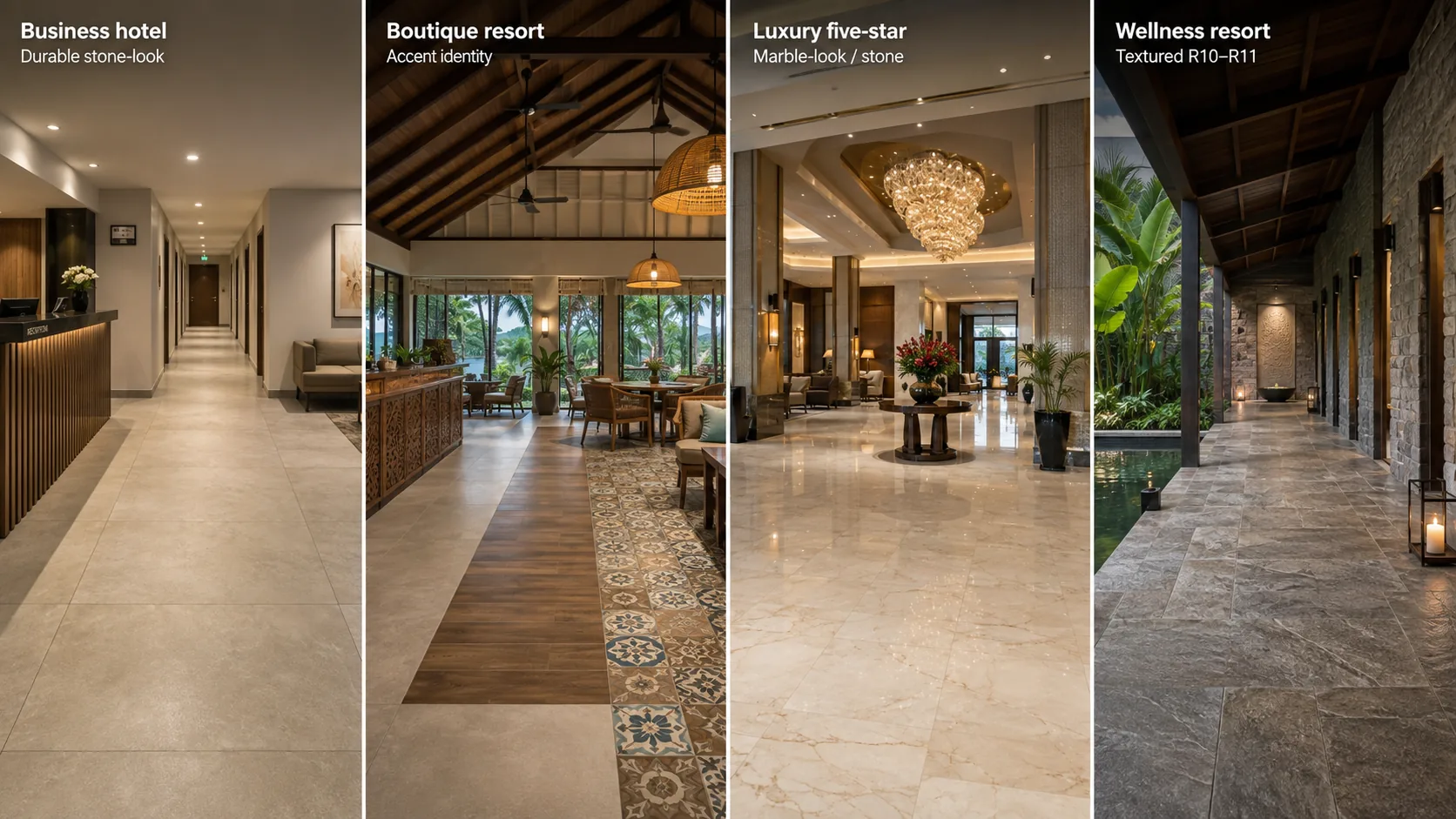
- Budget and mid-scale business hotels: full body vitrified in a neutral stone-look or concrete-look finish across public areas, PEI 4 minimum, prioritising durability and low maintenance cost over design statement pieces.
- Boutique resorts: a mix of large format GVT in guest-facing zones with a genuine design identity, wood-look or patterned accent tiles used selectively in lobby and restaurant areas to support brand storytelling.
- Luxury five-star properties: marble-look porcelain or genuine natural stone in guest-facing zones, PEI 5 full-body vitrified in back-of-house, with a materially higher design and finish budget reflecting the guest expectation at this tier.
- Wellness and spa-led resorts: textured stone-look tiles throughout guest-facing wet zones, prioritising a calm, natural material palette without compromising the R10-R11 slip specification these zones genuinely need.
A Specification Checklist Before the RFP Goes Out
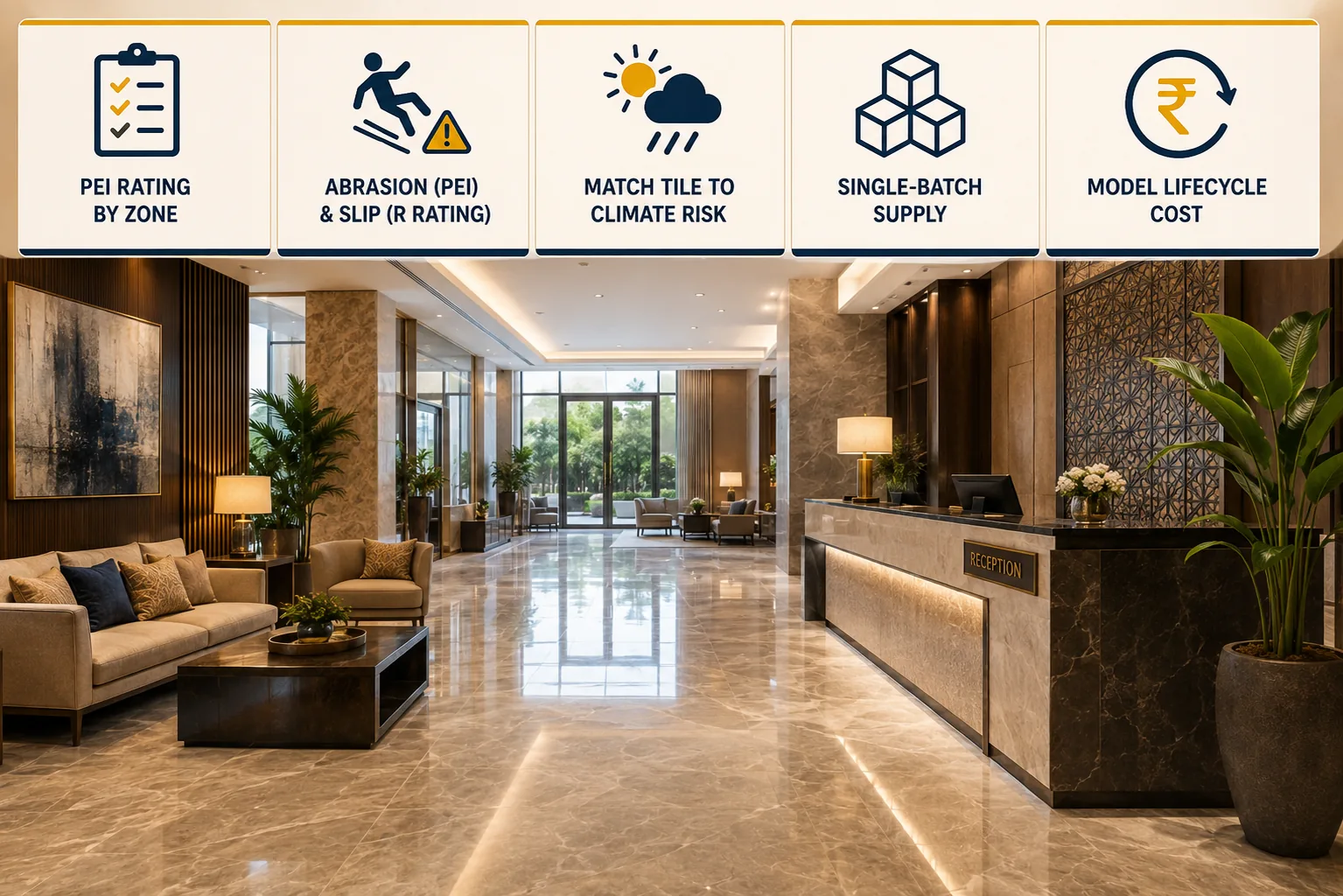
- Confirm PEI rating by zone, not as a single blanket figure across the entire property, since lobby, guest room, and back of house genuinely differ in traffic load.
- Request both abrasion (PEI) and slip (R rating or DCOF) documentation for every wet or transitional zone, treating a submission without both as incomplete.
- Match tile selection to the property's specific climate risk, coastal salt exposure, hill station cold, or desert dust, rather than defaulting to a generic hospitality template.
- Confirm single-batch supply commitments for the full order across large public areas, given how visible a shade mismatch is across an open lobby or corridor.
- Model lifecycle cost, not just upfront material price, factoring in expected wear life against the property's renovation cycle and daily room revenue.
Where to Source Hospitality Grade Tiles
Hospitality projects need dealers and manufacturers who can supply PEI 4-5 rated, large-format, batch-consistent product at project scale; not every residential-focused dealer stocks this tier of product as standard inventory.
TilesFinders is a tile discovery and dealer directory that helps hospitality project teams compare commercial-grade tile options across lobby, guest room, pool deck, and back-of-house categories, and connect with verified dealers on a quote basis suited to project-scale orders.
Specifying for Both Judges at Once
A hotel or resort floor that genuinely works satisfies the guest's eye and the operator's decade-long maintenance reality at the same time, not one at the expense of the other. Getting there means treating each zone's brief separately, documenting slip and abrasion data rather than trusting a showroom sample, and matching the specification to the property's actual climate rather than a generic hospitality template.
If you are sourcing tiles for a hotel or resort project, TilesFinders connects hospitality project teams with verified dealers offering commercial-grade, batch-consistent product on TilesFinders.

FAQs
PEI 5 is the standard recommendation for hotel and hospital lobby floors, given the continuous, heavy foot traffic these spaces carry, often including luggage trolleys and outdoor footwear.
A textured, matte porcelain paver rated R11 to R12 is the standard specification for pool decks, given the combination of constant water exposure and bare feet.
Hotel floors carry continuous, near round-the-clock foot traffic from a constantly changing set of guests, far exceeding the wear a residential floor experiences, which is why hospitality specifications call for PEI 4-5 rated tile rather than the PEI 3 typical of home flooring.
It can work well in low-traffic, dry, guest-facing accent areas, but polished finishes are a genuine slip liability in any zone exposed to tracked-in moisture, including most lobbies during monsoon season, and should be avoided there regardless of how the sample looks in a showroom.
No. Coastal properties need to account for salt air and sustained monsoon exposure, while hill station properties generally prioritise warmer-toned finishes for guest comfort in colder conditions. Copying one climate's specification onto the other is a common and avoidable mismatch.
Both measure slip resistance but through different test methods; the R rating uses a ramp test common in Indian and European specifications, while DCOF, tested under ANSI A326.3, is more commonly referenced in commercial specifications following American standards. Requesting whichever data set is available, and ideally both, gives a more complete picture than relying on either alone.


Discover Similar Styles
Best Sand Dune-Shade Vitrified and GVT Tiles India 2027: Minimalist Bedroom and Living Room Picks
Top 15 Tiles Manufacturers & Suppliers in West Bengal: Top Picks for Builders & Homeowners 2027
Matte Carving Tile Design Ideas: 20+ Embossed and Sculpted Looks for Indian Living Rooms and Bathrooms
See our tile guides first
Set TilesFinders as a preferred source and our buying guides surface ahead of the rest for you.
Add as preferred sourceTakes one tap. Nothing to install.
What Readers Say
I was about to redo my parking area with the wrong tile size until I read this. The layout comparisons saved me from a costly mistake.
We reference TilesFinders guides while briefing clients on material selection. The size and pattern breakdowns are accurate and easy to explain visually.
On site, I get asked about grout spacing all the time. This article gave me a solid reference I now share with my team before every job.
Finally a guide that doesn't just push generic advice. The oil stain removal steps actually worked on our clubhouse driveway tiles.
I run a small construction firm and now send this link to clients directly when they ask about entrance tile sizing. Saves me an hour of explaining.
Good practical detail, though I wish there were more examples for compact apartment entrances specifically, not just villas.
My mother-in-law wanted marble, I wanted vitrified. This blog gave us the neutral comparison we needed to actually decide together.
Detailed without being overwhelming. I appreciated that it covered both cost and maintenance, not just the aesthetics.
Used the algae and hard water removal tips on our terrace tiles after the monsoon. Worked better than what our regular cleaner was doing.
As someone who sources tiles for multiple builder projects, I find these comparisons genuinely useful for vendor conversations, not just consumer content.
Recommended this to a client who kept second-guessing the entrance design. The small vs large layout section settled the debate instantly.
Straightforward and honest, no unnecessary jargon. Would like to see a similar breakdown for outdoor pool-deck tiles next.
We've bookmarked several TilesFinders guides for our design handbook. Reliable source when clients want data, not just opinions.
Two paths, one marketplace.
Get free quotes from verified suppliers.
Share your room, budget, and style. Suppliers in Morbi respond within hours.
Get Free QuotesList your business, reach real buyers.
Put your showroom in front of homeowners searching for tiles right now.
List Your BusinessMore Blogs
See all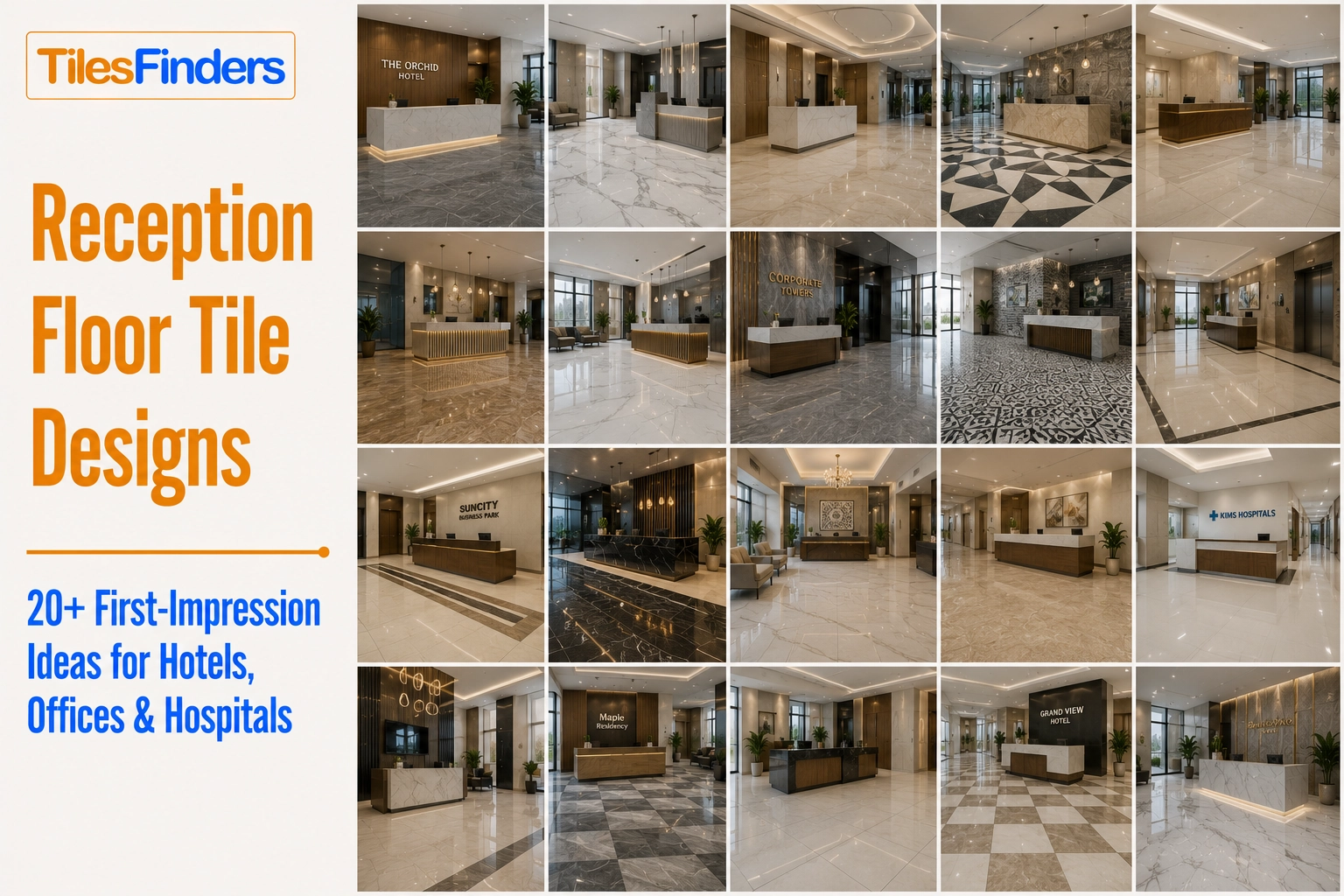
Reception Floor Tile Designs: 20+ Ideas for Hotels, Offices & Hospitals
The complete guide to choosing reception area tiles for Indian buildings, covering tile materials...
Read More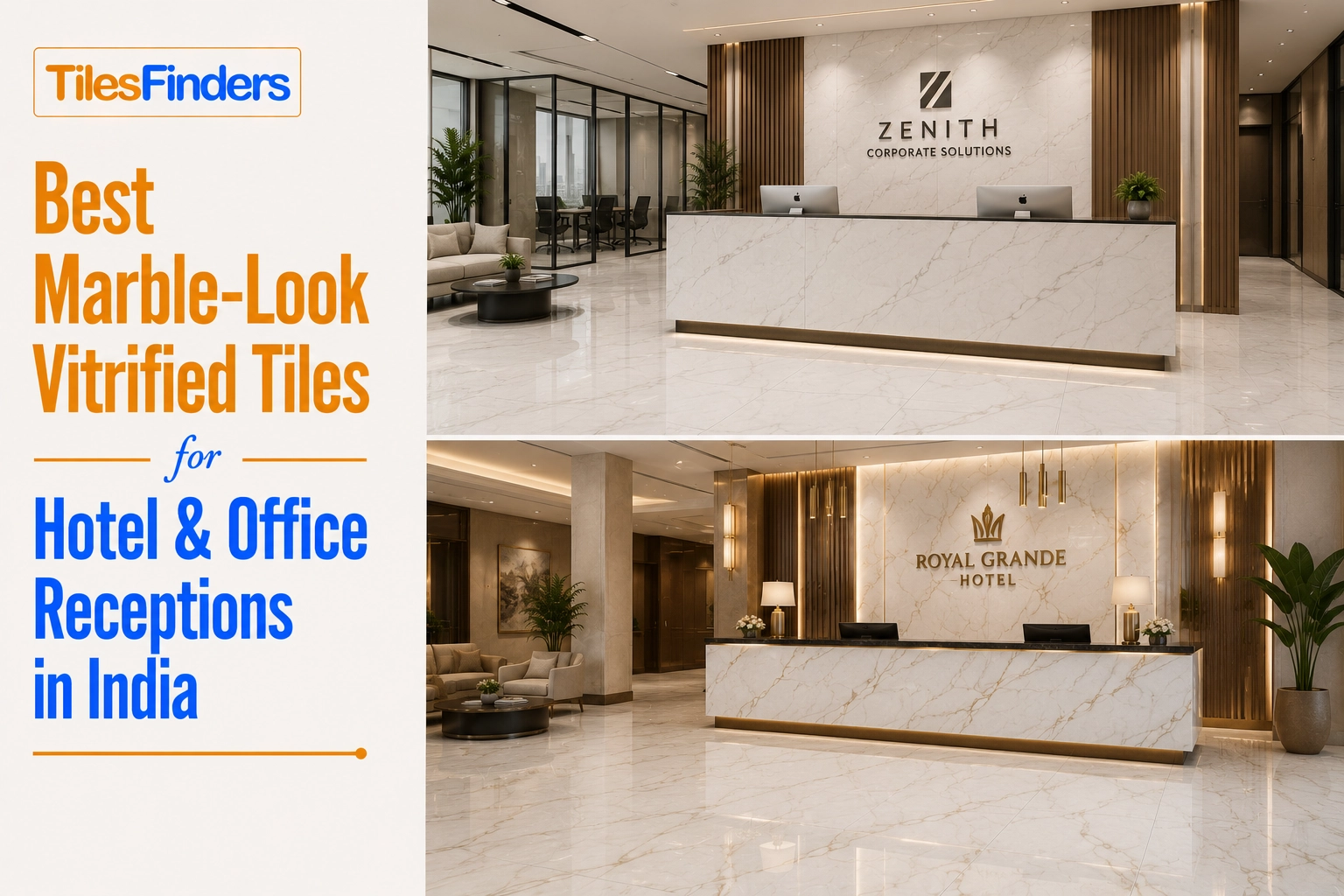
Best Marble-Look Vitrified Tiles for Hotel & Office Receptions in India
Discover the best marble-look vitrified tiles for hotel and office receptions in India. Compare m...
Read More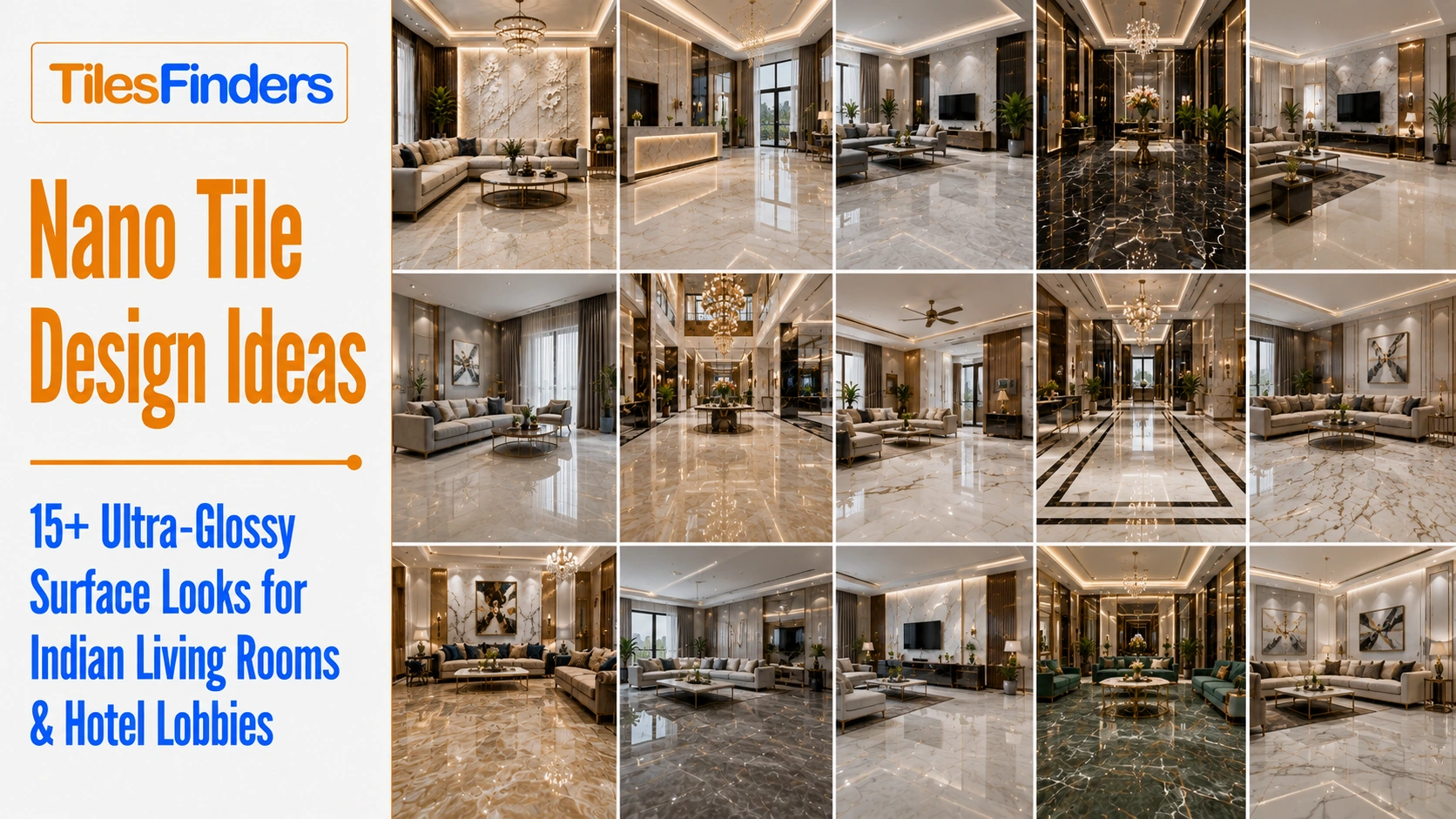
Nano Tile Design Ideas: 15+ Ultra-Glossy Surface Looks for Indian Living Rooms and Hotel Lobbies
Explore 15+ nano tile design ideas for Indian living rooms, dining spaces, hotel lobbies and feat...
Read More