Rustic Tiles in India: Complete Style, Material & Buying Guide
Discover rustic tiles for Indian homes, including terracotta, stone-look, wood-look, brick-look, and natural stone. Compare prices, finishes, room-wise applications, and expert buying tips.
- What 'Rustic Tiles' Actually Means in the Indian Market
- Six Rustic Tile Styles and Where Each Works in an Indian Home
- Rustic Tiles by Room: Right Material for Each Surface
- Rustic Tile Price Guide India 2026
- Common Mistakes When Buying Rustic Tiles in India
- Rustic Tile Buying Guide: Questions to Ask Before Ordering
- Rustic Tiles from Morbi, Gujarat, and Indian Sources
- Find Your Rustic Tile Style on TilesFinders
Rustic tiles combine timeless natural aesthetics with modern durability, making them ideal for Indian homes. This guide compares materials, prices, room-wise applications, finishes, and maintenance to help you choose the perfect rustic tile.
Rustic tiles cover a wide range of materials, looks, and price points in the Indian market. The word 'rustic' is used by designers to describe anything from a hand-pressed terracotta tile from Rajasthan to a digitally printed GVT that replicates aged wood or stone. Before buying, it is worth being clear on which rustic look you want, which material delivers it, and which surface the tile can safely go on.
This guide covers the five major rustic tile categories available in India in 2026, the right material and finish for each room, the price range across tiers, and the buying specifications that matter when ordering from Morbi, Gujarat, manufacturers or regional artisan producers.
What 'Rustic Tiles' Actually Means in the Indian Market
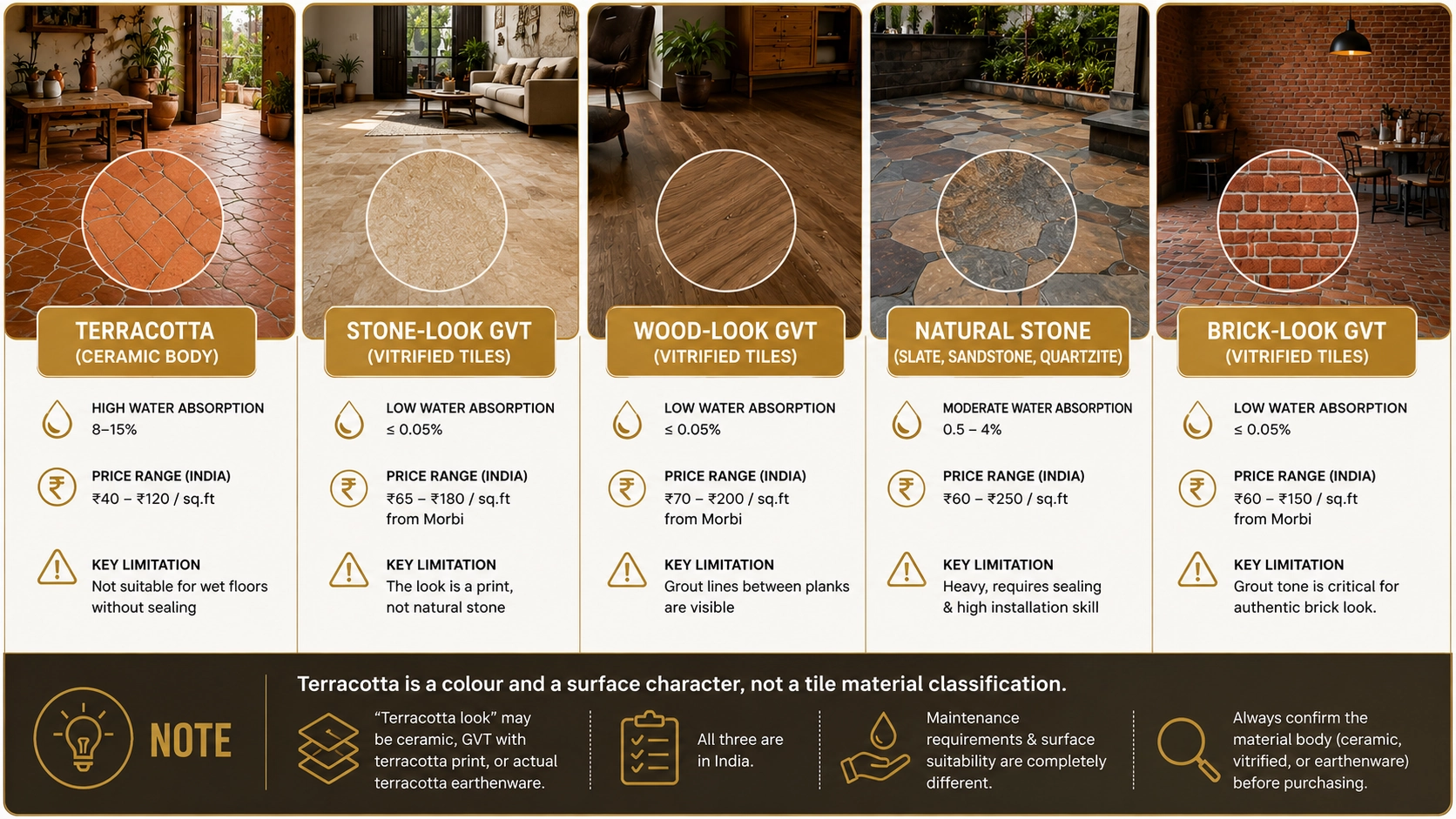
In the Indian tile market, the rustic category encompasses a range of product types. It is a design language shared across five very different materials. Each material achieves the rustic look through a distinct mechanism, and each has unique technical properties, maintenance requirements, and surface suitability.
| Material | How It Creates the Rustic Look | Water Absorption | Price Range (India) | Key Limitation |
| Terracotta (ceramic body) | Unglazed or lightly glazed earthenware fired at low temperature. The warm red-brown colour, porous body, and hand-pressed variation are the look. | 8 to 15%. Porous. Requires sealing. | Rs. 40 to Rs. 120/sq.ft for domestic terracotta | Not suitable for wet floors without sealing. Stains from oil and turmeric without regular maintenance. |
| Stone-look GVT (vitrified tiles) | Digital print on GVT body replicates aged stone, slate, travertine, sandstone, or quartzite. Textured matte surface adds tactile dimension. | 0.05% or lower. Non-porous. No sealing. | Rs. 65 to Rs. 180/sq.ft from Morbi | The look is a print, not a natural surface. Very close at room scale but visible as a tile on close inspection. |
| Wood-look GVT (vitrified tiles) | Digital print replicates aged teak, walnut, reclaimed barn wood, or driftwood planks. Available in plank formats (200x1200 mm, 150x900 mm). | 0.05% or lower. Non-porous. No sealing. | Rs. 70 to Rs. 200/sq.ft from Morbi | Grout lines between planks are visible and must be specified carefully to avoid a printed-floor read. |
| Natural stone (slate, sandstone, quartzite) | Actual stone with natural cleft surface, colour variation, and edge irregularity. Slate, Indian Kota stone, Mandana, and Raj Pink are the primary rustic stone options. | 0.5 to 4% depending on stone type. Sealing required. | Rs. 60 to Rs. 250/sq.ft for domestic stone | Weight, structural load, inconsistent thickness, and high installation skill requirements. |
| Brick-look GVT (vitrified tiles) | Digital print replicates aged brick, exposed brick wall, or terracotta brick floor. Available in brick formats (75x230 mm, 100x300 mm, 200x400 mm). | 0.05% or lower. Non-porous. No sealing. | Rs. 60 to Rs. 150/sq.ft from Morbi | Grout joint specification is critical. Wrong grout tone destroys the exposed brick read. |
Note: Terracotta is a colour and a surface character, not a tile material classification. In the Indian tile industry, a tile described as 'terracotta look' may be a ceramic tile, a GVT with a terracotta-coloured digital print, or an actual unglazed terracotta earthenware tile. All three are sold in India. The maintenance requirements and surface suitability of each area are completely different. Always confirm the material body (ceramic, vitrified, or earthenware) before purchasing.
Six Rustic Tile Styles and Where Each Works in an Indian Home
1. Terracotta and Warm Earth Tones
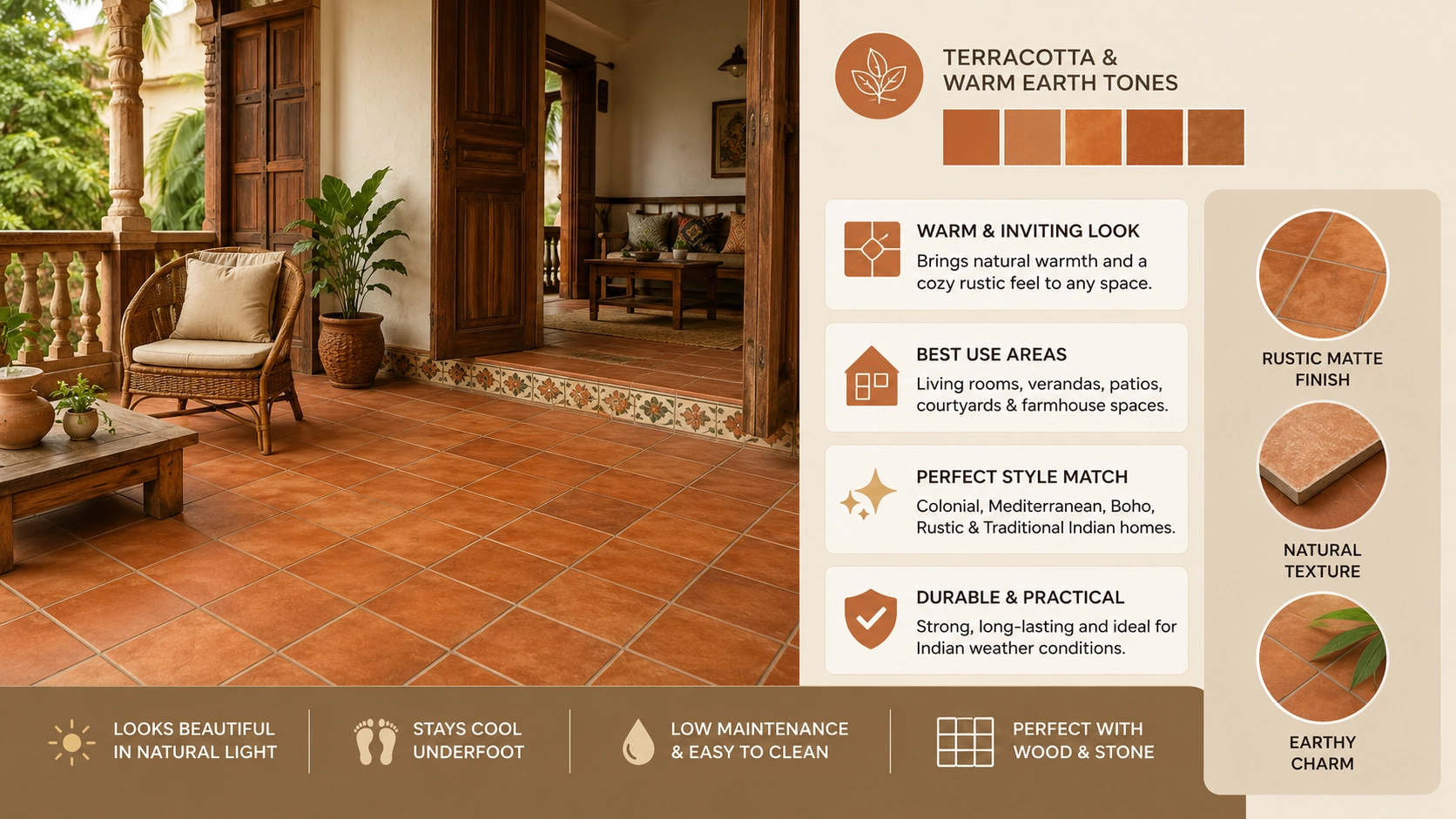
The terracotta rustic style draws from India's deepest tile tradition: the baked earth tiles of Rajasthan, Madhya Pradesh, and Gujarat, used in havelis, step-wells, and traditional courtyard homes for centuries. In a modern Indian home, the terracotta look works best in living rooms, dining rooms, covered verandahs, and entrance areas where the warm red-brown floor creates a grounded, rooted quality that no other floor material matches.
- Terracotta-look GVT: Water absorption at 0.05%, no sealing, PEI 4 for floor use. The practical specification for any room where the terracotta aesthetic is wanted.
- Best sizes: 300x300 mm, 400x400 mm, and 600x600 mm. Large-format terracotta look at 800x800 mm is available from Morbi, but the warm tone works best in smaller square formats that replicate the scale of traditional Indian floor tiles.
Design principle: Terracotta and warm earth tone floors warm a room optically, not just visually. In a room with white or off-white walls and natural daylight, a terracotta floor at 300x300 mm reads as the thermal anchor of the space. This is why traditional Indian homes used warm-tone floors throughout: the floor colour compensates for the coolness of thick stone or lime-washed plaster walls.
2. Stone-Look Rustic: Slate, Travertine, and Sandstone
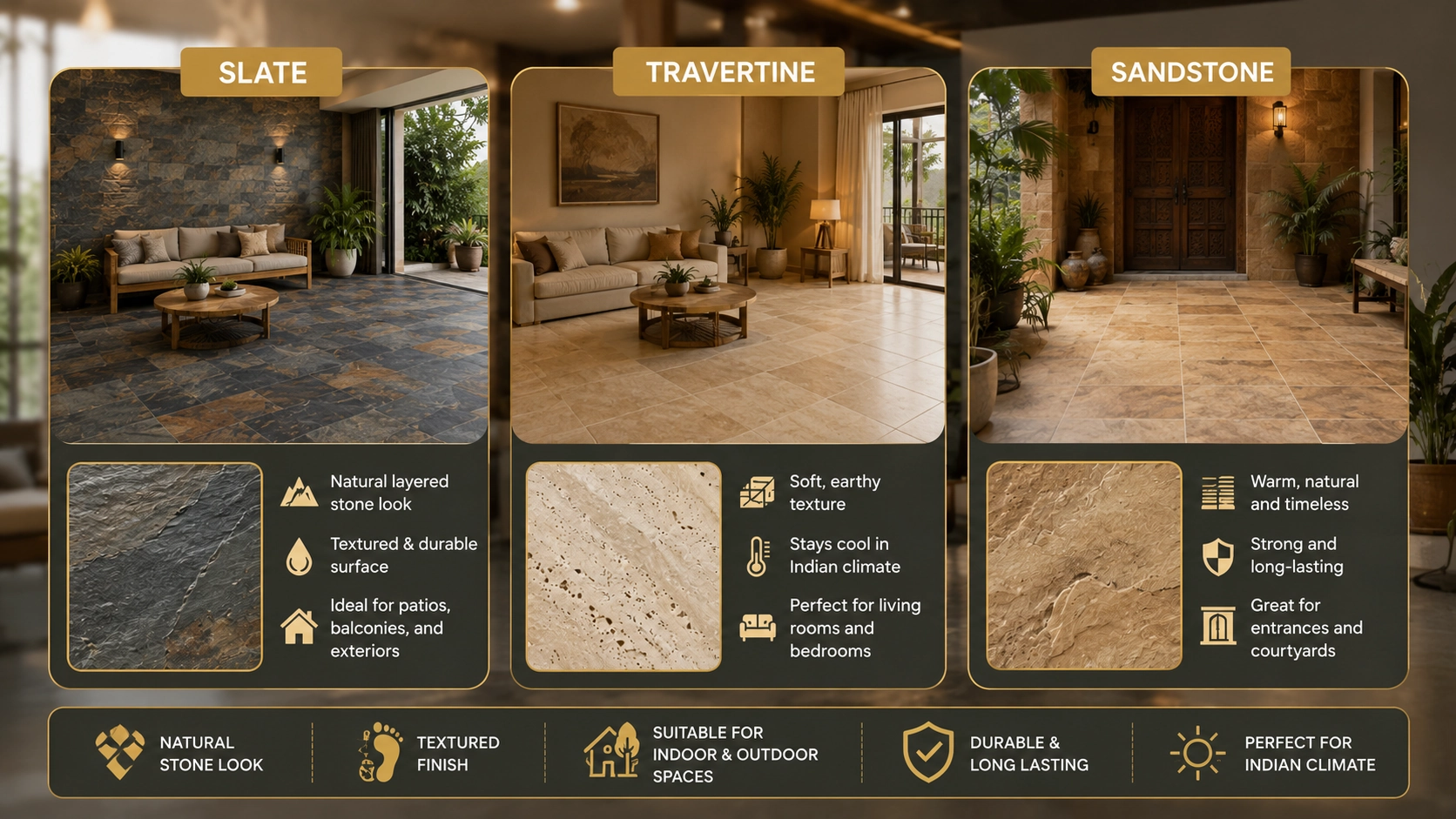
The stone-look rustic style replicates the cleft, textured, and colour-varied surface of natural stone in a GVT body. Slate-look, travertine-look, and sandstone-look are the three most widely available sub-categories from Morbi manufacturers in 2026. Each creates a different rustic temperature.
- Slate-look GVT: Dark grey, charcoal, or green-grey base with cleft texture. The most dramatic rustic stone look. Works in living rooms, bedroom accent walls, bathroom walls, and outdoor covered areas. Textured matte finish at Rs. 75 to Rs. 140/sq.ft from Morbi.
- Travertine-look GVT: Cream, warm beige, or ivory base with pitted and banded surface replicating natural travertine. Reads as warm and classical. Works in living rooms, hotel lobbies, and heritage-style interiors. Matte or sugar finish at Rs. 80 to Rs. 160/sq.ft.
- Sandstone-look GVT: Buff, golden yellow, or warm brown with fine horizontal banding replicating Indian Dholpur or Kota sandstone. Works in courtyards, verandahs, dining rooms, and any interior with a Rajasthani or Mughal design reference. Textured matte at Rs. 70 to Rs. 140/sq.ft.
Spec to ask for: For any stone-look rustic GVT, request the surface texture depth (in mm or micro-texture). A texture depth above 0.5 mm gives a genuinely tactile surface that reads as stone. Below 0.3 mm, the surface reads as flat print. The texture specification is not always listed on the TDS; ask the Morbi manufacturer's technical team directly.
3. Wood-Look Rustic: Reclaimed, Barn Wood, and Aged Teak
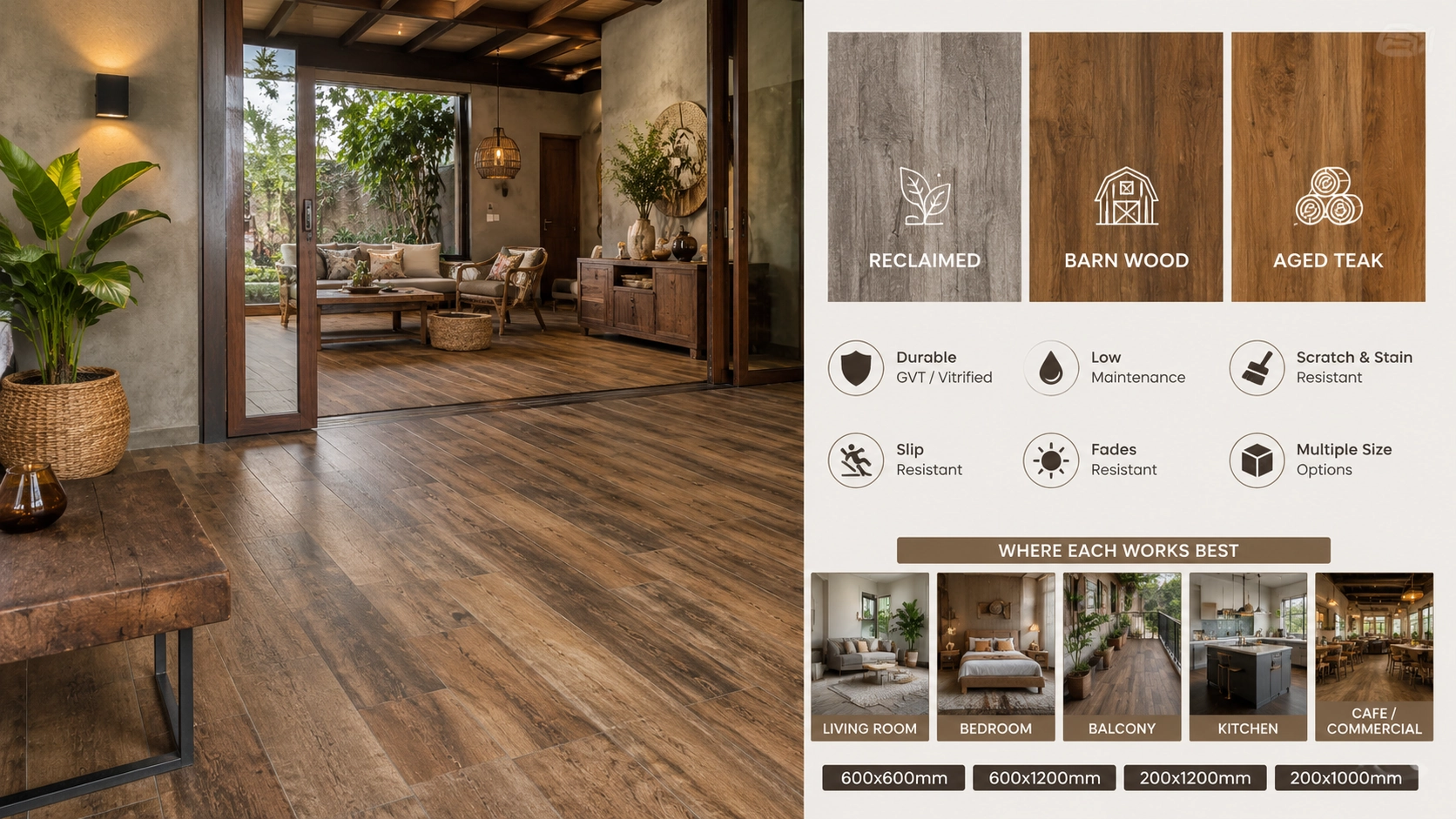
Wood-look rustic tiles in the Indian market cover three sub-styles: reclaimed wood (pale weathered planks), barn wood (dark aged timber with knots and grain marks), and aged teak (warm brown with pronounced grain). All three are available as GVT plank tiles from Morbi manufacturers.
- Plank formats: 200x1200 mm (most popular for Indian living rooms), 150x900 mm, 200x1000 mm. The long rectangular format is essential for the wood plank read. Square or near-square wood-look tiles do not read as timber.
- Finish: Matte or sugar finish only for floor use. GHR finish is available in some wood-look designs and adds depth to the grain print. Never specify a glossy finish for a wood-look floor tile, as a glossy finish breaks the natural timber's grain immediately.
- Price range: Rs. 90 to Rs. 200/sq.ft from Morbi manufacturers in 200x1200 mm plank format. Higher for 4 to 6 face variation batches that prevent visible grain repetition.
- Indian home suitability: Wood-look GVT works in all rooms, including kitchen, bathroom, and balcony,y with anti-skid matte specification. Natural wood flooring is maintenance-intensive and humidity-sensitive; wood-look GVT delivers the visual without any of the humidity, termite, or sealing concerns.
Note: Wood-look tiles in India are classified as GVT (Glazed Vitrified Tiles) with a digital print. They are not wood-plastic composite (WPC) or laminate flooring. The tile body is ceramic-vitrified, not wood-based. Do not confuse the two products when comparing quotes from different suppliers.
4. Brick-Look Rustic: Exposed Brick Wall and Floor Styles
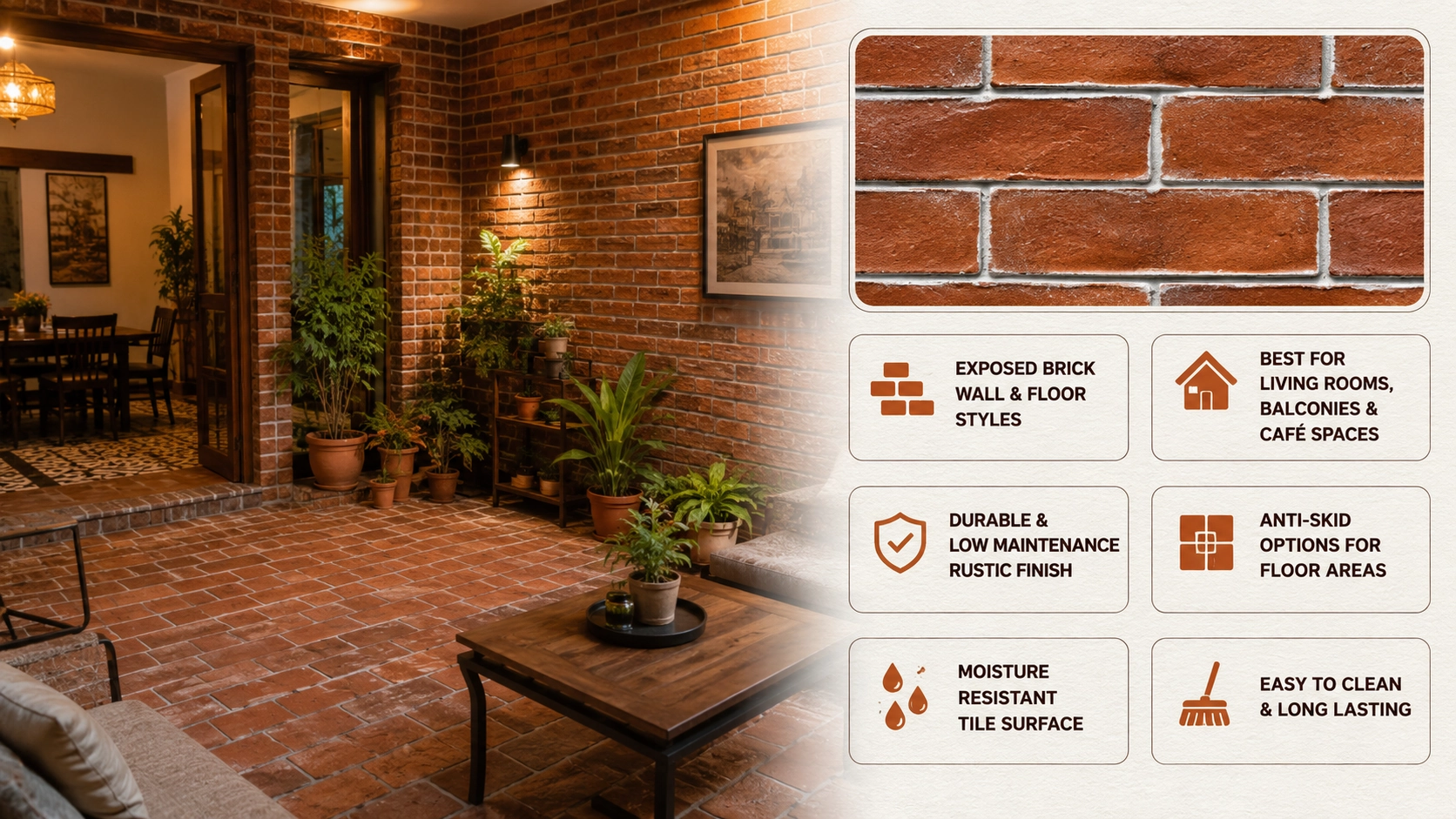
Brick-look rustic tiles replicate the surface of aged, exposed brick in formats that match real brick proportions. In Indian interiors, the brick-look rustic style draws from the exposed brick aesthetic of Mumbai's colonial mill buildings, Delhi's Lutyens bungalows, and contemporary industrial-chic restaurants and cafes across metro India.
- Wall use (primary application): Brick-look GVT at 75x230 mm or 100x300 mm on an accent wall behind a sofa, a feature dining room wall, a kitchen backsplash, or a bar wall. This is where brick-look tile does most of its design work in an Indian home.
- Floor use: 200x400 mm brick-look GVT in anti-skid matte for a courtyard, verandah, or outdoor entertainment area. Not commonly used on interior floors in Indian homes, the scale of 75x230 mm brick creates very high grout line density on a floor above 100 sq.ft.
- Grout specification: Dark grey or brown grout that matches the mortar colour of aged brick. White grout on a brick-look wall makes the tile read as bathroom rather than exposed brick. The grout tone is 50% of the brick-look design outcome.
- Price range: Rs. 60 to Rs. 150/sq.ft from Morbi manufacturers in standard brick formats.
5. Natural Stone Rustic: Kota, Mandana, Slate, and Raj Pink
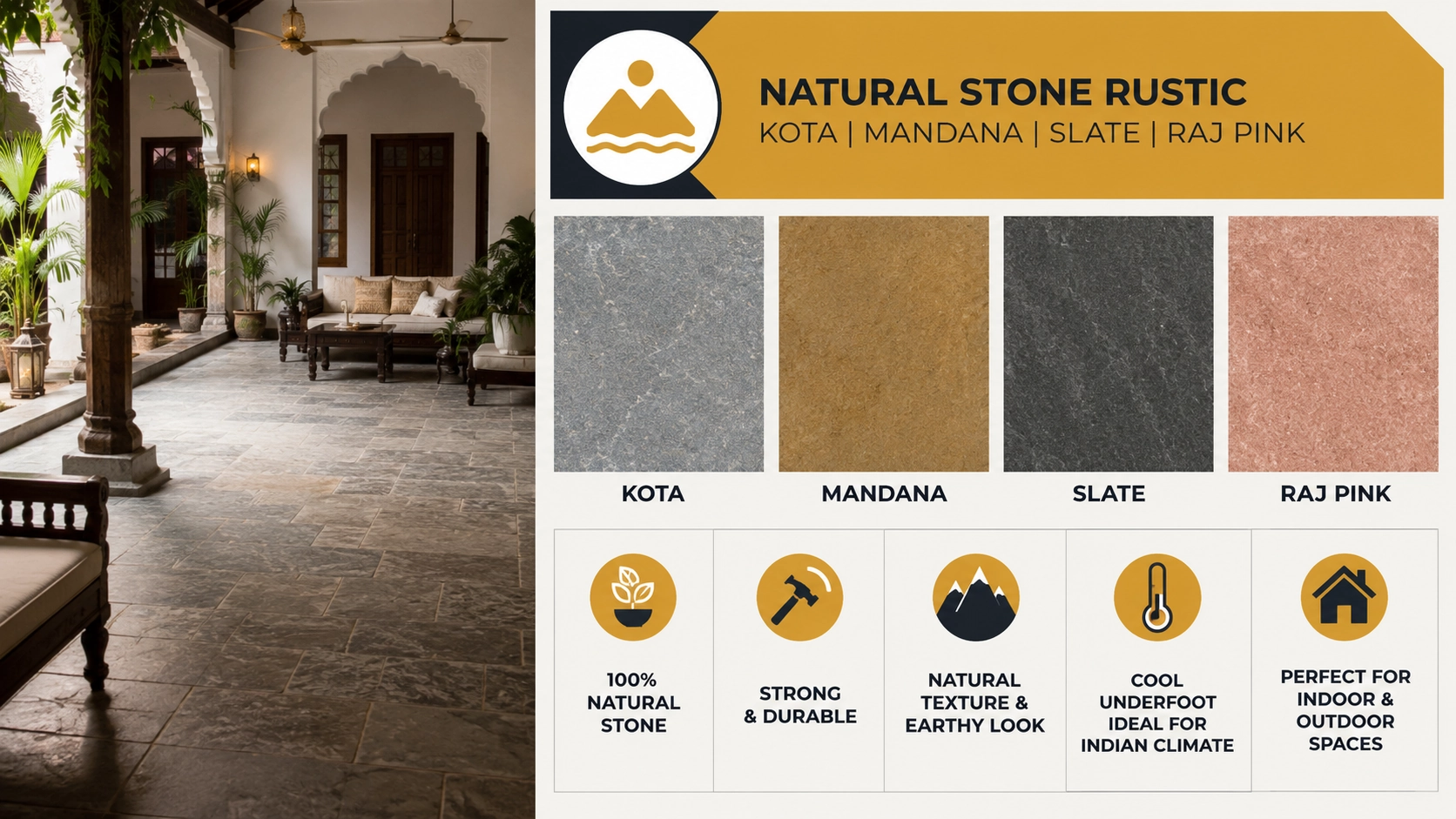
Indian natural stone offers the most authentic rustic look available in the Indian market. Kota stone (dark green-grey), Mandana stone (warm red), Raj Pink granite, Dholpur sandstone, and Indian slate are all quarried domestically and have been used in Indian architecture for centuries.
- Kota stone: Dark green-grey limestone with fine horizontal stratification. Used in courtyards, verandahs, and school and institutional floors for generations. Available honed or with a natural cleft finish. Rs. 60 to Rs. 120/sq.ft. Requires sealing in the kitchen and wet areas.
- Mandana stone: Deep red quartzite from Rajasthan with a warm, rough cleft surface. Traditional to Rajasthani architecture. Used in courtyards and ground-floor rooms in Rajasthan and adjacent states. Rs. 80 to Rs. 140/sq.ft.
- Raj Pink granite: Pink-grey granite from Rajasthan with a naturally rough or polished surface. Used in institutional and heritage buildings. Rs. 80 to Rs. 180/sq.ft. Lower maintenance than sandstone or limestone.
- Indian slate: Dark grey to purple-black natural slate from Andhra Pradesh and Himachal Pradesh. Cleft surface with high natural slip resistance. Used in courtyards, bathroom floors (honed), and feature walls. Rs. 70 to Rs. 140/sq.ft.
- Key constraint: All natural stone has variable thickness, which complicates installation. Natural stone installation requires a skilled stone mason and site grinding for thickness consistency. Not a specification that works with a standard tile fixer.
Rustic Tiles by Room: Right Material for Each Surface
| Room | Best Rustic Material | Best Finish | Best Size | Surface Safety Note |
| Living room floor | Stone-look GVT (travertine or sandstone) or wood-look GVT plank | Matte or textured matte | 600x600 mm, 600x1200 mm, or 200x1200 mm plank | PEI 4 minimum. Anti-skid is not required for a dry living room, but confirm COF above 0.35 dry. |
| Living room accent wall | Brick-look GVT or stone-look GVT | Matte or textured matte | 75x230 mm brick format or 600x1200 mm stone slab | Wall use only. No slip rating required. |
| Kitchen floor | Stone-look GVT or terracotta-look GVT (vitrified body) | Anti-skid matte | 300x600 mm or 600x600 mm | Must be vitrified GVT at 0.05% absorption. No genuine terracotta on kitchen floors. |
| Kitchen backsplash | Brick-look GVT or terracotta-look GVT | Matte | 75x230 mm brick or 200x200 mm terracotta-look | Wall use. GVT requires no sealing. |
| Bedroom floor | Wood-look GVT plank or stone-look GVT | Matte or sugar finish | 200x1200 mm plank or 600x600 mm stone-look | PEI 3 is sufficient for the bedroom. No anti-skid required. |
| Bathroom floor | Slate-look GVT or stone-look GVT (anti-skid) | Anti-skid matte only | 300x300 mm or 300x600 mm | Anti-skid matte with R10 to R11 rating mandatory. No genuine terracotta or natural stone without sealing. |
| Bathroom wall | Stone-look GVT or brick-look GVT | Matte or textured matte | 300x600 mm or 600x1200 mm | Wall use. No slip rating required. |
| Courtyard or verandah | Kota stone, sandstone-look GVT (anti-skid), or genuine terracotta (sealed) | Natural cleft (stone) or anti-skid matte (GVT) | 400x400 mm, 600x600 mm | Outdoor use: R11 anti-skid minimum for GVT. Natural stone: ensure drainage slope. Genuine terracotta: seal annually. |
Rustic Tile Price Guide India 2026
| Rustic Style | Material | Format | Material Price | Installation Cost | Total Installed |
| Terracotta look | Terracotta-look GVT (Morbi) | 300x300 mm or 400x400 mm | Rs. 55 to Rs. 90/sq.ft | Rs. 40 to Rs. 55/sq.ft | Rs. 95 to Rs. 145/sq.ft |
| Stone-look rustic | Slate-look GVT (Morbi) | 600x600 mm textured matte | Rs. 75 to Rs. 140/sq.ft | Rs. 45 to Rs. 65/sq.ft | Rs. 120 to Rs. 205/sq.ft |
| Stone-look rustic | Travertine-look GVT (Morbi) | 600x1200 mm matte | Rs. 80 to Rs. 160/sq.ft | Rs. 50 to Rs. 70/sq.ft | Rs. 130 to Rs. 230/sq.ft |
| Stone-look rustic | Natural Kota stone | 400x400 mm or 600x600 mm | Rs. 60 to Rs. 120/sq.ft | Rs. 70 to Rs. 110/sq.ft | Rs. 130 to Rs. 230/sq.ft + sealing |
| Wood-look rustic | Wood-look GVT plank (Morbi) | 200x1200 mm matte | Rs. 90 to Rs. 200/sq.ft | Rs. 50 to Rs. 75/sq.ft | Rs. 140 to Rs. 275/sq.ft |
| Brick-look rustic | Brick-look GVT (Morbi) | 75x230 mm or 200x400 mm | Rs. 60 to Rs. 150/sq.ft | Rs. 55 to Rs. 80/sq.ft | Rs. 115 to Rs. 230/sq.ft |
Pro tip: When comparing a genuine terracotta tile quote against a terracotta-look GVT alternative, always add 5-year maintenance cost. Genuine terracotta: Rs. 15 to Rs. 25 per sq.ft per year in sealing. Terracotta-look GVT: Rs. 500 to Rs. 1,000 per year in cleaning products for a 200 sq ft floor, with no sealing cost. The GVT total cost over five years is consistently lower.
Common Mistakes When Buying Rustic Tiles in India
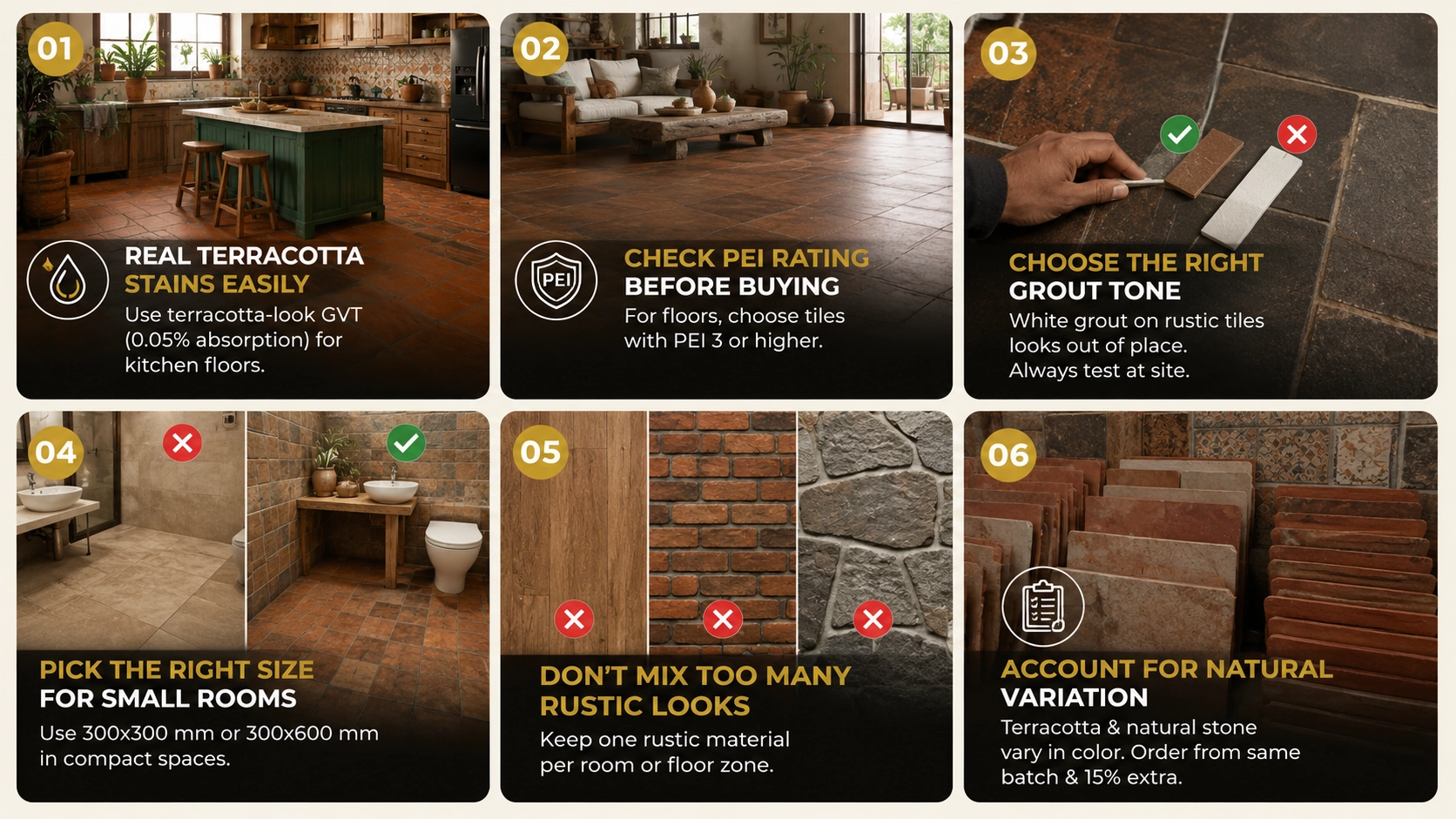
- Buying genuine terracotta for a kitchen floor. Indian kitchens use turmeric, oil, and daily water contact stains unsealed terracotta within weeks. The staining is irreversible without grinding. Use terracotta-look GVT at 0.05% absorption for any kitchen floor where the warm earth tone is wanted.
- Specifying a rustic tile without checking the PEI rating. Some rustic tiles sold in India, particularly artisan and unglazed products, carry no PEI rating. On a kitchen or living room floor with daily foot traffic, a tile below PEI 3 wears through the surface glaze within 3 to 5 years. Always confirm PEI rating for floor applications.
- Choosing the wrong grout tone for a rustic floor. White grout on a dark slate-look tile, a terracotta floor, or a brick-look wall reads as clinical, not rustic. Grout tone must be specified as part of the design decision, not left to the tile fixer on-site. Always bring the grout sample to the site before ordering.
- Using large-format rustic tiles in a small room. A 600x600 mm stone-look rustic tile in a 60 sq ft bathroom reads as oversized and mismatched. In compact rooms, the right rustic format is 300x300 mm or 300x600 mm.
- Mixing two different rustic looks in the same space without a clear logic. A wood-look floor with a brick-look accent wall and a stone-look bathroom wall in the same open-plan space reads as inconsistent. Rustic tile design works best when the material language is coherent: pick one rustic family per room or floor zone.
- Not accounting for variation in genuine terracotta and natural stone tiles. Genuine terracotta tiles from different kiln batches have a colour variation of 10 to 20%. Natural Kota stone slabs vary in colour from green-grey to buff. Order all material from the same batch or quarry lot, and order 15% extra for wastage and future repairs.
Rustic Tile Buying Guide: Questions to Ask Before Ordering
1. Is the tile body vitrified, ceramic, or earthenware? This determines water absorption, maintenance requirements, and which surfaces the tile can safely go on. Ask for the material body classification before any other question.
2. What is the water absorption percentage? Vitrified GVT: 0.05%. Ceramic: 2 to 6%. Earthenware (terracotta): 8 to 15%. Any tile for a kitchen or bathroom floor must be vitrified GVT at 0.05%.
3. What is the PEI rating? PEI 3 for bedroom and light residential use. PEI 4 for living room, kitchen, and commercial use. PEI 5 for heavy commercial use. No PEI rating = wall tile only.
4. What is the anti-skid or COF rating? For any floor in a wet area: COF 0.4 wet minimum, or R10 to R11 anti-skid rating. Request this from the TDS, not just verbally from the sales team.
5. How many face variations are in the batch? Minimum 4 for rooms above 100 sq.ft. 6 to 8 for rooms above 300 sq.ft. View 9 tiles together before approving.
6. What is the calibration tolerance? Maximum ±0.5 mm for 600x600 mm and above. Rustic tiles with an intentional edge variation (artisan or natural stone look) may have wider tolerances by design; confirm this in writing.
7. For genuine terracotta or natural stone: what sealing protocol is required? Before grouting, after grouting, and ongoing resealing frequency. Budget for the sealing cost as part of the total project cost.
Rustic Tiles from Morbi, Gujarat, and Indian Sources
Stone-look, terracotta-look, wood-look, and brick-look GVT rustic tiles are manufactured in Morbi, Gujarat, which produces over 70% of India's vitrified tile supply. Under IS 15622:2006, vitrified rustic tiles for floor use must achieve water absorption at 0.05% or below. The 24x24 (600x600 mm) textured matte stone-look GVT from Morbi is the most widely stocked rustic floor tile format, priced at Rs. 75 to Rs. 140 per sq.ft. The 8x47 (200x1200 mm) wood-look plank format at Rs. 90 to Rs. 200 per sq.ft is the fastest-growing rustic format in metro Indian apartment renovations in 2026, driven by demand for a warm, natural aesthetic without wood flooring's humidity and termite risks.
India's own stone heritage provides a parallel supply chain for authentic rustic materials: Kota stone from Rajasthan at Rs. 60 to Rs. 120 per sq. ft., Indian slate from Andhra Pradesh and Himachal Pradesh at Rs. 70 to Rs. 140 per sq. ft., and Mandana red quartzite at Rs. 80 to Rs. 140 per sq ft. These materials suit India's monsoon climate better than imported stone because they are quarried in the same climate conditions and have performed in Indian buildings for generations. For coastal Indian projects in Mumbai, Goa, Kochi, and Chennai, where monsoon humidity reaches 85 to 95% from June to September, stone-look GVT at 0.05% absorption from Gujarat manufacturers is the lower-maintenance rustic floor specification over any natural stone, which requires annual sealing to prevent staining and surface degradation in sustained high humidity.
Find Your Rustic Tile Style on TilesFinders
From terracotta-look GVT at Rs. 55 per sq.ft to natural Kota stone and slate alternatives, the full rustic tile range for Indian homes is on TilesFinders. Browse by material, finish, size, and room to find the right rustic tile for your project and your maintenance budget.
FAQs
Rustic tiles cover five material categories in India: terracotta-look GVT, stone-look GVT (slate, travertine, sandstone), wood-look GVT planks, brick-look GVT, and natural Indian stone (Kota, slate, sandstone, Mandana). Each creates the rustic look through a different mechanism and has different water absorption, maintenance needs, and surface suitability.
Rustic GVT from Morbi, Gujarat, ranges from Rs. 55 to Rs. 200 per sq.f, depending on material type and format. Genuine terracotta is Rs. 40 to Rs. 120 per sq.ft for domestic production. Natural Indian stone is Rs. 60 to Rs. 180 per sq.ft for Kota stone, slate, and sandstone.
Rustic GVT at 0.05% water absorption in anti-skid matte finish is safe for Indian kitchen floors. Genuine terracotta should not be used on kitchen floors because turmeric, oil, and acidic cleaners stain porous surfaces permanently. Specify terracotta-look or stone-look GVT for a kitchen floor where a rustic aesthetic is wanted.
Genuine terracotta tiles are unglazed or lightly glazed earthenware with 8 to 15% water absorption and require sealing every 6 to 12 months. Terracotta-look GVT is a kiln-fired vitrified tile with a digital terracotta-colour print at 0.05% water absorption and no sealing required. Both are sold in India as 'terracotta tiles'. Confirm the material body before purchasing.
Stone-look GVT in travertine or sandstone design at 600x600 mm or 600x1200 mm matte finish is the most practical rustic tile for an Indian living room floor. It delivers the stone aesthetic at 0.05% water absorption with no maintenance beyond a weekly mop. Wood-look GVT at 200x1200 mm plank format in aged teak or reclaimed wood design is the alternative for rooms where the timber aesthetic is preferred.
Rustic GVT tiles need only a weekly damp mop with a pH-neutral cleaner. No sealing, no polishing. Genuine terracotta requires sealing every 6 to 12 months. Natural stone requires sealing every 12 to 24 months, depending on the type. In Indian monsoon conditions, the sealing frequency for porous materials increases by 20 to 30% in coastal cities.
The grout colour must match the rustic material's tone. Terracotta tiles: warm buff or brown grout. Slate-look tiles: dark grey or charcoal grout. Wood-look planks: brown or warm grey grout that replicates wood seam colour. Brick-look tiles: dark grey or brown grout matching aged mortar. Travertine-look: cream or warm white grout. White grout on any dark rustic tile breaks the natural read immediately.
Wood-look GVT is the more practical specification for Indian homes in most situations. Natural wood flooring swells in monsoon humidity, is vulnerable to termites, requires annual oiling or lacquering, and cannot go in kitchens or bathrooms. Wood-look GVT at 0.05% absorption is humidity-proof, termite-proof, requires no sealing, and is safe in kitchens and bathrooms with anti-skid specification. The visual difference at room scale is minimal with 6 or more face variations.

See our tile guides first
Set TilesFinders as a preferred source and our buying guides surface ahead of the rest for you.
Add as preferred sourceTakes one tap. Nothing to install.
What Readers Say
I was about to redo my parking area with the wrong tile size until I read this. The layout comparisons saved me from a costly mistake.
We reference TilesFinders guides while briefing clients on material selection. The size and pattern breakdowns are accurate and easy to explain visually.
On site, I get asked about grout spacing all the time. This article gave me a solid reference I now share with my team before every job.
Finally a guide that doesn't just push generic advice. The oil stain removal steps actually worked on our clubhouse driveway tiles.
I run a small construction firm and now send this link to clients directly when they ask about entrance tile sizing. Saves me an hour of explaining.
Good practical detail, though I wish there were more examples for compact apartment entrances specifically, not just villas.
My mother-in-law wanted marble, I wanted vitrified. This blog gave us the neutral comparison we needed to actually decide together.
Detailed without being overwhelming. I appreciated that it covered both cost and maintenance, not just the aesthetics.
Used the algae and hard water removal tips on our terrace tiles after the monsoon. Worked better than what our regular cleaner was doing.
As someone who sources tiles for multiple builder projects, I find these comparisons genuinely useful for vendor conversations, not just consumer content.
Recommended this to a client who kept second-guessing the entrance design. The small vs large layout section settled the debate instantly.
Straightforward and honest, no unnecessary jargon. Would like to see a similar breakdown for outdoor pool-deck tiles next.
We've bookmarked several TilesFinders guides for our design handbook. Reliable source when clients want data, not just opinions.
Two paths, one marketplace.
Get free quotes from verified suppliers.
Share your room, budget, and style. Suppliers in Morbi respond within hours.
Get Free QuotesList your business, reach real buyers.
Put your showroom in front of homeowners searching for tiles right now.
List Your Business