How to Choose Living Room Tile Size for Big Spaces
Upgrade expansive living rooms with large-format tiles. Learn to balance floor and wall scales, zone massive spaces, and choose the best durable finishes for a seamless look.
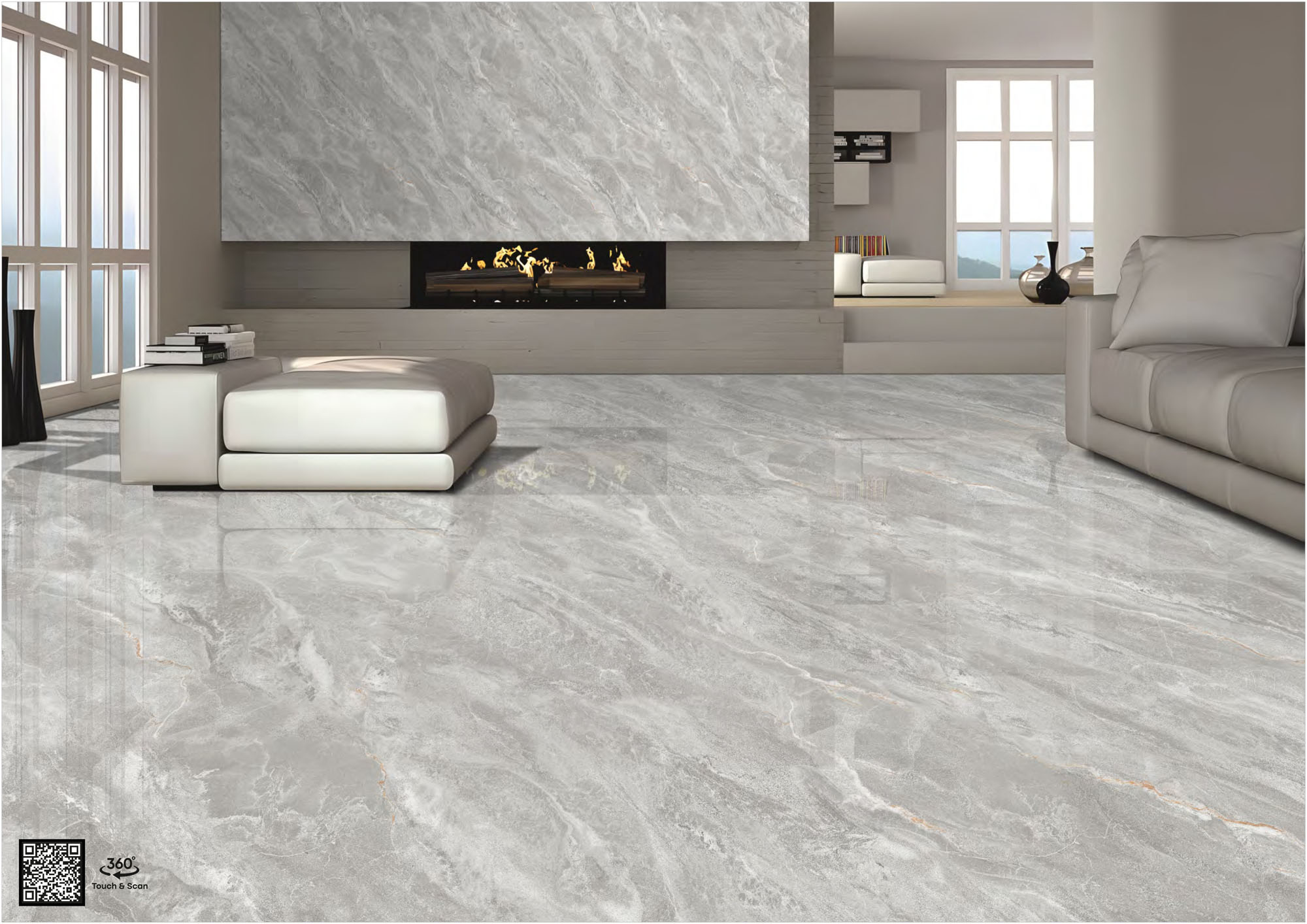
In large living rooms, tile size should match the scale of the space. Oversized slabs reduce grout lines and create a seamless surface that feels calm and luxurious. Pairing large floor tiles with proportionate wall formats helps maintain balance and creates a unified, hotel-like living area.
Why larger tiles work better in expansive living rooms
Big living rooms need flooring that matches their scale. When smaller tiles are used across a wide area, the floor ends up filled with grout lines. This creates a grid-like effect that visually breaks the space and makes the room feel busier than it actually is.
Traditionally, many homes used 600x600 mm tiles, which work well in compact rooms but often look fragmented in large living areas.
Designers now prefer larger formats because they reduce visual interruptions on the floor. For example:
- Expansive spaces often benefit from 800x1600 living room floor tiles, as their larger surface area creates a broad, continuous layout that feels calm and luxurious.
- In ultra-spacious homes, 1200x1800 living room floor tiles can replicate the appearance of natural stone slabs with very minimal joints.
When grout lines are reduced, the floor appears more seamless, allowing furniture, lighting, and architectural elements to stand out rather than compete with the tile layout.
How to correctly pair large floor formats with living room wall tiles?
When the floor uses large tiles, the walls must follow a similar scale to maintain visual balance. Installing very small tiles on a feature wall can clash with a wide floor layout and break the visual harmony of the room.
For feature areas such as a TV backdrop, designers often use large-format living room wall tiles to maintain the same sense of scale as the floor. Larger wall panels create a cleaner backdrop and prevent the wall from looking overly busy next to expansive floor surfaces.
A popular approach is to install 600x1200 living room wall tiles vertically behind the TV unit. This orientation draws the eye upward, emphasising ceiling height and making the living room feel even more expansive.
Which tile material, PGVT or Full Body, is best for high-traffic big spaces?
Material selection depends on how the living room is used.
Spaces that function primarily as formal sitting areas often prioritise aesthetics, while living rooms connected to patios, gardens, or balconies require stronger surfaces capable of handling higher foot traffic.
Material & Finish Comparison
| Material / Finish | Best Suited For | Durability Spec |
| Polished Glazed Vitrified (PGVT) | Formal sitting areas with moderate foot traffic | Reflective glazed surface; highlights marble patterns but may show scratches and requires careful maintenance |
| Full Body Vitrified | High-traffic indoor-outdoor layouts | Colour runs through the entire tile thickness; highly resistant to wear and scratches |
| Wood-Look Planks | Cosy dining corners or reading zones | Matte textured surface with good slip resistance |
PGVT Tiles or High Glossy Tiles are often chosen when homeowners want dramatic marble patterns and a reflective surface that brightens the living room. However, glossy finishes can show scratches more easily and may become slippery, especially when dust or moisture is present. Because of this, they are better suited to formal seating areas where foot traffic is moderate.
For living rooms that connect to balconies, gardens, or other high-traffic zones, Full Body Tiles are usually the safer choice. Their colour runs through the entire tile body, making them more resistant to wear while maintaining better grip over time.
How can tile sizing be used to create distinct zones in a massive living room?
Large living rooms can sometimes feel empty or undefined. Instead of adding partitions, designers often use flooring to subtly divide the space.
This technique is called floor zoning.
For example, the main living area may feature High Glossy Tiles in a large format to create an elegant base. Within the same room, a dining or reading corner can be framed using 200x1200 mm tiles with a wood-look finish.
When laid in patterns such as herringbone or chevron, these plank tiles act like a permanent rug on the floor, visually separating the area while maintaining the openness of the room.
Installation Strategy: How to prevent lippage when laying oversized living room tiles
Installing oversized tiles requires precise preparation.
If the concrete subfloor has even a slight variation in level, the edges of adjacent tiles may sit at different heights. This issue, known as lippage, becomes very noticeable with large formats and disrupts the smooth visual effect.
To prevent this, installers must first apply self-levelling compounds to create a perfectly flat base.
Large tiles also require polymer-modified thinset adhesives, as traditional cement mortar cannot properly support the weight and expansion of oversized slabs. Professional installers additionally use tile levelling wedge systems to ensure each tile sits perfectly flush with the next.
FAQs
No. Tile cracking is usually caused by improper installation rather than size. A properly levelled base and polymer-modified adhesive ensure large tiles remain stable.
Not necessarily. High Glossy Tiles can feel balanced when paired with warm lighting, wooden furniture, and soft furnishings such as rugs and curtains.
Yes. Many designers follow a colour-drenching approach where the same tile is used across floors and walls to create a continuous visual flow. However, the wall substrate must be strong enough to support the tile weight.

See our tile guides first
Set TilesFinders as a preferred source and our buying guides surface ahead of the rest for you.
Add as preferred sourceTakes one tap. Nothing to install.
What Readers Say
I was about to redo my parking area with the wrong tile size until I read this. The layout comparisons saved me from a costly mistake.
We reference TilesFinders guides while briefing clients on material selection. The size and pattern breakdowns are accurate and easy to explain visually.
On site, I get asked about grout spacing all the time. This article gave me a solid reference I now share with my team before every job.
Finally a guide that doesn't just push generic advice. The oil stain removal steps actually worked on our clubhouse driveway tiles.
I run a small construction firm and now send this link to clients directly when they ask about entrance tile sizing. Saves me an hour of explaining.
Good practical detail, though I wish there were more examples for compact apartment entrances specifically, not just villas.
My mother-in-law wanted marble, I wanted vitrified. This blog gave us the neutral comparison we needed to actually decide together.
Detailed without being overwhelming. I appreciated that it covered both cost and maintenance, not just the aesthetics.
Used the algae and hard water removal tips on our terrace tiles after the monsoon. Worked better than what our regular cleaner was doing.
As someone who sources tiles for multiple builder projects, I find these comparisons genuinely useful for vendor conversations, not just consumer content.
Recommended this to a client who kept second-guessing the entrance design. The small vs large layout section settled the debate instantly.
Straightforward and honest, no unnecessary jargon. Would like to see a similar breakdown for outdoor pool-deck tiles next.
We've bookmarked several TilesFinders guides for our design handbook. Reliable source when clients want data, not just opinions.
Two paths, one marketplace.
Get free quotes from verified suppliers.
Share your room, budget, and style. Suppliers in Morbi respond within hours.
Get Free QuotesList your business, reach real buyers.
Put your showroom in front of homeowners searching for tiles right now.
List Your Business