Best Budget Tiles Under Rs 30 per Sq Ft in India: What You Actually Get
Check out what tiles under Rs 30 per sq ft really include, the actual cost after GST and freight, quality grades to expect, and where budget ceramic and vitrified tiles are worth buying.
- What Rs 30 per sq ft actually buys in the Indian Tile Market
- Tile Types You Can Actually Buy Under Rs 30 per Sq Ft
- Why a Rs 24 Tile Lands at Rs 34 and Finishes Near Rs 66
- Grades: The Part Nobody Prints in the Price List
- What You Give Up Below Rs 30 per Sq Ft
- Rooms Where Budget Tiles Work, and Rooms Where They Cost You More
- How to Check What You Are Actually Buying
- Common Mistakes Buyers Make at This Price Band
- Buying Tips from the Morbi Market
- Getting the Right Tile at the Right Rate
Under Rs 30 per sq ft you get ceramic wall, ceramic floor, parking and commercial grade vitrified tiles. That rate is ex-factory, so add GST, freight, wastage and labour before you budget.
Budget tiles under Rs 30 per sq ft are real, and most of them roll out of Morbi in Gujarat. What confuses buyers is what that rate actually covers, because it is almost always an ex-factory number, quoted before GST, freight, wastage and labour.
At this band you are looking at ceramic wall tiles, ceramic floor tiles, parking tiles and commercial grade double charge vitrified. Each one behaves very differently once it is sitting on your floor.
Here is what you get, what you give up, and what the tile really costs by the time it is laid.
What Rs 30 per sq ft actually buys in the Indian Tile Market
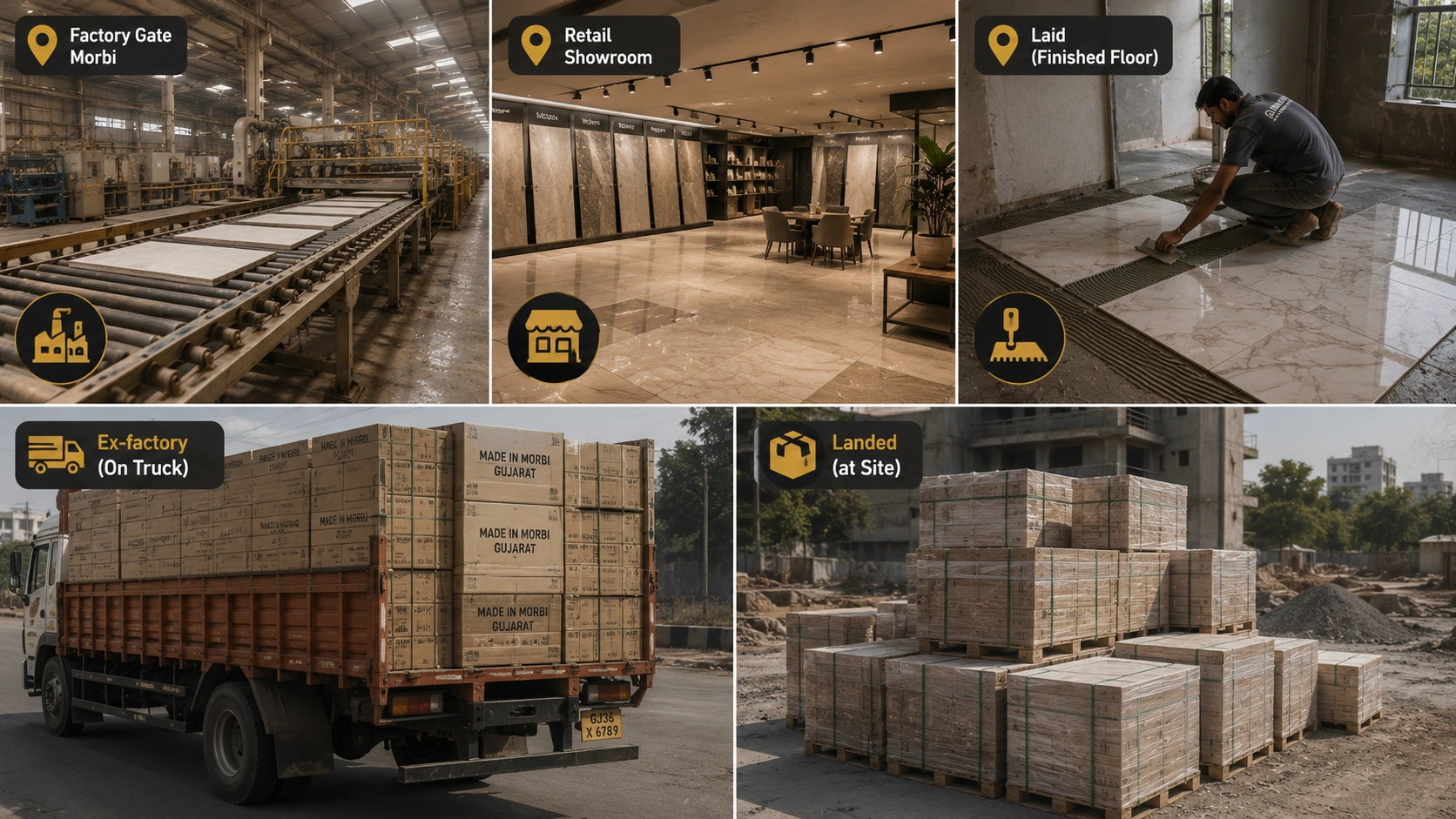
Tile pricing in India starts at the factory gate, and Morbi in Gujarat produces the bulk of the country’s tiles. A rate of Rs 18 or Rs 26 per sq ft floating around in a WhatsApp price list is almost always an ex-factory rate for truckload quantity.
Walk into a retail showroom in Ahmedabad, Bengaluru or Pune and the same tile sits at Rs 38 to Rs 55 per sq ft. Nothing dishonest has happened. Freight, GST, dealer margin and handling sit in that gap.
So the first thing to fix is the question itself. Not which tile is under Rs 30, but under Rs 30 at which stage of the chain, and in which grade.
Ex-factory, landed and laid are three different numbers
Ex-factory is the tile on the truck at the plant in Morbi. Landed is the tile stacked at your site after GST, freight and breakage. Laid is the finished floor, including adhesive, labour and grout.
Budget planning breaks the moment someone compares an ex-factory number with a retail number. This article uses all three, so you can plan against the one that matters.
Tile Types You Can Actually Buy Under Rs 30 per Sq Ft
Four categories sit inside this band. They are not interchangeable, and mixing them up is the single most expensive mistake at this price point.
| Tile type | Common sizes | Ex-factory band (Rs/sq ft) | Water absorption | Where it belongs |
|---|---|---|---|---|
| Ceramic wall tile | 250x375 mm, 300x450 mm, 300x600 mm | 14 to 22 | Above 10% | Walls only: kitchen dado, bathroom walls, utility area |
| Ceramic floor tile | 400x400 mm, 600x600 mm | 16 to 26 | Roughly 3 to 6% | Bedrooms, rental flats, low traffic indoor floors |
| Double charge vitrified (commercial grade) | 600x600 mm | 26 to 32 | Below 0.5% | Living rooms, corridors, shops, heavy footfall |
| GVT matt (economy lots) | 600x600 mm | 28 to 34 | Below 0.5% | Indoor floors where a printed design is wanted |
| Parking tile | 300x300 mm | 22 to 30 | Varies by body | Driveways, ramps, open parking, outdoor paths |
These bands move with fuel rates, gas prices in Morbi and the season. Treat them as a starting point for negotiation, not a fixed list.
Ceramic wall tiles: Rs 14 to Rs 22
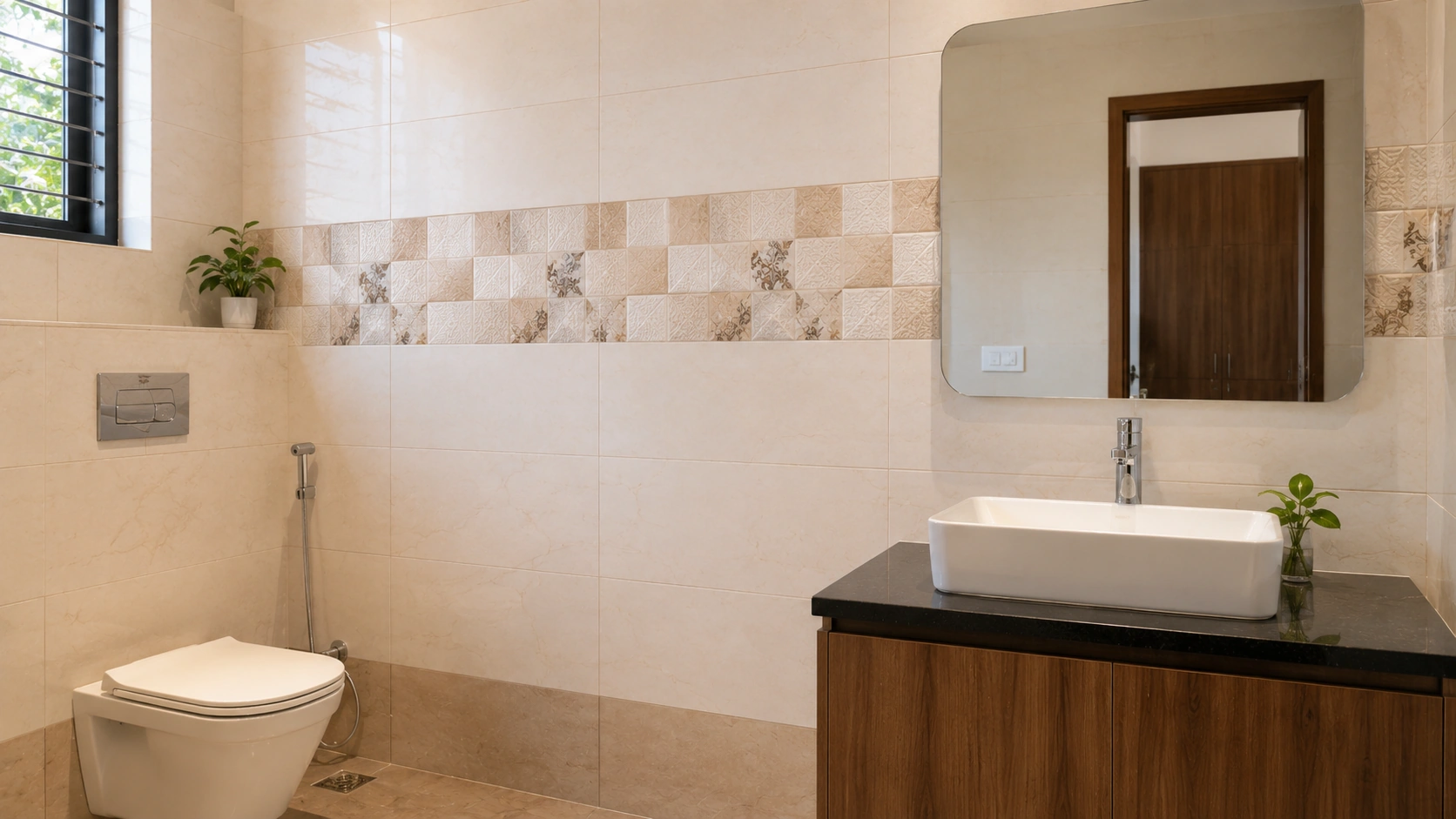
This is the cheapest thing on the market and also the most misused. Ceramic wall tiles carry a soft, porous body with water absorption above 10 per cent, which is exactly why they bond well to a vertical plastered surface.
Put the same tile on a floor and the corners chip within a year. A 300x600 mm ceramic tile is a wall tile. No dealer discount changes that fact.
Ceramic floor tiles: Rs 16 to Rs 26
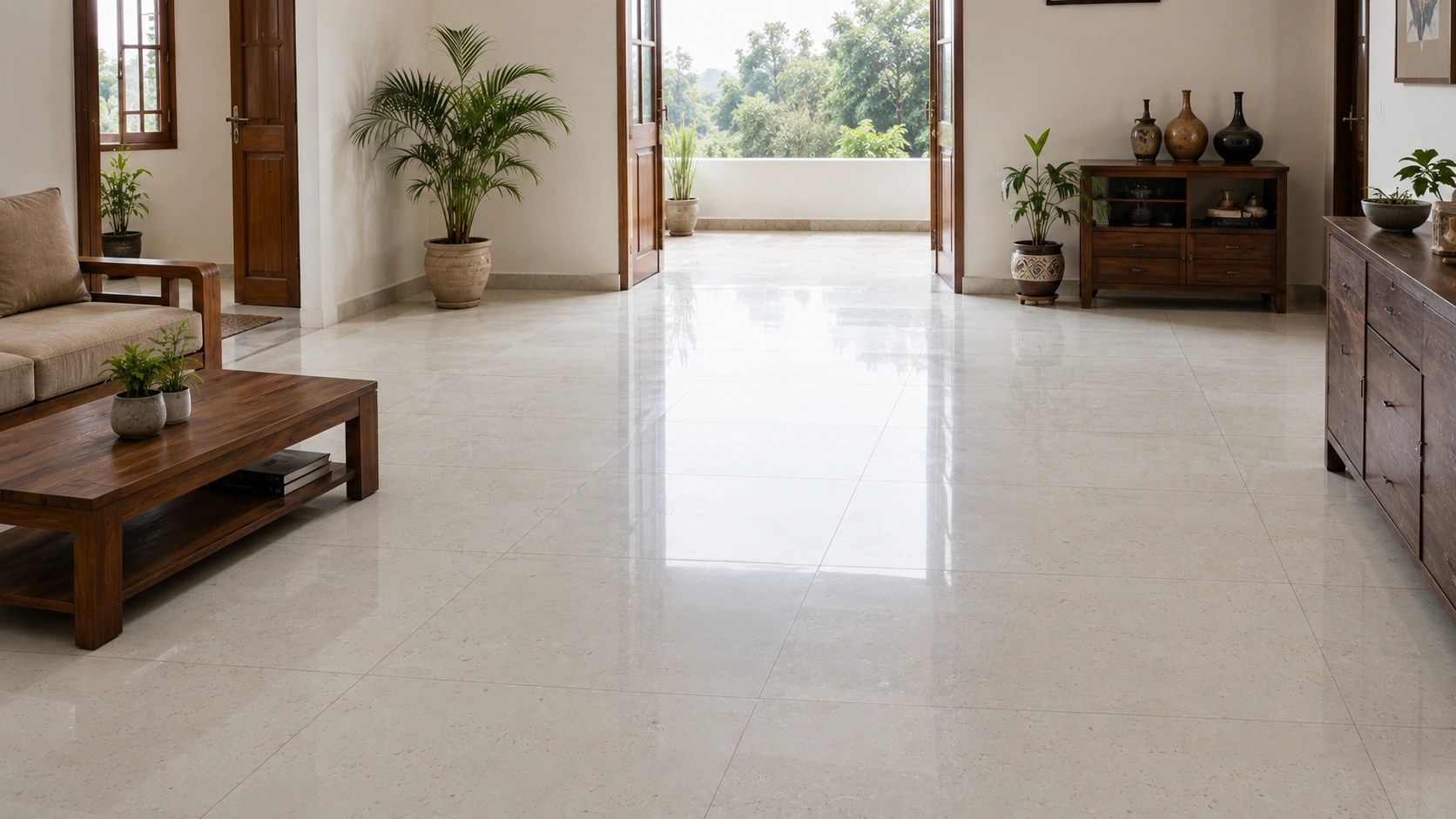
A ceramic floor tile is a different body altogether, pressed harder, with lower absorption and a tougher glaze. In 400x400 mm and 600x600 mm it does a fair job in bedrooms, guest rooms and rented flats.
The honest limit is traffic. In a shop entrance, or a house where three generations walk through the same passage every day, the glaze dulls and scratch marks start showing up in side light.
Commercial grade double charge vitrified: Rs 26 to Rs 32
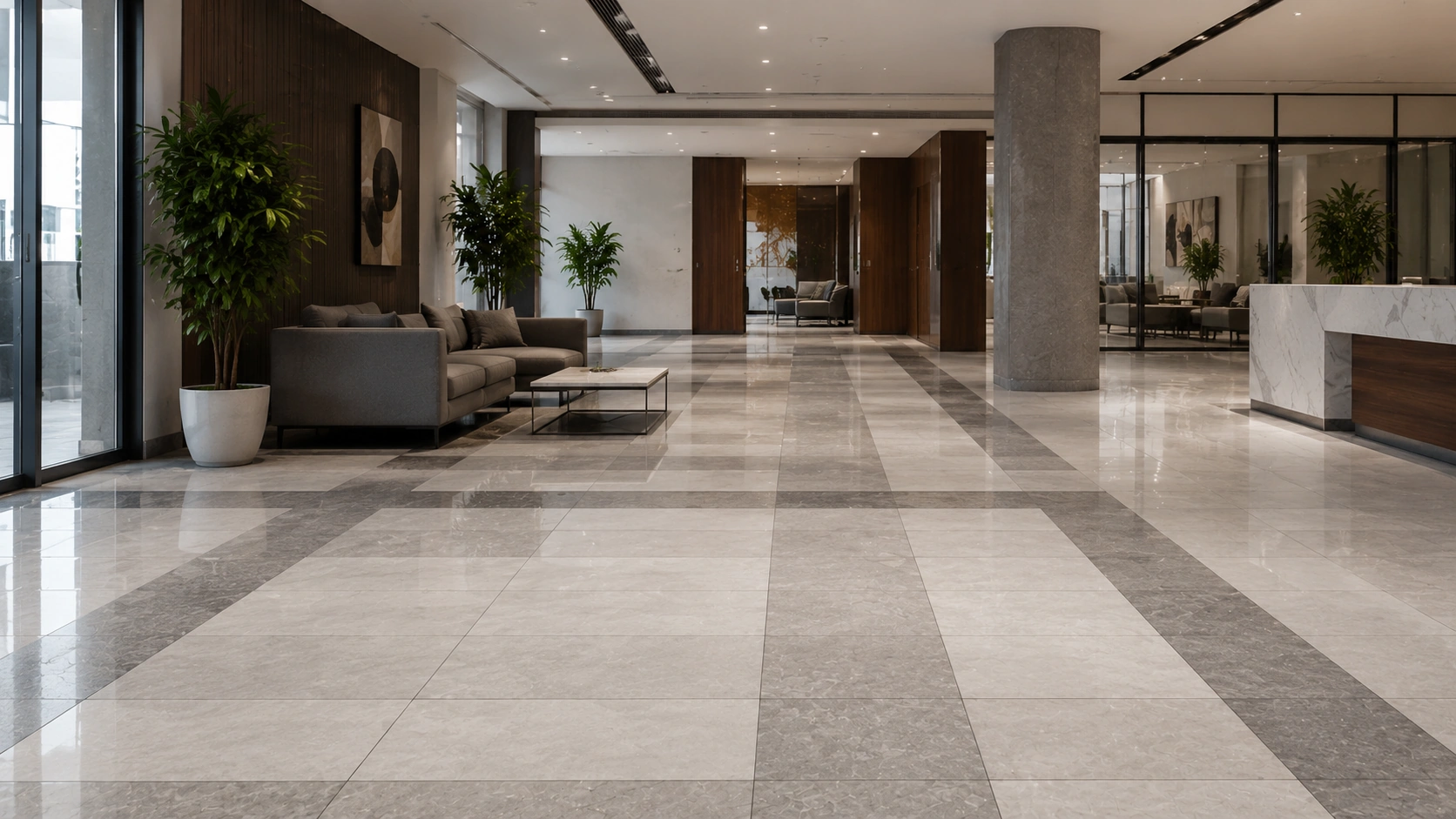
Double charge vitrified tiles is the workhorse of Indian flooring. Two layers of pigment are pressed together so the colour runs 3 to 4 mm deep, and a scratch does not expose a white body underneath.
Under Rs 30 you can still get it, but in plain salt and pepper designs and usually in commercial grade. Design choice narrows, and the shade can shift between production lots.
Parking tiles: Rs 22 to Rs 30
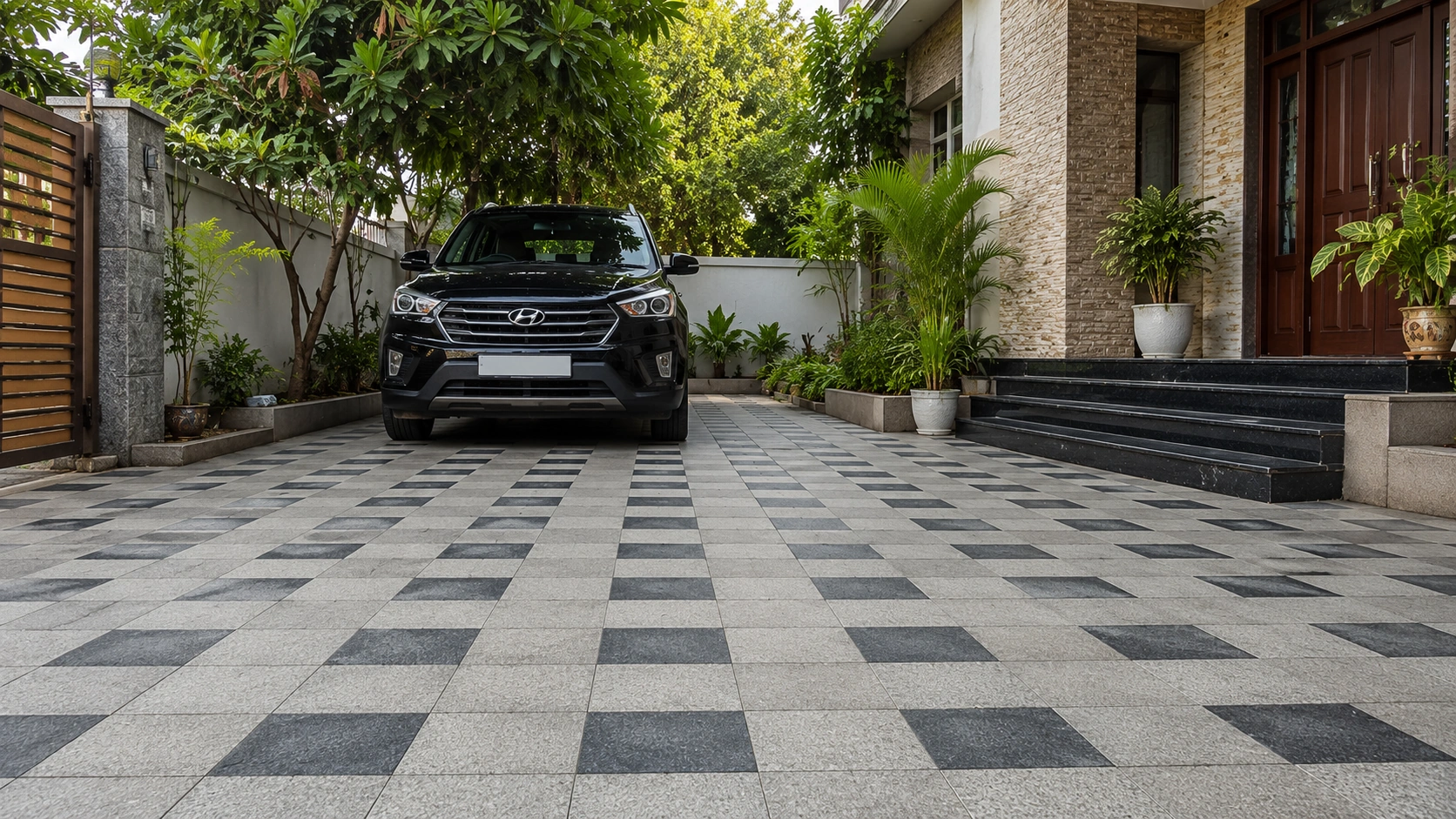
Parking tiles at 300x300 mm are pressed thick with a heavily textured face that grips a wet car tyre. This is one of the few budget categories where a low rate is not a compromise, because the category is built to be rough and functional in the first place.
Why a Rs 24 Tile Lands at Rs 34 and Finishes Near Rs 66
Here is a working example. 1,000 sq ft of 600x600 mm ceramic floor tile, bought at Rs 24 per sq ft ex-factory Morbi, shipped to a site in central India.
| Cost head | Rs per sq ft | What it covers |
|---|---|---|
| Tile, ex-factory Morbi | 24.00 | Truckload rate, with the grade written on the invoice |
| GST | 4.32 | Tiles sit under HSN 6907 and have been taxed at 18 per cent. Confirm the current rate on your bill |
| Freight to site | 3.00 | Rises with distance. South and east India cost more |
| Unloading and local cartage | 1.00 | Almost always forgotten at quoting stage |
| Breakage and cutting wastage at 7% | 1.70 | Goes higher when the layout has many cuts |
| LANDED COST AT SITE | 34.02 | This is your real material cost |
| Tile adhesive or mortar bed | 10.00 | Adhesive costs more than plain cement but bonds vitrified properly |
| Laying labour | 22.00 | Moves with city and with laying pattern |
| Grout, spacers, cleaning | 2.00 | Small line, skipped often, shows up in the joints |
| FINISHED FLOOR COST | 66.02 | What the floor actually costs you |
The tile is roughly 36 per cent of the finished floor. That single number should change how you negotiate. Squeezing Rs 2 off the tile rate saves Rs 2,000 across 1,000 sq ft. A mason who lays it badly costs you many times that in re-work.
Grades: The Part Nobody Prints in the Price List
Every Morbi plant sorts its daily output. Tiles with tight calibration and a clean glaze go into one stack, and the rest go into others. The rate you are quoted depends entirely on which stack you are buying from.
| Grade | Also called | What you see on site | Typical band | Sensible use |
|---|---|---|---|---|
| First grade | Premium, A grade | Tight sizing, flat body, consistent shade within the lot | Rs 32 and above | Living room, entrance, showroom floor |
| Commercial grade | Standard, B grade | Slight warpage, occasional pinhole, shade shifts across lots | Rs 22 to Rs 30 | Bedrooms, rental flats, back office, terrace |
| Economy grade | Third quality, C grade | Visible size variation, patchy shade, glaze specks | Rs 14 to Rs 22 | Godown, staff quarters, wash area, temporary work |
When a listing shouts "tiles at Rs 19 per sq ft", it is nearly always commercial or economy grade, in bulk. That is not a scam. It turns into one only when the invoice refuses to say which grade you paid for.
What You Give Up Below Rs 30 per Sq Ft
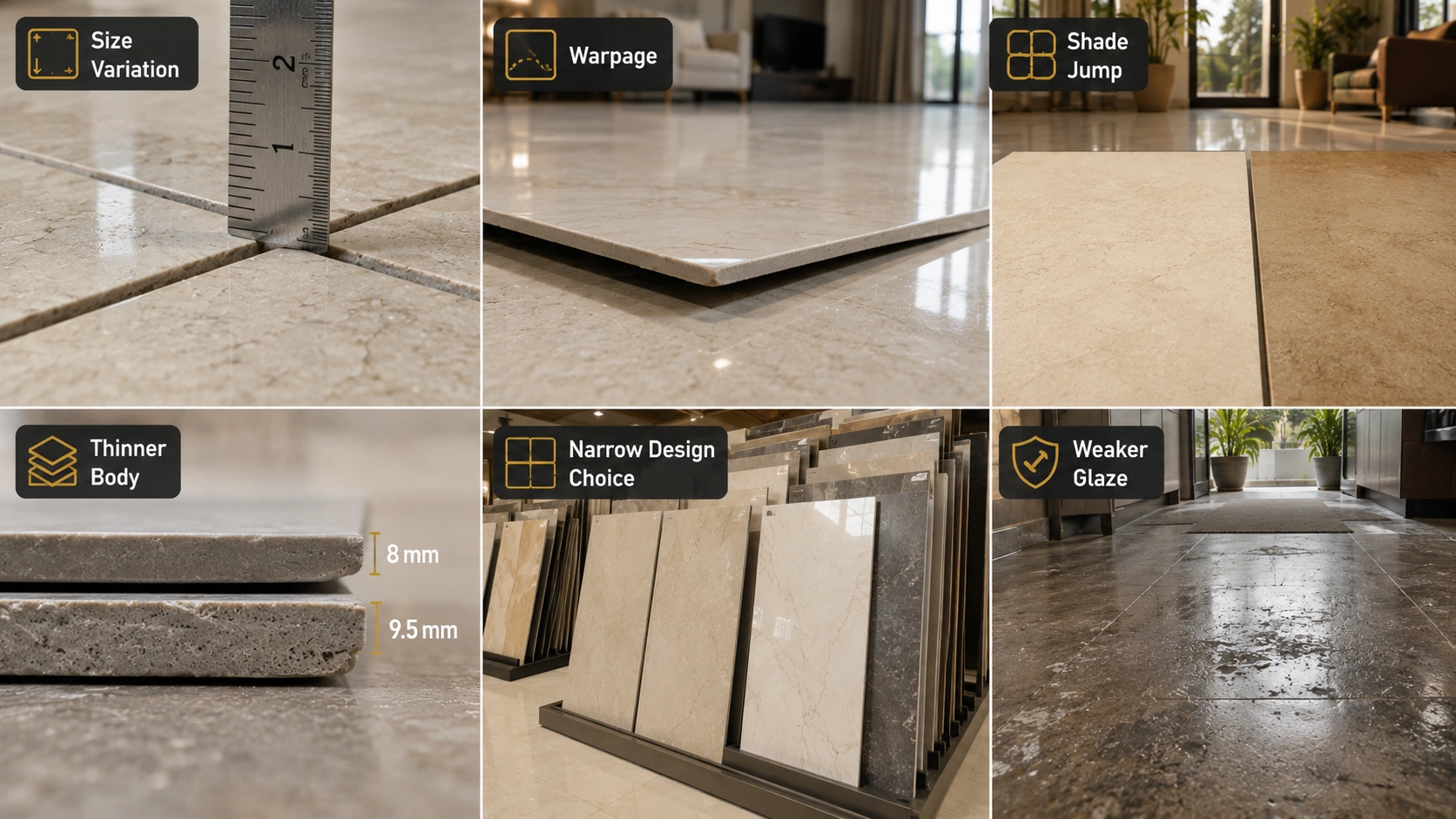
Budget tiles fail in predictable ways. Knowing the failure modes in advance beats a vague warning to "buy good tiles".
- Size variation: 1 to 2 mm across a single box, which forces wider joints and a visibly uneven grout line
- Warpage: the tile lifts slightly at the corners, so edges catch the light and feel uneven under bare feet
- Shade jump: two lots of the same design can look like two different tiles in daylight
- Thinner body: 8 mm instead of 9.5 mm, which cracks more easily during transport and cutting
- Narrow design choice: budget lots are often the designs that did not move, so colour and pattern options shrink
- Weaker glaze: the surface dulls faster at the entrance and in the kitchen, where grit gets walked in every day
None of this matters in a godown. All of it matters in a drawing room at 5 pm, when low sunlight rakes across the floor and shows every lifted edge.
Rooms Where Budget Tiles Work, and Rooms Where They Cost You More
The smart way to use a Rs 30 ceiling is not to apply it across the whole house. Split the budget room by room.
| Area | Under Rs 30 verdict | Reason |
|---|---|---|
| Bedroom floor | Works | Low traffic, mostly bare feet, forgiving surface |
| Kitchen dado and bathroom walls | Works | Ceramic wall tile is the correct product for this surface anyway |
| Parking and driveway | Works | Parking tiles are engineered for exactly this |
| Terrace and open balcony | Works with care | Stay with anti-skid or textured surfaces and keep polished tiles out |
| Rental flat, staff quarters | Works | Easy to replace, and nobody is auditing shade match |
| Living room and entrance | False economy | Traffic and daylight expose warpage and glaze wear within a year |
| Bathroom floor | Risky | Slip risk is real in a wet Indian bathroom. Never use a polished surface here |
| Shop or showroom floor | False economy | Footfall dulls a commercial grade glaze within one season |
Polished glazed vitrified tiles, or PGVT, need a separate warning. They photograph beautifully and turn dangerous the moment water sits on them. Keep PGVT off bathroom floors, off open terraces and off any surface that stays wet through the monsoon.
How to Check What You Are Actually Buying
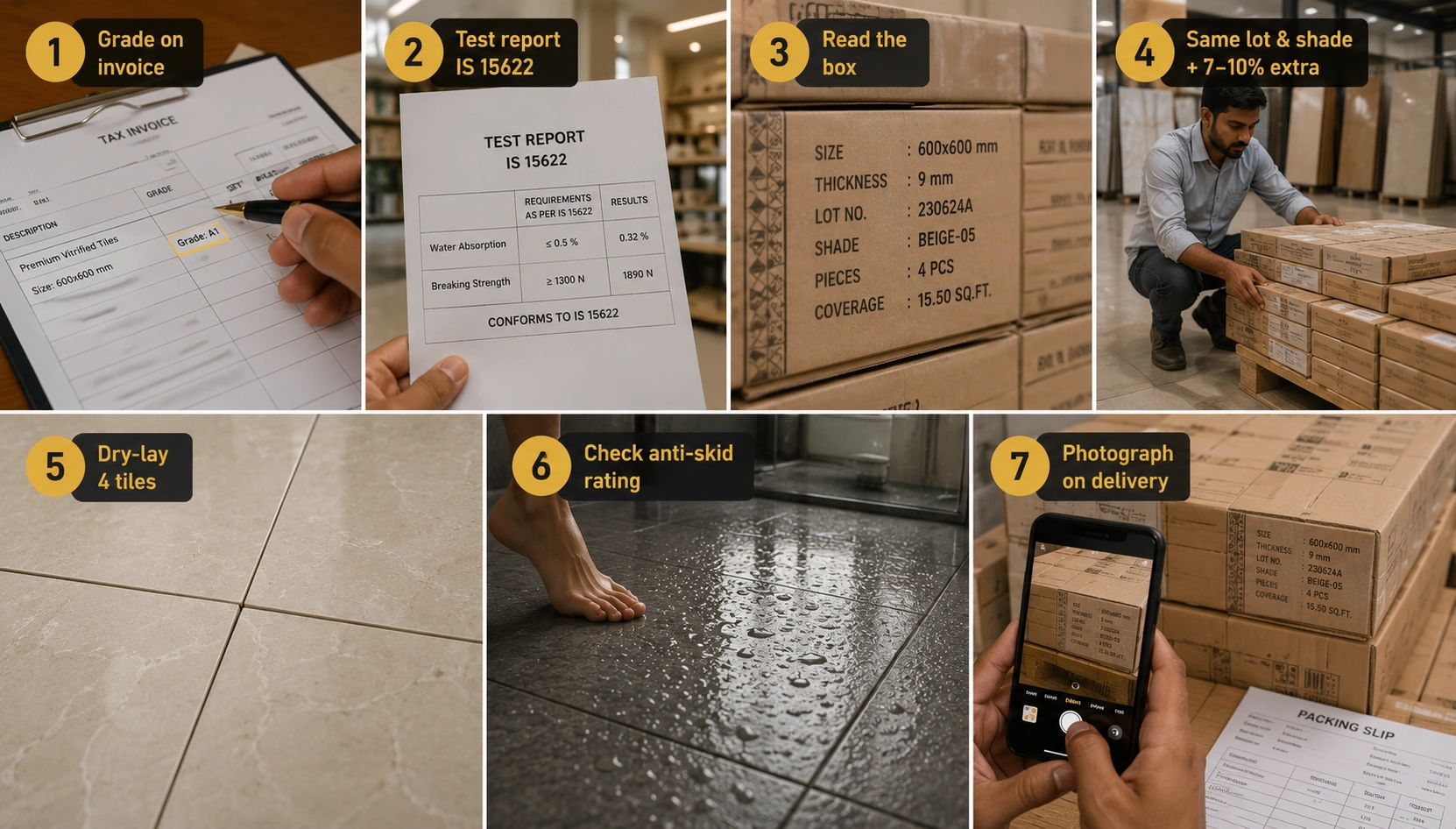
Price is easy to compare. Grade is not, unless you insist on it in writing. Run this checklist before you release payment.
- Get the grade printed on the invoice, not just the word "tiles"
- Ask for the test report against IS 15622, which covers water absorption and breaking strength for pressed ceramic tiles
- Read the box. It should carry size, thickness, lot number, shade code, pieces per box and sq ft per box
- Buy every box from the same lot and shade number, and count 7 to 10 per cent extra, because a matching lot will not exist six months from now
- Dry-lay four tiles face to face on a flat surface and look for gaps at the edges. This exposes warpage faster than any certificate
- For any wet area, ask for the anti-skid or slip resistance rating and check it against where you plan to lay it
- Photograph the packing slip and box markings on delivery day, before the boxes get opened and mixed
Common Mistakes Buyers Make at This Price Band
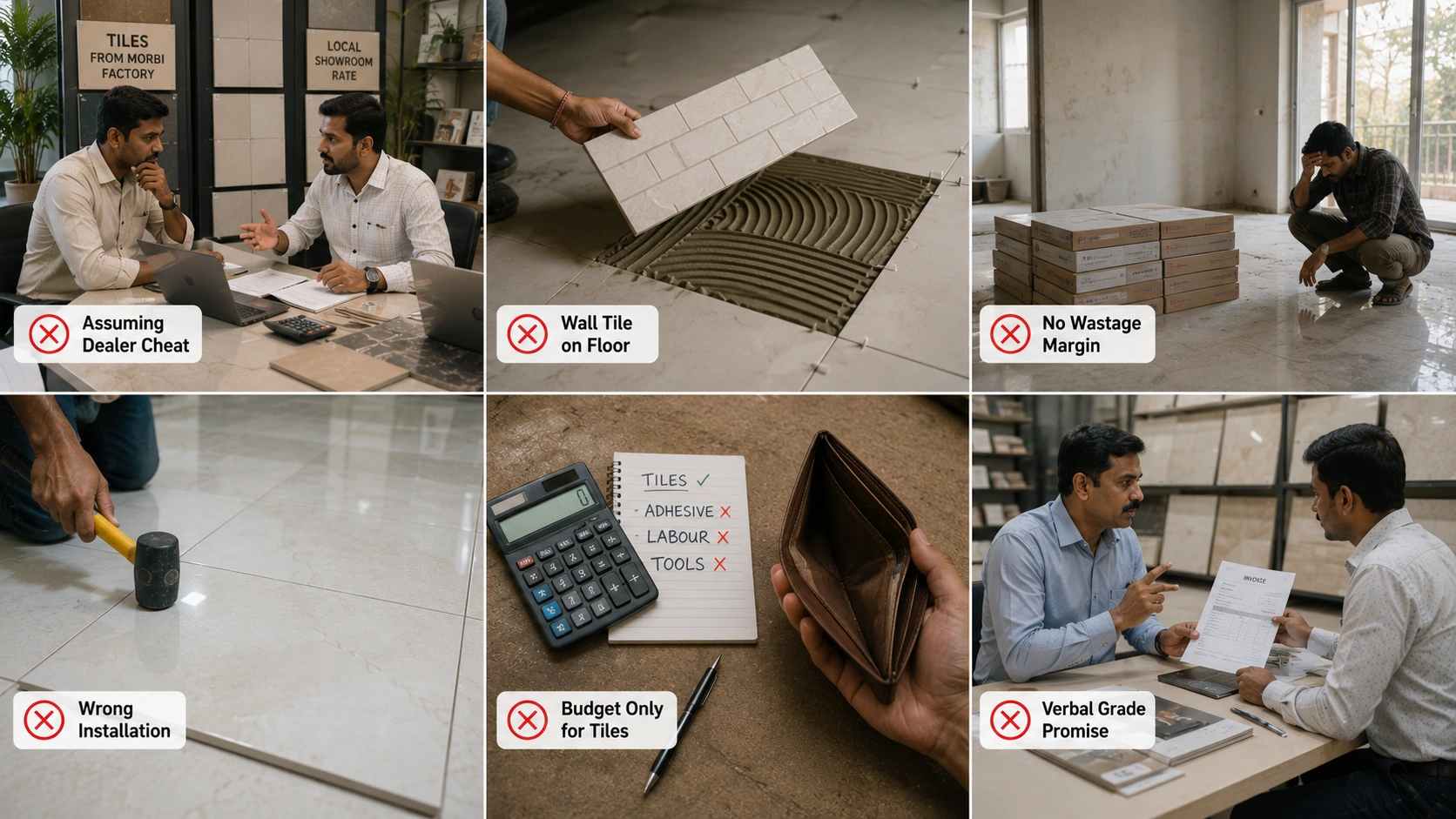
- Comparing a Morbi ex-factory rate with a local showroom rate, then assuming the dealer is cheating
- Buying a 300x600 mm ceramic wall tile for a floor because the per sq ft rate looked lower
- Ordering the exact measured area with zero wastage margin, then hunting for a matching lot mid-project
- Laying vitrified tiles on a plain cement mortar bed instead of adhesive, which leads to hollow sounds and lifting tiles
- Fixing the entire budget around the tile rate and leaving nothing for adhesive and a skilled mason
- Accepting a verbal grade promise against a generic invoice
Buying Tips from the Morbi Market
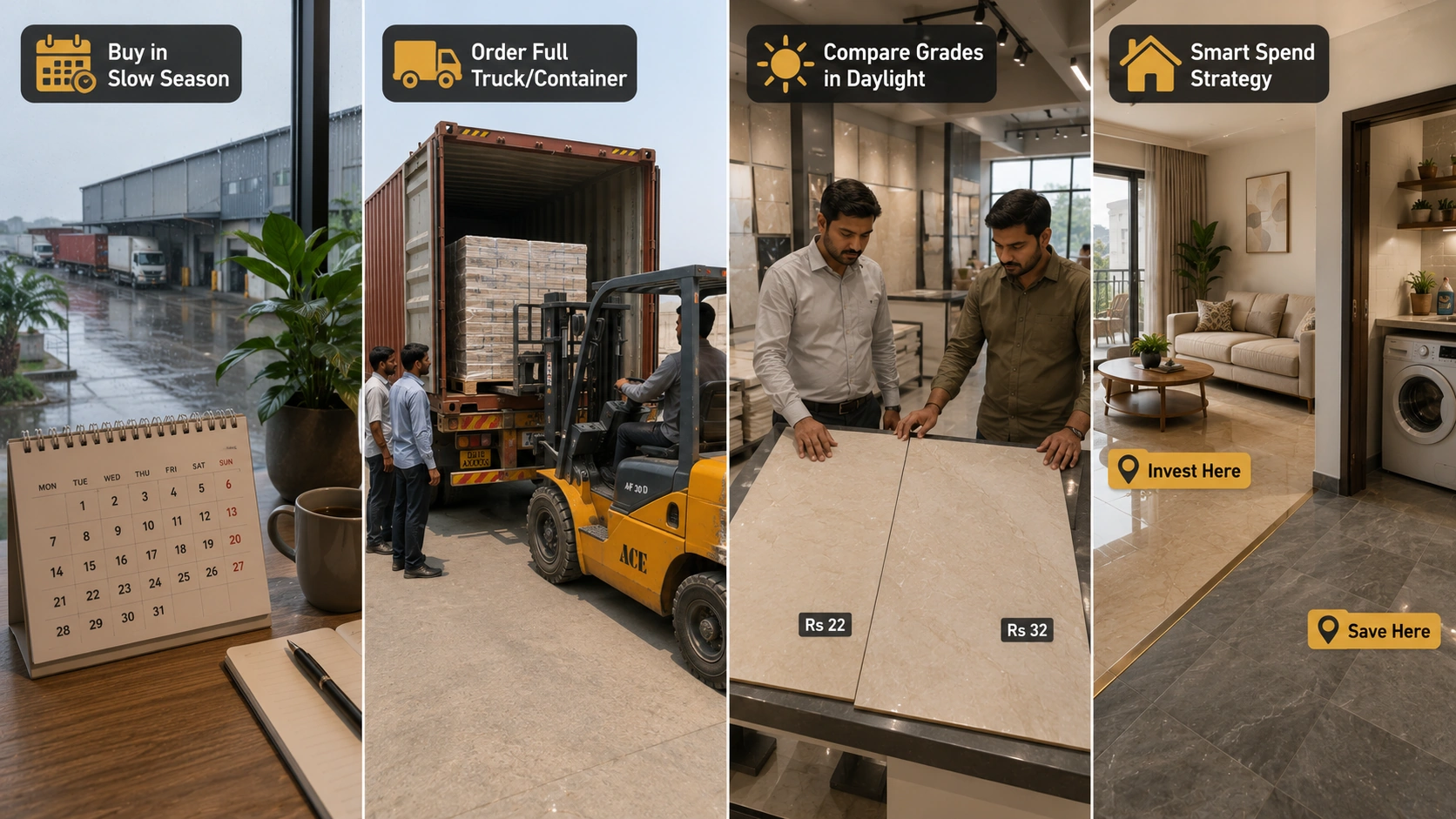
Rates soften when factories carry stock pressure, which usually happens after the festival season and through the slow monsoon weeks. If your timeline has any flex, that is when to book.
Order in full truck or container quantity wherever possible. Club the order with a neighbour or a builder if you fall short. The per sq ft rate drops sharply the moment you fill a vehicle.
Ask the dealer to show you the same design in two grades, side by side, in daylight rather than under showroom spotlights. The difference between a Rs 22 tile and a Rs 32 tile shows up in ten seconds in natural light and stays invisible under halogen.
If you are tiling a rental property, commercial grade is a sound business call. If you are tiling the house you will live in for the next twenty years, spend the extra Rs 8 per sq ft on the living room and claw it back in the utility area.
Getting the Right Tile at the Right Rate
The rate is one line in your budget. Grade, lot number and the surface you lay it on decide whether that rate turned out to be a saving or a repair bill.
Compare verified tile dealers, distributors and manufacturers across Morbi and other Indian tile hubs on TilesFinders, check what each one stocks in every grade, and ask for rates against your exact size and area before you commit.
FAQs
Ex-factory rates in Morbi start around Rs 14 to Rs 16 per sq ft for economy grade ceramic wall tiles. Ceramic floor tiles begin near Rs 16, and basic double charge vitrified starts around Rs 26. These are truckload rates, quoted before GST, freight and labour.
Almost never. Rates quoted from Morbi are ex-factory and exclude GST, freight, unloading and wastage. Tiles sit under HSN 6907 and have been taxed at 18 per cent, so check the rate printed on your invoice.
Only if the surface is anti-skid or textured. Keep polished glazed vitrified tiles, or PGVT, off bathroom floors, because they get slippery the moment water sits on them.
It is the middle sorting grade at a tile plant. You get slight warpage, occasional pinholes and shade shifts across lots. Most tiles priced between Rs 22 and Rs 30 per sq ft fall into this grade.
For a Rs 24 tile, expect roughly Rs 34 per sq ft landed at site and around Rs 66 per sq ft as a finished floor, once adhesive, labour and grout are counted. City labour rates move this number up or down.
Not on the same floor. Two lots of the same design can read as two different colours in daylight. Buy every box from one lot and one shade number, and order 7 to 10 per cent extra.
The 300x300 mm parking tile and the 400x400 mm ceramic floor tile usually carry the lowest per sq ft rates, because they use less material per piece and run in very high volumes at Morbi plants.

See our tile guides first
Set TilesFinders as a preferred source and our buying guides surface ahead of the rest for you.
Add as preferred sourceTakes one tap. Nothing to install.
What Readers Say
I was about to redo my parking area with the wrong tile size until I read this. The layout comparisons saved me from a costly mistake.
We reference TilesFinders guides while briefing clients on material selection. The size and pattern breakdowns are accurate and easy to explain visually.
On site, I get asked about grout spacing all the time. This article gave me a solid reference I now share with my team before every job.
Finally a guide that doesn't just push generic advice. The oil stain removal steps actually worked on our clubhouse driveway tiles.
I run a small construction firm and now send this link to clients directly when they ask about entrance tile sizing. Saves me an hour of explaining.
Good practical detail, though I wish there were more examples for compact apartment entrances specifically, not just villas.
My mother-in-law wanted marble, I wanted vitrified. This blog gave us the neutral comparison we needed to actually decide together.
Detailed without being overwhelming. I appreciated that it covered both cost and maintenance, not just the aesthetics.
Used the algae and hard water removal tips on our terrace tiles after the monsoon. Worked better than what our regular cleaner was doing.
As someone who sources tiles for multiple builder projects, I find these comparisons genuinely useful for vendor conversations, not just consumer content.
Recommended this to a client who kept second-guessing the entrance design. The small vs large layout section settled the debate instantly.
Straightforward and honest, no unnecessary jargon. Would like to see a similar breakdown for outdoor pool-deck tiles next.
We've bookmarked several TilesFinders guides for our design handbook. Reliable source when clients want data, not just opinions.
Two paths, one marketplace.
Get free quotes from verified suppliers.
Share your room, budget, and style. Suppliers in Morbi respond within hours.
Get Free QuotesList your business, reach real buyers.
Put your showroom in front of homeowners searching for tiles right now.
List Your Business