800×1600 Tiles: Luxury Flooring Size for Contemporary Homes
February 21, 2026 258
Upgrade your home with 800x1600 mm luxury tiles. They reduce grout lines, visually expand your space, and offer the seamless look of large slabs without the complex installation.
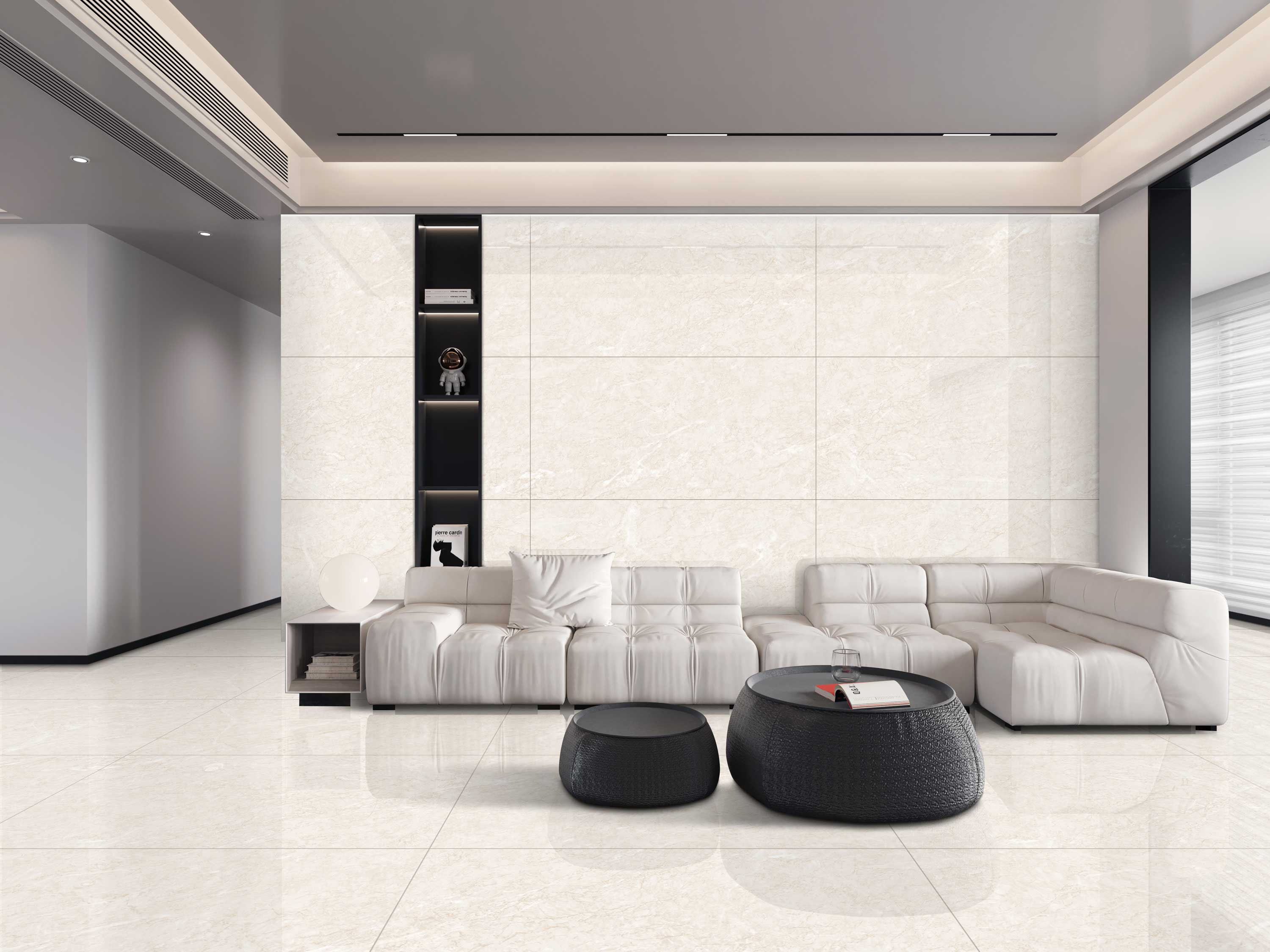
The 800×1600 mm tile sits right between regular tiles and oversized slabs. It delivers the seamless, high-end look created by fewer grout joints, yet installers can still handle it without slab-level machinery. The result: premium aesthetics, faster installation, and lower labour cost compared with very large formats.
Why does the 800x1600 mm medium format outshine traditional square tiles in contemporary layouts?
Traditional 600×600 mm tiles divide a floor into a visible grid. The eye keeps catching grout joints instead of appreciating the room. 800x1600 mm tiles reduce joint frequency by almost half across the same area, which visually enlarges the space, especially useful in compact urban homes.
This format is commonly available in full-body vitrified tiles, where the colour and composition run through the entire thickness. Many designs are also made as glazed vitrified tiles (GVT), which carry a printed surface layer for patterns such as marble or stone. The polished finish variant, known as polished glazed vitrified tiles (PGVT), adds surface reflectivity. These porcelain tiles are fired above 1200°C, densifying the material and sealing pores. Under ISO 13006 standards, water absorption stays below 0.5%, which makes the surface resistant to moisture and staining. In simple terms:
- less moisture penetration
- higher density
- longer life
Because the tile is rectangular rather than square, designers can lay it in linear patterns that align with furniture and architectural lines. Instead of a patchwork floor, the flooring begins to feel like part of the architecture itself.
Which rooms are best for installing 800×1600mm tiles?
Large-format flooring works best when the eye moves smoothly across the space. Instead of a grid, the surface looks continuous. That is exactly what modern layouts try to achieve.
1. Living Room
The living room is the most open area of a house. Sofas, centre tables, and TV units sit far apart. With 800x1600 tiles for the living room, grout lines reduce sharply. The floor stops looking segmented, and the room appears wider.
2. Bedrooms
Bedrooms need visual calm more than drama. Many joints create visual noise. Fewer lines make the space feel quieter. Installers often align the 1600 mm side along the bed direction. This subtly elongates the room.
3. Bathrooms
The size becomes practical here. Using 800x1600 tiles for bathroom walls covers almost the full height. Fewer horizontal joints mean less moisture buildup and lower mould risk. Matte or satin finishes suit wet floors, while glossy walls help reflect light.
4. Dining Areas
Dining chairs move constantly. Smaller tiles place chair legs on grout joints repeatedly. Dirt collects there first. Larger tiles create wider, cleanable areas and daily cleaning becomes easier.
5. Passageways & Corridors
Narrow corridors benefit the most. The long side is laid lengthwise. The hallway instantly appears longer. No structural change is needed, only layout planning.
This size is particularly effective in open-plan homes, where flooring must visually connect separate functional zones.
How to correctly install 800x1600mm tiles to prevent cracking and lippage?
Because 800x1600 large floor tiles span a wider area than standard 600×600 flooring, even minor unevenness in the base becomes visible on the surface. Therefore, installation becomes more important than the tile quality itself. Most issues blamed on the tile actually result from poor bedding and insufficient support below.
Key installation requirements:
Subfloor preparation
- Surface flatness tolerance: max ±2 mm across 2 meters
- Cement screed must cure for a minimum of 14 days
- Moisture content below 5%
Adhesive & placement
- Use polymer-modified adhesive (C2TE S1 as per EN 12004)
- Apply adhesive with a 12 mm notched trowel
- Back-buttering is mandatory for 95% coverage
The same installation care applies to vertical surfaces as well. When fixing 800x1600 mm wall tiles, full adhesive coverage and proper levelling clips are important to prevent tile slippage before the adhesive cures.
Why this matters:
Large tiles don’t flex like small ones. Air gaps underneath create hollow spots, and pressure points eventually lead to cracks or “lippage” (uneven edges).
Buyer’s Checklist: What specific technical checks are required before buying 800x1600mm tiles?
When selecting 2.5x5 feet tiles, appearance alone is not enough. Technical specifications determine performance.
Check these parameters before purchase:
- PEI Rating (Porcelain Enamel Institute): PEI 3 is suitable for light residential, and for living rooms and heavy home traffic, PEI 4 is recommended
- Thickness: minimum 9–10 mm for floors
- Warpage tolerance: <0.5% (ensures flatness)
- Slip resistance: R9–R10 for indoor floors
- Shade consistency: batch number must match across boxes
A practical tip: open at least two boxes in the showroom and place tiles side-by-side. Micro-shade differences become obvious immediately.
Maintenance Guide: How to preserve the finish on 800x1600mm vitrified floors?
The biggest misconception about 800x1600 glossy tiles is that they require constant polishing. They don’t. Vitrified tiles are non-porous; the shine is factory-fired, not a surface coating.
Daily care
- Microfiber mop + plain water
- Neutral pH cleaner once a week
What not to use
- Acid cleaners (damage grout)
- Phenyl or soap oil (creates slippery film)
- Hard scrubbers (scratch reflection, not tile)
Grout tip:
Use epoxy grout in kitchens and entrances. Cement grout absorbs stains and darkens within months, making even expensive flooring look older than it actually is.
FAQs
Yes. 800x1600 mm wall tiles are widely used for TV backdrops and shower walls. Because the panel height is larger, you need fewer horizontal joints, which prevents water seepage and improves hygiene.
800x1600 tiles for bathroom walls are ideal for shower areas because fewer grout joints mean less mould growth. For floors, choose a matte or R10 slip-resistant finish to ensure safety when wet.
Yes. Larger tiles reduce visual segmentation. Human perception reads fewer joints as a wider floor area, which psychologically expands the room.
