Best Parking Tiles for Heavy Vehicles: What Actually Works?
April 14, 2026 113
Stop parking tile cracks before they start. Prioritize 10-16mm vitrified tiles and anti-skid textures to ensure your driveway handles heavy SUVs and commercial vehicles with ease.
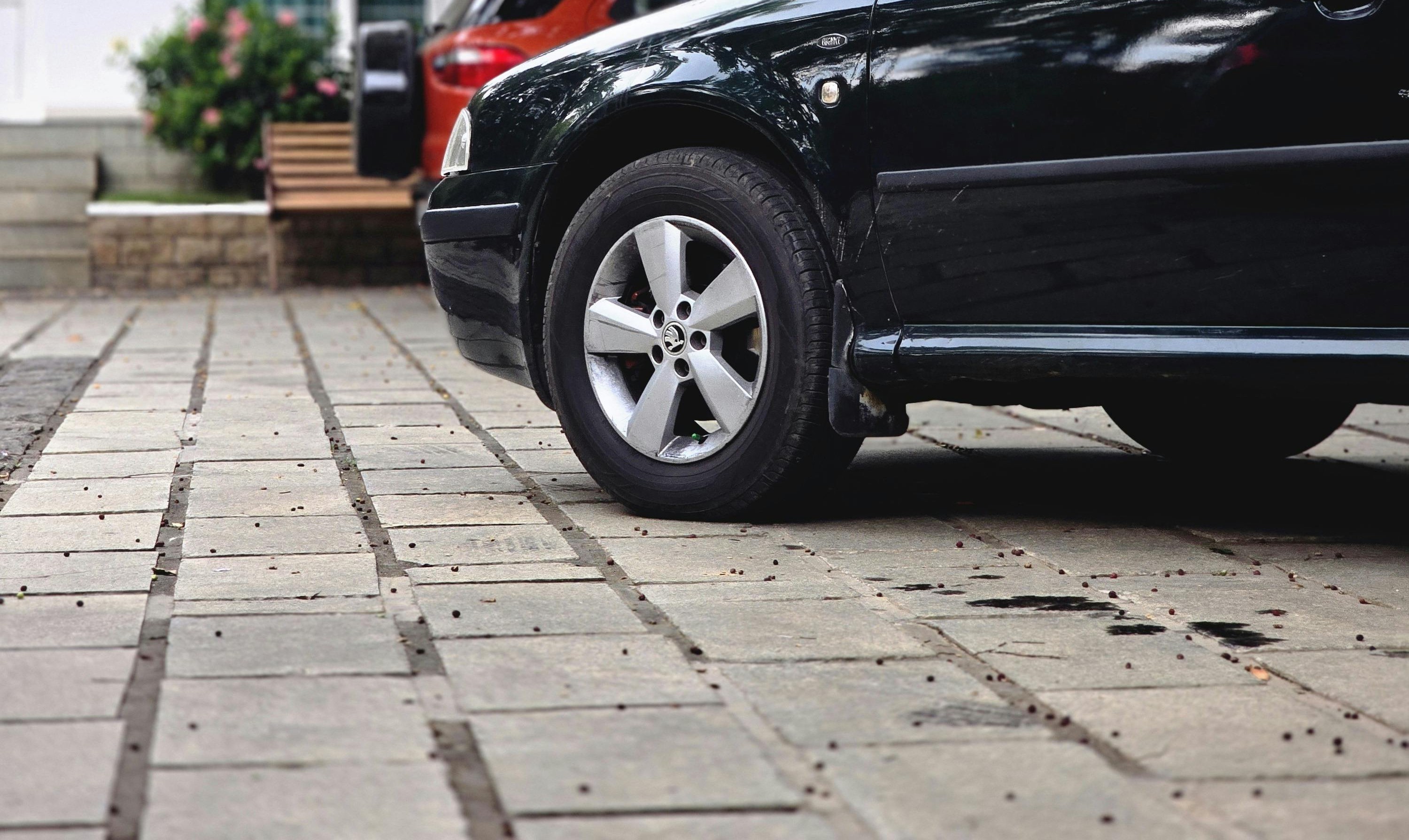
Why Most Parking Tiles Fail Under Heavy Vehicles
If your parking area is used by SUVs, commercial vehicles, or even regular cars daily, you’ve probably noticed one thing.
Tiles that look perfectly fine at the start don’t always stay that way.
Hairline cracks appear. Edges start chipping. In some cases, tiles loosen or shift slightly under weight. And during the monsoon, the same surface becomes slippery.
This usually doesn’t happen because the tile was “bad.”
It happens because the tile wasn’t chosen for real conditions.
When selecting tiles for heavy vehicles, the focus should shift from appearance to performance. This is where understanding parking tiles design becomes more practical than decorative.
Quick Answer
For heavy vehicles, vitrified or porcelain parking tiles with a matte or textured anti-skid surface work best.
They handle high loads, resist water absorption, and stay stable under temperature changes.
Avoid glossy or thin tiles,they tend to crack or become unsafe over time.
Types of Parking Tiles Suitable for Heavy Vehicles
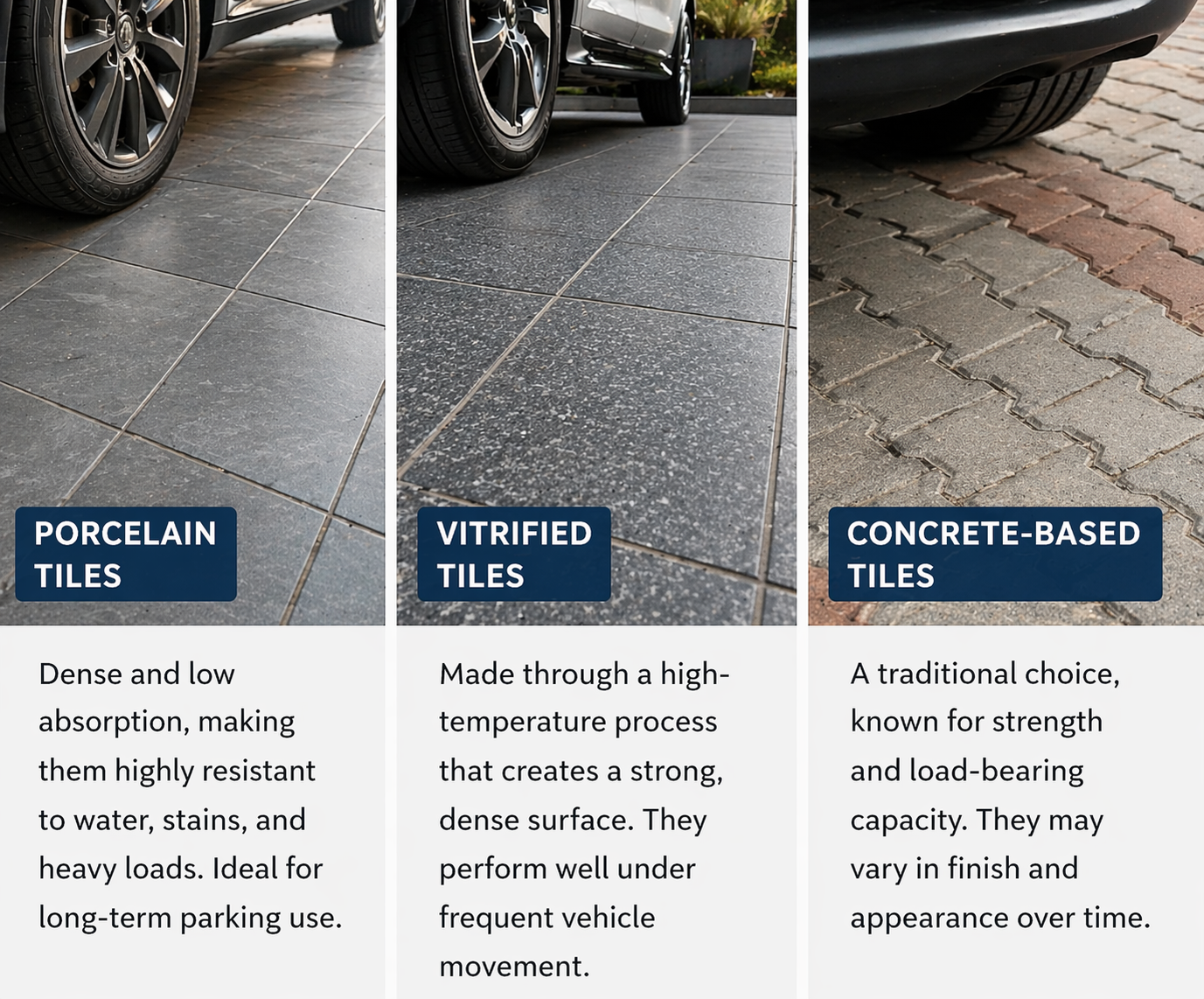
Porcelain Tiles
These are the most reliable materials for high-load areas.
They are dense, which means they don’t absorb much water and can withstand pressure better. This is why most car parking tiles today are made using porcelain bodies.
They remain stable even with repeated vehicle movement.
Full Body and Colour-body Vitrified Tiles
For heavier vehicles, these tiles offer additional strength.
They are built for commercial-level durability. If your parking area is used frequently or supports larger vehicles, these tiles reduce the chances of surface wear and internal cracking.
Concrete (paver-block) Tiles (Weather-Resistant Options)
Concrete-based (paver block) tiles are designed to handle both load and exposure.
They are commonly used in driveways and open parking spaces. You’ll find many options under outdoor parking tiles categories that are specifically built for sun and rain conditions.
What Actually Works
Let’s simplify this.
A tile works well for heavy vehicles when it handles:
- weight pressure
- heat expansion
- water exposure
- friction from tyres
This is why parking floor tiles need a different selection approach than indoor flooring.
Ideal Combination:
- dense body (vitrified/porcelain)
- 10–16 mm thickness
- matte or textured surface
- anti-skid finish
These factors matter more than brand or pattern.
Parking Tiles Price: What You Should Actually Compare
Price often creates confusion.
Two tiles may look similar but perform very differently.
Factors affecting cost:
- material density
- thickness
- finish type
- manufacturing quality
This is why the parking tiles price should not be the only deciding factor.
Lower-cost tiles may increase maintenance or replacement costs later.
Things to Consider Before Choosing Parking Tiles
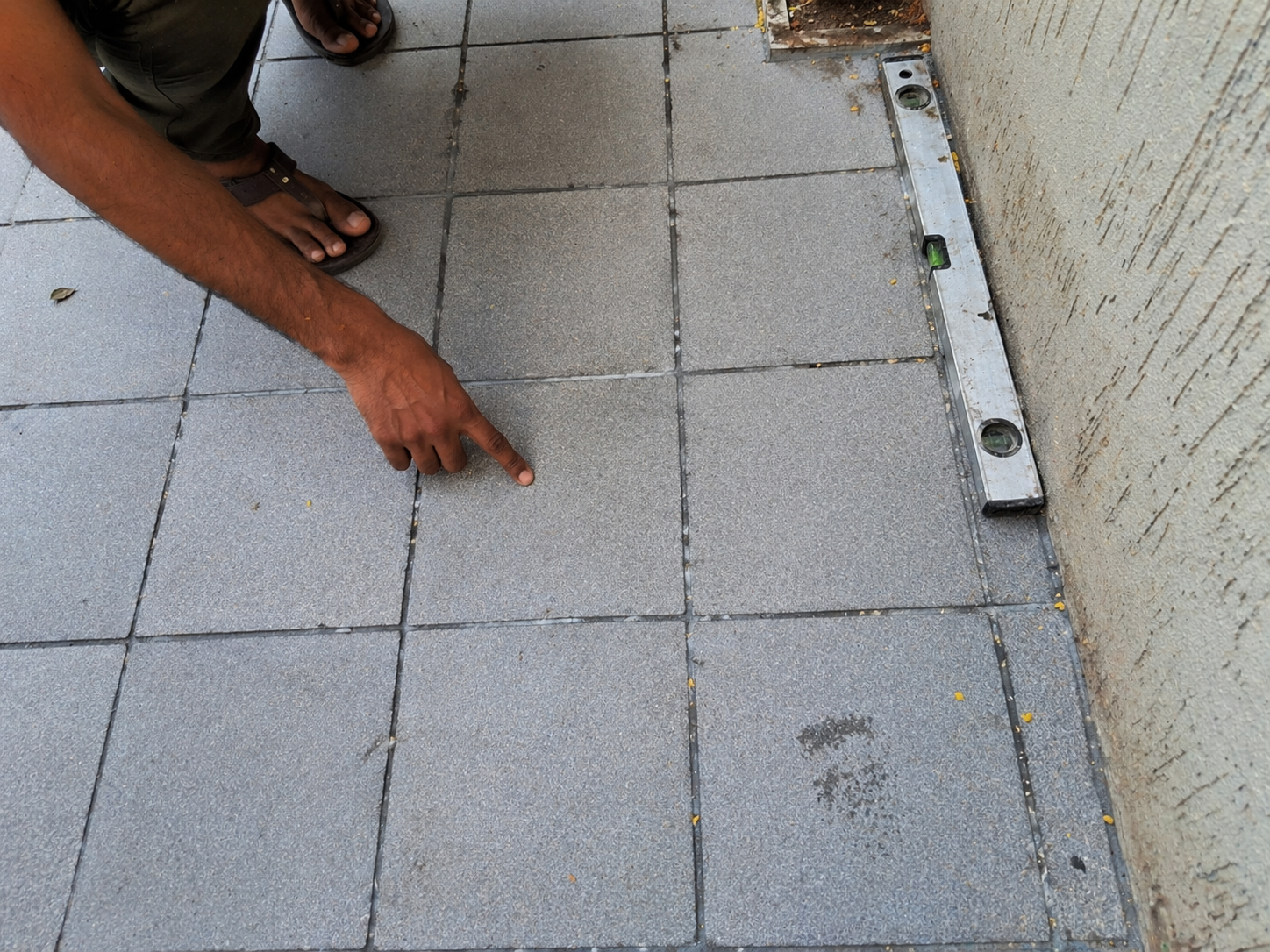
Load-Bearing Capacity
This is where most decisions go wrong.
A small car and a heavy SUV create very different pressure points. Tiles must distribute that load evenly.
Thin tiles may look fine initially, but often fail under repeated stress.
Surface Grip and Safety
During rain, smooth tiles can become slippery.
This is why anti-skid parking tiles are not optional, they are necessary in outdoor or semi-covered spaces.
They provide traction without making cleaning difficult.
Tile Thickness and Sizes
Thickness directly affects how well a tile handles pressure over time. Along with that, tile size also plays a key role in load distribution. Smaller formats generally perform better because the weight gets spread more evenly across the surface.
400×400 mm (16x16 tiles): Most preferred for parking areas. A smaller size helps distribute the vehicle load evenly, reducing the chances of cracks and improving long-term stability.
500×500 mm: A balanced option between size and strength. It provides good load handling while maintaining installation stability, making it suitable for regular car parking use.
600×600 mm (2x2 tiles): Used less frequently in parking spaces. Slightly more expensive and requires a well-prepared base to avoid stress points, but it can work if installed properly.
Water Absorption and Climate Suitability
In Indian conditions, tiles face both heat and heavy rain.
Low absorption tiles prevent water seepage and reduce long-term damage. This is especially important in coastal or humid regions.
Common Mistakes That Lead to Tile Failure
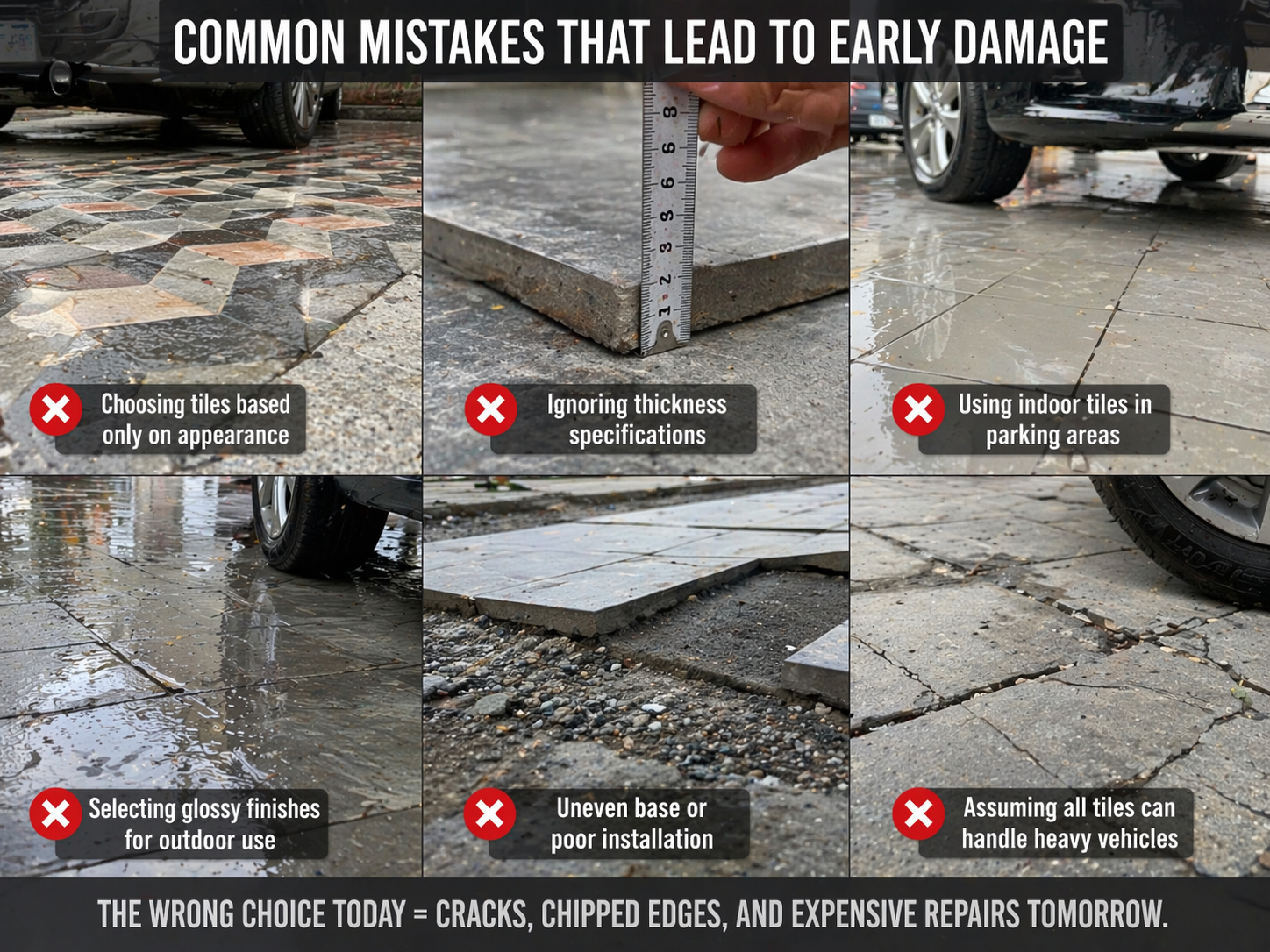
| Mistake People Make | What Actually Works | Why It Matters |
| Choosing tiles based only on design | Prioritise strength and load capacity | Good-looking tiles do not meet the proper standard under vehicle weight |
| Using glossy or smooth tiles | Use matte or anti-skid surfaces | Reduces slipping risk, especially during rain |
| Ignoring tile thickness | Choose 10–16 mm thickness | Thicker tiles handle pressure and prevent cracks |
| Skipping proper base preparation | Ensure solid concrete base (100–150 mm) | Weak base leads to tile shifting or breakage |
| No slope for drainage | Maintain slight slope (1–2%) | Prevents water accumulation and long-term damage |
| Using indoor tiles outdoors | Select outdoor-specific parking tiles | Indoor tiles are not built for weather exposure |
Most failures are not material issues; they are selection or installation errors.
Design Approach for Residential Parking Areas
A parking area still contributes to your home’s appearance.
Modern parking tiles design for home focuses on:
- neutral shades (grey, brown, stone textures)
- patterns that hide tyre marks
- finishes that reduce visible dust
Design should support usage, not conflict with it.
If you’re exploring durability for outdoor spaces, you can also read: Best Outdoor Tiles for Indian Weather Conditions
Expert Recommendation
If your parking area is used by heavy vehicles:
- Go for vitrified or porcelain tiles only
- choose matte or textured finishes
- ensure proper concrete base (minimum 100–150 mm)
- maintain slope for drainage
- avoid overly decorative designs
A simple, durable surface performs better than a complex design that fails early.
If you're comparing materials beyond standard tiles, you can also explore: Balcony tiles, which are durable, anti-skid tiles designed to handle outdoor weather while maintaining a clean, modern look. 3D look tiles are textured or printed tiles that create a visual depth effect, adding dimension and style to walls or floors..
Conclusion: What Actually Matters After Installation
Most tile decisions are made at the selection stage.
That’s where everything looks perfect, clean samples, even lighting, no real stress on the surface.
But once the tiles are installed and start facing actual use, the situation changes. Weight, movement, heat, and moisture aren’t minor factors. They decide how the surface behaves over time.
And that’s where the difference shows.
Some tiles stay stable. Others start showing small issues early, nothing dramatic at first, but enough to notice.
So the focus shouldn’t be only on how a tile looks when new. It should be on how it performs after months of use.
If strength, grip, and stability are addressed, the design usually works out on its own.
FAQs
Yes, and honestly, they make life easier. In real parking areas, marks are unavoidable, tyre lines, dust, and sometimes oil. Grey doesn’t hide everything, but it hides enough that you don’t feel the need to clean it every day. That’s the practical benefit people notice later, not at the time of selection.
You realise their importance only after the first rainy day. Smooth tiles may look fine initially, but once water comes in, grip becomes an issue. Matte surfaces don’t eliminate slipping, but they significantly reduce the risk.
16x16 (400×400 mm) and 500x500mm tiles tend to behave more predictably. Bigger tiles can work, but only when the base is properly done, which, in many cases, is where things go wrong.
Design doesn’t matter much in parking areas; performance does. Bookmatch tiles are made for visual appeal, not for handling heavy loads or daily vehicle movement, so they are not suitable here.
Nothing complicated. Just basic cleaning. What actually damages the surface over time is neglect, especially when dirt or oil stays there for too long.
