Bathroom Tiles in India: The Complete 2026 Buyer's Guide
Compare ceramic, vitrified, porcelain, matte, glossy, and anti-skid bathroom tiles in India with 2026 trends, prices, sizing tips, and practical buying advice.
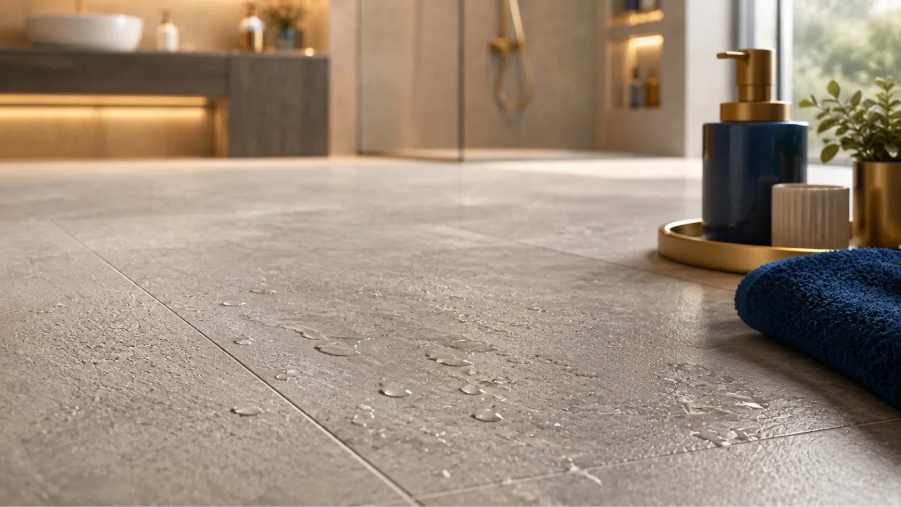
Picking bathroom tiles in India is not as simple as choosing something that looks good at the showroom. What looks sharp under store lighting can look completely different in a compact bathroom with a single ceiling bulb. And what feels grippy in your dry hands can become dangerously slippery under a running shower.
This guide cuts through the confusion and gives you everything you need: tile types, 2026 trends, pricing, sizing logic, and the exact checks you should run before putting any money down.
It also helps you compare modern bathroom tile design ideas that work in Indian homes, not just in showroom displays.
Why Your Bathroom Tile Choice Matters More Than You Think
Bathroom tiles are one of the few home decisions you live with for 10 to 15 years without getting a second chance. Unlike paint or furniture, ripping out and replacing tiles means breaking walls, adding wastage cost, and rebuilding from scratch.
In India specifically, bathrooms face a tough set of conditions: hard water, high humidity, frequent cleaning with harsh chemicals, and often very limited natural light. A tile that works in a European bathroom brochure may simply not hold up here.
Choosing right the first time saves money, safety headaches, and regret.
Types of Bathroom Tiles Available in India
Before you look at colours or patterns, understand what the tile is made of. Material determines everything: how it handles water, how long it lasts, and what it costs over time.
Ceramic Bathroom Tiles
Ceramic tiles are the most widely used in Indian bathrooms. They are clay-based, kiln-fired, and coated with a glaze on top.
They work well on walls in bathrooms because the glaze resists water and stains. On floors, they are acceptable in low-traffic areas, but they scratch over time under heavy use.
Water absorption rate: 6% to 16% (higher than vitrified).
Typical price range: Rs. 25 to Rs. 80 per sq. ft.
Vitrified Tiles
Vitrified tiles are fired at much higher temperatures than ceramic tiles, which fuses the body and makes them far less porous. This makes them a stronger choice for bathroom floors in Indian homes.
They come in four types:
GVT (Glazed Vitrified Tiles) – Better surface designs and glossy finishes for modern bathrooms.
PGVT (Polished Glazed Vitrified Tiles) – Premium polished look with decorative patterns and marble-like finishes.
Double-Charged Vitrified Tiles – Highly durable and suitable for heavy bathroom foot traffic.
Full Body Vitrified Tiles – Colour and texture run throughout the tile, making chips and scratches less visible.
Water absorption rate: Below 0.5%.
Typical price range: Rs. 60 to Rs. 150 per sq. ft.
Porcelain Tiles
Porcelain bathroom tiles are made using refined clay and fired at very high temperatures, making them denser and less porous than regular ceramic tiles. This helps them resist water, stains, and moisture better in wet bathroom areas.
They are highly durable, easy to maintain, and ideal for both bathroom floors and walls. Matte porcelain tiles also provide better grip, making them a safer option for wet floors.
Typical price range: Rs. 80 to Rs. 220 per sq. ft.
Natural Stone-Look Tiles
These are not actual stones. They are vitrified or porcelain tiles printed to mimic marble, slate, travertine, or sandstone.
They give you the visual appeal of natural stone without the maintenance burden. Real marble, for example, stains with hard water and acids in cleaning products. Stone-look tiles do not.
Important: Always check if the surface is matte and anti-skid before using stone-look tiles on a bathroom floor.
Bathroom Wall Tiles vs Floor Tiles: Why You Cannot Use the Same Tile Everywhere
This is the mistake that catches most first-time buyers off guard.
Floor tiles need:
Anti-skid surface (minimum R9 or R10 slip resistance rating)
Low porosity to resist moisture from underneath
Thickness of at least 8 to 10 mm for structural support
Wall tiles need:
Lighter weight so they do not stress the adhesive
Smooth or glossy surfaces for easy wiping
No slip resistance requirement since no one walks on walls
Using a wall tile on the floor can result in cracking or dangerous slipping. Using a heavy floor tile on a wall puts too much load on the adhesive, especially on older plaster.
Always ask your dealer specifically whether a tile is rated for floor use, wall use, or both.
Top Bathroom Tile Trends in India for 2026
Trends in 2026 are moving away from cold, all-white bathrooms toward spaces that feel warmer and more considered. Here is what Indian homeowners and interior designers are putting on the walls and floors right now.
Large Format Tiles (600x1200 mm and beyond)
Large tiles reduce the number of grout lines, which makes a bathroom look cleaner and more open. Less grout also means less scrubbing every month.
The 600x1200 mm size is the new standard for bathroom walls in urban Indian homes. Some projects are going even bigger, to 800x1600 mm, especially in master bathrooms.
One practical note: larger tiles create more cutting wastage in compact bathrooms. For a bathroom smaller than 40 sq. ft., discuss tile size with your contractor before ordering.
Matte Finishes and Earthy Tones
Glossy white tiles are declining. Matte finishes in beige, sand, warm grey, dusty terracotta, and muted sage are the colours gaining ground across Indian homes in 2026.
This shift makes practical sense for India. Pure white glossy tiles show water marks, soap stains, and limescale deposits almost immediately, especially in cities with hard water. Matte earthy tones hide these marks far better between cleanings.
Pantone's 2026 colour of the year, Mocha Mousse, has also pushed warm brown tones into bathroom design.
Looking for more inspiration? Explore the best bathroom tile designs for modern Indian homes to see trending layouts, colour combinations, and contemporary bathroom styles.
Fluted and 3D Textured Tiles
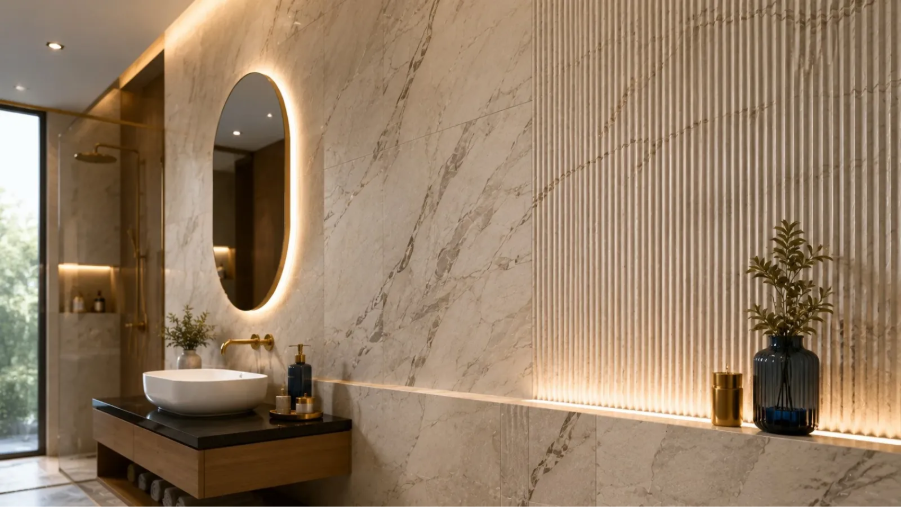
Fluted tiles (tiles with raised vertical ridges) started appearing in Indian bathrooms around 2023 and have fully arrived in 2026. They work best as a single feature wall behind the mirror or behind the shower area.
A full bathroom in fluted tiles looks busy and collects soap residue in the grooves. One accent wall gives the textural interest without the cleaning headache.
Marble-Look Tiles with Matte Finishes
Marble-look tiles have been around for years, but the 2026 version is different. High-gloss artificial marble is giving way to matte or satin-finish marble tiles with subtle, realistic veining.
In Indian conditions where humidity is high, the matte version is more practical. It hides water drips, resists showing fingerprints, and gives a far more convincing stone appearance than the older mirror-finish versions.
Choosing the Right Tile Size for Indian Bathrooms
Tile size affects how your bathroom looks, how much wastage you produce, and your final installation cost. Here is a simple size guide for Indian bathrooms:
| Bathroom Size | Recommended Floor Tile | Recommended Wall Tile |
| Under 30 sq. ft | 300x300 mm or 300x600 mm | 300x600 mm |
| 30 to 60 sq. ft | 400x400 mm or 600x600 mm | 600x600 mm or 600x1200 mm |
| 60 sq. ft and above | 600x600 mm or 600x1200 mm | 600x1200 mm or larger |
Larger tiles always look better in photos, but in a cramped bathroom, they create excessive cutting around fixtures, sumps, and drainage points. Each cut tile becomes wastage, and wastage adds directly to material cost.
If you are confused about which tile dimensions work best for compact, medium, or large bathrooms, read our detailed guide on choosing the best bathroom tile size for every space.
A good rule: order 10% extra material for bathrooms with many fixtures, and 5% extra for simple rectangular bathrooms.
Colour Combinations That Work Well in Indian Bathrooms
Lighting in most Indian bathrooms is not natural. A single overhead light or a small ventilation window is common. Under this kind of artificial light, certain colour combinations perform much better than others.
Combinations that work:
White walls + dark grey anti-skid floor - Classic, contrast is clean, shows less water on the floor
Beige/sand walls + matte brown or terracotta floor - Warm, low maintenance, spa-like
Light grey walls + charcoal floor - Crisp, works well in small and large bathrooms
Off-white walls + sage green accent wall - Fresh, trending, does not feel dated as fast as bold colours
What to avoid:
All-dark bathrooms without at least one light-coloured wall; they feel enclosed and depressing under single overhead lighting
Matching floor and wall in the same dark glossy tile; grout lines disappear, and the space feels unfinished
Pure bright white with warm yellow overhead lights; it turns greenish yellow in reality
Bathroom Tile Prices in India: 2026 Budget Guide
Tile material costs in India vary considerably based on tile type, finish, size, and brand. Laying bathroom tiles typically costs Rs. 25 to Rs. 45 per sq. ft for labour alone, separate from material costs.
Here is a clear breakdown for 2026:
| Tile Type | Material Cost (per sq. ft) | Finish | Best For |
| Ceramic Tiles | Rs. 25 to Rs. 60 | Glossy | Budget bathroom walls |
| GVT (Glazed Vitrified Tiles) | Rs. 60 to Rs. 120 | Matte/Glossy | Floor and walls both |
| PGVT (Polished Glazed Vitrified Tiles) | Rs. 80 to Rs. 150 | Matte/Satin | Feature walls, floors |
| Porcelain Tiles | Rs. 90 to Rs. 200 | Matte | Long-term floor investment |
Most Indian bathrooms cost between Rs. 15,000 and Rs. 30,000 to fully tile, depending on size and tile selection. A typical installation takes 2 to 3 days.
Total cost = (material cost per sq. ft x total area) + (labour at Rs. 25 to Rs. 45 per sq. ft) + adhesive and grout (approximately Rs. 10 to Rs. 15 per sq. ft).
7 Things to Check Before You Buy Bathroom Tiles in India
Most blogs stop at "choose a good brand." These are the checks that protect your money.
Water Absorption Rate
Ask for the tile's water absorption rating. Anything above 3% is not suitable for bathroom floors. Full body tiles and porcelain tiles fall well below 0.5%.
Slip Resistance Rating
Look for R9 or R10 on the tile specification sheet. R9 covers normal wet bathroom floors. R10 is better for open showers and wet zones.
BIS / ISI Certification
Indian bathroom tiles should carry Bureau of Indian Standards (BIS) certification. This is your assurance that the tile meets a minimum standard for strength, water resistance, and chemical resistance.
Tile Thickness
Bathroom floor tiles should be at least 8 mm thick. Thinner tiles crack under impact or uneven substrates. Wall tiles can be thinner, typically 6 to 7 mm.
Shade Batch Consistency
Always buy tiles from the same production batch (called a "shade lot" or "calibration lot"). Tiles from different batches can vary slightly in colour and size. This shows up as visible lines across your bathroom floor after installation.
Sample Testing in Your Own Light
Take physical samples home before ordering. Hold them under your bathroom's actual lighting conditions at different times of day. Showroom lighting is designed to make everything look its best.
Grout Joint Compatibility
Rectified tiles (machine-cut to precise dimensions) can go down with 2 mm grout joints for a near-seamless look. Non-rectified tiles need at least 3 to 5 mm joints. Confirm your tile type before choosing a grout thickness.
Mistakes People Commonly Make When Buying Bathroom Tiles
- Buying only the exact amount needed: Tiles break during cutting, and future replacements may not match your batch. Always buy 5 to 10% extra.
- Choosing tile by brand name alone: A big brand name does not automatically mean the tile works for your specific application. Always check material specs.
- Ignoring the grout: Grout takes up more visual space than most people expect. A dirty grout line can make the best tiles look rough within months. Choose epoxy grout or, at a minimum, a stain-resistant cement grout for Indian bathrooms.
- Using wall tiles on the floor: Wall tiles are not rated for foot traffic or weight load. This is both a safety and a durability issue.
- Ordering without checking the delivery condition: Tiles ship in bulk, and chips happen in transit. Inspect every box before the mason begins work, not after.
Ready to Start Tiling?
The best bathroom tile is not always the most expensive one or the trendiest one. It is the one that fits your space, handles your specific conditions, and holds up year after year without constant attention.
Before you visit any tile shop, note down your bathroom dimensions, your lighting conditions, and your actual budget,t including labour. Walk in with those numbers and ask dealers to work within them. You will make a far clearer decision than someone browsing through catalogues without a plan.
If you are working with an architect or interior designer, ask them to specify the tile type, water absorption rating, and slip resistance in writing. Vague specs lead to substitutions on site that you may not catch until the job is done.
You can also explore different bathroom tile styles, compare materials, and connect with trusted tile dealers through Tiles Finders to make your selection process easier and more informed.
You can also explore India’s growing tiles marketplace to compare bathroom tile designs, materials, sizes, and trusted tile dealers in one place.
Take your time. These tiles are going to be around for a long time.
-c1c8f337-bdf9-4ae7-a497-a62c8680ea62.png)
FAQs
Material costs start around Rs. 25 per sq. ft for basic ceramic and go up to Rs. 500 per sq ft for marble-look porcelain tiles. For a standard Indian bathroom of 40 to 50 sq ft, total tiling (material plus labour plus adhesive) typically falls between Rs. 15,000 and Rs. 30,000.
Vitrified tiles are the best choice for bathroom floors. They have a much lower water absorption rate (below 0.5%) compared to ceramic (3% to 10%). This makes them less likely to absorb moisture, grow mildew, or crack underweight time. The price difference is worth it for a surface you use every day.
Use lighter wall colours to reflect light and make the space feel larger. On the floor, go with a medium-format tile (300x600 mm or 400x400 mm) rather than very large tiles that create excessive wastage from cutting. Avoid busy patterns on both walls and floors simultaneously; let one surface stay simple.
No. Glossy tiles become very slippery when wet. They are suitable for bathroom walls, where they resist water and are easy to clean. Always use matte, textured, or anti-skid tiles on bathroom floors.
Ask for the Coefficient of Friction (COF) value or the R-rating on the tile specification sheet. For Indian bathrooms, aim for a COF of at least 0.5 or an R9 slip resistance rating. You can also do a basic wet test: pour a small amount of water on the tile sample and try pressing a wet foot against it.
Matte bathroom tiles are better for floors because they offer more grip and are safer when wet. Glossy bathroom tiles reflect light beautifully and are easier to clean, making them ideal for walls. A combination of matte floor tiles and glossy wall tiles gives the best balance of safety and aesthetics.

See our tile guides first
Set TilesFinders as a preferred source and our buying guides surface ahead of the rest for you.
Add as preferred sourceTakes one tap. Nothing to install.
What Readers Say
I was about to redo my parking area with the wrong tile size until I read this. The layout comparisons saved me from a costly mistake.
We reference TilesFinders guides while briefing clients on material selection. The size and pattern breakdowns are accurate and easy to explain visually.
On site, I get asked about grout spacing all the time. This article gave me a solid reference I now share with my team before every job.
Finally a guide that doesn't just push generic advice. The oil stain removal steps actually worked on our clubhouse driveway tiles.
I run a small construction firm and now send this link to clients directly when they ask about entrance tile sizing. Saves me an hour of explaining.
Good practical detail, though I wish there were more examples for compact apartment entrances specifically, not just villas.
My mother-in-law wanted marble, I wanted vitrified. This blog gave us the neutral comparison we needed to actually decide together.
Detailed without being overwhelming. I appreciated that it covered both cost and maintenance, not just the aesthetics.
Used the algae and hard water removal tips on our terrace tiles after the monsoon. Worked better than what our regular cleaner was doing.
As someone who sources tiles for multiple builder projects, I find these comparisons genuinely useful for vendor conversations, not just consumer content.
Recommended this to a client who kept second-guessing the entrance design. The small vs large layout section settled the debate instantly.
Straightforward and honest, no unnecessary jargon. Would like to see a similar breakdown for outdoor pool-deck tiles next.
We've bookmarked several TilesFinders guides for our design handbook. Reliable source when clients want data, not just opinions.
Two paths, one marketplace.
Get free quotes from verified suppliers.
Share your room, budget, and style. Suppliers in Morbi respond within hours.
Get Free QuotesList your business, reach real buyers.
Put your showroom in front of homeowners searching for tiles right now.
List Your Business