How to Calculate Tile Quantity for Your Home
March 30, 2026 232
Learn how to easily calculate tile quantity for your home. This 4-step guide covers measuring your space, adding the right wastage margin, and figuring out exactly how many boxes to buy.
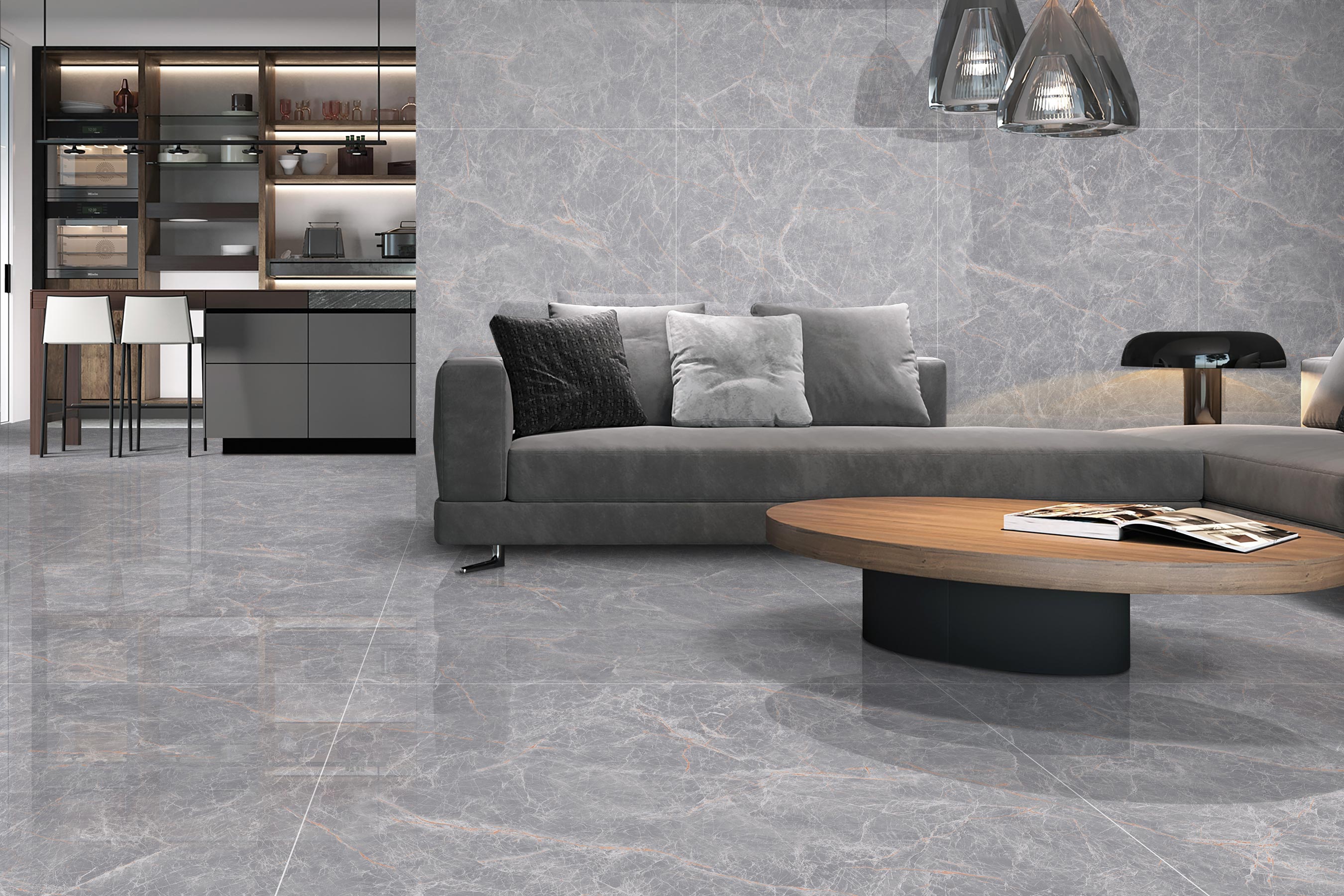
Calculating how many tiles you need for your home, whether you're installing living room floor tiles or kitchen backsplash tiles, is simpler than most people think. First, measure the total area of the floor or wall, then add 10–15% extra to cover cutting and wastage. Finally, divide that number by the coverage mentioned on a tile box to determine how many boxes to purchase.
Step 1: Measure your floor or wall area correctly
Before calculating tile quantity, you need the total surface area of the space where tiles will be installed. This usually means measuring the length and width of the room.
Start by measuring the length and width in feet using a tape measure.
The basic calculation is straightforward:
Length × Width = Total Area in square feet
For example, if a living room is 15 feet long and 12 feet wide, the total area becomes:
15 × 12 = 180 square feet
If you are calculating tiles for walls, remember to subtract the space taken up by permanent fixtures such as windows, doors, or built-in wardrobes. For bathrooms or kitchens, you may also need to deduct bathtubs, cabinets, or kitchen islands from the final area.
This gives you a more accurate tile requirement.
Step 2: Add a wastage margin before ordering tiles
In tile installation, the required quantity is always higher than the exact room area. Tiles need to be cut around corners, edges, and fixtures, which creates unavoidable wastage.
Because of this, professionals always recommend adding an extra margin.
For most installations, the following rule works well:
- Straight tile layout: Add about 10% extra
- Diagonal or herringbone layouts: Add about 15% extra
Complex layouts require more cutting, especially near walls and corners, which increases tile waste.
Another reason for ordering extra tiles is future repairs. Keeping one or two unopened boxes stored at home ensures you have matching tiles available if a tile cracks years later. Manufacturers may discontinue a design or produce slightly different shades in future batches.
Step 3: How to calculate the square feet covered in one tile box
Tile boxes usually display tile size in millimetres (mm) or sometimes centimetres (cm). However, tile quantities are commonly discussed in square feet. Because of this, you may need a simple calculation to understand how much area a box actually covers.
When the tile size is in millimetres (mm)
Use this formula to calculate the coverage of one box:
(Length in mm × Width in mm × Number of pieces in the box) ÷ (304.8 × 304.8)
This converts the measurement into square feet.
Example
Suppose a box contains 4 tiles of size 600 mm × 600 mm.
Calculation:
(600 × 600 × 4) ÷ 92903.04
= 15.50 square feet per box
So one box of 600×600 tiles covers approximately 15.5 sq. ft.
When the tile size is in centimetres (cm)
If the tile size is printed in centimetres, the same logic applies, but with a slightly different conversion.
Formula:
(Length in cm × Width in cm × Number of pieces) ÷ (30.48 × 30.48)
Example
A box contains 6 tiles measuring 30 cm × 45 cm.
Calculation:
(30 × 45 × 6) ÷ 929.03
= 8.71 square feet per box
So this box covers about 8.7 sq. ft.
Step 4: Calculate how many boxes you actually need
Once you know the room area and the coverage per box, the final step is simple.
Divide the total required area (including wastage) by the square footage covered by one box of tiles.
For example, if your room requires 200 square feet of tiles after adding wastage, and one box covers 15.5 square feet, you would divide:
200/15.5
The result will tell you how many boxes are required.
Since tiles are sold in complete cartons, always round the number up to the nearest whole box. Even if the calculation shows 12.4 boxes, you will need to purchase 13 boxes.
FAQs
Skirting tiles are usually about four inches high. To estimate the required quantity, measure the total perimeter of the room and convert that measurement into square feet based on the height of the skirting tile.
Yes. Measure the height and width of each door or window, calculate its area, and subtract it from the total wall area. This prevents ordering more tiles than necessary.
Ordering too few tiles can create problems later. If you buy additional boxes weeks or months later, they may come from a different manufacturing batch. This can lead to slight shade variations, which become noticeable once installed.
