Reception Area Tile Design for First Impression
Make a lasting first impression. Discover the best tile colours, layout patterns, and durable finishes to create a welcoming, professional reception area design.
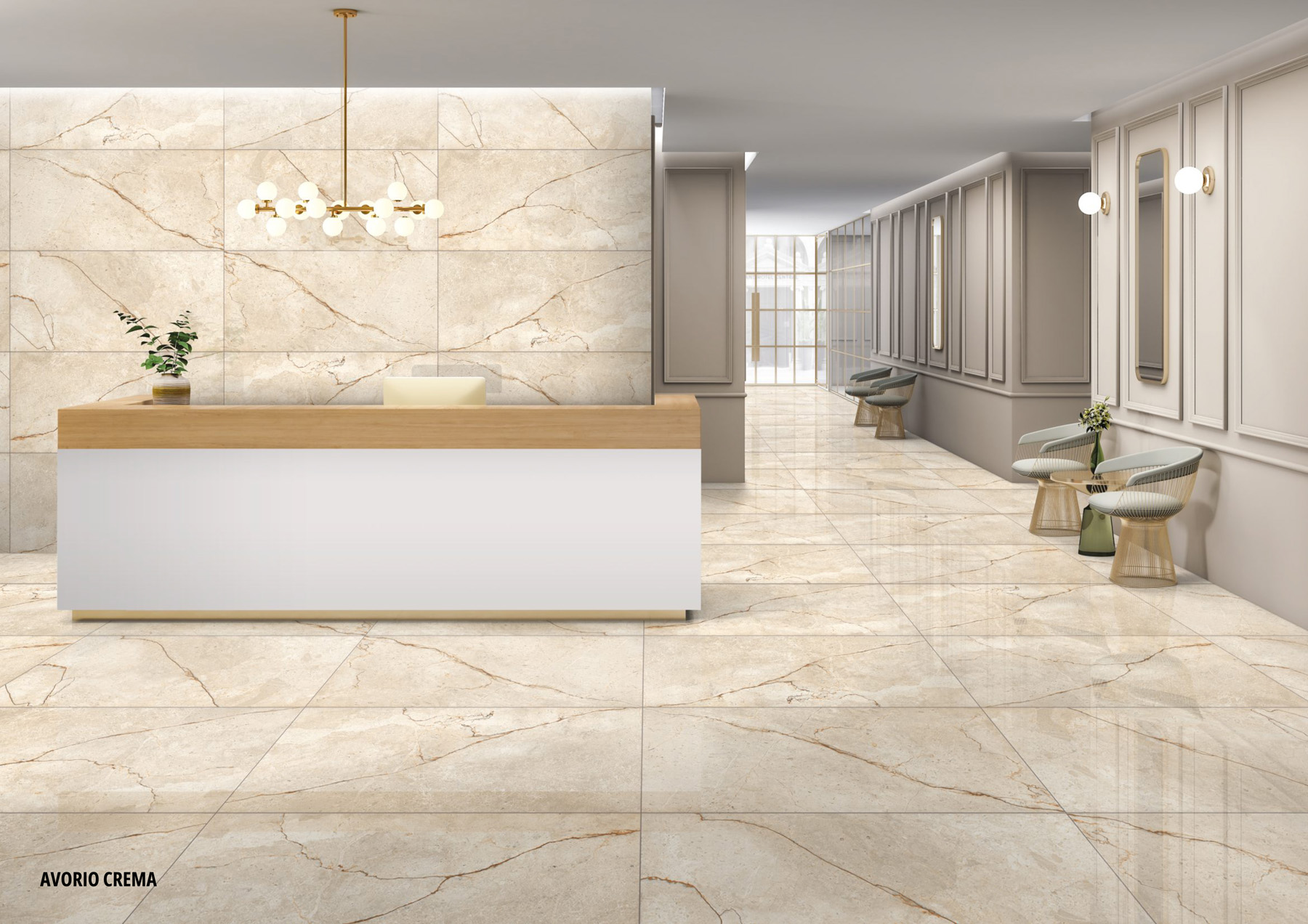
The tile design of a reception area shapes the first impression of the entire building. Large-format glossy floors help reflect light and visually expand the space, while textured or bookmatched feature walls behind the desk create a striking focal point that blends luxury aesthetics with commercial-grade durability.
How tile colours and finishes influence reception area design
Tile colour and surface finish influence how visitors perceive a space the moment they step inside. A carefully planned reception area can make even a compact lobby feel open, bright, and welcoming.
Light-toned tiles with glossy finishes reflect ceiling lights and natural daylight. Surfaces such as white marble look tiles inspired by Statuario or Calacatta marble bounce light across the room, making the reception area feel more spacious and elegant. This is why many architects prefer glossy reception floor tiles for smaller commercial lobbies.
Darker shades, however, create a completely different mood. Deep charcoal, slate, or graphite surfaces absorb light and create a grounded, contemporary atmosphere. A grey reception floor tile design works particularly well in modern office interiors where clean lines and minimalist furniture dominate.
Another growing design approach is colour drenching. In this concept, the same stone-look tile is used across both the floor and wall surfaces. When done correctly, it removes visual breaks and creates a seamless architectural envelope around the reception desk.
Which tile layout patterns create the best visual pathways to the front desk?
Floor layouts can subtly guide visitors toward the reception desk without relying on signs. A thoughtfully designed lobby floor does more than enhance the space visually; it helps direct movement and create a clear path through the reception area.
Layout Styles vs. Spatial Impact
| Layout Pattern | Design Application | Visual Impact in a Lobby |
| Bookmatch (1:2 ratio) | Centre of the lobby floor | Creates a mirrored marble vein pattern that forms a luxurious focal point. |
| Herringbone | Walkways using plank tiles | Adds directional movement and subtly guides visitors toward the desk. |
| Inlay Borders | Surrounding seating areas | Uses darker tiles to create a permanent rug effect, defining the waiting zone. |
| Staggered Brick | Narrow reception corridors | Visually widens the floor when tiles are placed across the entrance. |
Medium-format tile sizes make these patterns more impactful. Designers often use 600x1200 reception floor tiles to visually elongate the room, while larger medium-format options like 800x1600 floor tiles help reduce grout lines and create a cleaner, more seamless lobby floor.
How to design a dramatic feature wall behind the reception desk?
The wall behind the reception desk acts as the visual anchor of the entire lobby. While the floor establishes the foundation of the design, the feature wall becomes the focal point that visitors remember.
If the flooring uses glossy marble-inspired surfaces such as beige reception tiles or white marble look tiles, the wall behind the desk should introduce texture. Deeply grooved elevation tiles, stone-look cladding, or sculpted surfaces create contrast and prevent the design from feeling flat.
Medium-format slabs can enhance this effect even further when used vertically. When panels such as 800x1600 tiles are installed on the wall with ultra-thin epoxy grout joints, the surface appears almost monolithic, creating a refined backdrop where metallic logos or backlit signage stand out clearly.
For retail environments, designers often combine these elements to create a distinctive showroom reception tiles design, ensuring the entrance feels both professional and memorable.
Why should reception lobby floor tiles meet PEI Class 4 durability standards?
Reception areas experience far more wear than most interior spaces. Rolling luggage, sharp footwear, and outdoor debris constantly grind against the floor surface.
Because of this, the tiles used in the reception lobby floor design must meet strict durability standards. Double-Charged Vitrified Tiles or GVT stone look tiles with a PEI Class 4 or Class 5 rating are recommended for commercial spaces.
These ratings ensure the surface glaze remains intact even after years of heavy foot traffic. Without this level of abrasion resistance, glossy floors can quickly appear scratched or dull, diminishing the premium look of the reception area.
Maintenance Guide: How to preserve tiles in high-traffic reception areas
Reception floors experience constant movement, footwear, luggage wheels, and outdoor grit all pass through this space daily. For this reason, many designers recommend Posh Matte or GHR Matte tiles in reception areas. These finishes are specifically designed for commercial environments because they resist visible scratches and maintain their appearance even under heavy footfall.
Unlike highly polished surfaces, matte textures hide minor wear marks and reduce glare from overhead lighting. Routine cleaning is also simpler. Regular sweeping followed by mopping with a pH-neutral cleaner is usually enough to keep the floor looking consistent without damaging the tile surface.
Entrance management also plays a crucial role in maintenance. Installing large walk-off mats at the building entrance can trap a significant portion of dust, sand, and small stones before they reach the reception floor. This simple step protects the surface of Posh Matte and GHR Matte tiles and helps preserve the clean, professional look of the lobby over time.
Glossy or marble-look tiles can still be used in surrounding areas such as waiting zones or feature sections where foot traffic is lighter.
Buyer’s Checklist: What technical checks prevent lobby design failures?
Before finalising a reception area tile design, verify the following technical factors:
- V-Rating Verification: For marble-look vitrified tiles, select V3 or V4 variation levels so the floor appears natural and organic rather than repetitive.
- Lippage Control: Large tiles require levelling wedges during installation. Even a 1mm height difference becomes visible under bright lobby lighting.
- Adhesive Standard: Use polymer-modified thinset adhesives capable of supporting heavy foot traffic and furniture loads.
- Tile Size Selection: Medium formats like 600x1200 reception floor tiles work well in compact lobbies, while 800x1600 reception floor tiles deliver a seamless luxury effect in larger spaces.
FAQs
Medium-format 600x1200 reception floor tiles are often ideal because they reduce grout lines and visually elongate the space without overwhelming the layout.
Yes. Matte finishes provide better slip resistance during rainy conditions and hide minor scratches more effectively than high-gloss surfaces.
Light floors create a floating, open feeling, while darker floors provide a grounding effect that anchors furniture and the reception desk visually.

See our tile guides first
Set TilesFinders as a preferred source and our buying guides surface ahead of the rest for you.
Add as preferred sourceTakes one tap. Nothing to install.
What Readers Say
I was about to redo my parking area with the wrong tile size until I read this. The layout comparisons saved me from a costly mistake.
We reference TilesFinders guides while briefing clients on material selection. The size and pattern breakdowns are accurate and easy to explain visually.
On site, I get asked about grout spacing all the time. This article gave me a solid reference I now share with my team before every job.
Finally a guide that doesn't just push generic advice. The oil stain removal steps actually worked on our clubhouse driveway tiles.
I run a small construction firm and now send this link to clients directly when they ask about entrance tile sizing. Saves me an hour of explaining.
Good practical detail, though I wish there were more examples for compact apartment entrances specifically, not just villas.
My mother-in-law wanted marble, I wanted vitrified. This blog gave us the neutral comparison we needed to actually decide together.
Detailed without being overwhelming. I appreciated that it covered both cost and maintenance, not just the aesthetics.
Used the algae and hard water removal tips on our terrace tiles after the monsoon. Worked better than what our regular cleaner was doing.
As someone who sources tiles for multiple builder projects, I find these comparisons genuinely useful for vendor conversations, not just consumer content.
Recommended this to a client who kept second-guessing the entrance design. The small vs large layout section settled the debate instantly.
Straightforward and honest, no unnecessary jargon. Would like to see a similar breakdown for outdoor pool-deck tiles next.
We've bookmarked several TilesFinders guides for our design handbook. Reliable source when clients want data, not just opinions.
Two paths, one marketplace.
Get free quotes from verified suppliers.
Share your room, budget, and style. Suppliers in Morbi respond within hours.
Get Free QuotesList your business, reach real buyers.
Put your showroom in front of homeowners searching for tiles right now.
List Your Business