

Vitrified vs Porcelain Tiles in Chandausi: Market Reality, Technical Difference and Buying Guide
Loading designs...
-
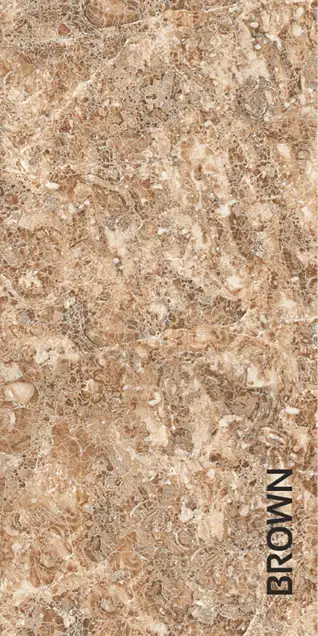 Classic Empredor Brown
 -
 6119
6119 -
Pantone Dalim Mint
-
10817-HL1
-
1120
-
17143
-
60120CL FLANT RECTENGULAR(END)
-
20825-L
-
20931-HL-2
-
Onyx Gold Wave
-
Navyat Dark
-
10823-HL1
-
1143
-
8004
-
Navona White
-
INDIGO MORROCCAN
-
20819-L
-
Patagonia Grey
-
Statuario Glanza
-
Anosa Natural









The question "vitrified or porcelain" is the most frequently misunderstood tile buying question in Chandausi's tile market, and the confusion is understandable because the two terms are used differently in India versus the rest of the world. Globally, the tile industry uses "porcelain" as the technical term for any tile with water absorption below 0.5%: all tiles at this performance level are called porcelain tiles internationally, and "vitrified" is simply the firing process that achieves this low absorption. In India, and specifically in the Morbi manufacturing cluster that produces all tiles sold in Chandausi, these terms evolved as distinct retail marketing categories with different performance levels. Knowing the Indian market reality for Chandausi buyers: "vitrified" at most Chandausi dealers means the higher-density, lower-absorption premium category (typically below 0.5% water absorption), while "porcelain" in the Indian market context often refers to a medium-density category with 2 to 5% water absorption. The same product may be called "porcelain" at one Chandausi showroom and "vitrified" at another. The technical benchmark that cuts through this terminology confusion is simple: ask for the water absorption percentage. Dealers on Sambhal Road and Station Road can clarify these differences.
Global Terminology vs Indian Market Terminology
Understanding the distinction between global and Indian market terminology for vitrified and porcelain tiles is crucial for Chandausi buyers. These terms, while seemingly interchangeable, carry different technical meanings depending on the regional context, impacting product classification and expected performance. Clarifying these definitions helps in making informed purchasing decisions.
How the World Defines Porcelain
Internationally, tiles with water absorption below 0.5% are classified as porcelain tiles. The "vitrified" descriptor refers to the manufacturing process (firing at high temperature until the clay vitrifies into a glass-like dense structure) that achieves this low absorption. In global markets, there is no separate retail category called "vitrified": all low-absorption dense tiles are porcelain, period. Buyers in Chandausi also look at tile design ideas to find styles that work with this colour palette.
How India and Morbi Use These Terms
In India's domestic market, terminology evolved differently from international standards. Morbi manufacturers label two distinct product categories: Porcelain (typically 2 to 5% water absorption, medium density, used for standard residential bedrooms and light-use applications) and Vitrified (typically below 0.5% absorption, higher density, more expensive, used for living rooms, commercial floors, and premium applications). This domestic labelling convention is marketing-driven rather than technically standardised: the same tile specification could be labelled differently by different manufacturers or exported with different terminology for international markets.
Water Absorption: The Real Technical Benchmark
For Chandausi buyers, water absorption percentage is the single most reliable technical parameter for evaluating tile suitability. This metric directly impacts a tile's strength, resistance to stains, and overall longevity, especially in Chandausi's climate. Lower absorption indicates higher density and better performance, making it a critical factor in tile selection.
| Category (India Context) | Absorption | Density | Best Chandausi Use |
|---|---|---|---|
| Indian Market Porcelain | 2% to 5% | Medium density | Bedrooms, low-traffic indoor areas |
| Indian Market Vitrified | 0.5% or below | High density | Living rooms, kitchens, commercial floors |
| Full Body Vitrified | 0.05% or below | Very high density | Heavy commercial, parking, institutional use |
Lower absorption equals higher density. Higher density equals better strength, scratch resistance, stain resistance, and long-term durability. For Chandausi households, the simple rule: ask for water absorption percentage. Below 0.5% is vitrified-level performance; 2 to 5% is porcelain-level in the Indian market context. Buyers in Chandausi also look at parking tiles to find styles that work with this colour palette.
Size-Based Market Reality in Chandausi
The size of tiles available in Chandausi often dictates whether they are typically classified as porcelain or vitrified in the Indian market context. This size-based reality influences both pricing and recommended applications for various spaces. Understanding these common market patterns helps buyers navigate the choices effectively.
400x400 mm and 500x500 mm Tiles
Mostly produced as porcelain (Indian context) with water absorption typically 2 to 5%. Budget-friendly. Suitable for Chandausi bedrooms, rental properties, and light-use indoor floors. Limited vitrified production in these sizes due to pricing sensitivity.
600x600 mm Tiles
Available in both porcelain and vitrified in Chandausi. Matte surface 600x600 mm is commonly porcelain. Polished Glossy and double-charge 600x600 mm are typically vitrified. Most popular size in Chandausi creates the highest terminology confusion because both categories exist at this size.
600x1200 mm and Larger Formats
Polished Glossy, high-gloss, and full-body colour tiles in 600x1200 mm and above are consistently vitrified-level specification in Chandausi. Matte and carving matte in 600x1200 mm may be either vitrified or porcelain depending on manufacturer. Large formats requiring higher structural integrity tend toward vitrified standards. For these larger formats, consider 2x4 tiles for clarity.
Performance and Practical Usage in Chandausi
The performance and practical usage of tiles in Chandausi vary depending on their classification. Choosing the right tile for a specific area ensures longevity and functionality, aligning with the demands of both residential and commercial settings. Factors like traffic, moisture exposure, and aesthetic preferences play a key role in tile selection.
Residential Use
Bedrooms and low-traffic spaces: Indian market porcelain tiles are sufficient and cost-effective. Kitchens and living rooms: Vitrified specification preferred for stain resistance and durability. Bathroom floors: Low water absorption specification recommended. Outdoor areas: Vitrified or porcelain with near-zero absorption.
Commercial and Heavy-Traffic Use
Shops, offices, corridors, and parking in Chandausi: Always specify vitrified-level (below 0.5% absorption). Better load-bearing capacity, scratch resistance, and long-term surface durability than Indian market porcelain. The heavy foot traffic in commercial areas of Chandausi requires more robust tiling solutions.
What Chandausi Buyers Should Ask Instead of "Vitrified or Porcelain?"
The correct question at any Chandausi tile dealer is: "What is the water absorption percentage of this tile?"
This single question reveals: Is it suitable for my application? How durable will it be under my use conditions? Is the price appropriate for the performance level?
Practical verification test: Spray a small amount of water on the unglazed back of the tile. If the water soaks in and leaves a damp patch within minutes, the absorption is higher (porcelain range in Indian context). If the water sits on the surface without absorbing, the tile is vitrified-level specification. Buyers in Chandausi also look at matte finish tiles to find styles that work with this colour palette.
In Chandausi, vitrified tiles, which have a water absorption rate of 0.5% or below (IS 15622:2006), are generally preferred for living rooms and commercial floors. These come in common sizes like 600x600 mm and 600x1200 mm, with prices typically ranging from Rs. 40 to Rs. 130 per sq.ft. Indian market porcelain tiles, with 2-5% absorption, are a more budget-friendly option for bedrooms.
These tiles are predominantly sourced from Morbi, Gujarat. Chandausi's semi-arid climate means that choosing vitrified tiles for outdoor and high-traffic areas ensures better durability against temperature fluctuations and dust, making them a practical choice for long-term use in the region.
Vitrified vs Porcelain Tiles Showroom and Dealer in chandausi
Shalabh traders
Contact: +91 +91 70178 16373
Shri Banke Bihari Tiles Udyog
Contact: +91 +91 99276 90089
-9f831d48-b3bd-4701-a2a1-136f1cbd1251.jpg)