

Vitrified vs Porcelain Tiles in Banda: Market Reality, Technical Difference and Buying Guide
Loading designs...
-
 3D 001
 -
 3D 002
 -
3D 003
-
3D 004
-
3D 005
-
3D 006
-
3D 007
-
3D 008
-
3D 009
-
3D 010
-
Adison Grey
-
Adison chocco
-
Afyon Bianco
-
Adison Ivory
-
3D 011
-
Albert White
-
Armani chocco
-
Aldur Brown
-
3D 012
-
Armani Nero







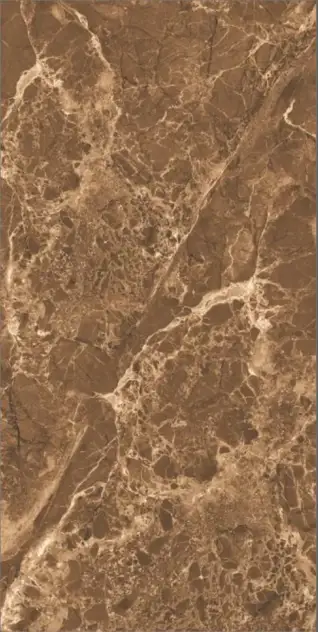
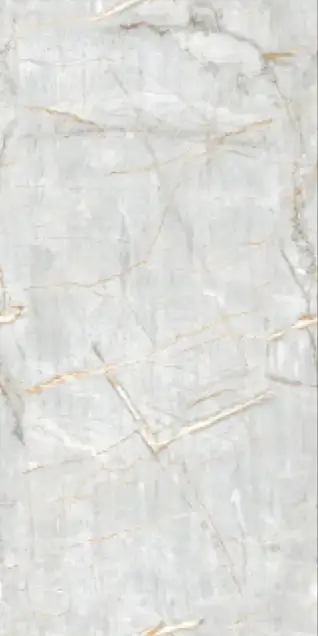



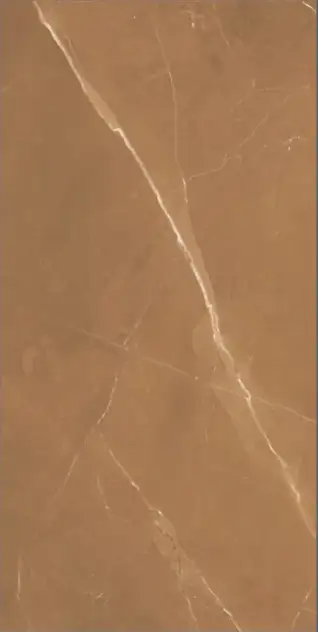
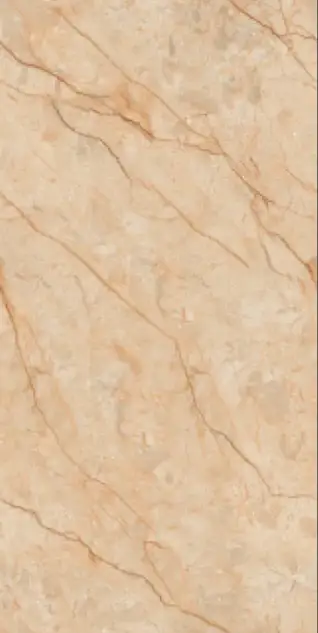

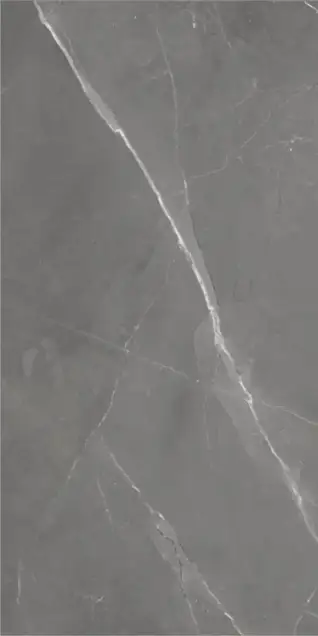
The question 'vitrified or porcelain' is often misunderstood in Banda's tile market, creating confusion for buyers. Globally, 'porcelain' technically refers to any tile with water absorption below 0.5%, with 'vitrified' being the firing process that achieves this. However, in India, and specifically the Morbi manufacturing cluster supplying Banda, these terms evolved as distinct retail marketing categories with different performance levels. In the Indian market context, 'vitrified' at most Banda dealers means a higher-density, lower-absorption category (typically below 0.5% water absorption), while 'porcelain' often refers to a medium-density category with 2 to 5% water absorption. The same product might be called differently at various Banda showrooms. The key is to ask for the water absorption percentage, as it provides the most reliable technical benchmark. Many independent houses in Banda are replacing older mosaic or cement tiles, so understanding these differences is important.
Global Terminology vs Indian Market Terminology
Internationally, tiles with water absorption below 0.5% are classified as porcelain tiles. The 'vitrified' descriptor refers to the manufacturing process of firing at high temperatures until the clay vitrifies into a dense, glass-like structure. In global markets, there is no separate retail category called 'vitrified'; all low-absorption dense tiles are simply porcelain. In India's domestic market, however, terminology evolved differently. Morbi manufacturers label two distinct product categories: 'Porcelain' (typically 2 to 5% water absorption, medium density) and 'Vitrified' (typically below 0.5% absorption, higher density, more expensive). This domestic labelling convention is marketing-driven, leading to potential confusion for Banda buyers. For living room tiles, the choice between these can impact durability.
Water Absorption: The Real Technical Benchmark
| Category (India Context) | Absorption | Density | Best Banda Use |
|---|---|---|---|
| Indian Market Porcelain | 2% to 5% | Medium density | Bedrooms, low-traffic indoor areas |
| Indian Market Vitrified | 0.5% or below | High density | Living rooms, kitchens, commercial floors |
| Full Body Vitrified | 0.05% or below | Very high density | Heavy commercial, parking, institutional use |
For Banda buyers, water absorption percentage is the most reliable technical parameter for evaluating tile suitability. Lower absorption means higher density, which translates to better strength, scratch resistance, stain resistance, and long-term durability. For Banda households, the simple rule is to ask for the water absorption percentage. Below 0.5% indicates vitrified-level performance, while 2 to 5% indicates porcelain-level performance in the Indian market context. This is especially relevant for outdoor tiles in Banda's climate.
Size-Based Market Reality in Banda
Tile sizes often correlate with their classification in Banda's market. 400x400 mm and 500x500 mm tiles are mostly produced as porcelain (Indian context) with water absorption typically 2 to 5%. These are budget-friendly and suitable for bedrooms, rental properties, and light-use indoor floors in Banda. Limited vitrified production exists in these sizes due to pricing sensitivity. 600x600 mm tiles are available in both porcelain and vitrified in Banda. Matte surface 600x600 mm is commonly porcelain, while polished glossy and double-charge 600x600 mm are typically vitrified. This size creates the highest terminology confusion. 600x1200 mm and larger formats are consistently vitrified-level specification. These larger tiles require higher structural integrity. For parking tiles, vitrified is often preferred.
Performance and Practical Usage in Banda
For residential use in Banda, Indian market porcelain tiles suffice for bedrooms and low-traffic spaces, offering a cost-effective solution. For kitchens and living rooms, vitrified specification is preferred due to its superior stain resistance and overall durability. Bathroom floors require low water absorption specifications for safety and longevity. Outdoor areas in Banda, exposed to the hot-dry climate and monsoon rains, also benefit from vitrified or porcelain with near-zero absorption for better weather resistance. For commercial and heavy-traffic use in Banda, such as shops, offices, corridors, and parking areas, always specify vitrified-level tiles (below 0.5% absorption). These offer better load-bearing capacity, scratch resistance, and long-term surface durability. When choosing bathroom tiles, water absorption is a key factor.
Tiles in Banda, when classified as vitrified (Indian context), have water absorption below 0.5% and come in sizes like 600x600 mm and 600x1200 mm, with prices ranging from Rs. 40 to Rs. 130+ per sq.ft. Indian market porcelain has 2-5% absorption and is usually found in 400x400 mm sizes, starting from Rs. 38 per sq.ft.
Sourced from Morbi, Gujarat, these tiles are chosen for Banda's hot-dry climate and dusty conditions. Vitrified tiles are generally preferred for their superior performance in independent houses and government colonies, offering better resilience to heavy use and environmental stresses. For a wide range of choices, explore tile design ideas.
Vitrified vs Porcelain Tiles Showroom and Dealer in banda
Mahalaxmi Ceramic
Contact: +91 +91 90857 30810
Shree Balaji Tiles marble and granite
Contact: +91 +91 80589 71437
Saurabh Trading Company Banda
Contact: +91 +91 94511 32050
-9f831d48-b3bd-4701-a2a1-136f1cbd1251.jpg)